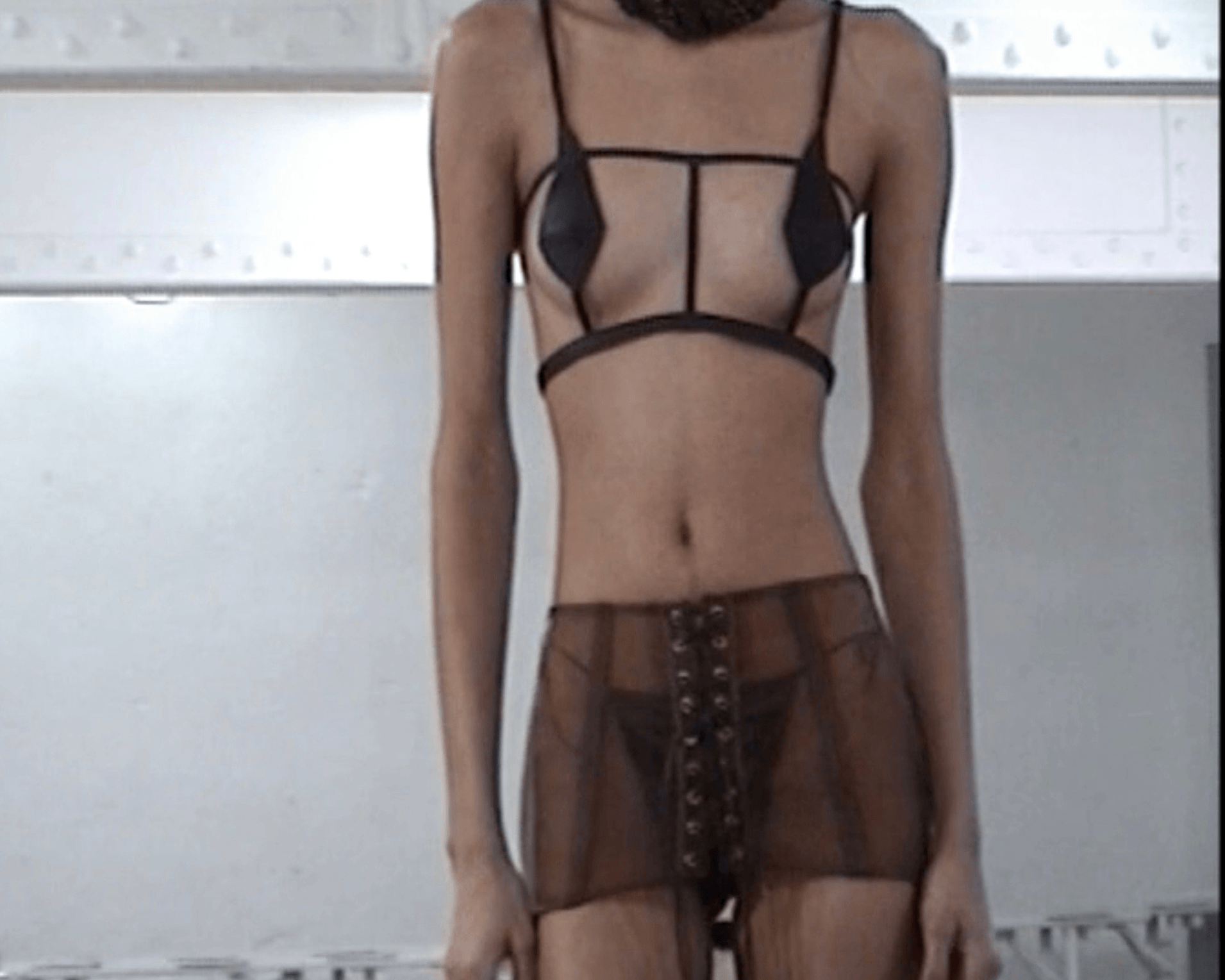
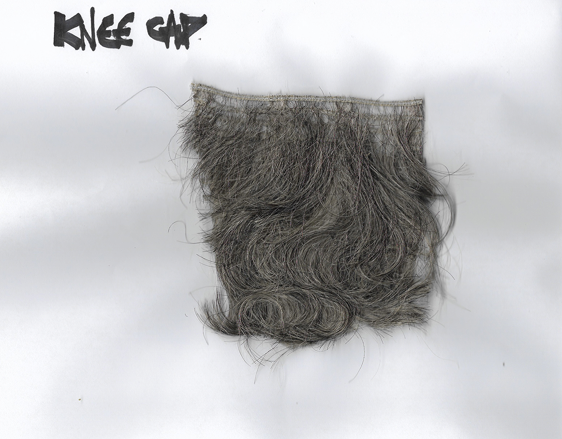
In a world governed by the aesthetics of perfection, Charlie Le Mindu awakens our mammalian essence. Le Mindu’s works are made from the very fibres of our being; hair becomes a conduit, each strand a channel connecting the primal and the societal. Throughout his years as a creative director, fashion designer and hairstylist, Le Mindu has fervently questioned the exaltation of conventional beauty ideals. Glamour is reconfigured from within the industry. Resisting the urge to tame the beast that is perfection, permission is bestowed for it to be unruly and abject. The feral and the post-human are teased out, knots unfurl, transformation runs riot.
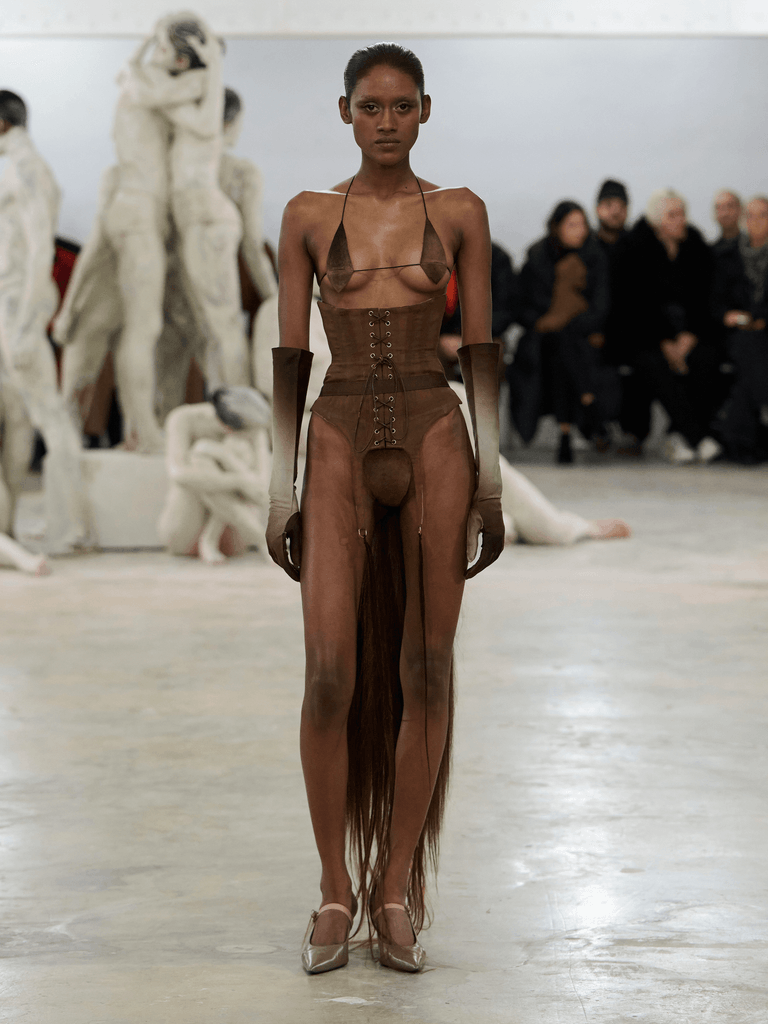
hube: Earlier this year, you presented your first haute couture collection, Skins, for SS26 in Paris. The collection required an enormous collaborative effort, involving a large team—including students from the Paris College of Art—to help bring every piece to life by hand. Having worked across hairstyling, costume design and creative direction, does couture require a different mindset?
Charlie Le Mindu: For me, Skins wasn’t about arriving in couture—it was about contaminating couture with hair. Hair has always been my textile. Suddenly, I was speaking the language of haute couture, but with a material that’s usually swept off the salon floor. I love that contradiction; it’s precious and abject at the same time.
The show only existed because of many hands. Couture is often sold as the vision of one person, but it’s actually a collective performance. Every strand was touched by someone, and that human energy stays inside the garment.
The haute couture experience shouldn’t be like that of a museum. It should be a laboratory where craft mutates into something unexpected.
h: For the show, you worked with choreographer Grace Lyell. You have also created pieces for Swedish choreographer Alexander Ekman and performers such as Lady Gaga and Peaches. Across these collaborations, hair seems to become more than a visual element—it extends the body, amplifies movement, and acquires a choreography of its own. What is it about hair that makes it such a dynamic medium?
CLM: Hair is impossible to control—which is exactly why I love it. Fabric obeys, hair misbehaves. It catches air, light, sweat, static electricity… it has a life of its own. Sometimes I think the hair performs better than the model.
Working with dancers and performers taught me that movement isn’t something you decorate. The movement designs the piece. Until someone moves, the work isn’t finished.