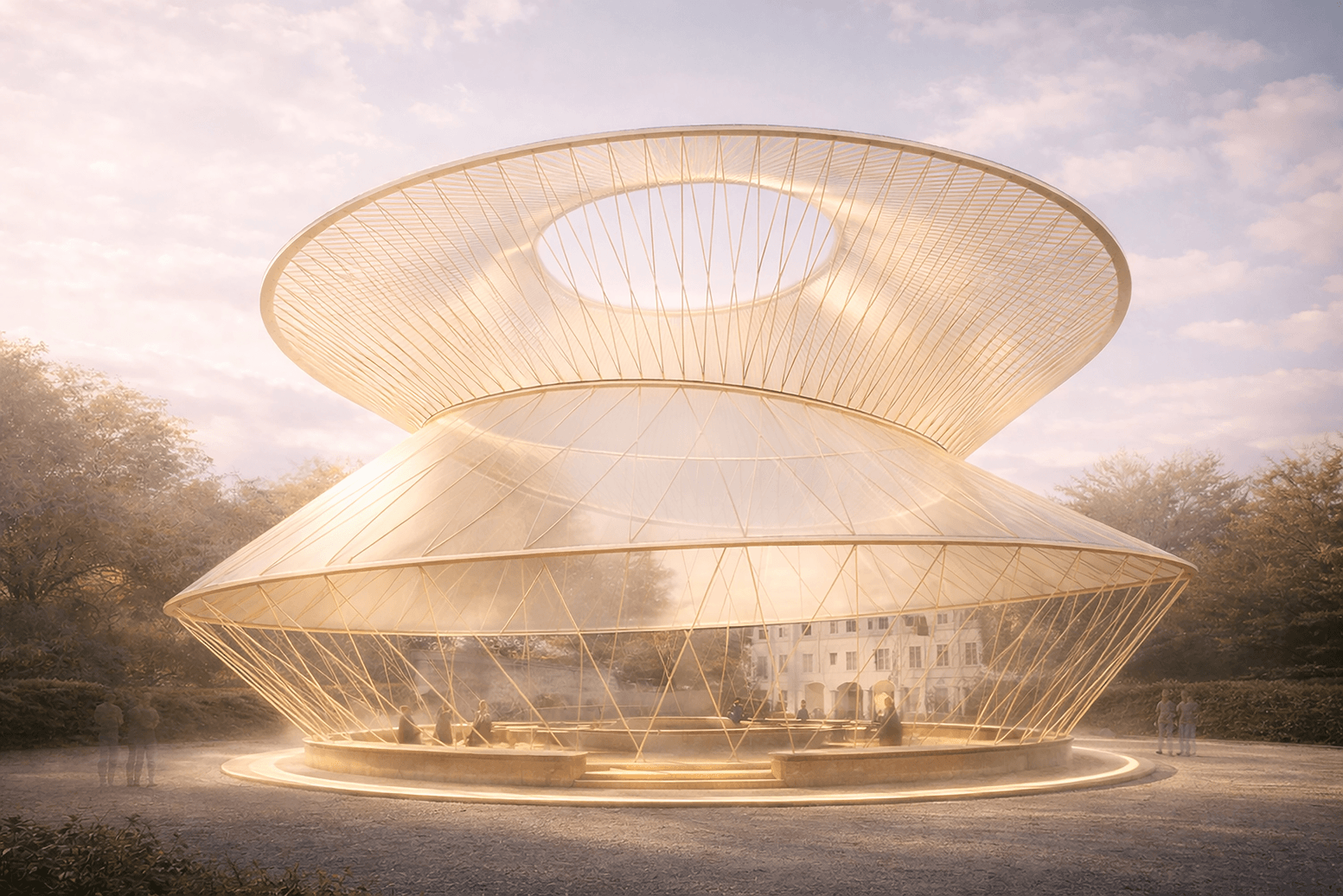
This year, the Uzbekistan pavilion will present When Apricots Blossom, an immersive exhibition taking place from 20th to 26th April at Palazzo Citterio. Designed as a cultural statement and a design proposition, the exhibition reimagines Uzbekistan’s craft traditions through a contemporary lens influenced by ecological concerns and collective memory.
Commissioned by the Uzbekistan Art and Culture Development Foundation and curated by Kulapat Yantrasast of WHY Architecture, the project traces the transformation of the Aral Sea region through craft, design, and ecological reflection.
A Landscape in Transition: Craft as a Language of Survival and Renewal
The Uzbekistan Pavilion draws on the ever-changing landscapes of Karakalpakstan, where environmental change has redefined daily life. Through undulating, reed-like forms, the scenography evokes a terrain shaped by absence, resilience and adaptation.
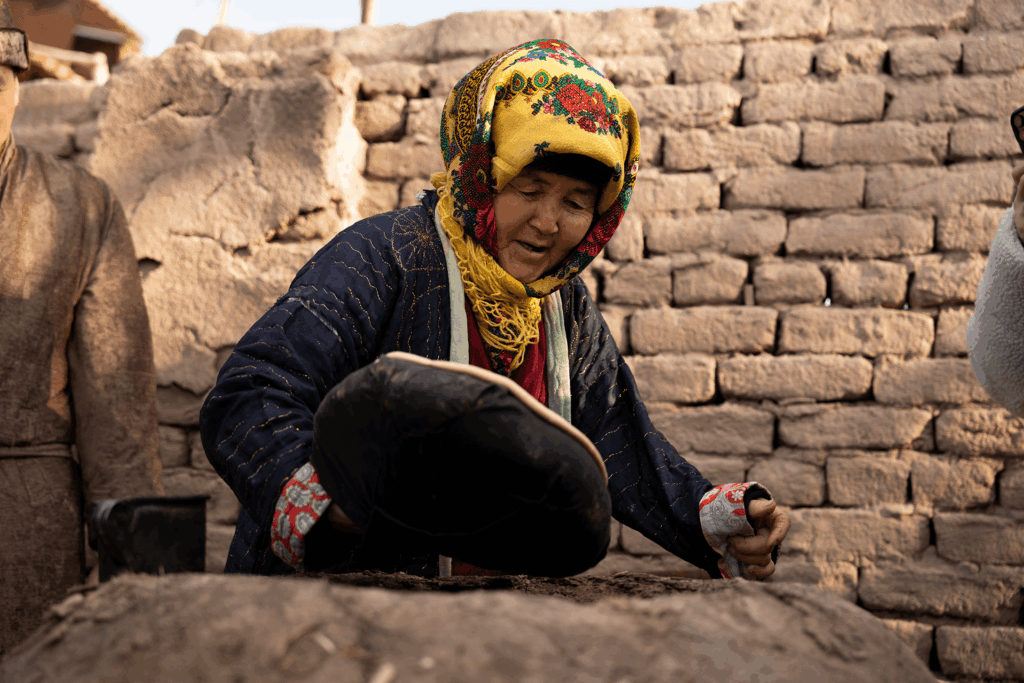
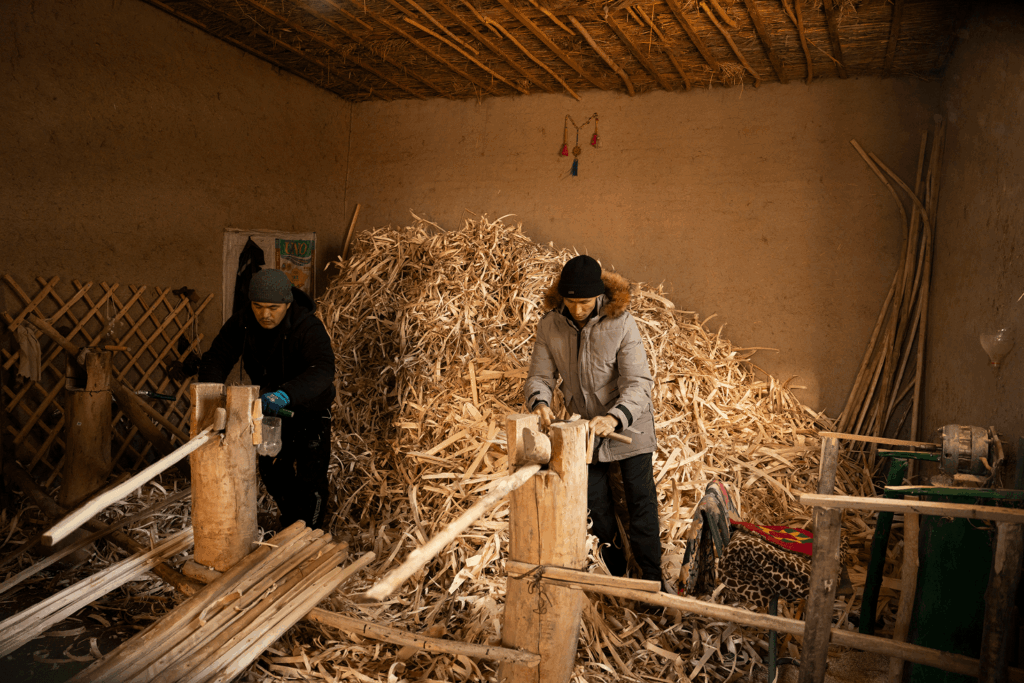
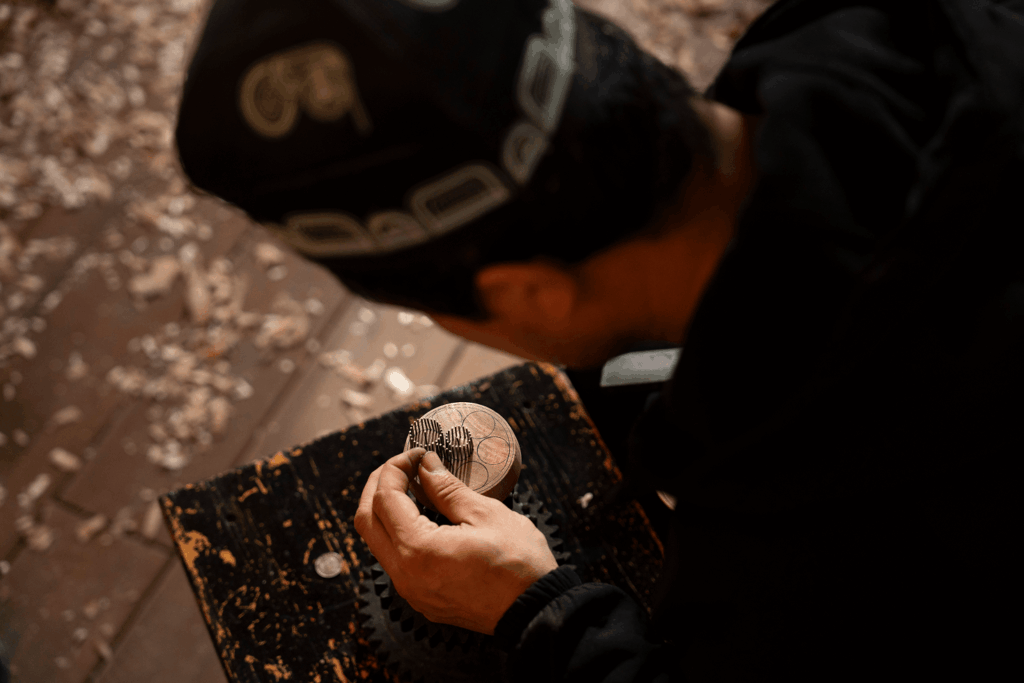
Ancient knowledge meets contemporary design as twelve international designers collaborate with Uzbek artisans to reinterpret bread-making traditions through limited-edition stamps and sculptural trays. Artefacts from the Aral School and the film Where the Water Ends, which traces the evolving communities of the region, extend this dialogue, positioning craft as a living practice and a tool for imagining future worlds.
The Uzbekistan Pavilion: A Deconstructed Yurt as a Space for Reflection
Set within the gardens, the Uzbekistan pavilion takes the form of the Garden Pavilion—a reimagined yurt conceived as a lightweight, open structure. Its latticed framework and translucent skin filter light softly, while custom wooden furnishings create an intimate, contemplative interior.
Here, architecture becomes both symbol and experience. As curator Kulapat Yantrasast reflects:
“The yurt is one of the most honest pieces of architecture ever made – born of nomadic life on the steppe, engineered to move with its people and hold the sky at bay across endlessly shifting landscapes, it carries an entire world inside it. For this pavilion, we wanted to crack that world open: to unpick the way a yurt holds space and remake it as something that holds absence – the absence of water, of shoreline, of a way of life entirely.”
The pavilion anchors a public programme of daily talks, workshops, and demonstrations—from bread-stamping sessions with master artisans to conversations on craft, ecology, and cultural continuity—offering visitors a space not only to observe, but to engage.
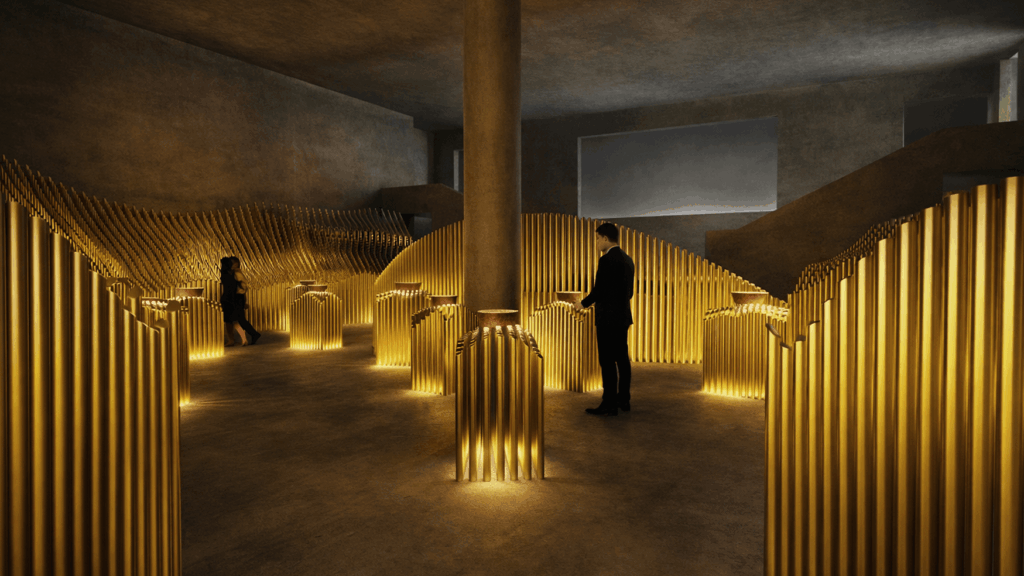
Courtesy of ACDF and WHY ARCHITECTURE
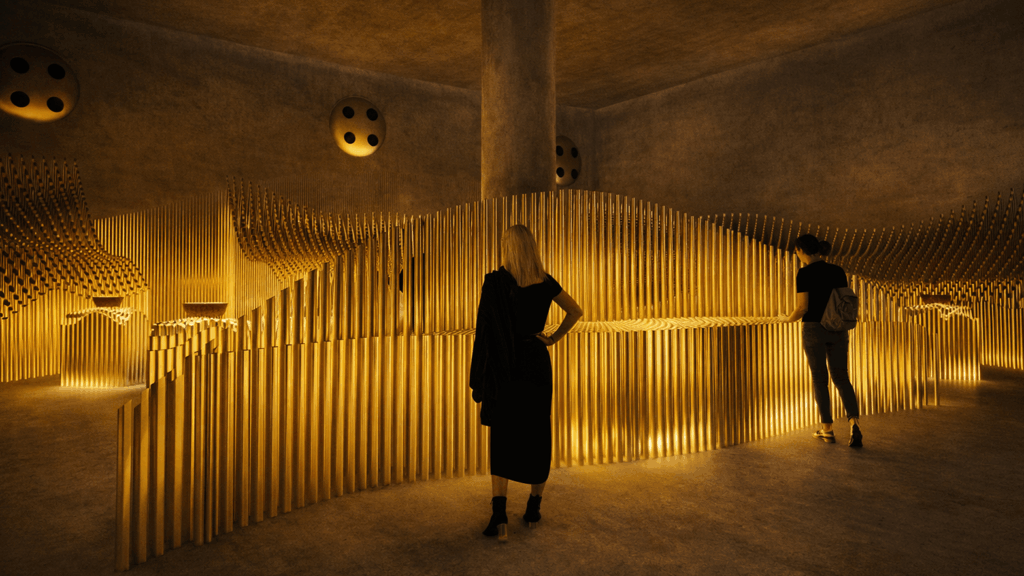
Courtesy of ACDF and WHY ARCHITECTURE
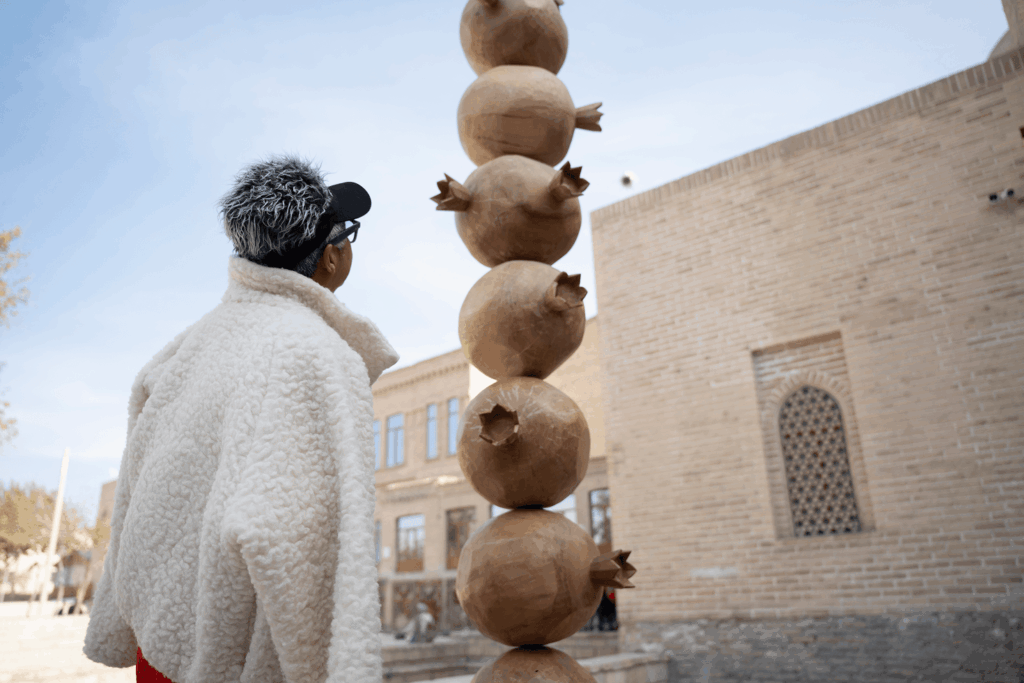
Photography courtesy of ACDF
Photography courtesy of ACDF
Photography courtesy of ACDF
Photography courtesy of ACDF
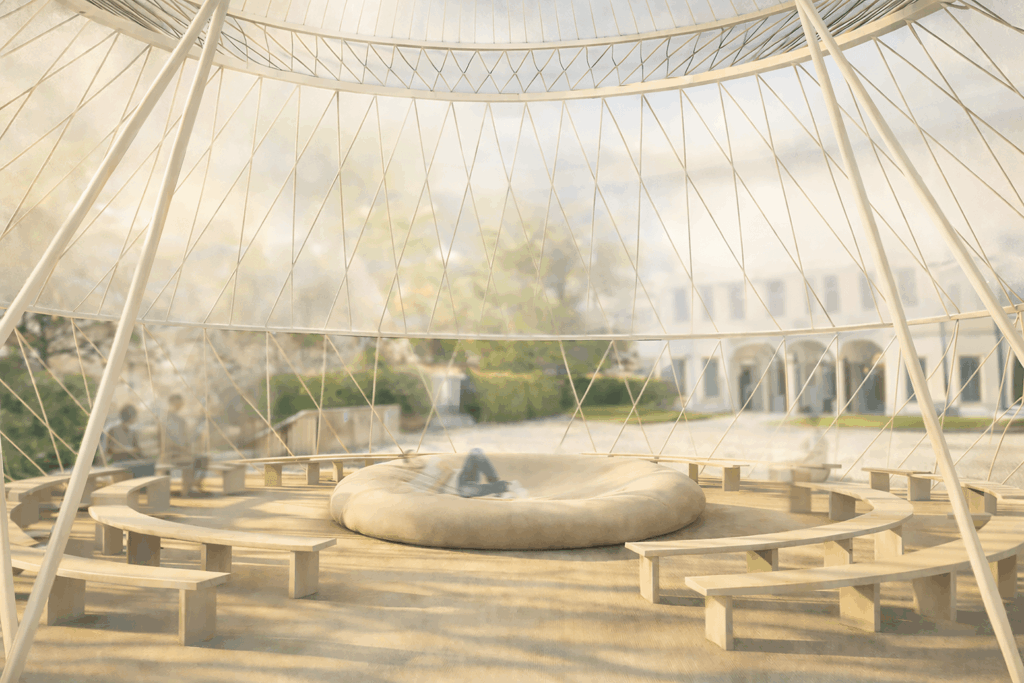
Indicative Render – Lightweight latticed framework deconstructed yurt by KULAPAT YANTRASAST
Image courtesy of ACDF and WHY ARCHITECTURE