Lebanese artist Yasmina Hilal possesses a rare clarity—an intelligence and composure that seem to exceed her years. Still early in her career, she has already contributed to GQ Middle East, Harper’s Bazaar Arabia, AD Middle East, and Condé Nast, notably gracing the cover of Dazed Middle East. Her work has also been presented in both solo and group exhibitions, including I See Me In You at the MENA Art Fair (Brussels, 2023), The Age of Dystopia at the Dalloul Art Foundation (Beirut, 2024), and The Material Woman at Soho Revue (London, 2024).
Her practice spans hand-developed analogue photography and experimental mixed media, often incorporating materials such as lead and other metals into sculptural, three-dimensional works. Across all her pieces, art and identity are deeply intertwined. Hilal traces the contours of womanhood, family, and nation—meticulously archiving and transforming the legacy of a people resisting erasure. Her work stands as an act of insistence and remembrance: we were here. We are here. We exist.
hube: Your practice incorporates layered materials and processes—analogue techniques, film, resin—each adding density and complexity. Do you find that this sensitivity to layering extends into your daily life? Is there a kind of heightened, dimensional awareness that informs how you move through the world?
Yasmina Hilal: Absolutely. Because of the lived experiences that I’ve gone through, I feel like many of these layers have to do with grief and finding yourself. Something isn’t complete unless it’s broken down and then rebuilt.
My mother was a photographer and collage artist, so my first memory of collage is her tearing up paper, gluing and sticking it. All these things made me understand the mannerisms of using my hands and how important it is to break down something so aesthetically pleasing and give it a new form—a form similar to a scar in the way it heals and rebuilds. There’s beauty within preserving those things and building onto them.
h: You’ve mentioned your mother and grandmother as key influences. What does “heritage” mean to you today, especially in a digital world where everything is constantly saved and shared?
YH: Heritage is quite important because there’s a lot of erasure within the context of war, the context of when you’re bound to these experiences in life. I think it’s really important to be able to tune into the women and men around you. My grandfather was a photographer as well. He left behind a big digital archive that I have been working on, figuring out how I want to piece it together. My father was a carpenter, so he is an engineer. He built a lot of the things at home: the tables, the woodwork, the closets, the beds. It made me understand the beauty of tactility and preservation. My mother was a photographer and collage artist. She gave me my first analogue camera when I was fifteen, so I kind of grew learning this technique from her.
My grandmother’s home is very much of a collectible home with so many different trinkets and objects. It was the place that I was born and raised in, and I have so many memories there. She also had a clothing boutique store called Beverly Hills at Clemenceau in Beirut, and she would source these beautiful outfits from all over Europe and sell them. It’s quite a special thing to be raised by people that use their craft and pass it down to you.
I’ve live through several wars. But, I feel like this one in particular is the most intense for me, in a way where I’m really understanding how it feels when your land or your home is taken away from you. I’ve felt it before, but just by having family in the south that had to leave their homes—this is not the first time when I had to leave my home in the first war when I was a kid, so I wasn’t really experiencing that type of belonging just yet. But I do feel it more than ever now, and I feel that I have a moral duty to be able to raise these things and talk about collective erasure, because a lot of the artisanal work that we have now has become so small because of the economy, the systems, the war, and the deaths. It’s really important to see how that affects art as well, and how that affects people losing their homes.
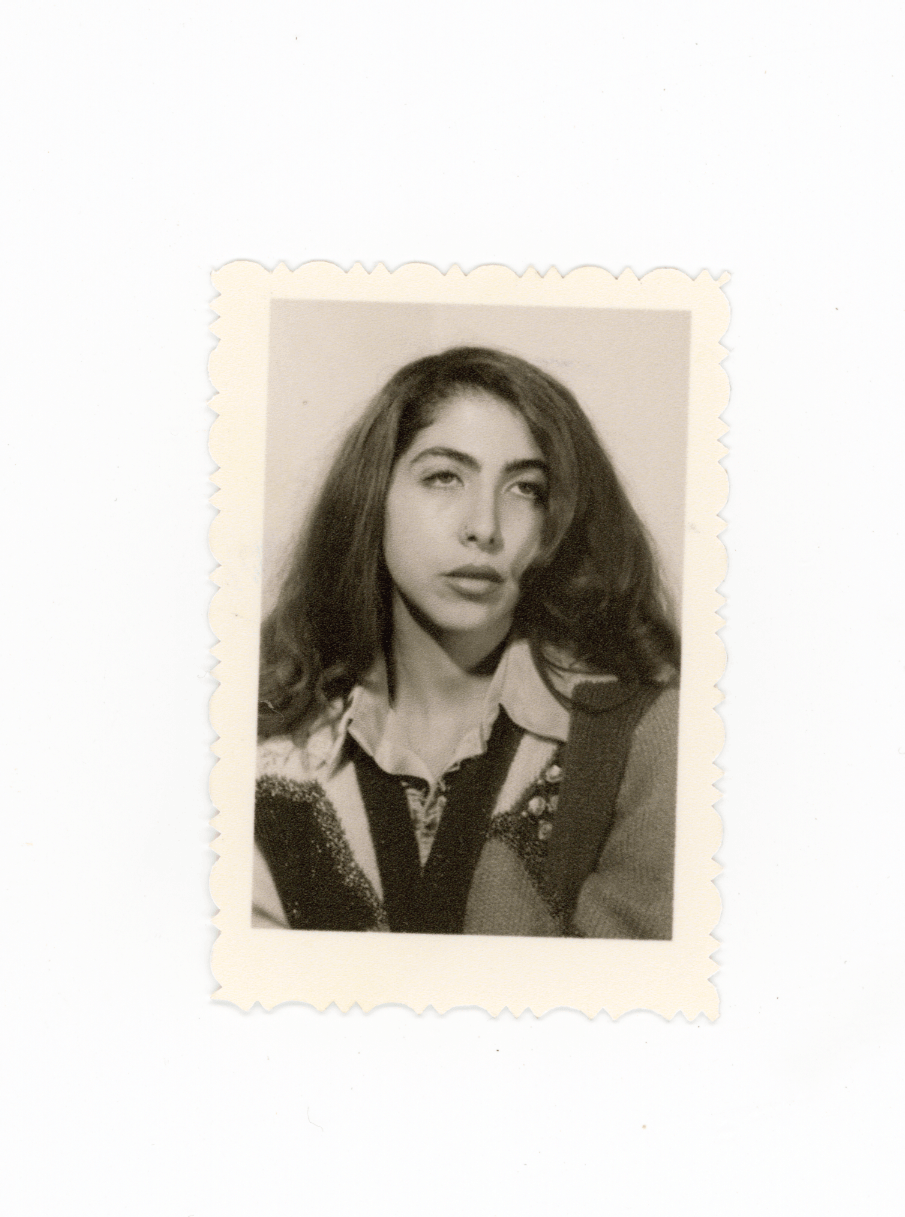
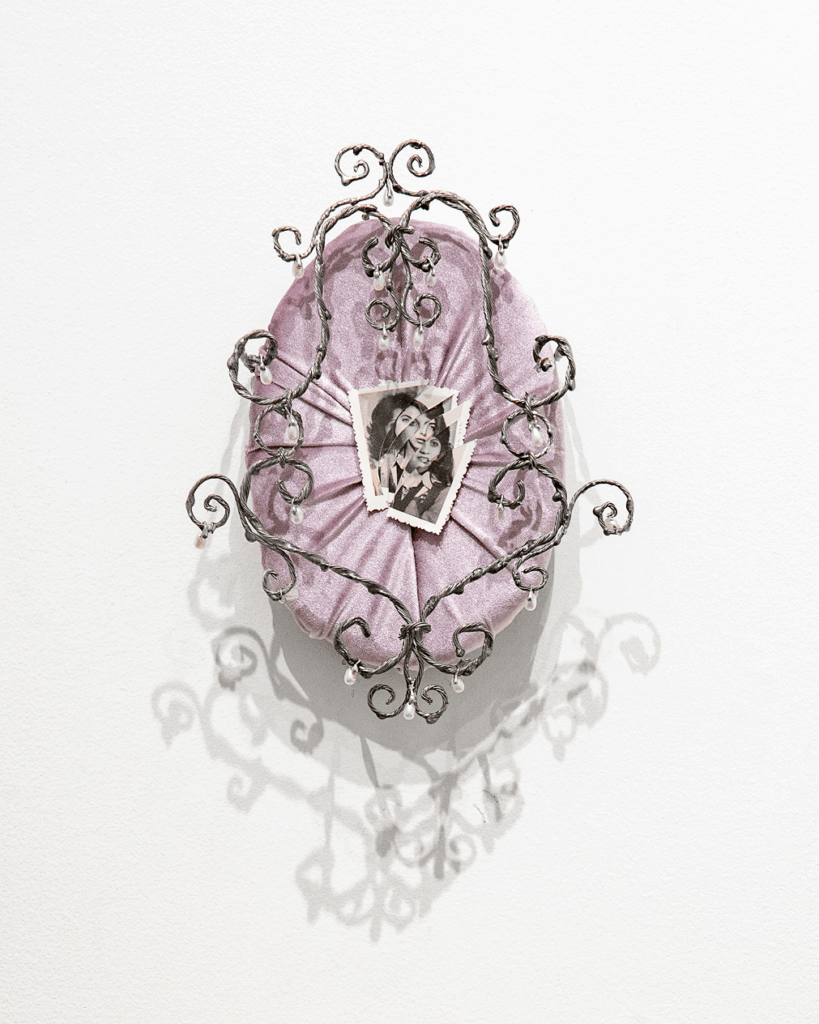
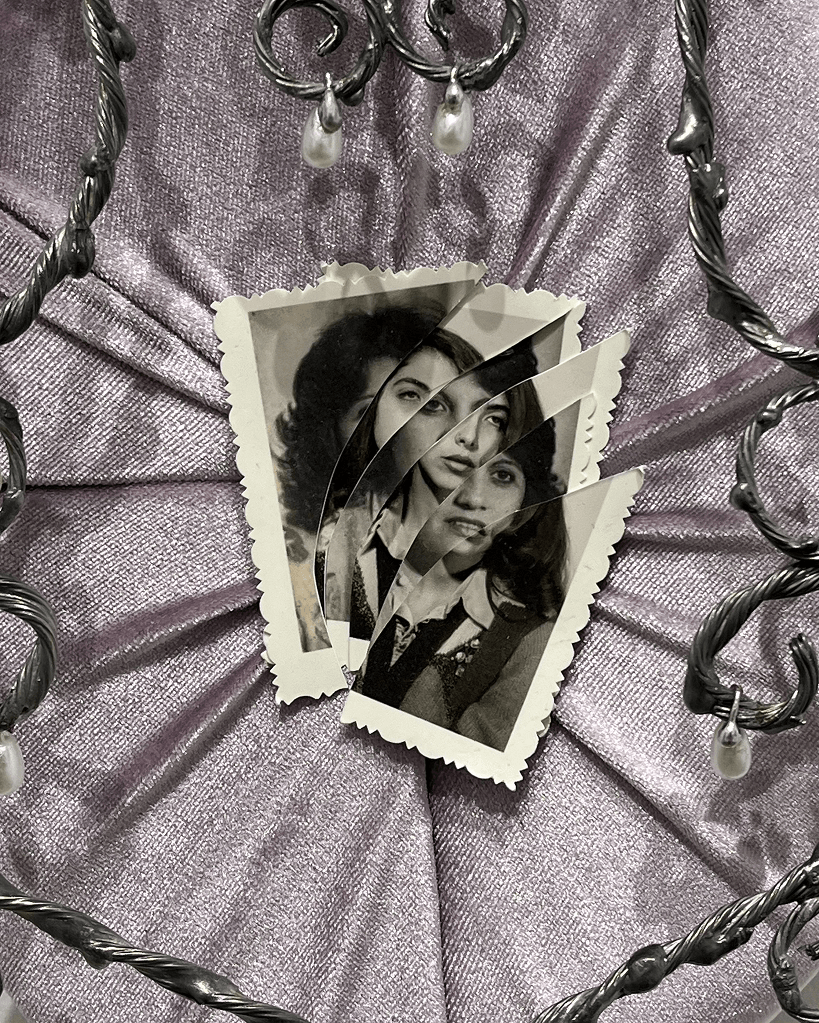
Portrait d’identité (1976-2026)
Dala3

Dala3

Dala3
h: In what ways has your Lebanese identity shaped both your artistic language? Do you feel it has significantly influenced the opportunities available to you, or the spaces in which your work is received, particularly in the US?
YH:Identity politics in general is quite important from wherever you are in the world, and I do feel more and more in tune with how I am as a Lebanese person—as I identify as one. You hear these stories from your parents about the wars and their life, and it doesn’t really process in your head as much as you actually realise how many you’ve lived through as well. During all these moments and times when I feel it, I find it important to praise the community, people around me, and the artists we have.
I don’t feel like we have that much funding when it comes to the arts here, which is a bit unfortunate. But I think it’s still important to be able to tell these stories here, to live through them, and to understand them—because that’s what makes me who I am. It’s from my ancestors: my mom is from the south, so she’s from the border with Palestine, and my father is from Tripoli, which is the border with Syria. It’s quite interesting to experience borders on different levels because they found love from being in the city in Beirut, in the centre.
It’s been occupied by so many different countries, and the Lebanese identity is a complex one. I would say it’s quite layered. You have a lot of different people from different religions and backgrounds. The way my grandmother from the north cooks is very different from the way my grandmother from the south does. It’s really lovely to see that there are different types of traditional dishes that are done in really different ways, but still have the core of love in a way. I want to understand my identity in a way that’s not only the history of war and crimes, but more of the history of heritage and what is passed down.
h: How do you deal with the gap between how people see your work—or you as an artist—and how you see yourself? We’re all constantly visible now, especially online. When you’re creating, are you aware of how your work might be received on social media, or do you try to block that out?
YH: When it comes to building my stuff, it’s based on intuition and on creating and making. It resonates with me, and I know people might resonate with it—and if not, it’s not the end of the world. That’s how I think of it. When you put so much care and thought into what other people think about your work or about what you create, then you’re not creating.
Of course, there comes a context where you do think about how things will play out. I do put myself out there, but I also try to preserve a bit of moments for myself. When it comes to my posts, I am a gradual person. Even with my work—I have so much work that I’ve been producing for the past two years that I haven’t released—I want to sit with it. It’s important because your mind is also changing, developing, and evolving. You might be coming back to a piece and be like, ‘Actually, I want to add something to it’. That’s also the beauty of not making for people or for the sake of posting on Instagram. There’s no point in it. It’s important to take moments for yourself. It’s all at home.
h: Is there a particular medium in which you feel most at ease, or most fully realised? How has formal or informal education informed your practice, especially given your engagement across multiple mediums?
YH: Definitely photography. I’ve been doing it for fifteen years now, and it’s been a lot of practice on that end. It feels more like an unconscious doing, which is really nice, because it’s just as I go. It’s always analog. I’ve gotten a grip on it and digitised it.
Formal education did really help me technically in some ways when it comes to photography. I feel like the storytelling I find more here than anywhere else. Technically, I learned a lot, but at the same time, I also learned a lot just by watching videos. For me, technique is something that you practice with. You just need to do it and keep doing it—then the storytelling comes from within.
h: A pervasive difficulty—not only among younger generations but more broadly—is the pronounced gap between knowledge, motivation, and actual execution. In the digital age, there is an endless stream of material to watch or absorb. How do you make the leap beyond that divide between passive engagement and the decisive moment of doing?
YH: I hate technology. I think it’s a problem for me, but there are some ways to help your train of thought. For me, it’s so much motivation to link things together and be like, ‘Oh, I could try this, and let me add this, and this, and this’. So it doesn’t necessarily come from an educational standpoint. Of course, it definitely helped me in ways that I wouldn’t have imagined, and I wish I can, and I hope to be able to do my master’s and possibly something to do with chemistry or fine arts.
I don’t like to use digital. I only mainly use it for any jobs that actually need it. But my photography clients always end up choosing the film. I like the beauty of tactility, the beauty of surprise, the beauty of mistakes. However, it is a very expensive medium, but again, that has also to do with heritage in a way—just being able to use your hands. If I want to digitise them, I do have my own scanner where I scan my negatives. I archive everything.
h: Could you tell us about your collaboration with Gucci for the Dazed Middle East cover? What drew you to that project, and how did you build its visual story?
YH: I love this project so much, and it brought me so many opportunities. I’m very thankful for it. The DAZED team is my family. Ahmad [Swaid], the editor-in-chief, is one of my mentors.
Lebanon is on the coast. It was important to cast real people—people that go to the beach and find solace in being in the sun—as the cover stars of the image. They wanted to have my mother in the shoot. It was important to build on that storytelling of the beauty of the beach—of our beach, of our land. It was such a beautiful collective effort. For me, it is really special to see it in print. It’s really lovely to be able to tell people’s stories here. I have done fashion a lot, but my focus now is more on the realm of documentary fashion, where I find beauty in the people.
h: Your analogue photography carries a sense of familiarity—a carefully cultivated sense of nostalgia that feels at once intimate and universal. When composing an image, are you primarily documenting what exists before you, or are you constructing moments that reflect what you feel is absent or yet to be seen?
YH:I’ve always told myself—and my parents have always told me—that I am an old soul. I love grandpas and grandmas, and I love ancestry. Their stories mean so much to me. I feel like I’m on this trajectory right now to highlight those past things, but also give them a different edge. There are some things that don’t really have anything to do with nostalgia—but also do in some way. It’s nice to see the contradictions between the way that we live right now and the way of before.
h: Your work frequently centres on the representation of women, particularly in relation to Western frameworks that have historically positioned them as disempowered. How do you navigate these narratives while producing work that resists didacticism?
YH: I had cancer when I was fifteen, so I lost a lot of parts of myself that were my feminine side. I lost my hair, I had to get injections to stop my period, so I was in menopause at the same time. It is quite interesting to lose that touch of femininity at a very young age—especially at an age where you’re growing to understand your womanhood.
I have been actually thinking about these things quite a lot now. My mother and grandmothers were there for me in different ways. When I would sit with my grandmother, she would tell me to do my nails or to put on makeup. Every time before I left the house, she would tell me to put on some blush to make up my cheeks. These little things in life teach you how to love yourself as a woman.
It’s important for me to showcase the beauty of our people and our women, but in ways that are different from the Western ways of seeing us. We are defiant and we are resistant to things that not many people understand. Your body is a form of resistance as well. Your body protects and takes care of you, but it’s also tired. It’s important to preserve that and showcase the beauty of womanhood as well. Not in ways that are categorised, but in ways, modes, and styles that represent our culture.

This Body Remembers and Continues

Portrait d’identité (1976-2026)
Words: ISABELLA MICELI
