The idea of a “new computer” feels strangely dated in 2026. Computing is already everywhere—in our pockets, homes, cars and conversations. What remains unresolved is why would anyone need another one?
Snap’s answer is SPECS.
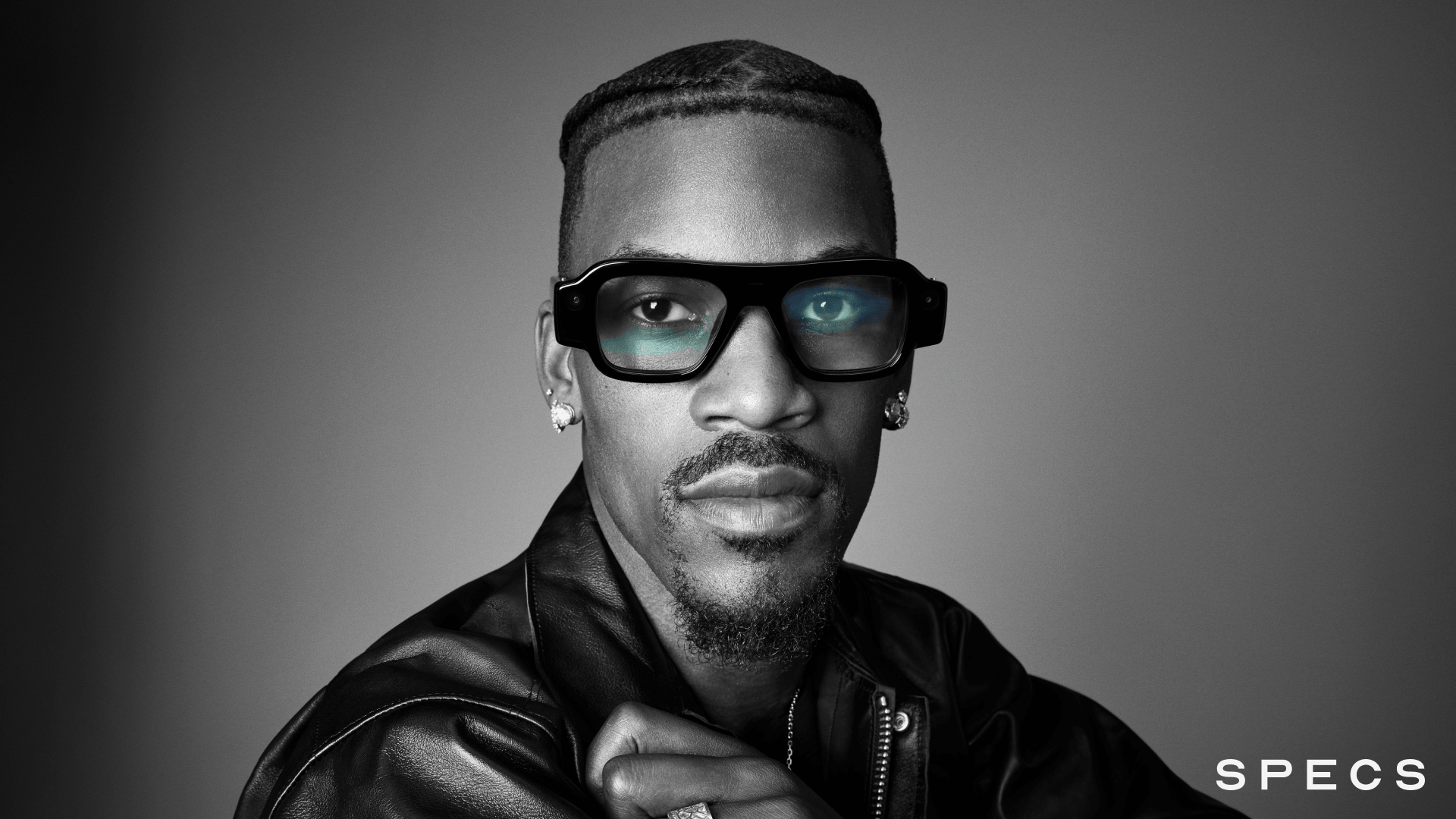
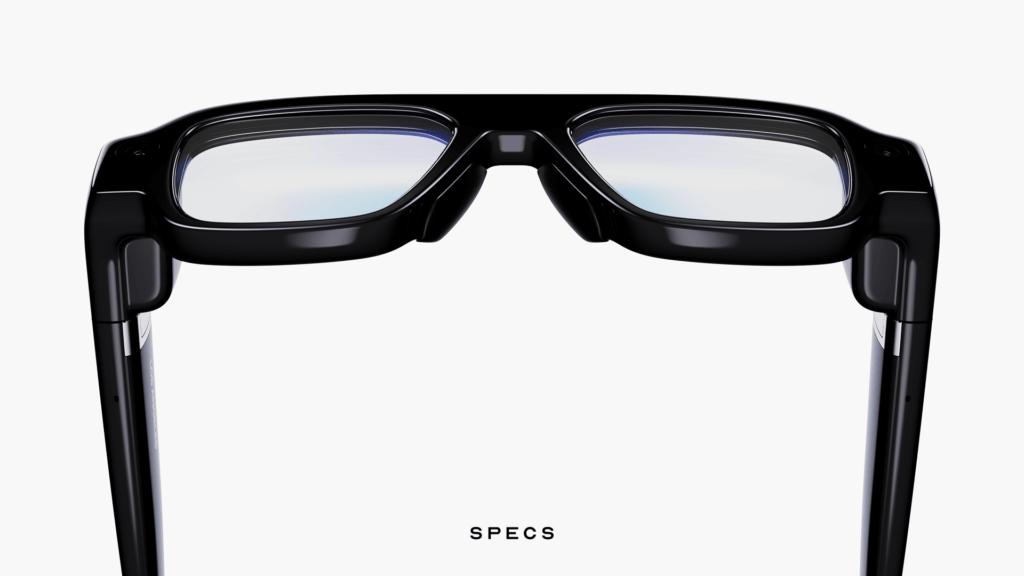
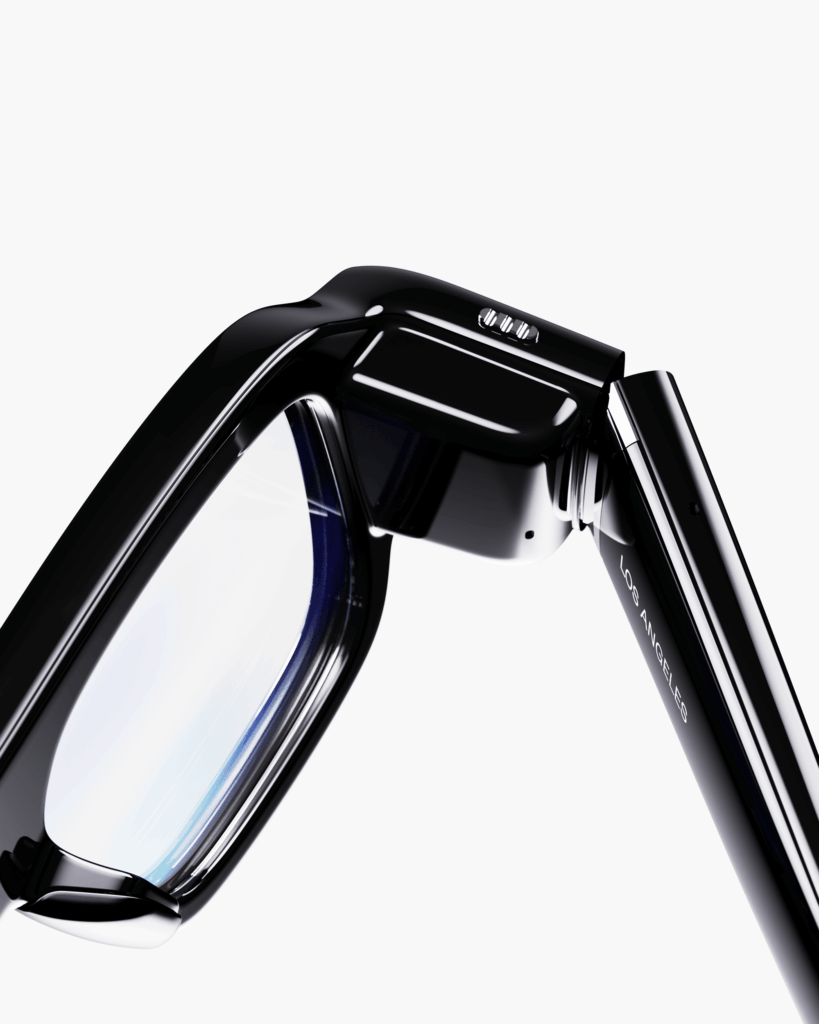
Introduced on September 16th in Los Angeles, SPECS is a computer built into a pair of see-through augmented reality glasses. But the interesting part is not really that a computer has been reduced to the size of eyewear. Snap is trying to move computing somewhere it has rarely been before: out of the screen and into the space where life is actually happening.
For more than a decade, Snap has built its technology around the camera and around a particular understanding of communication. Snapchat emerged as an alternative to the increasingly permanent nature of social media: images that disappeared, conversations that lived in the moment, a camera that was less about documenting life for an audience than about communicating with another person. Augmented reality became a natural extension of that idea. Instead of separating the digital image from reality, it allowed the two to occupy the same frame.
SPECS pushes that logic much further. The question is no longer what happens when we point a camera at the world. It is what happens when the world itself becomes part of the computer.
The screen has been an extraordinary invention. It may also have been a temporary one.
Almost every major chapter of personal computing has been organised around looking at something. The monitor. The laptop. The television. The phone. Even as devices became smaller and more portable, the fundamental gesture stayed remarkably consistent: stop what you are doing, look down or look across, and enter the digital space.
SPECS proposes a reversal.
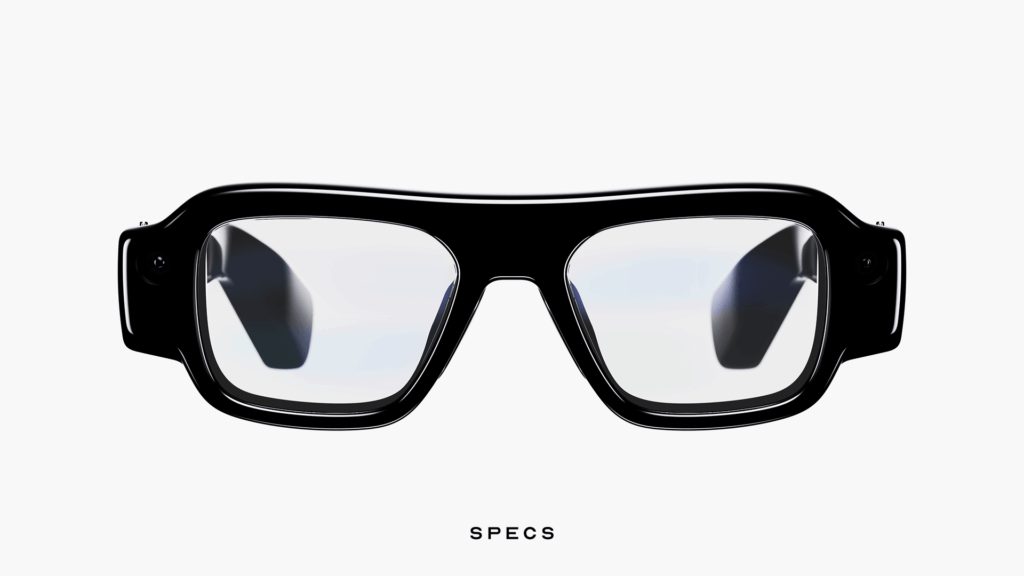
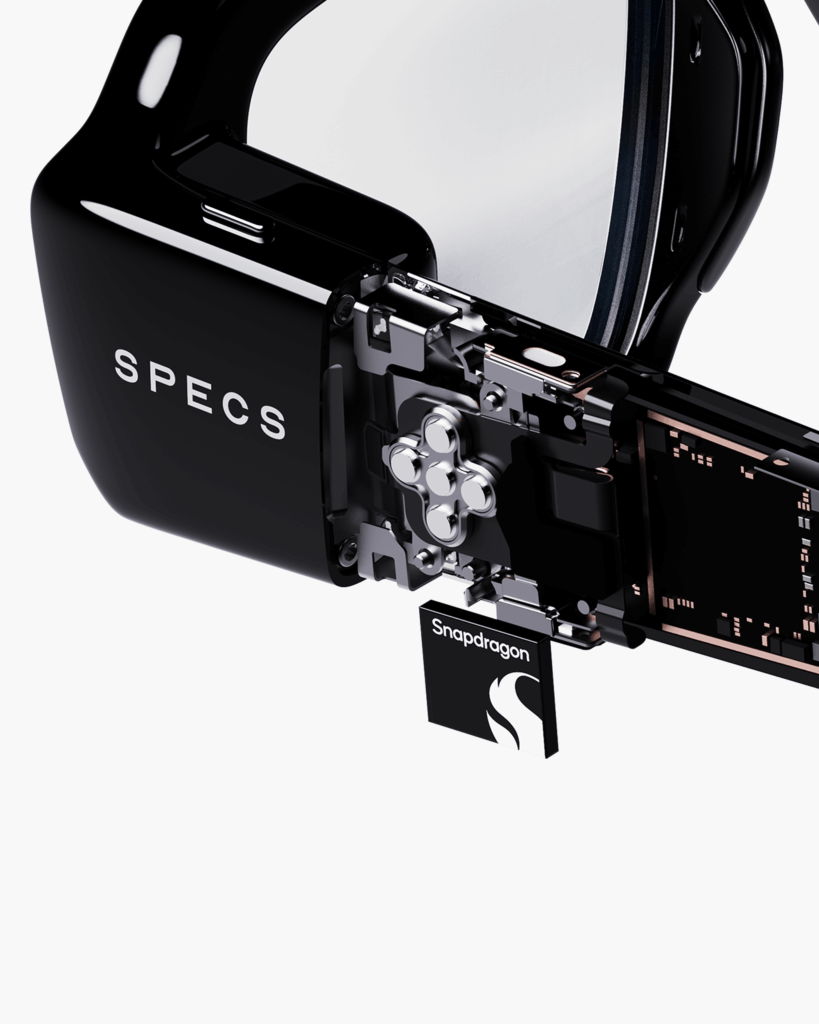
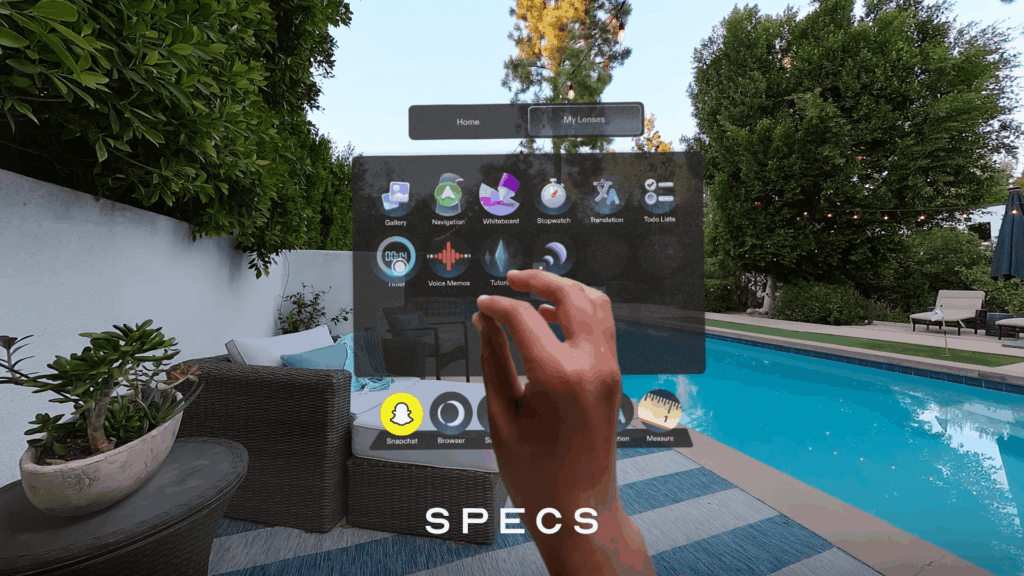
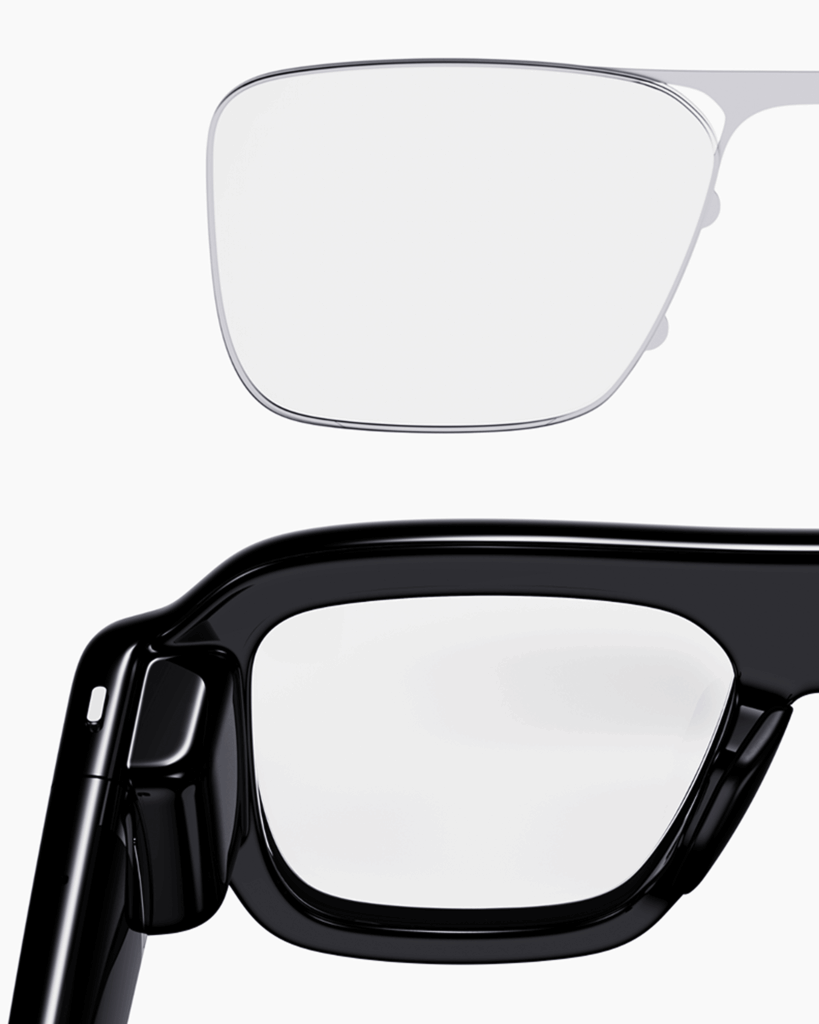
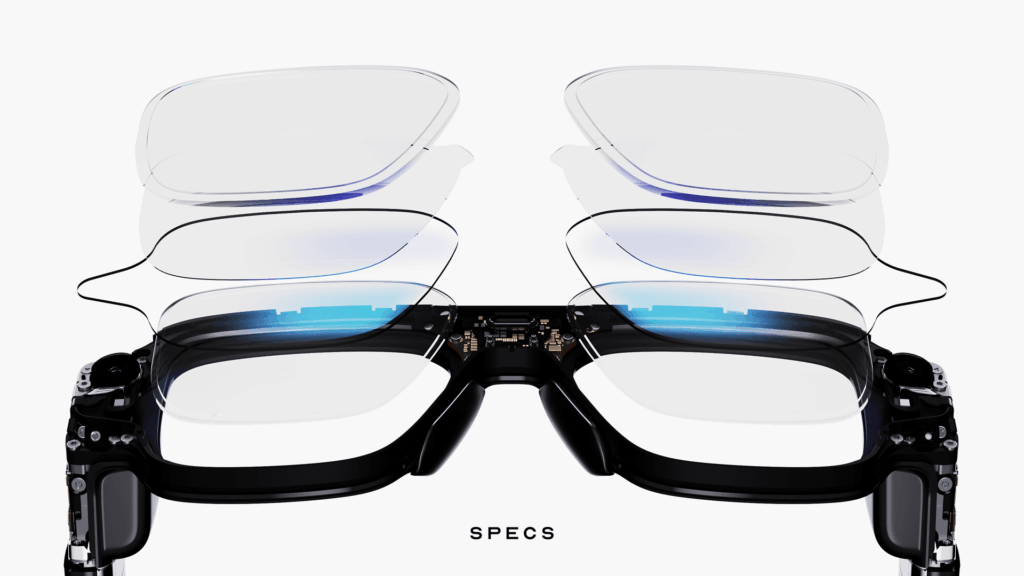
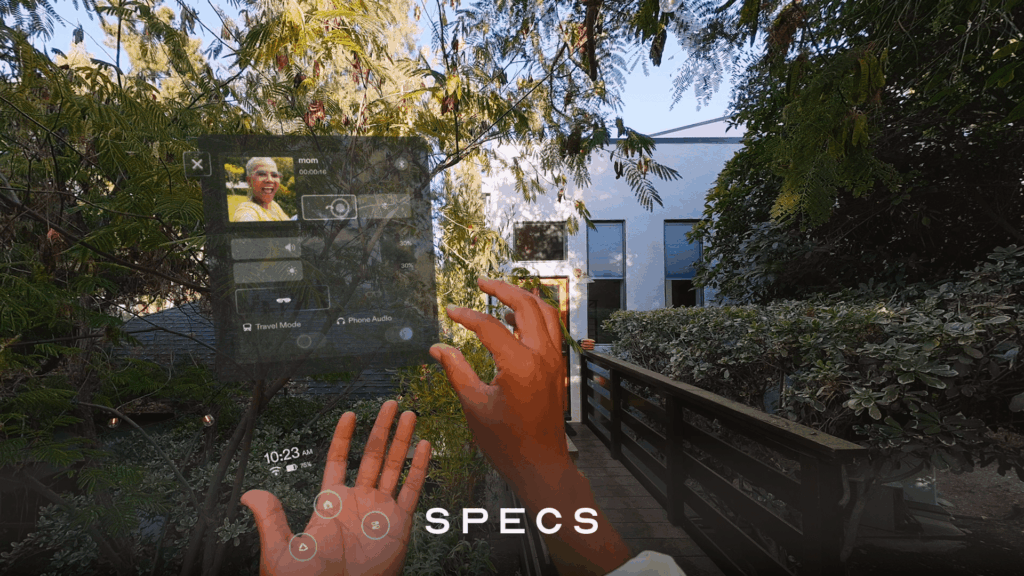
The glasses have transparent lenses, so the physical environment remains visible. Digital objects and information are layered onto it rather than replacing it. Interaction happens through hands and voice, while the computer itself is built into the glasses rather than connected to an external puck or tether. It sounds like a technical distinction. In practice, it suggests a different philosophy of attention.
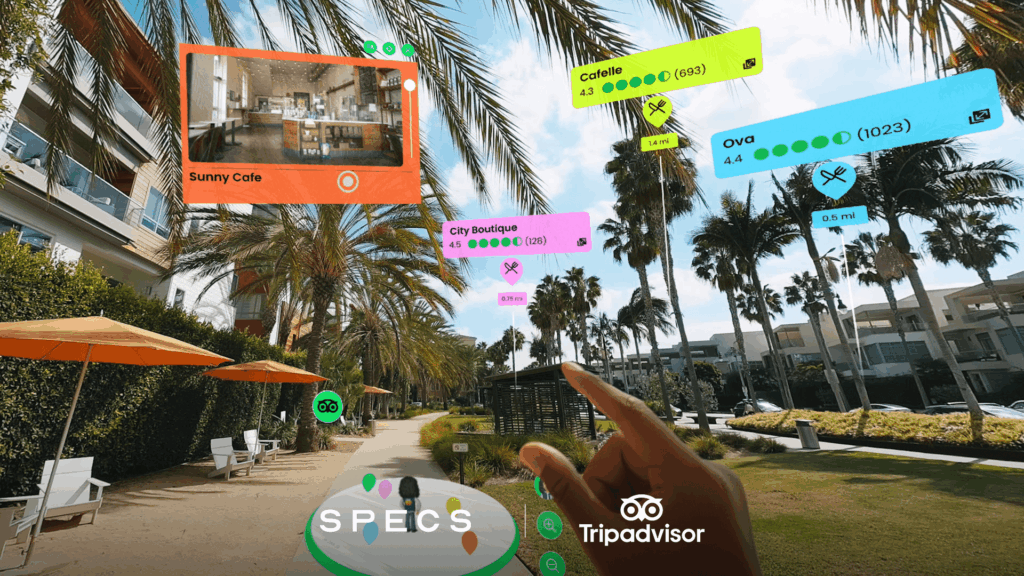
Imagine walking through an unfamiliar city. Instead of repeatedly checking a map, directions appear in the street ahead. You meet someone who speaks another language and subtitles appear within your field of view. You are looking at a building and can call up information about it without pulling out your phone. You are in your kitchen and see a three-dimensional version of an object you are considering buying, at roughly its actual scale.
None of these experiences requires the physical world to disappear. Quite the opposite. The technology is useful because the physical world remains there. SPECS is built around the idea that computing does not necessarily have to take us somewhere else. It can help us understand, navigate and experience where we already are.
Snap describes this as making computing more human. Its formulation is unusually direct: “The future isn’t about what computers can do. It’s about what you can do.”
As Ben Feuerstein, Head of SPECS Studio, puts it, the idea is ultimately to “be more present, interact with the world, not be distracted.”
There is an argument hidden inside that sentence about what technological progress is supposed to mean. For the last several years, the conversation around AI has largely been about capability. What can a model generate? What can it automate? How much work can it absorb? Which tasks will disappear?
Snap starts from a different place. If computers become better at doing things, perhaps the value of technology should increasingly be measured by what it leaves people free to do.
Read. Make music. Talk. Walk. Play. Notice things. Remember things. Be somewhere without constantly having to leave it. That is a much more difficult proposition than simply making a faster machine.
The world becomes the interface
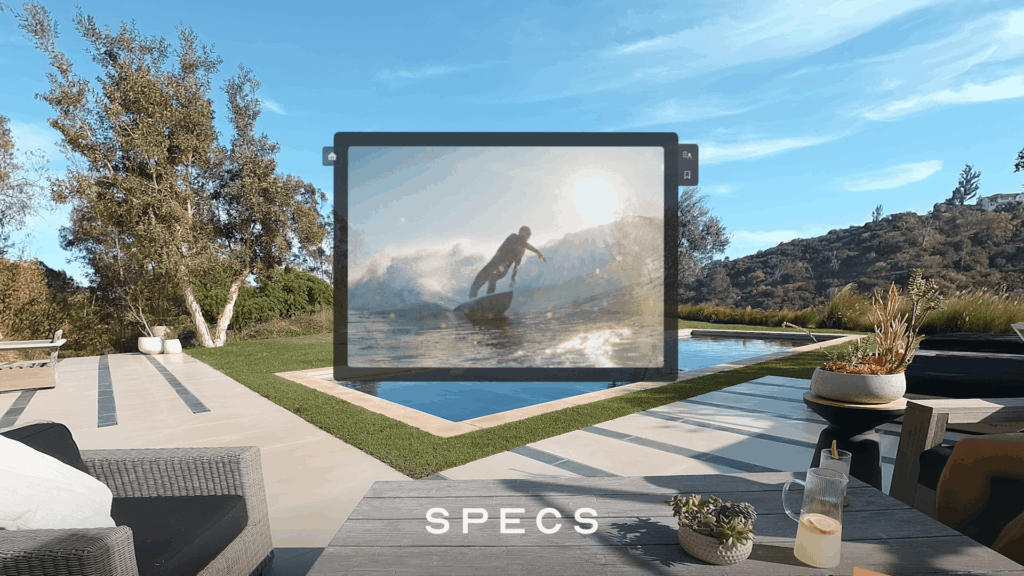
The practical demonstrations of SPECS are deliberately broad. There is entertainment: YouTube and HBO Max can be streamed through the glasses on a virtual screen roughly 115 inches in size, positioned around ten feet away. Travel Mode is designed to maintain a stable viewing experience while travelling by train or plane.
There is music, with Spotify providing recommendations based on context such as mood or a photograph.
There are games. Connected Lenses allow people to share augmented experiences in the same physical space, including dominoes, chess and table tennis. With the Dominoes Lens created with Jimmy Butler, an ordinary table becomes a game board without ceasing to be a table.
There is sport. NBA and WNBA experiences can provide visual guidance and training cues. Soccer Skills and golf experiences bring instruction into the physical environment, while an ALO Wellness Club experience is planned for next year.
There is education. Apollo 11 and Starmap use AR to make information spatial: rather than looking at a diagram of something, you can encounter the information in relation to the world around you.
There is translation, supporting 60 languages, with captions appearing in the user’s field of view.
There is navigation.
There is shopping. Through Shopify, products can be placed into a user’s home as full-scale 3D objects before the purchase is completed on the retailer’s website.
There is work.
And there is something perhaps more consequential than all of these individual examples: the possibility that the computer ceases to have one designated location. It can be in the street. At the dinner table. On a basketball court. Inside a book. In a factory. On a train. At a desk—but without being limited to one.
The computer becomes less like a destination and more like an additional layer of the environment.


Snap did not ask five visionaries to advertise a product, it asked them what they would do with it
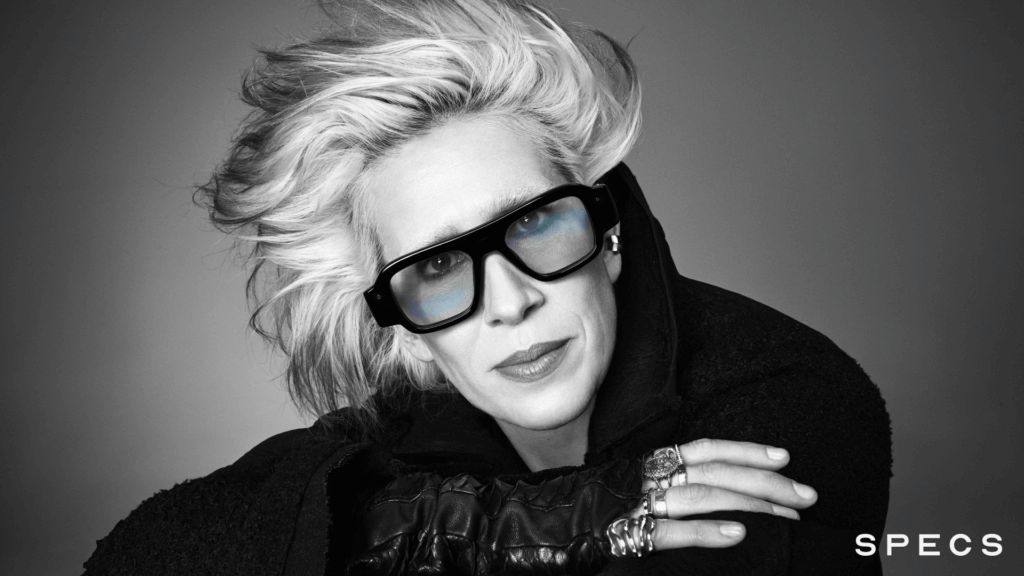
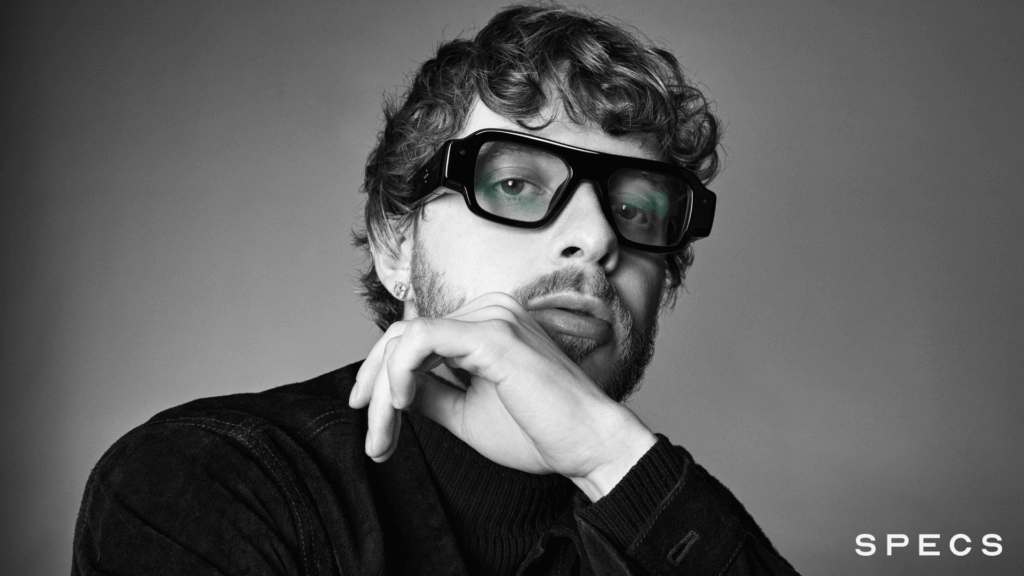
For SPECS, Snap worked with five talents whose practices have little in common on the surface: Kaia Gerber, Jimmy Butler, Hoyeon, Jack Harlow and Imogen Heap.
Their role was not simply to appear in campaign imagery. Each worked with Snap’s creative and engineering teams to develop an experience rooted in something they already care about.
Instead of asking, “What can AR do?” and then looking for a person to demonstrate the answer, Snap effectively asked: “What does this person already do, and what could happen if we gave them a new medium?”
That gives the technology a different starting point. That gives the technology a different starting point. As Ben Feuerstein puts it, there are “so many opportunities when it comes to creativity” — particularly when the technology is handed over to people who already have their own distinctive way of seeing the world.
Kaia Gerber: beyond the page
Kaia Gerber’s relationship with literature provided the basis for a SPECS experience connected to Library Science, the book club she co-founded. Books are perhaps one of the clearest examples of an experience we might not want to “upgrade”.
There is something deliberately slow about reading. A physical book gives you a page, a margin, a sequence. It asks for sustained attention and leaves space for thought. SPECS does not attempt to turn the book into a screen. Digital information can sit alongside the physical act of reading. A reader can save a quotation, look up a definition, annotate a passage or access additional context without putting the book down or losing their place.
The distinction between augmentation and interruption becomes interesting here. Technology is not always most useful when it demands our attention. Sometimes it is more interesting when it gives some of it back.
Jimmy Butler and the domino effect
Jimmy Butler brought something much more social to the project. His experience is based on dominoes, a game connected to memories of playing with his father. The Dominoes Lens transforms a flat surface into an augmented game space.
Again, the physical ritual remains intact. There is still a table. There are still people sitting around it. There is still the rhythm of a game played face to face. The digital component does not ask the players to retreat into separate worlds. It gives them another thing to share.
This may become an important distinction in the development of AR. Much of the early language around virtual reality was about leaving reality behind. SPECS is interested in what can happen when technology stays inside it.
Hoyeon and the possibility of doing less
Hoyeon’s contribution is quieter. Her Meditation Garden draws on meditation, memories of temples in Korea, flowers and landscapes associated with her mother.
There is an almost counterintuitive quality to using AR for meditation. The technology industry has spent years trying to capture attention; here, the objective is to create an environment in which attention can settle.
It raises a broader question about what augmented reality actually needs to augment. More information is one possibility. Atmosphere is another. A digital layer does not necessarily have to make the world busier. It can change how a place feels, or create a temporary space for reflection within an otherwise ordinary environment. For a technology that is often associated with spectacle, that is a surprisingly restrained idea.
Jack Harlow and the portable cinema
For Jack Harlow, cinema became the entry point. Films and television are part of his creative life, as sources of inspiration as well as escape. SPECS turns that private relationship with the moving image into something spatial and portable.
YouTube and HBO Max can be viewed on a virtual 115-inch display, approximately ten feet away. The technology is not inventing the desire to watch a film alone in a hotel room or on a long journey. That desire has existed for decades. What changes is the physical infrastructure. A cinema can now be carried without carrying a cinema. A screen can travel on a plane, a train or through a hotel room. The physical surroundings remain available, but the scale of the digital image is no longer dependent on what is physically installed there.
It is another example of SPECS separating computing from architecture.
Imogen Heap turns movement into music
Imogen Heap’s Sound Space is perhaps the most revealing of the five collaborations because it treats SPECS not as a consumer device but as a new musical instrument.
The experience allows users to create, mix and loop sounds through movement, hands and voice. The body becomes part of the interface. For most of the history of digital music, there has been some form of intermediary between gesture and sound: keyboard, controller, software, screen. Sound Space explores what happens when those boundaries become more fluid.
Move, and something happens. Speak, and something changes. Gesture becomes composition. The question is whether artists can use it to create something that could not have existed before.
That is a much more interesting test.
SPECS Intelligence: computing with context
If SPECS changes where computing happens, SPECS Intelligence changes how it behaves. Introduced alongside the glasses, SPECS Intelligence is Snap’s anticipatory AI system, designed to work across iPhone, Mac and SPECS. The premise is not that users need another chatbot.
Most digital assistants wait for instructions. You ask, they respond. SPECS Intelligence is designed to work with context. With the user’s permission, selected apps and services can be connected so that the system develops an understanding of goals, priorities, relationships and routines. Corners organise different parts of life, such as work or family. Goals connect individual tasks with things a person is trying to achieve over a longer period.
The examples Snap gives are mundane in the best possible sense. You have a meeting tomorrow. The system can help prepare you for it. You are travelling. Instead of simply showing your flight confirmation, it can bring together the pieces of information that make the trip relevant: hotel, reservations, reminders, plans and deadlines.
The point is to eliminate some of the small acts of administration that consume disproportionate amounts of attention. We have become accustomed to computers requiring us to know exactly what we want before they can help. Search terms, file names, calendar entries, applications, tabs, notifications. SPECS Intelligence imagines a system that can work backwards from intention.
A person does not experience life as a collection of apps. We experience it as a collection of priorities, relationships, places, memories and unfinished things. If AI is going to become genuinely personal, it has to understand some version of that structure.
Once that intelligence is available through SPECS, its implications become spatial. The assistant is no longer confined to the other side of a screen. It can move with you, remain present as you move through the world, and become part of the space in which life actually unfolds.
The social life of AR
Snap is also trying to answer one of the stranger problems created by personal technology: how do you make digital experiences more social without putting another screen between people?
The answer is shared space.
Connected Lenses allow multiple people to interact with the same augmented environment. The examples—dominoes, chess, table tennis—are intentionally ordinary. They begin with activities people already understand and add a digital dimension without requiring everyone to disappear into their own devices.
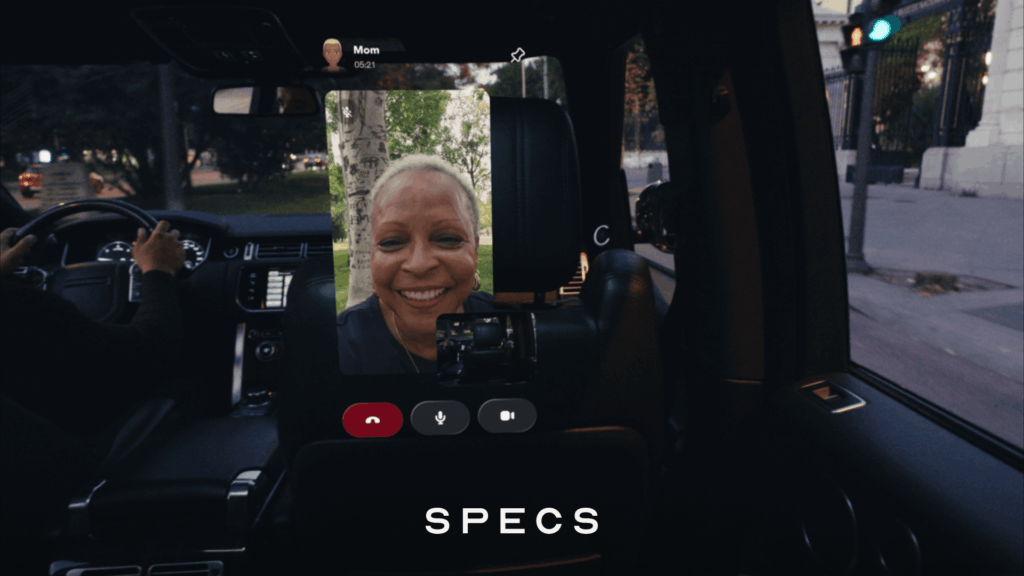
SPECS can also connect to a phone for calls, notifications and music. Snapchat itself has been redesigned for the glasses, including hands-free video calls and a finger-snap gesture for taking a Snap.
There is something almost circular about this. Snap began with the camera as a way to make digital communication more immediate. SPECS attempt to make digital communication less visually intrusive. The screen, once the place where the social experience happened, becomes optional.
A new medium is always larger than its launch presentation
The temptation with any new technology is to judge it by the examples available on day one.
But the history of technology rarely works that way.
Early cinema borrowed the language of theatre. Early websites looked like digital brochures. Smartphones initially seemed like more convenient versions of computers. It took artists, thinkers and users to discover what those mediums were actually capable of. SPECS will have to go through the same process.
Snap has already created an unusually wide opening vocabulary: sport, books, games, meditation, cinema, music, education, navigation, translation, shopping, work. But these are demonstrations, not a final definition. The more interesting applications may come from somewhere Snap has not anticipated.
An artist may use spatial computing to rethink installation. A musician may treat architecture as an instrument. An architect may build spaces that behave differently when seen through AR. A filmmaker may rethink what a “screen” means when the audience is no longer sitting in front of one. A game designer may invent something that depends on the physical room rather than a virtual one.
The medium will become itself when people stop demonstrating what the company built and start using it in ways the company never expected. That is usually where culture begins.
The future has no screen
Perhaps the most provocative thing about SPECS is that they do not promise a world beyond reality. They promise a world in which reality remains the starting point. The street is still the street. The book is still a book. The table is still a table. The musician still has to make the music. Two friends still have to sit opposite one another.
AI can help with context. AR can add another layer. Computing can become almost invisible.
But the human activity remains. As machines become capable of producing more, the things they cannot simply produce on our behalf become more valuable: taste, attention, memory, curiosity, affection, the ability to notice something and care about it.
Snap’s mission with SPECS is therefore larger than the introduction of a new piece of hardware. It is an attempt to define what computing should feel like after the screen has stopped being its centre.
The future of technology may not be a more immersive digital world, but a less intrusive one. The most sophisticated computer might ultimately be the one that knows when to speak, when to help, and when to disappear. And maybe the point of augmented reality is not to give us another reality to escape into. It is to give us a few more ways of seeing the one we already have.
SPECS First Look—Los Angeles
Snap will open SPECS First Look at Westfield Century City in Los Angeles on October 1st, 2026. The temporary space will allow visitors to experience SPECS in person, try the new AR experiences and interact with members of the Snap team. The activation will continue evolving throughout the holiday season, with new content and experiences introduced over time.
SPECS are currently available for pre-order in the United States at $2,195, with a $200 refundable deposit. Shipping is expected to begin later in the fall in the United States, the United Kingdom and France.
SPECS Intelligence is launching alongside the glasses. In the United States, users aged 18 and over can access an iOS preview, while fuller early access is being offered through an invitation-only Mac programme. Users can join the waitlist through the SPECS website or app.
Photography and video courtesy of SPECS