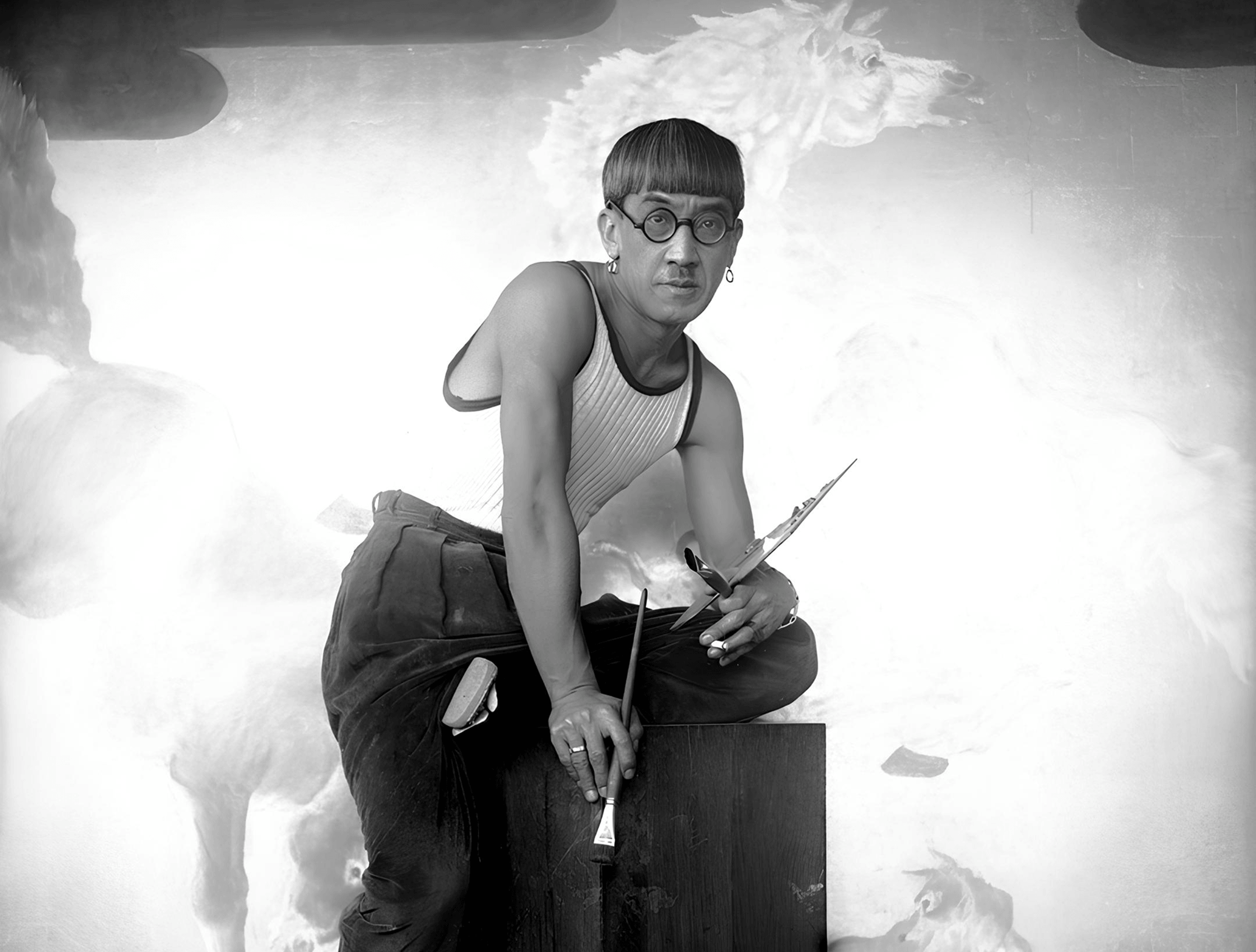
L’Étoffe de l’Artiste. De Rosa Bonheur à Sonia Delaunay examines how artists from the late 19th to mid-20th century used clothing to construct identities, signal affiliations and shape their public image. Opening at the Musée Bourdelle from September 23rd, 2026 to January 24th, 2027, the exhibition brings together more than 50 garments, accessories and personal objects alongside photographs, paintings, drawings and sculptures.
The selection includes rarely seen pieces associated with Gustav Klimt, Rosa Bonheur, Foujita, Sonia Delaunay and Camille Bernier, drawn from major European museums and private collections. Inspired by the rediscovery of Antoine Bourdelle’s wardrobe in 2020, the exhibition traces dress as a form of self-fashioning, moving from formal attire and bohemian silhouettes to workwear, folkloric costumes and eccentric ensembles.
From bohemian dress to workwear
The early sections examine the artist as a recognisable social figure. Hériter considers how artists used clothing to connect themselves with artistic predecessors, while Se reconnaître looks at academic dress and distinctions such as the Legion of Honour as markers of status.
Faire artiste turns to the bohemian image, with worn jackets, soft felt hats and deliberately dishevelled silhouettes becoming part of the artistic archetype. Se protéger and Emprunter focus on workwear, including the biaude or blaude, adopted by artists as a symbol of craftsmanship and authenticity.
Travel, gender and self-invention
Partir follows artists beyond the studio, examining regional dress, travel and the influence of places such as Brittany and Pont-Aven, alongside Orientalist appropriations of clothing beyond Europe. Troubler les genres explores clothing as a means of challenging gender conventions, from women adopting elements of the male wardrobe to artists creating fictional alter egos.
Other sections examine eccentricity, cultural heritage and clothing as an artistic statement. For figures such as Salvador Dalí and Leonor Fini, extravagant dress became part of their public personas, while Se retrouver considers garments as expressions of cultural belonging. Transformer le réel turns to the Italian Futurists, who treated clothing as part of a wider social and aesthetic revolution.
The final section, Se substituer, follows the growing relationship between art and everyday life after the Second World War, when garments could become artworks or artistic materials and eventually stand in for the artist’s body.
By bringing clothing into dialogue with portraits and artworks, L’Étoffe de l’Artiste traces dress as a visual language of status, gender, heritage and artistic identity.