The New York City Ballet Art Series returns with a new photographic commission by Thibaut Grevet, inviting audiences into a nuanced encounter with movement, time, and image-making. Presented in New York as part of NYCB’s long-running program bridging visual art and dance, the series positions contemporary dance photography as a space where performance is not simply documented, but re-imagined.
New York City Ballet Art Series: a photographic cycle of dance
Now in its 13th year, the New York City Ballet Art Series continues its tradition of inviting visual artists to respond to ballet through their own medium. Grevet’s contribution unfolds in phases — preparation, repetition, performance, rest — mirroring the internal structure of a dance itself. Rather than presenting a linear narrative, the photographs operate as a sequence of states, each with its own visual language and rhythm.
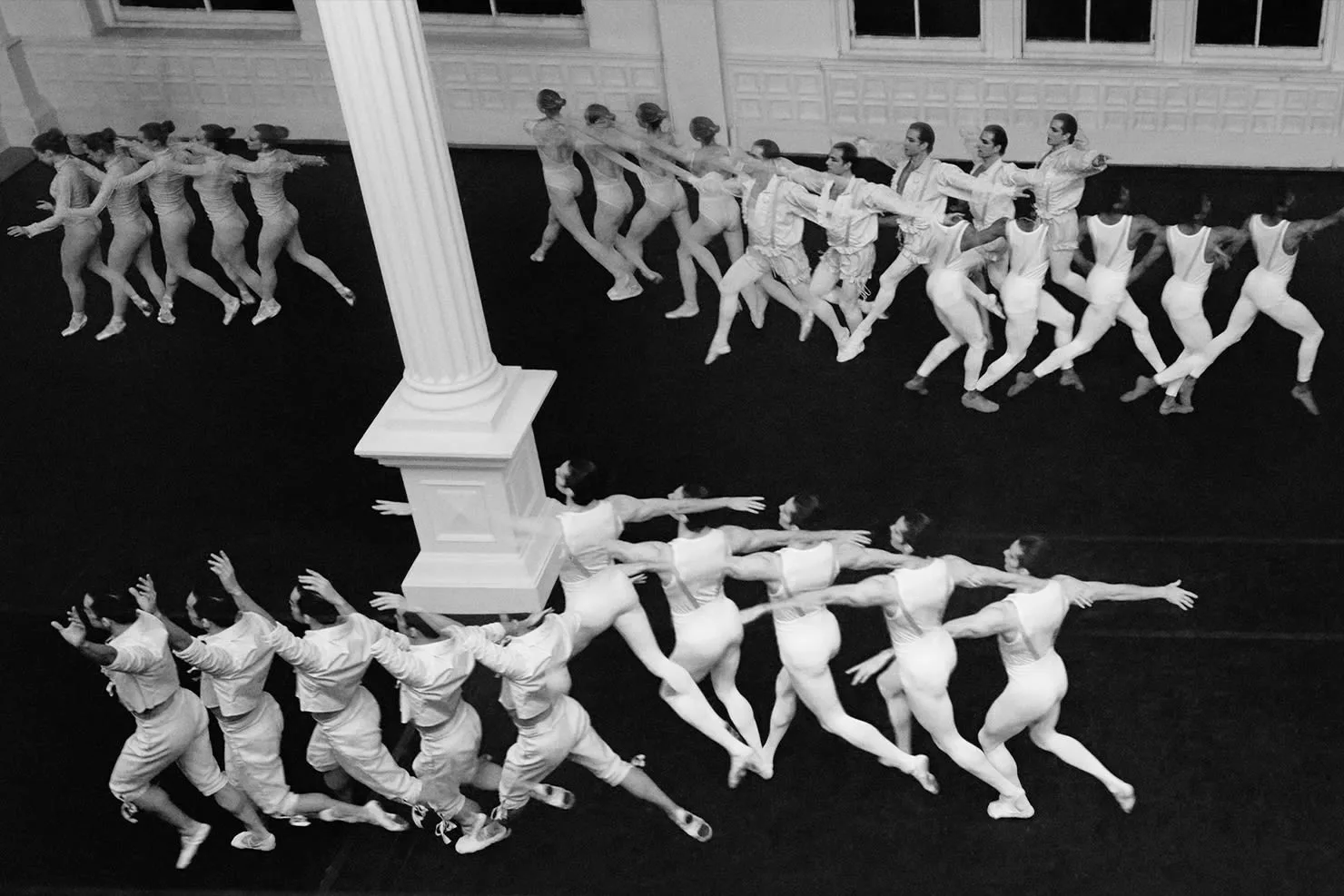
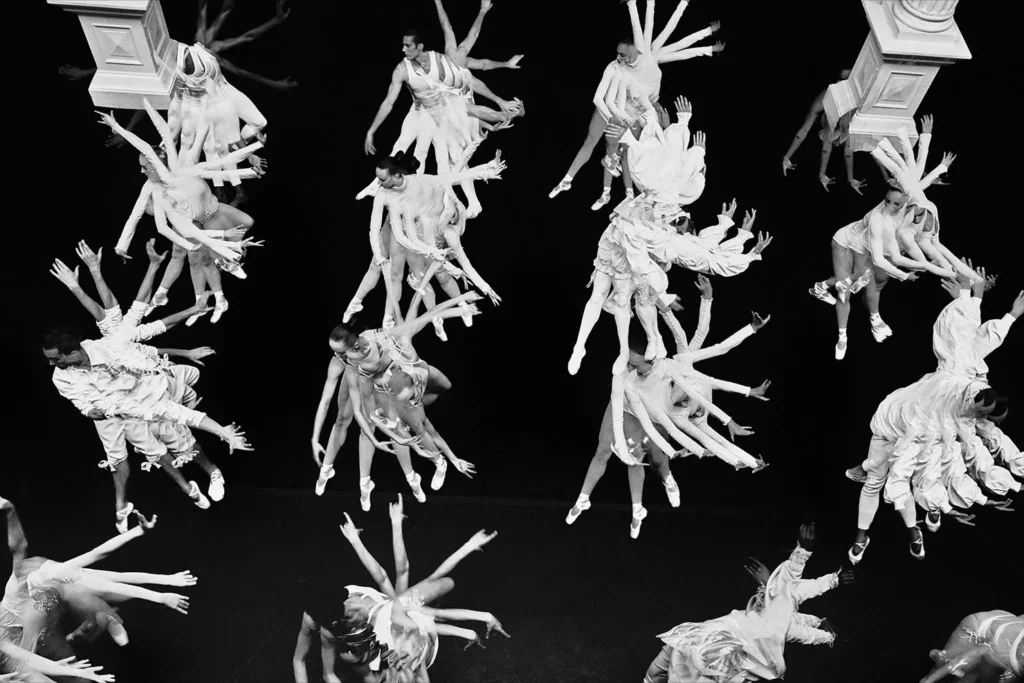
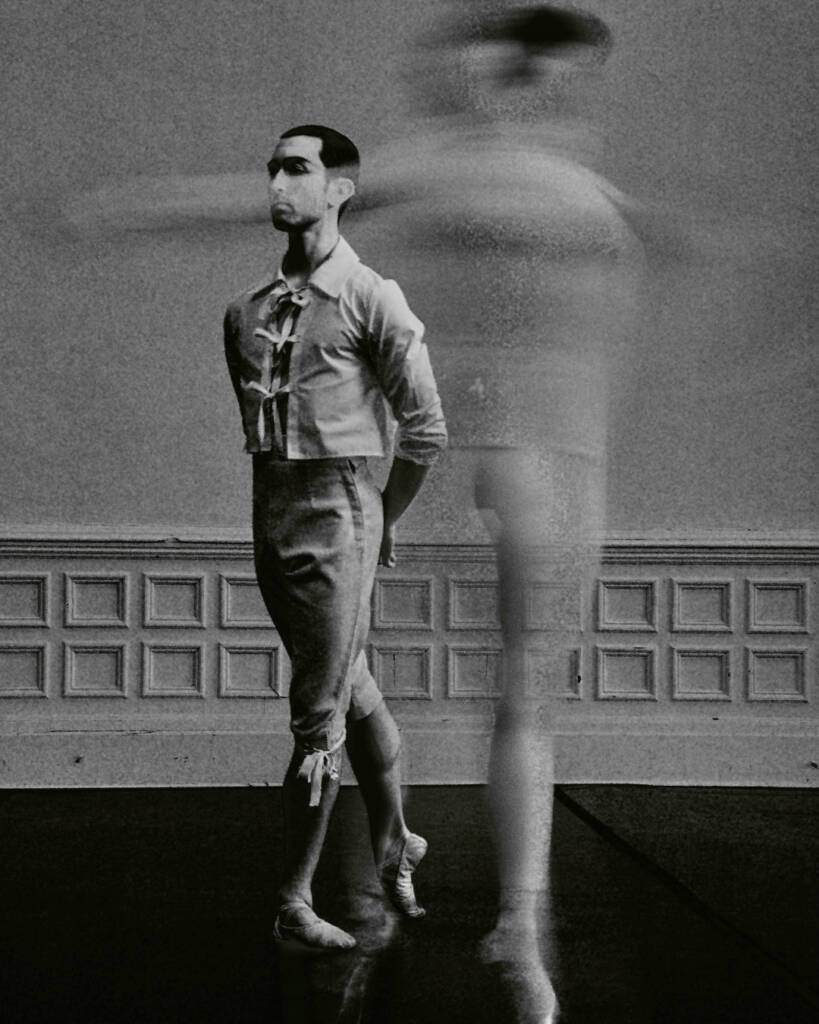
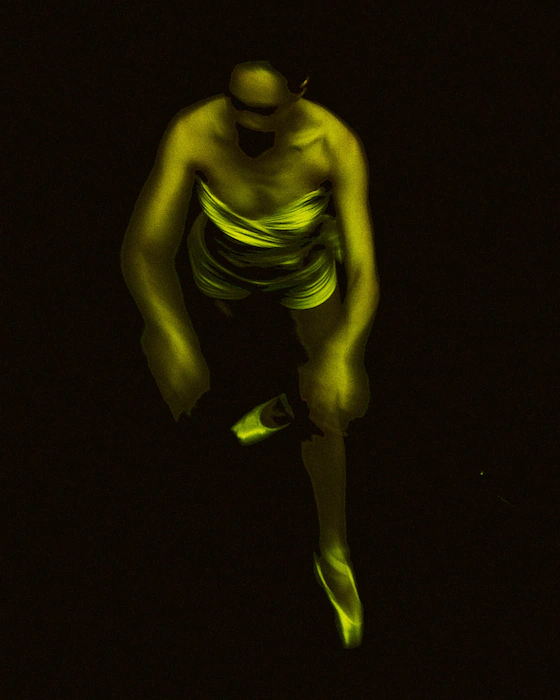
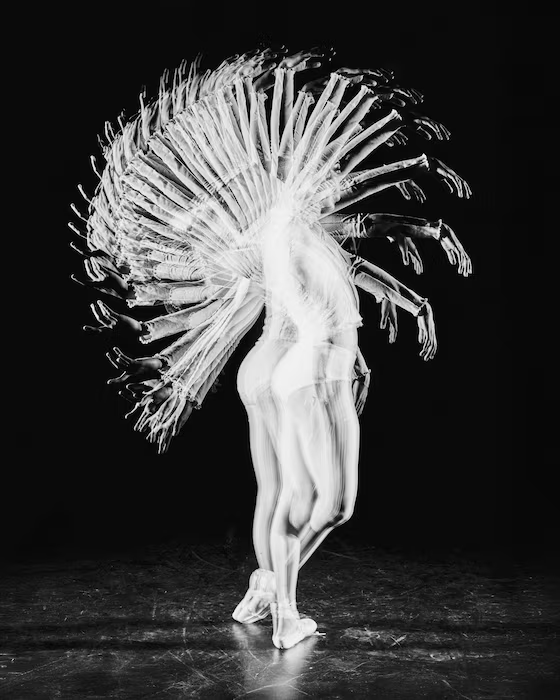
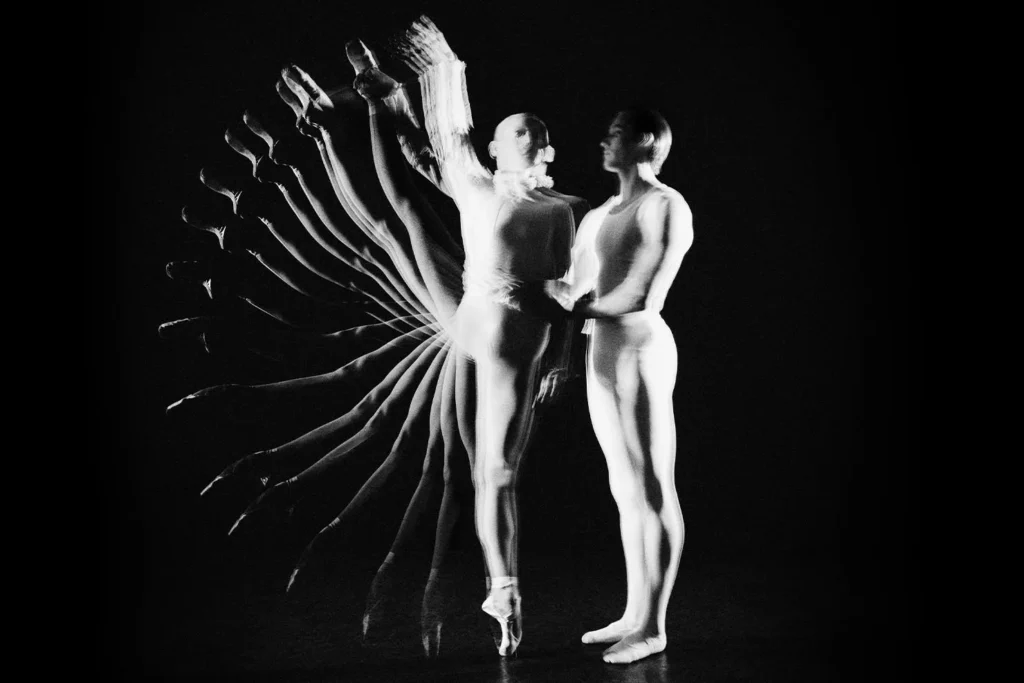
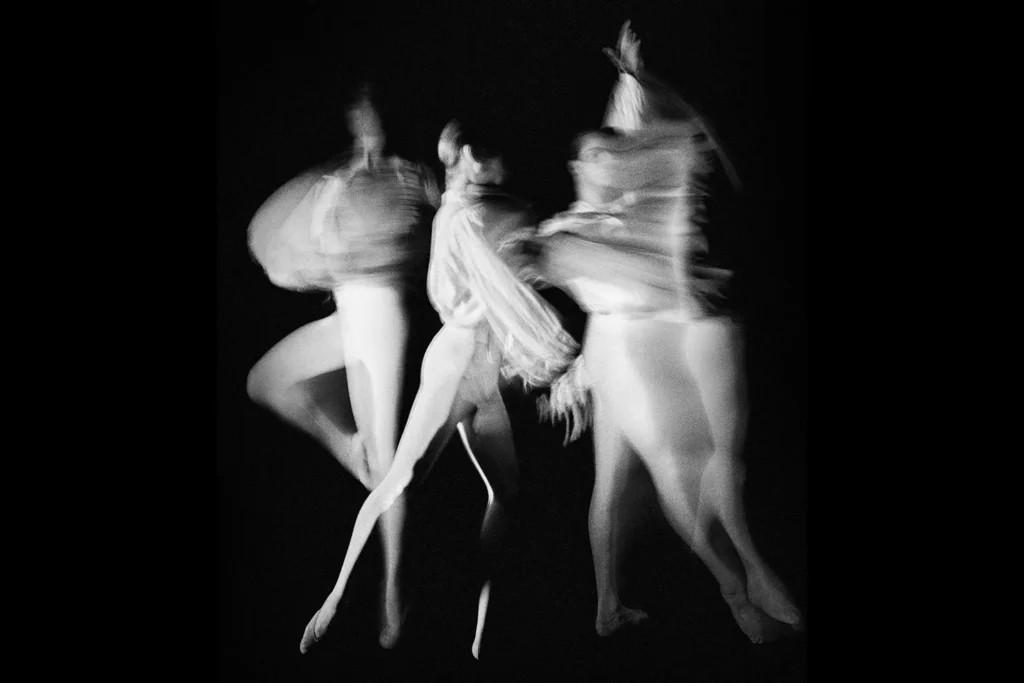
Close crops of dancers’ concentrated faces sit alongside full-length images of soloists in mid-motion, limbs beating through space. Group compositions introduce breezy, serpentine asymmetries, while colour, when it appears, is absorbed into the body — dancers washed in the chemical yellow of mercury lamps, suspended between rehearsal and performance.
Contemporary dance photography at the edge of motion
Though this marks Grevet’s first collaboration with ballet dancers, his work has long been concerned with movement. Known for photographing BMX riders, Formula One cars, musicians, and cultural figures, he approaches contemporary dance photography with the same sensitivity to velocity and timing. For Grevet, movement is both subject and problem: photography freezes what dance exists to release.
Drawing on references from chronophotography to the stroboscopic experiments of Gjon Mili, Grevet’s images sometimes layer motion itself — legs multiplying like spokes of a turning wheel against deep black space. Yet the process remains intuitive rather than planned. Shot with minimal post-production, the work insists on physical truth: bodies moving in real time, light striking them as it falls.
Photography by THIBAUT GREVET