Anne Imhof’s long-awaited return to institutional exhibition-making arrives in Portugal with Fun ist ein Stahlbad, her first solo presentation in the country. On view from December 12th, 2025 to April 19th, 2026 at the Serralves Museum of Contemporary Art, the project unfolds across the museum’s galleries and outdoor spaces, marking a significant moment in the artist’s evolving practice. This Anne Imhof exhibition brings together a substantial body of newly commissioned works conceived specifically for Serralves and its distinctive architectural setting.
An Anne Imhof exhibition shaped by architecture and tension
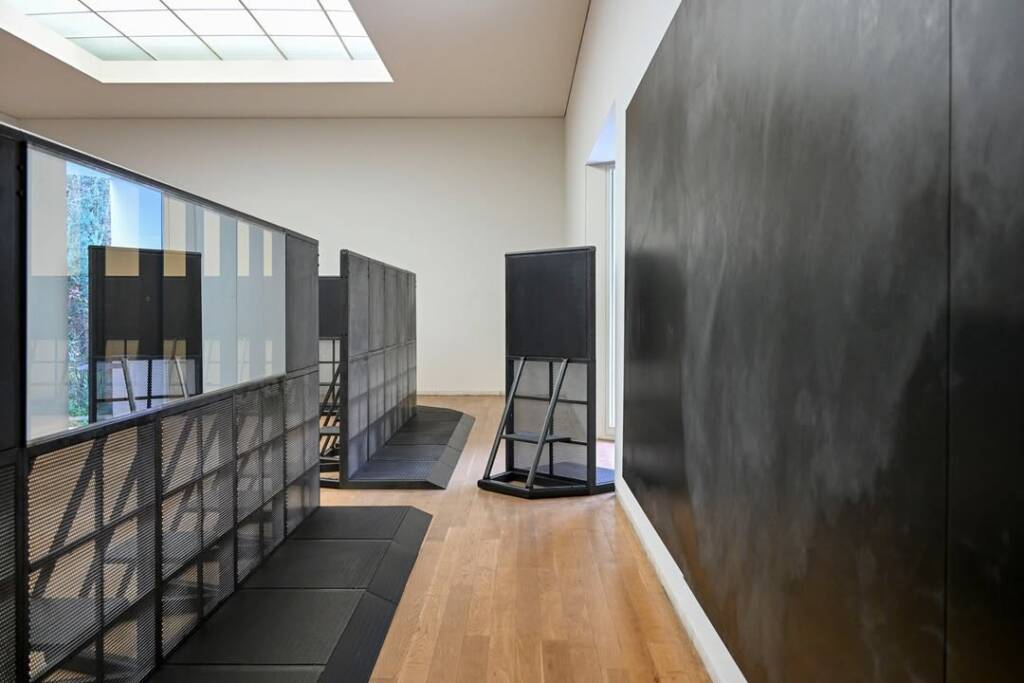
Installed across the museum and its surrounding grounds, Fun ist ein Stahlbad is anchored by a monumental site-specific sculpture placed in the Pátio do Ulmeiro. From this exterior point, the exhibition extends inward, guiding visitors through a sequence of sculptures, paintings, and moving-image works that explore fragility, suspended action, and the unease of contemporary life. The project establishes a deliberate dialogue with Álvaro Siza’s architecture, introducing weight, resistance, and interruption into spaces known for their openness and clarity.
The exhibition title references a phrase introduced by Theodor W. Adorno and Max Horkheimer in Dialectic of Enlightenment, where “fun” is described as a mechanism that mirrors discipline rather than freedom. This philosophical tension between promise and control serves as the conceptual backbone of the exhibition, resonating throughout Imhof’s visual language.
Site-specific sculpture as a central gesture
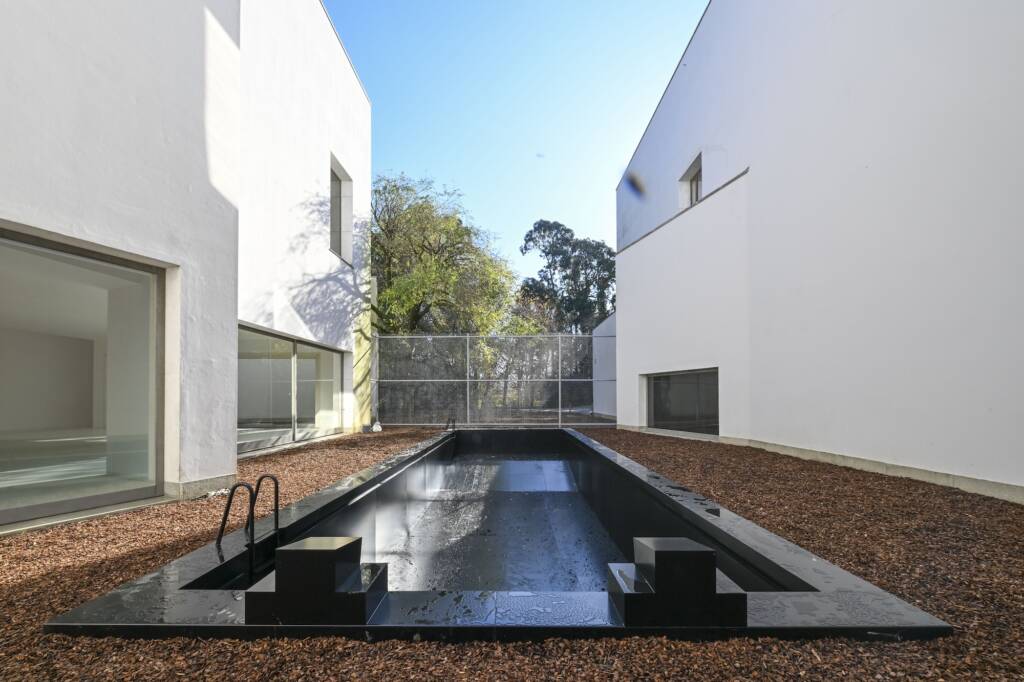
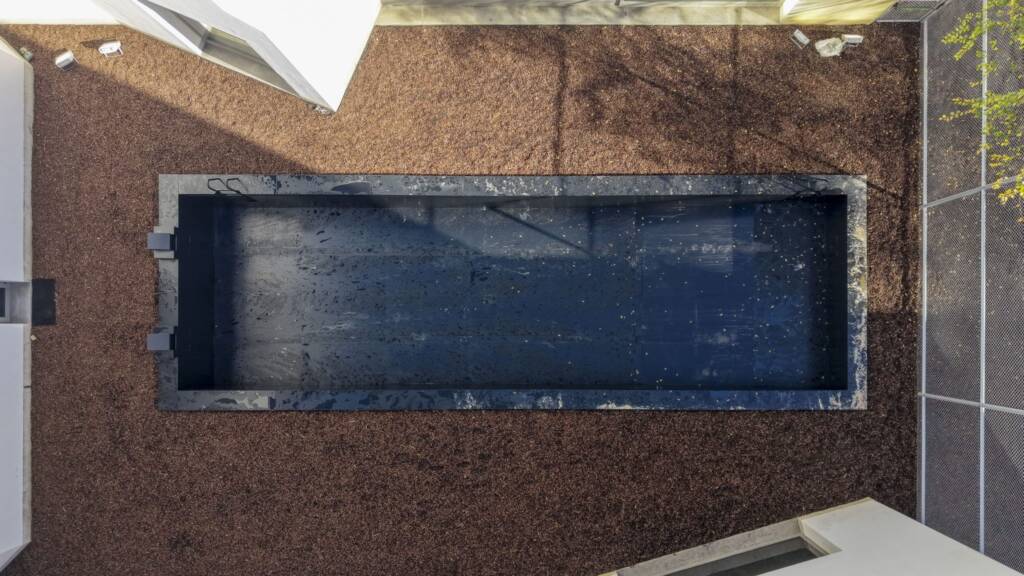
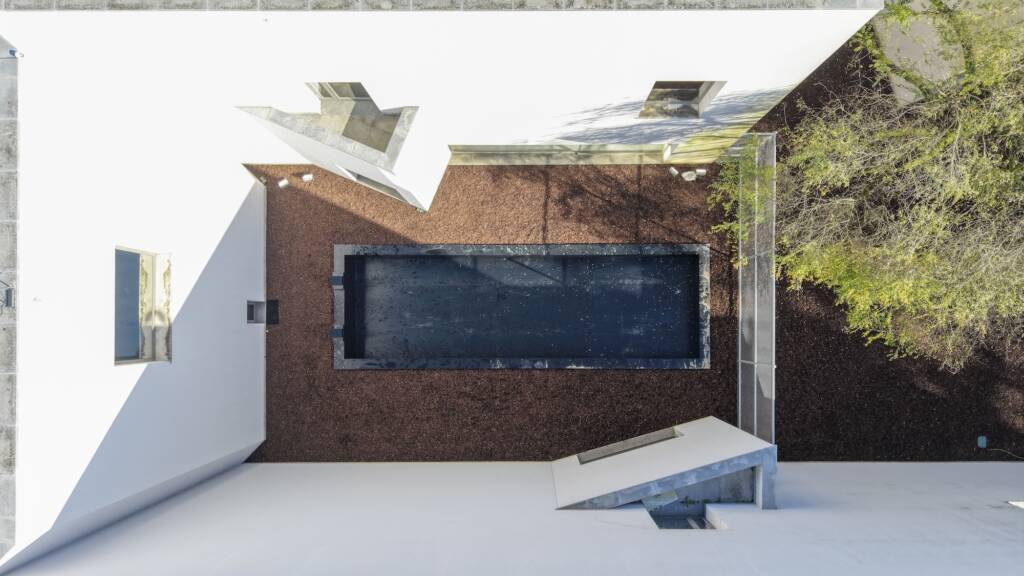
At the heart of the project is Stahlbad (2025), a large-scale black iron swimming pool embedded into the courtyard. Devoid of water and unusable by design, the sculpture retains the recognisable form of a leisure structure while stripping it of its function. The result is an object that feels both familiar and estranged: a silent mass that evokes collective ideas of rest and pleasure, only to deny them entirely. As Anne Imhof’s first outdoor sculpture, the work appears almost like a found relic—an artefact from another system of values, now rendered inert.
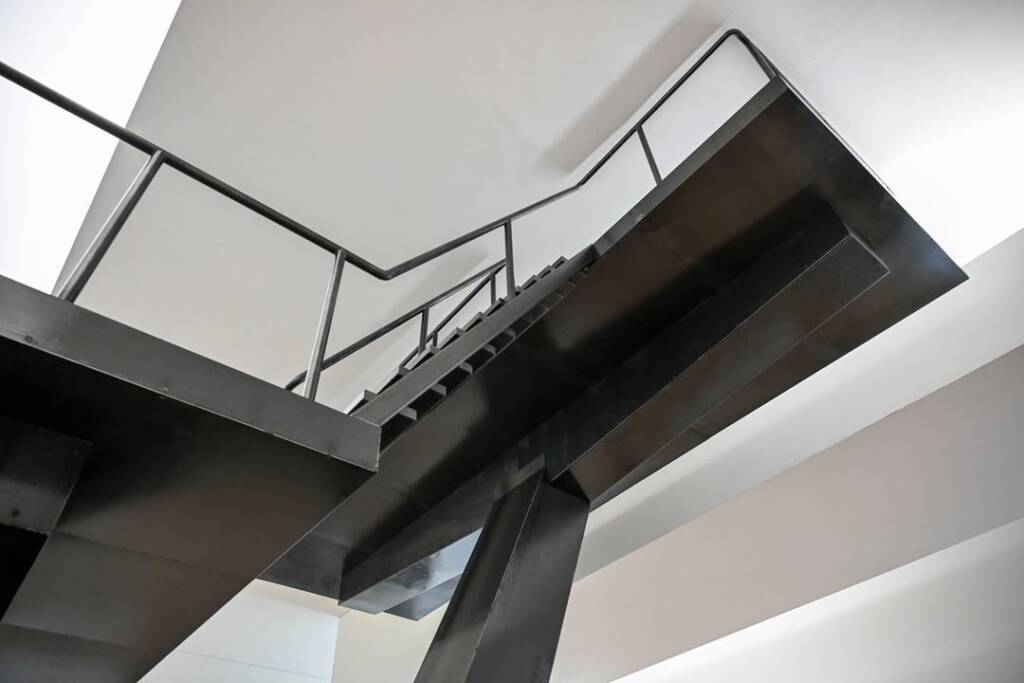
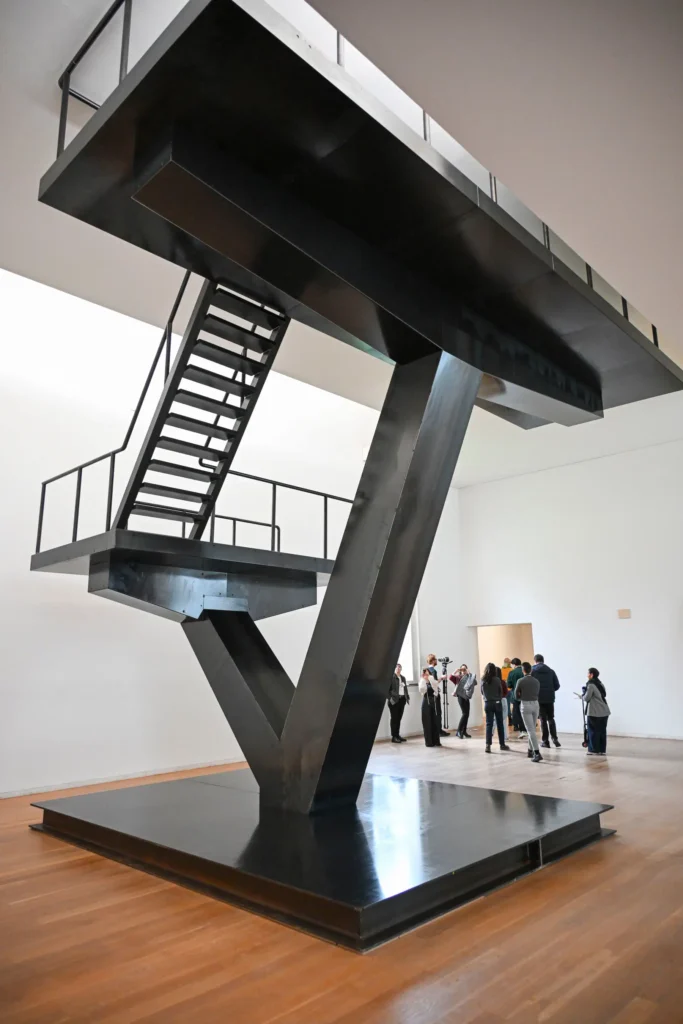
Inside the museum, a second sculptural work continues this logic of suspended utility. A towering black iron structure, inspired by a diving platform, rises within the gallery space. Once a symbol of movement, ascent, and physical confidence, it now exists purely as form. Visitors can approach it, measure its scale, and imagine the act it once implied, but never complete it. Together, the pool and the platform form a sculptural dialogue: one receives a fall that will never happen, the other promises a leap that remains imaginary.
Film, bodies, and states of exposure
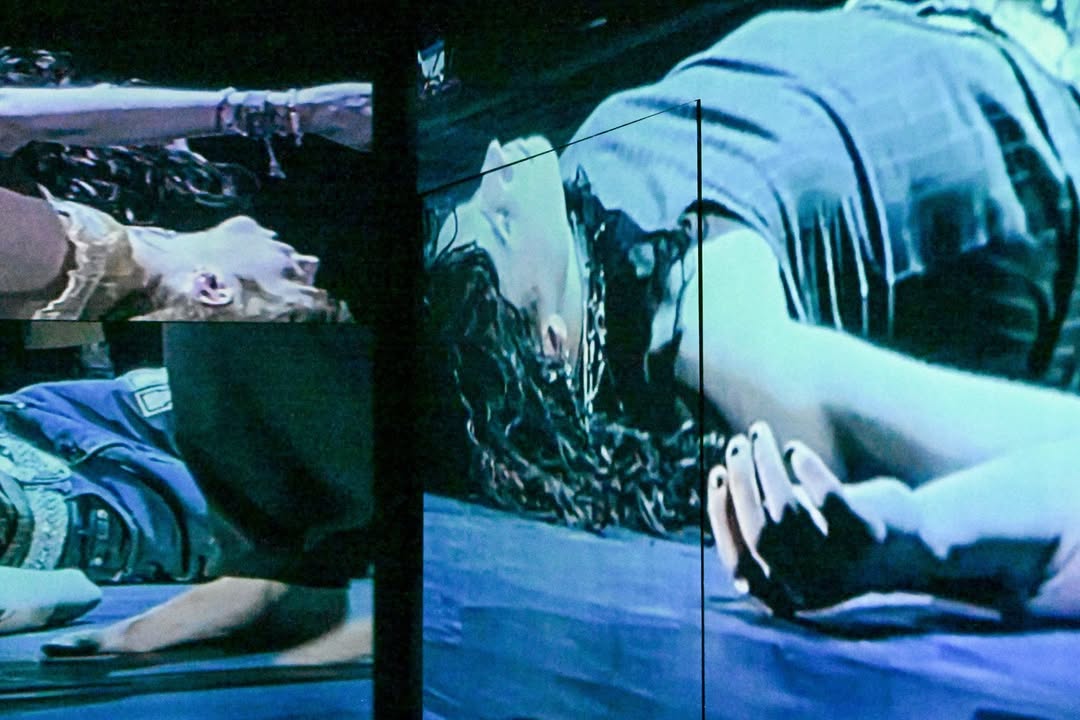
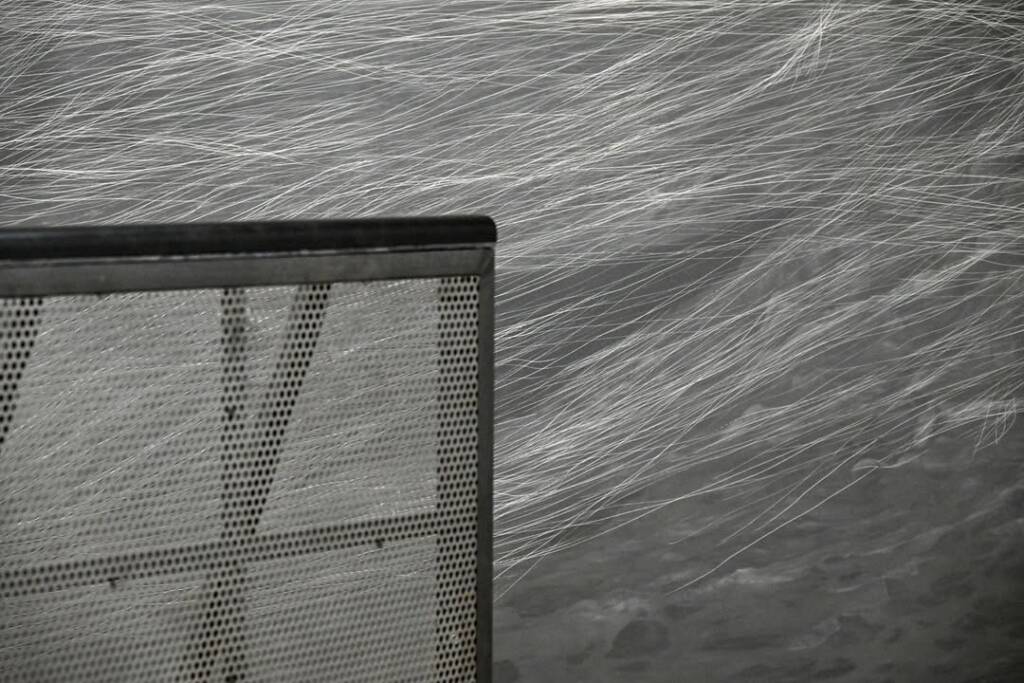
Alongside these sculptural anchors, the exhibition includes Citizen (2025), a new four-channel film installation premiering at Serralves. The work brings together performers, musicians, dancers, and actors within a fragmented architectural setting that dissolves into an undefined interior—described by the artist as a “house of hope.” Rather than offering narrative resolution, the film lingers on gesture, presence, and collective vulnerability, echoing themes central to Imhof’s performances while translating them into a cinematic language.
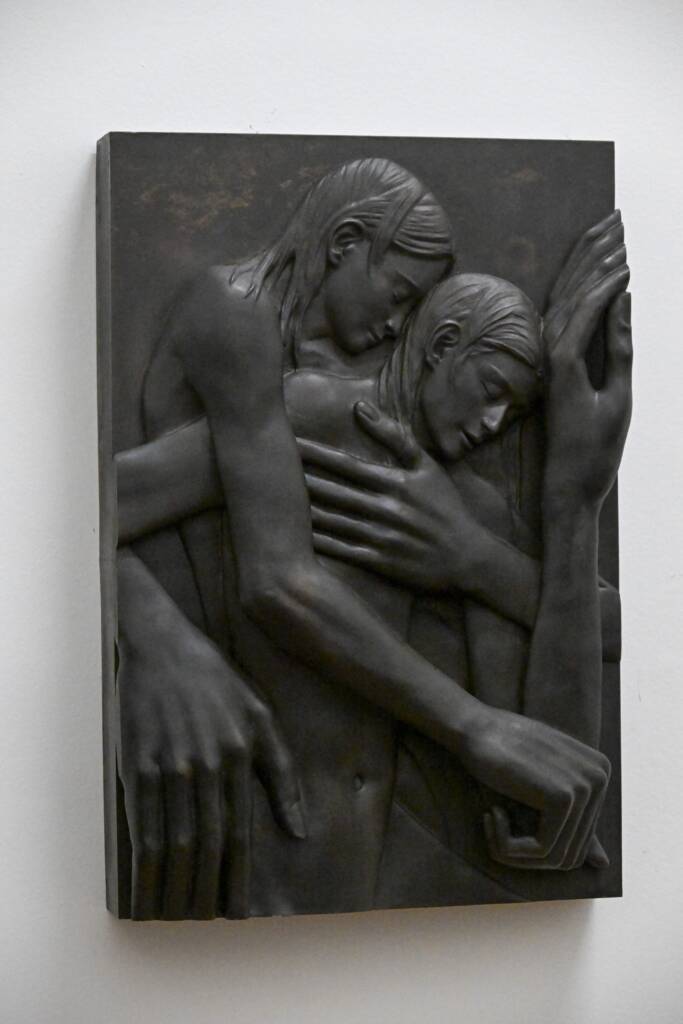
Across painting, sculpture, and film, the exhibition repeatedly returns to states of waiting, exposure, and emotional precariousness. Empty spaces function as thresholds, moments where something unresolved becomes briefly visible before receding again.
Produced by the Serralves Foundation—Museum of Contemporary Art, the exhibition is curated by Inês Grosso, Chief Curator of the museum, with coordination by Filipa Loureiro. The installation design was developed in collaboration with architect Andrea Faraguna, reinforcing the project’s architectural sensitivity.
All images courtesy of NVSTUDIO – SERRALVES FOUNDATION