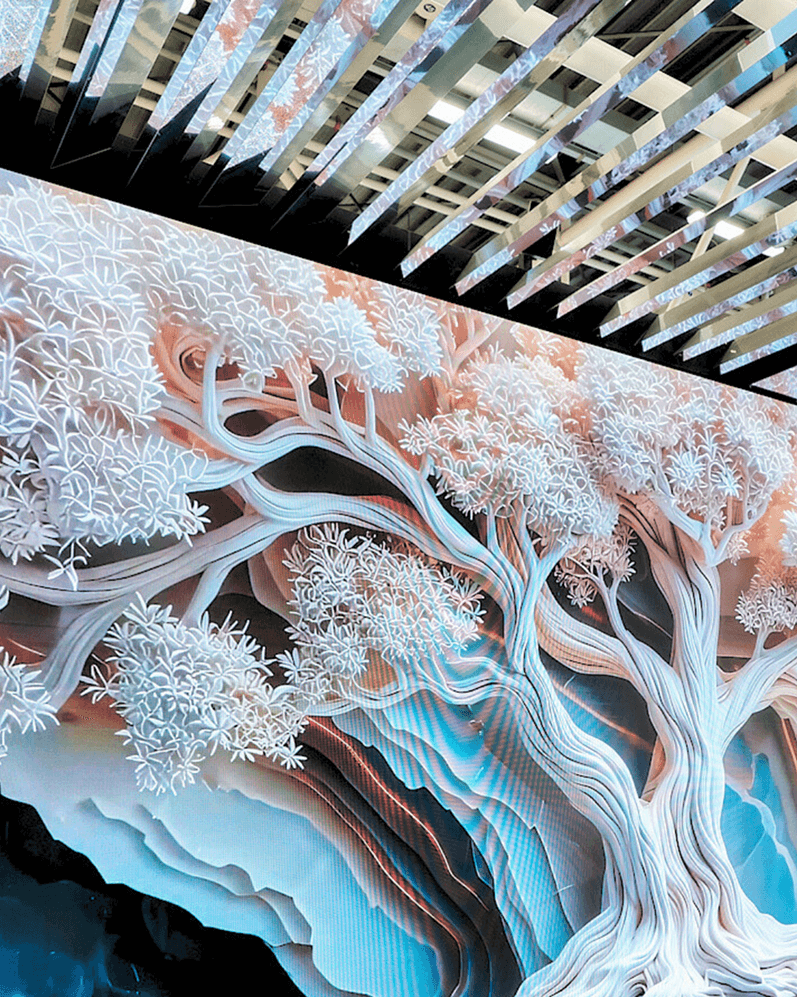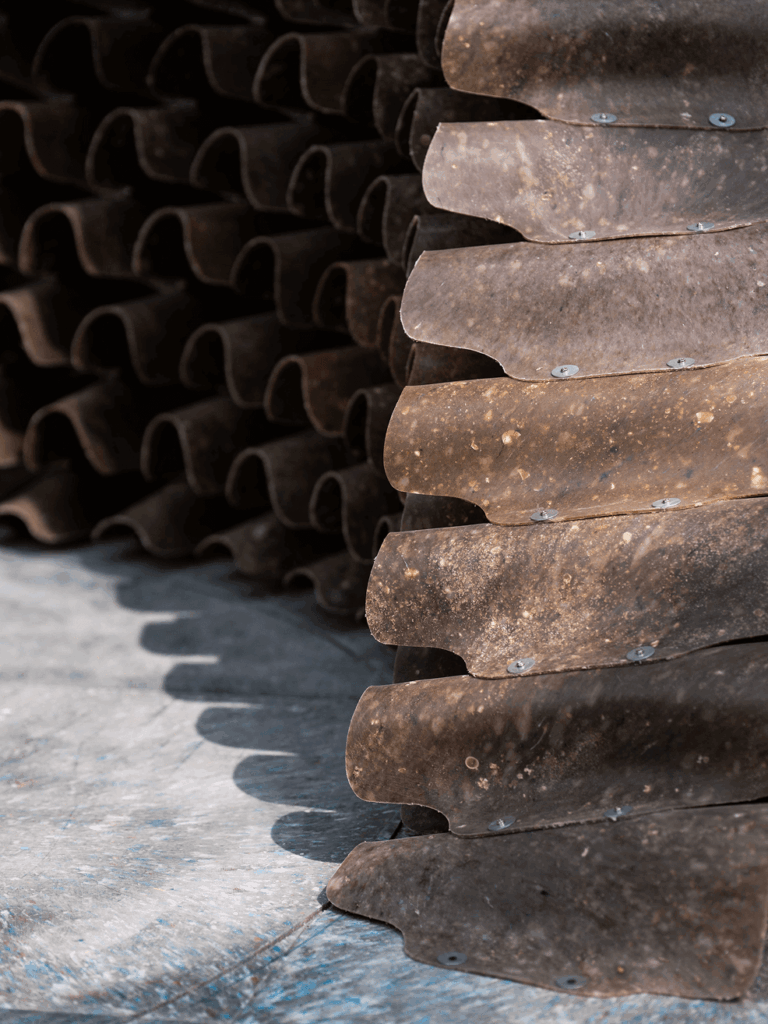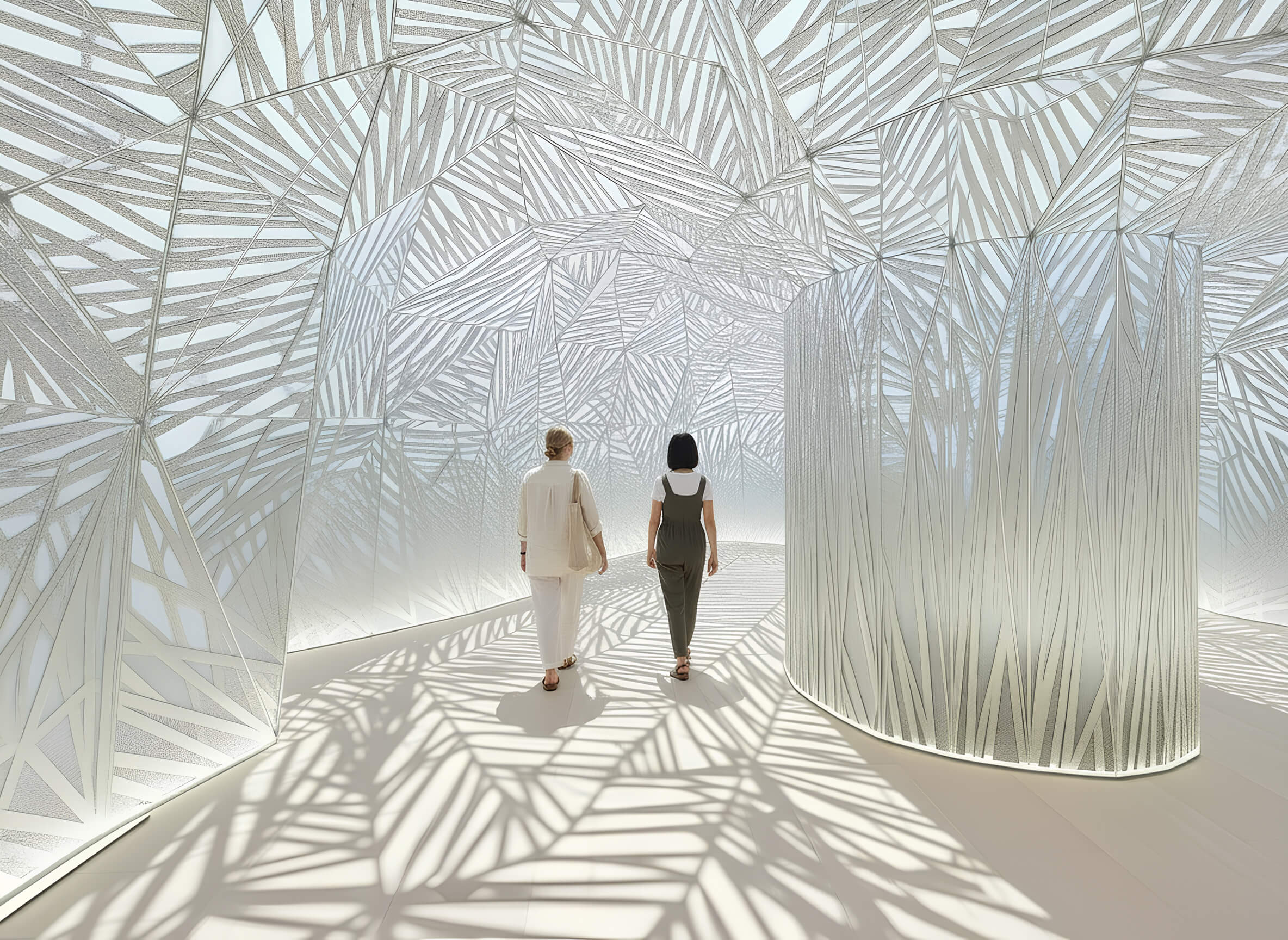
DEOND, Render. Courtesy of DUBAI DESIGN WEEK 2025

Natasha Carella and her Vision behind Dubai Design Week

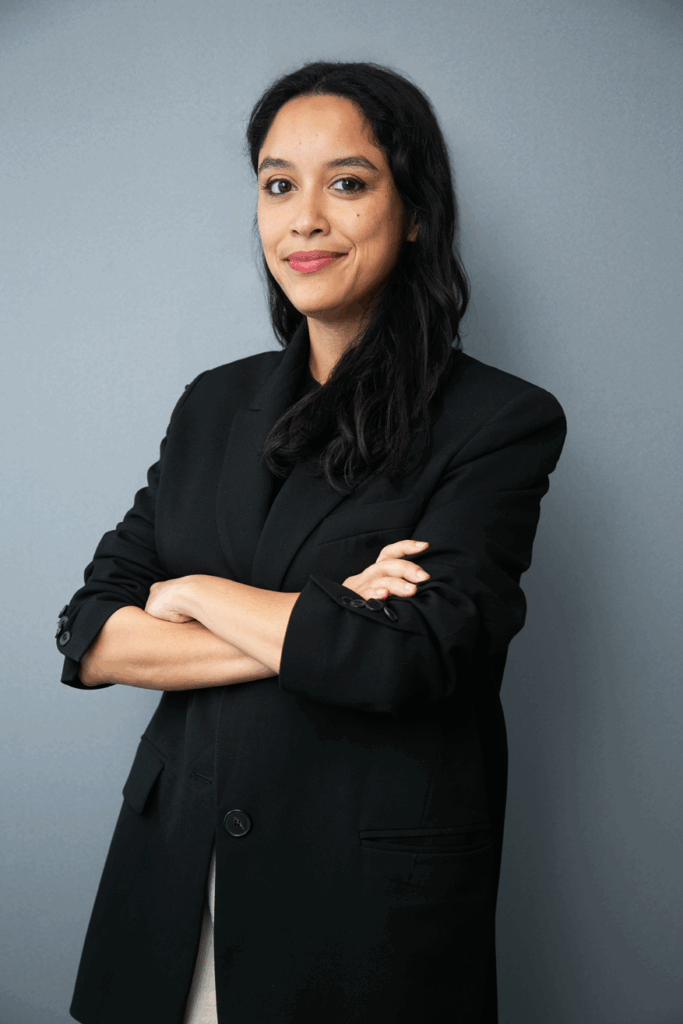
Natasha Carella, Director of Dubai Design Week, stands at the forefront of the Middle East’s growing creative landscape. As the festival’s director, she shapes a multidisciplinary platform that connects regional innovation with international design dialogue. Under her direction, Dubai Design Week has evolved into a global meeting point for architects, makers, emerging designers, and thinkers, redefining how the region engages with contemporary design. Before joining the festival, Carella held key roles at Art Dubai and the Jagtiani Foundation, where she looked after philanthropic initiatives and cultural partnerships across the SWANA region.

The 11th edition of Dubai Design Week, took place 4–9 November 2025, and lived up to the promise of being its most ambitious yet. Presented under the patronage of Her Highness Sheikha Latifa bint Mohammed bin Rashid Al Maktoum, Chairperson of Dubai Culture & Arts Authority (Dubai Culture) and in strategic partnership with Dubai Design District (d3) and supported by Dubai Culture, this year’s edition featured over 1,000 designers and creative practitioner, spotlighting design as a civic force—bridging heritage, innovation, and sustainability through installations, commissions, and cross-disciplinary collaborations. Carella sits down with hube’s editor-in-chief, Sasha Kovaleva, to reflect on the role of design in shaping culture, community, and change.

SK: Dubai’s art scene is rapidly gaining recognition on the global stage. How do you see the city reconciling its deep-rooted cultural history with the drive to remain at the cutting edge of contemporary practice?

NC: Dubai’s strength lies precisely in that tension. It is a young, future facing city, but that does not have to sit in contrast with heritage. In fact, what has become increasingly exciting is the way contemporary practice across the UAE and the Gulf is being informed by histories of making, building and living that were shaped by climate, material constraint and collective life. These references are not being treated as nostalgia or aesthetic garnish. They are being approached as knowledge, and in many cases as solutions.

Across architecture, product, interiors and graphic design, practitioners are drawing from vernacular intelligence to rethink how things are made, how spaces are organised and how identities are expressed. Techniques using mud, reed, palm fronds or earth based construction were never ornamental gestures. They were practical systems of care and resourcefulness, developed out of necessity long before sustainability became a design agenda. What we are seeing now is not a rediscovery, but a renewed recognition, and a rebalancing after decades in which many contemporary frameworks were dominated by imported references.

At Dubai Design Week, we try to create space for that dialogue to be visible and to move forward. One example is A Present Absent Mudhif, commissioned as part of Abwab in 2024, which reinterpreted the traditional reed guesthouses of the Marsh Arabs. While rooted in Iraqi geography and cultural memory, it also pointed towards contemporary possibilities for lightweight, low impact and regenerative architecture, especially relevant to contexts of ecological fragility and displacement. This is where heritage becomes active rather than historic, offering forms and methods that can be translated into present needs.

The other layer is Dubai’s unique social makeup. Over 200 nationalities live and work here, and that cultural overlap creates a constant exchange of ideas, disciplines and aesthetics. It produces unexpected collaborations and new hybrids, where craft lineages, contemporary technologies and different ways of seeing the world intersect. That is why the city can feel simultaneously grounded and experimental, and why the outputs often resist easy categorisation.
dubai design week
Natasha Carella
contemporary design
emerging designers
NATASHA CARELLA, Director of DUBAI DESIGN WEEK
Courtesy of DUBAI DESIGN WEEK
dubai design week
Natasha Carella
contemporary design
emerging designers
IRIS CERAMICA 
Activation
Courtesy of  DUBAI DESIGN WEEK 2025
dubai design week
Natasha Carella
contemporary design
emerging designers
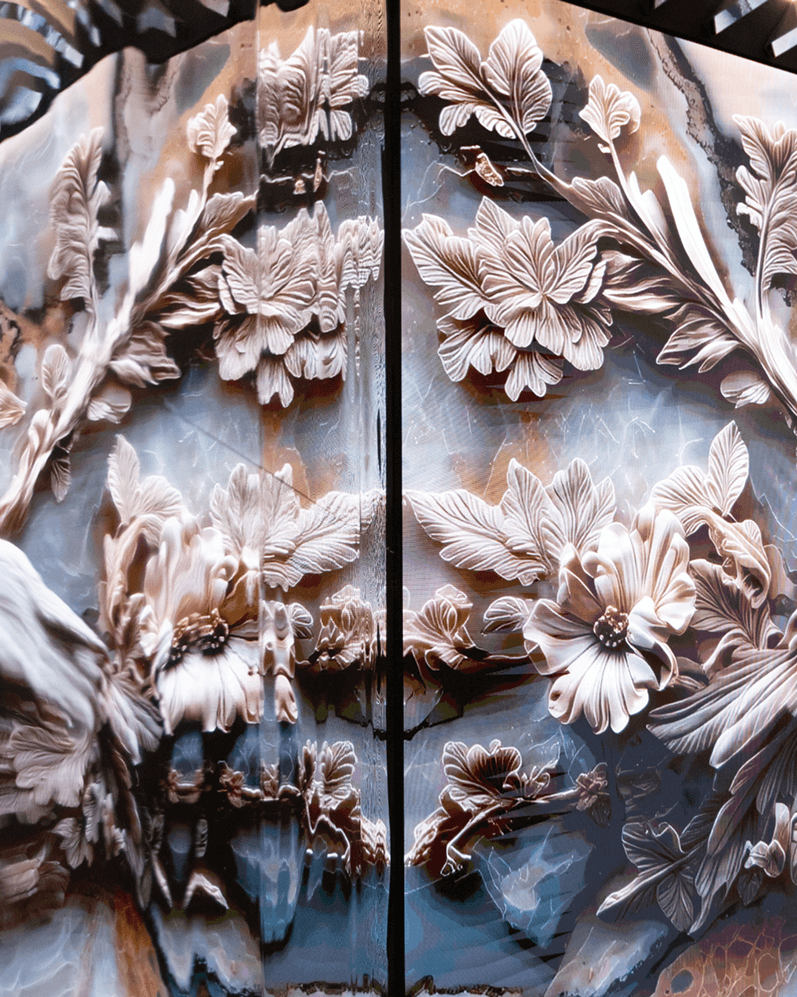
IRIS CERAMICA 
Activation
Courtesy of  DUBAI DESIGN WEEK 2025
dubai design week
Natasha Carella
contemporary design
emerging designers
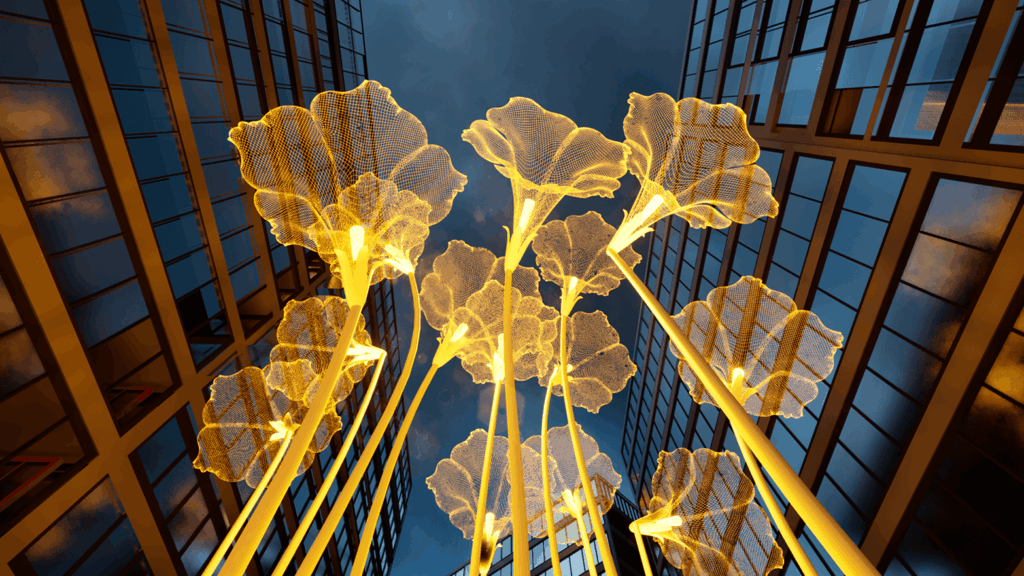
DUETTE STUDIO
Courtesy of  DUBAI DESIGN WEEK 2025
dubai design week
Natasha Carella
contemporary design
emerging designers
AUS AND UOS – AISHA TARIQ
Breathing Falga
Courtesy of  DUBAI DESIGN WEEK 2025
dubai design week
Natasha Carella
contemporary design
emerging designers
ASUS Design Thinking
Courtesy of  DUBAI DESIGN WEEK 2025
dubai design week
Natasha Carella
contemporary design
emerging designers
DESIGNLAB EXPERIENCE 
Composition
Courtesy of  DUBAI DESIGN WEEK 2025
dubai design week
Natasha Carella
contemporary design
emerging designers
BMW 
Courtesy of  DUBAI DESIGN WEEK 2025
dubai design week
Natasha Carella
contemporary design
emerging designers
ARDH COLLECTIVE
Courtesy of  DUBAI DESIGN WEEK 2025

SK: Events like Dubai Design Week often spark collaborations across disciplines—architecture, technology, sustainability, education. What kinds of cross-pollination excite you most?

NC: What feels important to me is recognising that, even though architecture, product design, technology, education and research operate as distinct disciplines, they are ultimately oriented towards similar questions. At their core, they are all concerned with how people live, how we relate to one another, and how we exist in balance with our environments. That shared ambition towards a better collective future is where meaningful exchange begins.

At Dubai Design Week, we try to create the conditions for that dialogue to happen by bringing different practitioners into close proximity. This does not always result in formal collaboration, nor does it need to. Often, it is enough for architects, designers, technologists, educators and researchers to encounter one another’s ways of thinking, and to recognise where their concerns overlap.

Some of this exchange is visible through our commissions. Urban Commissions, for example, creates a framework that asks practitioners to engage with public life, climate and behaviour through spatial thinking. By focusing on typologies such as the courtyard in 2025, the programme naturally invited perspectives from architecture, urban research, environmental thinking and furniture design, even when the outcome is a single intervention.

Another important layer comes from our educational and discursive programming. University exhibitions, student projects and experimental labs introduce speculative and research-led thinking into the wider ecosystem, creating moments of exchange between emerging designers, educators and more established practitioners. Alongside this, talks, workshops and masterclasses bring practitioners and the wider public into conversation, opening up space to question, debate and explore what design can realistically achieve.

SK: Dubai is often positioned as a ‘future city.’ Do you think this constant focus on the future ever prevents us from fully engaging with the present?

NC: I think the idea of Dubai as a future city is often misunderstood. Ambition and imagination have always been part of the city’s DNA, but that doesn’t necessarily mean being detached from thepresent. In many ways, Dubai’s forward momentum comes from a willingness to act, test and adapt in real time rather than from abstract futurism.

What I find distinctive is the city’s appetite for experimentation. Across sectors, there is a readiness to try new ideas, to iterate, and to accept that not everything will work perfectly the first time. That openness creates a sense of presence rather than distance, because decisions are made in response to current social, environmental and cultural realities.

From a design perspective, this translates into practice that is less about speculation and more about application. Designers are responding to lived conditions, climate, density, public life, and rapidly changing patterns of use. The future, in that sense, is not something projected far ahead, but something shaped through ongoing adjustment and learning.

SK: If you had to distill the spirit of Dubai Design Week into three words, what would they be?

NC: Collaborative. Contextual. Plural.

SK: Some critics argue that design weeks around the world can feel like showcases for brands more than platforms for ideas. How do you keep Dubai Design Week from falling into that trap?

NC: It’s a valid question, and one we’re very conscious of. A design week is, by nature, a constructed moment that brings together many stakeholders, including brands, cultural institutions, designers and the public. The commercial dimension is part of the ecosystem, and it’s not something we try to deny. Designers need viable markets, and brands can play a meaningful role in supporting creative practice.

What matters is how that presence is shaped. At Dubai Design Week, we aim to work with partners who are interested in contributing to a wider conversation rather than simply occupying space. We encourage brands to engage through commissioning, collaboration and research, and to think about how their participation can add cultural value, whether that’s by supporting emerging designers, experimenting with new formats, or engaging with material and social questions.

Equally important is balance. Alongside brand-led projects, we maintain a strong programme of independent commissions, open calls, educational platforms and research-led work. This ensures that no single voice or agenda dominates, and that ideas can circulate freely across different scales and modes of practice.

dubai design week
Natasha Carella
contemporary design
emerging designers
NINA MÉTAYER
Jaeger-Le Coultre
Courtesy of  DUBAI DESIGN WEEK 2025
dubai design week
Natasha Carella
contemporary design
emerging designers
L’ÉCOLE MIDDLE EAST, SCHOOL OF JEWELRY ARTS 
Courtesy of  DUBAI DESIGN WEEK 2025
dubai design week
Natasha Carella
contemporary design
emerging designers
MARAJ PRACTICE
Stories of the Isle & the Inlet
Courtesy of  DUBAI DESIGN WEEK 2025

SK: Beyond the design world, who or what inspires you most right now?

NC: Right now, I’m most inspired by people who are building things with care and intention, often quietly and without much visibility. That might be educators shaping future generations, community organisers working at a local scale, or individuals navigating complexity with empathy and thoughtfulness. There’s something powerful about sustained commitment, especially in a moment where speed and spectacle can dominate.

On a more intimate level, I’m deeply inspired by my team. The responsibility of stewarding a platform like Dubai Design Week is shared, and it’s shaped every day by the people behind it. Working alongside a team that is thoughtful, curious and deeply invested in the work makes a tangibledifference, not just to the outcomes, but to how the work feels. That collective energy, especially in moments of pressure, is incredibly motivating.

SK: Global design weeks have proliferated in recent years. Where do you think these platforms still have space to evolve, and what unique strengths do you feel the design industry holds right now?

NC: The growth of design weeks reflects a real appetite for connection and exchange. Each platform emerges from a specific context, and that context should shape how it evolves. Where there is still space to grow is in moving away from replication and towards greater clarity of purpose, allowing each design week to articulate what it uniquely contributes to the wider conversation.

At the same time, whether design weeks feel proliferated or not really depends on the lens we are looking through. From a Western perspective, the calendar may feel crowded, but from other geographies, particularly from the Gulf, Asia, the African continent and wider Global South, the emergence of new design platforms has been both necessary and overdue. It has been encouraging to see more design events taking shape across this region, reflecting the maturity and diversity of contemporary practices in these contexts. And there continues to be a need for greater representation from these places where rich design intelligence and ways of may remain underrepresented in other design circuits.

Design weeks can evolve by becoming more intentional conveners rather than accumulators. That means focusing less on scale for its own sake and more on the quality of dialogue and perspective.

There is also room for deeper collaboration between platforms, whether through shared commissions, knowledge exchange or long-term partnerships, rather than operating in parallel silos.

As for the design industry more broadly, one of its greatest strengths right now is its ability to operate across disciplines and scales. Design sits at the intersection of culture, technology, environment and everyday life, which allows it to respond to complexity in a way few other fields can. Designers are increasingly comfortable working with uncertainty, negotiating constraints and translating abstract challenges into tangible propositions.

There is also a growing awareness within the industry of responsibility. Questions of climate, equity, access and care are no longer peripheral; they are shaping how designers think, make and collaborate. This doesn’t mean design has all the answers, but it does mean it has a unique capacity to frame problems, test ideas and imagine alternatives in ways that are accessible and grounded.

dubai design week
Natasha Carella
contemporary design
emerging designers
ANNABELLE SCHNEIDER
Courtesy of  DUBAI DESIGN WEEK 2025
dubai design week
Natasha Carella
contemporary design
emerging designers
UAL 
Illuminate, 3D design 
Courtesy of  DUBAI DESIGN WEEK 2025
dubai design week
Natasha Carella
contemporary design
emerging designers
AJZAL
Courtesy of  DUBAI DESIGN WEEK 2025
dubai design week
Natasha Carella
contemporary design
emerging designers
DESIGNLAB EXPERIENCE
Courtesy of  DUBAI DESIGN WEEK 2025
dubai design week
Natasha Carella
contemporary design
emerging designers
ANA DESIGN CONSULTANTS
Asli Naz Atasoy
Courtesy of  DUBAI DESIGN WEEK 2025

ISSUE 7

The new edition is here