jamie oborne independent label music curation
Photography by JORDAN HUGHES

Jamie Oborne: redefining what an independent label can be

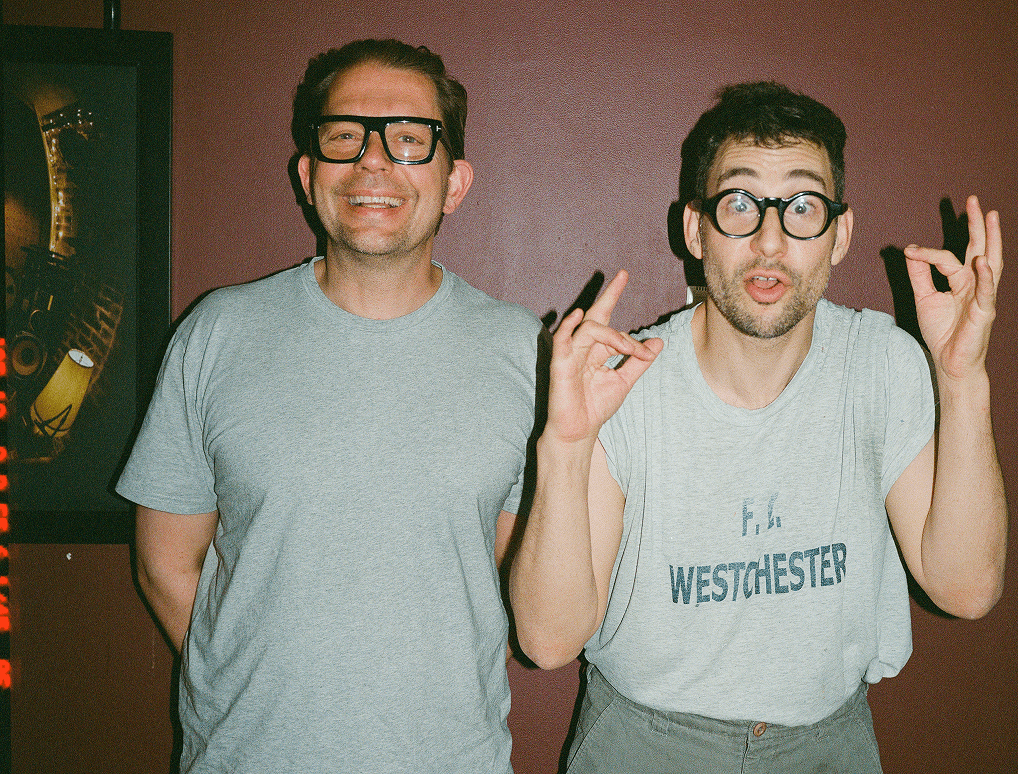
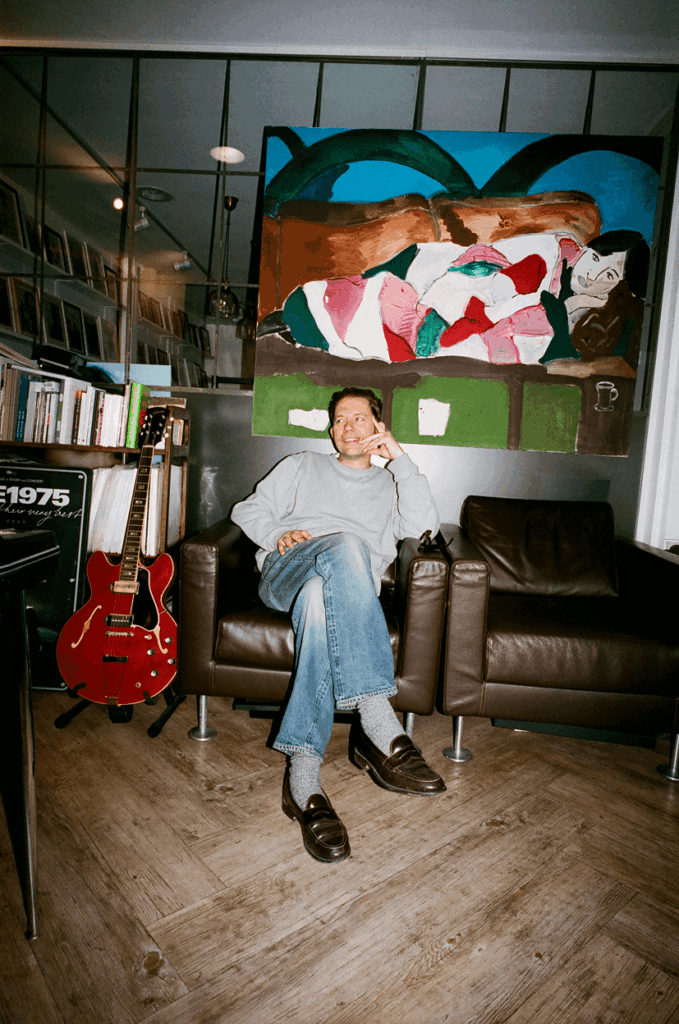
Jamie Oborne founded Dirty Hit in 2010—a label that’s grown alongside the artists it believed in from the start. With Beabadoobee, Been Stellar, The 1975, and nine-time Grammy nominee Jack Antonoff on his roster, Oborne has built a world of cult bands through conviction alone. His approach is emotional rather than formulaic: a label run on fandom and the art of music curation, where music feels made by fans, for fans. A former band member himself, Oborne has turned the DIY spirit of a teenage bedroom into a full-blown indie dreamscape. Each record on Dirty Hit plays less like a collection of tracks and more like an immersive world to live inside.

In this conversation, Oborne speaks with hube about managing The 1975, reading Burroughs, and treating a record label as a form of curation.

hube: When you begin working with an artist, do you start from sound, from story, or from something more intangible, like atmosphere? And if you could construct a dream world for an entirely fictional artist, what would it be?

Jamie Oborne: There’s never really a fixed starting point. My work and my life both feel like a series of serendipitous events. Usually, it starts from a connection with a person or group and grows naturally from there. Honestly, I feel like I already have artists who exist in those dream worlds. Working with people like The 1975, Jack Antonoff or Saya Gray, each has their own complete universe. I’m lucky that I get to live that fantasy in real life.

h: The name Dirty Hit feels both raw and precise. What layers of meaning do you see in it now, years on, compared to when you first chose it?

JO: I found it in a William Burroughs book. It described a feverish, drug-induced nightmare: something impure but electric. That sense of outsider energy and counterculture still feels true. I’ve always loved label branding, even as a teenager, and as soon as I saw that phrase, I thought it would make an amazing name for a record label.

h: Were you a Burroughs fan?

JO:
Yeah, I was. I loved his cut-up technique and how it influenced art, pop culture, and music. His work led me to Brion Gysin and other artists who opened up completely new creative directions for me.
jamie oborne
independent label
music curation
Photography by HENRY GOODFELLOW 
jamie oborne
independent label
music curation
Photography by OLI JACOBS
jamie oborne
independent label
music curation
Photography by OLI JACOBS
jamie oborne
independent label
music curation
THE 1975
Photography by JORDAN HUGHES

h: You manage The 1975, a band with such a defined creative identity. How does wearing the hat of a manager inform the way you engage with them in the studio, as collaborator, as critic, or as translator of their vision?

JO:
It doesn’t really change anything. My approach has always been collaborative and symbiotic. I listen a lot. I’m very artist-first, which means I assume the artist is right most of the time. My job is to help direct their energy. My input is maybe ten percent of the process, while the rest belongs entirely to them.

h: Running an independent label at scale means constantly negotiating with the mainstream. How do you protect the core ethos of Dirty Hit while still competing on a global stage?

JO:
By trusting our instincts and avoiding short-term rewards. We built the label around artists that nobody wanted to sign, and that shaped everything. In another world, they could have ended up at bigger labels with less care or freedom. Our ethos is easy to protect if we stay true to ourselves.

h: Many of Dirty Hit’s artists are deeply tied to a specific visual identity. Do you see that as a reflection of this generation of musicians or is it something the label consciously cultivates?

JO:
Definitely. When I first fell in love with music, I wasn’t just buying records, I was borrowing identity. That’s what I look for in artists: people who build worlds. We don’t chase hits, we build catalogues and communities. The artists who thrive here know who they are, and we help amplify and protect that through focused, intentional campaigns.

h: Dirty Hit has always moved at the intersection of sound and image. How do you ensure those two languages remain in dialogue rather than in competition, and what happens when one starts to dominate?

JO:
It’s always about balance. When visuals start to overshadow the music, you lose the emotional center. But when they move together, they make something much more powerful. The best artists understand that their world has to sound and look like the same story.

h: Do you have a favorite piece of album artwork, one from the Dirty Hit catalogue and one from the wider history of music, that to you embodies the perfect fusion of sound and image?

JO:
The first 1975 album cover still feels special to me. It captured exactly who they were at that time: minimal, emotional, confident. Outside of our label, probably The Stone Roses’ debut. That cover is as iconic as the music. It’s impossible to separate the two.

h: In your view, what defines a great album?

JO:
Great songs. It sounds simple, but it’s the truth. A great album needs songs that say something and resolve themselves beautifully. Everything else is secondary.

h: Do you think labels today should act more like cultural curators than traditional record companies? If so, what responsibilities come with that?

JO:
Yeah. I never learned how to run a label in a conventional way. We’ve always made it up as we went along, based on instinct. I’d rather Dirty Hit be seen as a point of cultural curation than just a standard record label. With that comes responsibility to be thoughtful, to not just add noise.

h: Watching artists you’ve nurtured move from early beginnings to global stages must be surreal. Do you experience that as pride, as release, or as something more complex?

JO:
It’s pride, but it’s also gratitude. You remember where it started, small rooms, no budgets, and seeing it all grow is emotional. But it’s never about release; it’s more like renewal. Every new success makes me want to keep building.

h: Looking ahead, what feels most alive for you within Dirty Hit’s future, whether that’s projects you can name or ideas you’re hungry to bring into being?

JO:
I’m making several records right now and feel creatively fulfilled. I’m really proud of what’s coming next year. On a different level, I want to build a physical space for the label, a permanent building that’s part studio, part office, part creative hub. Somewhere that belongs to us, where artists can take their time and make things properly.

h: Would you keep that space in West London?

JO:
Definitely. I want to stay around Ladbroke Grove. My office looks out toward Grenfell Tower. I like this area, its history, its energy. I grew up in North London, but this part of the city feels like home now.

h: Beyond music, what cultural spaces or artists are inspiring you most right now?

JO:
I really love the South African painter Cinga Samson. His work haunts me. There’s also an Irish figurative painter, Peter Doyle, who I love. And Damien Hirst’s blossom paintings are incredible. There’s a café under his studio in Hammersmith with one on the wall, and I sometimes go there alone just to look at it.

h: Do you think art feels more private than music?

JO:
It does. Owning a piece of someone else’s expression feels intimate, almost strange. With music, you share it. With art, you live alongside it. It’s a quieter kind of connection.

jamie oborne
independent label
music curation
Photography by OLI JACOBS
jamie oborne
independent label
music curation
Photography by OLI JACOBS
jamie oborne
independent label
music curation
Photography by OLI JACOBS

Words: JULIA SILVERBERG

ISSUE 7

The new edition is here