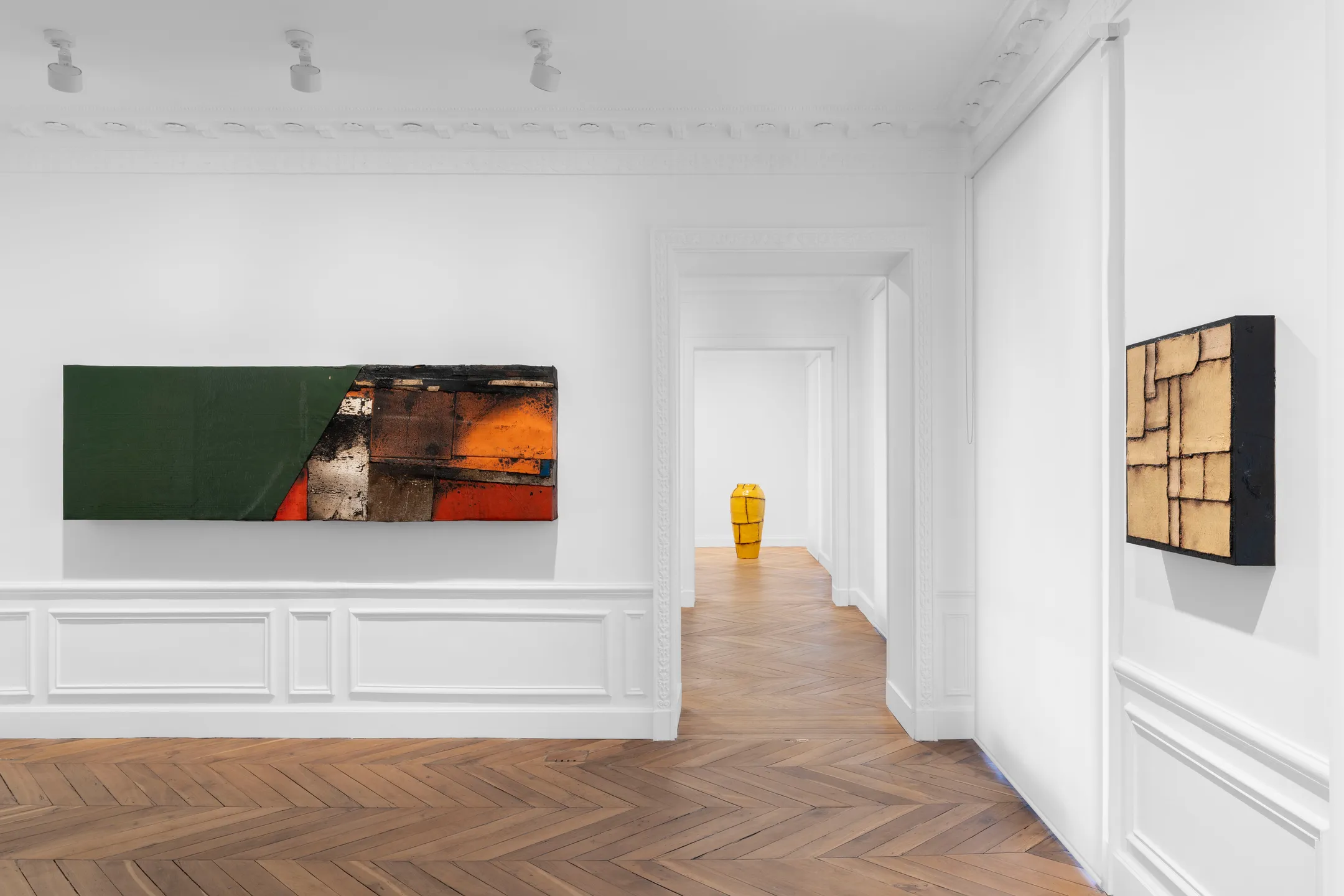
A new Theaster Gates exhibition, And Other Paintings, is currently on view from March 6th to April 4th, 2026, at the White Cube Gallery. The project presents a compelling new body of work in which the Chicago-based artist continues his long-standing investigation into how industrial materials can reshape the language of contemporary painting.
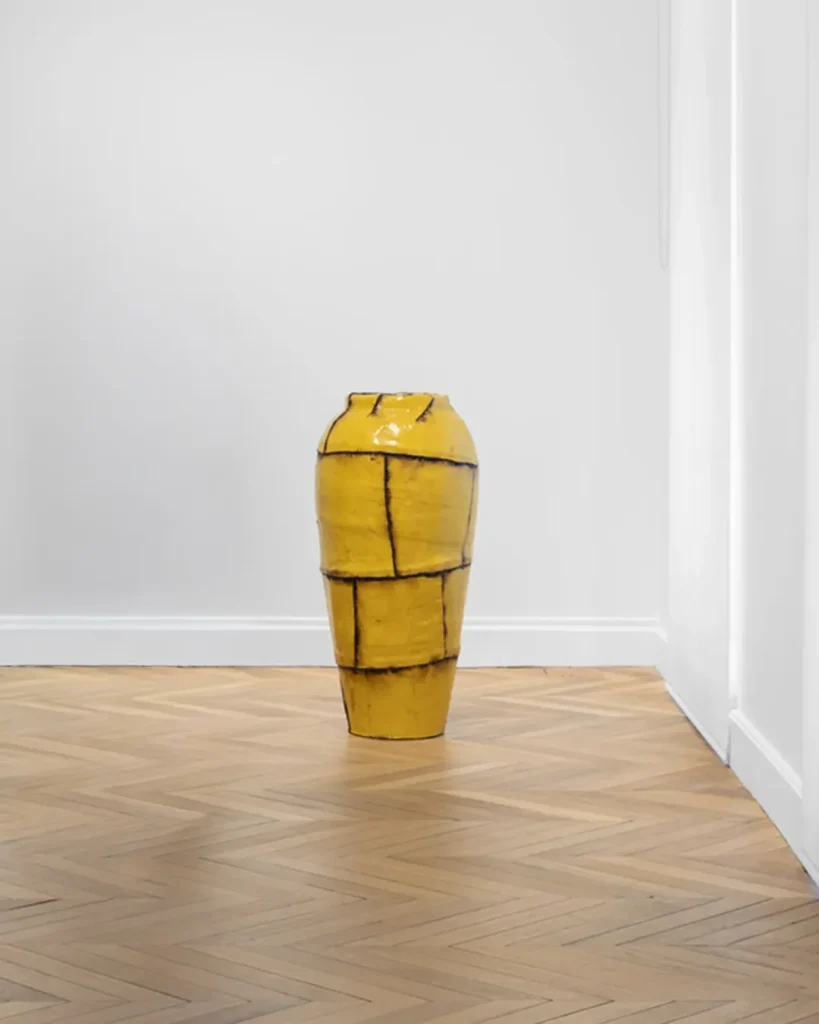
Bringing together monumental canvases, sculptural objects, and archival references, the exhibition centers on Gates’s distinctive tar paintings, a series that transforms the humble material of roofing tar into a medium of expressive abstraction. Through these works, Gates explores the intersections of labor, memory, and artistic form, reaffirming painting as a powerful site of experimentation.
Tar paintings: reimagining abstraction through material
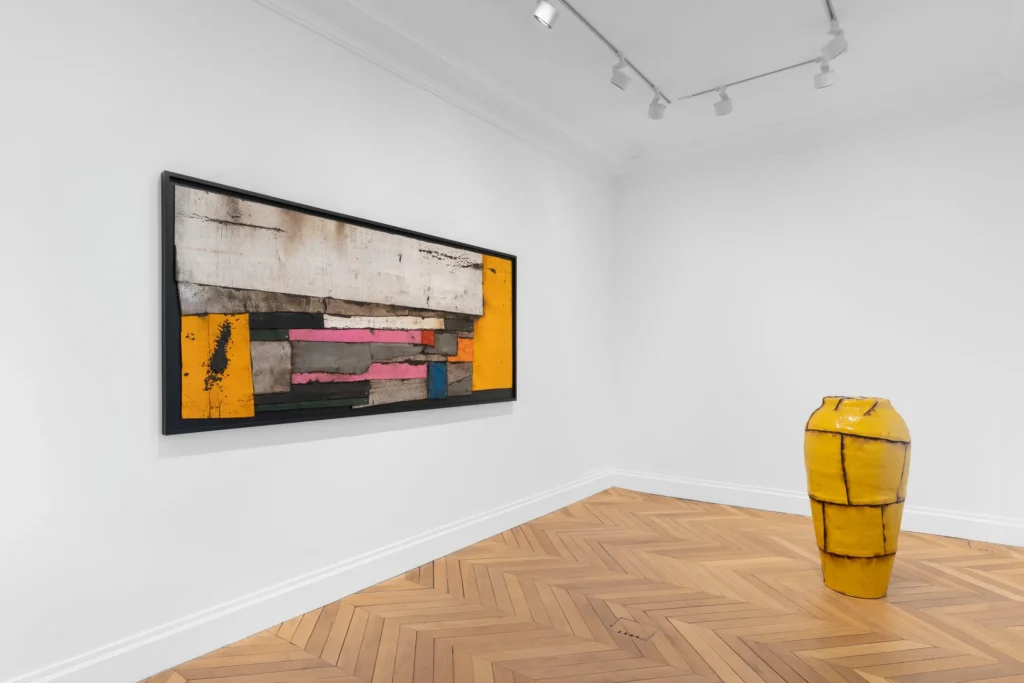
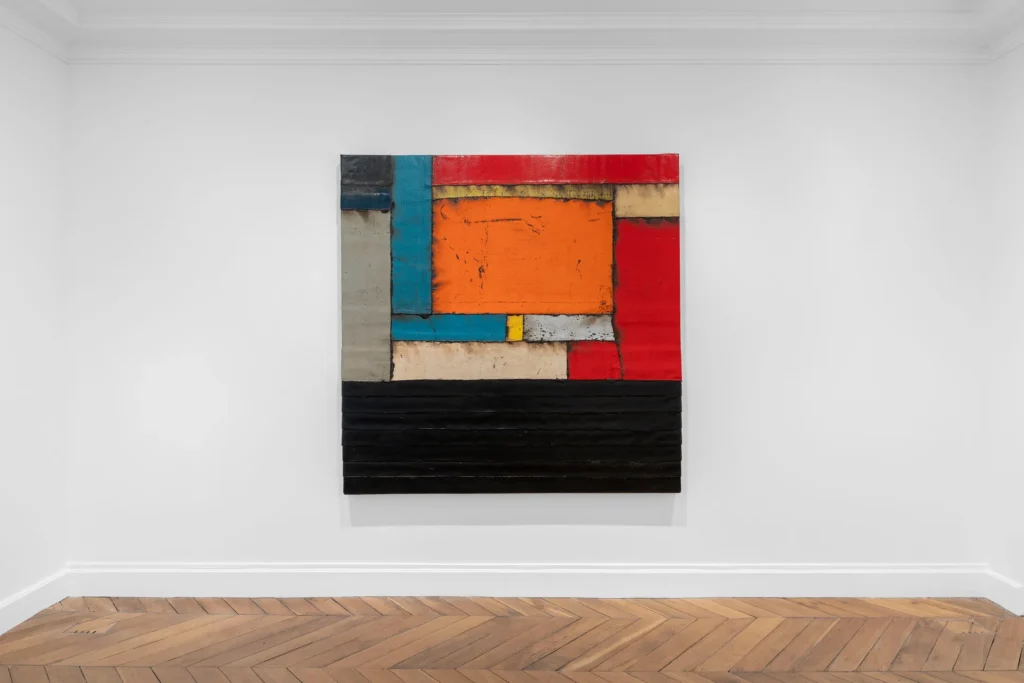
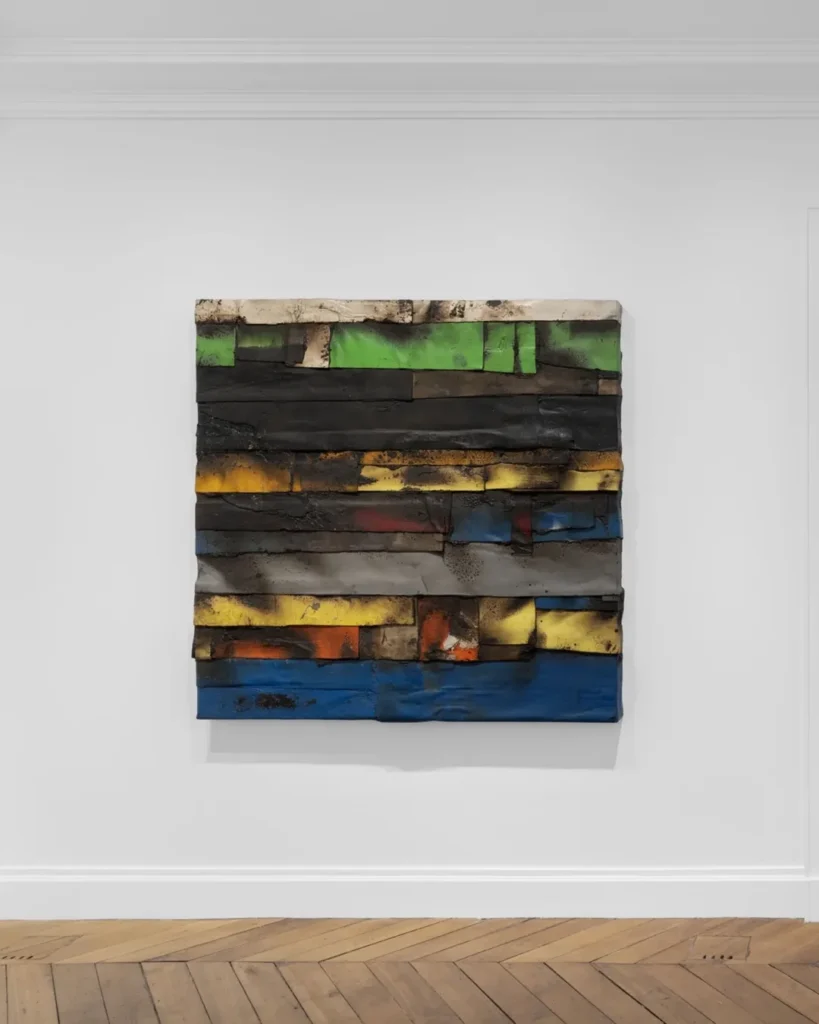
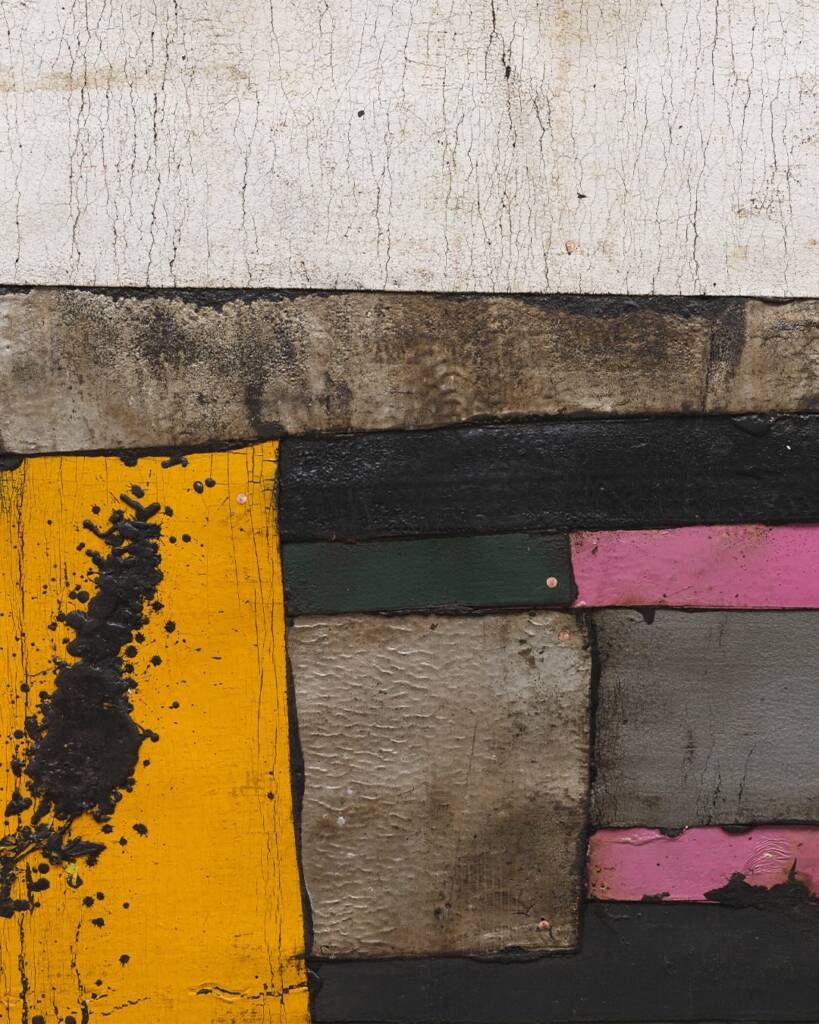
At the heart of the exhibition is a suite of new tar paintings, where Gates mobilizes roofing tar, bitumen, and oil-based enamel as a painterly vocabulary. By applying, fusing, and torching salvaged roofing materials, the artist creates dense, sculptural surfaces that blur the boundary between painting and relief.
Large-scale works such as Singed Eaves (2024) and The Whitest Zone to Harvest (2025) demonstrate Gates’s dialogue with the legacy of modernist abstraction. Their intensely chromatic surfaces echo devices such as the grid and the color field, yet the artist’s approach disrupts modernism’s tendency to detach form from labor. Instead, the works retain visible traces of industrial processes, transforming roofing substrates into richly layered compositions.
The use of archival memory in Gates’ art
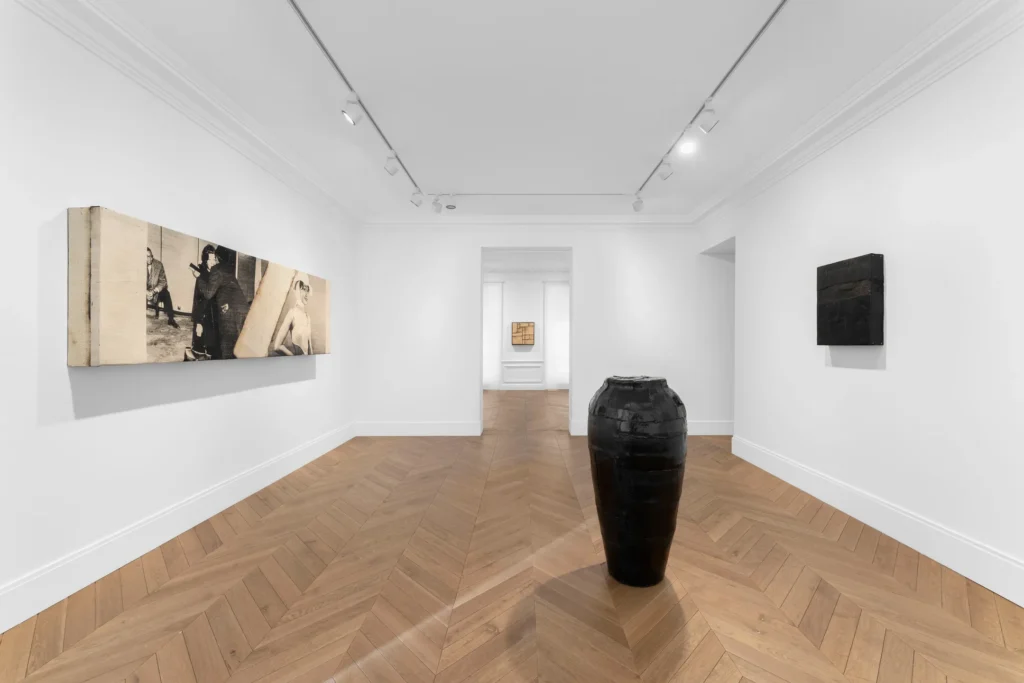
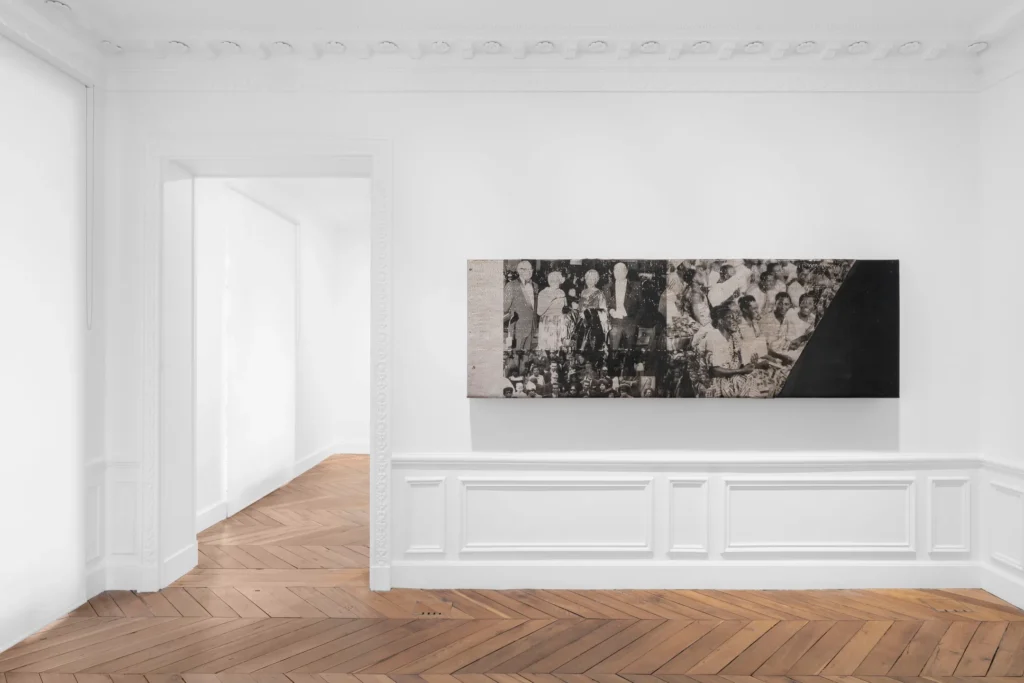
Another dimension of the exhibition emerges through works that incorporate historical imagery drawn from the archives of the Johnson Publishing Company, the influential Chicago publisher behind Ebony and Jet magazines. Through photo-transfer techniques, Gates embeds archival photographs into the tar surfaces of paintings such as She Never Leaves Her Purse (2025) and Critical Crowd (2025).
Founded in 1942, the Johnson Publishing Company played a pivotal role in shaping representations of Black American life throughout the twentieth century. In Gates’s works, these images are partially obscured by layers of enamel and tar, producing compositions that hover between figuration and abstraction. The archival fragments appear embedded within the paintings’ surfaces, suggesting memory as a material that can be layered, preserved, and reinterpreted over time.
Through And Other Paintings, the artist reaffirms a central premise of his practice: that even the most utilitarian substances can yield unexpected beauty and complexity. In Gates’s hands, tar becomes not merely a material, but a language through which histories of labor, identity, and abstraction converge.
In our interview with Theaster Gates, we delve into the artist’s thoughts on the spiritual dimension of creativity, the importance of archives, and the power of art to reshape communities. Continue reading to explore the ideas that guide his unique approach.
THEASTER GATES
And Other Paintings, WHITE CUBE PARIS © THEASTER GATES
Photography by NICOLAS BRASSEUR, courtesy of WHITE CUBE