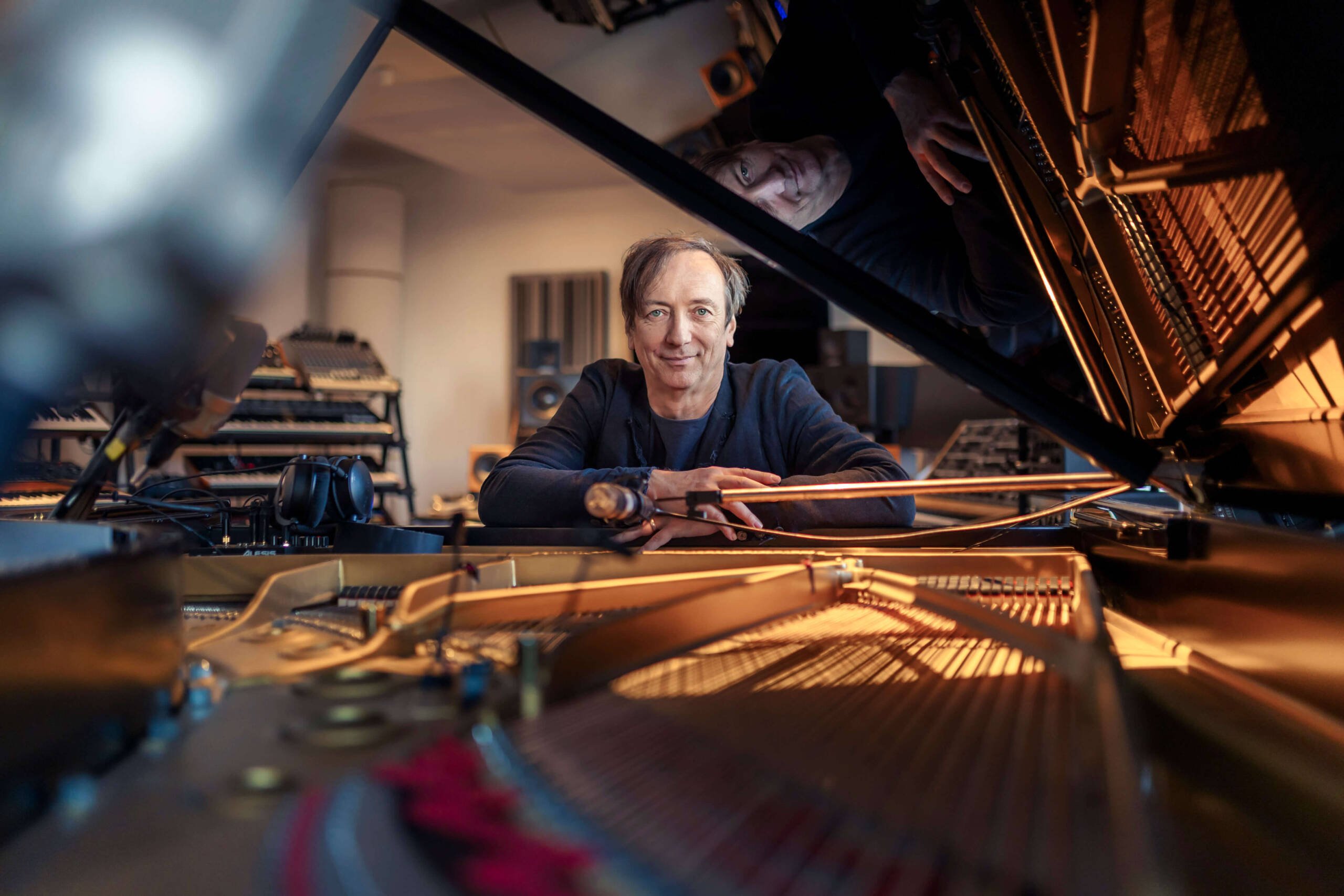
Volker Bertelmann Hauschka composing film scores experimental sound design
VOLKER BERTELMANN (HAUSCHKA) Photography courtesy of EUGEN SHKOLNIKOV STUDIO

The right wrong turn: Volker Bertelmann on detours that lead to discovery

Volker Bertelmann, known as Hauschka, is not easy to categorise. The German composer and pianist has spent decades navigating the different worlds: prepared piano and techno, concert halls and film sets, abstract soundscapes and an Oscar-winning score. His path was never charted toward a specific goal, but instead shaped by a series of questions. Early on, Volker tried his hand at medicine and economics—anything to sidestep music—yet every pursuit drew him deeper into the science of sound.

Through experimental sound design—from objects placed inside his piano to obscure instruments like the Cristal Baschet—Volker consistently invents fresh approaches that elude cliché entirely. His music for All Quiet on the Western Front and Conclave earned global acclaim, but the path there was anything but straight. His curiosity leads him to invent and discover instruments and approaches that are the antithesis of cliché. In this conversation, Volker Bertelmann reflects on independence, improvisation, and why the wrong turn is sometimes the rightest of all.

hube: You’ve mentioned that you’ve spent time trying to figure out your role as an artist and what resonates most deeply with you. How did your diverse musical experiences—from your early experiments to composing film scores—shape your artistic identity?

Volker Bertelmann: It’s important to be independent in your art form and in your expression. Collaboration is also vital to growth, because you work with other art forms and exchange ideas. Making film music is obviously one such collaboration.

At the same time, it’s important to have your own standpoint, your own art, which you can only really experience by making your own records or doing concerts. That gives you a much stronger chance of sharing your perspective with others. Ideally, they have a clear standpoint too. Often, though, people hire you precisely to provide a distinct point of view. For my artistic identity, it is very important to constantly work in different fields: film music, records, ballet, or theatre. That means a constant change of viewpoint and the people I work with.

h: Interestingly, you mentioned that you prefer to work with someone who has a strong viewpoint, because usually, sometimes, we tend to put ourselves in the spotlight. But when strong opinions collide, there is something beautiful that’s being born out of that.

VB: Absolutely. It’s obvious we cannot always cope with each other, but things become much clearer when somebody has an actual idea. Having a firm viewpoint doesn’t mean refusing to compromise. Ideally, you hold a strong opinion while remaining flexible enough to find value in the other opinion as well. You can only do that when you know exactly where you stand and what you’re willing to give up. Otherwise, decisions become emotional rather than rational; you get hurt or defensive. Having a strong opinion and viewpoint makes you more resilient.

h: How does your approach to creating music for film differ from the more personal work you do with Hauschka? Is there an aspect of filmmaking that challenges or enriches your music-making process in a way that your solo work doesn’t?

VB: Collaborating with a strong filmmaker gives you lots of ideas about music. As Hauschka, I have complete freedom. I can do whatever I want—I can even choose to make music with just a bottle and a table, and make a record with that. Film music, however, is always connected to a filmmaker’s vision. As a musician, you support a story, and the spotlight is not only on you. You find a way to give the film another dimension when it’s already powerful. I think that’s a wonderful feeling and a very different approach from creating purely for yourself and making your own record. Filmmaking broadens my experience enormously. I have also learned a lot from others with a different perspective.

h: What does your process of composing for film usually look like? Do you prefer to develop musical themes and concepts before shooting begins, or do you find that key scenes shape your work more after seeing the final cut?

VB: It depends on a couple of things. One is the director’s wish—some prefer to have the music before shooting the film. A lot also depends on the script. I’m a visual person, so I prefer to see what the picture will look like. Even though you can read a story, your interpretation may be completely different from what you see. Ideally, you need to get a sense of the colour and pace.

I usually ask for a first draft of the film, but I try not to get too involved with it at first. It’s nice to take a step back and experiment when you’re not yet too preoccupied with the story. Then you can come up with a couple of scenarios and compositions, and search for instruments or collaborators you want to involve. Very often it’s too late once you’re deep in writing—you simply have to rush to make it work.
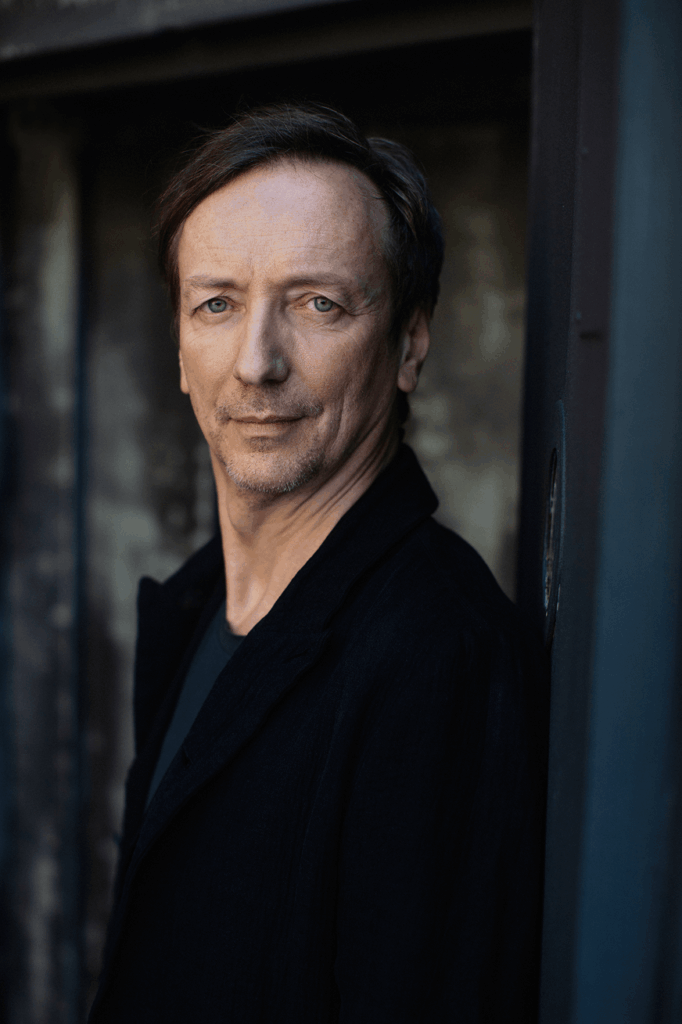
Volker Bertelmann
Hauschka
composing film scores
experimental sound design
VOLKER BERTELMANN 
Photography courtesy of HANNES CASPAR
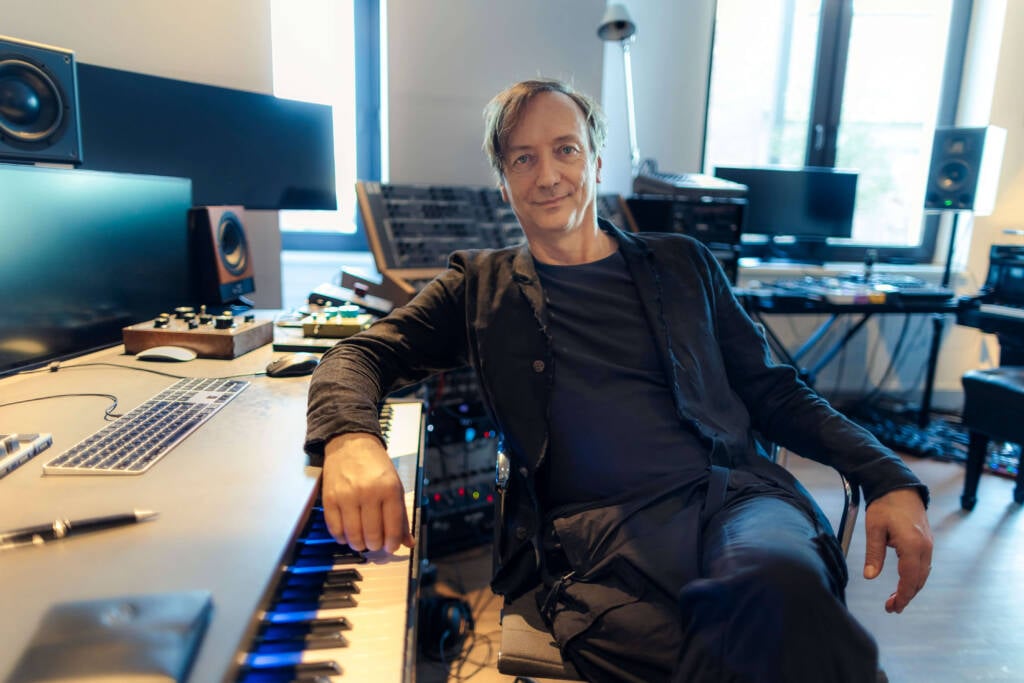
Volker Bertelmann
Hauschka
composing film scores
experimental sound design
VOLKER BERTELMANN (HAUSCHKA)
Photography courtesy of EUGEN SHKOLNIKOV STUDIO
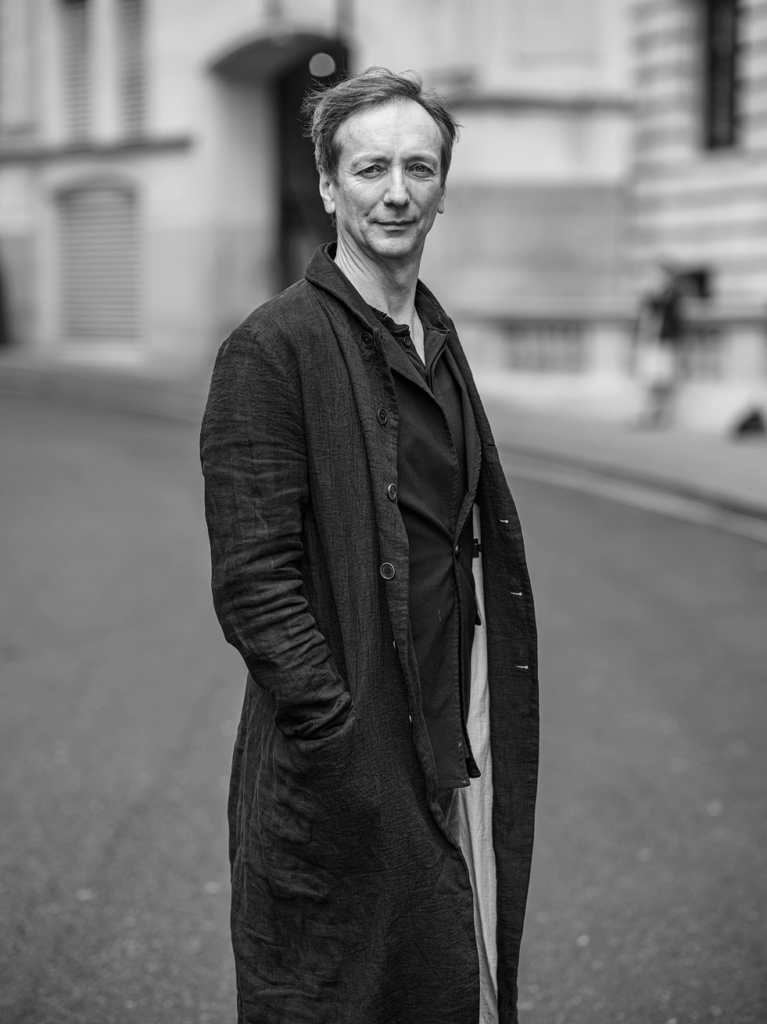
Volker Bertelmann
Hauschka
composing film scores
experimental sound design
VOLKER BERTELMANN
Photography courtesy of MISAN HARRIMAN
Volker Bertelmann
Hauschka
composing film scores
experimental sound design
All Quiet on the Western Front, 2022
Directed by EDWARD BERGER
Photography courtesy of NETFLIX
Volker Bertelmann
Hauschka
composing film scores
experimental sound design
Conclave, 2024 
Directed by EDWARD BERGER
©Focus Features; Courtesy of EVERETT COLLECTION 

h: For All Quiet on the Western Front, you chose a harmonium as the centrepiece of the score. Could you explain why that instrument stood out to you for this particular film, and how it helped bring the themes of the film to life through sound?

VB: I love working with my hands. Not only with instruments, but also digging in the ground, or working in fields. The same applies when I’m writing music—I need inspiration and something that connects with me.

After the first screening of All Quiet on the Western Front in Berlin, I took the train home, wondering what instrument could represent the era of the First World War. I had an old harmonium in my studio, received from my great-grandmother the year before. I refurbished it, and it sat there for quite a while in fantastic shape and very well-tuned.

On that journey, I thought about the war, my grandfather, who was a soldier, and my very Christian grandparents’ homes, where they played Bach chorales on harmoniums. So, I thought it would be a good idea to use the harmonium as a centrepiece. I changed the sound by using distortion and a heavy metal approach, making it more modern and tied to our world—yet the instrument’s smell and sound still transported me to the homes of people born before 1900.

h: Movies about the Vatican and the Roman Catholic Church are often associated with Gregorian chants or music reminiscent of the church. In Conclave, you took a different approach. What inspired this choice, and how do you feel it relates to the themes of the film?

VB: I’m a big fan of not taking the obvious. Many people hear choral singing or an organ and immediately imagine themselves in a church. If you decide against this but find something else with a similar quality, it opens up the imagination.

For Conclave, I was searching for an ethereal-sounding, organ-like instrument. I was looking for the sound inside the Vatican, where I felt the buildings represented an idealistic concept of belief and God. However, we know that achieving this idealistic state of mind is very difficult for humans. At the same time, the story is all about misleading the Christian approach. My feeling was that the more I give these holy halls and places the kind of spiritual, uplifting instrument, the more the crime comes across, or the thriller gets even darker.

I explored transcendent glass instruments, and I found one called the Cristal Baschet. It was built near Paris in 1952 by brothers Bernard and François Baschet. They have a museum near Paris where they build these sound objects. The Cristal Baschet is made of glass rods—to play it, you put your hands in the water and rub the rods, causing them to resonate like a wine glass. These resonances are then connected to metal cylinders, producing a sound similar to a distorted synthesiser, despite not being amplified. It sounds like a normal instrument, such as a piano, but with a weird, otherworldly sound.

Marc Chouarain, from Paris, came to my studio and played the Cristal Baschet. I really loved it and sent the recordings to Edward [Berger, the director of Conclave], who shared my excitement. It became exactly the sound we needed for those passages.

Sometimes you find an interesting instrument, sometimes you don’t. Then you have to go back to working with a conventional setup. But whenever I can discover something new and obscure that inspires me, I prefer working with it.

h: You’ve noted that every collaboration and every performance present a new challenge. Is there a specific project or moment in your career that stands out as particularly transformative or that made you reevaluate your approach to your music?

VB: Plenty of those—not only musical ones. They changed my approach to life, because the wish to be a musician is not always clear. If you want to be an instrumentalist but weren’t a virtuoso by the age of four or five, you face a question: what do you do when your instrumental ability sits in the middle range? Not everyone is meant to be a classical virtuoso; there are many other paths. Yet in the classical world, that mindset is dominant: you play the canonical pieces, there’s no amplification, and rock music is treated as unimportant. That has changed a lot, especially for me—I was drawn to rock music from around age twelve, so I went looking for it.

One key moment came at 41, when I played New York for the first time. It was 2007, my first Hauschka records, my first American tour, supporting the wonderful Icelandic experimental band múm, who let me open as a pianist. I only had fifteen minutes each night and improvised every concert. Walking on stage, I never knew what I would play. I love that immediacy. So I talked to the audience: “Hey, I’m Volker, from a small village in Germany. I’ve dreamed of coming to New York since I was a kid, but somehow, I studied medicine, studied economics, tried everything to avoid being a musician. And finally, I’m here, performing for you.” When I finished, the whole place stood up—people applauding, supporting me. I sold all my merch for the entire tour that day.

Suddenly, I realised something immediate about success: sometimes you are enough just as you are with your output. People react strongly, want more, applaud, and come back with questions. In the years before, I tried so hard to experience something like it, and never got it—because I was trying too hard. Sometimes it’s better to let go and wait for the moment when you find your expression. Even if that means discovering you’re not “enough” as a performer, that’s fine too—but you have to find out. That was one of those moments.

The other is definitely my work on All Quiet on the Western Front—a score acknowledged in so many ways, and the collaboration with Edward Berger. That’s another moment that changed my life drastically.

h: Your music often incorporates improvisation, and you’ve said it’s a key part of finding a fresh direction in your work. How does improvisation shape the overall composition process for you? Is it a tool for exploration, or do you see it as the foundation of your music?

VB: It’s the foundation—a search for strong motives and ideas. I’m not someone who can think structurally and map instruments out in advance. I need to play live, then decide what feels strong. With film music, I watch a scene and write on the fly, sensing what’s right or wrong. The selection process is very important: distinguishing strong ideas from weaker ones, or putting something aside to develop later. But some ideas arrive fully formed from the very first moment.

Playing live also tells you a lot: where you feel comfortable and secure, and crucially, where you don’t and suddenly lose your way. When you’re alone on stage, there’s no bass player, no drummer, nobody to cover your mistakes.

That’s why I think mistakes are essential to growth. Without them, you can’t really develop. In your own work, especially, you have to accept that you’ll sometimes take a wrong path, turn left, then correct course. By the time you find the centre again, you’ve brought something valuable from that detour with you. The wrong turn becomes part of you. That’s why improvisation matters so much.

h: You’ve often spoken about how the environment and the senses inform your music. What role do the non-musical aspects of sound—such as texture, space, or physical sensation—play in how you compose or perform?

VB: I see it the way John Cage did, though I wasn’t familiar with him at first. When I started with prepared piano, I had no idea who he was; I only discovered him later through exploring the pioneers of the technique. I loved his work—he was funny and inventive. There’s a piece called “Water Walk”, available on YouTube: he performs on a 1960s game show for housewives, throwing toasters off a table, putting a vibrator inside the piano, using an ice cube machine—everything precisely timed and written as a composition.

Reading his music theory later, I completely shared his belief that every sound, everything outside, everything that creates rhythm in time, is music. A bird has its rhythm, a train has its rhythm. I listen for the moments when things suddenly connect. There’s no sound I don’t consider music. That’s why I’m drawn to finding what an instrument can do that mimics the real world—or the reverse: placing microphones in a city’s canals to capture what’s down there. I’m very interested in that microcosm.

h: In the beginning, you faced challenges related to valuing your output and seeking honest feedback. How has your approach to self-criticism and your working process changed as you’ve matured as an artist?

VB: Looking back, I think what I experienced as a musician is something everyone goes through after leaving school: how do you define work, and what do you do with your time? The hardest part is separating pleasure from making money. Ideally, they come together; you do what you love and get paid for it. But it’s the rarest outcome—most of the time, you take what’s in front of you, the work that’s the only option. You send out letters, get rejections, and then one person says yes that shapes your future, even if it wasn’t what you truly wanted.

So much is random. But I firmly believe that if you have a wish, even one so absurd you think “it’s funny I’m even thinking this”, the more you stay committed, the more reality begins to shift toward it. One day, the world turns to that moment where the wish could come true, and if you’re prepared, because everything around you has been getting you ready, you can say yes.

That’s what I learned by overcoming my own challenges, figuring out how I want to live, how to be happy, how to make music, who to work with. Slowly, I understood that the imagining matters as much as the outcome; the way matters more than reaching the goal. And if you do reach the one you wished for, that’s, of course, wonderful.

h: Many musicians find their voices through a balance of imitation and innovation. Was there a specific moment or influence in your career where you felt like you discovered your own distinct musical voice?

VB: There definitely was. Before the discovery, I started disconnecting from pop music—stopped dreaming of being a pop star or writing vocal songs. I decided to move into abstract electronic music and dance techno, releasing smaller-scale records for an audience open to discovering new things.

Around 1999-2000, I released a few techno and electronic records with friends, started some bands, and put out weird electronic music: soundscapes, experiments, things that gave a home to my imagination. Before then, I had no contact with that kind of music. Growing up in my village, you heard traditional music, maybe the most mainstream rock imaginable—nothing experimental. But the further I got from home, and the more artists I met, the more they opened up ideas of abstraction, deeply fulfilling music, not in a sentimental way, but in the way it creates turbulence inside you. It puts you somewhere else, and you start to dream. When I discovered that it was possible, I brought it to the piano, and one key step was realising I could do it without amplification.

Volker Bertelmann
Hauschka
composing film scores
experimental sound design
VOLKER BERTELMANN (HAUSCHKA)
Photography courtesy of EUGEN SHKOLNIKOV STUDIO
Volker Bertelmann
Hauschka
composing film scores
experimental sound design
VOLKER BERTELMANN 
Photography courtesy of HANNES CASPAR

ISSUE 8

Be the first to get the new issue