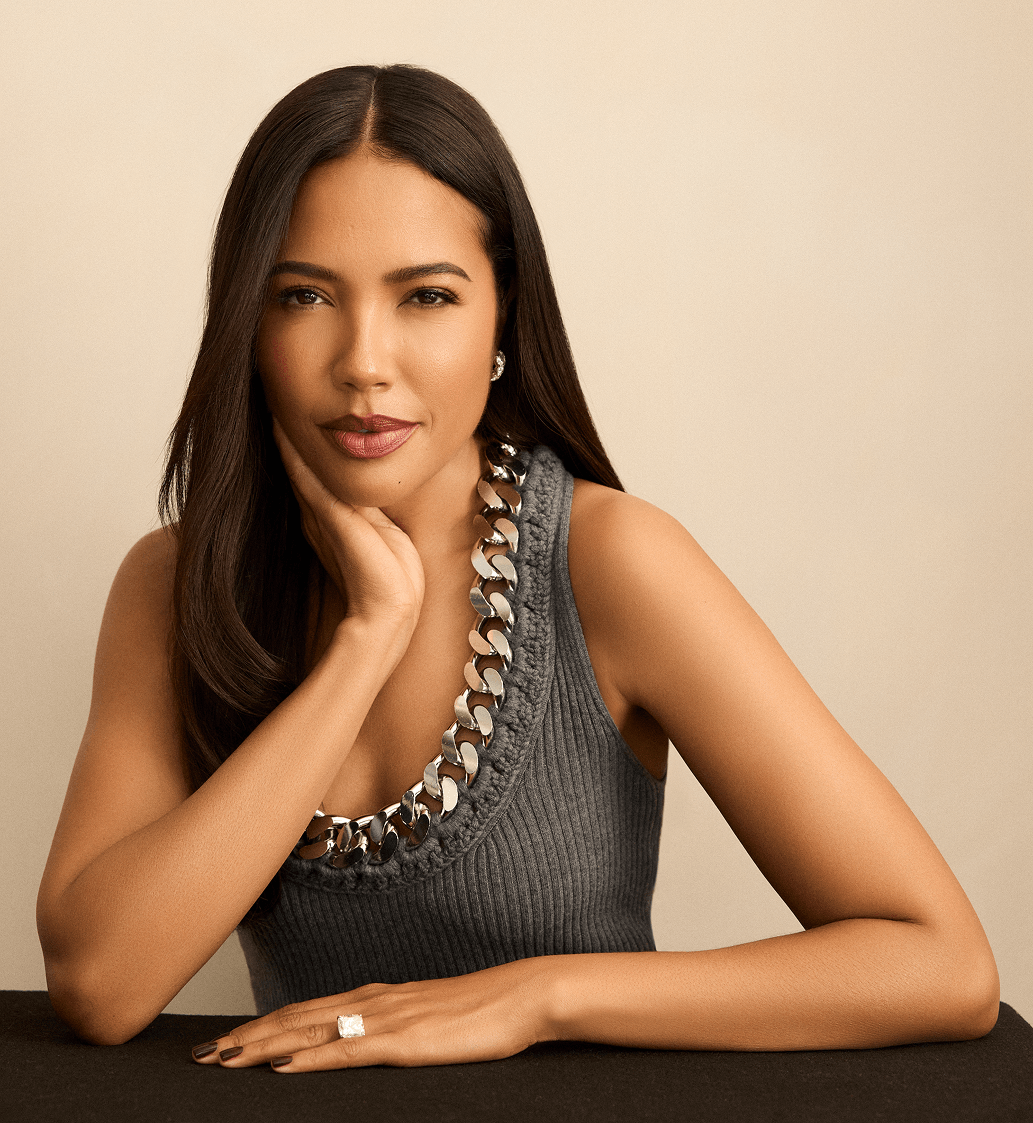
Emma Grede Start With Yourself female entrepreneurship

Start With Yourself: Emma Grede on ambition, audacity and the discipline of no

Without hesitation, one could say that Emma Grede has more hours in her day than the rest of us. She is a serial founder and entrepreneur of amazing tenure: co-founder of the denim company Good American, a founding partner and chief product officer of Skims. She is a host of the Aspire with Emma Grede podcast. She is a philanthropist, investor, and mother of four, among many other roles. Emma juggles them with ease, always looking impeccable and inspiring those around her. Everyone wishes to know her secret. 

Luckily, Emma is on a mission to encourage others to pursue their dreams. In her new book Start with Yourself: A New Vision for Work & Life, she shares her honest thoughts on success, achievement, balance and offers guidance to those ready to make the most of who they are. In conversation with hube’s editor-in-chief, Sasha Kovaleva, Emma offers a sneak preview of her book, reflects on fear and the importance of saying no, and shares insights into her journey and the future.

Sasha Kovaleva: Fear is universal, even for those who have achieved recognition and admiration in their field. At this stage of your career, do you still encounter fear? If so, could you share some of the professional fears that challenge you today?

Emma Grede: That’s a really great place to start, because, as you say, fear is universal, and specifically for women who are in uncharted territory, doing new things in business and forging new paths, it’s very familiar territory. I definitely still have fear; it’s there. If we go back, the podcast is only seven or eight months old. I was really fearful about doing that, about putting myself in such a spotlight, and then going out on a platform with no followers, no recognition—it was just me.

I have trained myself to look for those moments of fear and lean into them, because I know what’s on the other side. And what I’ve learned in my career is that all the things you are most scared of are probably the things you should be doing. In so many ways, I have learned that you don’t find where you’re really good and competent—where your superpowers are—unless you’re leaning into the things that scare you just a little bit.

I don’t think that anything I’ve done that’s been particularly good—starting any of the companies, or indeed the podcast or writing the book—has been easy or without me feeling trepidation and judgment. But I’ve learned the hard way, so it’s just best to go through it.

SK: Looking back at the early stages of your career, which tools or strategies were most instrumental in helping you get started? Was it building a strong network, leveraging mentors, or another resource that often gets overlooked?

EG: The first one is a sense of naivety, because when you’re young, you don’t know what you don’t know. And so that sense of fearlessness, and just putting yourself in situations where there’s an element of the unknown, was really important for me. I try to keep an element of that—not overthinking everything, not imagining that everybody has a spotlight on me. When I was younger, I would take so many risks, and I would put myself in situations that, quite honestly, I should have known better than to get into—situations that could have been full of danger and the unknown. But when you don’t know, you do.

If I’m really honest, one of the things you can do that is really under-recognised is how you treat people in your work life. Even as I go out on this press tour to promote my book, I’ve had interviews with three journalists who used to work for me. The world is small. The way you behave, the way you make people feel, and the way you treat people are so important. Your reputation is one of your biggest assets. You don’t pay anything for your reputation—it’s entirely based on how you behave, what you do, and how you leave people feeling. It’s an easy thing that anyone can do. You can ensure your reputation is impeccable by simply being mindful of how you behave and how you leave people feeling.
Emma Grede
Start With Yourself
female entrepreneurship
Courtesy of EMMA GREDE
Emma Grede
Start With Yourself
female entrepreneurship
Courtesy of EMMA GREDE
Emma Grede
Start With Yourself
female entrepreneurship
Start With Yourself: A New Vision for Work & Life by EMMA GREDE
Emma Grede
Start With Yourself
female entrepreneurship
Emma Grede
Start With Yourself
female entrepreneurship
Courtesy of EMMA GREDE
Emma Grede
Start With Yourself
female entrepreneurship
Courtesy of EMMA GREDE
Emma Grede
Start With Yourself
female entrepreneurship
EMMA and JENS GREDE
Courtesy of SKIMS

SK: Start With Yourself presents self-awareness as the foundation for meaningful change. From your perspective, what do you think is the biggest misconception people have about this process?

EG: What’s really interesting is that we always like to put power in somebody else’s hands. I wrote this book because I want readers to understand the emotions that shape their decisions and how, if they hold a vision for their lives and take responsibility for them, they can actually change everything for themselves. I thought about the book as being a wake-up call for ambitious women—for women who want money and power and recognition and careers and families. But if you want all of those things, I really wanted to explain that you’re not going to get them by hiding behind politeness or soft ambition.

I believe that women have been socially conditioned to avoid the exact behaviours that lead to creating wealth, visibility, or opportunity. And so the book is structured to make sure that we’re dismantling the lies we’ve been sold, because my experience tells me none of it is true. And if you’re really ambitious, then you’re going to have to get comfortable with discomfort, because that is just a requirement. And if you want to make money and get paid what you deserve, then a level of audacity is absolutely needed.

Speaking of careers, they require visibility and proximity, and people don’t necessarily want to think about those things. And I know that, given where we are in the world right now, I feel very strongly that women need power. Power has to be taken, because no one is coming to give it to you. No one’s going to hand it to you. And honestly, we need more women in positions of power right now. That’s really clear, given where we are in the world.

SK: If you had to distil your personal brand into a single emotion it evokes in people, what would that be?

EG: Hard working. That would be the boil down. That’s the one consistent thing. I have my highs and my lows, but I’m always working.

SK: Your upbringing in East London was very different from the life your children are experiencing today. Seeing them surrounded by opportunities you could only dream of, how do you think that might influence their motivation and outlook on what’s possible?

EG: It’s something that I think about all the time. When you’re raising kids in a very different situation from where you were born, you often worry about whether they’re going to feel the need to go out, fulfil their potential, and do what they can. But I’m reassured that my kids, despite being raised with a lot of privilege, see me as the example every day. They watch me, five days a week, not only leave the house to go to work, but also go after my dreams.

Right now, I’m in London for four days for work, which means I’m not with my kids. And they get to an age where you have to explain to them that mommy worked really hard to get to the position where I get to do these things: I get to host a podcast, write a book, and run these amazing companies. I’ve never been more ambitious than after my third and fourth kids. The ambition grew with every child that I had. I try to be honest with my kids about the fact that I’m still on a journey myself, that fulfilling my potential is still really important to me, and I hope that that’s a really good example for them as they get older.

SK: Do you think a brand like Skims could have originated in Europe, or was its initial success—so closely tied to influencer marketing—something that could realistically only happen in the U.S.?

EG: No, great brands can be born anywhere. The world is full of exceptional talent and unbelievable innovation. And while the US has an unbelievable business climate that is unique and special, I’m lucky enough to be an investor in businesses born in other places, and great ideas can come from anywhere.

SK: In a world obsessed with growth, what’s something you’ve deliberately decided not to pursue, and why?

EG: I love that question, and I love that you say “obsessed with growth,” because I do think we’ve gone crazy when we believe that the only businesses that deserve to get started are unicorns or billion-dollar companies. I even talk about it in my book—the many friends, colleagues, and small businesses I’ve invested in that create amazing lives for the founders or the women who started them. And that’s a really good breeding ground for conversation, because not every business needs to be big to be super successful.

I decide every day not to do something, and it’s the secret to my success. Saying no is an absolute superpower, and I am both unbelievably focused and a boundary person. I have my goals, and I say no to everything that isn’t getting me closer to one of them.

I could give you a list of things that I said no to today, and that’s what I talk about so much in the book—the idea that there are trade-offs all the time. Because trade-offs are usually things that you want to do. I get so many opportunities that I’d love to pursue, but at the end of the day, they’re not really part of my journey. They don’t meet my goals. You have to get really comfortable with being focused and saying no a lot.

SK: If you could only choose one, would you prefer a visionary with great ideas but limited execution skills, or a manager with exceptional execution and organisational ability but less visionary thinking?

EG: Here’s the truth: you need both. One doesn’t work without the other, because at the end of the day you can have all the ideas in the world. I used to have a woman who worked for me, and she would say, “An A idea with a B team is still a C execution.” And it’s so true.

I always chafe when people say to me, “self-made woman.” I’m not self-made anything. I have an army of a team around me. And in all the places where I’m weak, I make up for it with really strong, exceptional people who know better. I don’t know that you can choose one or the other. You need a myriad of experiences. You need different people who come from different places. When we talk about diversity, equity, and inclusion as nice-to-haves in a business, to me that’s crazy, because unless you have a team where the makeup of the people—their skills and their disciplines—are complementary and entirely different, you don’t have a successful company. You need it all.

SK: In today’s market, brands often succeed based on narrative as much as product. In your experience, have you ever made a decision to let storytelling lead strategy over data and consumer feedback—or is that approach simply not feasible?

EG: I would say yes, but I believe that product is king. You can have an exceptional narrative, an incredible brand, unbelievable marketing, and best-in-class customer service, but unless you have an exceptional product, you have nothing. And the beauty of an exceptional product is that it does all of that work itself. Even if you have zero marketing budget, no influencer spends, and no other way of getting your product out there, one person telling somebody, who then tells someone else about what you’ve got, will be enough to make you successful. I think about all of those other things outside of the product as the cherry on top of the cake—but the cake is still the cake. You have to have an exceptional product to get people to come back time and time again.

SK: How would you describe the future in three words?

EG: I’ve got three syllables: UN, bloody, CER-TAIN—such a nightmare (laughs).
Right now, we’re in a really interesting time with everything that’s happening. People get really concerned about AI, about where we are in the political and economic climate, but whenever there’s uncertainty, there’s also opportunity.

Whenever something is falling, there’s room for the good stuff to rise to the top. I have to be a net positive person. There’s no point in being anything else. What we have to understand is that humans are exceptional, and the way we evolve is truly remarkable. People who are creative thinkers, who have a hunger and a thirst to do things differently, and who are willing to iterate and innovate—they will always come through.

Emma Grede
Start With Yourself
female entrepreneurship
Courtesy of EMMA GREDE
Emma Grede
Start With Yourself
female entrepreneurship
EMMA GREDE and GWYNETH PALTROW
Courtesy of EMMA GREDE
Emma Grede
Start With Yourself
female entrepreneurship
EMMA GREDE
Set of Aspire

ISSUE 8

issue no8

Be the first to get the new issue