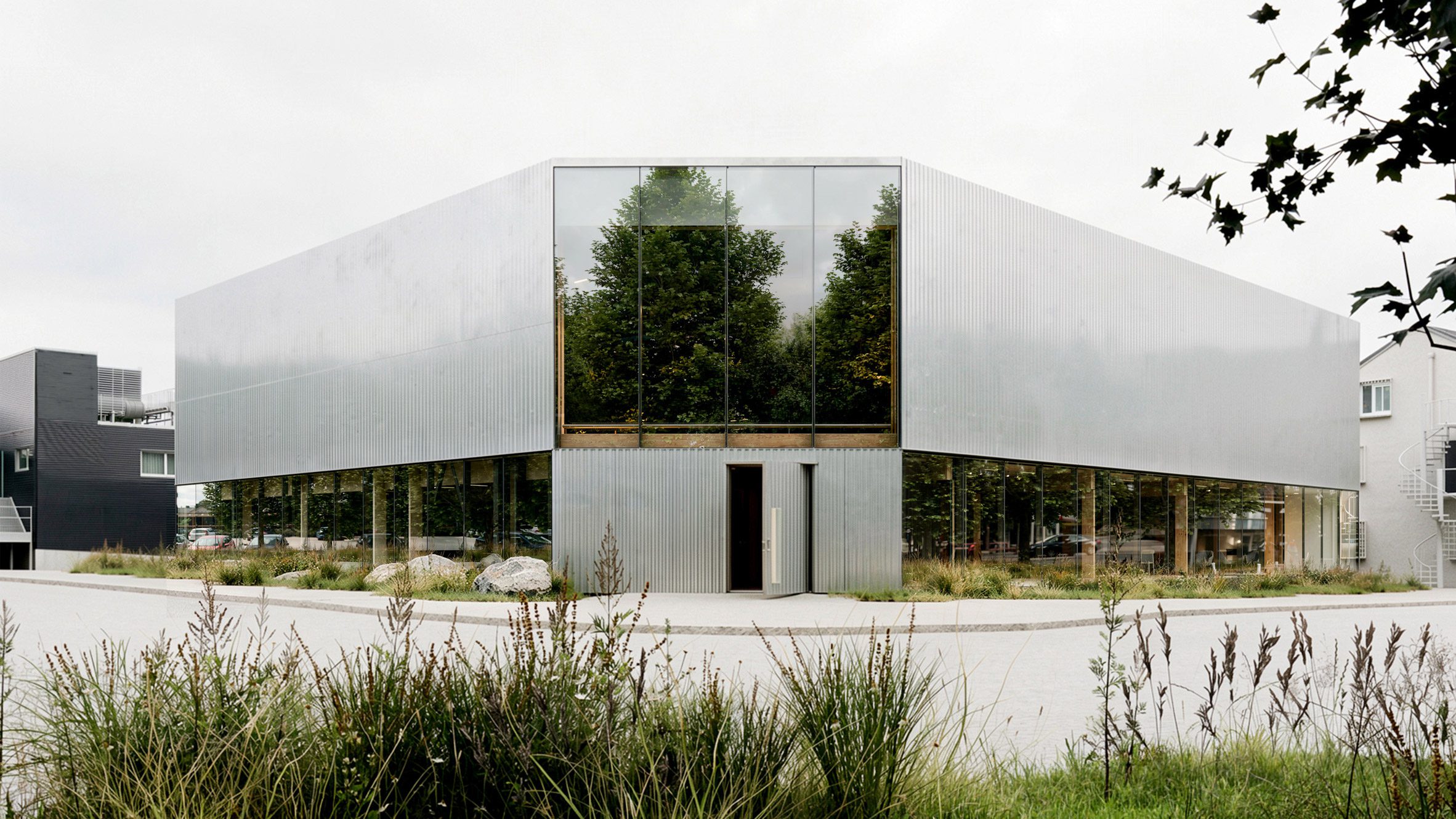
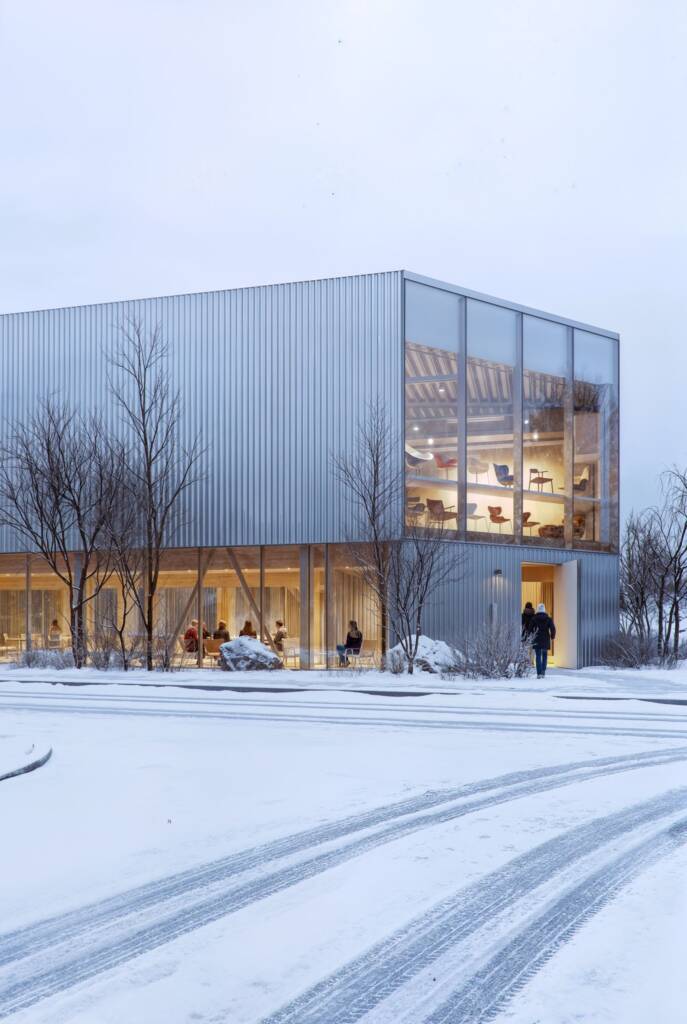
Opening in early February 2027 in Älmhult, the Museum of Furniture Studies signals a new chapter for furniture design—where heritage and forward-looking practice meet within a compelling example of reuse architecture. Conceived by the Danish studio Cobe for IKEA, the project reworks a former warehouse into a cultural space where design is not only observed, but experienced at close range.
Furniture design history as a living continuum
Dedicated to furniture design history, the museum brings together a collection spanning the 19th century to the present. First established in Stockholm in 2017, the institution now enters a more expansive phase, placing emphasis on accessibility, interaction, and continuity across generations.
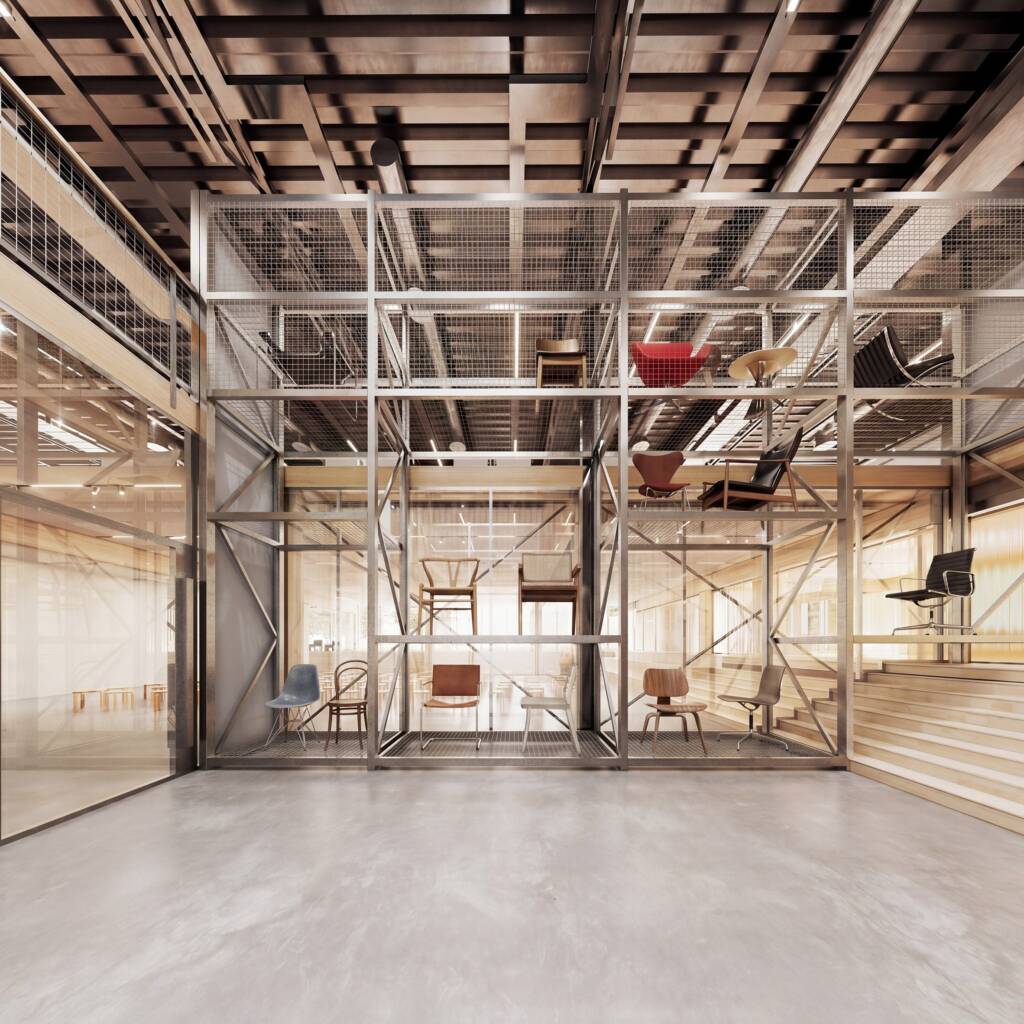
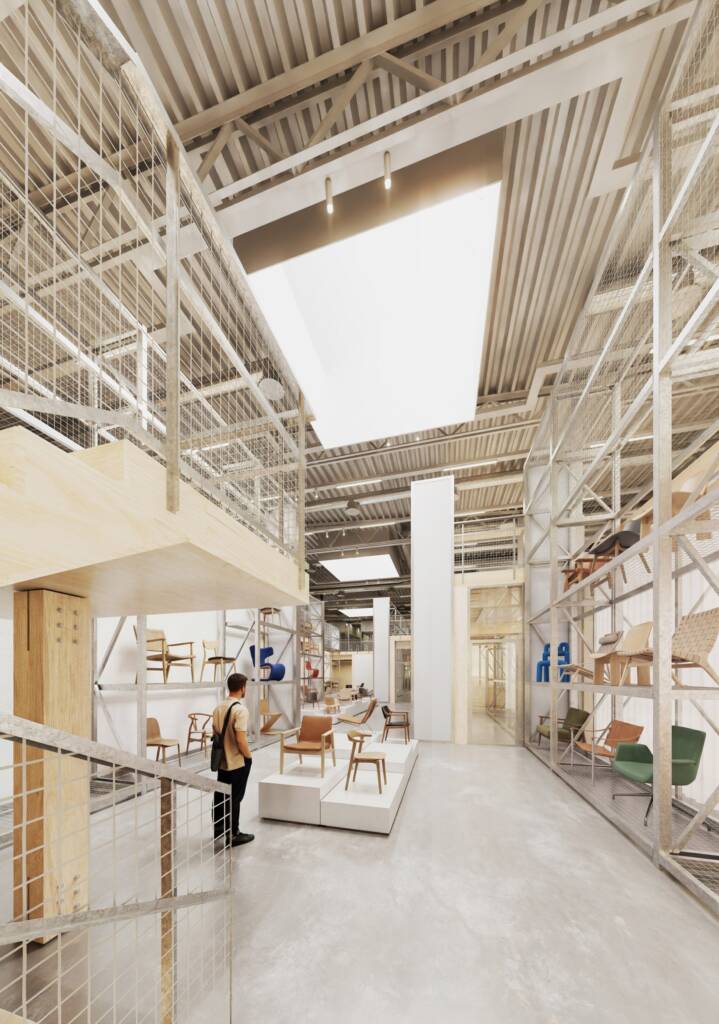
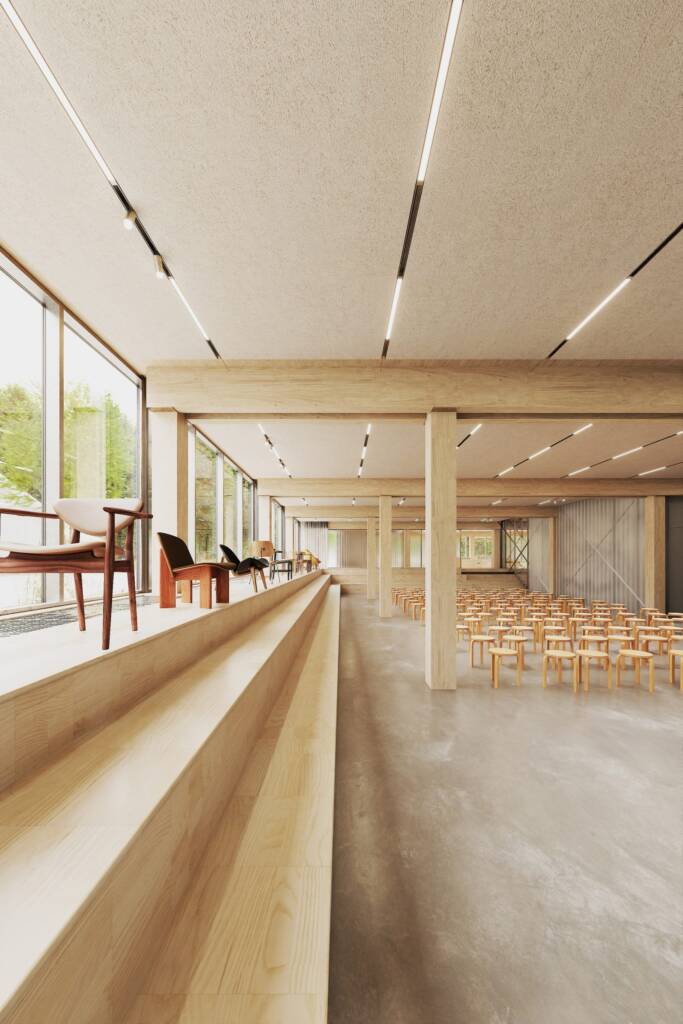
More than 800 objects are presented along an open mezzanine, while the ground floor hosts exhibitions, workshops, and learning environments. Rather than treating furniture as static heritage, the museum frames it as an active conversation—linking past craftsmanship with present-day experimentation and future possibilities. Visitors are invited to engage directly with materials and processes, shifting the experience from observation to participation.
Reuse architecture as spatial memory
Cobe approaches reuse architecture with precision and restraint. The existing warehouse structure—its steel frame, roof trusses, and concrete floors—remains visible, carrying traces of its industrial past into its new life. Instead of erasing what came before, the design works with it, allowing continuity to guide the space.
Three large windows open the façade, bringing in light and a sense of permeability, while a newly introduced timber framework reshapes the interior. This wooden structure forms a mezzanine and a series of smaller rooms within the larger volume, subtly echoing the region’s furniture-making traditions.
At the centre, a double-height void cuts through the building, creating a vertical connection between levels and accommodating temporary exhibitions. The space balances scale and intimacy, where movement through the building becomes part of the experience.
Courtesy of IKEA