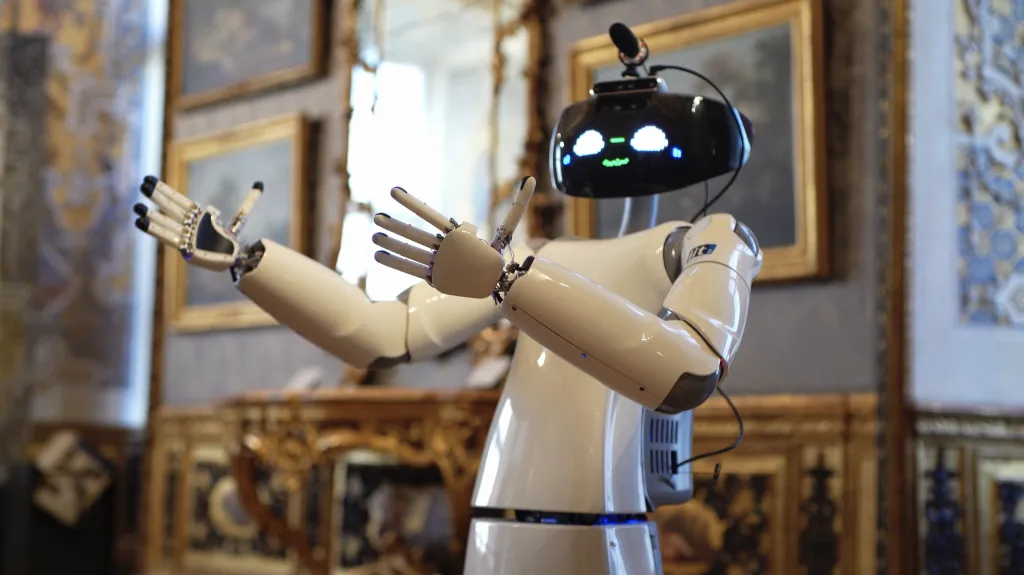
Inside Palazzo Madama, visitors are meeting a new kind of cultural mediator: the R1 robot, a four-foot-tall AI-powered guide navigating centuries of Italian art and history with mechanical precision. Developed by the Italian Institute of Technology with support from the European Union, the project introduces advanced robotics into one of Italy’s most historically charged architectural settings.
A humanoid robot designed to navigate art, architecture and human interaction
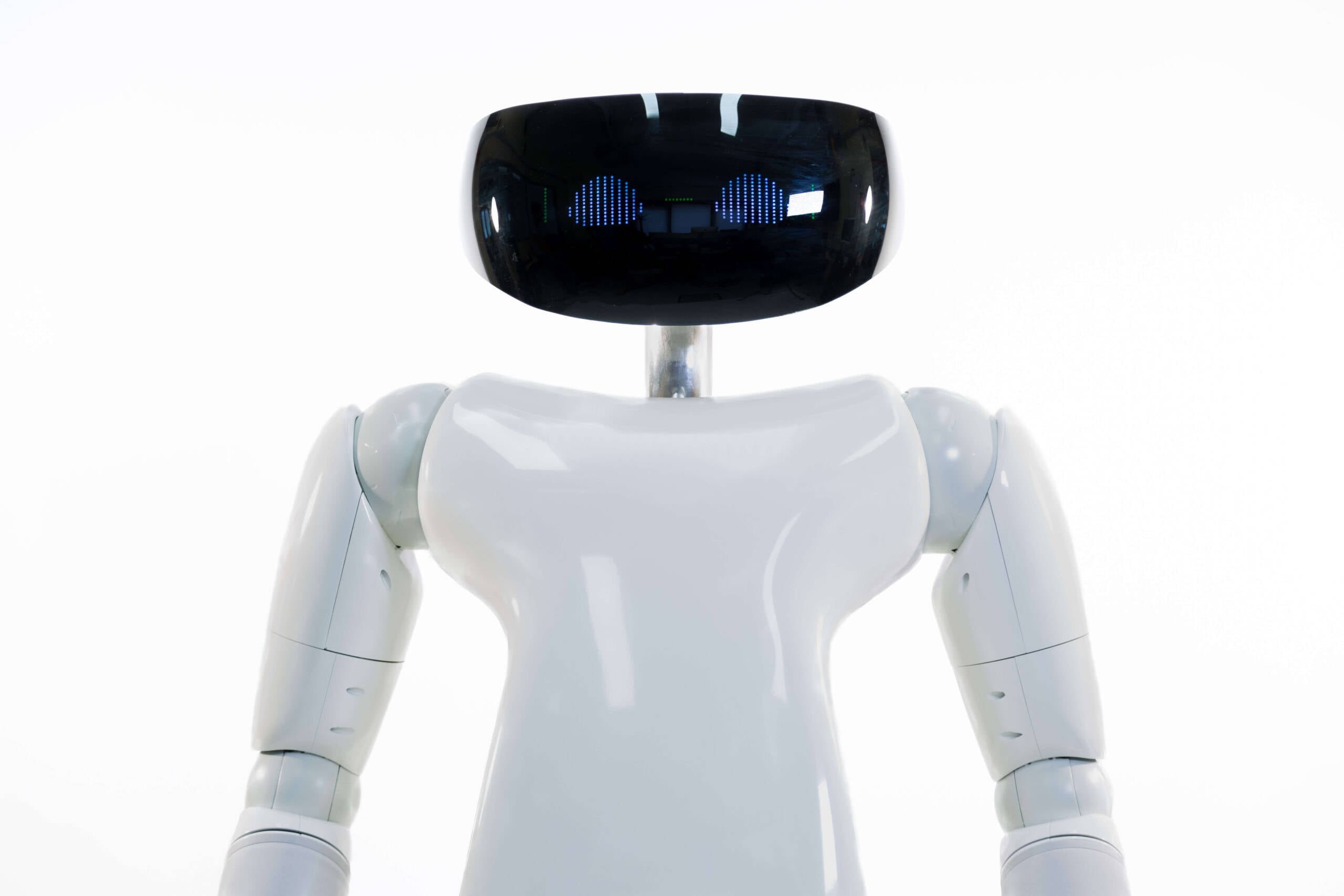
Clad in pristine white and equipped with cameras, sensors, robotic arms, and an extendable torso, the humanoid robot glides autonomously through the palace galleries. Using artificial intelligence, R1 introduces visitors to artworks, tapestries, furniture, and the legacy of the House of Savoy, while maneuvering through narrow corridors and crowded exhibition spaces with striking fluidity.
Unlike conventional audio guides or museum apps, the humanoid robot engages directly with its audience. Visitors can speak to R1, request additional context about specific works, or ask it to lead them deeper into the exhibition. Its software allows the machine to adjust routes instantly, avoid obstacles, and recalibrate itself whenever spatial orientation becomes unstable inside the museum.
The initiative forms part of CONVINCE, a European research programme focused on autonomous systems capable of operating in unpredictable real-world environments. Engineers designed R1 specifically for fragile heritage spaces, ensuring the robot could function safely among historical objects while maintaining independence even under unstable network conditions.
How the R1 Robot could shape the future of museum spaces
Museum officials stress that R1 is not intended to replace human guides, but to support them—particularly during periods of heavy visitor traffic. The robot assists with navigation, accessibility, and introductory interpretation, easing the movement of guests through the palace while opening new possibilities for public engagement.
Its presence inside Palazzo Madama creates a striking visual tension: Baroque architecture set against the polished surfaces of contemporary robotics. The encounter feels less like science fiction than a glimpse into the evolving language of cultural institutions, where artificial intelligence begins to coexist with memory, craftsmanship, and historical preservation.