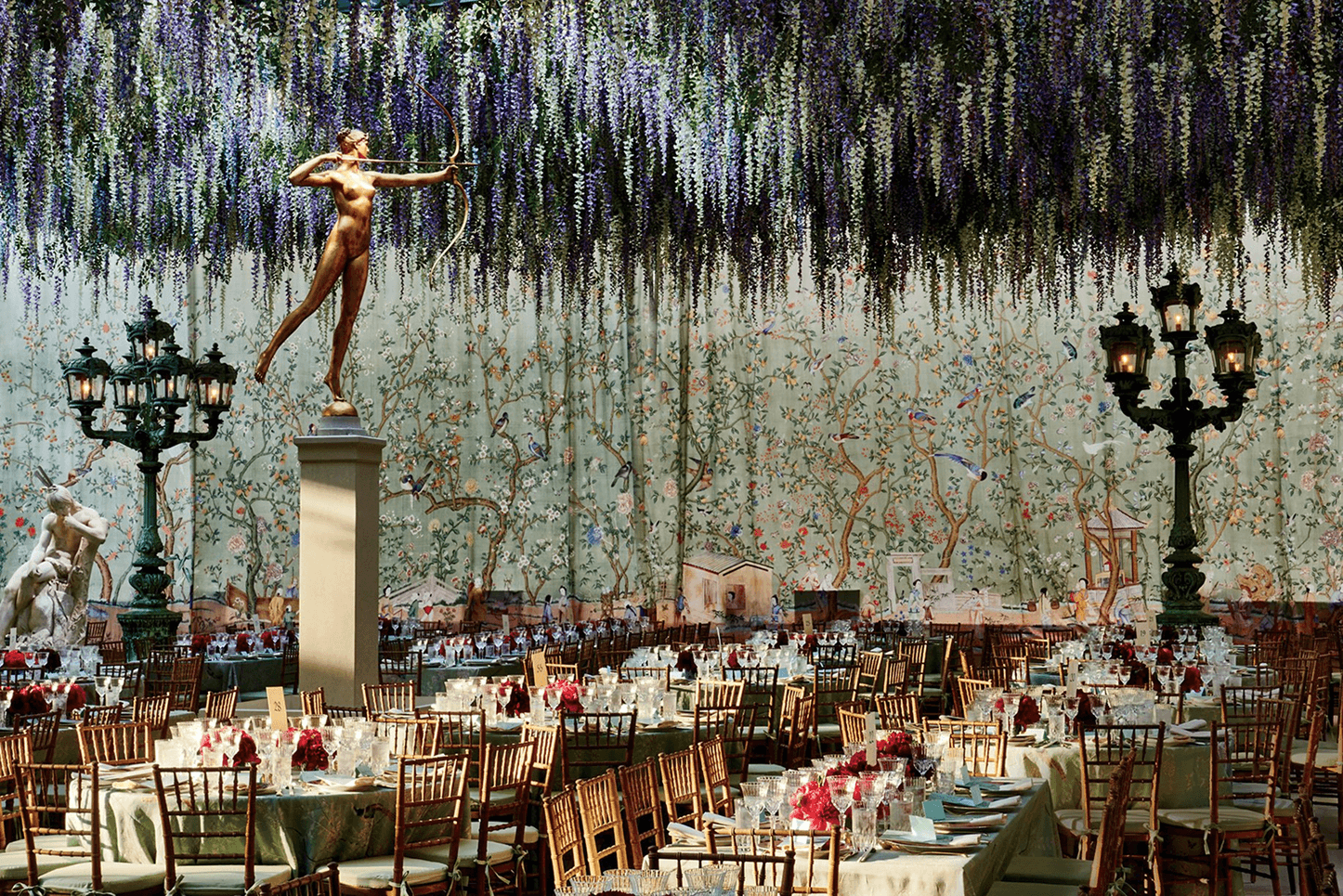
Colombian-born floral artist and event designer Raúl Àvila has a gift for transforming spaces into immersive experiences. In his approach, flowers are never just decoration, but a thoughtful means of storytelling and human connection. At the heart of Àvila’s practice lies a philosophy that embraces nature’s ultimate impermanence. He rejects heavy manipulation of materials, instead seeking harmonious surrender to their natural beauty and imperfections.
For decades, Àvila has contributed to the Met Gala stage design. His compositions have consistently elevated the event’s themes—most recently for the 2026 edition, “Fashion is Art,” where he drew inspiration from the landscapes of Northern Italy and merged Renaissance grandeur with tactile warmth. Carefully choosing references and elements of scenography, he creates an elegant dynamic that accentuates what the event is about. In this conversation with hube, Àvila reflects on his journey in floral artistry, the evolution of his craft, and the future of experiential design.
hube: What first drew you to the world of event design and floral artistry? Was there a particular moment, place, or experience that was especially formative?
Raúl Àvila: A single, transformative presence shaped my journey into this world: my late mentor, Robert Isabell. Meeting him was the defining crossroads of my life. Robert didn’t just teach me the technicalities of floral composition; he unlocked my internal creative voice and instilled in me a deep, boundless passion for the art of floristry. He taught me to look at space not as a void to fill, but as a canvas for emotion and atmosphere. Under his guidance, I learned that flowers are a medium through which we can express the grandest human sentiments.
h: You’ve incorporated elements like Colombian roses and orchids into your designs. How important is it for you to weave your Colombian cultural heritage into your work on global stages?
RÀ: It is profoundly important to me. Colombia is woven into the very fabric of who I am, and to bring that heritage to the global stage is both a privilege and a duty. Our soil yields some of the most spectacular florals in the world, nurtured by a community of incredibly passionate artisans. My ultimate goal is to illuminate the vibrant tapestry of craftsmanship that Colombia has to offer, giving our culture the spotlight it richly deserves on the world’s most prestigious stages.



h: Over nearly two decades, you’ve been the visionary force behind the Met Gala stage design. Looking back, how did this collaboration start, and how has your role evolved over the years?
RÀ: It all traces back to a single phone call from Anna Wintour with an invitation to collaborate on the event. Over the nearly two decades since, my definition of creativity has undergone a profound evolution. In the early years, my focus was simply on the sheer scale of the execution, but over time, it became a deeply psychological pursuit. My objective evolved from merely designing beautiful spaces to orchestrating unforgettable, immersive experiences that transport guests into another realm entirely.
h: For the 2026 Met Gala themed “Fashion is Art,” you drew inspiration from Northern Italian gardens and Renaissance landscapes. Can you walk us through the vision and conceptual layers behind that?
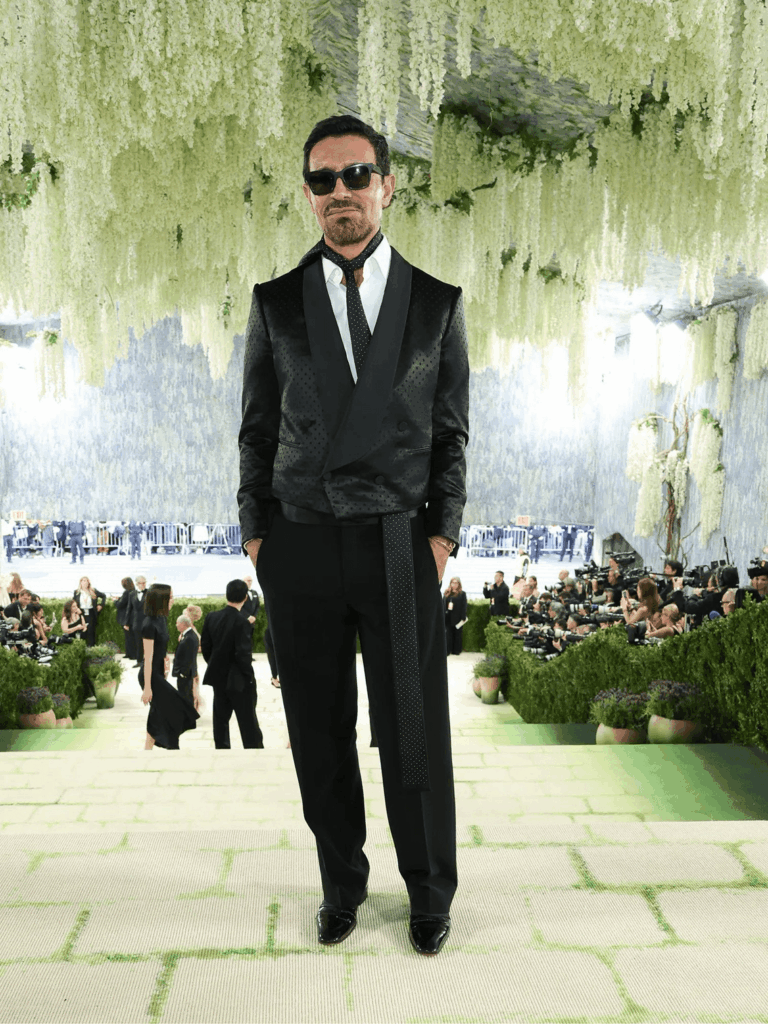
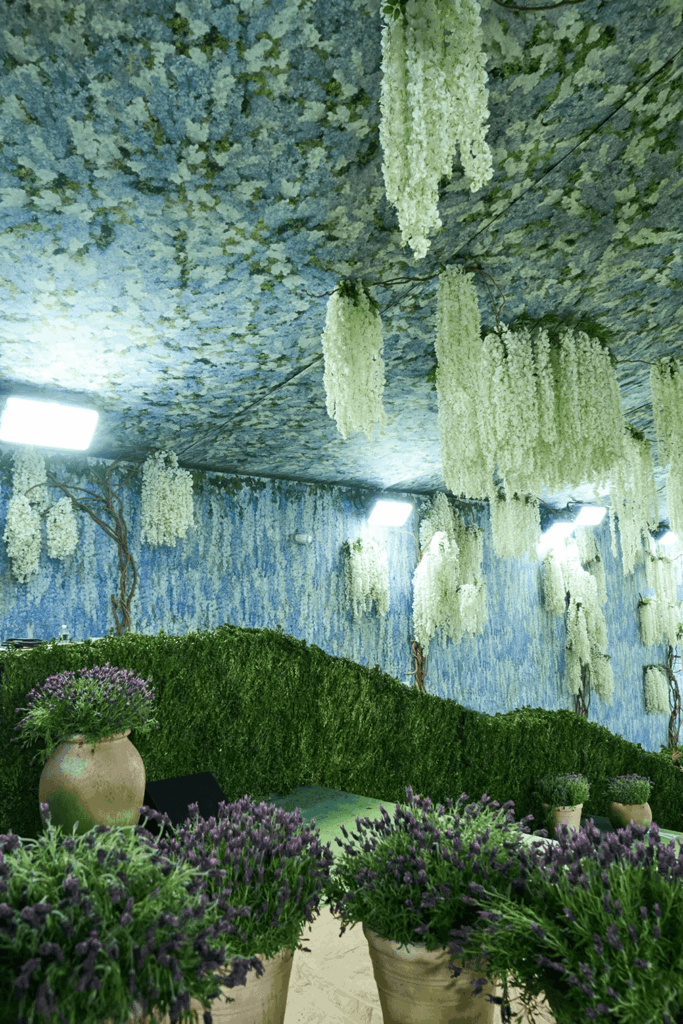
RÀ: From the inception of the “Fashion is Art” theme, I knew the scenography had to capture the romanticism, symmetry, and poetic weight of Northern Italy. I wanted the space to feel living, breathing, and historically rich. We conceptualized this as a narrative journey of sensory layers: upon entering, guests were greeted by a dreamlike, cascading canopy of wisteria, setting an ethereal, romantic tone. As they transitioned deeper into the Great Hall, the energy shifted into architectural grandeur with the introduction of towering, statuesque cypress trees and the fresh scent of lavender. Finally, in the dining room, we grounded the romance into tactile intimacy, weaving vibrant citrus fruits and garden-grown vegetables directly into the table centerpieces to evoke the sun-drenched, sensory warmth of an Italian estate.
h: Collaborating with figures like Baz Luhrmann and Derek McLane must lead to fascinating dialogues. How do these partnerships push the boundaries of what immersive event design can achieve? What have been the most valuable lessons you’ve learned from your large-scale collaborations, and how have they influenced the way you approach design projects?
RÀ: Collaborating with masters of visual storytelling like Baz and Derek completely redefines what event design can be. It turns scenography into a cinematic, living installation. When we designed the 2026 “Fashion is Art” Gala, our dialogue allowed us to approach the space not just structurally, but narratively. The greatest lesson I’ve learned from these grand-scale collaborations is the power of collective craftsmanship.
h: Where do you draw the line between human intention and nature’s own poetry? How much do you let the materials—light, petals, texture—speak for themselves?
RÀ: I try not to draw a line at all, but rather find a harmonious surrender to the natural world. I have a strict philosophy: I never manipulate or force the materials I work with. Nature is the ultimate artist; human intention is merely the frame. For me, the true majesty of a design lives entirely within the imperfections. My role is not to master nature, but to listen to it and allow it to speak loudly, clearly, and uninterrupted.
h: Flowers are inherently tied to impermanence—they bloom and then fade. Do you view this fleeting quality of your art as a limitation, or does it bring a deeper, more sacred value?
RÀ: I have never viewed impermanence as a limitation; rather, it is exactly what makes this medium sacred. There is a profound beauty in knowing that a space will exist for only a few fleeting hours before returning to the earth. It demands presence from everyone who steps inside. Because a blossom will inevitably fade, its peak moment becomes a privilege to witness. This transient nature forces my designs to be entirely alive. When the event ends, and the flowers are gone, the installation survives purely as an indelible memory in the hearts of its witnesses.
h: Where do you see the future of experiential design heading, especially as technology and sustainability intersect with natural elements like flora?
RÀ: The future of experiential design belongs to a philosophy of conscious luxury. True innovation lies in how we source and repurpose. My focus is entirely on circular design that utilizes biodegradable, raw earth materials, supports traditional global artisan communities, and ensures that every element of a grand installation is either returned to nature or thoughtfully reborn. The goal is to create dreamscapes that prove opulence and ecological reverence can walk hand in hand.


Images courtesy of RAÚL ÀVILA
Special thanks to MKTCNTRL
