Alessandra Ferri alessandra ferri interview Vienna State Ballet contemporary ballet
Photography by ANDREAS JAKWERTH

We bring light: Alessandra Ferri on the essence of ballet

Alessandra Ferri 
alessandra ferri interview
Vienna State Ballet
contemporary ballet
Photography by ANDREAS JAKWERTH
Alessandra Ferri 
alessandra ferri interview
Vienna State Ballet
contemporary ballet
WIENER STAATSBALLETT 
Photography by KOSMAS PAVLOS

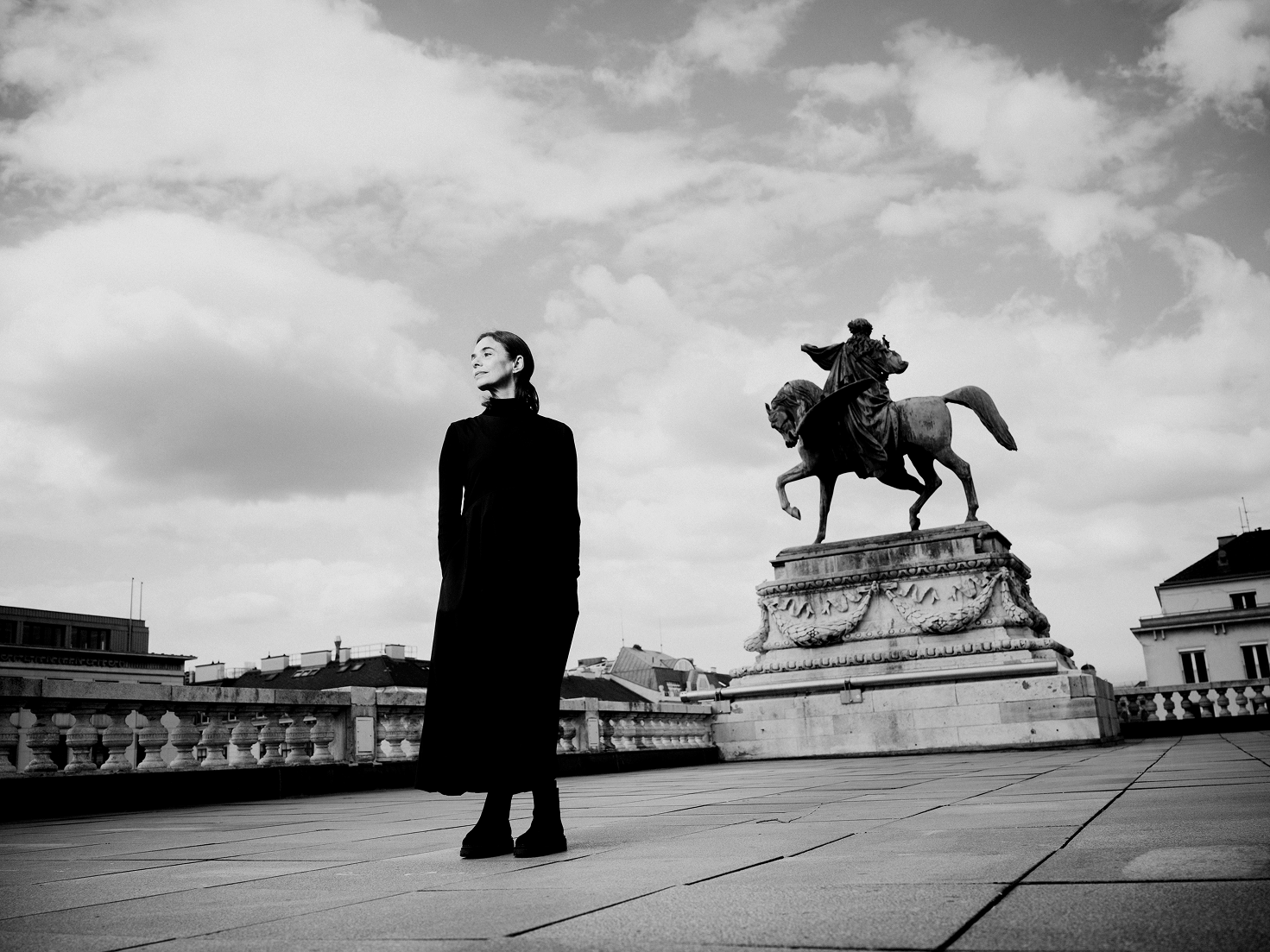
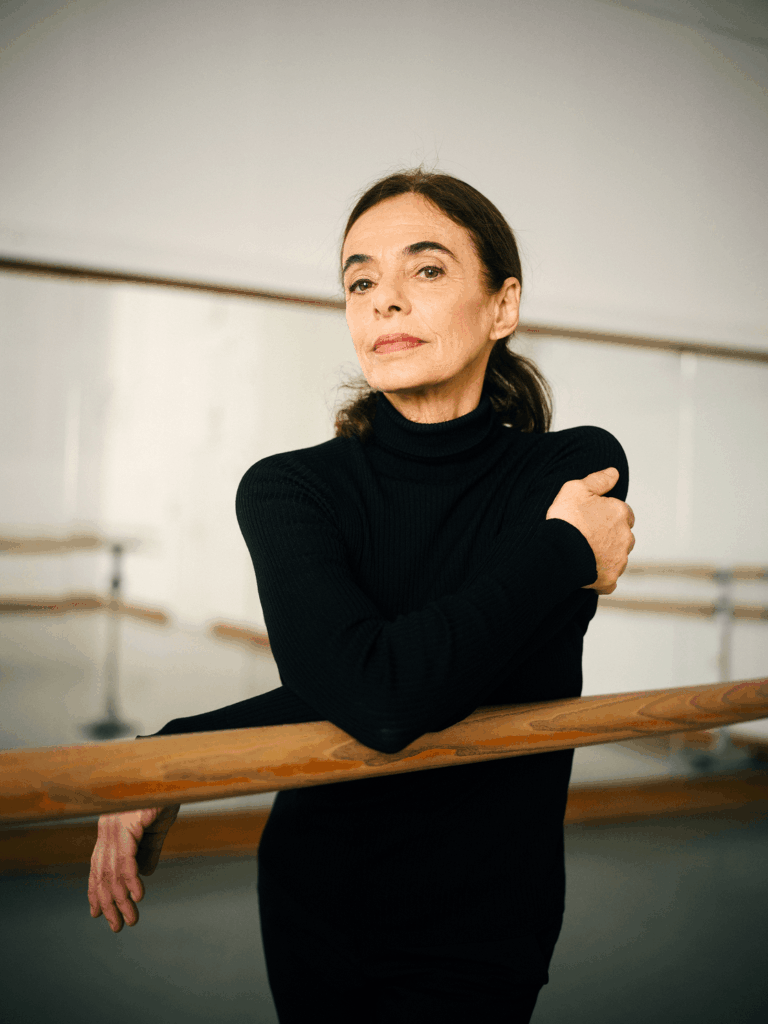
When Alessandra Ferri took over as artistic director of the Vienna State Ballet, she stepped into the role with a very clear vision. She knows, instinctively, what a company should be and works, with complete discipline, to make it so. Having danced for over forty years at the highest level—Royal Ballet principal at nineteen, La Scala’s Prima Ballerina Assoluta, two Olivier Awards, thousands of performances across every major stage in the world—she brings to the directorial role her experience and a philosophy: that technique is the foundation, not the goal; that fragility is a strength; and that ballet’s purpose, now more than ever, is to bring beauty into a world that badly needs it.

As the new artistic director of the Vienna State Ballet, Alessandra Ferri is trying to give younger dancers the courage to be exactly who they are. In this interview, she reflects on the unexpected realities of leading a major company, the risks of contemporary ballet, and what it feels like to tap into something higher than yourself in front of an audience.

hube: For someone who has never followed strategies, how do you approach the very strategic work of running a major ballet company?

Alessandra Ferri: It’s not that I don’t have a strategy—I just don’t have one for my life. I don’t plan it. Some people define their next goal and know exactly what they want. I let things come, and I always feel if something interests me or not.

I have a vision about how I want to run the company and how I want it to be. Then I organise the work accordingly, with a good team behind me to accomplish what I need to. That’s what I mean by not having a strategy. Having been a dancer and a director, I know that you can only have a career in these fields if you are extremely disciplined and focused. I have plenty of determination, focus, and discipline. I practised it all my life—over forty years of career and school—and it’s a part of my strategy.

h: Leading a company is a fundamentally different act from dancing in one. What has been the most unexpected thing about being on the other side?

AF: When you’re a dancer—particularly a principal dancer—you have to take very good care of yourself. Your whole focus is inward: keeping yourself in shape, looking after your body, which is your instrument. The whole day is dedicated to one’s talent and trying to make it flourish. Now, however, I have to do it for other dancers, trying to understand them and their psychology. Each person is different, so working with them and for them is a unique challenge.

What was unexpected was all the work behind the scenes, everything that involves productions and PR. However, there’s a whole other aspect that wasn’t surprising, because I was a dancer and lived in this world since I was ten years old in different theatres, situations, and companies. I produced my own things, and I was the director at the Spoleto Festival in Italy, where I did the programming. Not everything was new. The people were new because I didn’t know who I would work with. But there are no aspects that I have never encountered in my career. The focus has shifted slightly, but it has remained within the same world.
Alessandra Ferri 
alessandra ferri interview
Vienna State Ballet
contemporary ballet
WIENER STAATSBALLETT 
Photography by KOSMAS PAVLOS

h: The first season moves from Giselle to Pam Tanowitz, from Roland Petit to Justin Peck. What is the logic that connects those choices—what are you trying to say about what ballet is and can be?

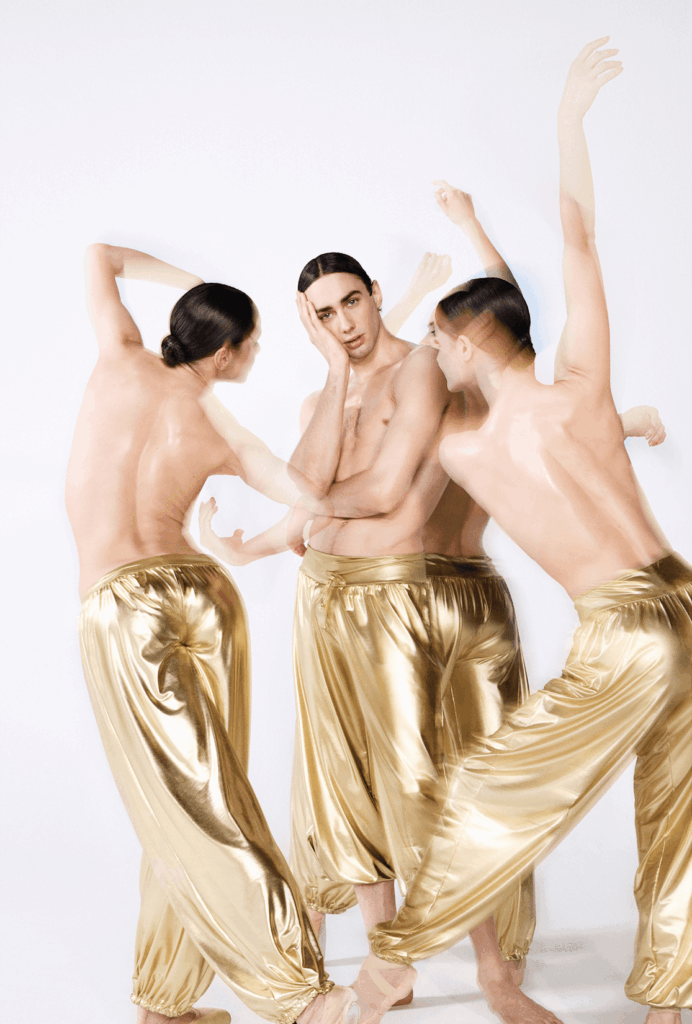
AF: The logic, to me, is excellence. That is my first motto for this company. This is an amazing theatre [Vienna State Ballet is based in Vienna State Opera and the Volksoper Wien] in a wonderful, beautiful, incredibly culturally elevated city, and I think that the company has to reflect that excellence. The choreographers I have chosen all have a common language of evolved classical ballet. Giselle was then, and Pam Tanowitz, Justin Peck and Wayne McGregor are today; we are tracing through Roland Petit, Jerome Robbins, George Balanchine, and all the others. It’s the whole spectrum of what ballet was, is and will be. I can’t predict the future, but I see a direction in which ballet is going.

h: How does a company hold onto its identity while genuinely evolving? Is that a tension that ever fully resolves, or does it have to be renegotiated every season?

AF: A company’s identity comes from its repertoire, its programming and how its dancers perform. Sometimes you have to readjust and consider the value you bring to a performance. For me, the interpretative side of a dancer is essential. I try to pass that on to the new generations—that they need to fully commit to who each one is, and that creates an identity.

These days, the repertoire is pretty similar in every company around the world, because borders no longer exist. Choreographers change. When I was a young dancer, I joined the Royal Ballet and the American Ballet. Each company had its own specific style of choreography—such as MacMillan and Ashton in London, and Cranko in Stuttgart. Then there was Balanchine and Robbins in New York, Roland Petit in France, and Grigorovich in Russia. Nowadays, everybody goes everywhere. Your identity is reflected in your approach to the work—it’s how the dancers understand and perform it. I believe we are a classical company, so I really insist on that aspect. As I say, the classical language is evolving.

h: What does the Vienna State Ballet have that other major companies don’t? And what does it still need to find?

AF: I would like to see the Vienna State Ballet perform around the world, which can sometimes be difficult for logistical reasons. There’s a lot going on behind the scenes. The season is structured in such a way that we can’t just disappear for two weeks, still I would very much like it to be part of the international scene. Sometimes it has been isolated for no good reason. I would really like it to become more international, and I think this is happening much faster than I expected. We’re generating a lot of interest from other countries—this is thanks to the dancers.

Perhaps because I travel so much, it’s important for me to be part of the rosters of a few internationally recognised companies. I want to make it known that we are one of them; it’s something I want to work towards. My goal was to make the company technically very strong. To be an interpretative company, you need a solid technical foundation. I’m surprised at how quickly the dancers have achieved that—I thought it would take much longer, but it’s been great.

This season has been very demanding: in terms of the programme, we’ve performed some very challenging ballets. It was a bit of a gamble because I programmed it two years ago. The Visionary Dances programme is really hard to perform, and the dancers did it amazingly well. I think we’re making great progress. For me, it’s very fulfilling to see that.

h: You’ve described fragility and vulnerability as strengths rather than faults. Was there a moment in your own career when you realised that it was the breaking open of something inside you that made a performance extraordinary?

AF: Yes, absolutely. As a dancer and a human being, I think we are all full of insecurities. Sometimes we feel that we are not up to the task, or the imposter syndrome makes us think that we are pretending. But then I realised it’s a human condition, and it’s beautiful. It’s better to incorporate that fragility into your work than to try to hide it and pretend that you’re a superstar dancer with a perfect life. Incorporate the insecurity into the character you’re playing and show it, and people will connect with you because they will see you as real and human—someone they can identify with. So instead of acting as a fragile Giselle, be the fragile person you are. Don’t act, just be. This is something that dancers find harder to do because we all try to be perfect. Everyone tries to say, “Yes, I’m fine,” “Yes, I’m good.” But actually it’s “I’m not; I’m like everybody else.” I think it’s inspiring to let people be themselves and show that. Of course, we have to work hard to improve technically, but it’s also necessary to incorporate who we really are into what we do.

Alessandra Ferri 
alessandra ferri interview
Vienna State Ballet
contemporary ballet
Photography by ASHLEY TAYLOR 
Courtesy of WIENER STAATSBALLETT
Alessandra Ferri 
alessandra ferri interview
Vienna State Ballet
contemporary ballet
Photography by ANDREAS JAKWERTH
Alessandra Ferri 
alessandra ferri interview
Vienna State Ballet
contemporary ballet
WIENER STAATSBALLETT 
Photography by KOSMAS PAVLOS
Alessandra Ferri 
alessandra ferri interview
Vienna State Ballet
contemporary ballet
Photography by ANDREAS JAKWERTH
Alessandra Ferri 
alessandra ferri interview
Vienna State Ballet
contemporary ballet
WIENER STAATSBALLETT 
Photography by KOSMAS PAVLOS
Alessandra Ferri 
alessandra ferri interview
Vienna State Ballet
contemporary ballet
WIENER STAATSBALLETT 
Photography by KOSMAS PAVLOS
Alessandra Ferri 
alessandra ferri interview
Vienna State Ballet
contemporary ballet
Photography by ANDREAS JAKWERTH

h: A lot is said about what ballet asks of the body. What does it ask of the mind, and of the inner life and are those demands spoken about enough?

AF: Like any performing profession, it’s tough. You need the strength to perform in front of an audience. Of course, this is supported by the love and passion we have for the art form. When you tap into this, it gives you a lot of courage because you love doing it. But it’s a physically demanding profession. Like any athlete, you have to be fit. When I dance, I always think of my body as a racing car, like a Ferrari. It’s an instrument that we need to take care of and demand a lot from, but that’s the only way. You could say the same to a professional marathon runner: you train to get fit for that stage, but there are some very tough moments in preparation. So we have to think of it as an athletic profession combined with performance. It’s hard, but that’s the way it is. You can’t be an Olympic champion without training hard. Ballet isn’t different.

I think people don’t realise how tough it is—because our job is to make it look effortless. An athlete can scream and shout as they go along, but we can’t do that. We have to pretend that everything is easy when it’s not. When you enter the profession, you know that’s what it’s like. I think it’s important to make that clear from the beginning. Of course, it’s a gradual build-up until you have the strength and physical stamina to approach a company and a career professionally, but you can’t hide anything. You need a strong body.

h: What is most at risk of being lost in ballet right now: technically, artistically, culturally?

AF: The world has changed. Society has changed. Young people have changed, too. Now we all have phones, myself included. I look at mine too much! But I think it’s a sign of the times. Nowadays, dancers and youngsters always see themselves from the outside because they know how people perceive them. Dancers post videos of themselves doing something well. Of course, everyone posts when they’re having a good day; nobody posts when they’re having a bad rehearsal or performance. You edit what you want people to see. This puts a lot more pressure on you and others. You always see your own performance from the outside instead of being present and living it.

Dancers now film their rehearsals, but the video provides only one-dimensional feedback. It doesn’t convey the energy or emotion: maybe the step was imperfect, but it was so emotionally wonderful. You use your technique to express it, but in a video, you only see if you did the step exactly correctly. This means that you are approaching the work from the outside rather than the inside. That can be dangerous, because then you lose the inner world. You’re wearing the character’s clothes instead of creating the character from within. Then you lose the interpretation, and the technique becomes the goal instead of forming the basis of the performance.

h: You’ve spoken about the awareness that we are capable of tapping into things higher than ourselves. What does that mean to you? Is it spiritual, artistic, or something else entirely?

AF: It’s a little bit of everything. You tap into something and suddenly transcend your own limitations. You’re always thinking about going beyond that and tapping into emotions or feelings you don’t necessarily experience in everyday life for various reasons, such as distraction, problems, or things to do. So, when you dance, perform, and melt with the music, you have to do something so hard.

Some friends of mine ran the Tokyo Marathon for the first time this year, and they told me it was the most amazing experience: it was really hard and you had to push yourself. They didn’t just turn up and run 42 kilometres; they trained for the whole year. But when they got there, they said that the feeling of everyone being together and trying to be better than they are was amazing. It’s a similar feeling to that. When you dance, you have to surpass your fears, limitations, fragilities, and insecurities for the benefit of others, i.e. the audience, and that’s something that unifies people. It’s a beautiful feeling. You feel a sense of unison with everyone around you, including the audience. It’s a special and privileged experience.

h: What is the conversation you most want to be having with ballet audiences right now, not about a specific production, but about the art form itself?

AF: If you go to a ballet performance, you can truly appreciate the beauty that comes through in its transparency. In this day and age, when there is so much unpleasantness and darkness out there, we definitely make light. We bring joy, we bring light, we bring beauty. Just come and experience it.

Alessandra Ferri 
alessandra ferri interview
Vienna State Ballet
contemporary ballet
Photography by ANDREAS JAKWERTH

Words: ARINA V

ISSUE 8

issue no8

Discover the new issue — available now