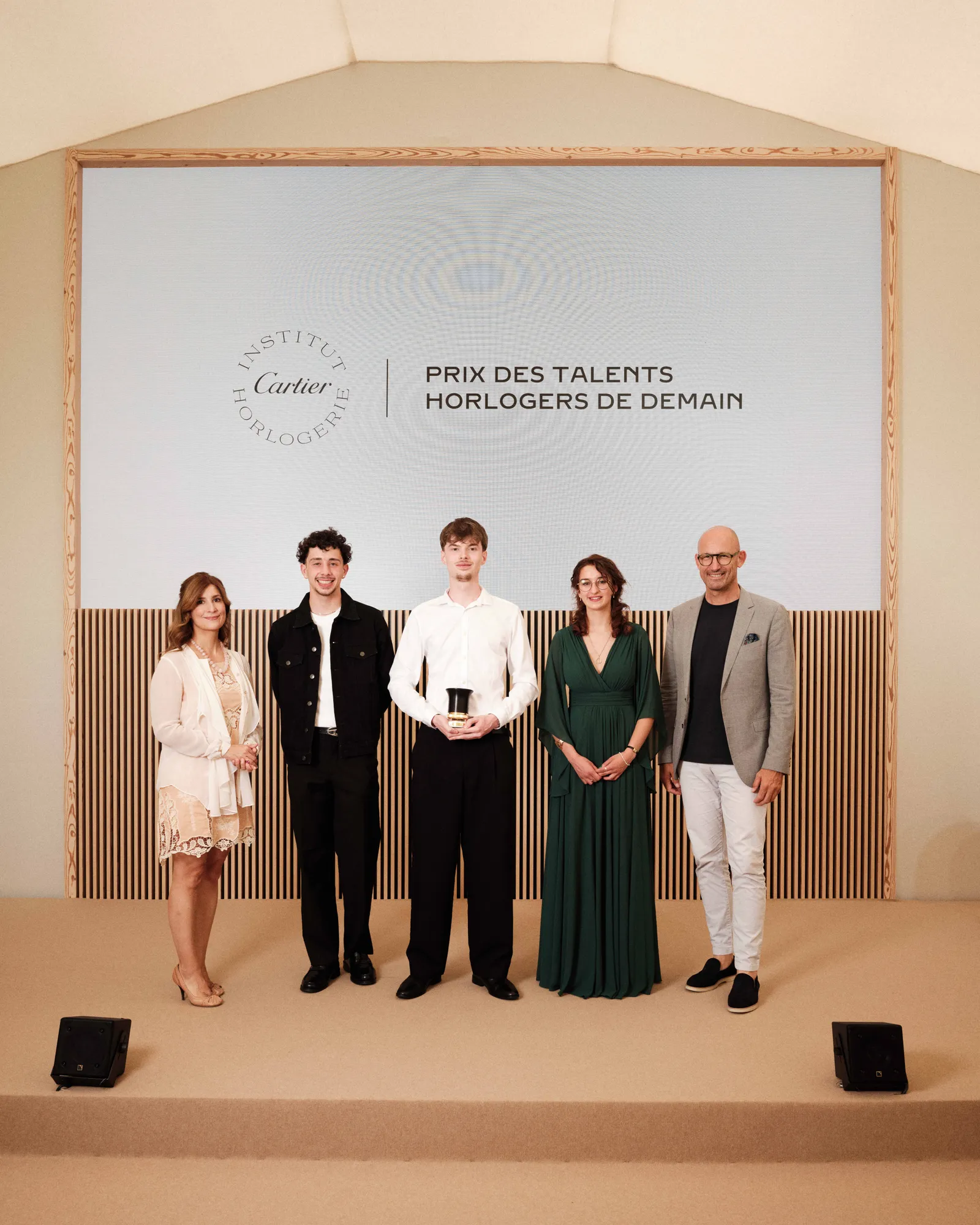
The Cartier Prize for Watchmaking Talents of Tomorrow has announced the winners of its 28th edition, celebrating a new generation of watchmakers whose inventive concepts are reshaping the future of horology. Presented at Cartier’s Maison des Métiers d’Art in La Chaux-de-Fonds, Switzerland, the award has championed emerging talent since 1995, recognising both technical mastery and creative vision.
Watchmakers rethink the language of time
This year’s edition invited apprentices and technicians from Switzerland, France, Belgium, and Germany to interpret the theme Shifting the Balance: Reading and Understanding Time Differently. Inspired by the pendulum, finalists spent three months refining their concepts with expert mentors before presenting them to an international jury of horology specialists.
Unlike conventional competitions, the Cartier Prize begins with an idea rather than a mechanical feat. Each participant received a Cartier alarm-clock movement, an 80-hour production window, and an identical budget, placing imagination on equal footing with craftsmanship.
Watch design winners that challenge conventional timekeeping
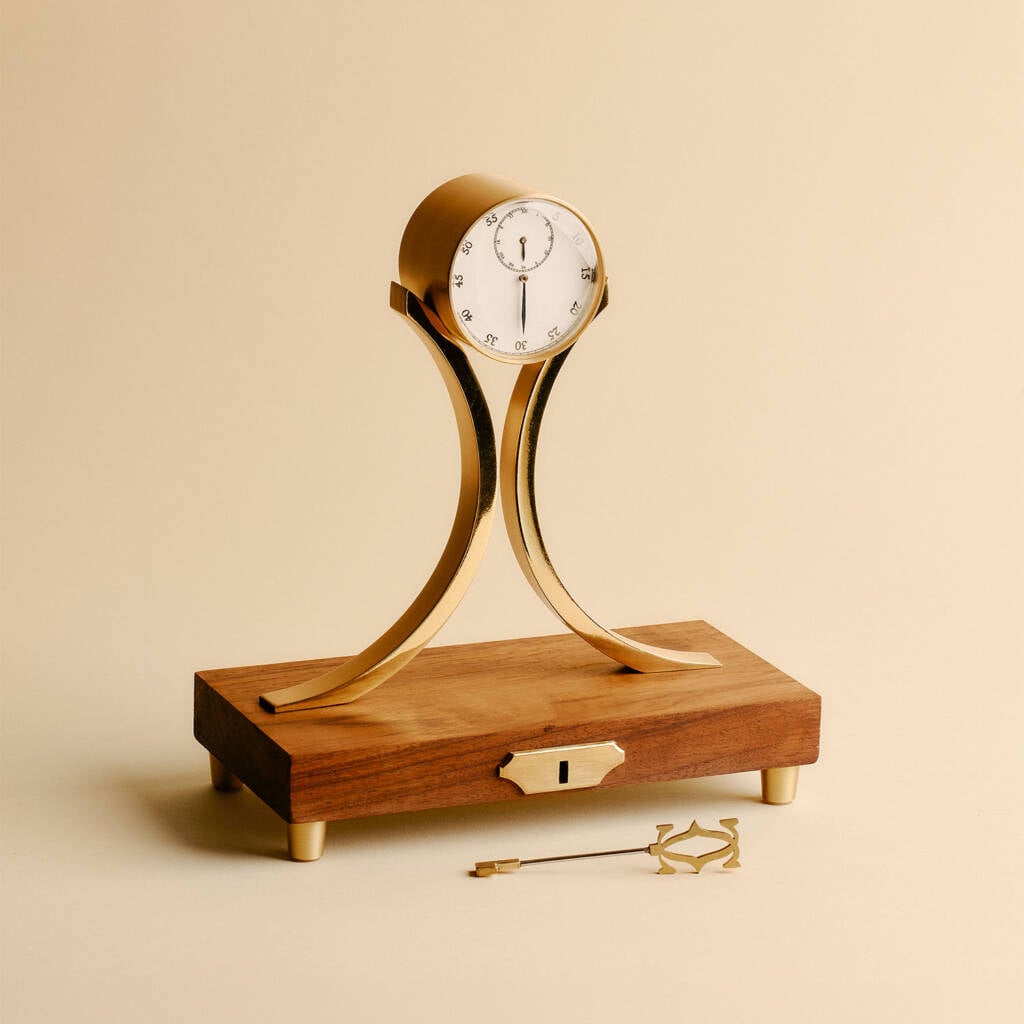
Belgian apprentice Aymeric Peters claimed first prize for Silence Choisi (Chosen Silence), a clock that conceals time until activated. Echoing nineteenth-century wooden clocks, it uses two hidden rattrapante mechanisms to reveal the hour only when a key is turned, inviting a quieter relationship with time.
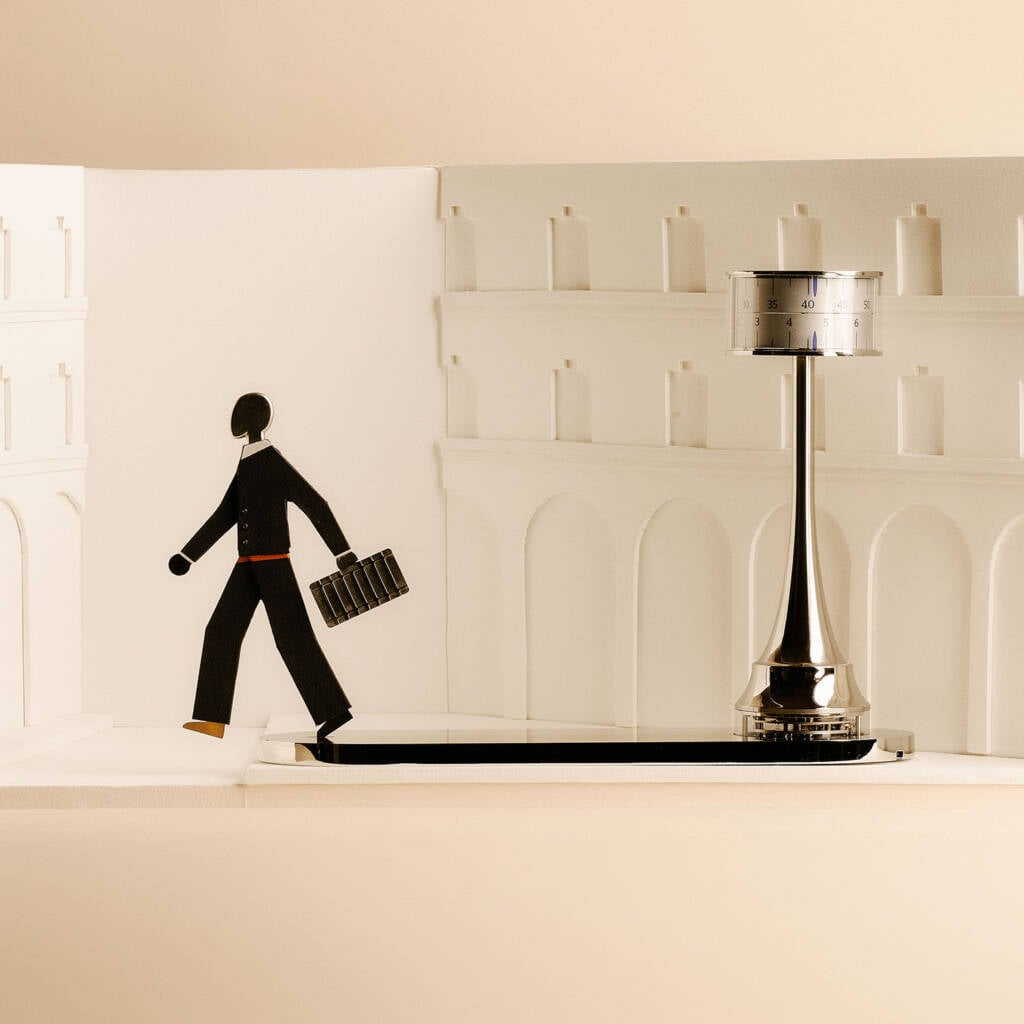
In the Technicians category, France’s Arthur Choquet won with Un Instant (A Moment). Drawing on Parisian architecture, Art Nouveau street lamps, and the photography of Henri Cartier-Bresson, his design contrasts stillness with perpetual motion, suggesting that time is something to be experienced as much as measured.
Among the other winners, Layla Sluysmans received second prize for Nymphéa, a mechanical water lily that opens every two hours to reveal its dial, while Edouard Nicod was recognised for La Dualité Des Opposés, inspired by Cartier’s iconic panther. Adam Deroche earned second place in the Technicians category with Médusée, and Adrien Stefenelli received third for Echo, a study of repetition and resonance.
Future of horology
Established by the Cartier Watchmaking Institute in 1995, the Cartier Prize combines competition with mentorship, supporting the next generation of makers. Alongside Cartier timepieces, the two first-prize winners will complete internships at Cartier’s Manufactures & Ateliers, working alongside the Maison’s master watchmakers.
More than a showcase of technical excellence, the Cartier Prize highlights horology as a field driven by invention, emotion, and fresh perspectives. This year’s finalists proved that the future of watchmaking lies as much in original ideas as in mechanical precision.