Gary Card set designer fashion industry
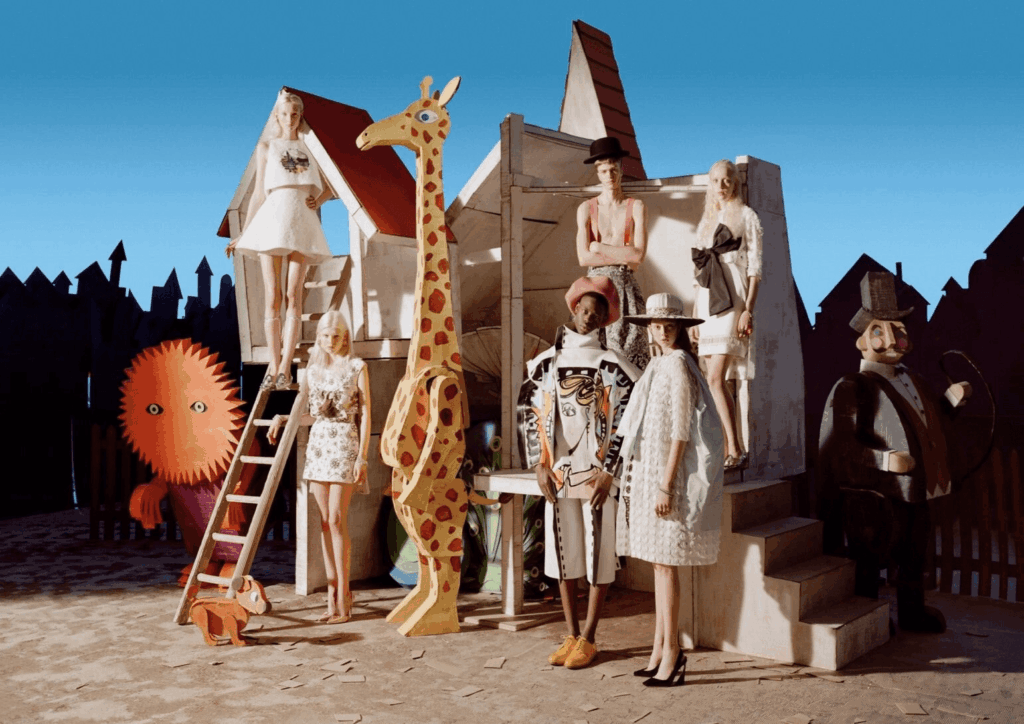
Photography by TIM WALKER; Styled by SARA MOONVES; Set Design by GARY CARD

Gary Card: Giant Domed Cities

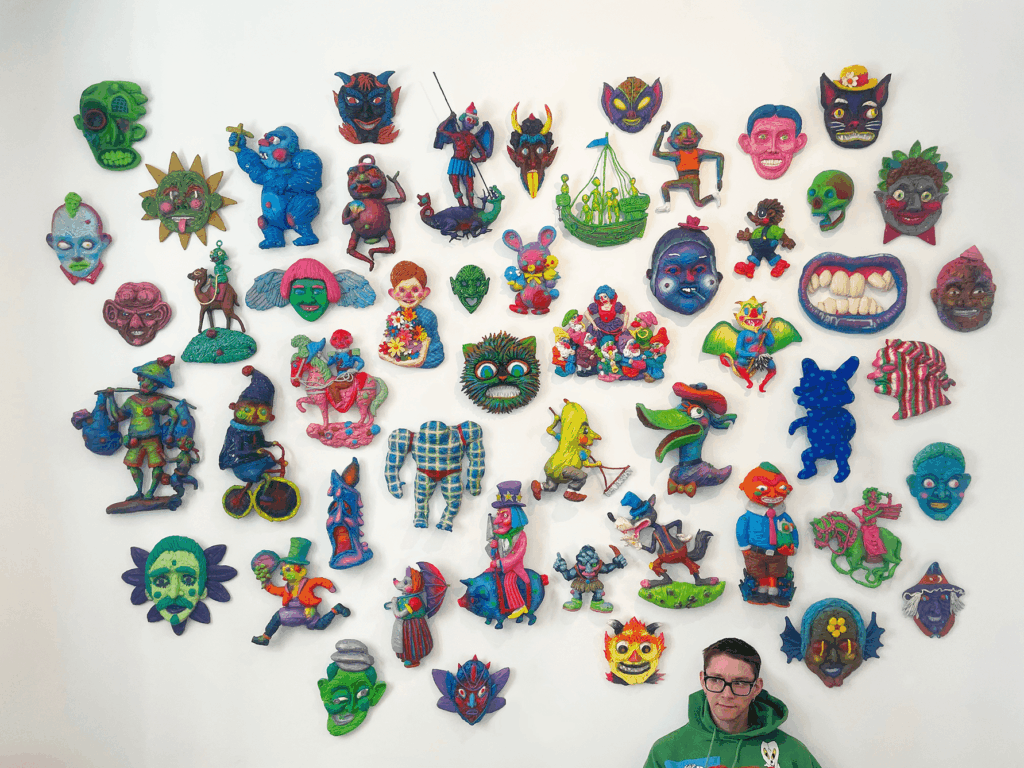
Gary Card cannot be described with a single label. Over two decades, the London-based artist, illustrator, sculptor, and set designer has built one of the most visually distinctive practices in contemporary culture, creating worlds for Comme des Garçons, Lady Gaga, Rei Kawakubo, Tim Walker, and Louis Vuitton, while developing a fine art practice that exists entirely on his own terms. His installations are maximalist, playful, and often a bit unsettling: smiling faces that are also melting, curiosity shops that feel like fever dreams. In this conversation, he talks about the gap between commercial work and creative freedom, why beauty alone has never interested him, and what it actually feels like to collaborate with someone who trusts you completely.

hube: Set designer, artist, illustrator, sculptor—the labels keep multiplying. At this point in your career, does any single one of them feel true, or has the work always existed somewhere between all of them?

Gary Card: The original polymath, master of none. I definitely exist in the in-between. I never really felt comfortable with the term set designer. I made artwork for fashion industry projects, whether that meant a photoshoot or a catwalk, it was always my goal to bring fine art into fashion. It sounds obvious now, but it was an almost radical proposal at the beginning of my career, and really gave me a signature style. As I got older, I became more of a traditional set designer. When I started, my rule was that I would never make a room set, ie a traditional hotel room or a wood cabin set. But in order for my studio to survive in this turbulent industry, that rule fell away, to the point that over the last 5 years there’s been a huge divide between my set design work and my art practice. I treat them as two separate schools of thought. Occasionally, both practices collide. But to do justice to my own creative impulses, I have to make artwork for myself, without the constraints of a client. Making my own work keeps me engaged and reaffirms why I wanted to make things in the first place.

h: Commercial work for Louis Vuitton, Hermès, Comme des Garçons and solo exhibitions on your own terms. How different does it feel to make something for yourself versus making it in service of someone else’s vision?

GC: Sometimes making sets to clients’ specific preferences can be freeing, in that I have certain parameters I have to work within, like following a recipe. Whereas making my own stuff is far more precarious, there’s far more danger in that respect, as the factors are limitless, so you have to be laser-focused on your point of view: what is my visual identity? There’s no big brand safety net to catch you, but at the same time creating something on your own terms is far more rewarding.

Gary Card
set designer
fashion industry
GARY CARD
Photography by WILLIAM SELDEN
Gary Card
set designer
fashion industry
Courtesy of GARY CARD
Gary Card
set designer
fashion industry
TIM WALKER for W MAGAZINE
Babes in Toyland
Set design by GARY CARD
Gary Card
set designer
fashion industry
Courtesy of GARY CARD
Gary Card
set designer
fashion industry
Gary Card
set designer
fashion industry
Gary Card
set designer
fashion industry
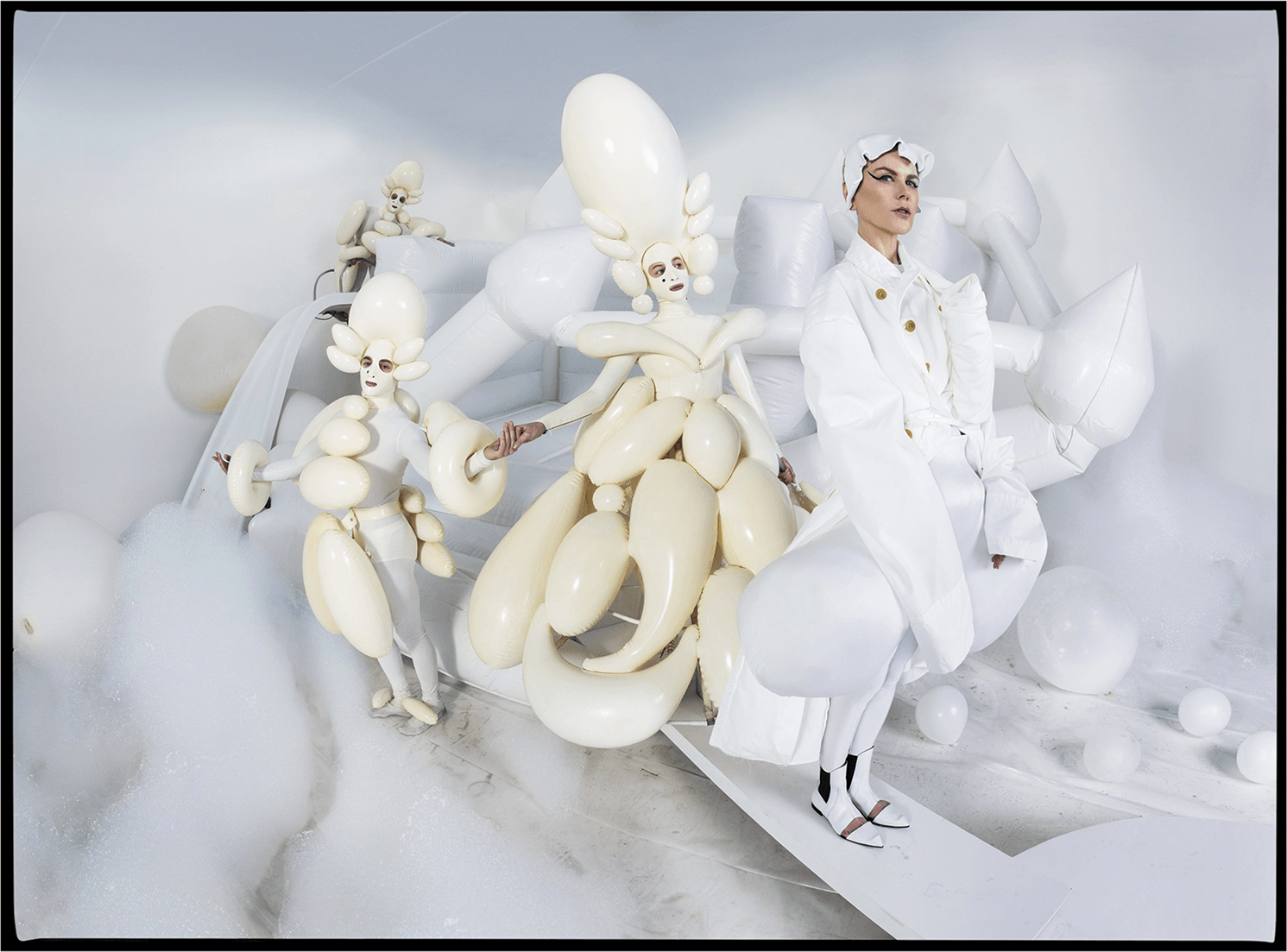
TIM WALKER for DAZED MAGAZINE, 2022
Angels in Buggery
Set design by GARY CARD
Gary Card
set designer
fashion industry
LOUIS VUITTON Men’s Fall/Winter 2021 campaign
Photography by TIM WALKER
Set design by GARY CARD
Gary Card
set designer
fashion industry
LOUIS VUITTON Men’s Fall/Winter 2021 campaign
Photography by TIM WALKER
Set design by GARY CARD
Gary Card
set designer
fashion industry
BALENCIAGA Spring/Summer 2017 advertising campaign
Photography by HARLEY WEI
Set design by GARY CARD

h: The abandoned amusement park, the claustrophobic curiosity shop, the mad carnival—your worlds always have a strong sense of place and character. Do those environments arrive fully formed, or do they build gradually through making?

GC: When making my own self-directed spaces, they start with the intent to completely saturate an audience in an idea, so that ambition is big and fully formed. It’s the drive to keep going, to keep adding layers and detail. I can be pretty stubborn, so if there’s an idea I need to execute, I won’t stop until it looks like the picture inside my head. I can compromise on the ideas within the installation but not the scale of the concept. On many occasions that means I’ll send the team home and stay in whatever space I’m creating until the early hours. A lot of the time my energy comes from a concept hanging on a knife’s edge and figuring out how to pull it back from the brink.

h: Scale seems important to your work, from small sculptures to five-metre installations. Does size change what a piece is capable of saying, or is it more about what it does to the body of the person standing in front of it?

GC: Scale is always fun to work with. The greatest joy is seeing something very small that I’ve made blown up to a gigantic proportion. We do this a lot when we create art in China, we get to create lots of huge things there. Chinese audiences are far more receptive to big, weird and wild ideas. It’s a joy to work there.

h: Working with Rei Kawakubo, FKA Twigs, Tim Walker, Lady Gaga—a remarkable list to have accumulated. What does the best collaboration feel like from the inside, and what makes a creative relationship actually work?

GC: The best collaborations are with people who trust you and want you to bring your world into theirs. Probably, my most fulfilling collaboration has been with Rei [Kawakubo] and Comme [des Garçons] team. She always gave me room to breathe and create without barriers, just keywords that would inspire me and then left me to create. When I create headpieces for her, I’ll sometimes make 30 or 40 for her collection, then she’ll choose her favourite 10 or 12. It’s an unbelievable thrill to see those pieces on the catwalk paired with her incredible stuff.

Creating for [Lady] Gaga was similar, only the success rate was far lower. I would endlessly create work for her, but only a few things made the cut. There was an understanding at the time that if I was making stuff for her for a video or a gig, it meant there were another 20 designers in London doing the same thing, so the chances of your pieces being chosen were limited. It was a huge time investment, and the gamble could sometimes be soul-crushing, which is why I had to eventually walk away from working with her.

Tim [Walker] is and always will be my favourite photographer to work with, it truly is a collaboration. A lot of the time, making set for photographers is a dictatorship where you have just make every one of their mad whims happen. But with Tim, you really feel like a valued partner, creating ideas together. He’s incredibly open and receptive, a lot of trust has been built there, so much so that he’ll invite me to edit the photos with him. He’s an inspiration in so many ways. Mainly, he shows that you can be at the absolute top of your game and still keep your soul.

h: The relationship between set design and art has shifted; immersive, environment-led shows are everywhere now. Do you feel like the work you were doing years ago anticipated something, or did the industry catch up to something that was always possible?

GC: Without bragging too much, we were definitely ahead of the curve there. We’ve been making ‘immersive spaces’ since the noughties, but the term was only coined when giant LED screens changed the game. Ultimately, it’s always been about encasing an audience in an idea from floor to ceiling. It’s wonderful, but it’s expensive. So, LED screens suddenly meant that you could create giant sets by just hiring the technology, so boring!

Gary Card
set designer
fashion industry
GUCCI Cosmogonie Cruise 2023 campaign
Photography by MERT ALAS and MARCUS PIGGOTT
Set design by GARY CARD
Gary Card
set designer
fashion industry

h: What is the project that would genuinely scare you, the one that would require something you haven’t found in yourself yet?

GC: I think creating sets for a film would genuinely kill me. I’ll sometimes look at the amount of work in sci-fi films and think it would be an insurmountable task. When Shona Heath won an Oscar for Poor Things, it made us set designers re-adjust our ambitions, that became the new benchmark. We were like, “Are you kidding me? We have to win Oscars now?!” Jokes aside, it was hugely gratifying to see that achievement. I don’t think set design gets enough love a lot of the time.

h: You’ve spoken about making something beautiful and then “messing it up”—what does disruption reveal that beauty alone cannot?

GC: Beauty is so limited. When I was a kid, I drew a lot of people and faces. I always found myself gravitating to people who weren’t traditionally beautiful because they had features that would anchor a drawing. Pretty people, on the other hand, were impossible to draw. There was no focal point for me. I guess that could be applied to my general design ethos. Beauty just isn’t interesting to me, which is hilarious when you think I’ve worked in fashion for 20 years.

h: How would you describe the future in 3 words?

GC: Giant domed cities.

Gary Card
set designer
fashion industry
GARY CARD
Dover Rover sculpture, a mascot for the COMME DES GARÇONS PLAY LINE
Gary Card
set designer
fashion industry
ANDREAS KRONTHALER for VIVIENNE WESTWOOD Spring/Summer 2019 runway show
Set design by GARY CARD
Gary Card
set designer
fashion industry
COMME DES GARÇONS, Spring/Summer 2012
Gary Card
set designer
fashion industry
Photography by Elizaveta Porodina for LUNCHEON MAGAZINE
Set design by GARY CARD
Gary Card
set designer
fashion industry
COMME DES GARÇONS, Spring/Summer 2022
Gary Card
set designer
fashion industry
Photography by ELIZAVETA PORODINA for LUNCHEON MAGAZINE
Wall People
Set design by GARY CARD

Words: ARINA V

ISSUE 8

issue no8

Discover the new issue — available now