Carsten Höller invites visitors to question certainty in Two, a major site-specific exhibition at the UCCA Center for Contemporary Art in Beijing, on view through January 31st, 2027. The artist’s first institutional solo exhibition in China turns the museum into a dynamic environment where every decision is governed by chance. Through participatory works, perceptual experiments, and mirrored settings, Höller treats uncertainty not as a flaw, but as a catalyst for curiosity.
A museum sSplit between two worlds
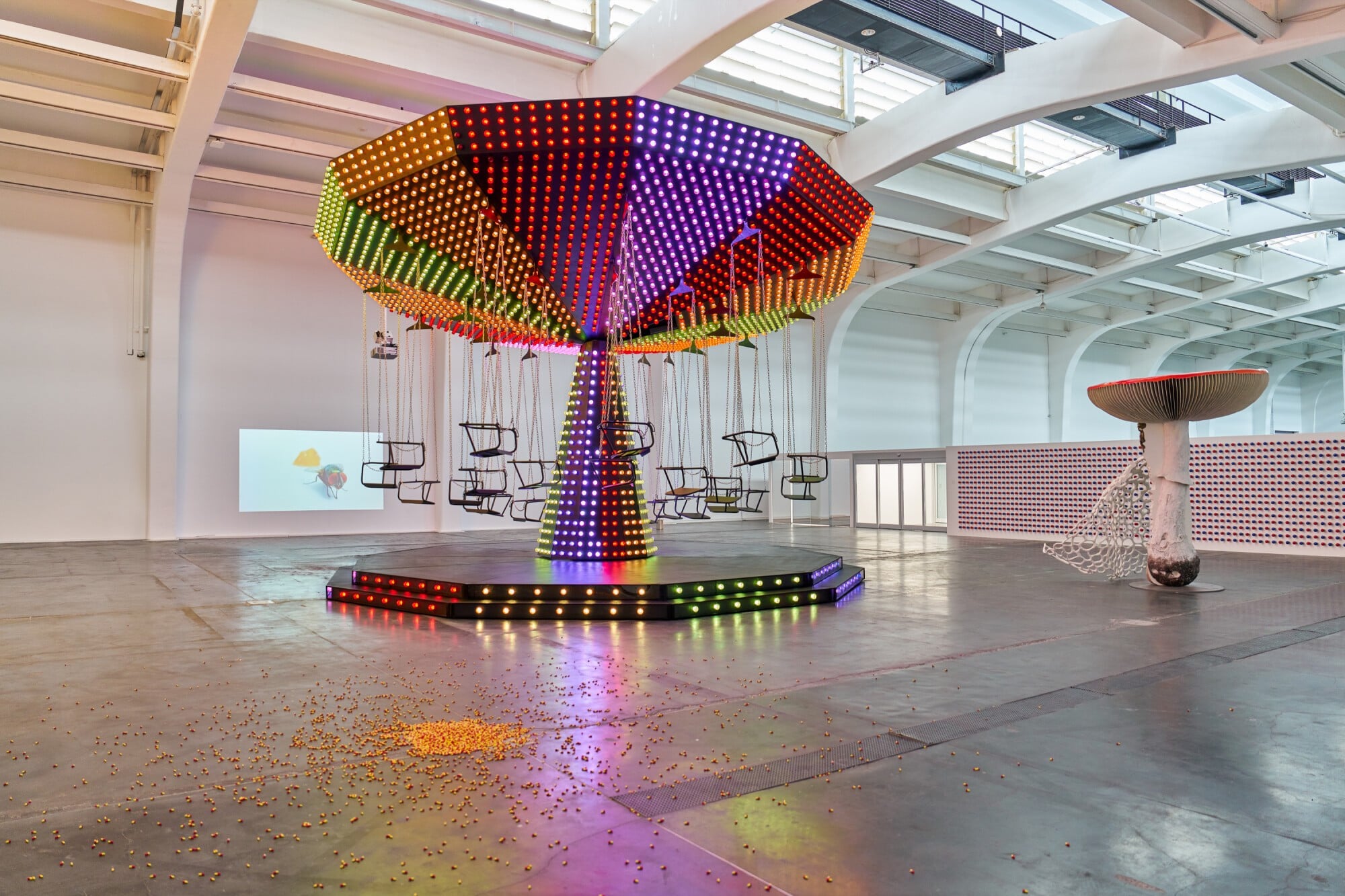
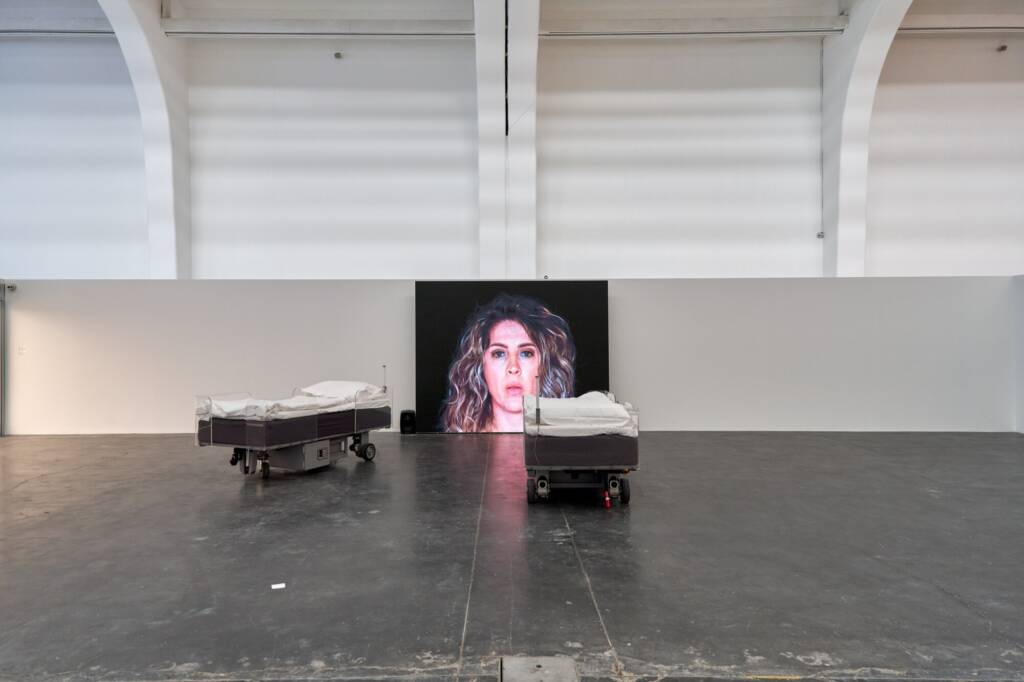
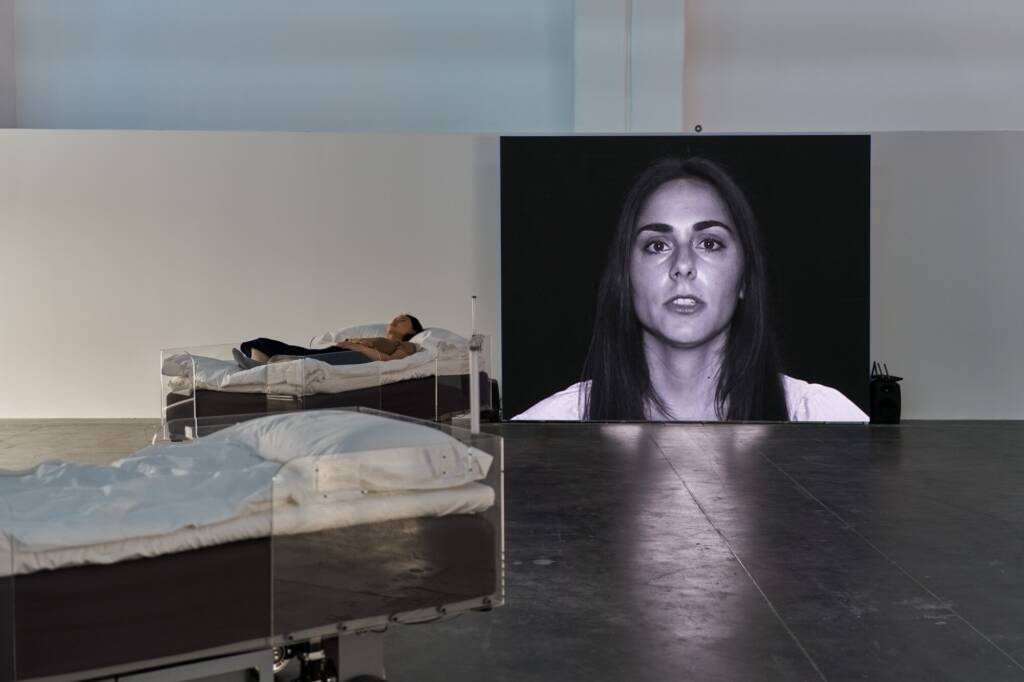
Curated by Philip Tinari and Jiashu Zou, Two occupies UCCA’s Great Hall as what Höller calls a Laboratory of Doubt. Upon arrival, visitors are randomly directed to one of two entrances, leading into parallel versions of the exhibition: one saturated with colour, the other reduced to black and white. Though the installations largely correspond, no two journeys are identical, suggesting that reality shifts with circumstance and perspective.
Originally trained as an agricultural scientist before turning to art in the early 1990s, Höller has consistently approached exhibitions as experiments. His works place visitors inside carefully constructed situations that probe perception, behaviour, and the unseen forces shaping everyday life.
Participatory works that test perception
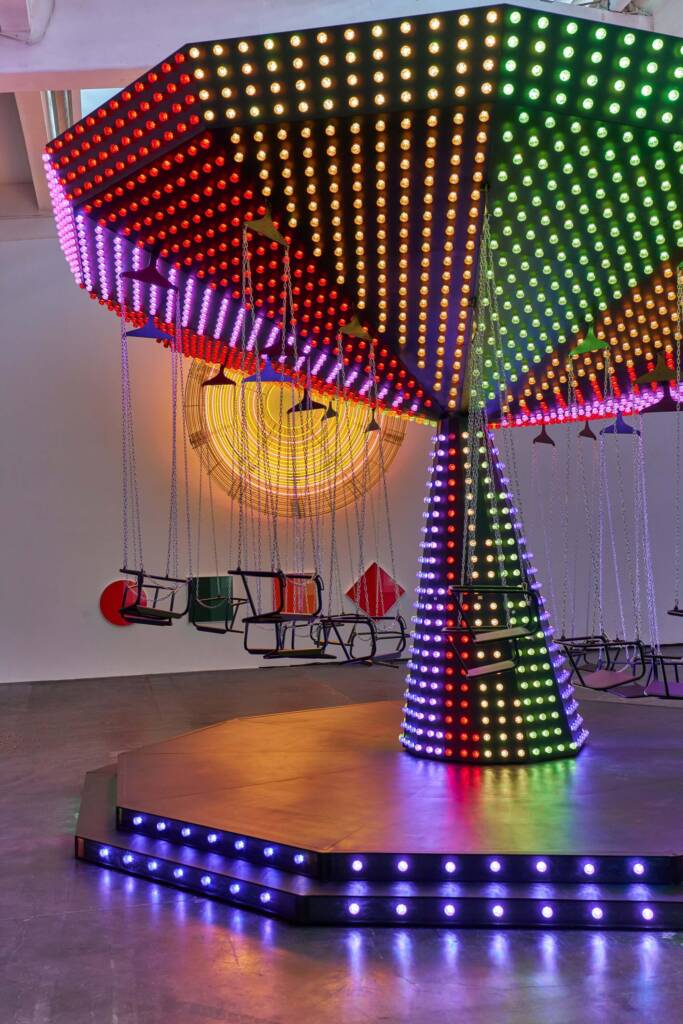
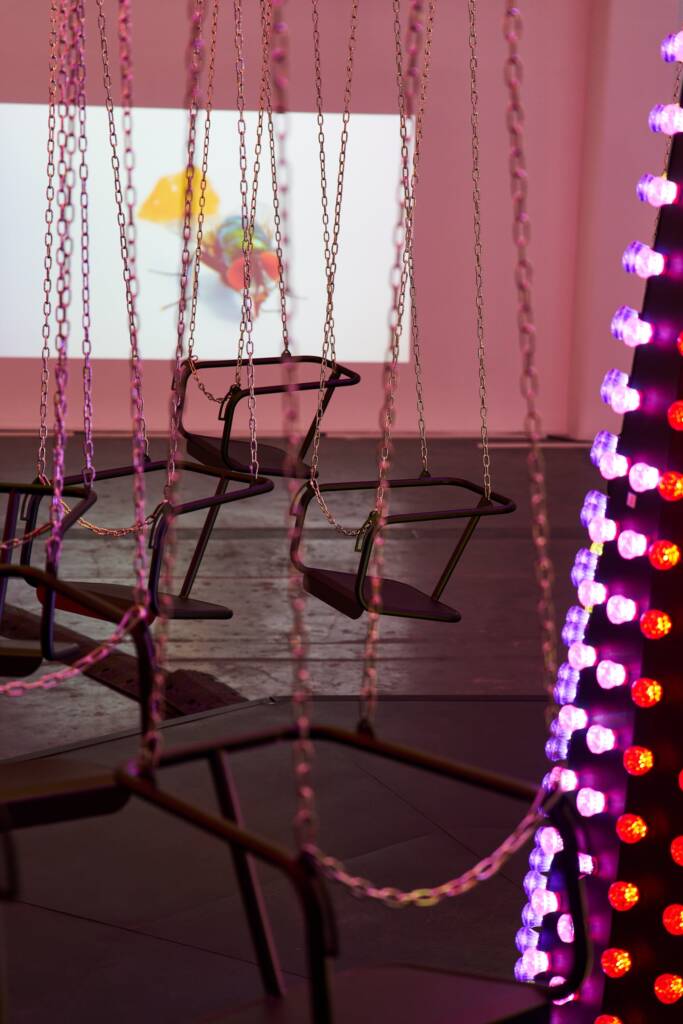
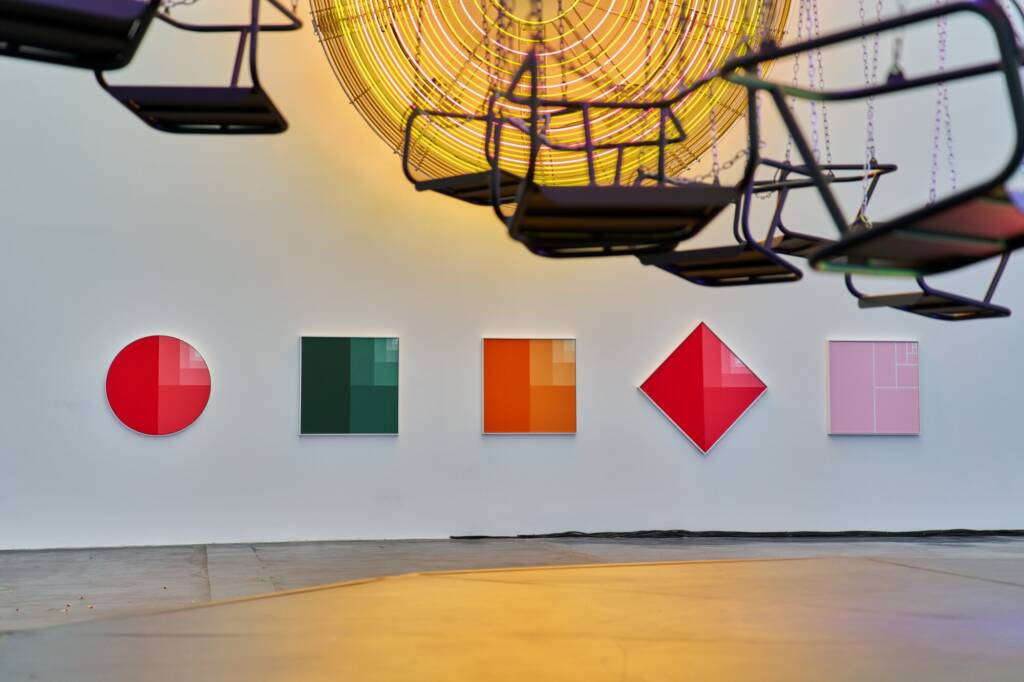
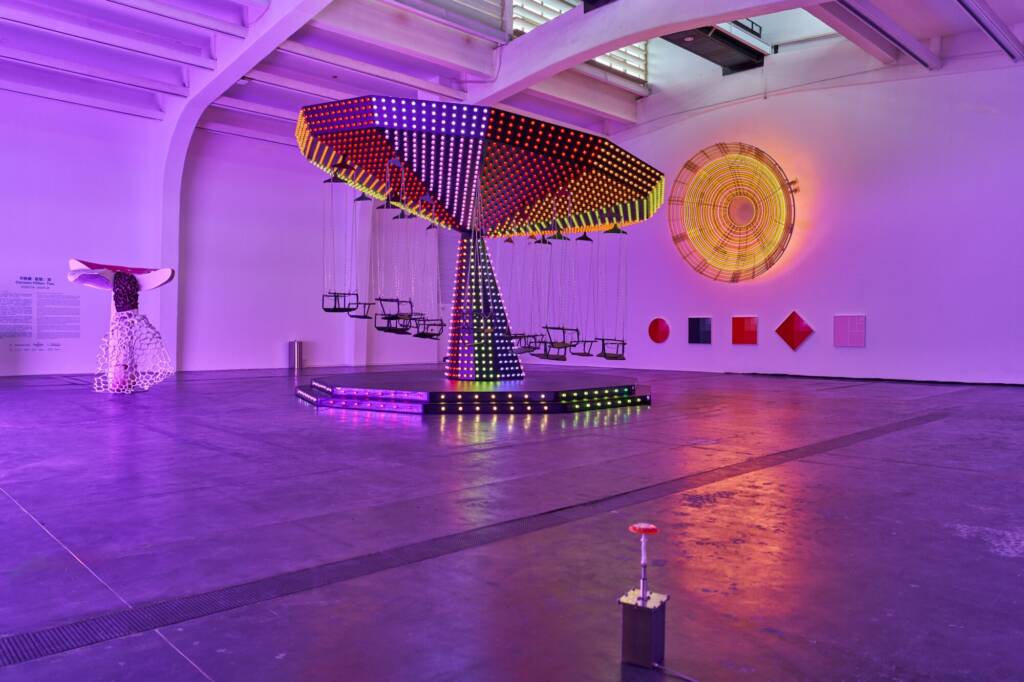
Throughout the exhibition, the audience becomes an essential part of the work. Newly created Tilted Carousel (Five Colours) and Tilted Carousel (Two Whites) slow the familiar fairground ride to an almost hypnotic pace. Riders remain aboard until a full rotation is complete, replacing thrill with heightened awareness, patience, and quiet observation.
Elsewhere, Dice (Chinese Marble) enlarges a gaming die into a monumental marble structure visitors can enter, while Pill Clock dispenses ingestible pills containing an undisclosed substance every three seconds—the span Höller associates with the present moment. Both works examine chance, control, and our perception of time.
Science, Memory, and the natural world
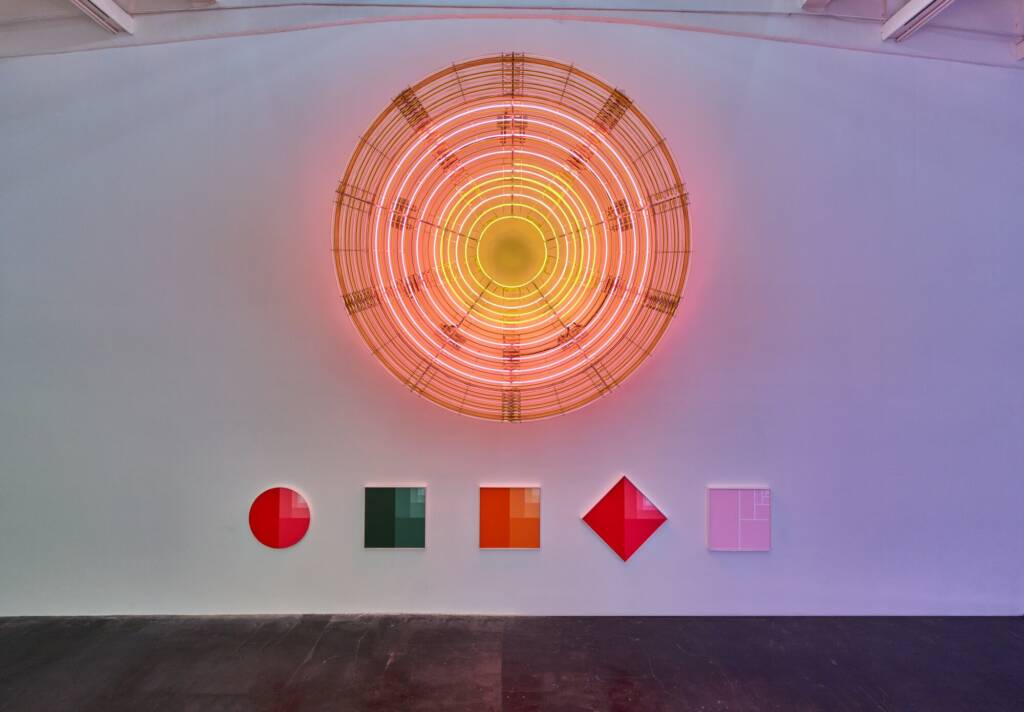
Several installations reveal Höller’s longstanding dialogue with scientific inquiry. His ongoing Divisions series repeatedly splits painted surfaces according to simple rules, producing increasingly subtle compositions that edge toward infinity. Nearby, Smell of My Mother and Smell of My Father recreate the scents of the artist’s parents, turning memory and inheritance into an invisible sensory experience that explores identity, resemblance, and attraction.
Nature remains another recurring subject. Giant Triple Mushroom (2024) merges enlarged cross-sections of three mushroom species into a monumental hybrid form. Rooted in Höller’s fascination with biology, the sculpture celebrates the complexity of fungi while acknowledging that science can illuminate nature without ever fully explaining its mysteries.
Courtesy of BEIJING’S UCCA CENTER FOR CONTEMPORARY ART