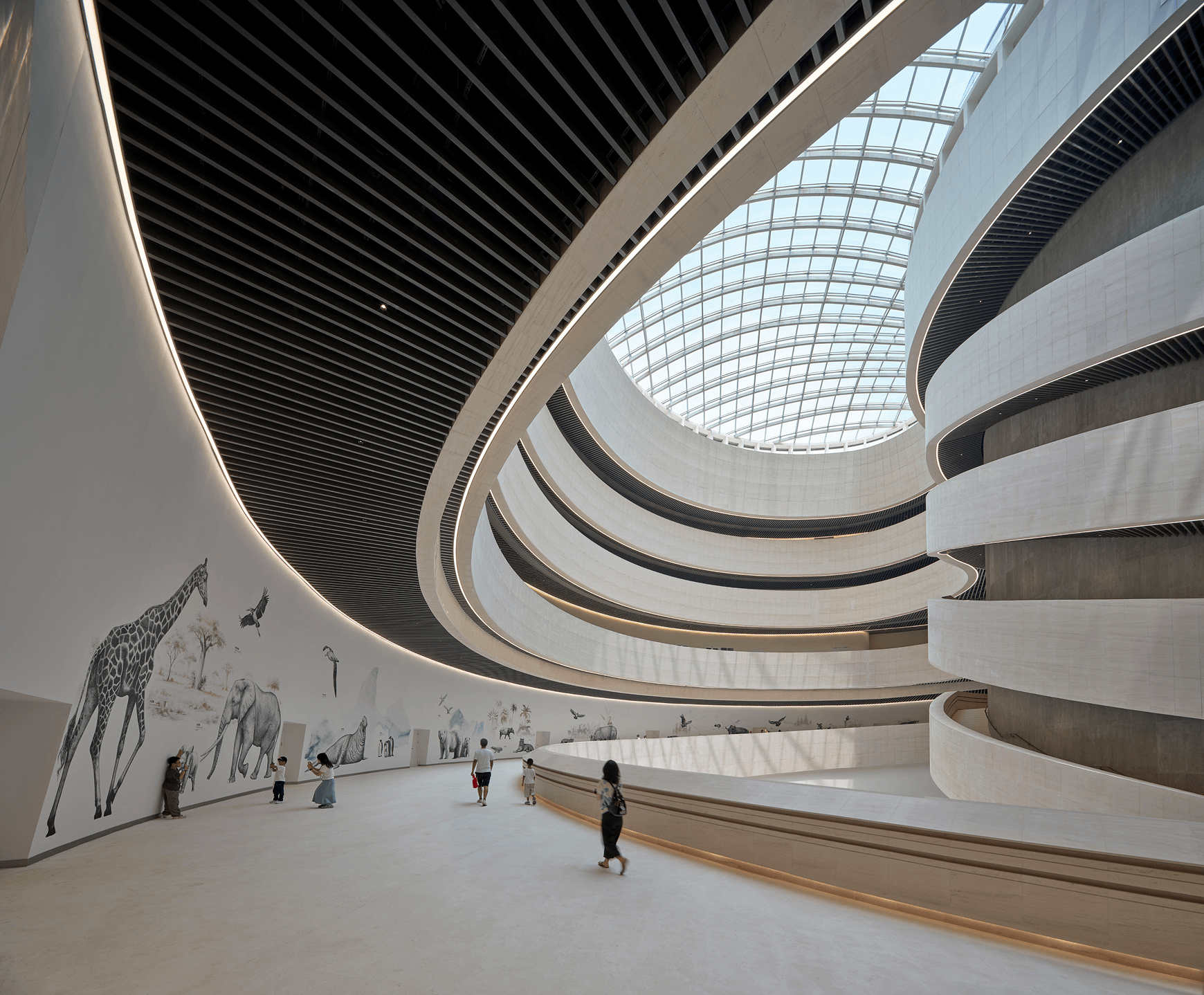
The Shenzhen Natural History Museum opens today in Shenzhen, China, becoming one of the world’s largest newly built natural history museums and the biggest of its kind in South China. Designed by the international consortium of 3XN, B+H Architects, and Zhubo Design, the new institution unites architecture, science, and public life in a bold cultural destination that reflects Shenzhen’s growing influence in innovation, education, and design.
Museum architecture inspired by the language of nature
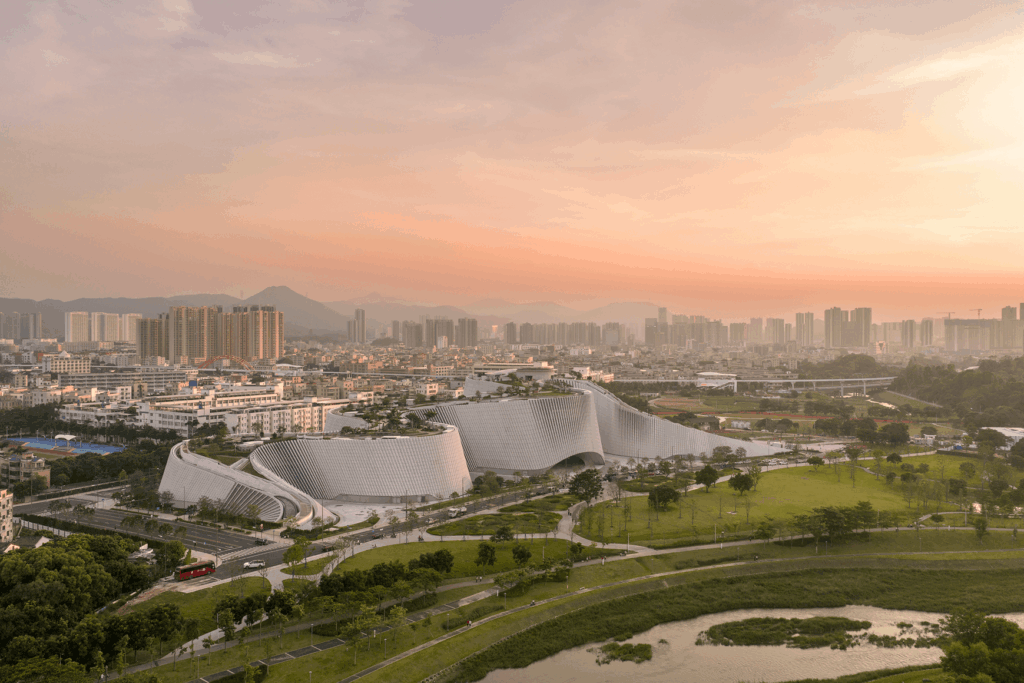
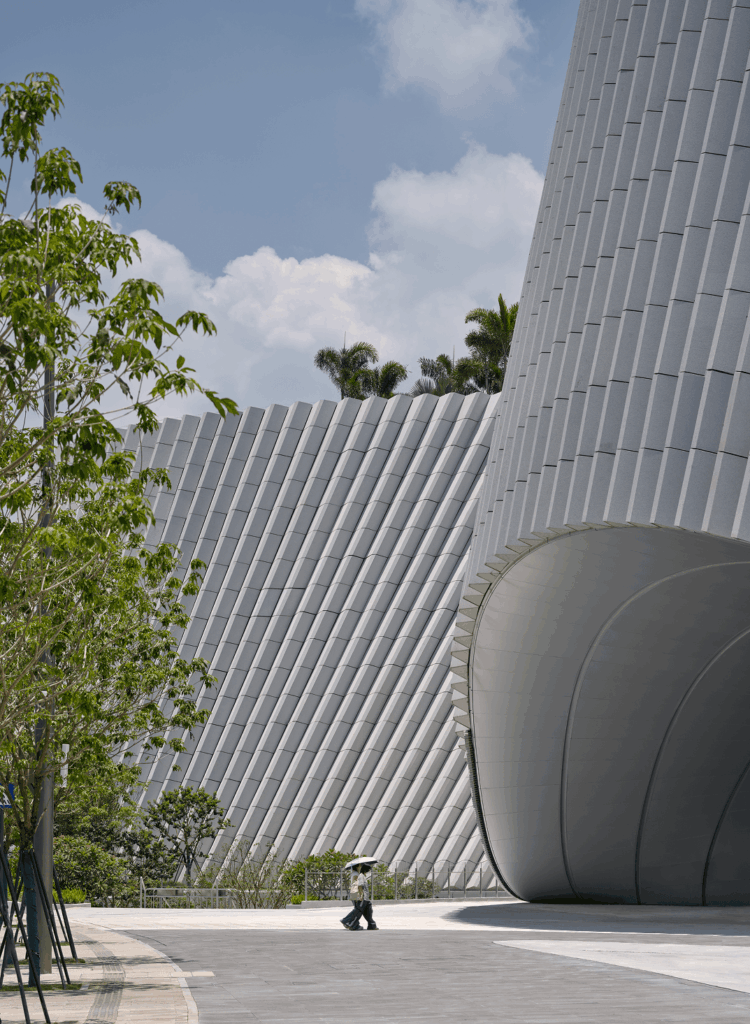
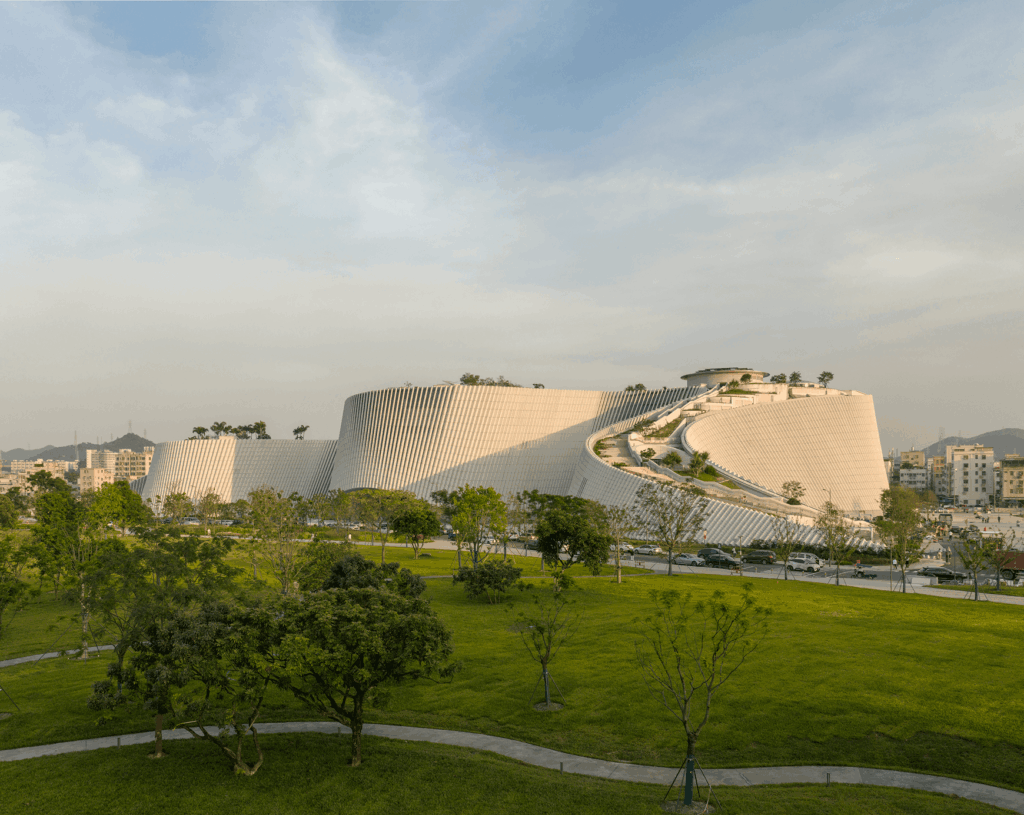
Overlooking Yanzi Lake, the museum rises from the landscape as though carved by natural forces rather than constructed by human hands. Its sweeping granite exterior, sculpted openings, and walkable rooftop blur the line between building and terrain, inviting visitors to experience the museum as an extension of the surrounding park.
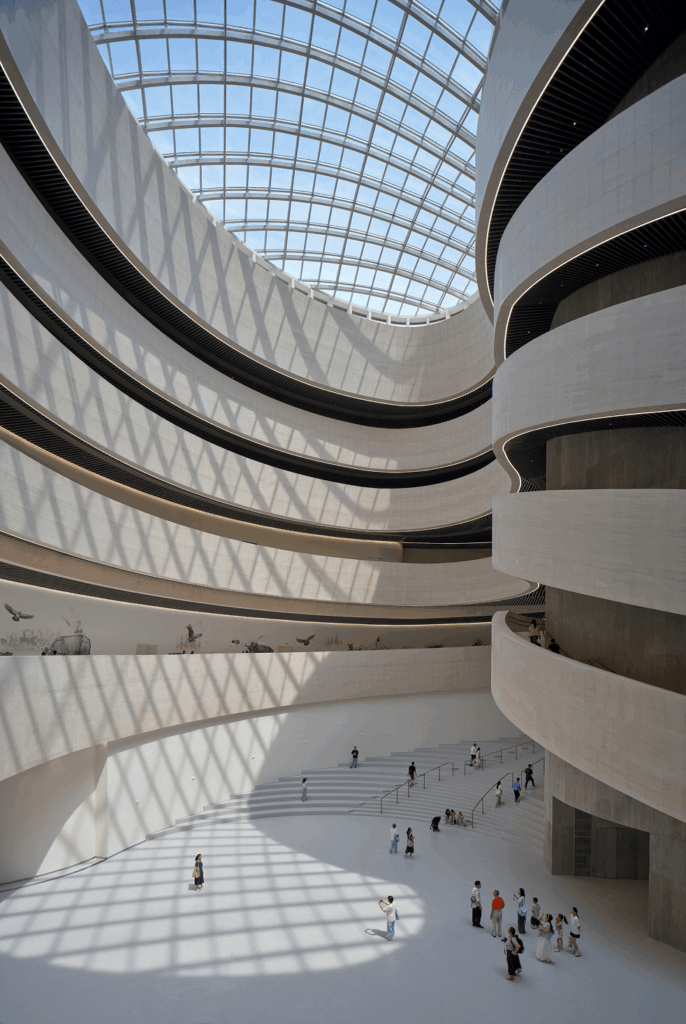
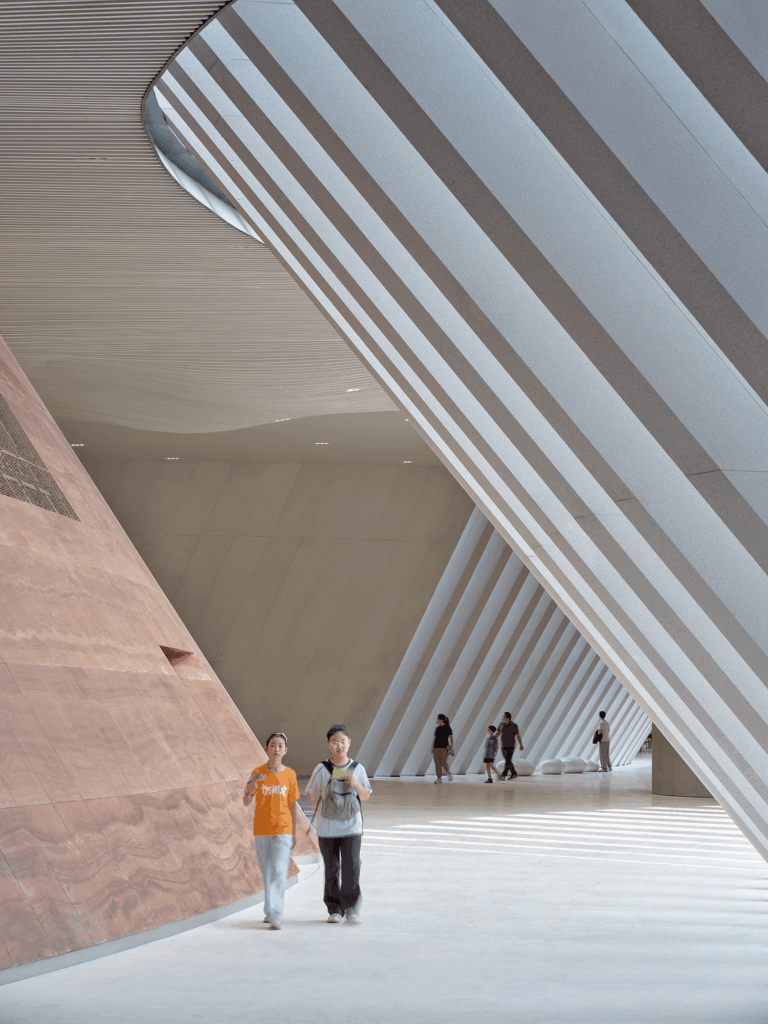
Its fluid silhouette echoes the river valleys and rolling hills of southern China, while five monumental cone-shaped volumes define the museum’s principal galleries. Inside, cave-like corridors, soaring atriums, terraces, and carefully framed vistas create a continuous architectural journey.
As Kim Herforth Nielsen, Founder and Creative Director of 3XN, explains:
“Nothing in nature is square. Nature is amorphous, dynamic, and always in formation.”
Reflecting on the project’s vision, he adds:
“From the beginning, the ambition was to create not a building, but a piece of landscape that had always been there – shaped by local geology, water and time.”
Sustainable architecture that creates a living public landscape
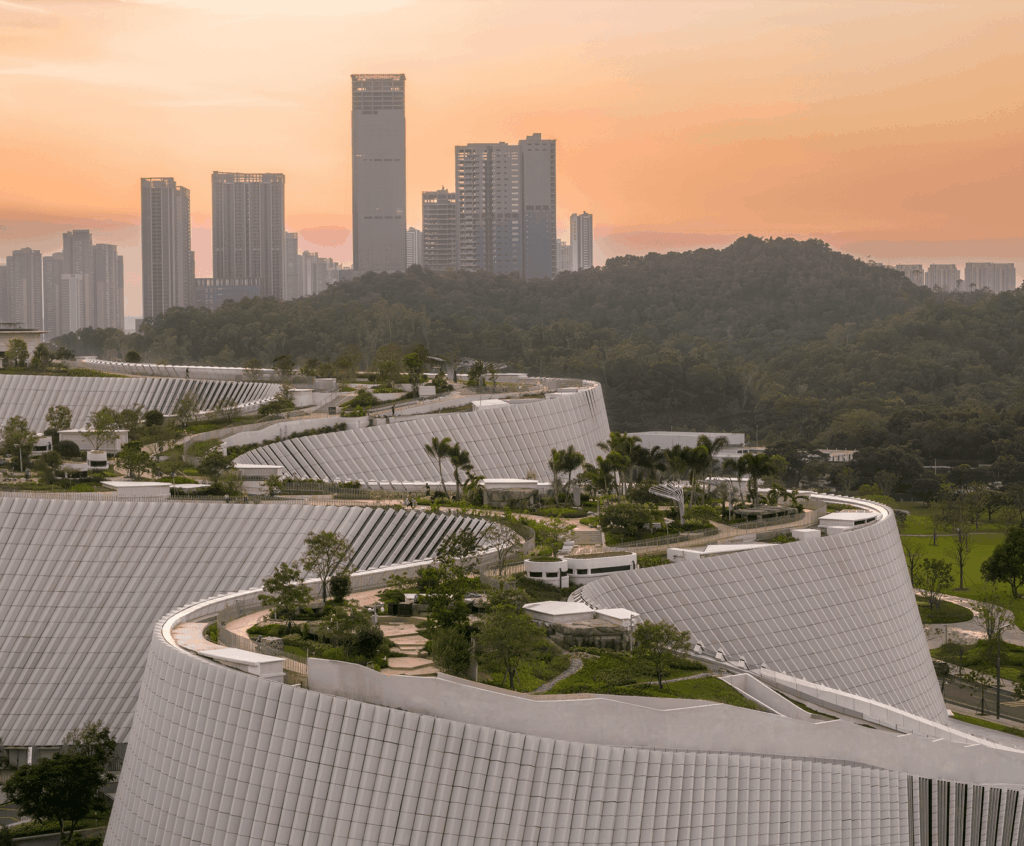
The museum extends its dialogue with nature through an accessible rooftop park that flows seamlessly into the surrounding terrain. More than a viewing platform, it functions as a public landscape where visitors can gather, walk, and engage with the building before stepping inside.
Terraces, plazas, and pedestrian routes weave architecture into daily civic life, strengthening the museum’s role as both a cultural institution and an open urban destination.
Exhibition design that brings Earth’s history to life
Eight permanent galleries lead visitors across 4.6 billion years of Earth’s history, from the birth of the universe and the emergence of life to dinosaurs, human evolution, and the ecosystems of South China.
Created with Atelier Brückner and Museum Studio, the exhibition design is inseparable from the architecture itself. Towering cone-shaped spaces, curved walls, dramatic vertical volumes, fossil collections, minerals, plants, animals, large-scale installations, and cinematic media combine to create a richly layered experience.
Instead of isolated displays, the galleries form a continuous narrative where architecture, scenography, and scientific discovery reinforce one another, encouraging visitors to explore through movement, light, and space.
A new destination for science, culture, and public life
Spanning more than 100,000 square metres, the Shenzhen Natural History Museum represents a new generation of cultural institutions, bringing scientific research, exhibition design, and public engagement under one roof. Its permanent displays connect the story of our planet with the landscapes and biodiversity of South China through collections of fossils, minerals, plants, animals, and interactive media.
Opening today, the museum establishes itself as both a major scientific destination and an architectural landmark, where sustainable design and compelling storytelling invite visitors to experience Earth’s history from a fresh perspective.
Photography by ADAM MØRK