There is a particular kind of confidence that comes from knowing exactly who you are, even as the world around you keeps shifting. This is the certainty Buccellati jewelry has always carried: a century of hand-engraved gold, sculpted silver, and jewelry that reads more like miniature architecture than adornment. But confidence in a legacy doesn’t mean standing still. It means knowing precisely which threads to keep pulling forward, generation after generation.
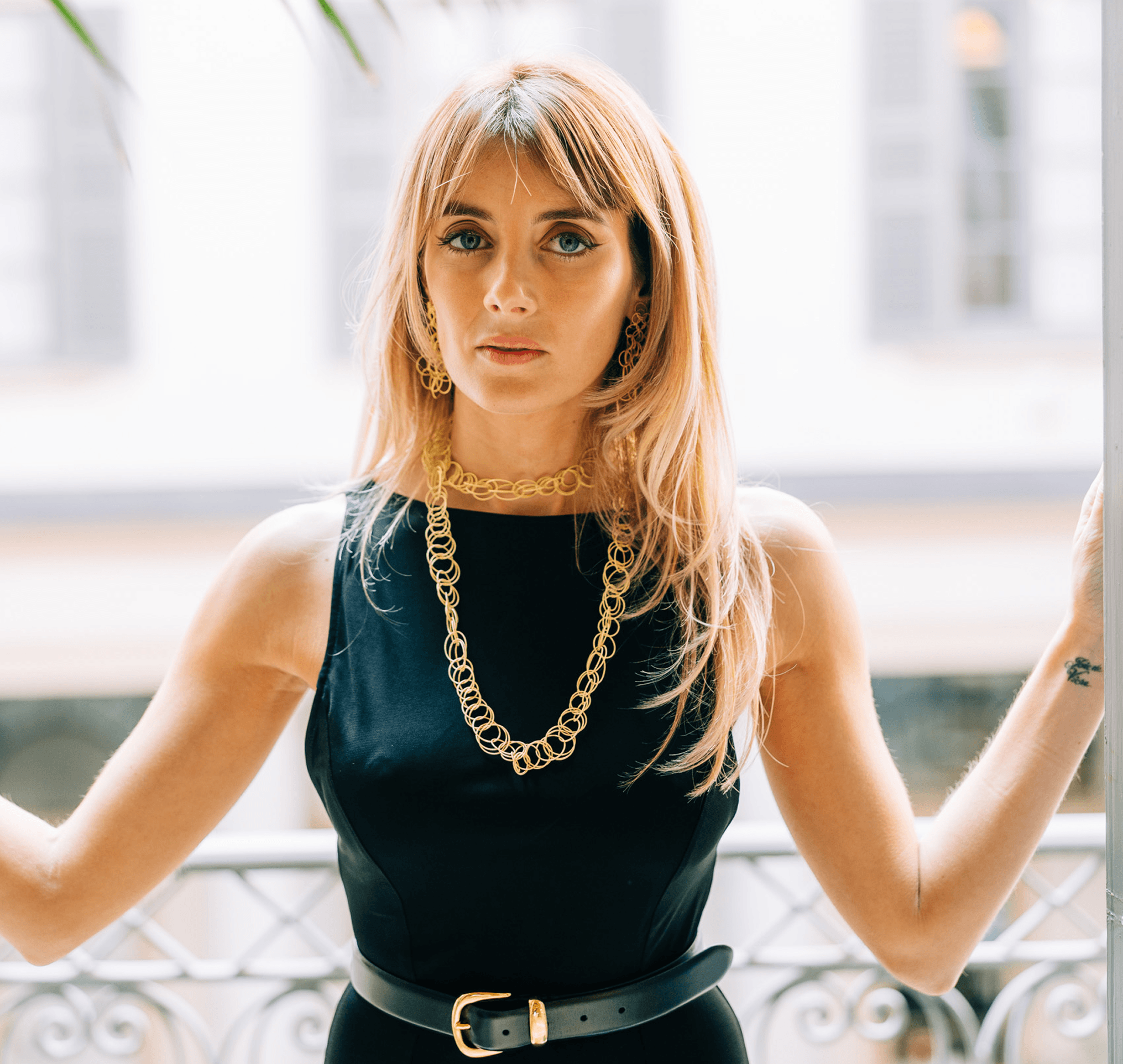
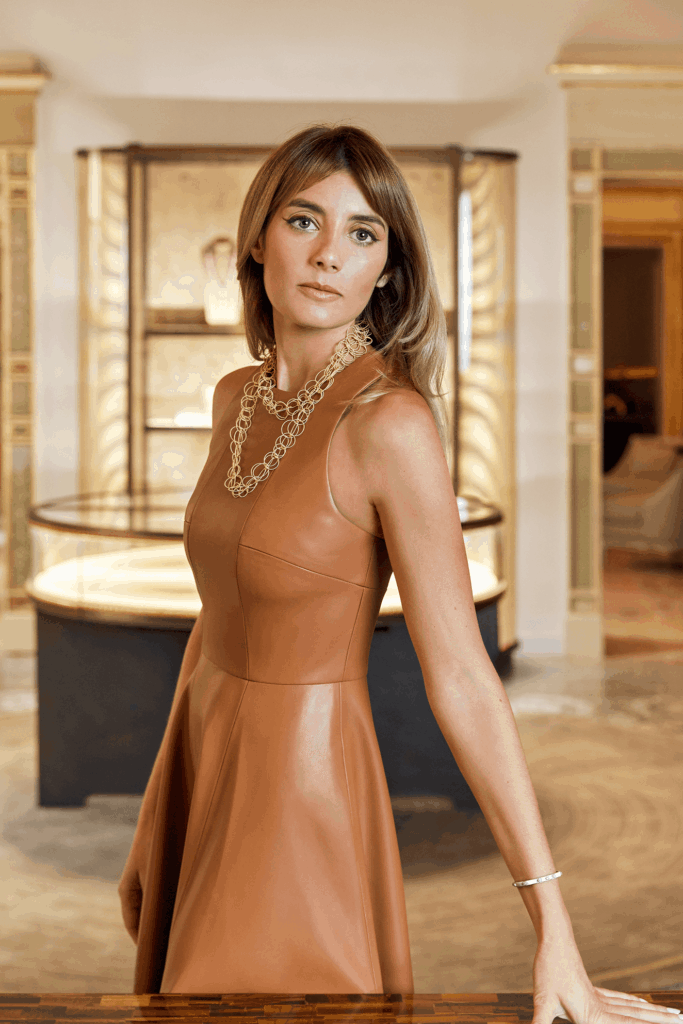
Lucrezia Buccellati is carrying forward a family language of craftsmanship that her great-grandfather began shaping over a hundred years ago. She talks about heritage as something alive: a vocabulary that gets rewritten with each generation’s hand, responsive to how people actually want to live and dress today, while never losing its unmistakable accent. In this conversation, hube’s editor-in-chief asked her about the tension between permanence and immediacy, what jewelry design communicates today that it didn’t decades ago, and the responsibility of creating objects built to outlast their makers.
Sasha Kovaleva: Historically, jewelry was often associated with inheritance, permanence, and long-term value. Younger generations appear to engage with objects differently. Has jewelry become more about self-expression than legacy?
Lucrezia Buccellati: Buccellati’s jewelry is both a legacy, reflected in our distinctive style and craftsmanship, and a form of self-expression. Over the past 15 to 20 years, we have introduced new collections and expanded existing ones, creating pieces that are more versatile and can be styled in many different ways.
SK: Which parts of a legacy should remain untouchable, and which should be challenged?
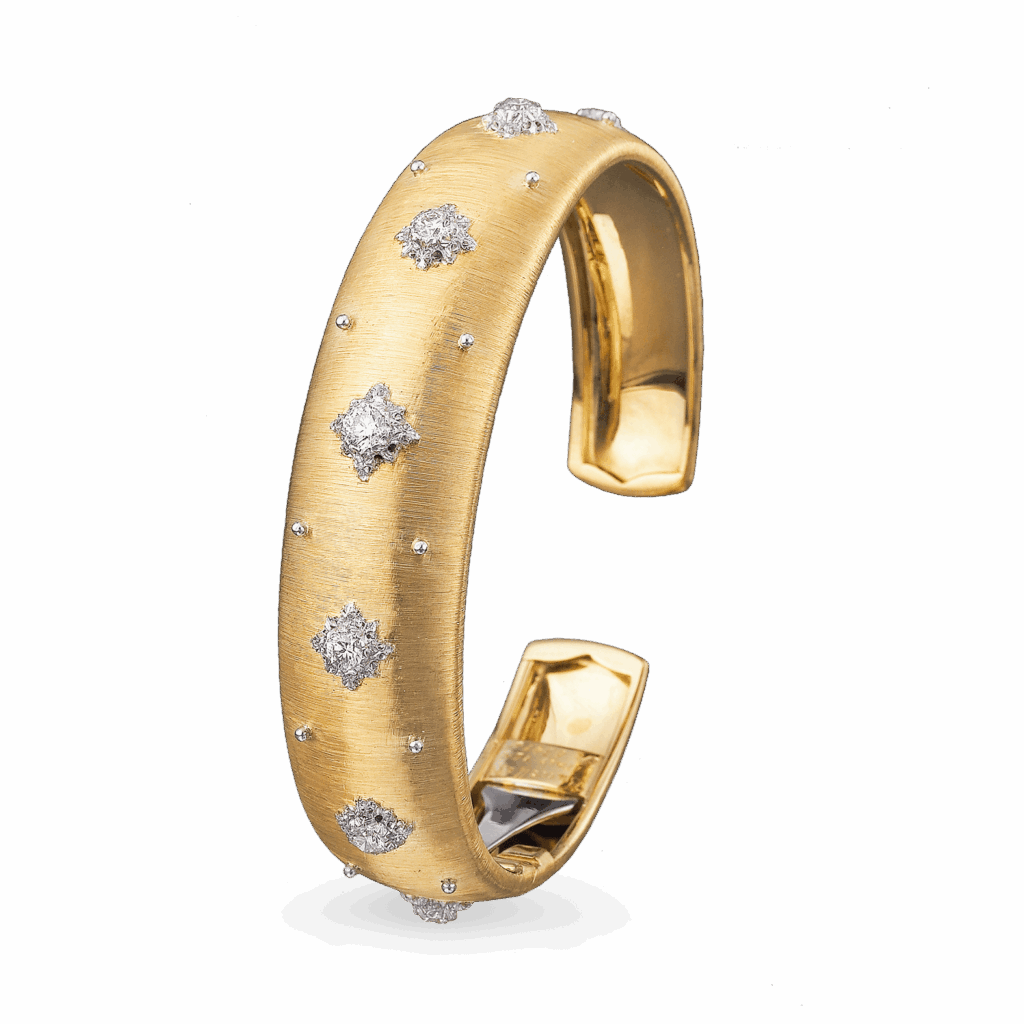
LB: Our legacy is established by our unique style. While it remains untouched, it evolves with each generation, reflecting the desires of the market at that time. You can clearly see this when you look at the pieces designed by my great-grandfather, Mario, and compare them to those designed by my father and me.
SK: What does jewelry communicate today that it didn’t communicate 30 years ago?
LB: Jewelry is an extension of who we are, reflecting our personality, taste, and style. What has changed is that jewelry now seamlessly transitions from day to night, becoming part of our everyday self-expression.
SK: What happens to craftsmanship in a culture obsessed with immediacy?
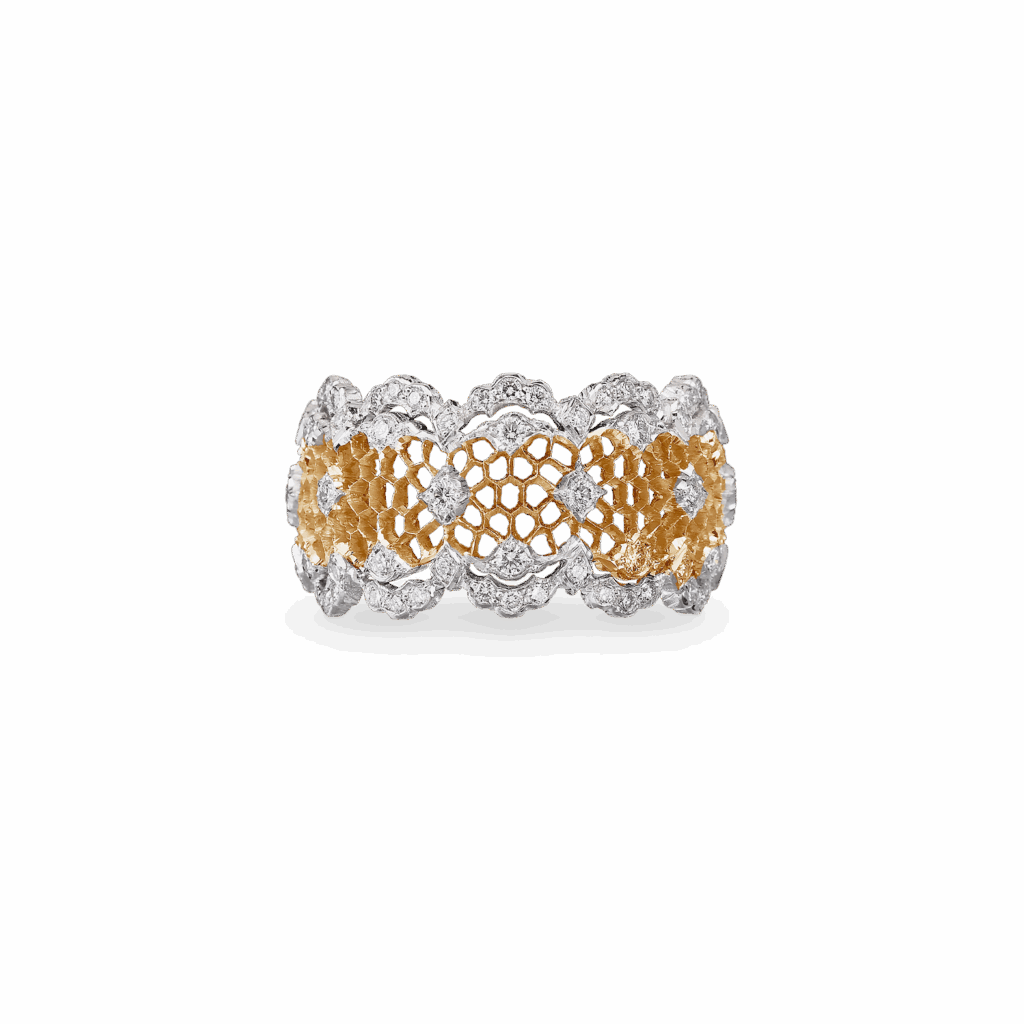
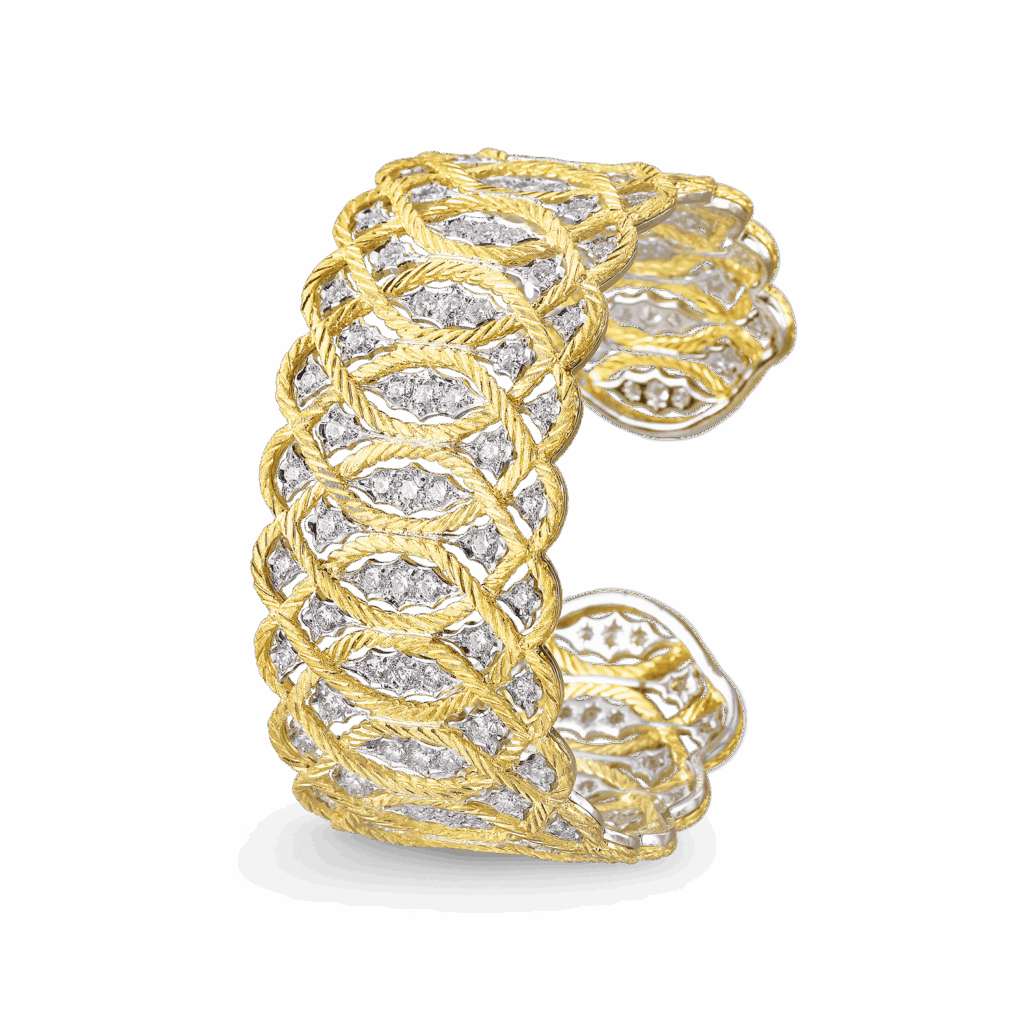
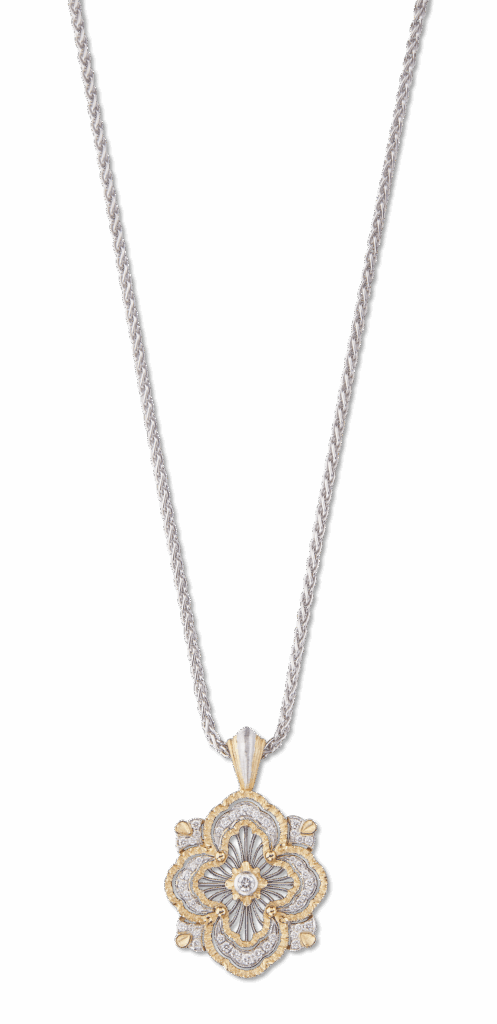
LB: In a world that rushes toward immediacy, Buccellati stands apart by embracing the value of time. The true value of our craftsmanship is in the countless hours devoted to each creation, transforming every piece into more than something to wear—it becomes a treasure of enduring beauty, lasting worth, and profound significance. If the world desires true quality and masterful craftsmanship, it must also embrace the time it takes to create.
SK: What responsibilities come with creating objects that may outlive several generations of owners?
LB: Our approach is to create pieces that are timeless and our purpose is to do this by maintaining our iconic DNA that makes us world renowned for our unique style. I cherish the idea that jewelry is passed down through generations, preserving the memories of our loved ones while transcending time and trends.
SK: How does historical Italian craftsmanship continue to shape Buccellati’s visual language?
LB: Buccellati draws deep inspiration from the rich heritage of Italian craftsmanship. It is through this enduring legacy that our distinctive style was born and perfected over time, continually challenging our artisans to refine their techniques and elevate the precision, beauty, and excellence that define every Buccellati creation.
SK: Where do you find inspiration today—perhaps in nature, history, architecture, or unexpected places?
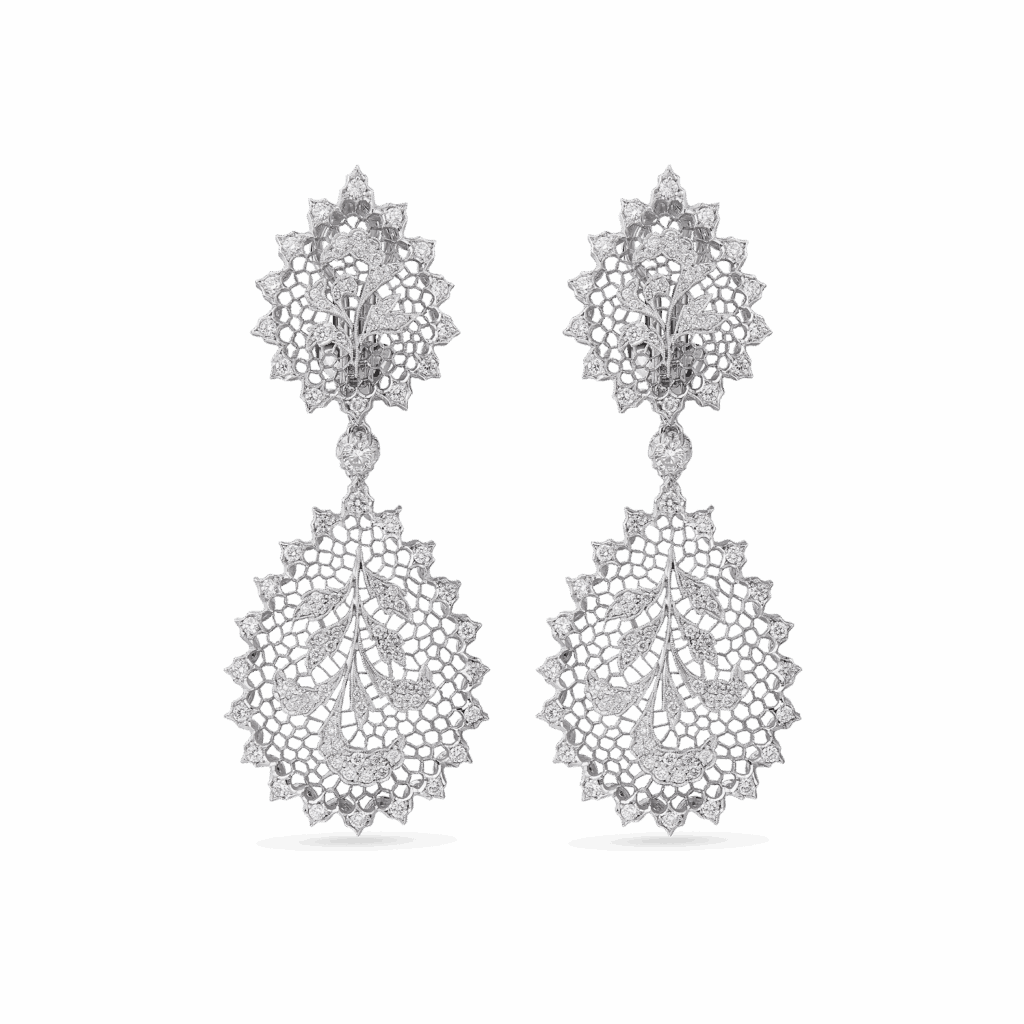
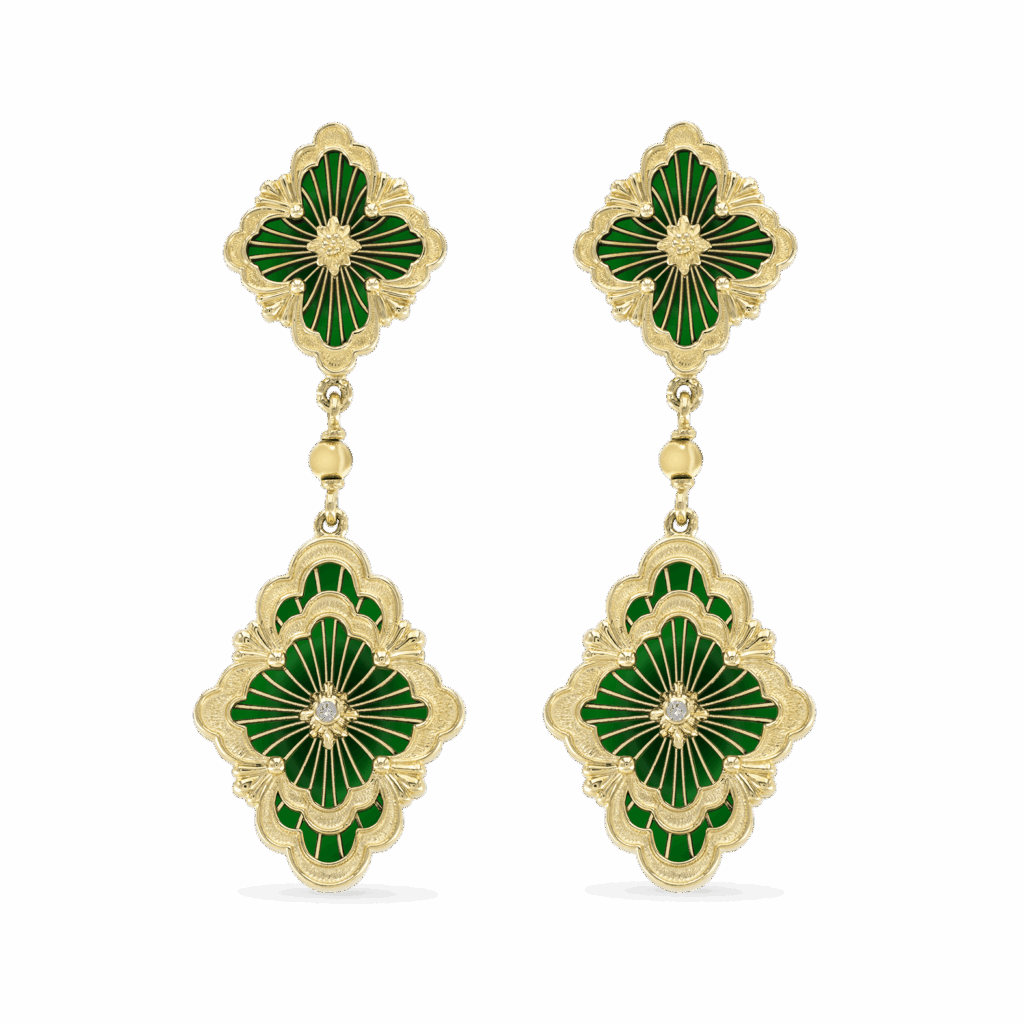
LB: Nature plays a fundamental role in our inspiration, as you can see across many of our creations, from our silver tablescapes to the Blossoms collection and our high jewelry. We also draw deeply from history and architecture, taking inspiration from the motifs in the palazzos of Italy’s iconic cities, Byzantine mosaics, Venetian lace, and intricate embroidered trims, just as we did for our latest high jewelry collection, Serenissima. These timeless influences allow us to create pieces that feel both contemporary and deeply rooted in Italian heritage.
SK: How do you personally find quietness or a sense of grounding in a world that is moving so fast? Are there specific rituals or spaces that help you reconnect?
LB: I always try to make time for myself, whether it’s horseback riding, my greatest passion and a form of meditation, or simply being in nature. When I’m riding, the world seems to disappear, and the only thing I need to focus on is the connection between me and my horse. It’s a moment of complete presence that allows me to recharge and find balance.
SK: What was the last piece of art, music, or writing that moved you deeply?
LB: Recently, while I was in Venice, I had the opportunity to visit several extraordinary palazzos that were opened exclusively for special exhibitions during the Biennale. Walking through these remarkable spaces and imagining what life was like during the Renaissance was incredibly moving. It wasn’t a single artwork that left the strongest impression on me, but rather the atmosphere, the history, and the feeling of stepping into another era.
SK: If you could spend a day observing the creative process of any historical artist, writer, or architect, who would it be and why?
LB: Without a doubt, Leonardo da Vinci. He was a man far ahead of his time, a true visionary who seamlessly combined art, science, architecture, and engineering. Spending a day observing his creative process would be fascinating, not only to understand how he conceived his masterpieces, but also to witness how innovation and creativity came together so naturally in his mind.


Special thanks to DADA GOLDBERG
Courtesy of BUCCELLATI