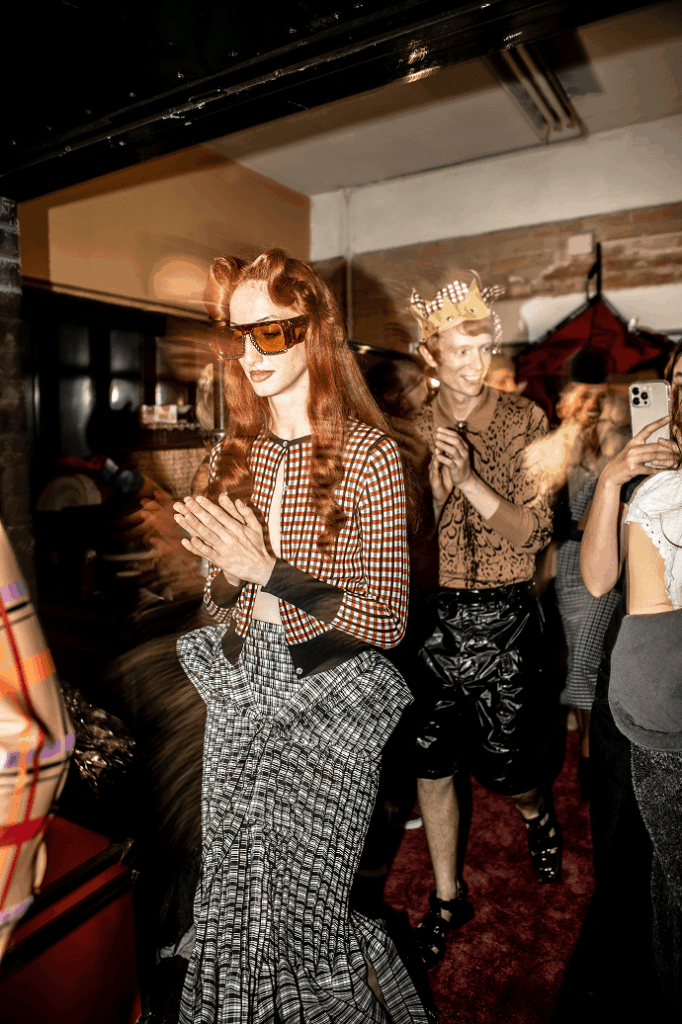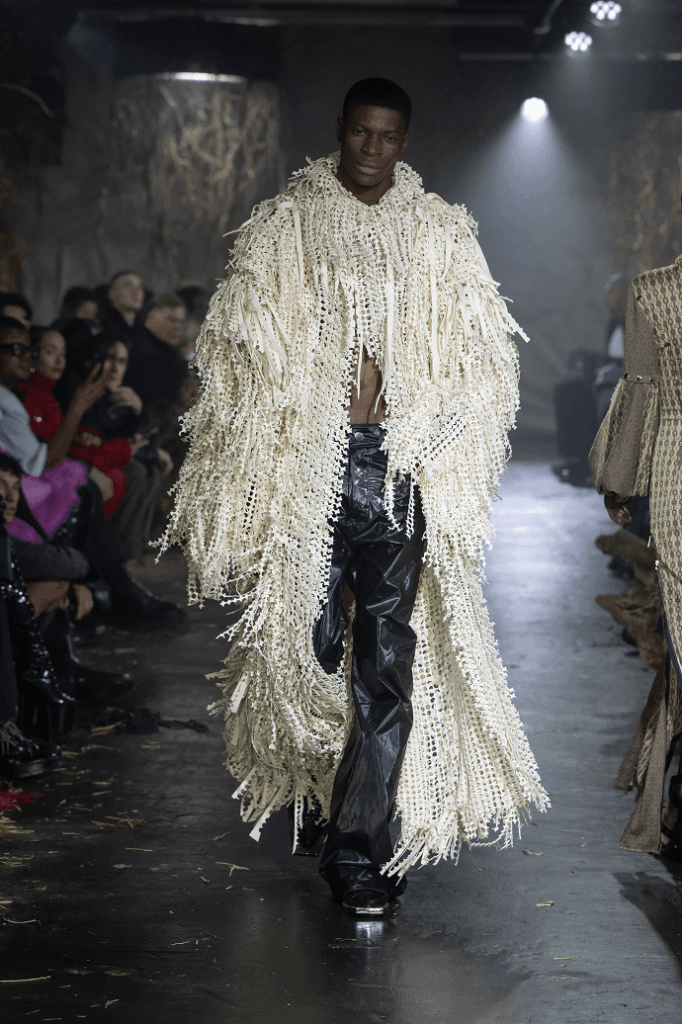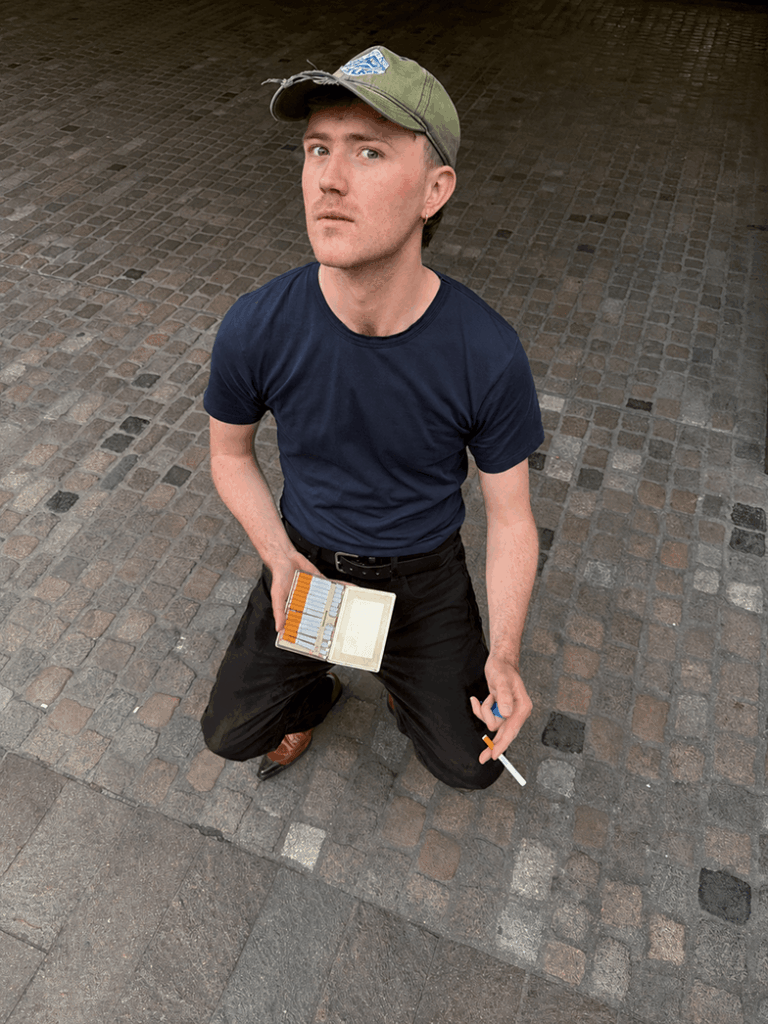
Maximilian Raynor designs the way other people write tragedies—one eye on the romance, the other daring you to survive it. A Central Saint Martins graduate, the London-based independent fashion designer launched his eponymous label in 2024, following formative years at JW Anderson under Jonathan Anderson. He treats fashion as full-world storytelling: immersive, character-driven shows that feel like film sets caught mid-scene.
That instinct for narrative predates the label itself. At ten, he wrote to Vivienne Westwood and ended up in her studio, poring over a book of eighteenth-century shirts and learning to treat history as raw material. The habit stuck. British tailoring codes get stripped down and rebuilt through a queer, anarchic lens; deadstock fashion materials get handled with the same reverence usually reserved for silk. hube asked Raynor about the making of his most personal collection, the vision behind the Equinix dress, and what it actually takes for emerging fashion designers to keep an independent label standing on its own two feet.
hube: At the age of 10, you wrote to Vivienne Westwood and were invited to her studio—a rare moment of recognition for such a young dreamer. Looking back, what did that encounter reveal to you about the power of fashion as a form of imagination, communication, and possibility?
Maximilian Raynor: The importance of history was a key takeaway from my time with Vivienne. We studied a book of 18th century shirts together and she explained the way they were cut and how they can inspire modern iterations. Aged 10, it was a wild and overwhelming experience that I’ll never forget.
h: Your work often draws from literature, theatre, cinema, and historical tragedy. Are there particular stories, characters, or moments from these worlds that continue to haunt your creative imagination?
MR: Tragedies inspire me more than happier stories, for some reason. I adore the drama of Shakespeare—Lady Macbeth’s incarnadine hands, the three witches, star-crossed lovers, and all that! I’m obsessed with the epic romance of Moulin Rouge, The English Patient, Love in the Time of Cholera.
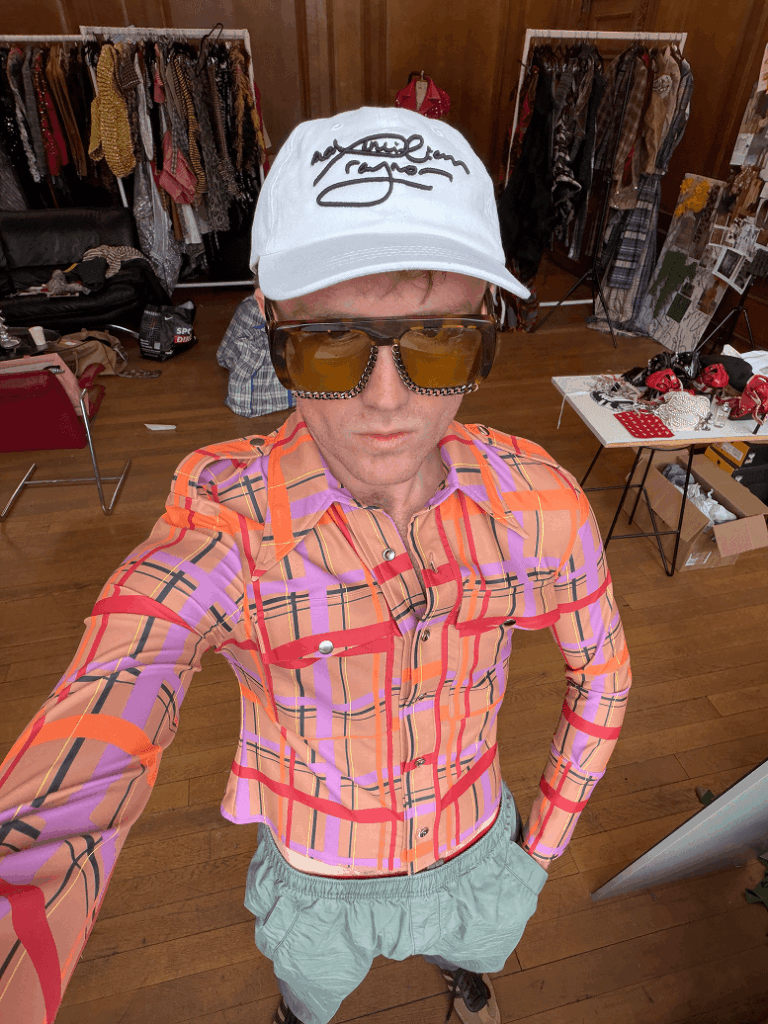
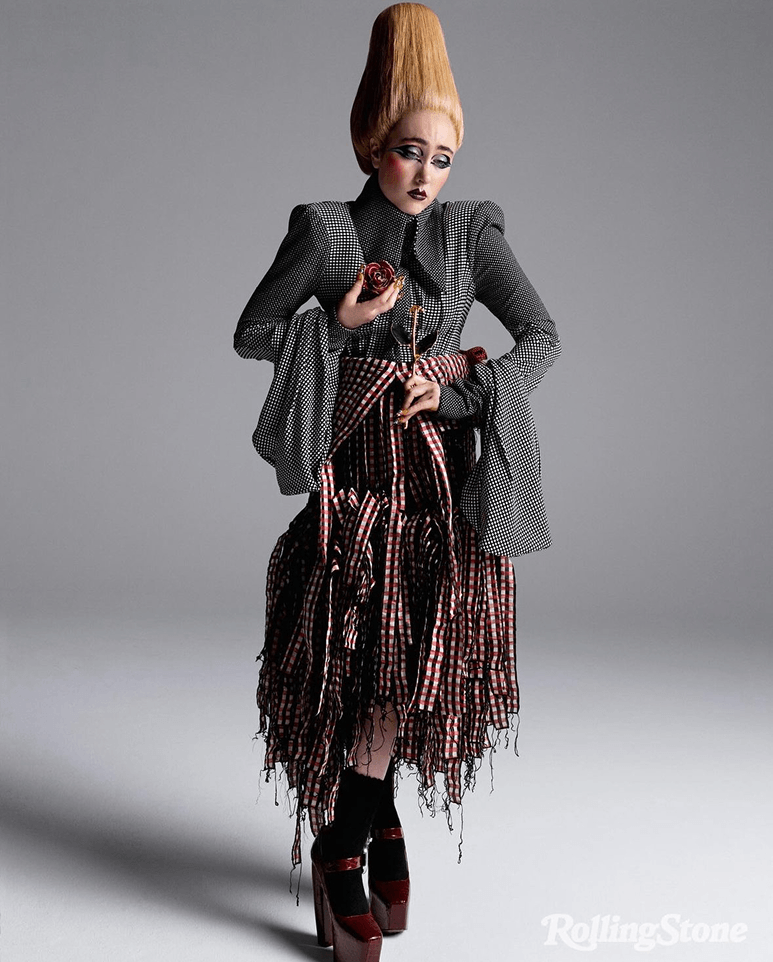
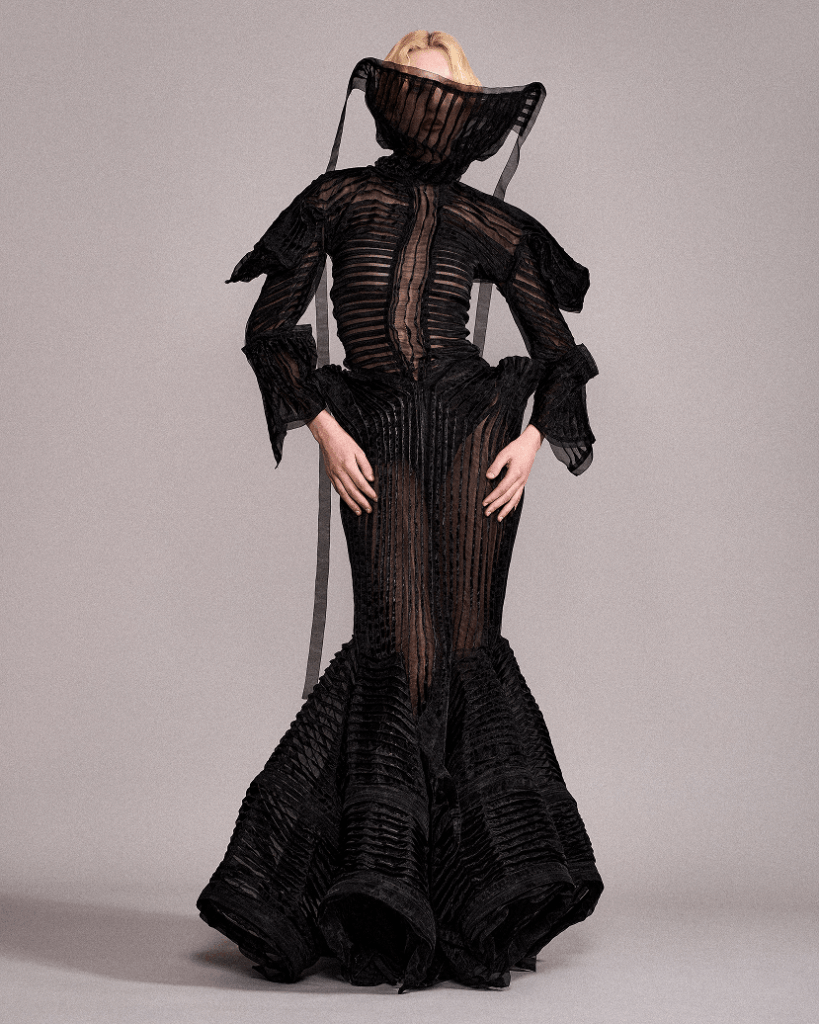
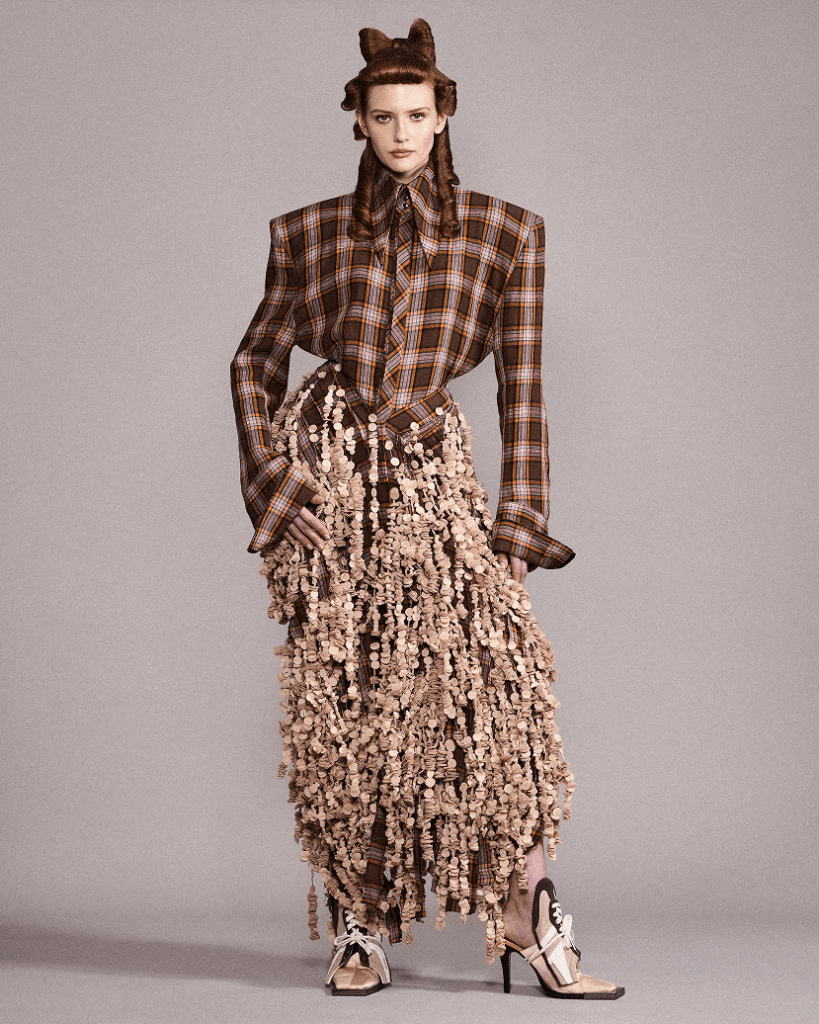
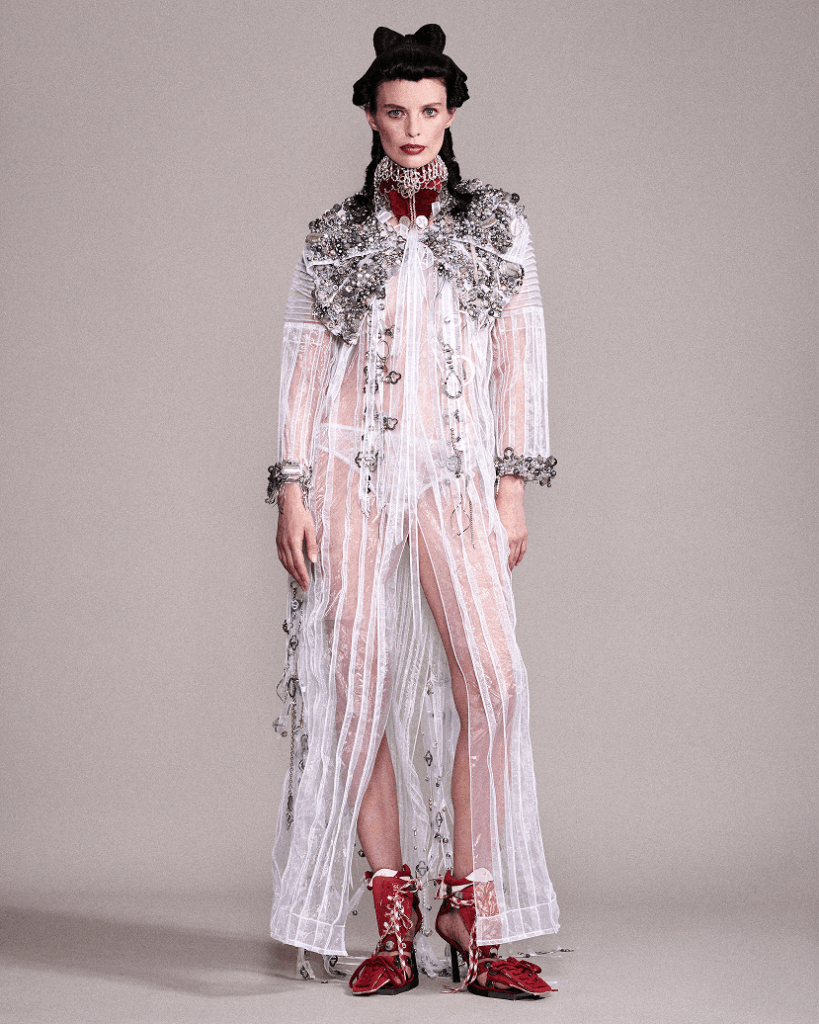
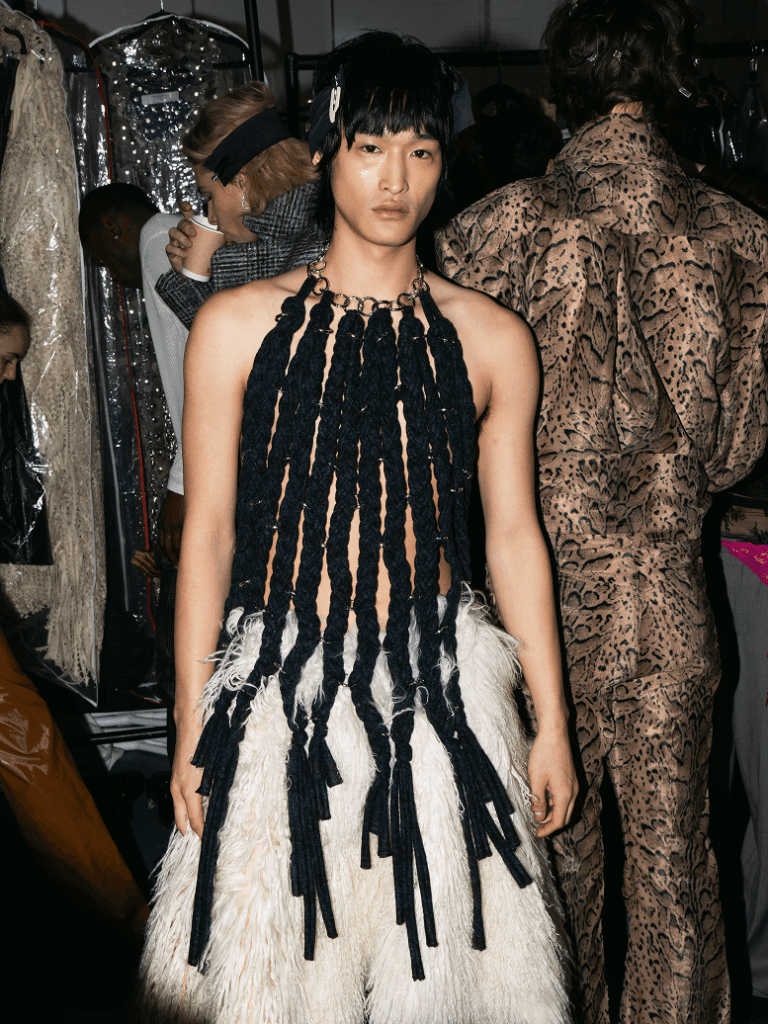
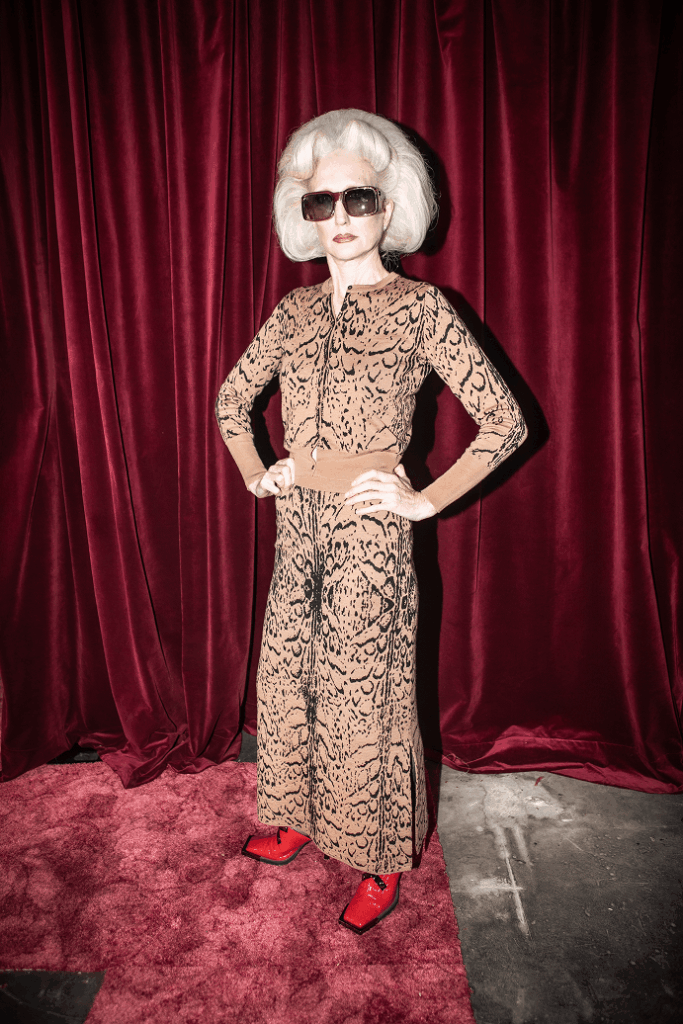
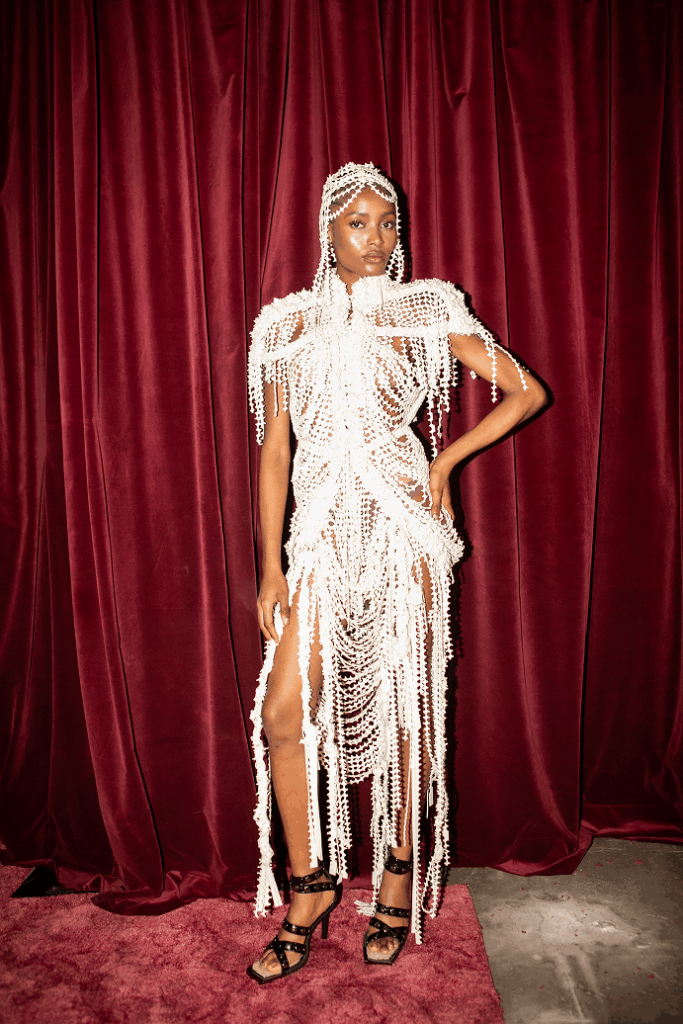
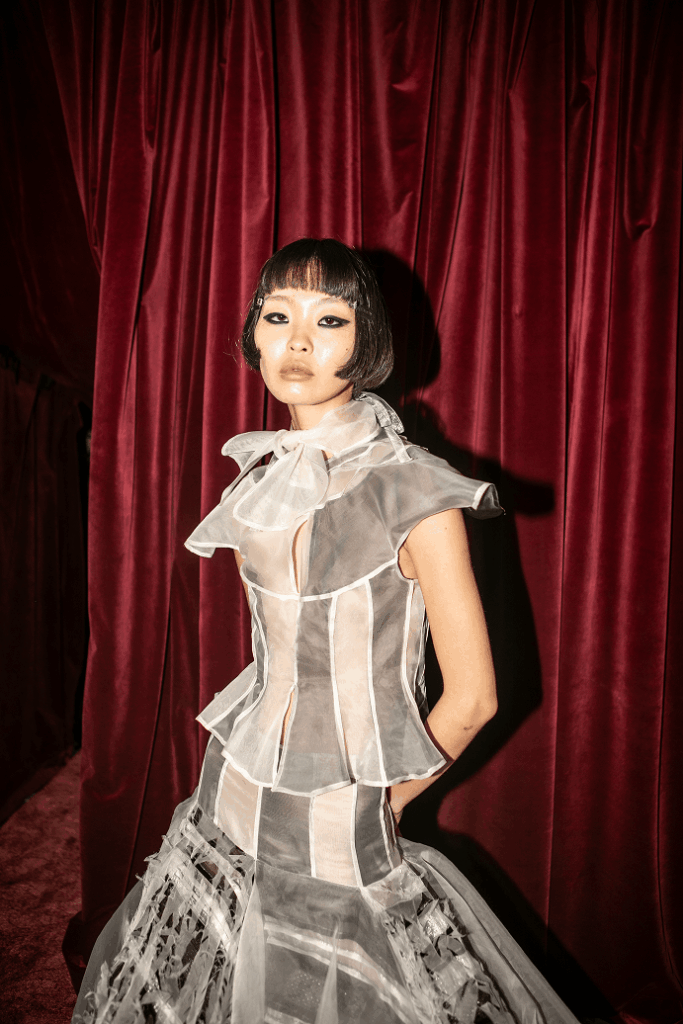
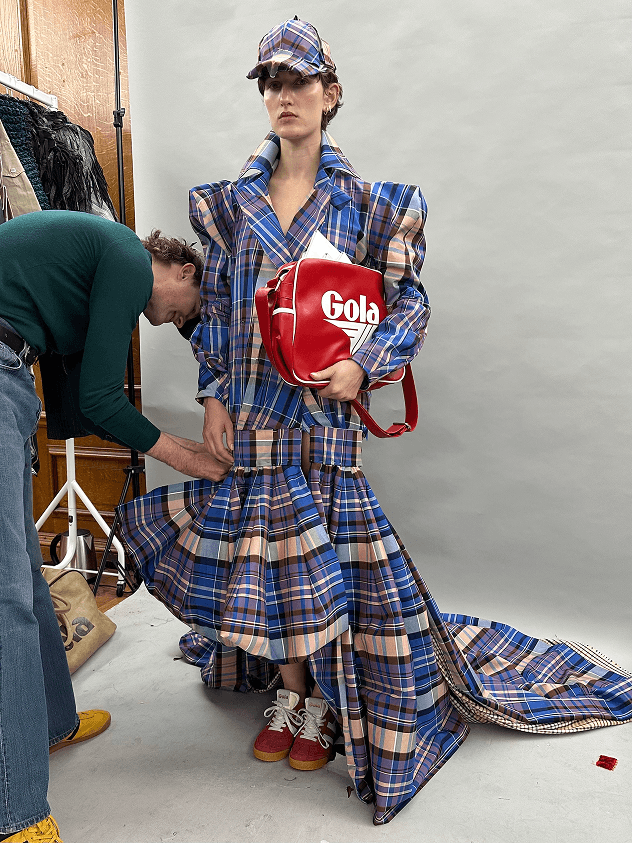
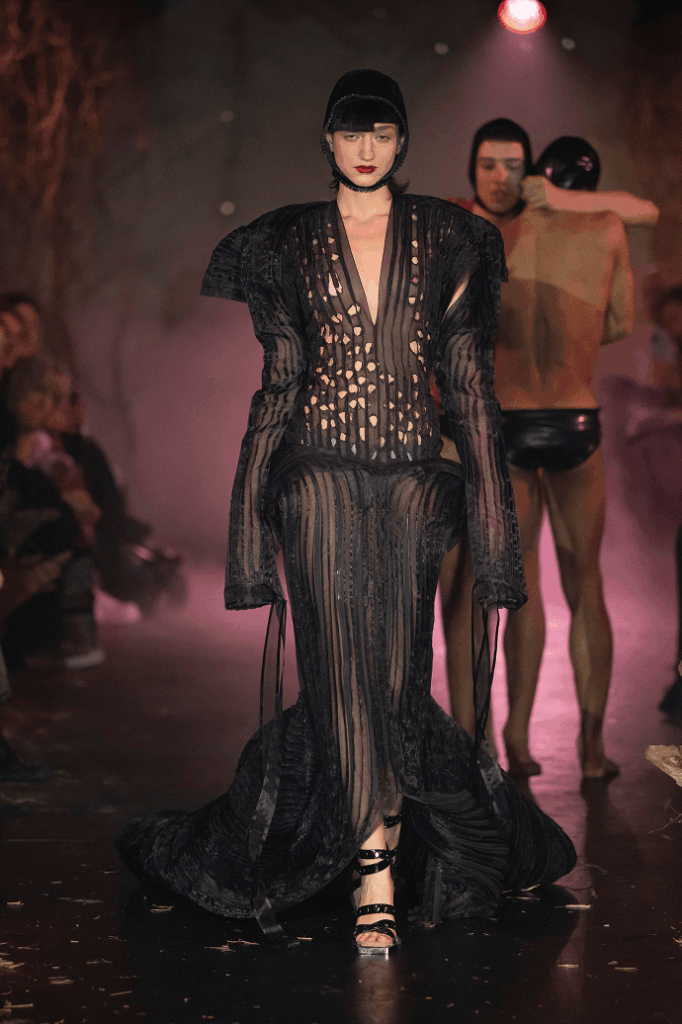
h: Many of your shows construct immersive worlds—the purgatorial manor house in Manor for Heaven, the dystopian 3025 of your LFW debut, the ghostly ancestral birthday party in I’ll Cry If I Want To. Can you walk us through an example of how you build these cinematic narratives, from initial spark to runway?
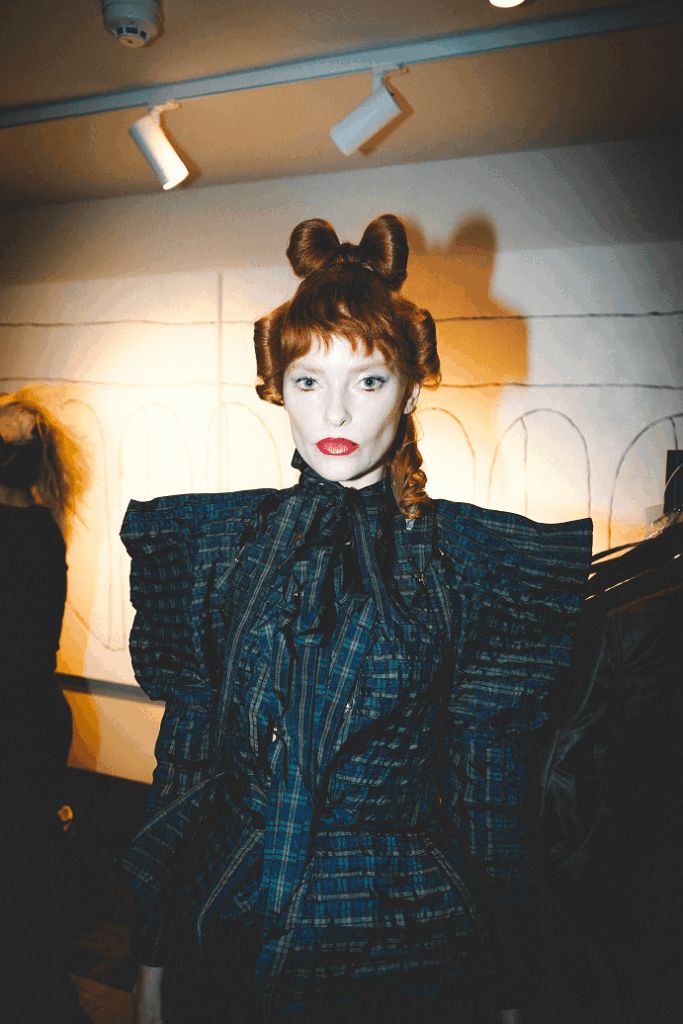
MR: Each season is always a pivot or response to the last. After the Un-United Kingdom dystopia I was craving the mid-century glamour of a Lynchian filmset—so I’ll Cry If I Want To’s red velvet curtains and ghostly birthday party dream world was born.
I start the season with a list of buzz words. Jonathan Anderson used to do the same when I interned there. It might be as broad as textures like “butter” or “marzipan” or as specific as Joanna Hogg’s film Unrelated or Tudor cut and slash work. From those words I outline a hazy narrative which slowly cements across the season into a cinematic, script-like setting, with fully-realised characters with backstories and lives lived.
h: Your most recent collection, Post Me Your Last Kiss, is your most personal work to date. The title itself suggests intimacy, memory, and perhaps a sense of farewell. What emotional landscape were you exploring, and how did those feelings find their way into the garments and the presentation?
MR: I was heartbroken. So fucking heartbroken. Still am. It was such a weird time but I had to find some antidote to the lethargy and disorientation I was experiencing. I was walking the streets of London alone, spending a lot of time at Spitalfields market sifting through old objects. The idea of the shattered pocket watch, a symbol for eternal love being broken apart and time in freeze frame, sparked this narrative in me—a Shoreditch street walker, time travelling through the eras he adores in search of his lost lover or better still himself again.
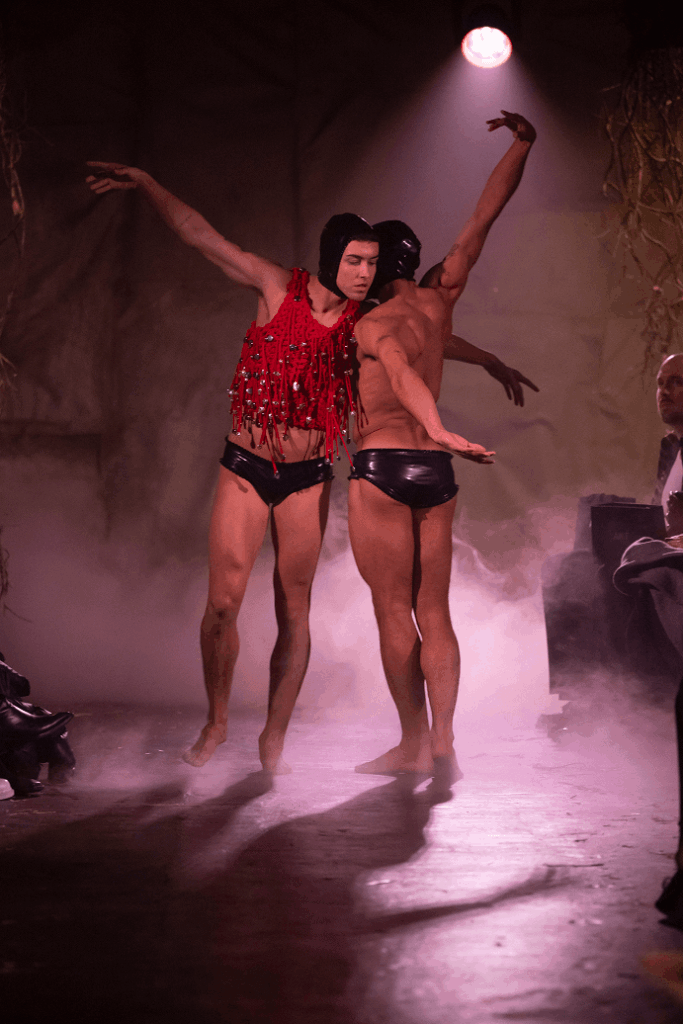
h: Sound, performance, and live elements—bells on garments, dancers, singers—often lift your presentations beyond a traditional fashion show. How important is the multisensory experience in bringing your ideas to life? What does sound or movement reveal about a garment that an image alone cannot?
MR: I used to want to be an actor and took singing lessons up until grade 8 classical. I grieved the loss of that side of me when I moved to Saint Martins but I have rediscovered it in the way we stage my shows. I love that I still get to work with actors and dancers and direct short films, music videos, and more. As a designer I’m able to oversee the entire project, rather than being a pawn in another director’s vision.
h: Piano felt, cables, deadstock—you treat what’s been thrown away as raw luxury. Is there a material you’ve been circling for years and still haven’t cracked?
MR: When I got my Machine-A ready-to-wear order I got overconfident and thought all the other stores would follow. My meetings with a few major stores did not result in a buy, but I’d already ordered so much fabric (lesson learnt). I still have an insane amount of this mottled jersey material I am dying to develop a textile for. It’s very wintery so we are waiting until next season to transform it.
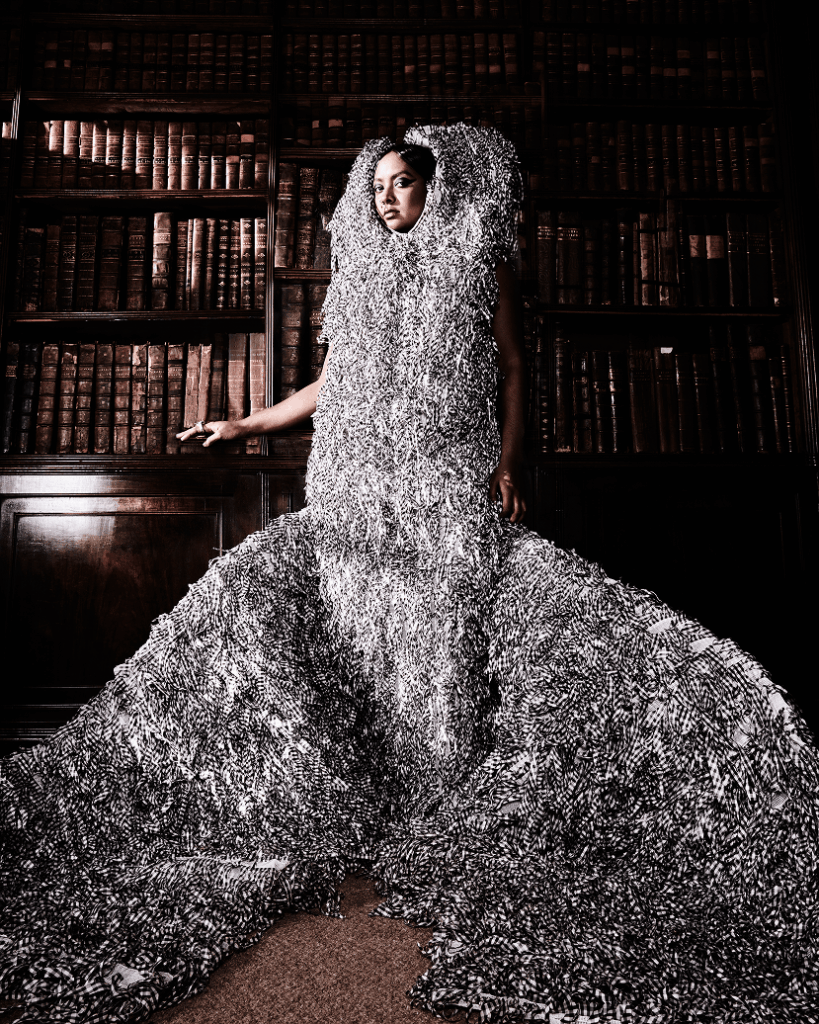
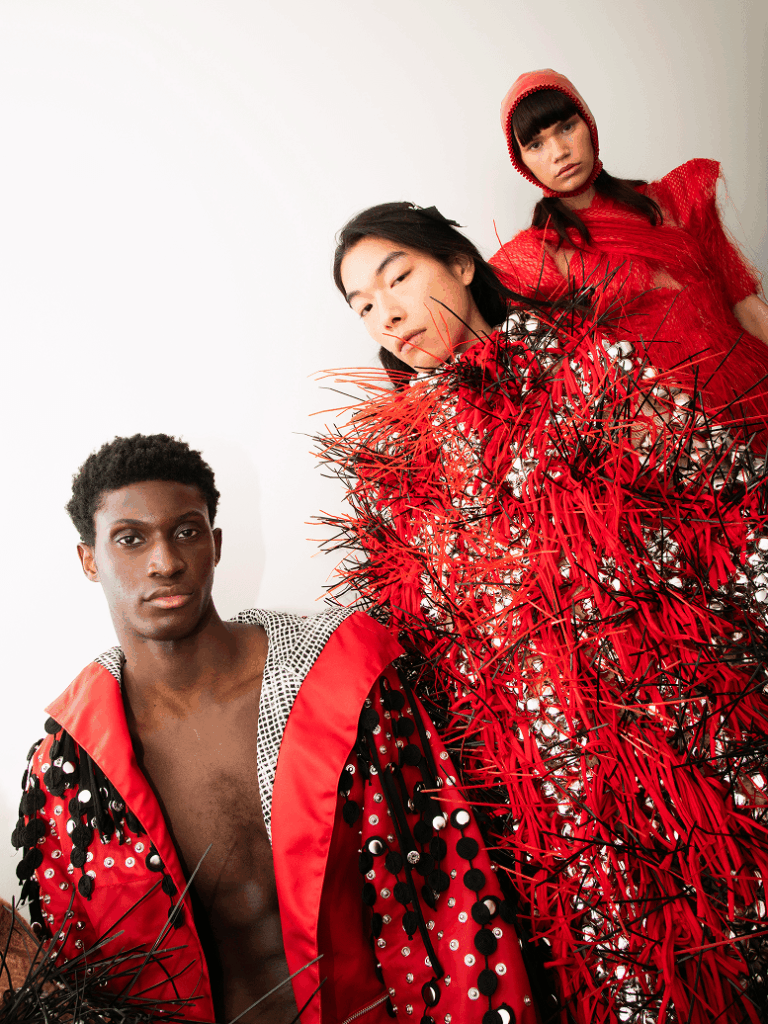
h: The Equinix dress was built from thousands of metres of decommissioned data-centre cable. How was this idea born, and what did the material demand once you started working with it—in terms of weight, structure, and whether a body could realistically wear it?
MR: It’s so heavy! A body absolutely cannot realistically wear it. That one really was a sculpture to exist in a photograph and a fantasy. We were holding the weight of it between takes and padding the model’s shoulders. It’s now in a glass box at Equinix’s headquarters in the city. I think some garments serve the purpose of function, desirability, and a precious place in someone’s wardrobe—and others drive a narrative, a sense of escapism and world-building; they explore a craft and challenge materiality. I enjoy doing both.
h: You have presented your work across four continents. How does encountering different cultures, landscapes, and audiences influence the worlds you create? Do you think a designer ever truly leaves their place of origin, or do they carry it with them?
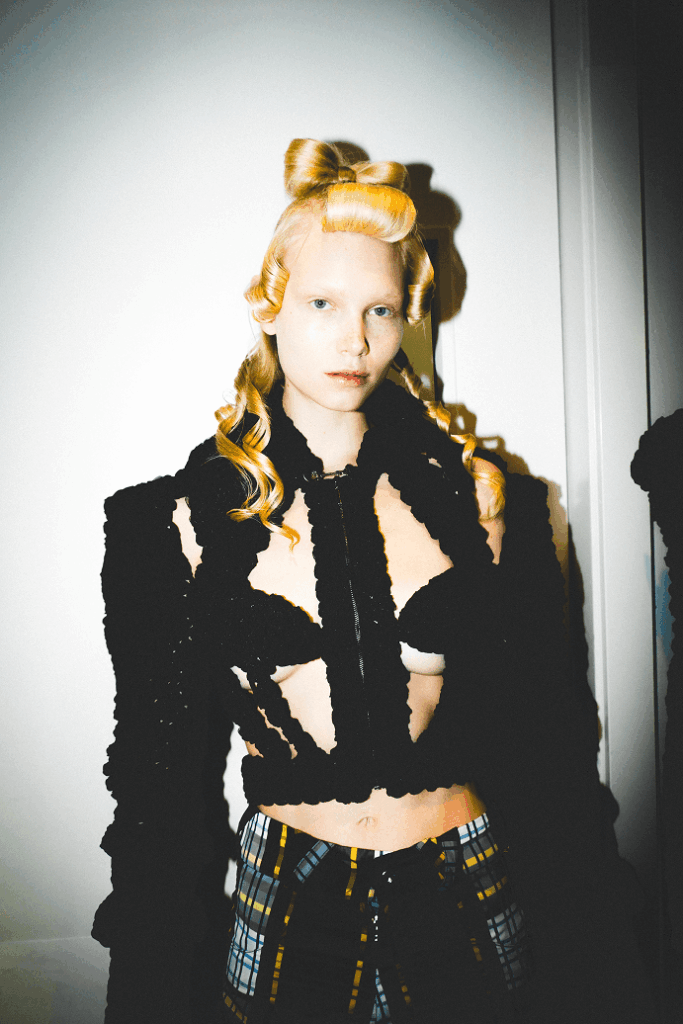
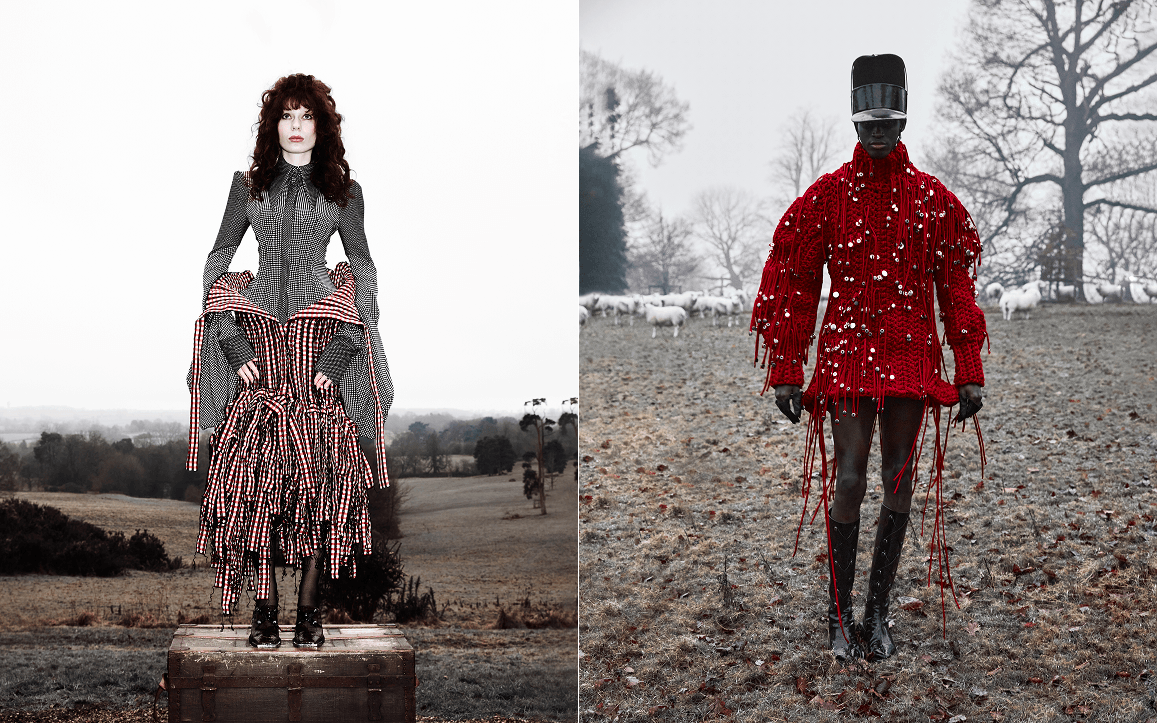
MR: India had profound impact on me after showing there for R|Elan Circular Design Challenge. It was after my heartbreak and subsequent show and I had time to process and re-prioritise my life. I was a definite victim to the hamster wheel rat race of trying to become a successful designer. The travelling I did in India helped me to come back to London with new energy, inspired by the people I had met out there. Everyone is rightly apprehensive about taking inspiration from cultures that don’t belong to them, so it’s about finding common ground, having meaningful conversations and learning from each other—as I did with Indian designers like Varshne B. from CRCLE and Rishabh Kumar from Farak. I definitely carry British heritage with me into my design practice—waxed country coats, riding boots, Queen’s guardsmen, tweed, gingham, and more. I love to subvert tradition and classics where the codes of my origin are challenged and re-envisioned in new contexts, often through a queer or anarchic lens.
h: Sustainability and zero-waste practices are deeply embedded in your process, but your work is also highly emotional, dramatic, and fantastical. How do you reconcile the practical limitations of responsible design with the limitless nature of imagination?
MR: I’m not a sustainable brand, whilst we do work so often with waste materials and re-purposed techniques. I have deep admiration for designers who lead the fight such as Phoebe English, who is the one doing it properly. I love to magpie and find waste materials to re-imagine into fabulous new contexts. I’ve worked a lot with apple and pineapple leather as well as British Wool surplus.
The honest answer to your question is that I don’t reconcile it as well as I’d like to. I always choose the idea I love the most, rather than the greenest one, it’s just lucky that often the ideas I find most innovative are the scrappiest and upcycliest ones.
h: As a young designer building an independent label, what have been the most illuminating lessons in balancing commerce, creativity, and community?
MR: I spend 80% of my time on my laptop, pitching for sponsorship, replying to clients, organising accounts or budgets. The most illuminating moment is when you realise that running a brand is less so about being a fashion designer and more so being a small business owner. If you don’t ask you don’t get—so reach out to people all the time. Surround yourself with a team of people who give you life, who inspire you, and who you’d be friends with outside of the studio—this gets you through the harder days. Credit your team. Invite your team to the parties you get invited to. If you’re stressed, tired, and starting to be stroppy, communicate that it’s nothing to do with your team and go for pints after to remind them it was stress and not them. Basically, just don’t treat people like shit—in the way I was often treated in my earliest experiences in fashion.
h: Your work often explores beauty alongside melancholy, fantasy alongside tragedy, and celebration alongside loss. What role do these contradictions play in your understanding of beauty — and in the kind of life you want to create through fashion?
MR: Firstly, thank you—I’m glad you recognise that in my work. What you’ve just described is life. For every rise there is a fall, for every smile, a tear, for every night staring into the eyes of a true love, there’s the nights alone and overthinking your whole world. My work aims to, in some indirect way, reflect the contradictions of living. When selling myself and the brand I project optimism, like some American Ted Talk elevator pitch of animation and joy, but this is contrasted by deep self-doubt, crippling worrying about whether there’ll be money for the next season, or who is doing better than me. The characters in my stories are as flawed and multifaceted as me. The illusion that other people have it all sorted out, is just that—an illusion; so like it for my characters to reflect, usually an exaggerated essence of that.
h: Looking ahead, what worlds or stories are you most eager to explore next—through new collections, expanded media, or even broader cultural projects?
MR: The new collection is optimistic, a pivot from last season’s melancholy. There is more colour than ever before. I am swimming and running, I’m healthier but simultaneously going out heavier than ever before. I was inspired this summer by Wimbledon and the World Cup, long English summers of peace and tranquility but also by filthy London clubs and the rave scene. Frivolity, debauchery, and wholesomeness. That’s the vibe.
h: If you could invite 3 people to a dinner (dead or alive), who would they be?
MR: David Bowie, Baz Luhrmann, and my future lover (where is he?).