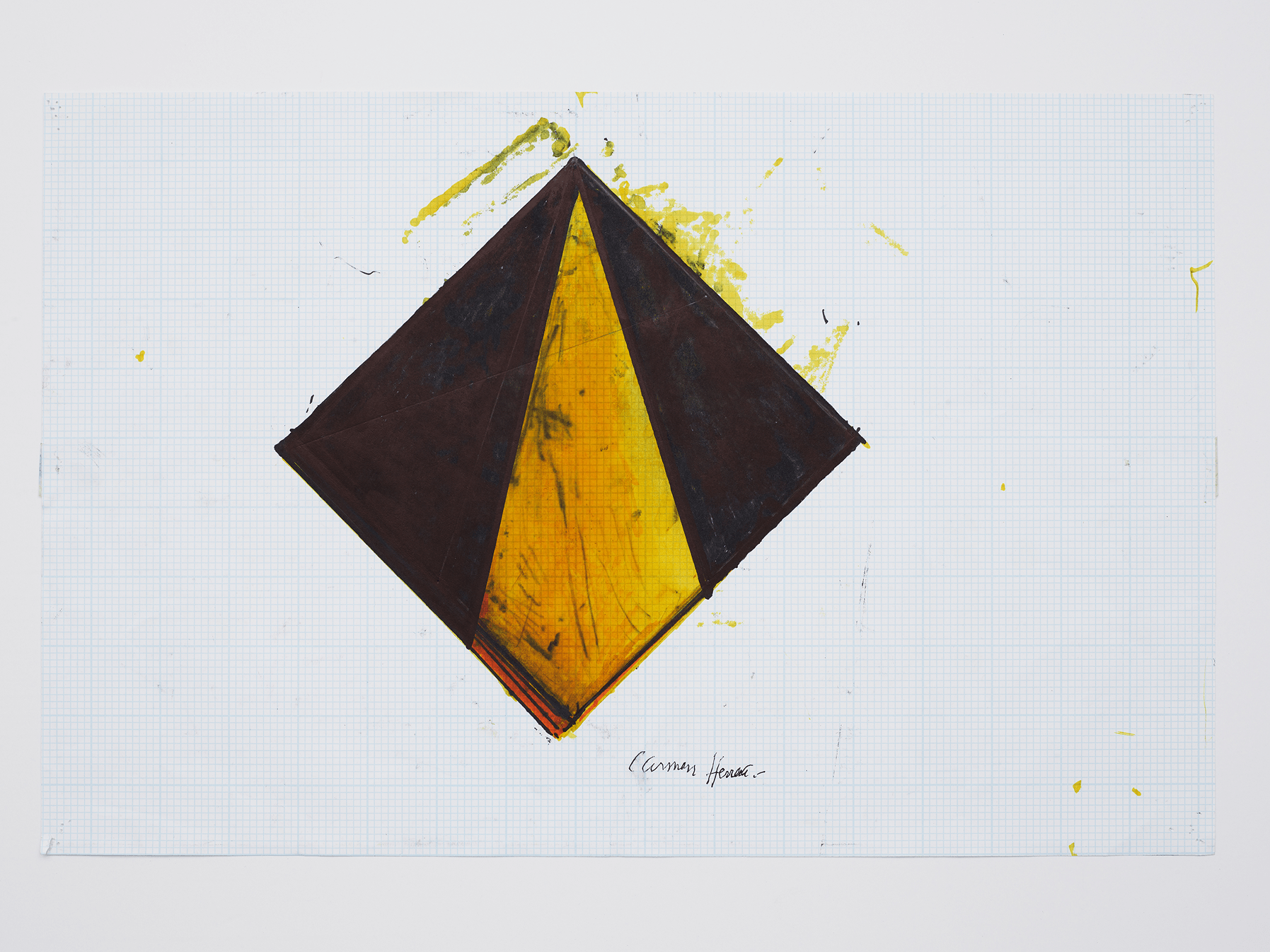
Lisson Gallery turns its attention to Carmen Herrera with an exhibition of works from the final decade of the Cuban-born American artist’s life, curated by Marie Perennès, a French curator based in Paris who specialises in exhibitions of Latin American artists. Opening on September 24th and running through November 7th, 2026, the exhibition spans paintings, drawings and sculptures across four galleries, framing Herrera’s late practice as the culmination of an eight-decade investigation into line, colour, proportion and space.
Born in Havana in 1915, Herrera studied architecture before moving to New York and later spending five years in Paris. Her encounters with European modernism shaped the hard-edged geometric language for which she became known, yet her compositions remained distinctly her own, disrupted by asymmetry, unexpected colour relationships and subtle shifts in proportion.
Colour with a pulse
The exhibition opens with works centred on Herrera’s fascination with colour and its ability to alter spatial perception. In Columbina (2013), black and orange triangles gather around a central black rhombus, evoking a fragment of an immense harlequin pattern that seems capable of extending beyond the canvas.
A similar tension appears in Untitled (2015), where a mid-blue trapezium cuts across vivid orange. The unusual geometry reflects Herrera’s habit of testing possibilities through sketches and trial and error, balancing calculated structure with playful deviation.
When geometry leaves the canvas
Herrera’s Estructuras series carries her geometric language into three-dimensional space. Angulo (Orange) (2017–18) is conceived as a “three-dimensional painting”, extending her precise lines and forms beyond the picture plane. Begun in the 1960s, the series grew from her architectural interest in the relationship between space and line, later expanding into monumental works, including installations at New York’s City Hall Park.
The purity of black and white
Herrera began developing her black-and-white works in 1950, reducing her visual language to its most elemental terms through what she called depuración, or “purification”. In Adios (2010), interlocking triangles and rectangles seem to fold inward and open outward, while black and white continually exchange figure and ground. Stripped to line, plane and contrast, the composition takes on the quality of an abstract alphabet.
For Herrera, precision was never synonymous with rigidity. Her late works strike a balance between calculation and chance, architecture and improvisation, and colour and silence.
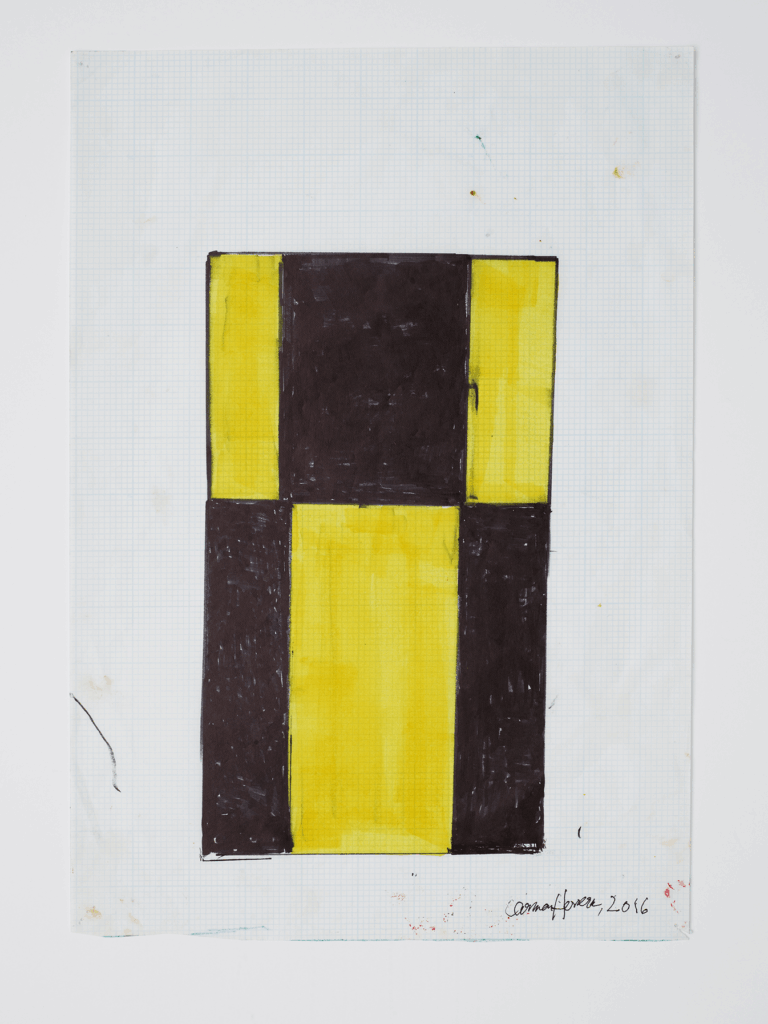
Untitled, 2016
Acrylic marker on graph paper. 40 x 27.9 cm. 15 ¾ x 11 in
Courtesy of ESTATE OF CARMEN HERRERA
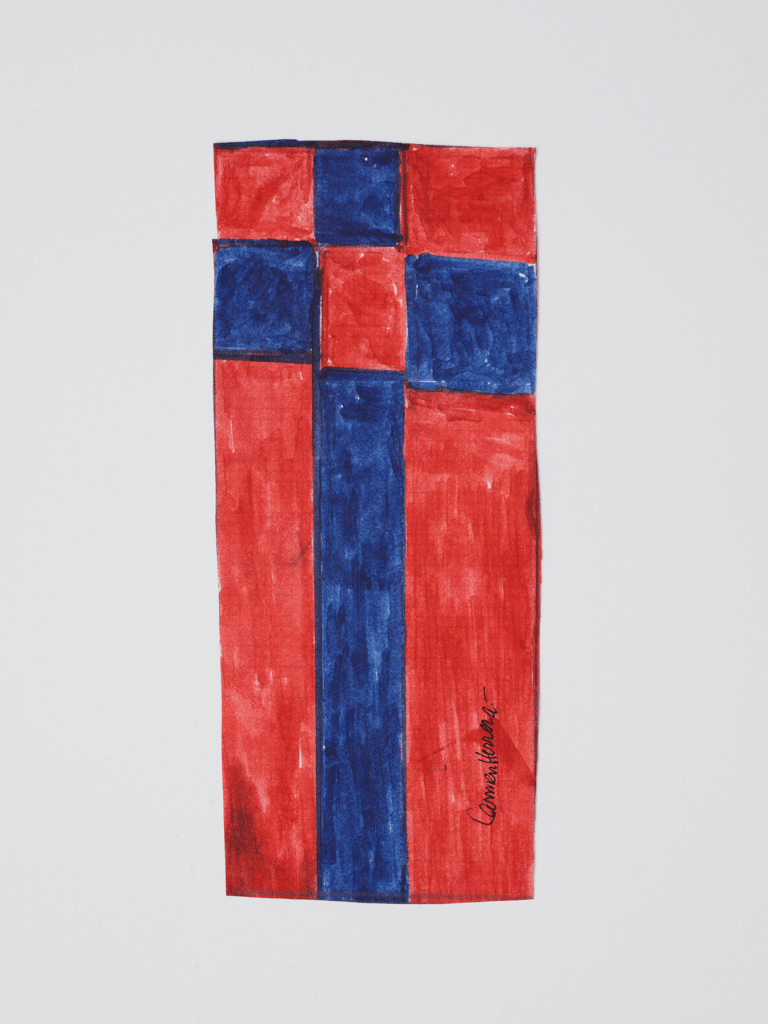
Untitled, 2017
Acrylic marker on paper. 19.1 x 7.6 cm. 7 ½ x 3 in
Courtesy of ESTATE OF CARMEN HERRERA
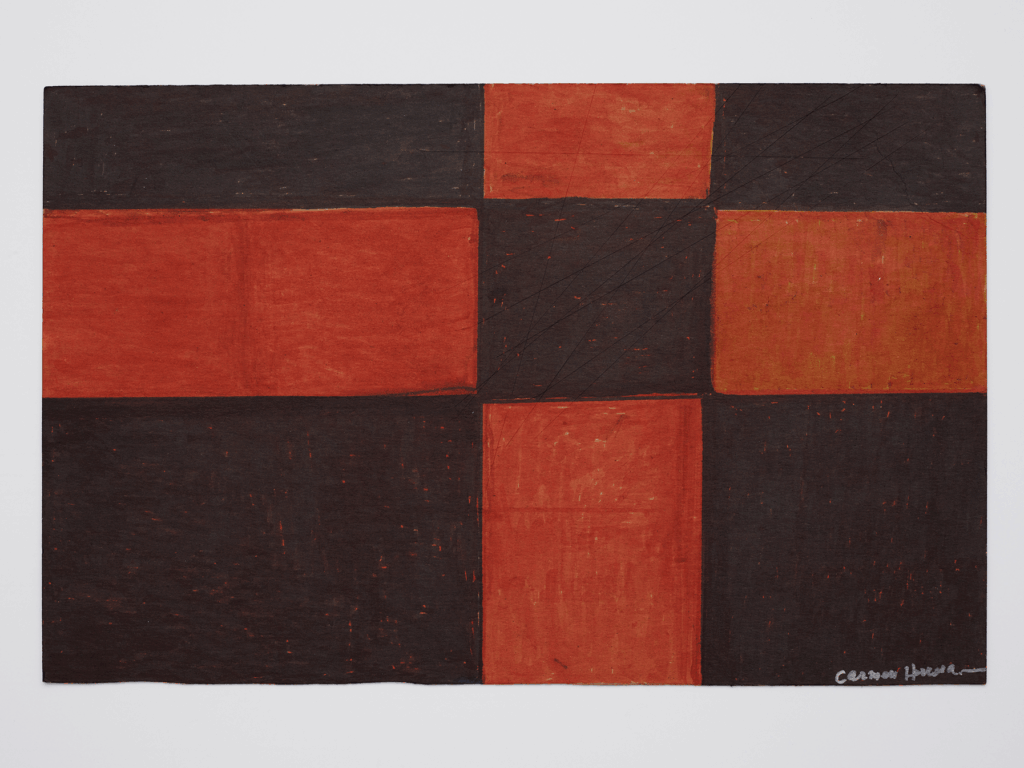
Untitled, 2017
Acrylic marker on cardboard. 27.3 x 43.2 cm. 10 ¾ x 17 in
Courtesy of ESTATE OF CARMEN HERRERA