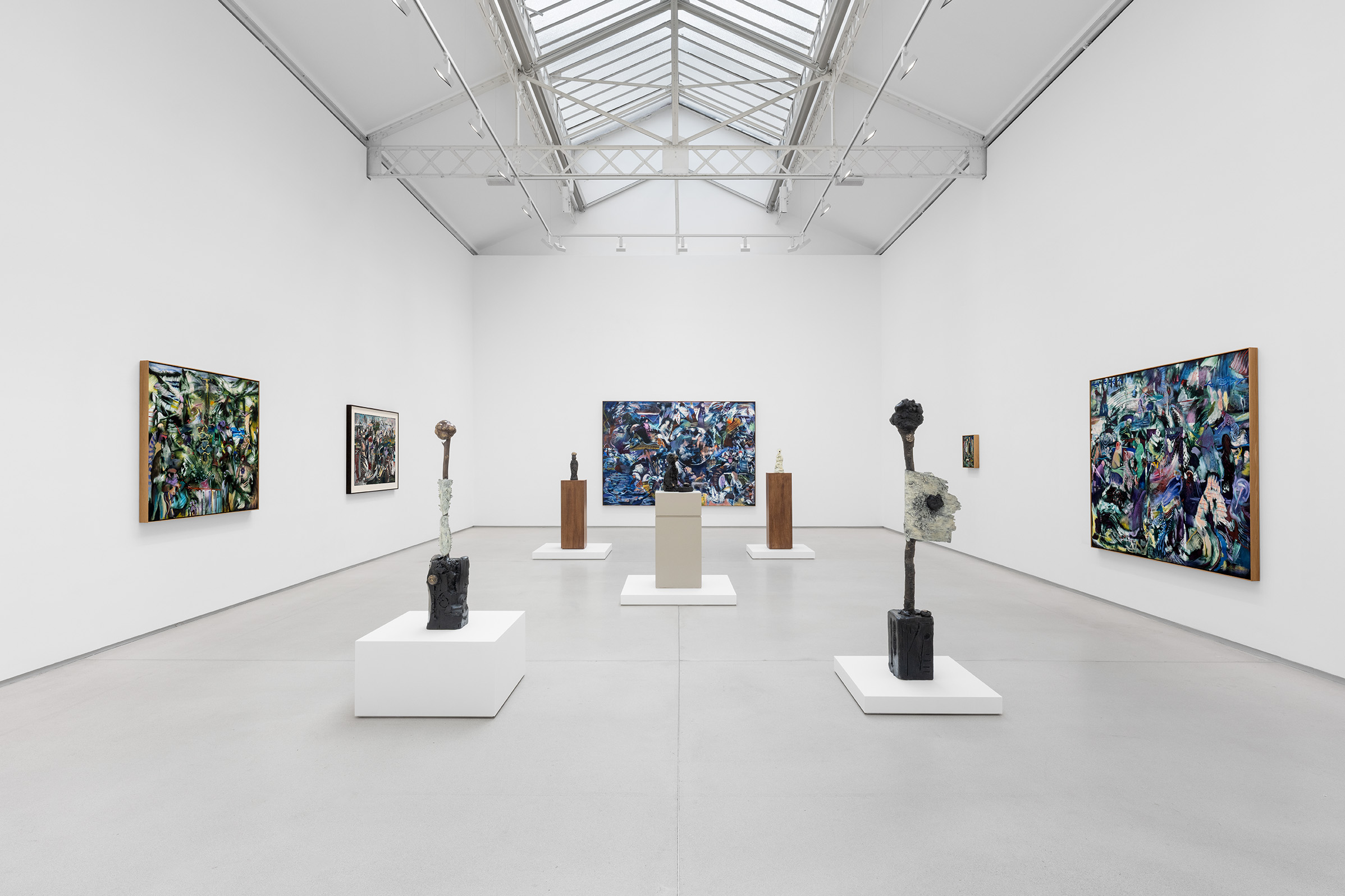
Ali Banisadr: Talisman is on view at Thaddaeus Ropac Paris Marais from September 5th to October 10th, 2026, bringing together new paintings, bronze sculptures and, for the first time, pastel works. Across these mediums, the Tehran-born, New York-based artist builds a visual world of archetypal figures, enigmatic symbols and shifting forms, where abstraction meets figuration and histories intersect.
The exhibition coincides with Banisadr’s presentation at the Musée national Gustave Moreau, on view from September 9th to December 7th. Moreau’s Symbolist language offers a key reference, particularly Banisadr’s interest in images suspended between the visible world and myth, memory and imagination.
Painting between worlds
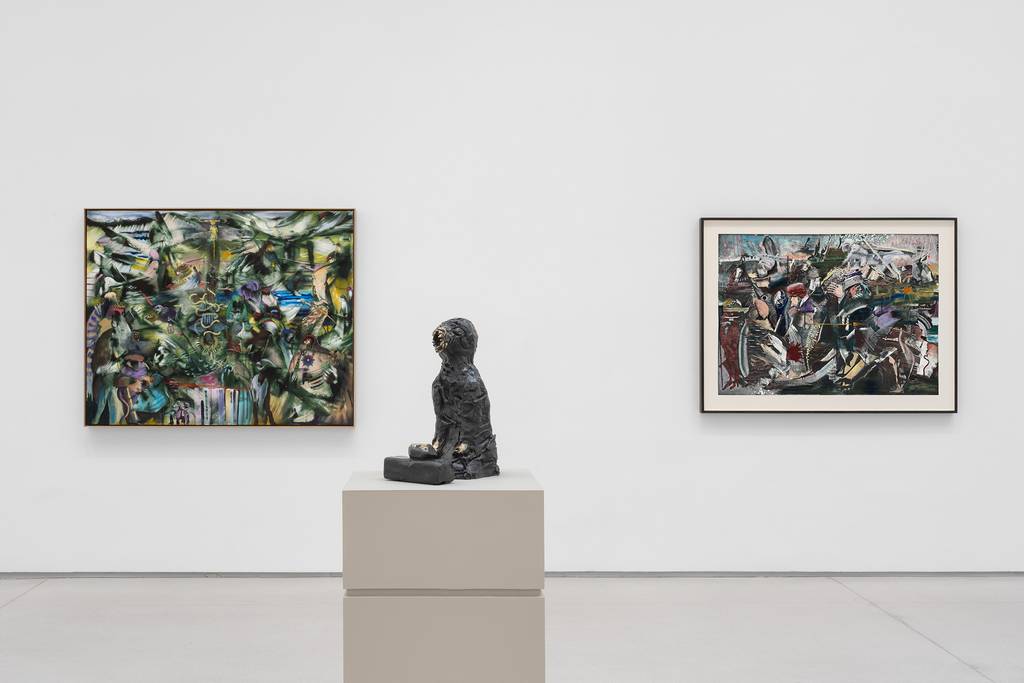
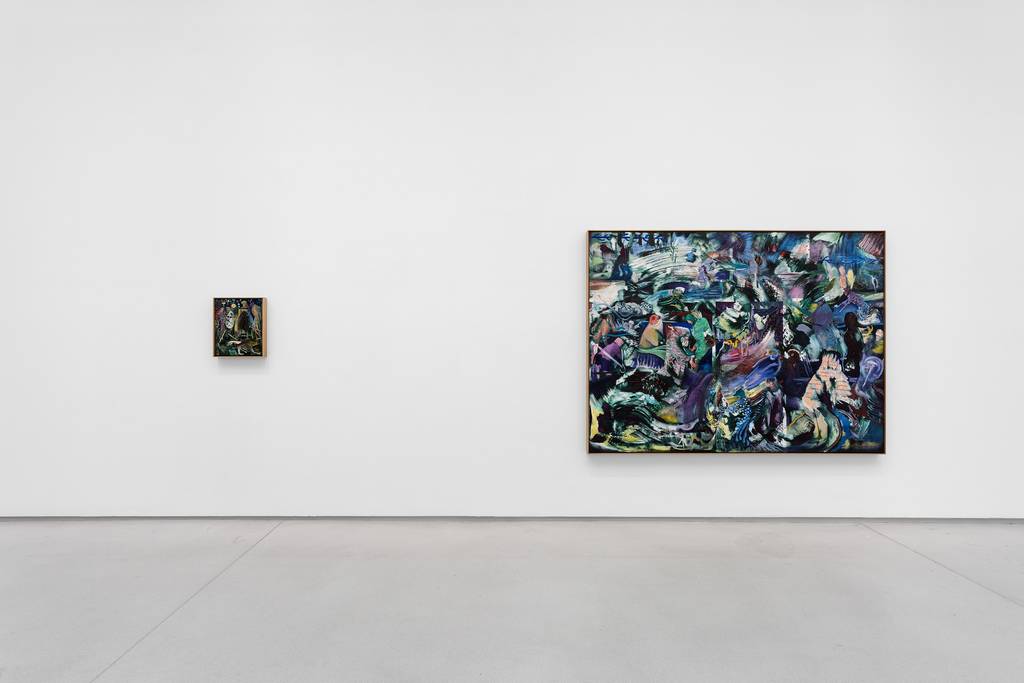
Banisadr’s paintings combine swirling gestures, oblique horizons, portals and elusive grids, creating spaces where multiple realities seem to coexist. His increasingly architectural compositions suggest psychological and historical worlds opening beyond the picture plane.
In Social Contract (2026), a sharp diagonal rupture cuts through the composition, evoking a fragile agreement pushed towards its limits. Echoes of Thomas Hobbes’s Leviathan (1651) and Francisco de Goya’s Duel with Cudgels (1820–1823) place political theory, art history and human conflict within the same atmospheric space.
Smoke & Mirrors (2026) is more elusive. Figures emerge and recede within a lattice of smoke-like forms, reflecting Banisadr’s fascination with illusion, disguise and concealment. The image seems close to revealing itself before slipping back into abstraction.
The talisman as image
For Banisadr, the talisman is more than a symbolic object. Traditionally associated with protection and spiritual power, it becomes a model for how images carry meaning across time. His signs and hybrid forms begin as intuitive drawings, refined in sketchbooks before appearing on canvas as compact visual emblems.
Their meanings remain open, accumulating associations across civilisations and visual traditions. Ancient Mesopotamian and Egyptian art, Persian miniatures, Renaissance painting and modern abstraction all enter this evolving vocabulary.
Talisman therefore speaks directly to Banisadr’s practice: his images act as vessels for memory, carrying fragments of stories and cultural knowledge between contexts. Their significance lies not only in what they represent, but in their capacity to survive, mutate and gather new associations.
Archetypes in bronze
A series of bronze sculptures extends this symbolic language into three dimensions. Mythological beings appear as autonomous archetypes, occupying the gallery as guardians and intermediaries between material and imagined worlds.
Their surfaces recall archaeological fragments or ritual objects, while Banisadr applies patina by hand with a brush, approaching bronze with a painter’s sensibility. The resulting figures hover between relic, body and apparition.
Across painting, sculpture and pastel, Banisadr treats the image as a living structure—concealing, resurfacing and accumulating meaning over time. Like talismans, his works carry fragments of memory between personal and archaeological worlds.
Courtesy of THADDAEUS ROPAC GALLERY, London · Paris · Salzburg · Milan · Seoul
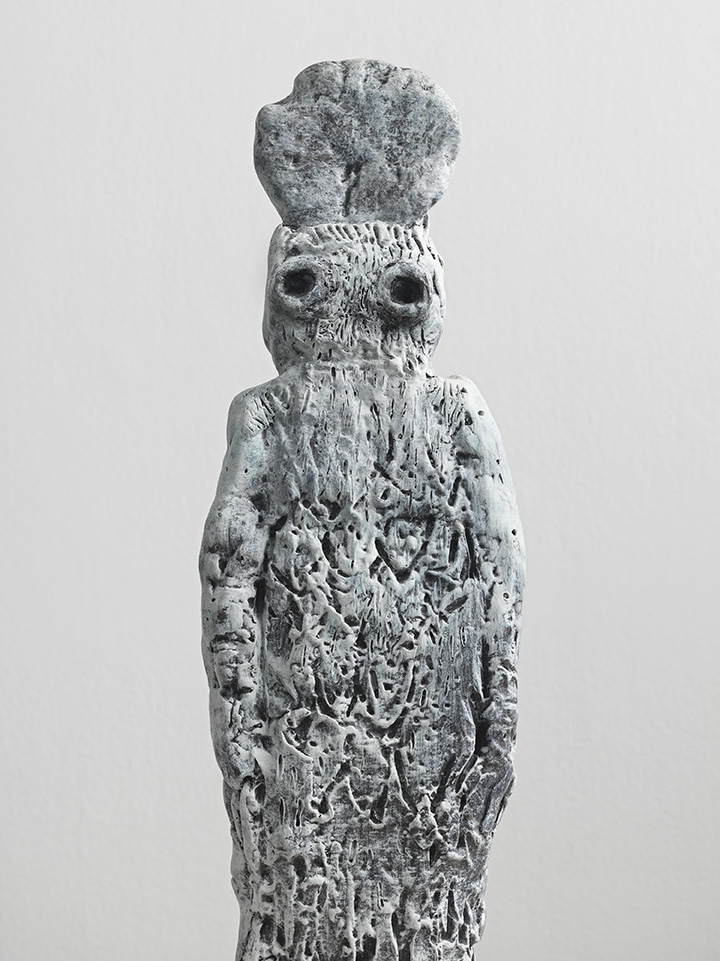
Gilgamesh, 2025
© ALI BANISADR. Photography by GENEVIEVE HANSON
Courtesy of THADDAEUS ROPAC GALLERY, London · Paris · Salzburg · Milan · Seoul
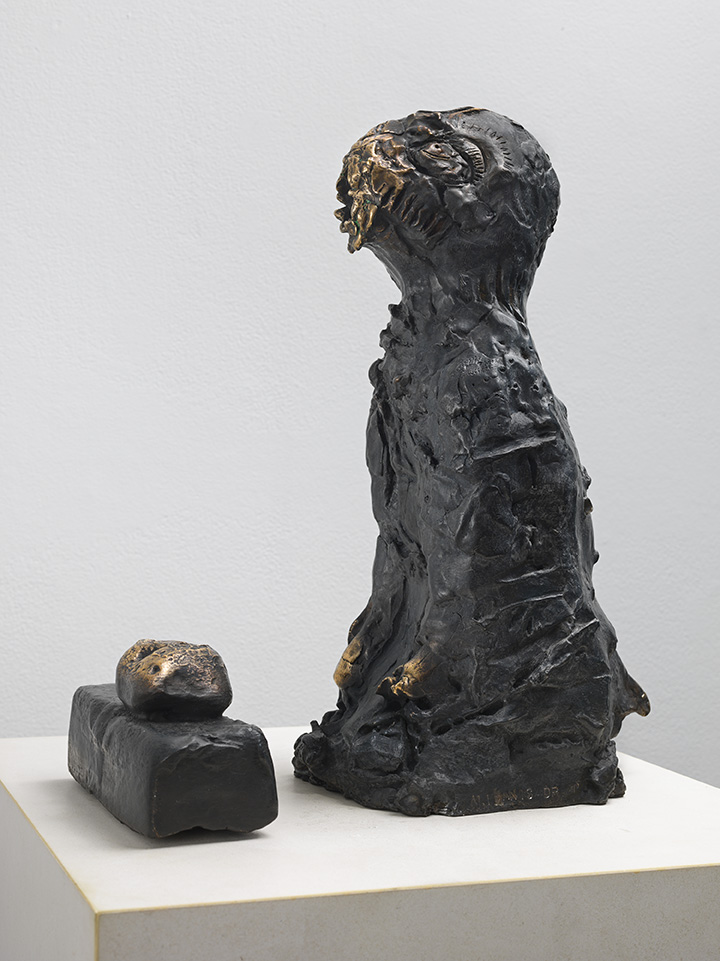
The Alchemist, 2025
© ALI BANISADR. Photography by GENEVIEVE HANSON
Courtesy of THADDAEUS ROPAC GALLERY, London · Paris · Salzburg · Milan · Seoul
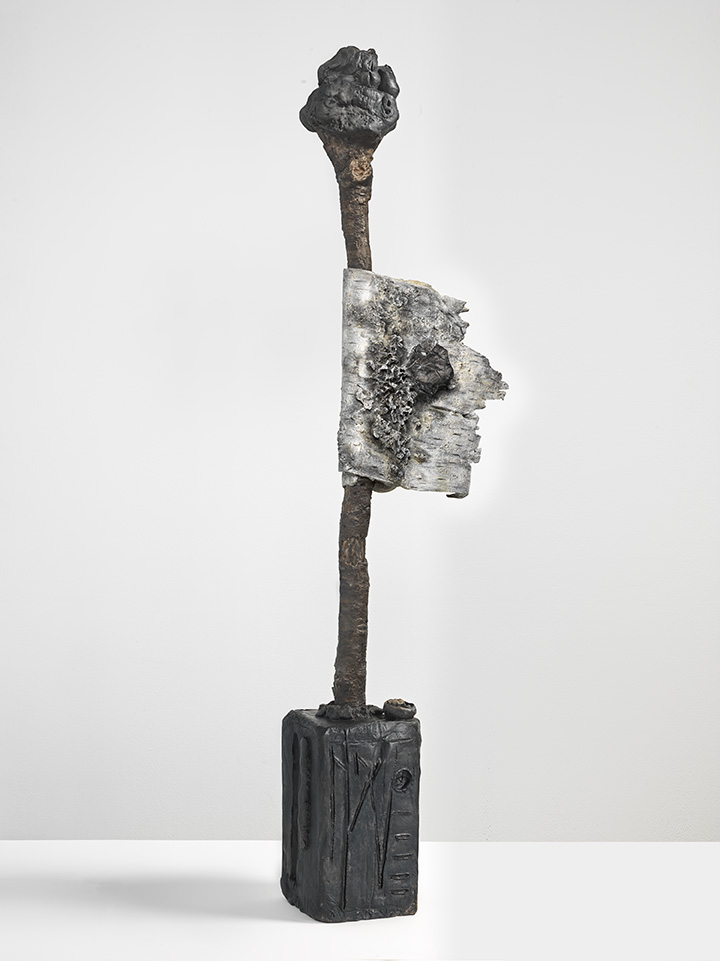
Animus, 2025
© ALI BANISADR. Photography by GENEVIEVE HANSON
Courtesy of THADDAEUS ROPAC GALLERY, London · Paris · Salzburg · Milan · Seoul