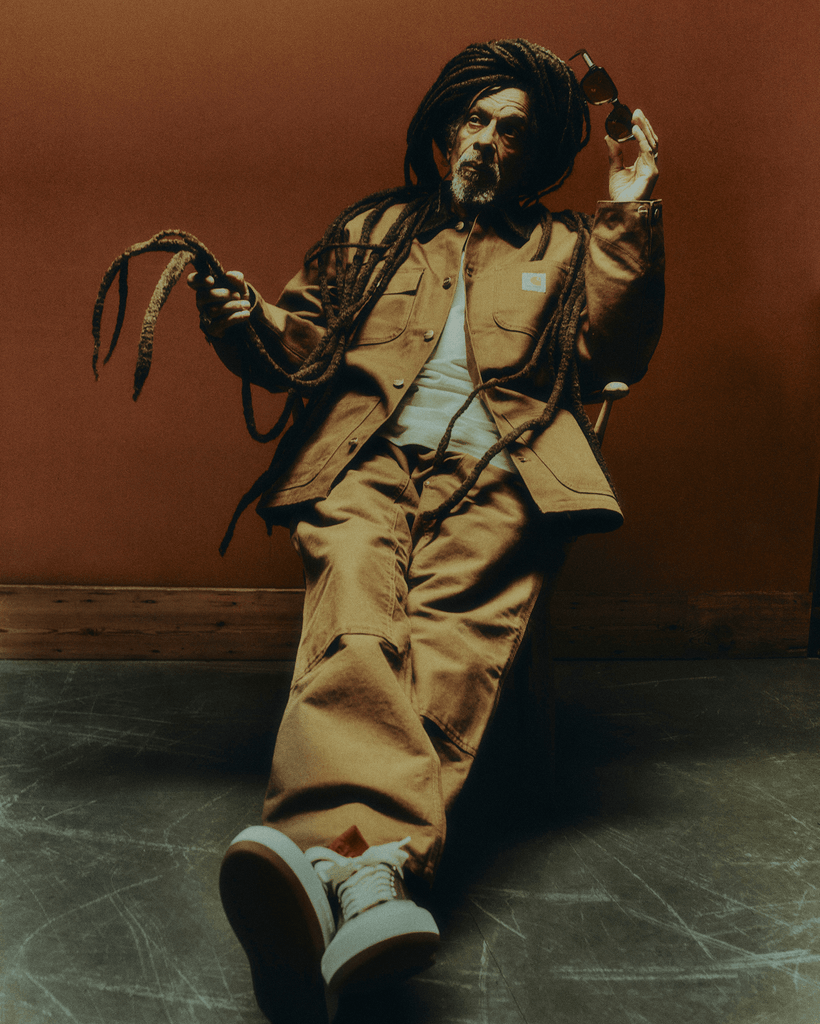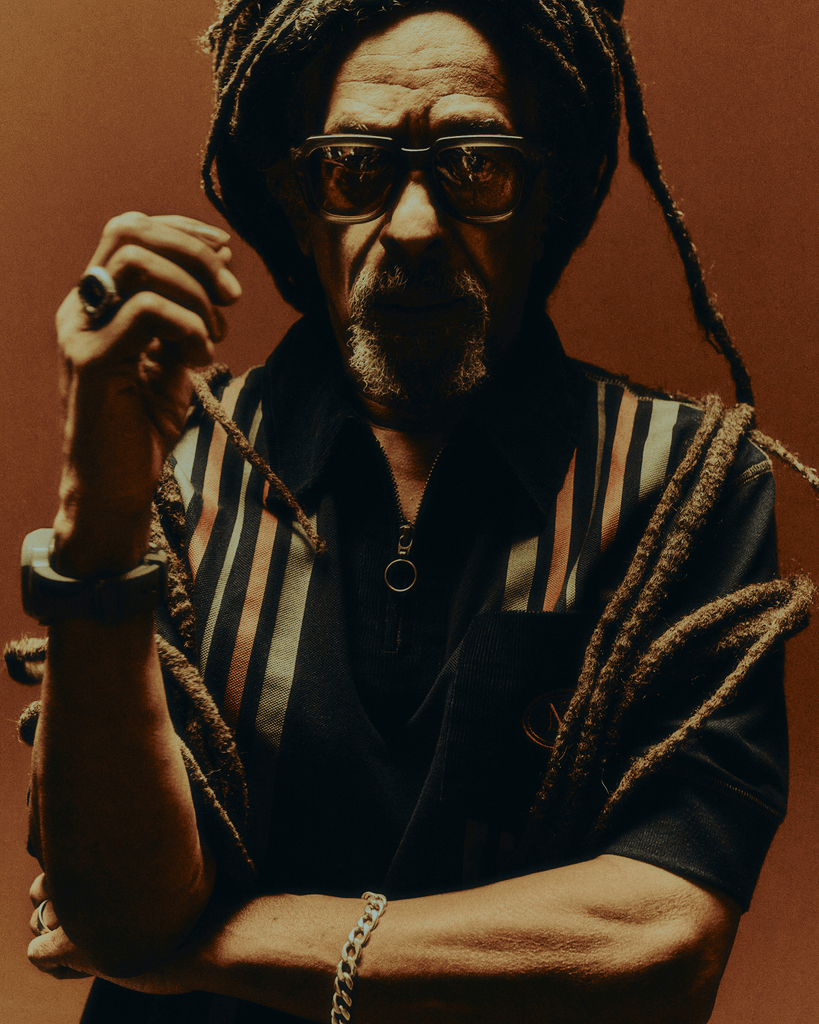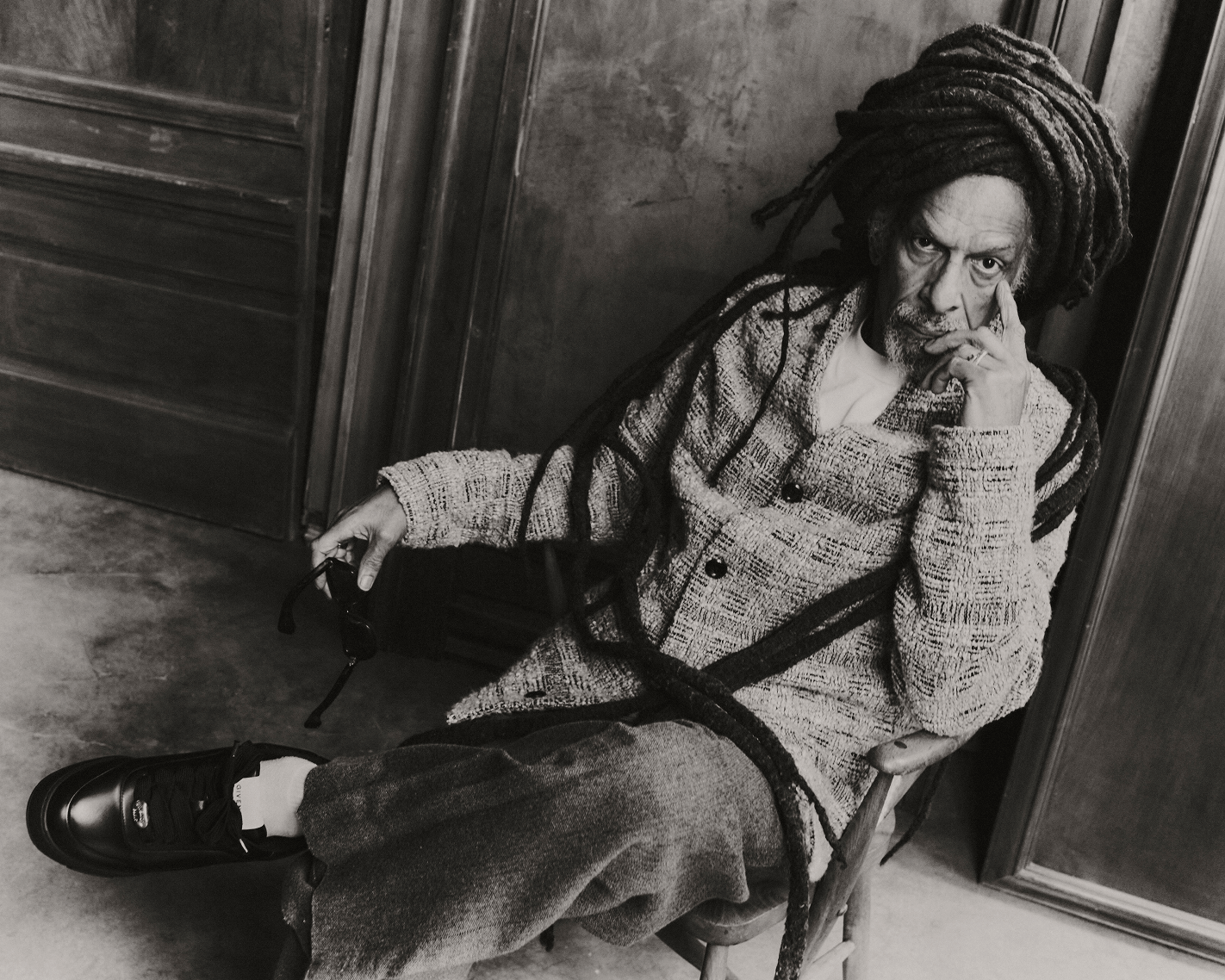
It’s difficult to overstate the significance of Don Letts to music and film: he’s where bass-driven Jamaican music met London punk and where the resulting punky-reggae party met the world. Known as “Rebel Dread,” the film director and musician first came to prominence running Acme Attractions, a store that pumped dub reggae and counted Bob Marley, the Sex Pistols, Debbie Harry, and Patti Smith as friends and customers. He spun his favourite tracks at London’s first punk club, the Roxy, and went on to direct videos for The Clash. It was through the band that he met Futura—the NYC-born abstract painter who began his career with the streets as his canvas. It was 1981, and The Clash were booked to play seventeen shows in Times Square with Letts as their videographer. Curious about the local scene, they’d invited rappers to open for them and asked Futura to paint live on stage during their sets. When the legendary residency wrapped, Letts remained in the States and The Clash returned to London with Futura—the keys to Letts’ Brixton apartment in his pocket. It was a gesture of generosity that marked the beginning of a lifelong friendship between the two. Forty-five years on, we were fortunate to sit down with them for a discussion about art, life, and why money can’t buy soul.
hube: You were both part of movements that were born outside the mainstream and challenged established ideas of culture and art. What happens when a rebellious language becomes accepted, commercialised, and absorbed by the system it once opposed? Do you believe subcultures still exist when the world is watching?
Don Letts: From my perspective, the establishment has always had an astounding ability to commodify culture and dissent. The moment something becomes genuinely threatening, they work out how they can package it and sell it back to you: punk became a fashion, reggae became a lifestyle, hip-hop became a global industry. But that’s not exactly a new story. I don’t think you should confuse the commercialisation of style with the death of spirit. They’re not the same thing.
Futura: The movement that is created—that’s a kind of counterculture, not an answer, but an alternative—ultimately becomes something.You’re right, Don. They commodified us, they commercialised us, and I feel very much part of that. Even forty years ago, when we were arriving and gaining exposure, I was saying, “Oh, we’re being manipulated, we’re being
used.” It was a rock and a hard place, because we want exposure, we want to deliver our messages, but we’re going up against a system that is really trying to shut us down. When we met, hip-hop was not even labelled as such—we called it rap music. But I also feel that they did that because they were trying to find a way to control us. I feel ultimately, they failed. They didn’t really sniff any of us out—at least not the heart. As you said, Don, we didn’t die.
DL: It’s because they mistook subculture for aesthetics. They thought it was about the hairstyle or the soundtrack, but all that became a uniform. The real subculture was all about a new way of thinking, and they couldn’t package that. You can’t buy that in a shop.
F: One of the great things was how much we were able to influence and be a part of it without profiting in the beginning at all. If anything, we weren’t about that.
DL: But don’t get it wrong—we wanted to pay the rent, but we weren’t thinking of global domination or big bank accounts. We weren’t stupid.
F: Don, I wanted to mention something that I don’t know if I ever expressed to you. When we met here in the city and I was asked to go to London with The Clash, you offered to let me stay at your flat. I’ll never forget how kind and generous that was, because we had barely met—we’d only known each other for a couple of months—but I guess you had a feeling about me, and I’m so grateful. Real recognizes real—but it doesn’t happen through screens, that’s for sure. We’re all about eye contact, real human chemistry. We know that’s kind of a thing of the past. Although I see the system now, the world is trying to re-correct back to humanity. We’ll see.
DL: We got to bring the human beings back. Don’t get me wrong, technology has its place, but it’s all about the intent of the people behind it. The downside of technology is only a reflection of where we’re at as a human race.