Irving Penn’s fashion photography is the subject of a major retrospective at the Maison Européenne de la Photographie (MEP) in Paris. Entitled Penn & Fashion, the exhibition will showcase more than six decades of images from September 30th, 2026 to January 17th, 2027. The exhibition reveals how Penn’s precise eye for geometry, light and composition gave fashion photography a distinctive artistic vocabulary by following his career chronologically.
A career shaped by fashion and experimentation
Born in New Jersey in 1917, Irving Penn joined Vogue in 1943 under artistic director Alexander Liberman, publishing his first cover that same year. The spare composition of lemons, gloves and bags marked the beginning of a collaboration spanning more than sixty years and producing over 150 covers.
Penn & Fashion traces this journey from 1947 to 2008 through works from the MEP and Nicola Erni collections, alongside loans from the Irving Penn Foundation and Miyake Issey Foundation. Facsimiles of his Vogue covers further chart the evolution of a partnership woven into the history of modern fashion photography.
When less became a visual language
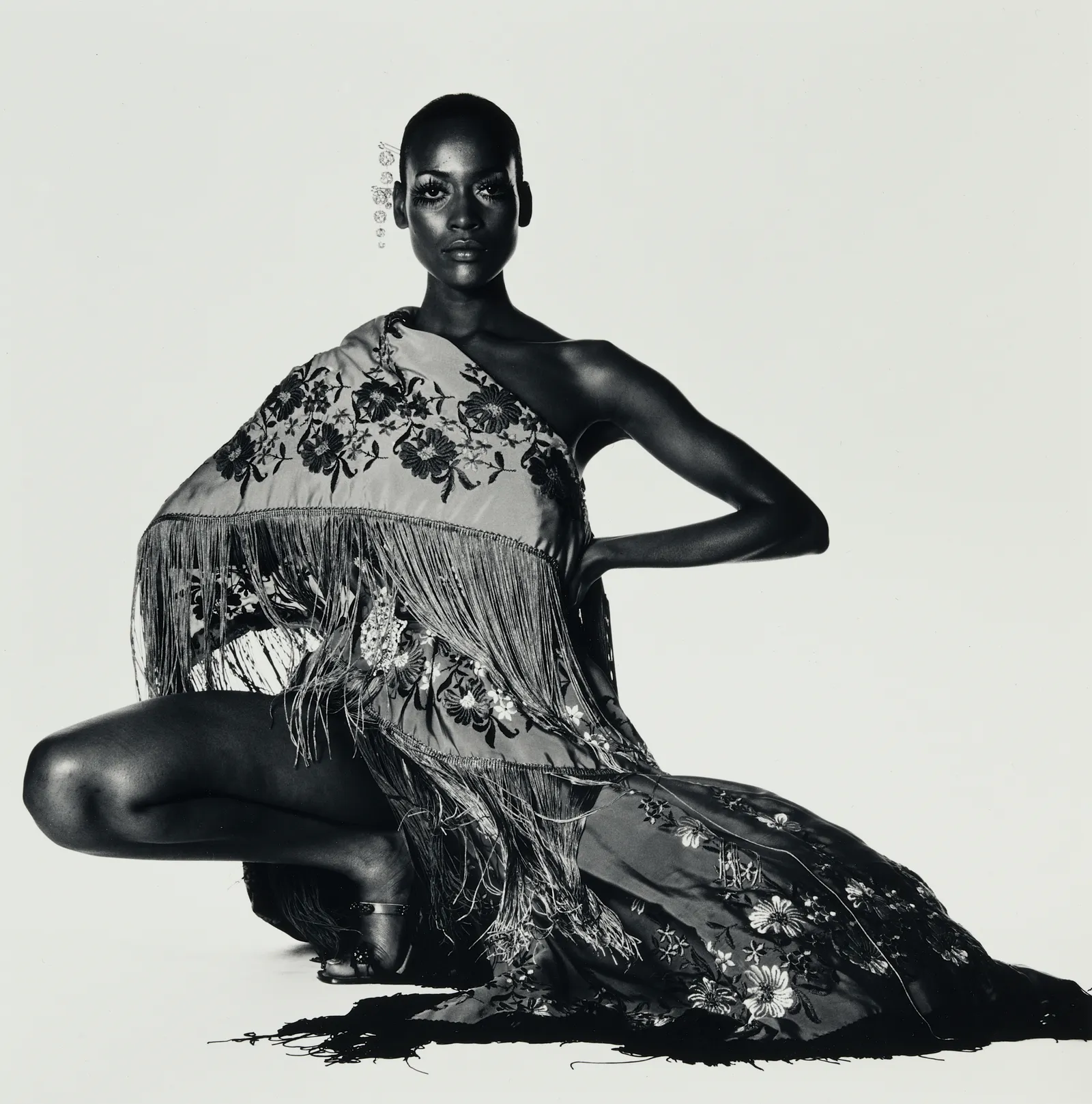
Penn approached fashion with almost architectural precision. As advertising imagery grew increasingly elaborate, he stripped compositions down through pared-back sets, controlled lighting and carefully directed poses.
Models often appear against white or grey backgrounds, their bodies and garments freed from visual distractions. His Portraits in a Corner series pushed this concentration further, placing sitters between two walls and using architecture to sharpen the image. Every fold, silhouette, gesture and shadow gained weight.
His restraint became a defining signature. Through light and composition, clothes emerged not simply as fashion objects but as forms, textures and volumes, helping establish photography as an equal creative counterpart to couture.
From Parisian couture to sculptural pleats
The exhibition opens with Penn’s celebrated photographs of 1950s Parisian haute couture, including Christian Dior and Balenciaga, worn by models such as Lisa Fonssagrives and Jean Patchett. Later decades feature Courrèges, Yves Saint Laurent and Karl Lagerfeld, alongside the expressive silhouettes of the 1970s and 1980s.
Penn never simply documented garments. He translated their construction into visual form, making fabric, volume and movement integral to the image. Designs by John Galliano and Christian Lacroix, alongside Chanel’s elaborate feathered headpieces, became sculptural subjects beneath his lens.
A dedicated section focuses on his collaboration with Japanese designer Issey Miyake. Penn’s graphic precision proved especially suited to Miyake’s architectural pleats, allowing the garments to occupy the frame almost as independent sculptures.
Six decades, one distinctive eye
Penn died in 2009 at 92, leaving one of the most influential bodies of work in twentieth-century photography. His enduring relationship with Vogue and generations of designers established a visual language that continues to shape fashion imagery.
At the MEP, Penn & Fashion traces this legacy from the refined elegance of 1950s couture to Issey Miyake’s sculptural experimentation, revealing an artist whose disciplined approach made fashion images feel timeless.
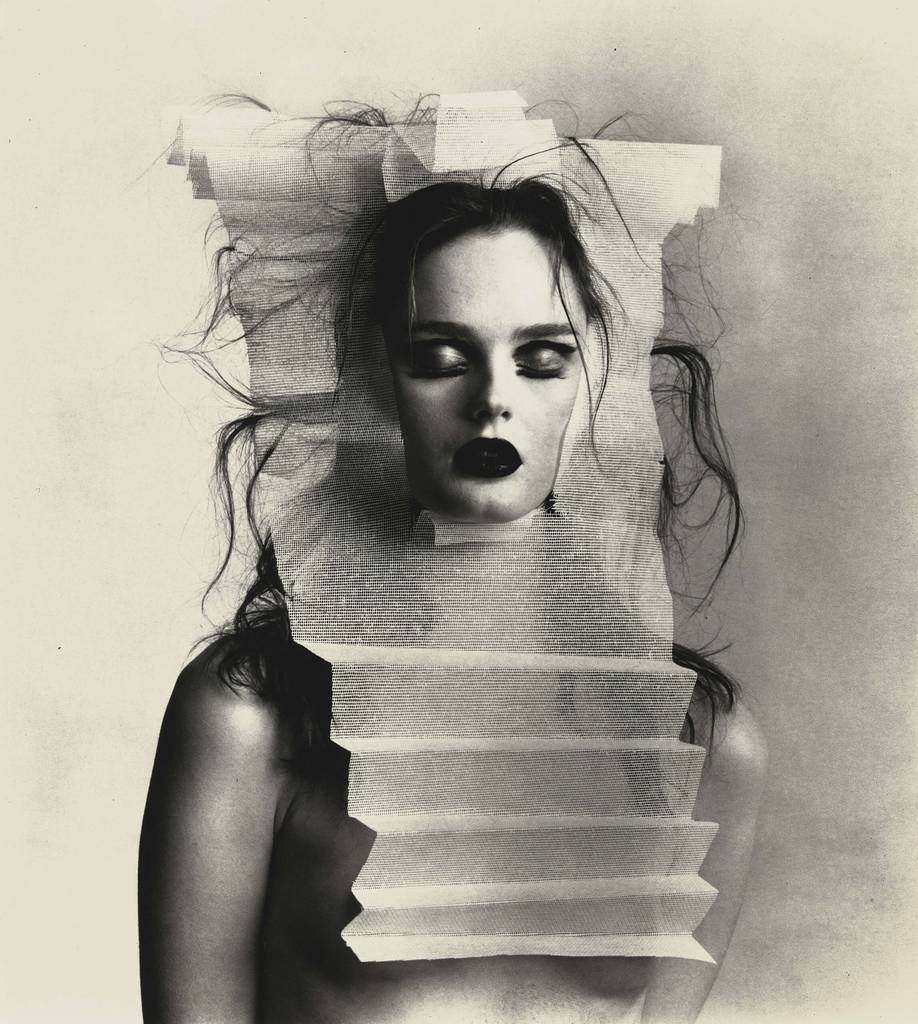
Young Woman with Headdress, New York, 2005; collection of THE IRVING PENN FOUNDATION, New York
Courtesy of THE IRVING PENN FOUNDATION
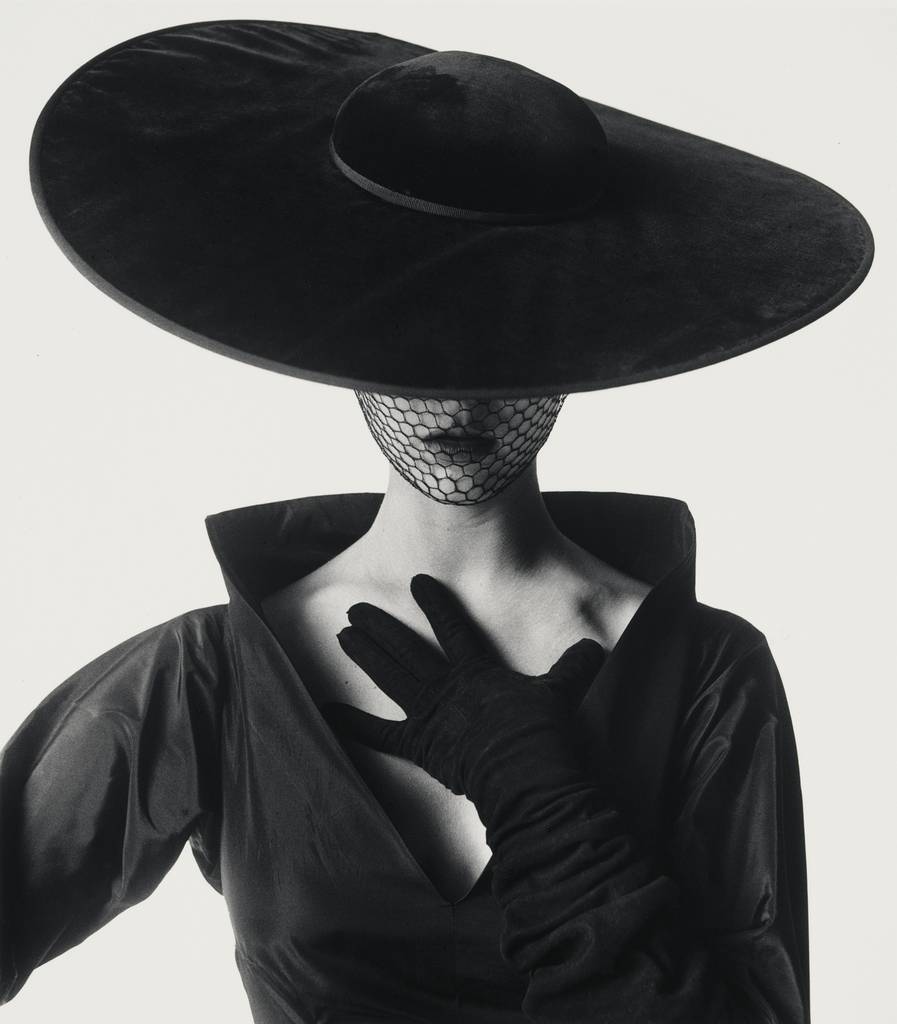
Fashion Photograph (Jean Patchett), New York, 1949; NICOLA ERNI COLLECTION, Zug
Courtesy of THE IRVING PENN FOUNDATION
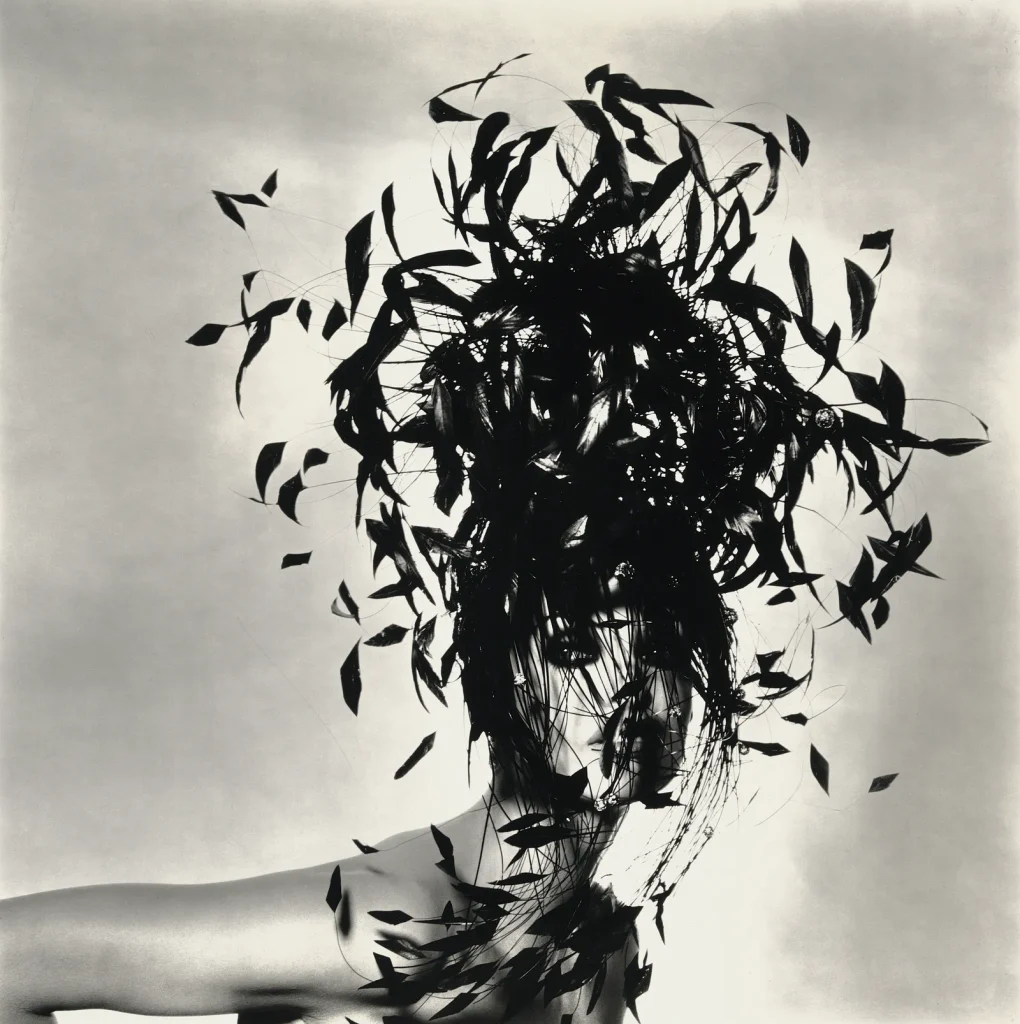
Woman in Feather Hat, New York, 1991
© NICOLA ERNI COLLECTION, Zug, CONDÉ NAST
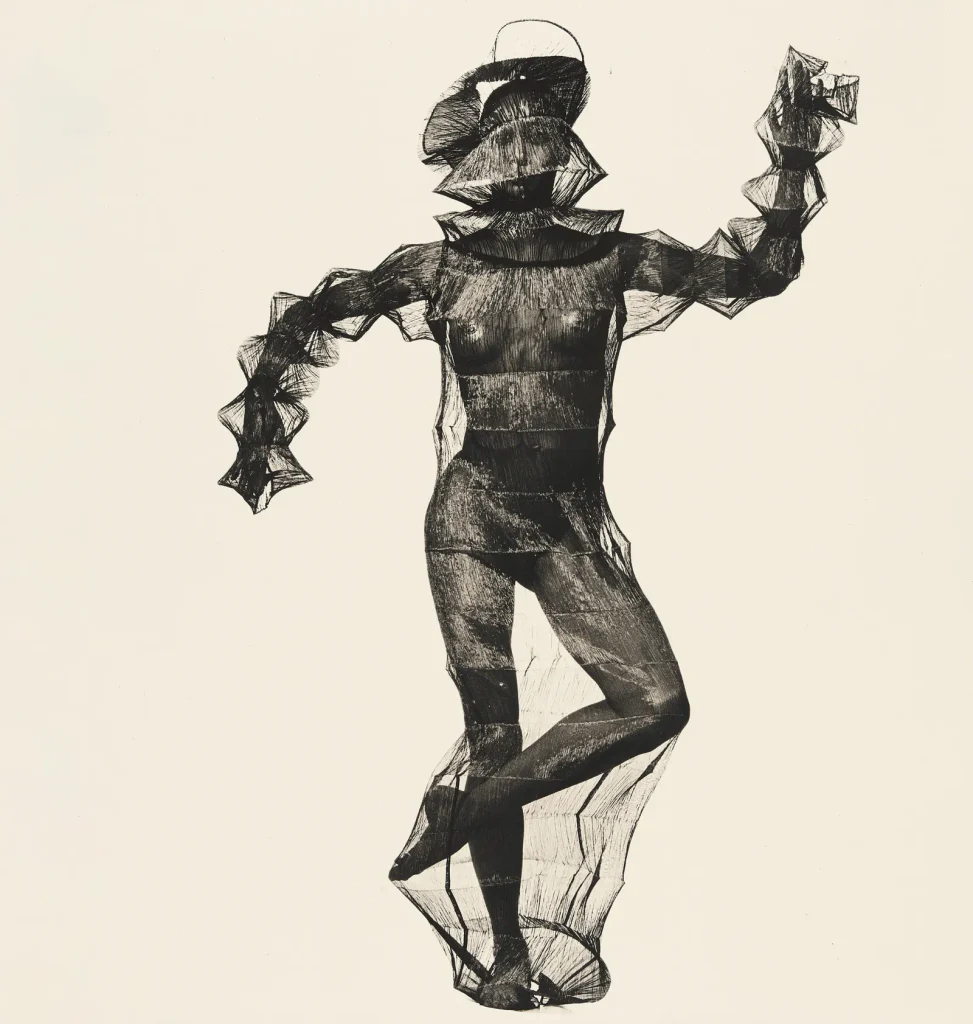
Young Woman in a Net (Miyake Design), New York, 1993
© Collection MEP, Paris, THE IRVING PENN FOUNDATION, New York
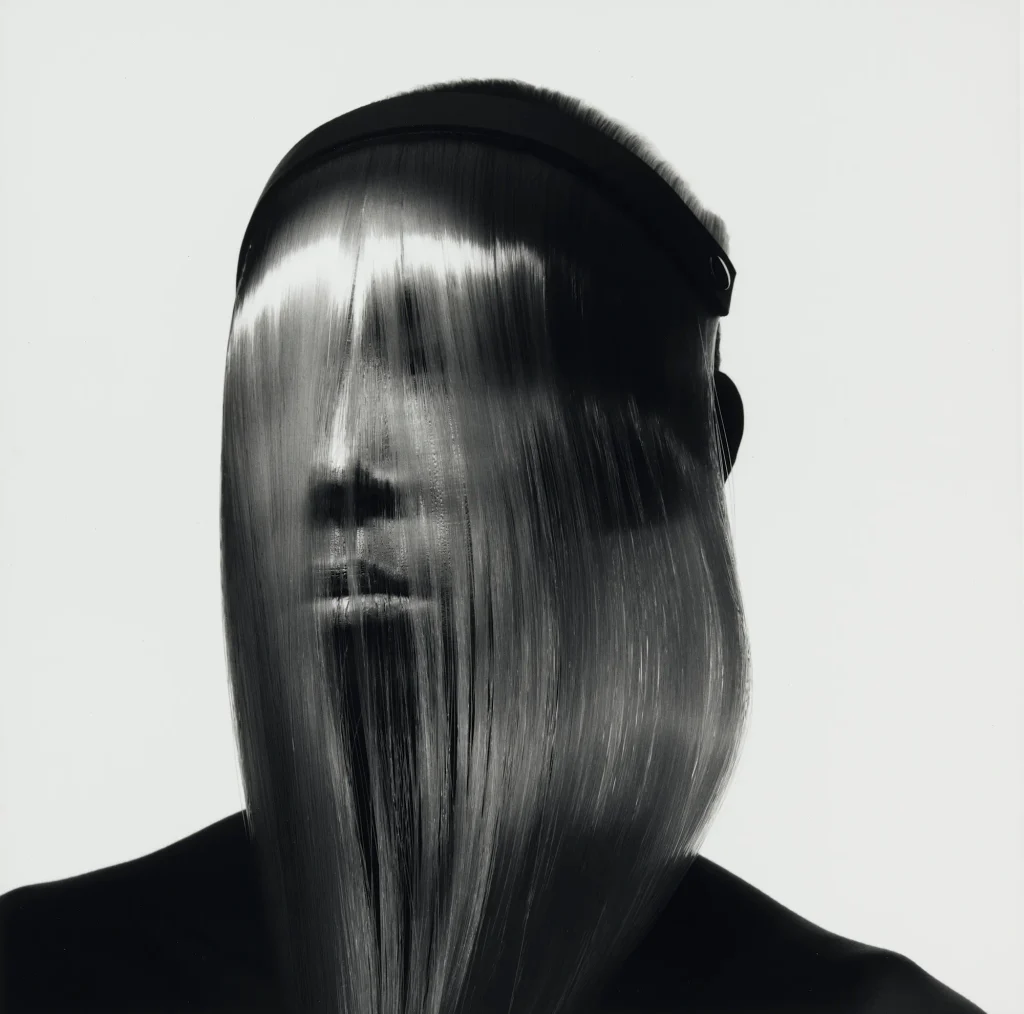
Issey Miyake Fashion: Face Covered with Hair, New York, 1991; collection of THE IRVING PENN FOUNDATION, New York
Courtesy of THE IRVING PENN FOUNDATION