Elizaveta Porodina moves between fashion photography and portraiture, creating images that often feel less like photographs than fragments of a dream. Her pictures are carefully staged and lit, saturated with colour or stripped back to deep black and white. The people in them seem caught in the middle of something—a gesture, a transformation, a story that began before the shutter clicked.
Before photography, Porodina trained in clinical psychology and spent years drawing, illustrating, and working with digital painting. She picked up a camera at 22, bringing with her an instinct for looking beneath the surface. That background still lingers in her work: in the attention she gives to expression and gesture, and in the sense that her portraits are always reaching for something just beyond the visible.
Her clients include Vogue, Dior, Louis Vuitton, Moncler, and Carolina Herrera. She has also worked closely with musicians, including the Irish band Fontaines D.C. or the Viennese band Bilderbuch, creating image campaigns and music videos for them. Her photographs have been exhibited at OstLicht in Vienna and at Fotografiska Stockholm, which presented her first solo exhibition there in 2022. That same year, Hatje Cantz published her first monograph, Un/Masked.
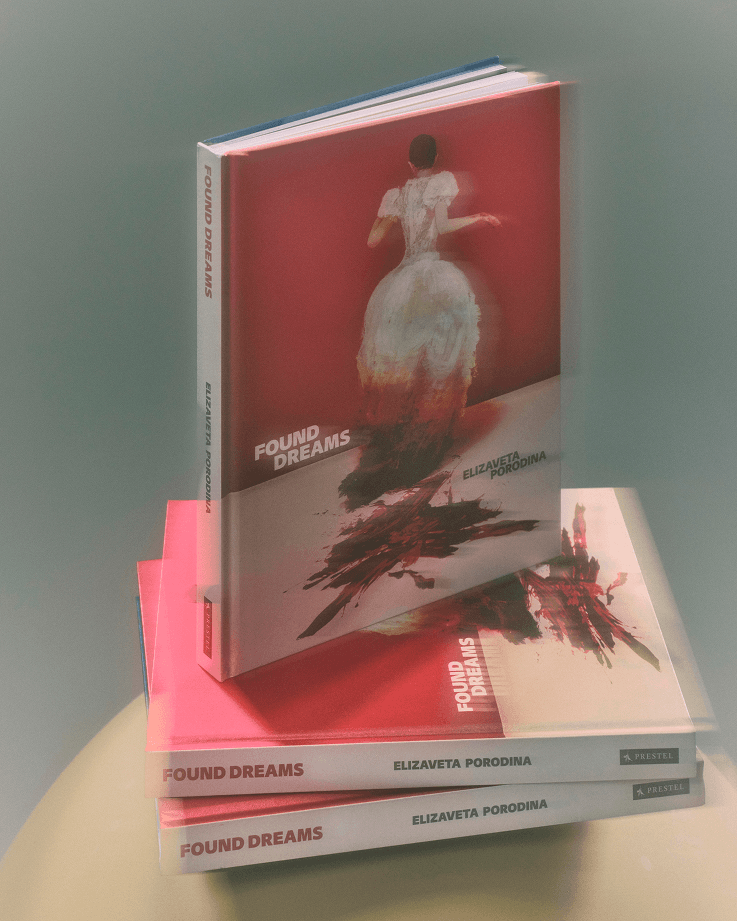
Now comes Found Dreams, her second monograph, published by Prestel on October 6. Edited by Porodina together with Nadine Barth, with a foreword by Ariana Grande, the book brings together 180 colour photographs across 240 pages. It centers on Porodina’s recent fashion work, in which every shoot becomes a small world of its own. Models take on the qualities of mythic figures; light, colour, and composition become emotional forces. The images move between the surreal and the cinematic, while the psychological undercurrent of Porodina’s work remains close to the surface.
Alongside commissioned work, Found Dreams also contains a series that has never been published before. Porodina photographed it two years ago and chose to keep the images unseen until the book. Rather than presenting the series in one place, she threads the photographs through its chapters, allowing them to reappear at different points and turning the book into something closer to a journey than a straightforward collection.
In her recent conversation with hube’s editor-in-chief, Porodina spoke about the long wait that preceded the book, the role of intuition in her creative decisions, and the moment when making new work stopped feeling like a risk.
Sasha Kovaleva: When did Found Dreams first begin to exist in your mind as a book? Was the idea always there in the background, or did you have to look back at your own work before you could recognise the book hiding within it?
Elizaveta Porodina: It was exactly that—the last option you mentioned. The countdown started with the publication of my first monograph, Un/Masked. I’ve made another book since then, a special collaborative project with Carolina Herrera, but I think of it differently because it isn’t a monograph. So for me, Found Dreams began the moment Un/Masked was published. Ever since then, in some way, I’ve been working toward the next monograph.
But working toward it doesn’t mean doing it as fast or as frequently as possible. My respect for the medium of the book is enormous. For me, it’s the apotheosis of the work: the work becomes a physical body, and that body is the book. I respect the medium too much to put out a book simply because I can. The material has to feel like enough.
I wanted to bring the themes I was working with as far as I possibly could. I was going to say “to perfection,” but that’s the wrong word—we’re all human, perfection doesn’t exist, and every statement is by definition imperfect. When people first started asking whether I wanted to make another book, I knew the work was still too raw. I could see the empty spaces very clearly, and I wanted to fill them—with personal projects, commercial commissions, and whatever else might find its way into the work.
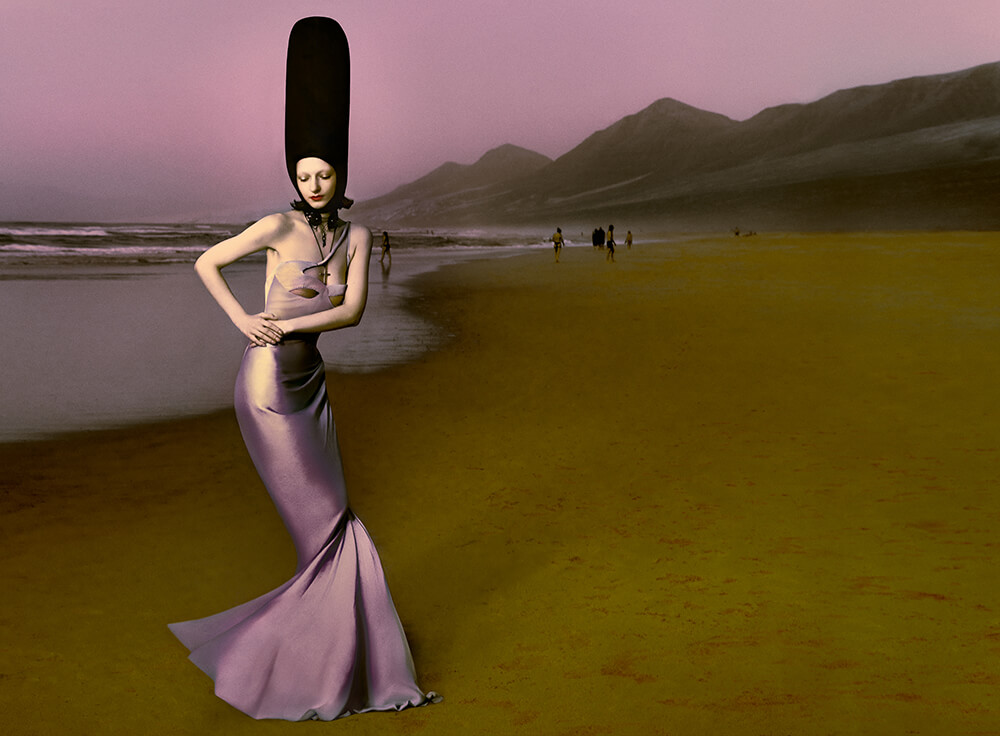
Model: GRACE ELIZABETH
Featured in: VOGUE CHINA, June 2023
© ELIZAVETA PORODINA, 2026
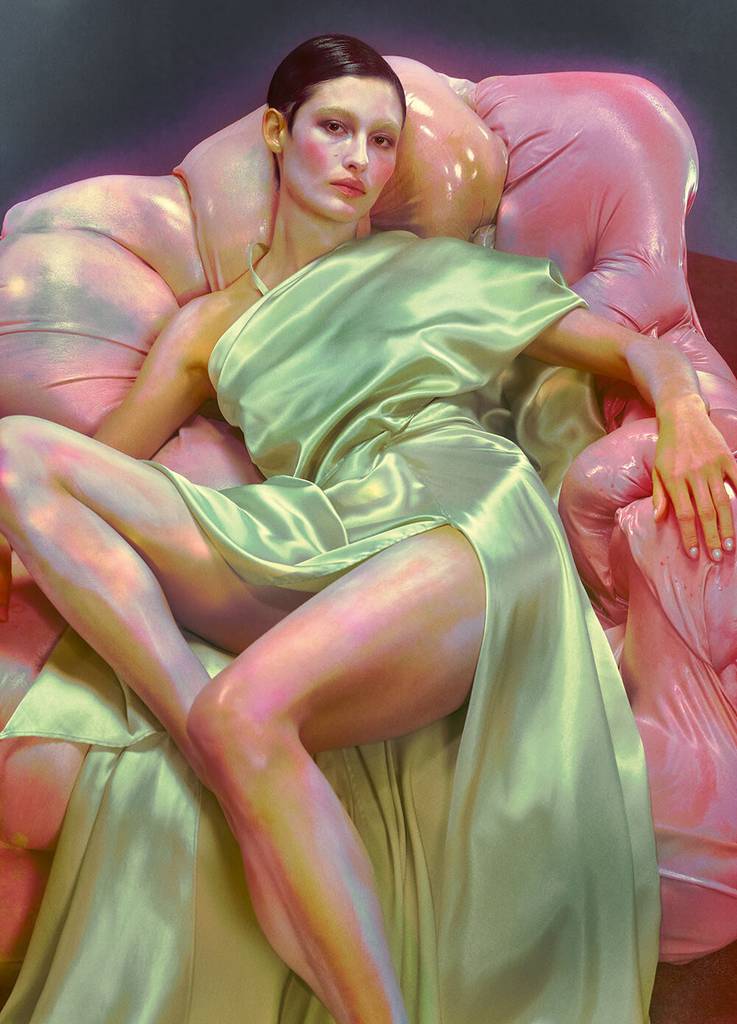
Photography by JOSEF BEYER
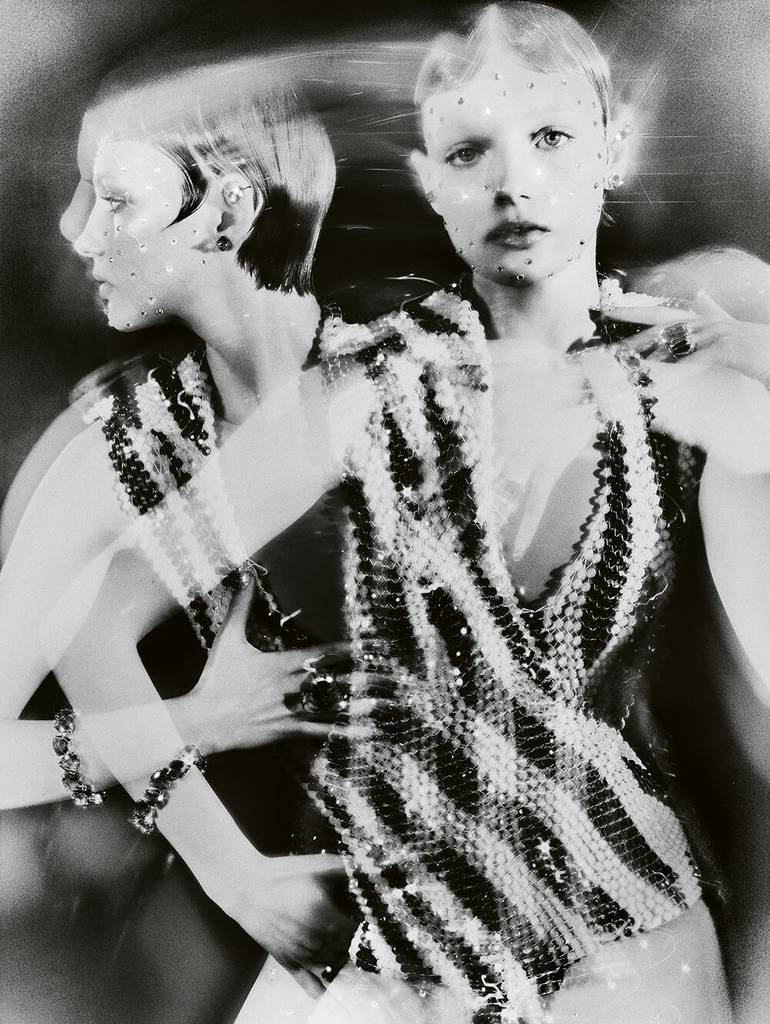
Model: FRAN SUMMERS
Featured in: ANOTHER, April 2022
© ELIZAVETA PORODINA, 2026
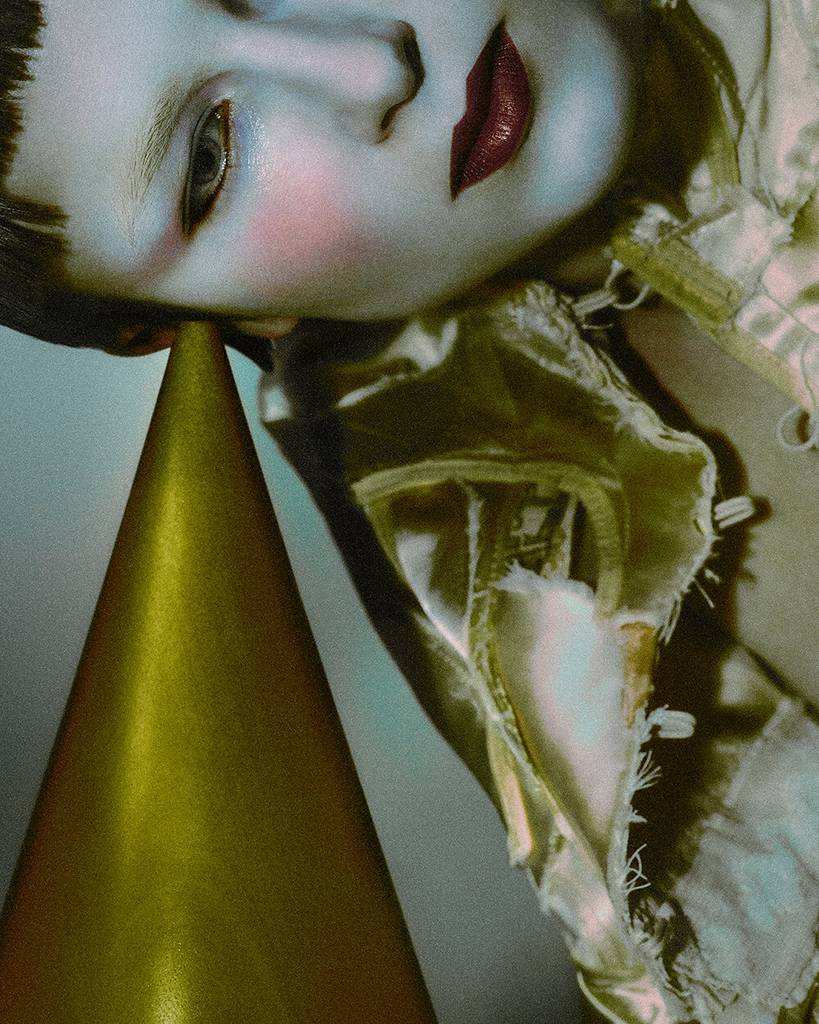
Model: BRITT LIBERG
Featured in: MODERN WEEKLY STYLING, November 2024
ELIZAVETA PORODINA, 2026
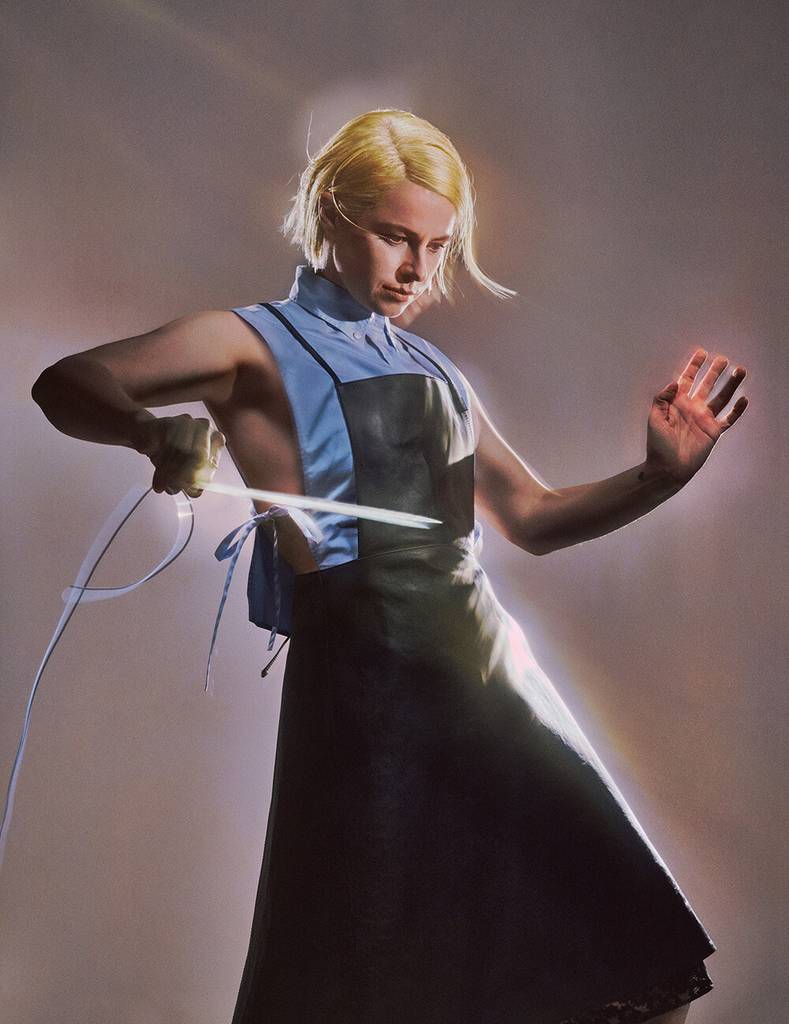
Featured in: POP MAGAZINE, March 2026
© ELIZAVETA PORODINA, 2026
SK: Was there anything in the process of making the book that made you hesitate?
EP: Not from the moment I realized everything was ready. But before that, there were constant
doubts, and I take my doubts very seriously.
When it comes to art, I’m a very intuitive person. I work on pure intuition. Strategic and logical considerations are of course part of my decision-making process, but I never put them first. When I feel that something is off, I trust that feeling. I can say, “Okay, this isn’t working yet. Nothing connects here yet.”
And when I realized I had gathered enough material to express what I wanted to say with these visual words, all the doubts fell away. I understood that I was moving from the period of collecting words into the period of writing the poem—the play.
SK: Are there any previously unpublished images in the book?
EP: Yes. Most of them come from a project with my muse Britt Liberg that I shot two years ago and deliberately never published. That material is exclusive to the book.
SK: What makes an image remain unseen for years before suddenly feeling right to bring it into the world?
EP: While I was shooting that project, it was immediately clear to me that this was exactly what I wanted to say in the book. The question wasn’t where else to publish it—that’s usually not a problem. I simply didn’t feel the need. It felt like the book needed precisely these words.
Every photograph from that project represents a different stage and somehow reflects the structure of the book and its chapters. When I photographed it, it felt as if I had drawn the structure in advance. All I had to do was wait and put the images in at the right moment.
So keeping them unseen became a gift to myself, and ultimately a gift to the book.
SK: The title Found Dreams suggests something discovered rather than invented. What does a “found dream” mean to you?
EP: That’s exactly what I mean. I recently answered this question during a public talk at Library180. I was surrounded by people I work with and constantly exchange ideas and inspirations with, but also by people who have followed and loved my work for a long time. I wanted to answer them as honestly as possible.
In my best moments, I don’t feel like it belongs to me. I don’t even feel like my talent is my talent. I have skills, technical craft, knowledge of how a set works, how to talk to people, how to facilitate situations and solve problems. But when it comes to that spark—to something inexplicably, divinely beautiful—that doesn’t feel like mine. I’m happy that I have the right to channel it through me.
I find these things; I don’t manufacture them. I excavate them. I suppose I could have called the book Excavated Dreams, but it doesn’t sound quite as concise as Found Dreams.
SK: Do you believe photography can reveal something about a person that they themselves do not yet know?
EP: That’s a really good question, and I’m not completely sure how to answer it. The flattering answer would be yes, absolutely, because I’ve seen people react to photographs we’ve created together in exactly that way. I’ve seen surprise, shock, admiration—as if, for a moment, a particular aspect of themselves had been revealed to them. And I’ve heard people describe it in those terms.
Of course I would like to say yes. It flatters my idea of myself as an artist and as an excavator. But the analytical part of me doesn’t entirely believe that there are things about ourselves we truly don’t know at all.
Maybe we don’t know them because we choose not to put our attention on them. But somewhere, even subconsciously, there is this wobbly feeling of something hidden on the floor
of your basement, waiting to wake up, waiting to be activated. You might not know exactly how to describe it, but you know it’s there. You might even know how it feels.
Of course, that may be completely subjective. I can only speak from my own experience of the human condition. But that’s the dichotomy I’m wrestling with.
h: You have photographed some of the most recognisable faces in contemporary culture. How does the image we already carry of a person—as a public figure, an icon, or simply someone we think we know—affect what can happen in front of your camera?
EP: I can say completely honestly that I don’t have an inflated respect for the pedestal famous people are put on. I have respect for the human being—for an individual who has lived on this earth for 20, 30, 40 years or more and gathered their own unique experience.
And I respect the multitude of identities within a person. A person is allowed to be whatever the fuck they want to be on that particular day. They don’t need to walk into the room and perform the one version of themselves that we all know and love—or hate, or whatever.
That’s genuinely how I approach people. I don’t necessarily verbalize it, but I live and breathe it. I want people to have fun on my set. I want them to feel free to try things, to be courageous, to experiment with me, and not to feel chained to a specific idea that somebody already has of them. I want to create a platform on which they can do that.
I’m not starting from, “Okay, this is your pedestal. Let’s acknowledge it and then try to dismantle it.” I’m not even looking there. I start with: “How was your day? What do you think about this idea? What happens if I ask you to jump around like this, or stand here? What do you feel in your body?”
I’m starting from a deeply human place, in the here and now. And I think that naturally excludes a lot of the other stuff.
SK: You have worked extensively within fashion, yet your images rarely feel bound by fashion’s usual logic of beauty, desirability, or seasonality. What does fashion give you as a visual language—and what do you deliberately resist within it?
EP: There is a very preconceived answer I could give you: fashion is one of the most immediate and multilayered ways people choose to express themselves—or choose not to, which is still a choice. It can be a powerful mirror of someone’s state of mind. And if you’re shaping a character or telling their story, fashion—or costume—is an incredibly powerful channel through which to communicate that character and their progression. All of that is absolutely true.
But honestly, I don’t start with fashion at all. I start with the person.
Sometimes they’re not wearing anything. I work with fashion brands, but my practice has spread out enormously over the last few years. I collaborate with musicians and jewelry brands, and I make work that has nothing to do with fashion—work about nature or environmental issues.
For example, we’re currently presenting a project I made with Atmos at the New York Public Library. I photographed the entire project in nature with my muse. We went to the old-growth trees in Redwood National Park, and I photographed her as an embodiment of the spirit of those trees. There was no fashion because the work simply wasn’t about that.
My work is art regardless of whether fashion is present. Sometimes fashion is integral because the concept revolves around the construction of a character. Sometimes there is no fashion and the work is about a particular fantasy. Sometimes there is almost nothing at all and the image becomes completely abstract.
It’s entirely project-bound. I follow the idea and tell the story the way it wants to be told. Sometimes it wants fashion; sometimes it doesn’t.
SK: Your work draws inspiration from very different worlds—painting, cinema, theatre, fashion, psychology. What continues to inspire you visually, and has there been something recently that made you see your own work differently?
EP: Visually, I’ve moved away from referencing as much as I once did. I understand that precise references can be very important for members of my team, so I still collect them from everywhere—painting, films, things I find on the street, poems, things I write down. Not just photography, obviously, because photography itself has never been my primary source of inspiration.
But the real inspiration of the last few years—and particularly this year—is, at the risk of sounding incredibly banal, simply my life.
I’ve learned to value and cherish my life much more, and to observe it rather than always living with both feet in it and being dragged along by it. I’m more present, but at the same time more observant. I notice what is happening, who I’m meeting, what kind of people they are, what they feel.
Before, my way of processing other people was much more: “What does this mean for me? If they have feelings, how does that affect me?” Something in that has changed completely. Now I find myself simply looking outward and seeing people in completely new colors, almost for the first time in my life.
And I don’t want this to sound crazy, but everything is so wonderful and rich. Every interaction moves me or affects me somehow. Everything could be a movie, a photograph, a painting. People are wonderful. People are absurd. They react in incredibly funny ways. Everything is worth noting.
The further I go, the more I see these qualities. My task is simply to notice them, recognize the pattern, and visualize it.
SK: At this stage in your career and creative journey, what is harder to trust: an image that comes naturally, or one that asks you to take a risk?
EP: That’s a really good question, because I’ve completely revised my mindset around this.
Before, there was a division in my life between the intuitive image and the big risk. Either I felt comfortable because I had already seen the image in my mind and all I needed to do was photograph it, or I felt uncomfortable because I was attempting something I had never made before—something I had no experience in, where I would be learning more than anything else and would most likely fall on my face once or twice. Basically, that’s what I’ve been doing my whole life, and I still do.
But I don’t really see those things as risks anymore.
Every project that comes to me, whether from the inside or the outside, feels like a gift—an offering, a present, an invitation to reconsider my perspective and broaden my horizons. For me, the word “risk” implies that you can fall. But I don’t look there anymore. I only see the possibility of flight. I don’t look down. For me, risks don’t exist.
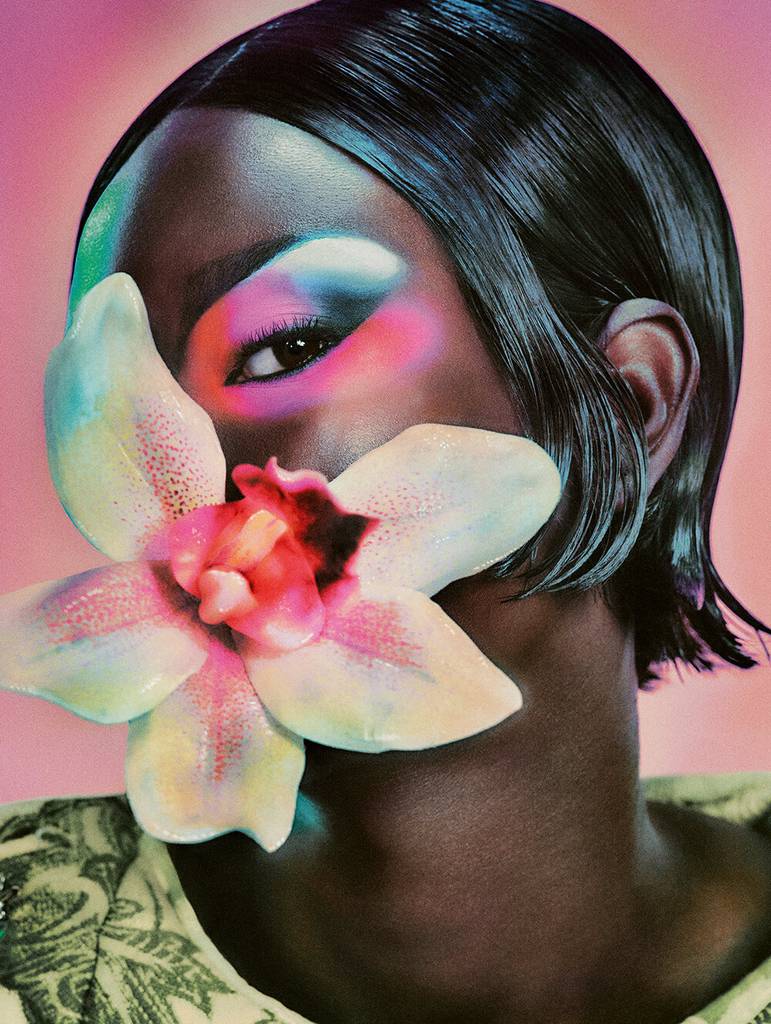
Model: AWEK GAK
Featured in: OD BEAUTY, February 2026
© ELIZAVETA PORODINA, 2026
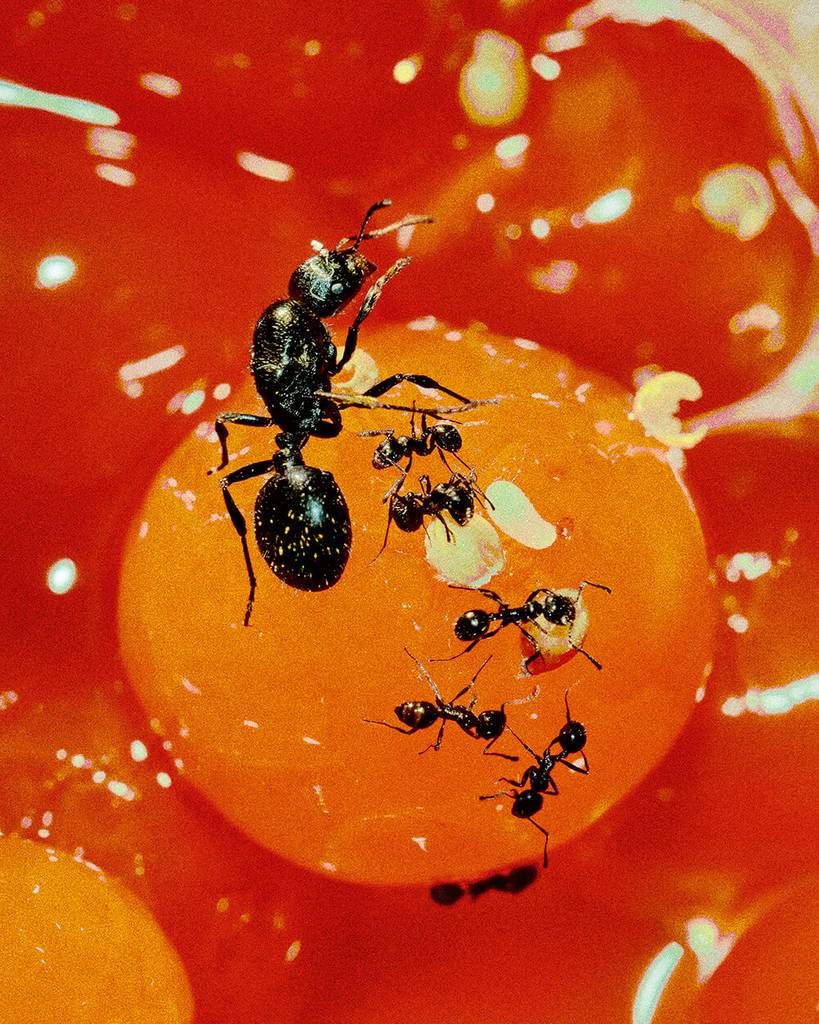
Featured in: ATMOS, April 2025
© ELIZAVETA PORODINA, 2026
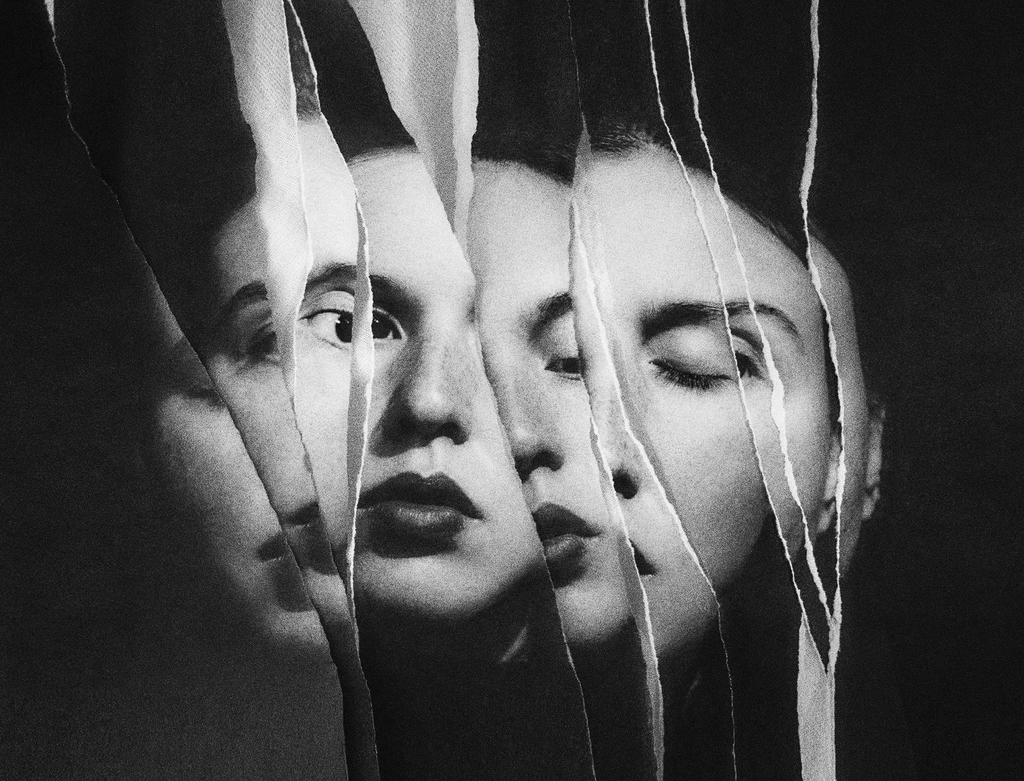
Courtesy of the artist