Few artists have entered popular visual culture as completely as René Magritte. His bowler hats, apples, pipes and impossible skies are instantly recognisable, yet beneath their polished simplicity lies a stranger world where objects refuse to remain what they seem. At Gagosian London, This Is Still Not a Pipe: The Afterlife of Magritte places Magritte’s paintings alongside works by more than forty contemporary artists shaped by his peculiar logic of image, language and perception.
On view at Gagosian, Grosvenor Hill, from September 24th to December 12th, 2026, the exhibition was organised in collaboration with the Fondation Magritte. It considers how his visual language continues to circulate through contemporary art and wider visual culture.
When familiar images begin to misbehave
The exhibition spans Magritte’s career through paintings, sculpture and works on paper. Among the earliest is Les Fleurs du voyage (The Flowers of the Journey) (1926), a mysterious landscape first shown at his inaugural solo exhibition in Brussels the following year.
His fascination with unstable meaning appears more directly in La Lampe philosophique (The Philosopher’s Lamp) (1936), a surreal self-portrait in which his face exists in an impossible relationship with a pipe. La Malédiction (The Curse) (1931), meanwhile, depicts an apparently serene blue sky scattered with white clouds, while its title casts the familiar scene in an unsettling light.
Other works sharpen this tension. In The Exception (1936), a fish and cigar merge into an increasingly inexplicable image, while The Blow to the Heart (1952) gives a rose the unexpected role of wielding a dagger. The Listening Room (1958), with its enormous apple filling an interior, and The Drums of Death (1965), where two bowler-hatted figures contain radically different landscapes, further reveal Magritte’s gift for making ordinary things behave strangely.
An afterlife written by contemporary artists
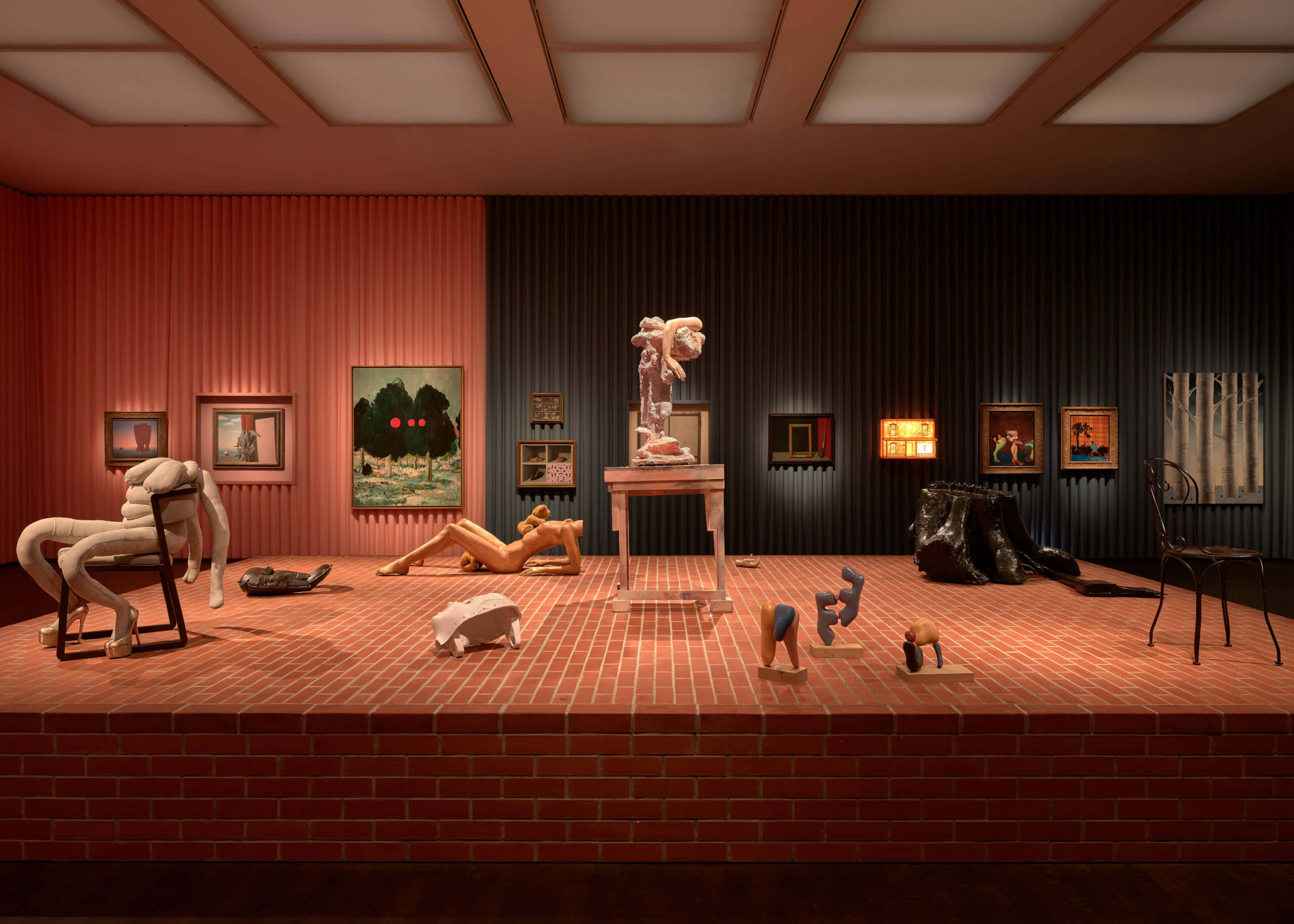
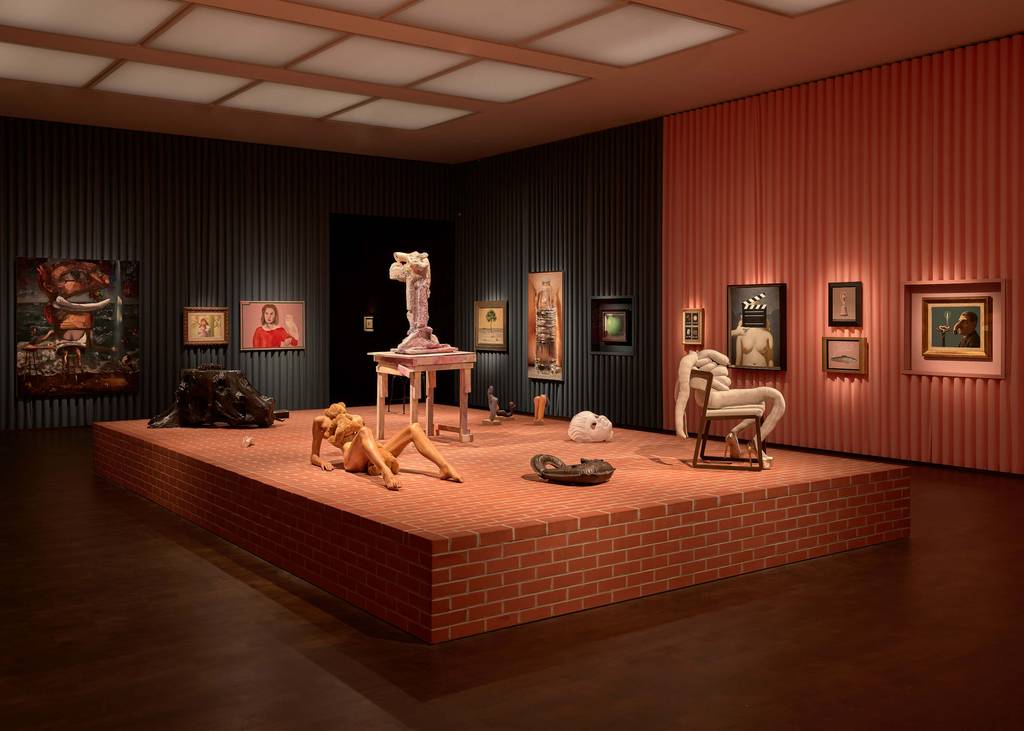
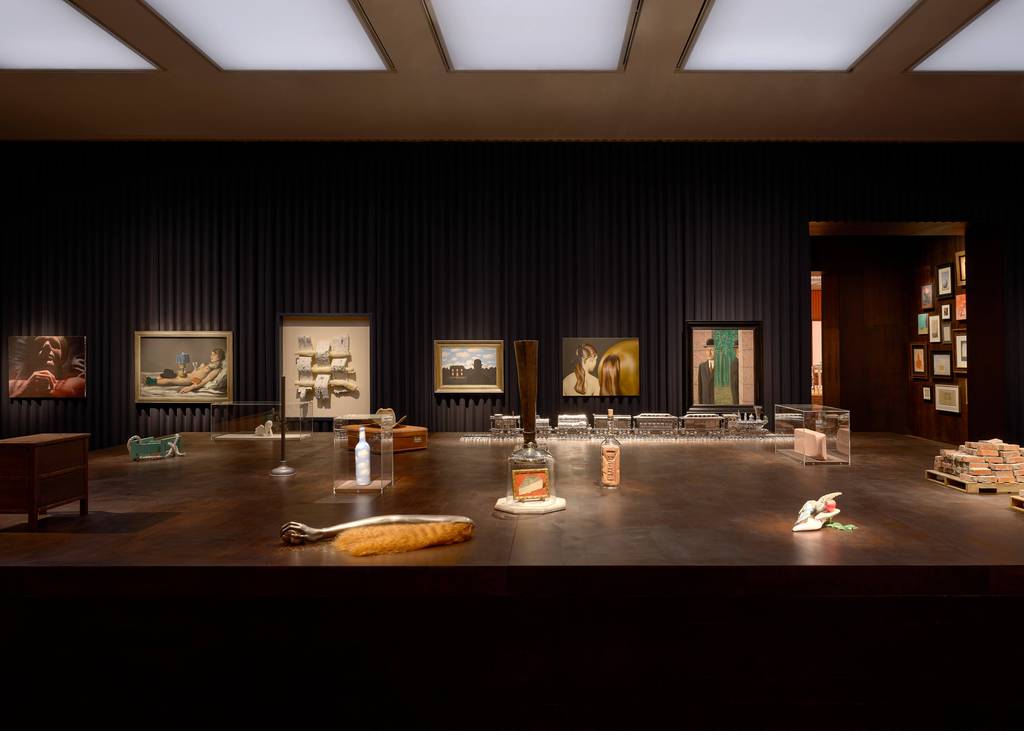
The exhibition gains much of its energy from the dialogue between Magritte and more than forty artists from different generations, many of whom created works specifically for the occasion. Their practices echo his fascination with absurdity, displacement and the uncanny power of an image.
Isabelle Albuquerque’s Orgy For Ten People In One Body: 7 (2021) features teddy bears surrounding a female body carved from black locust hardwood, mixing tenderness, violence and theatricality. Other highlights include Sarah Lucas’s SLAG, Jeff Koons’s gleaming stainless-steel toy locomotive and Vija Celmins’s Pink Pearl Eraser (1966–67), which gives an everyday object the presence of a carefully observed relic.
Soshiro Matsubara’s Der Traum des Schmetterlings (2018–26) introduces a surreal bird with a woman’s face, lying on its back in an oddly vulnerable pose. Nearby, Yoko Ono’s Sky TV uses a live feed of the sky above the gallery, establishing a direct visual dialogue with Magritte’s cloud-filled paintings.
The connection is especially striking beside The Curse: Ono’s sky remains live and constantly changing, while Magritte’s painted clouds are fixed yet unstable in meaning. Both works ask how much of an image belongs to what we see—and how much is shaped by our own gaze.
Elsewhere, Victor Man’s Titiriteros (2023), populated by puppet-like witches, hangs alongside Magritte’s Natural Selection (1938), where clouds appear to rest on the ground and rain upwards. The pairings keep Magritte’s mysteries open, allowing new forms of uncertainty to enter his visual language.
The surrealist legacy keeps moving
The exhibition’s title extends Magritte’s most famous paradox into the present. This Is Still Not a Pipe suggests that the question posed by The Treachery of Images remains unresolved: an image may resemble an object, but it can never quite become the thing itself.
At Gagosian London, Magritte’s paintings anchor a wider conversation spanning sculpture, painting, photography, installation and moving image. Nearly six decades after his death, his work remains difficult to contain—playful one moment, unsettling the next. Its lasting power lies in that instability: the ability of an image to charm, confuse and disturb us at once.
Photography by PRUDENCE CUMING ASSOCIATES LTD
Photography by PRUDENCE CUMING ASSOCIATES LTD
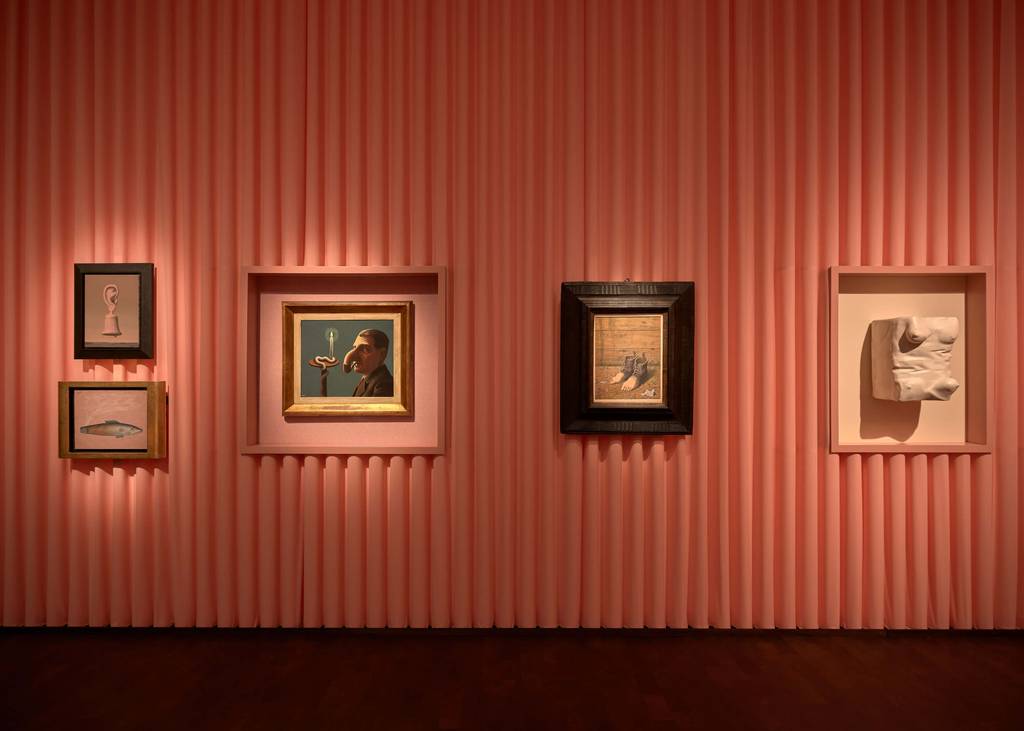
Photography by PRUDENCE CUMING ASSOCIATES LTD
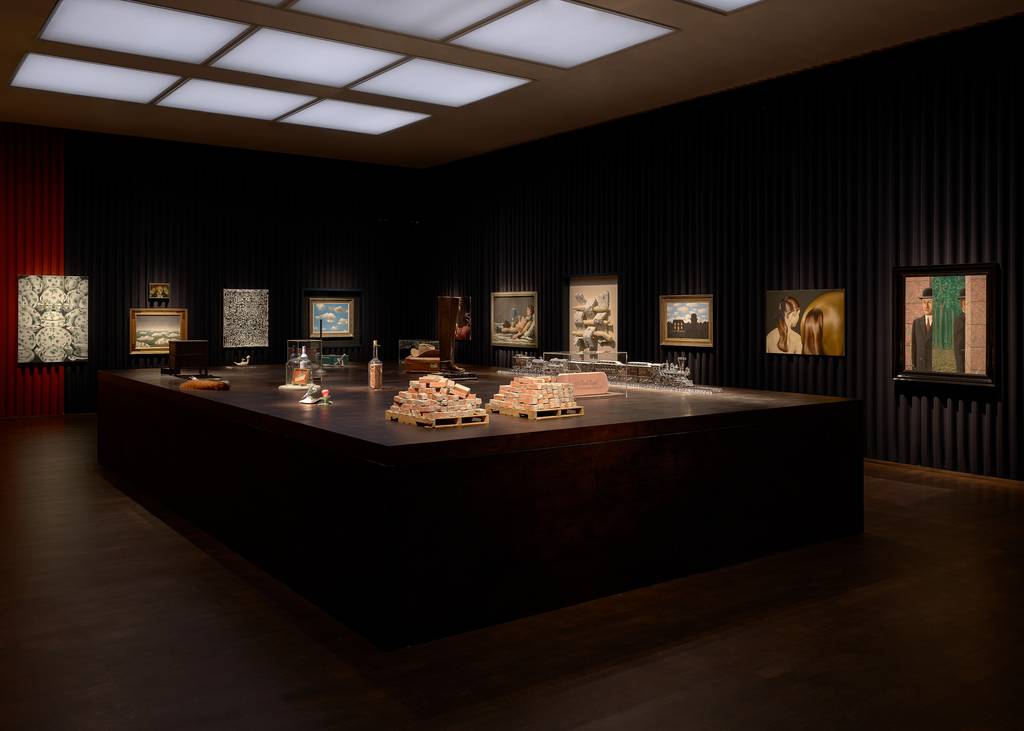
Photography by PRUDENCE CUMING ASSOCIATES LTD
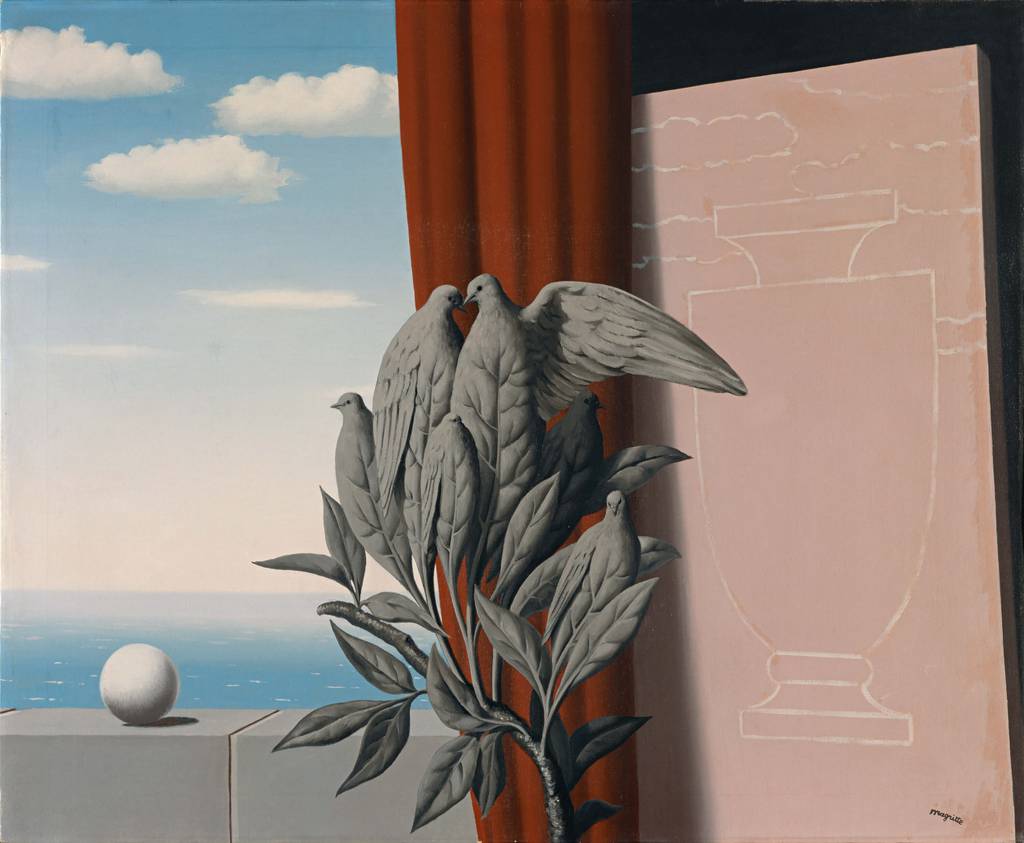
L’Équateur (The Equator), 1942, NEUE NATIONALGALERIE, Berlin
© 2026 ADAGP, Paris, and DACS, London. Photography by JOCHEN LITTKEMANN
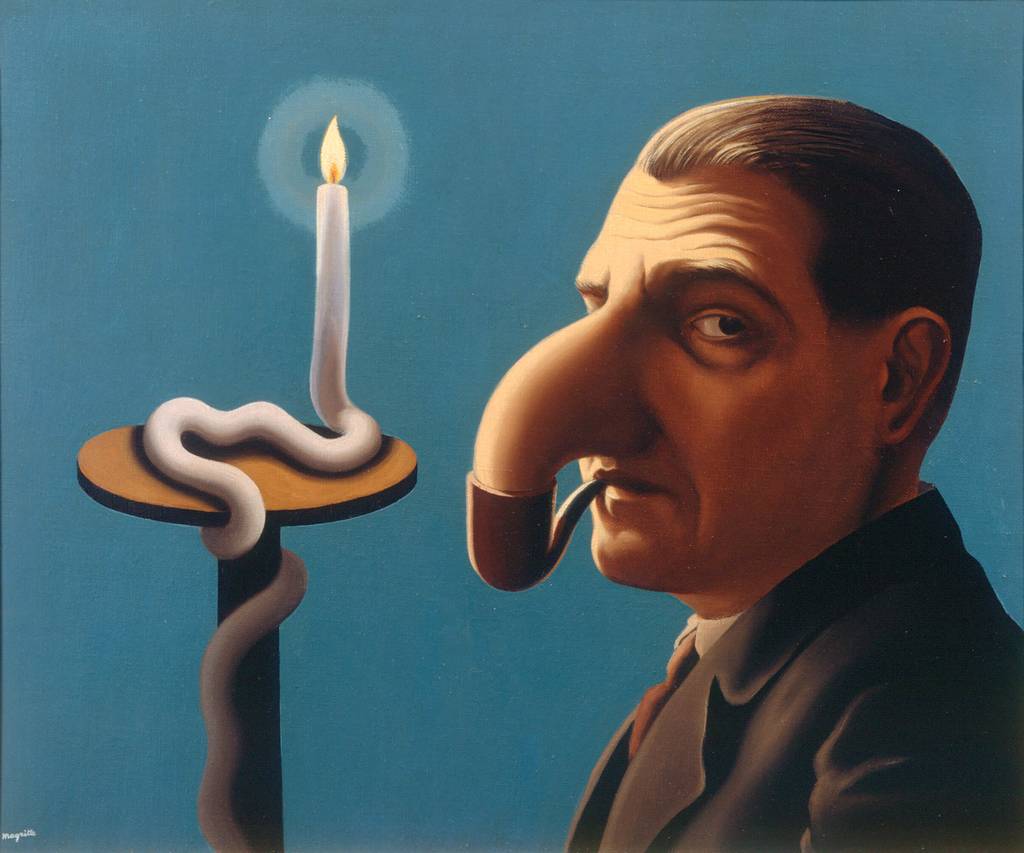
La Lampe philosophique (The Philosopher’s Lamp), 1936
© 2026 C. HERSCOVICI/ARTISTS RIGHTS SOCIETY
(ARS), New York. Photography courtesy of Private Collection, Brussels, Kingdom of Belgium
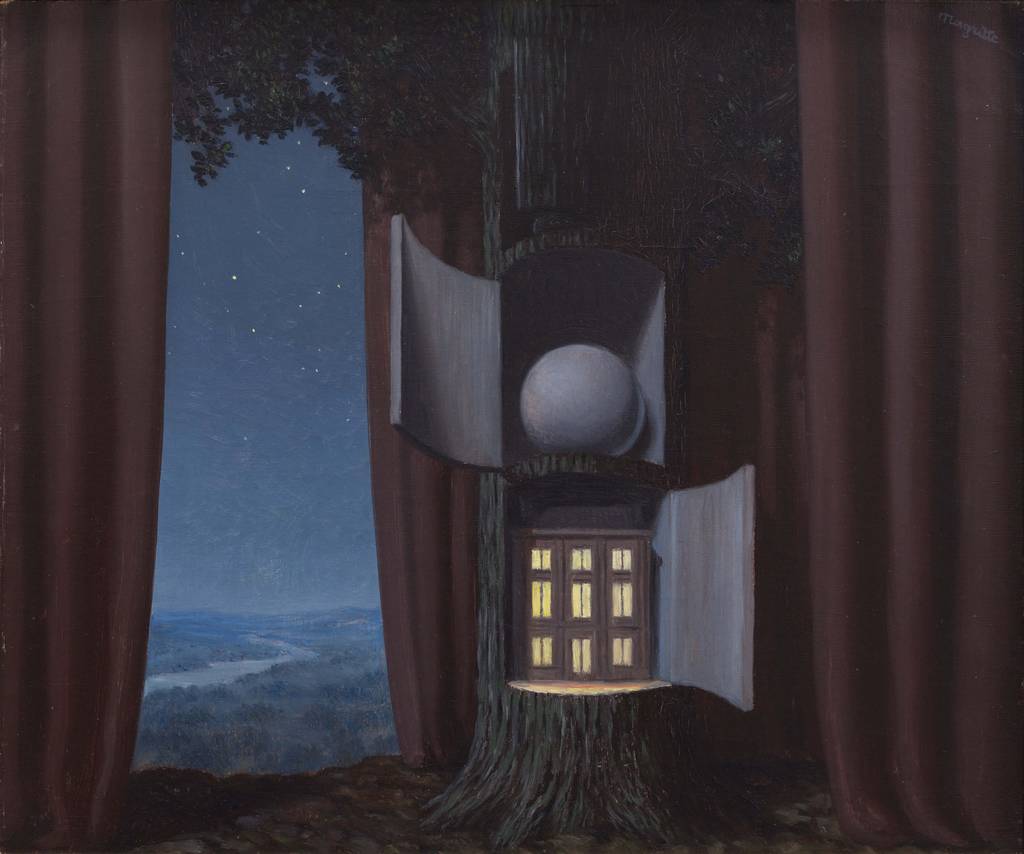
La Voix du sang (Blood Will Tell), 1948
© 2026 ADAGP, Paris, and DACS, London. Photography by FREDRIK NILSEN