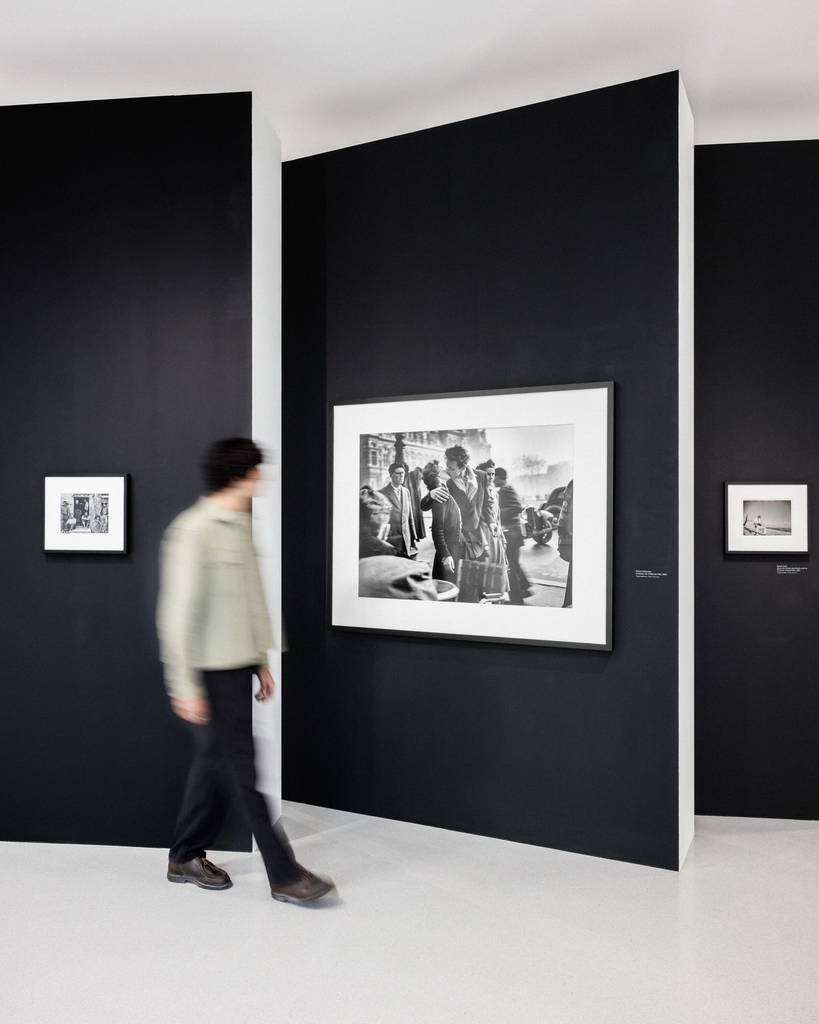
Marking the bicentenary of photography, Remember Me gathers around 700 works by more than 70 artists at the Bourse de Commerce — Pinault Collection in Paris. On view from October 7th, 2026 to January 18th, 2027, the exhibition follows a deliberately non-linear path through the medium’s history, placing historical photographs and contemporary images in unexpected dialogue. In the museum’s Rotunda, Barbara Kruger adds a monumental installation of text, image and political force.
A fugue through the history of photography
Curated by Matthieu Humery, Photography Advisor to the Pinault Collection, with Lola Regard, Remember Me takes its title from Barbara Kruger’s Untitled (Remember me). The phrase becomes a key to photography’s enduring relationship with memory: a photograph can preserve a face, landscape or fleeting moment, allowing what has disappeared from lived experience to remain visible.
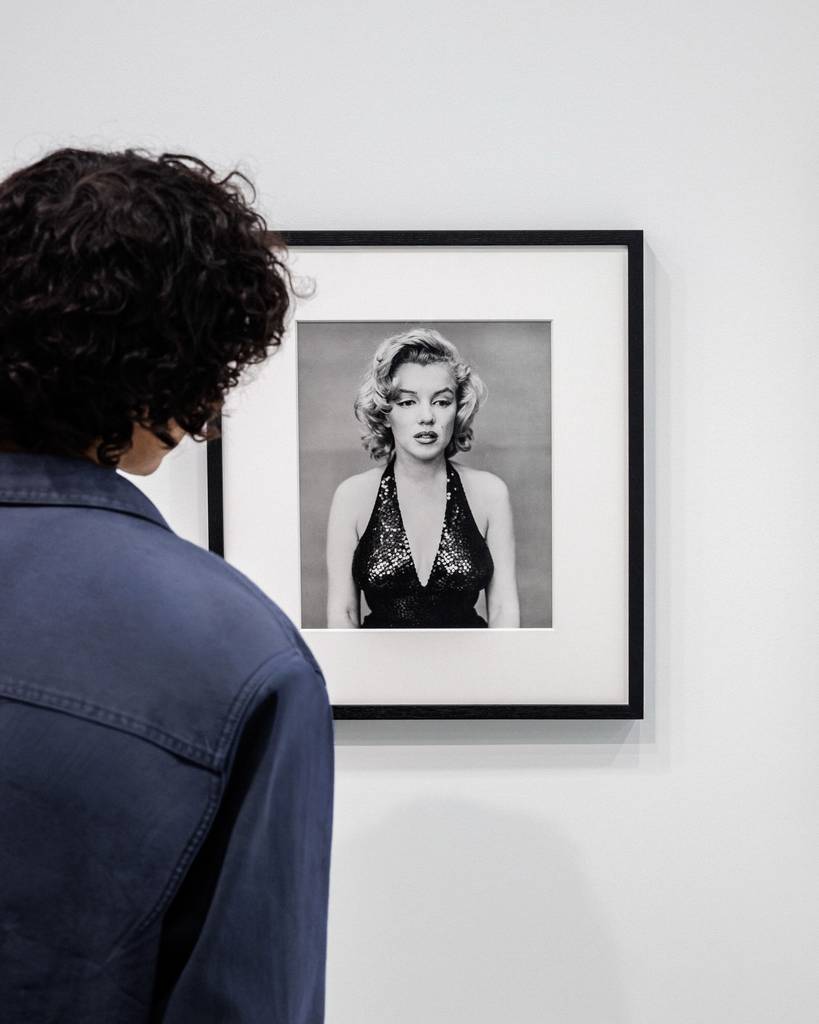
The exhibition moves freely between centuries, genres and photographic languages. Gustave Le Gray appears alongside Wolfgang Tillmans, while Man Ray, Dorothea Lange, Irving Penn, Cindy Sherman and Louise Lawler form part of the same expansive constellation. Visual echoes, recurring subjects and unexpected affinities reveal how photography has continually reshaped its relationship with reality.
Photography has been an important field within the François Pinault Collection since 2006. Remember Me offers an unusually broad view of its holdings, spanning historical and contemporary works throughout the Bourse de Commerce.
The world according to Irving Penn
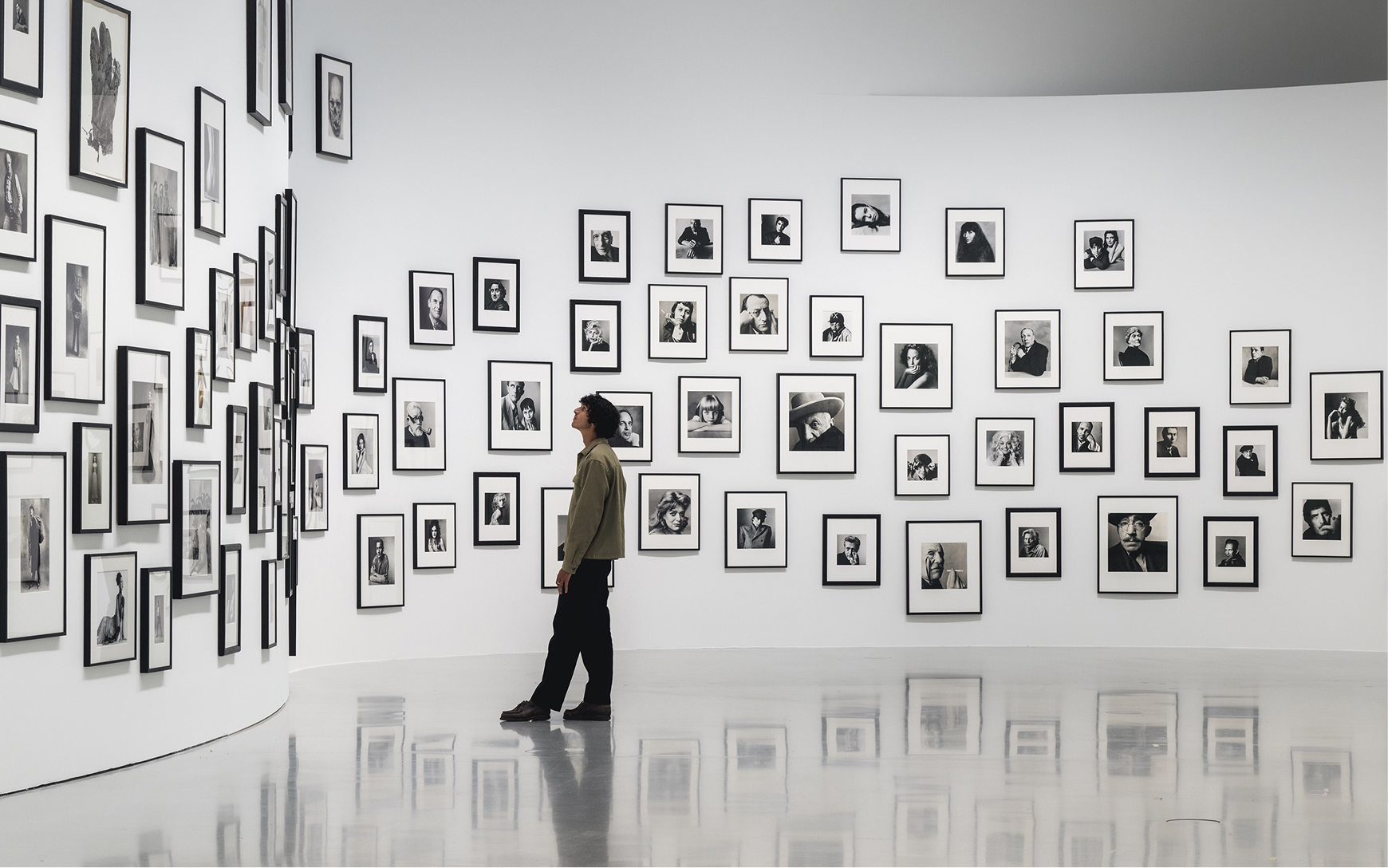
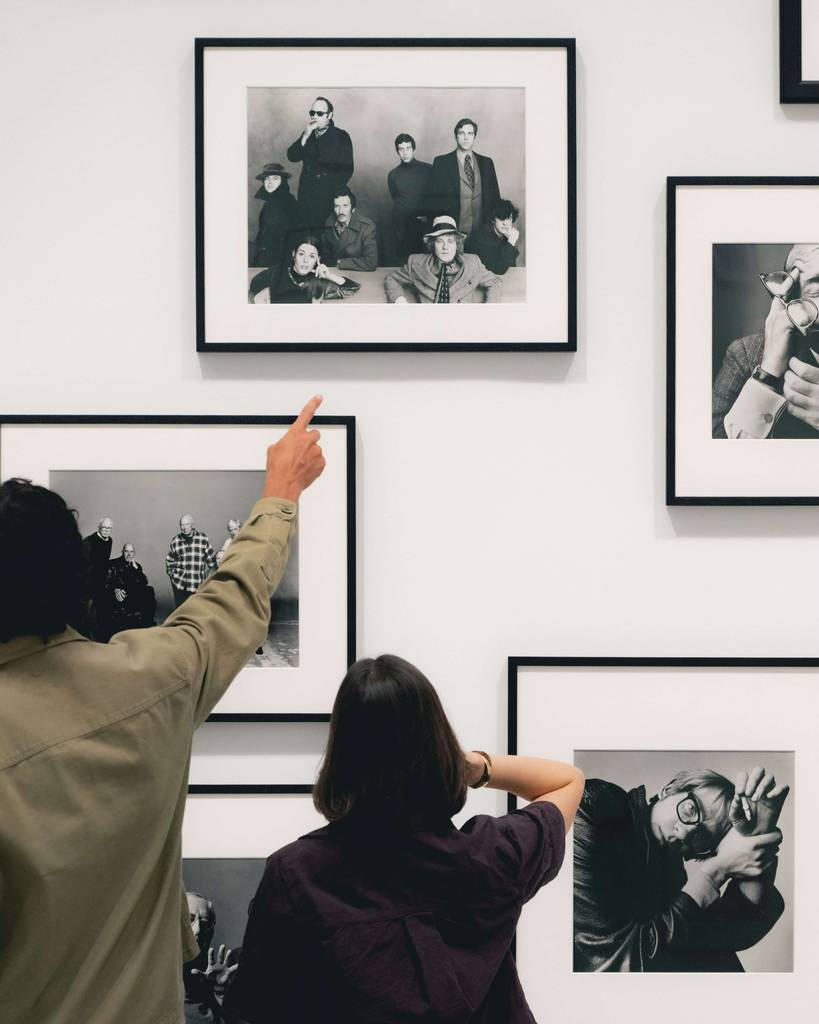
One of the exhibition’s major highlights is The World According to Penn in Gallery 2, gathering almost 450 photographs by Irving Penn from the Pinault Collection. Spanning the 1940s to the early 2000s, it conveys the remarkable breadth and consistency of the American photographer’s practice.
Penn’s portraits, fashion images, ethnographic studies, nudes, still lifes and floral compositions form a free-flowing visual mosaic. Corner Portraits encounter images of small trades, cigarette butts, faded flowers and fashion, while Penn’s rigorous compositions, sensitivity to materials and stripped-back aesthetic remain constant.
A consummate studio photographer, Penn repeatedly worked with remarkably simple settings—canvas or white paper flooded with natural light—creating what he called a “neutral zone”. Within this restrained space, ordinary objects and human figures acquire extraordinary intensity.
From the sea to the archive
Across the exhibition, thematic sections expand the idea of what a photograph can preserve, construct or question.
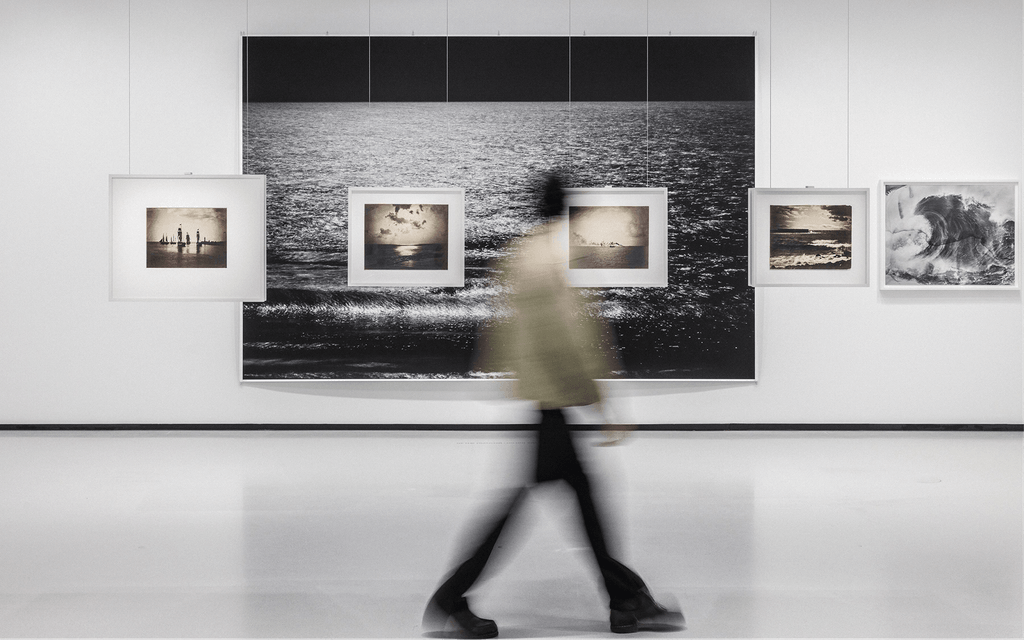
The sea recurs from Gustave Le Gray to Hiroshi Sugimoto, Eileen Quinlan and Wolfgang Tillmans. Their images approach the ocean as both landscape and abstract surface, capturing tensions between stillness and movement, permanence and variation. Waves, horizons and shifting light become recurring motifs through which generations of photographers develop radically different visual languages.
Another section, Seriality and Typology, traces photography’s shift beyond the singular image. From the late nineteenth century onwards, artists, scientists and archivists increasingly used repetition, accumulation and sequences to classify and organise the world.
Historical and contemporary series reveal how photography constructs knowledge through multiplication. The repeated image becomes a method of observation, revealing patterns, systems and the passage of time.
The Fabrication of the Image section explores the experimental potential of photography, examining how twentieth-century artists challenged the notion of the photograph as an accurate representation of reality. Inspired by Surrealism, photographers explored techniques such as multiple exposures, solarisation, distortion, photomontage, and the physical properties of photographic materials. The image emerges as something that can be manipulated, reconstructed and imagined; photography has the power to distort, fracture and invent new versions of reality.
The Art of Composition section presents composition as another persistent theme. Some photographs derive their power from lines, shapes and angles, while others derive it from the ‘decisive moment’, when a fleeting instant achieves precise visual balance. From Roger Fenton to Cindy Sherman, this section considers how the organisation of the frame shapes our reading of an image and, ultimately, our perception of the world.
Barbara Kruger’s monumental intervention in the rotunda
At the Bourse de Commerce’s centre, Barbara Kruger extends the exhibition’s questions about memory, spectatorship and power into the architecture itself. Her monumental installation, The History of Tears, occupies Tadao Ando’s concrete Rotunda and the museum’s 24 surrounding display cases. Its starting point is Untitled (Remember me), the 1988 work reconstructed in 2020 as an LED panel that gives the exhibition its title.
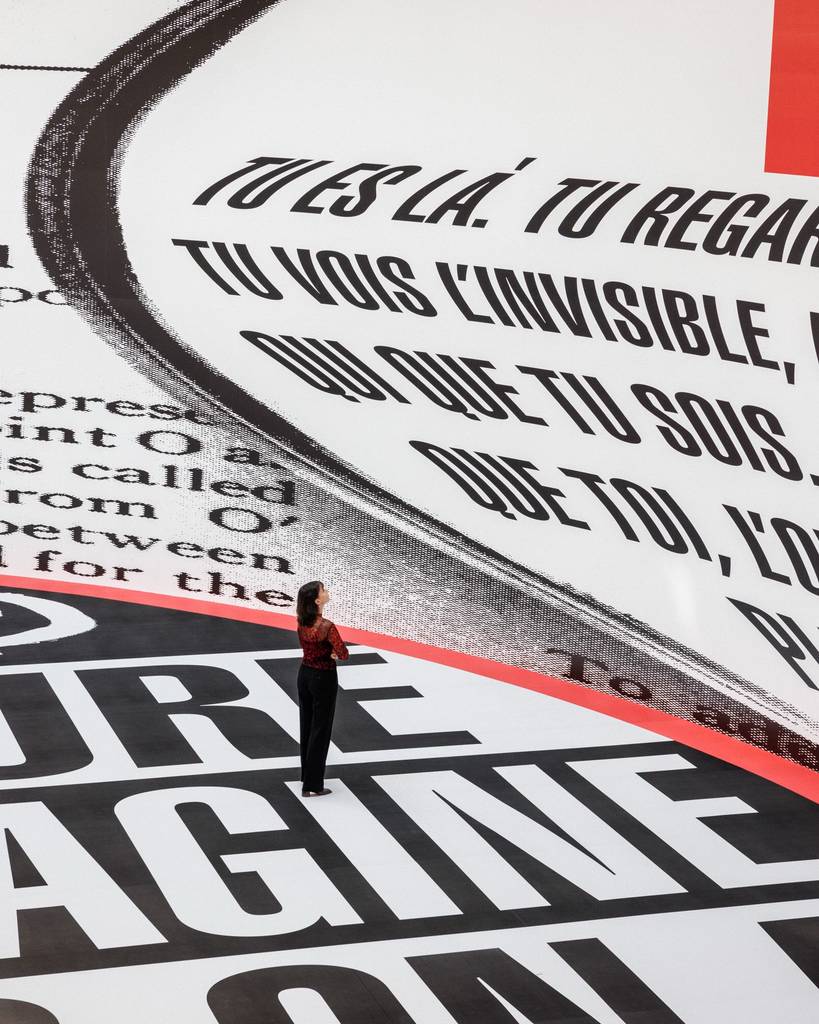
Kruger treats the Rotunda as a vast page. Her signature black, white and red typography stretches across the curved walls and beneath visitors’ feet, while the display cases become illuminated text panels. At the centre, a quotation from Martinican poet Aimé Césaire’s Journal of a Homecoming confronts viewers with a warning against passive spectatorship in the face of suffering.
Another text, taken from George Orwell’s 1984, crosses the floor beneath the audience. Its monumental scale makes it impossible to read from within the Rotunda; visible from above, it shifts the visitor from reader to participant.
Kruger’s intervention introduces questions of power, pleasure, desire, disgust, ownership and remembrance into the exhibition’s wider inquiry into photography. Her earlier two-video work Power, Pleasure, Desire, Disgust also returns to the Rotunda, placing a succession of faces before the viewer and complicating the relationship between looking, desire and threat.
A photographic constellation across time
Among the season’s Paris exhibitions, Remember Me is compelling for its refusal to treat photography as a closed historical sequence. Instead, the Bourse de Commerce becomes a space where two centuries of images encounter one another without the hierarchy of chronology.
Remember Me is on view at the Bourse de Commerce — Pinault Collection, Paris, from October 7th, 2026 to January 18th, 2027.
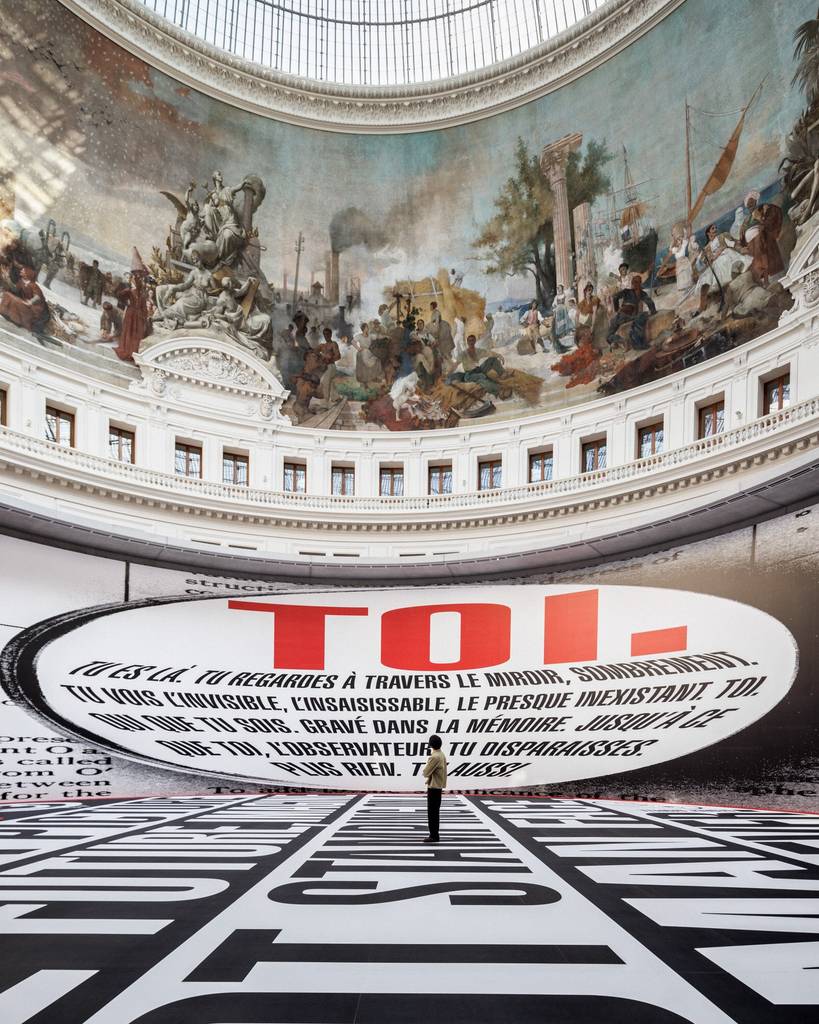
The History of Tears, 2026
PINAULT COLLECTION. Courtesy of the Artist and SPRÜTH MAGERS and DAVID ZWIRNER
Courtesy of PINAULT COLLECTION
Courtesy of PINAULT COLLECTION

An Embrace, 2024, UV print on glass, mirror, aluminium frame, 132.1 × 164 cm.
© TYLER MITCHELL. PINAULT COLLECTION