Photography by STEFANO GALUZZI
Photography by GIOVANNI GIANNONI
Photography by GIOVANNI GIANNONI
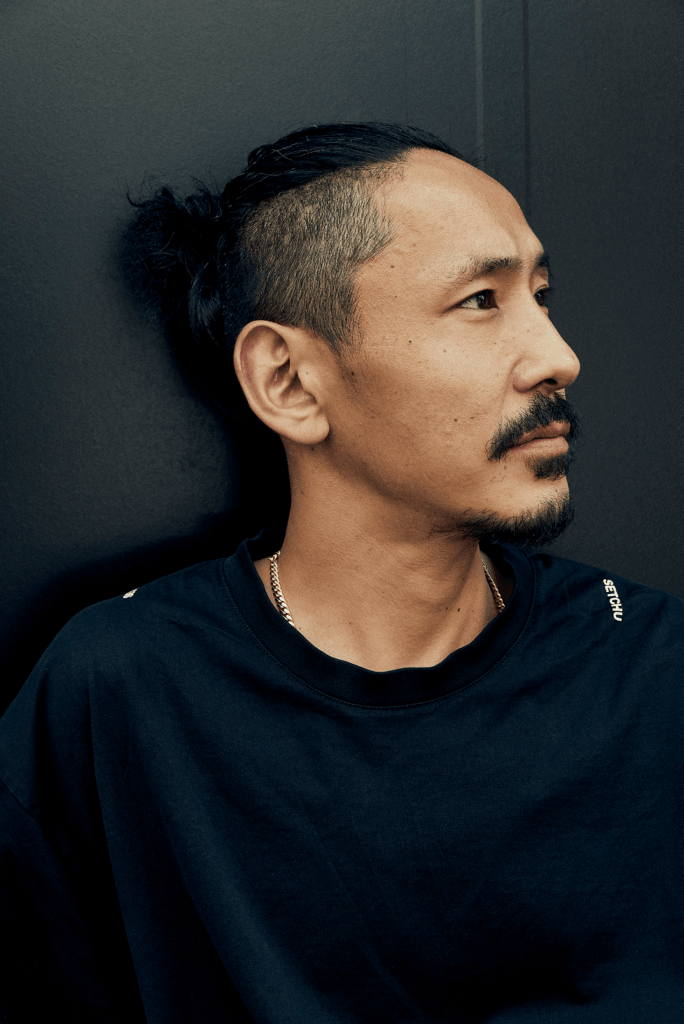
Satoshi Kuwata is a fashion designer making a compromise between Eastern and Western traditions. Born in Japan, he has since lived in several fashion capitals, now based in Milan, where he helms the label Setchu. Neither fully Japanese nor entirely European, he observes his native culture with the clarifying distance of an outsider while drawing on an intimate, almost visceral reservoir of memory—scents, tastes, and textures from his early years.
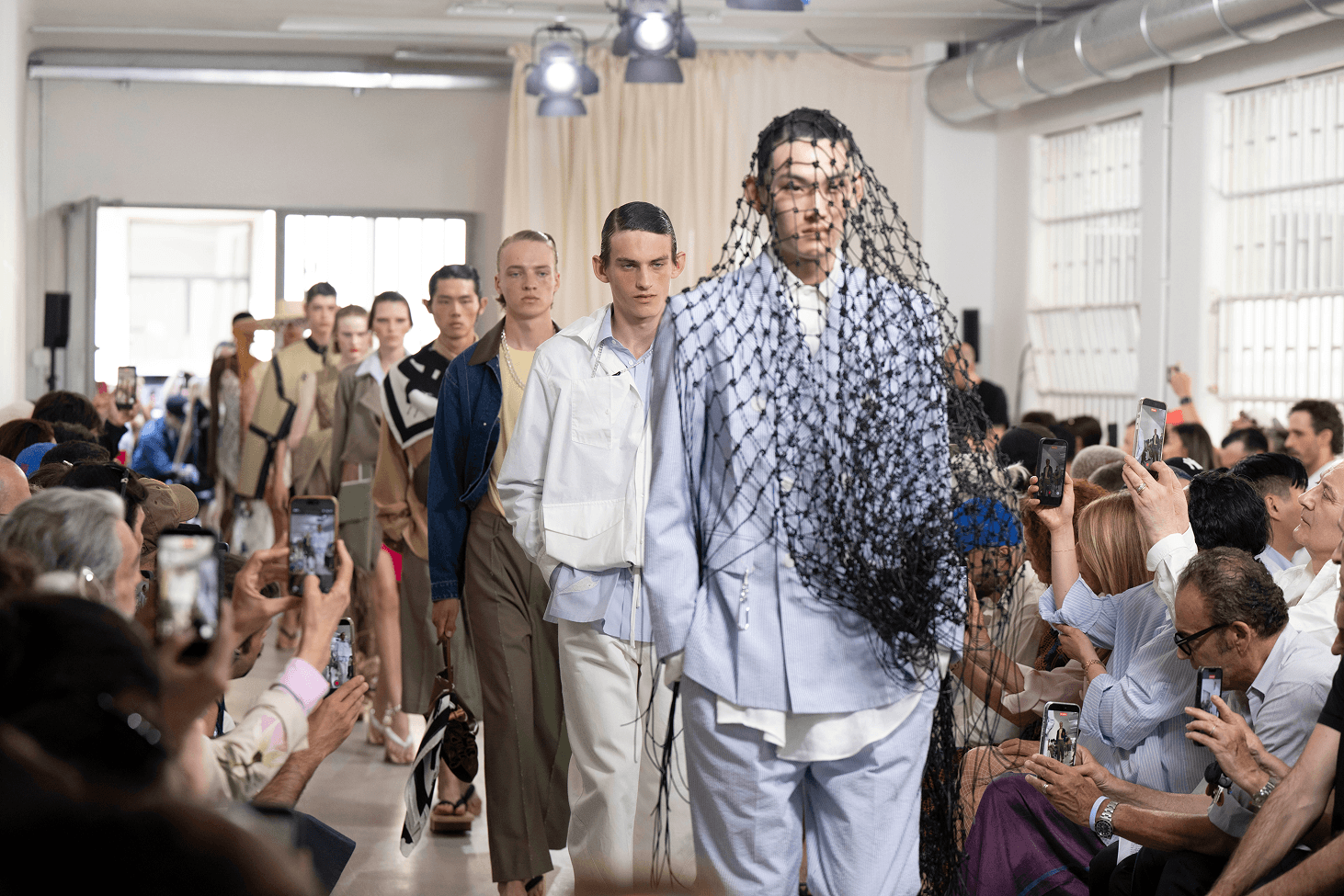
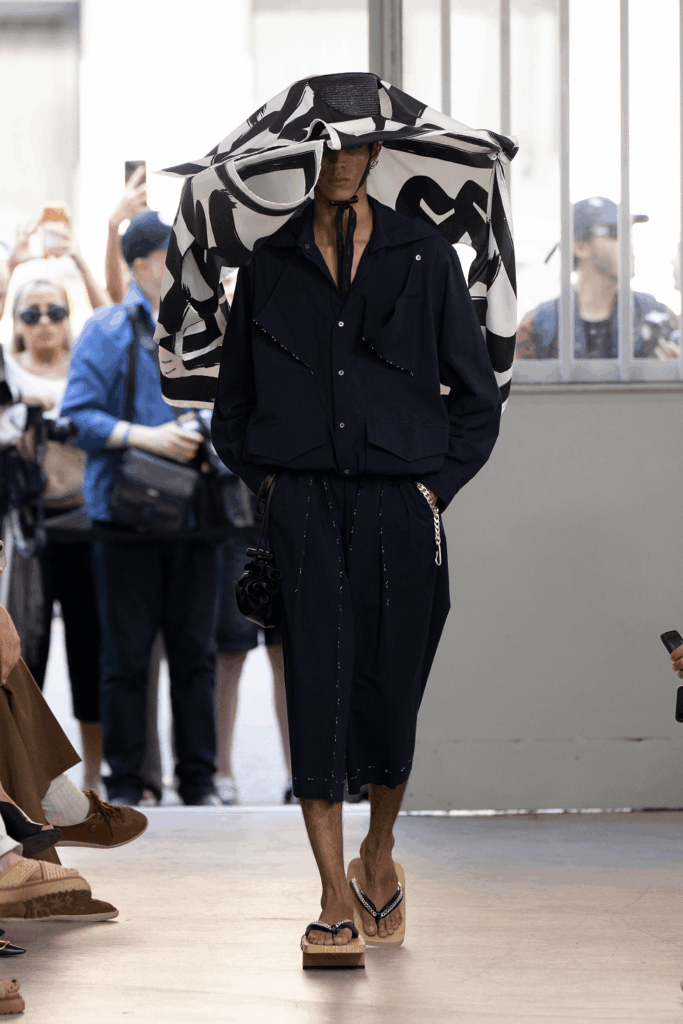
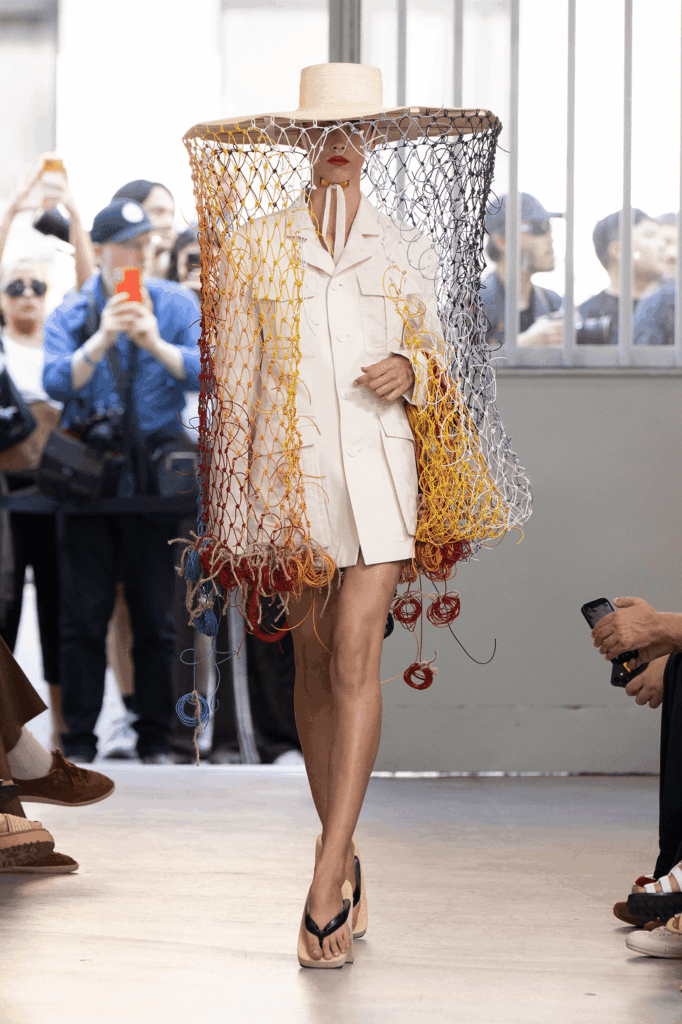
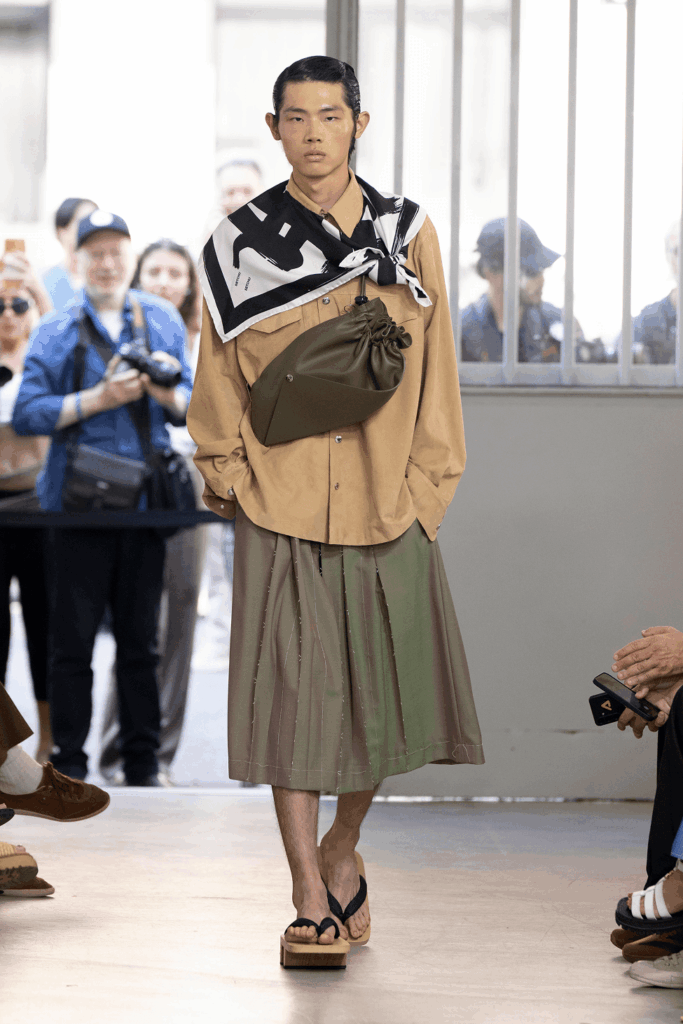
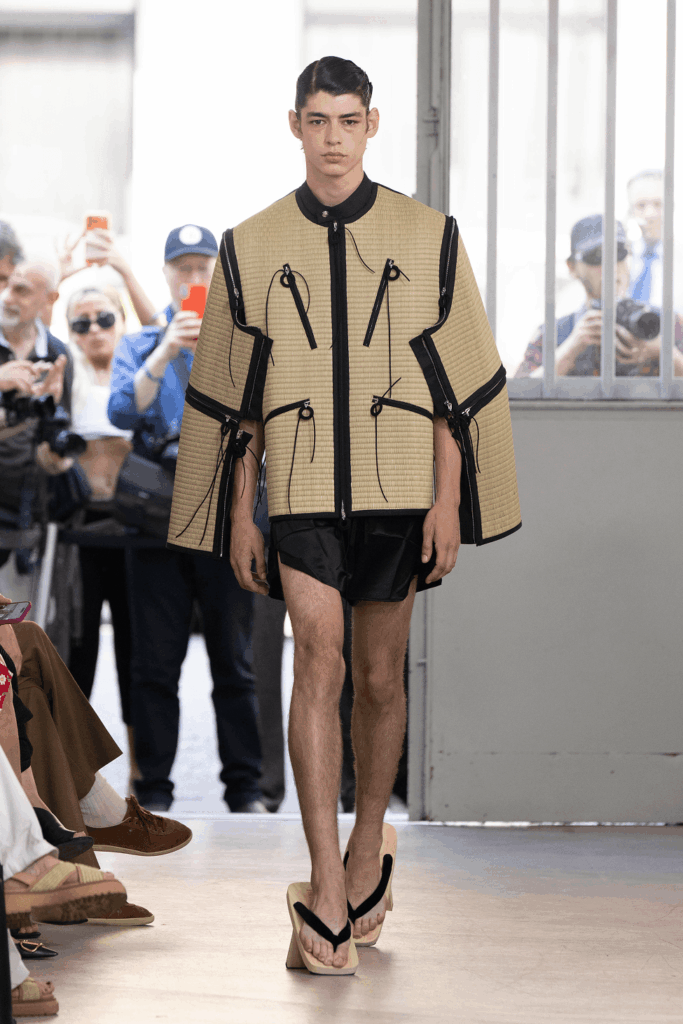
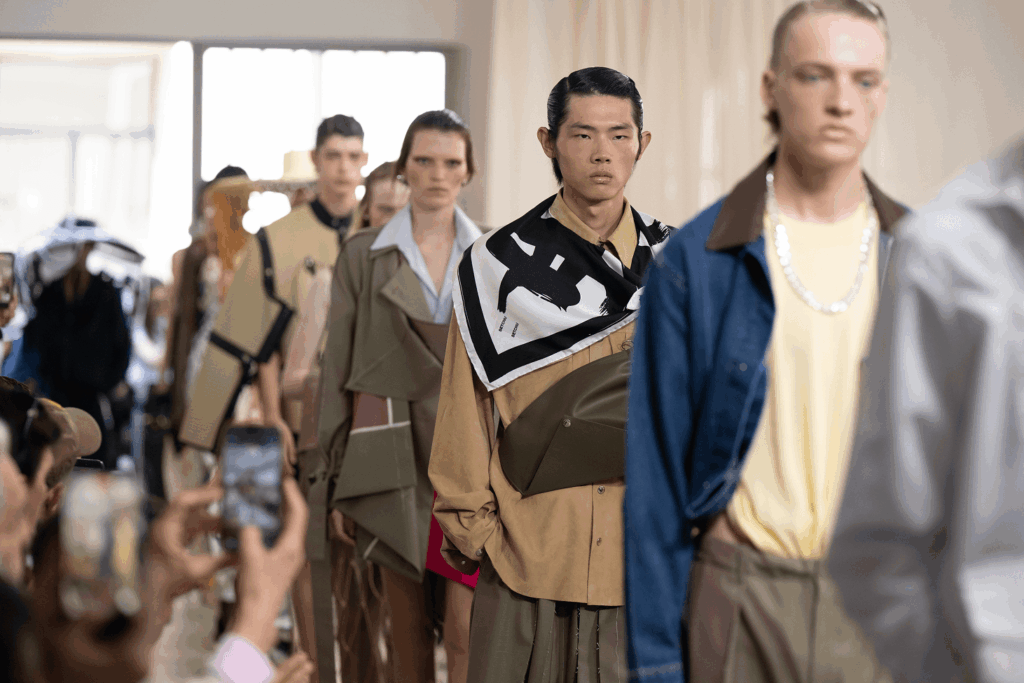
Setchu’s functional garments remain classic while emphasizing beauty in imperfection, inspired by Japanese craftsmanship traditions and wabi-sabi. The Spring/Summer 2027 collection, shown at Milan Fashion Week Men’s, distilled these preoccupations into a meditation on fishing nets, bias-cut rectangles, and Satoshi’s recent trip to Africa, where the raw drama of nature offered him both literal and metaphorical inspiration.
Since becoming the LVMH Prize winner in 2023, Kuwata has gained wider recognition without compromising the scale of his endeavor. As Setchu evolves, he envisions it not merely as a fashion house but as the seed of a Japanese luxury sensibility, while remaining grounded in a respect for materials, process, and the quiet pleasures of daily life. Kuwata’s vision feels remarkably solid: coherent in its philosophy, consistent in its execution, and quietly assured in its direction.
hube: Your work often moves between Japanese and European traditions. Where do you feel the most productive friction—or unexpected harmony—between these two cultural languages?
Satoshi Kuwata: I’m from Japan, and it’s quite a different culture. People describe me as not being like a Japanese person. I left my home country 20 years ago; I lived in London, Paris, New York, and now I live in Milan. I became somewhat non-Japanese, but I’m not a citizen of another country either. I see Japan almost the same way Europeans do. It’s interesting—I’m Japanese, but I’m also looking at Japan objectively, from the outside. I’m like a foreigner, and this way I can clearly see what is essentially Japanese.
Then there’s the other way of looking at it. Yes, I am Japanese, and I have this sentimental memory of what I have seen, what I have smelled, what I have eaten. It’s like a fifth element. That’s how I create the Japanese elements in my collection. It’s not purely Japanese—that’s a really important point. You see two cultures merge together. I use the words Japan, Asian, and Western together, but they don’t have to be far away from each other. When you look at it, there are so many similarities, and yet so many different things.
If something is too similar, the only way I can make the audience realize the difference is to emphasize it. Let’s say, for example, a kimono: it has a flat construction, and it’s already so different from a 3D-constructed garment, so I don’t have to make an obvious difference there. But let’s take an example that has nothing to do with fashion. Say, Japanese rice and Italian rice—they’re so similar. Now I need to explain what the difference between them is: the rice we use in Japan is for sushi, and the rice here, in Italy, is for risotto. Even the same rice is different. So things depend on the topic I’m talking about. What challenges me is the differentiation, and how to emphasize it. That’s how I compose a collection.
h: The idea of wabi-sabi, and your own reflections on “roughness,” seem central to your thinking. How does this sensibility actually translate into decisions in the studio?
SK: Wabi-sabi is unique to Japan. There’s China, where they have a beautiful culture; the temples there are older than those in Japan and Korea. Every cultural element came from the continent, from China, through Korea. Japan invented Japanese culture after receiving something: we studied it thoroughly and tried to make it into something different. At one point Japan closed the border for a few hundred years, from the beginning of the 17th century to the 19th century. This period made the country so unique. This is why, when you go to China or Korea, the temples have similar designs and colors, but Japanese temples are different. We prefer more brown, darker colors. This special sort of wabi-sabi was developed during that time.
Everyone wants to be unique. When I talk about the topic of Japan, I look for something special about the country, and wabi-sabi is one of the key elements—that we find something broken to be beautiful. We believe in imperfection. For example, if you have a creased t-shirt, you usually use an iron to flatten it. But somehow, in our culture, we find that a beauty. Things happen for a reason, and every crease has a reason. When you go to a temple in Kyoto, some of the sections shine in gold, but the other parts are brown and half-rotten. With wabi-sabi, we find that beautiful; it’s like our life, nothing is perfect. We enjoy the character of the material, whatever you happen to see there—the way it brings reason and harmony. It has also taught me that you don’t have to love something only because other people say it’s beautiful. If you find a broken branch on the street—that’s a beauty. That’s the idea of wabi-sabi.
I try to have this kind of feeling in my collections. This is why I have a lot of creases on the garment. Instead of ironing, I like to let a small crease run over the body. Everyone has a different posture, a different body, different muscles, different fats, and the crease will be pushed away from the body when you wear my clothes, creating different drapes. Now I find it really beautiful. Garments are products, but a garment only reaches its final stage once someone wears it. Everyone deserves to be unique, so adding those kinds of wabi-sabi elements to complete someone’s outfit makes sense.
h: Many of your garments include origami-like folds, reversibility, or modular elements. What draws you to clothing that is not fixed, but can shift and reveal different meanings depending on how it’s worn?
SK: I think clothing is no longer the center of culture. At one point, twenty or thirty years ago, it was; but now, when the internet and social networks have developed so much, fashion is not as fun as before. What people are expecting from clothing is more comfort, less design, and a competitive price—that’s what’s shifting. Before I started my own company, the marketing and merchandising element was strongly involved, and creation was left behind. Starting Setchu, I wanted to bring the playfulness. This is why I tried to bring multifunctionality, the origami creases, the elements that people find unnecessary. Yes, it’s more expensive, and yes, it takes more time; but if I don’t do it, no one will. I know how to make a garment more commercial, but for Setchu I’m probably going against it.
I just finished the SS27 fashion show in Milan. It was all about the handmade. It is a kind of cliché; not everyone understands what is handmade and what’s not. But as long as people find it something fun, I like to keep doing it. Fashion shows are becoming deeper and deeper every season, but we forget that we need to make them emotional for people. I don’t like to make complicated moodboards—I’d rather have more fun in each garment. We are not doing a fashion show to satisfy everyone. We are here to show what we stand for, to show what our DNA is. I think this time I really succeeded in making everyone get what we do. Even five-year-old kids could understand my collection. It was built around a fishing net. Why not? It’s a part of our culture—I am Japanese, so I need to have some element of Japan, even though my company is based in Italy. This is why I have origami elements—to convey our DNA to the audience.
h: Can you tell us more about the core vision behind your latest collection, Spring/Summer 2027, presented at Milan Fashion Week Men’s? What central idea or emotion were you hoping to express, and how does it represent where Setchu stands right now?
SK: As I said, I don’t like to make a big moodboard, because those become the references you start working out of. I’ve done that when I worked for big maisons, but using a reference is close to almost copying the original. A moodboard helps design something based on something. But do I need to do that again? I gave up on that kind of work; yes, I made more money when I was designing for bigger companies, and now I’m investing all my resources, all my time to do meaningful things.
This season, I only had two photos to start with. One photo was a guy throwing a fishing net in the air. I was inspired by my trip to Gabon. Gabon is a sanctuary for fishermen: that’s where everyone dreams of going one day. You can catch big fish, suitcase-sized—you fight for an hour to land one. It’s dangerous because you’re sometimes attacked by hippopotamuses or crocodiles, but you can truly see nature, you can smell it. Gabon is known to have the richest forest in Africa. Obviously, it gives me other inspirations—the beautiful flowers, beautiful trees, beautiful leaves, beautiful skies, stars—you name it. Africa is amazing. I love going there.
So I get inspired by fishing, and then I start looking at why women cannot do it. Historically, hunting was done by men, it was a male activity. But we’re facing 2030—women can fish as well. The first look in the collection was like the man was caught by someone else. People think we have more menswear clients because we show in the men’s fashion week, but actually our main business is womenswear—60-70% of our clients are women. I have to preach to them, but also to men; still, I wanted to have this element, this easy concept to start with—women catching men using a fishing net.
My second inspiration was the rectangle shape. I usually start with a paper, and it always gives me ideas. This season, I just cut out the middle and then cut the fabric on the bias, because fishing nets are cut on the bias too. The fabric drapes—like in the works of Madame Grès, Vionnet, or John Galliano. In look 17, the model wears a cape-like dress that was made exactly this way. The first look is like I started something, and the last look is like I backward-developed something; when the two meet, I start styling things together. Usually, this is my way of doing it.
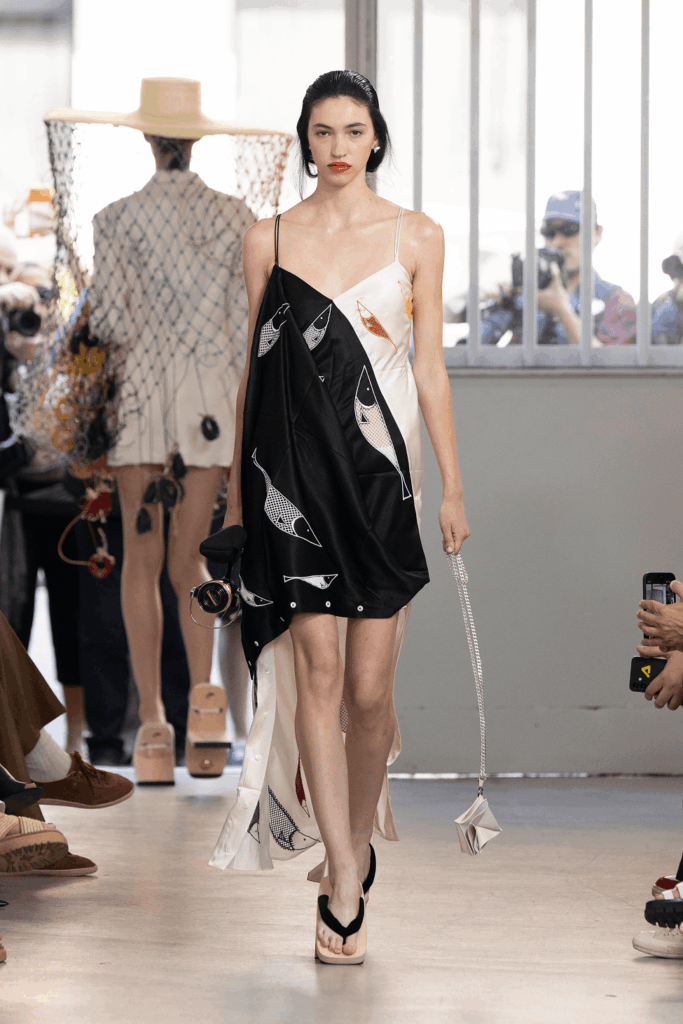
I usually get inspired by the trip I did before, and then put some sort of geometric approach to a concept. It can be the garments I took on my trip, or the shape of paper—I find it beautiful. We had fish embroideries in one of the looks, a half-black, half-white dress. That fish motif came from a piece of fabric I found on the floor. This kind of accent gives me some inspiration as well. Rather than finding embroidery of fish and trying to copy it, I try to have a very pure approach to the object.
Photography by GIOVANNI GIANNONI
Photography by GIOVANNI GIANNONI
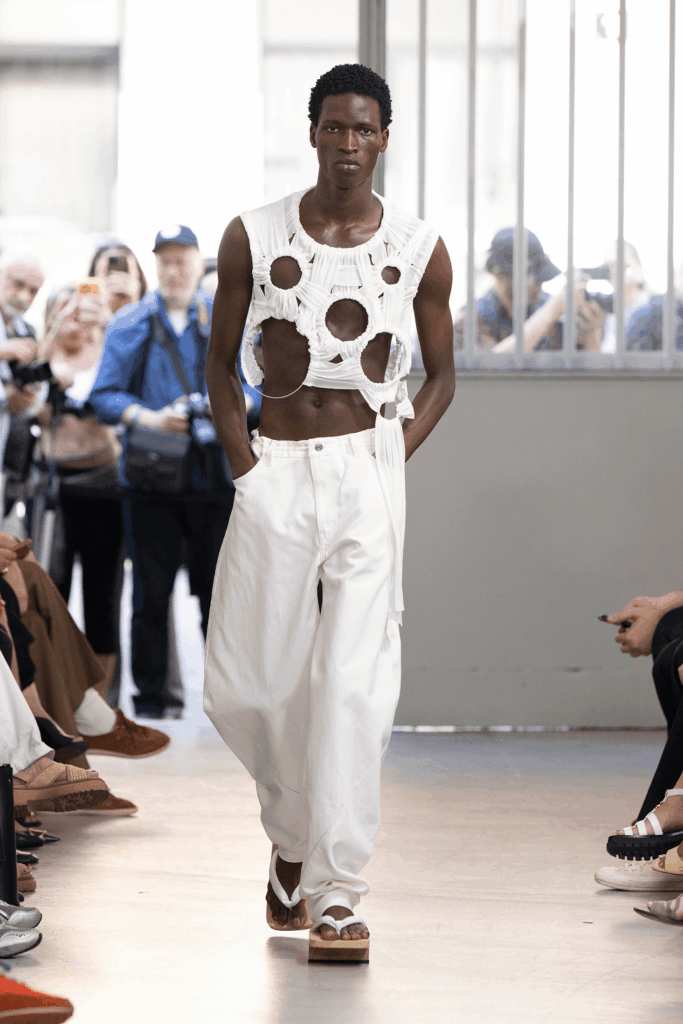
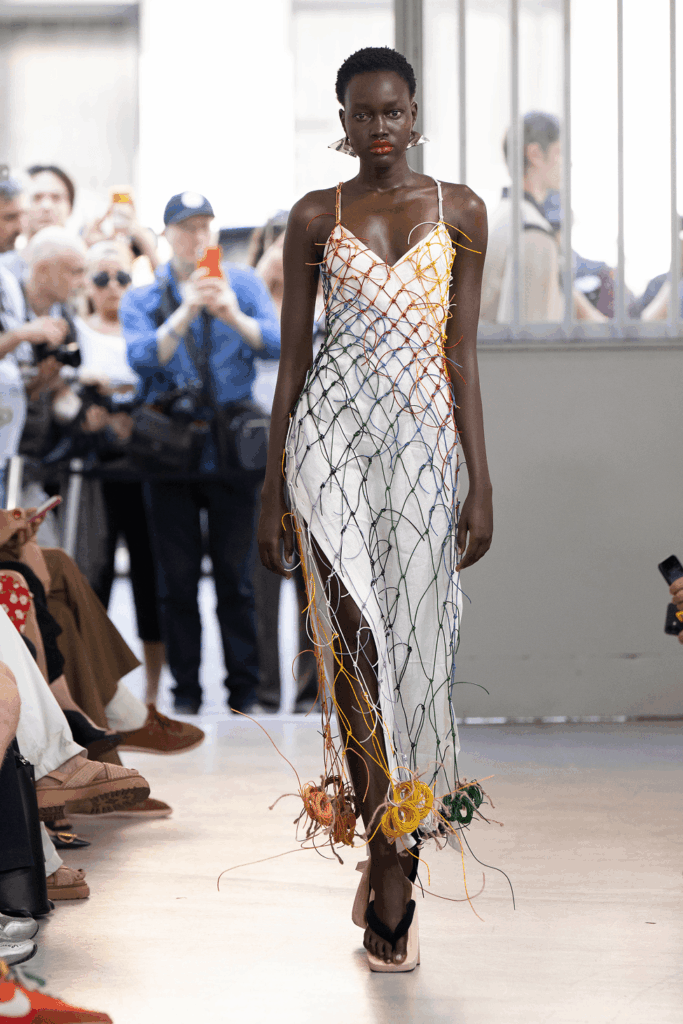
Photography by GIOVANNI GIANNONI
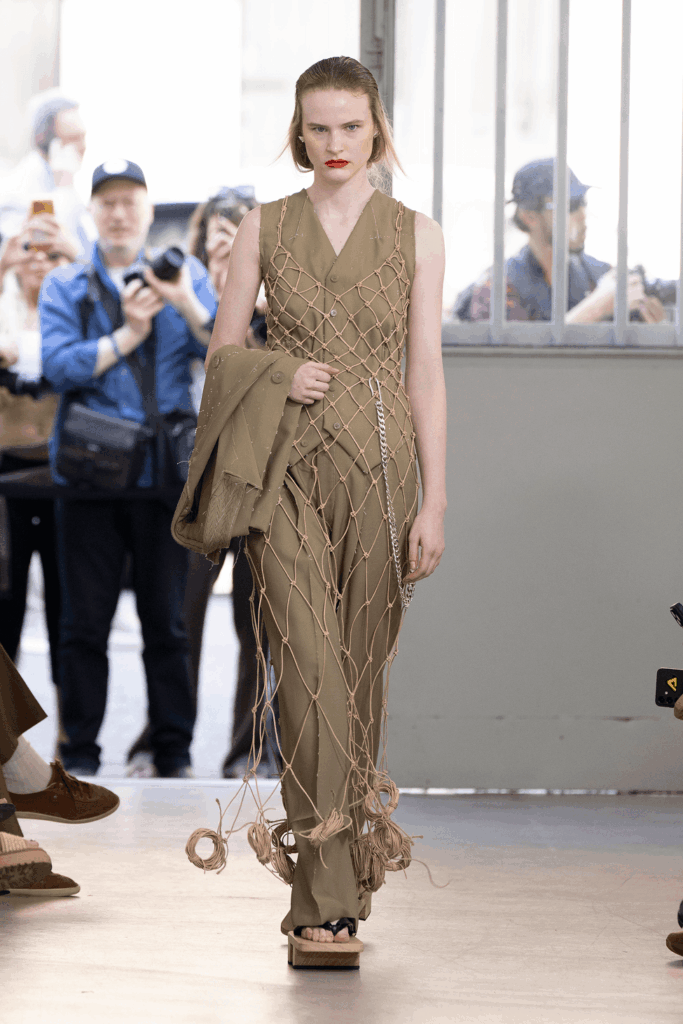
Photography by GIOVANNI GIANNONI
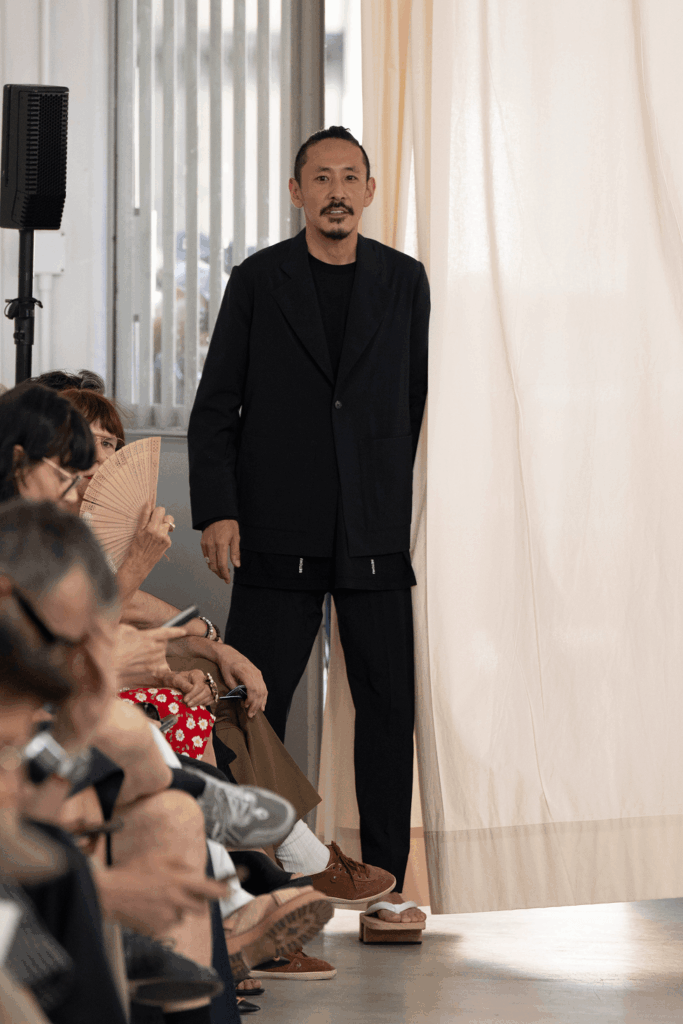
Photography by GIOVANNI GIANNONI
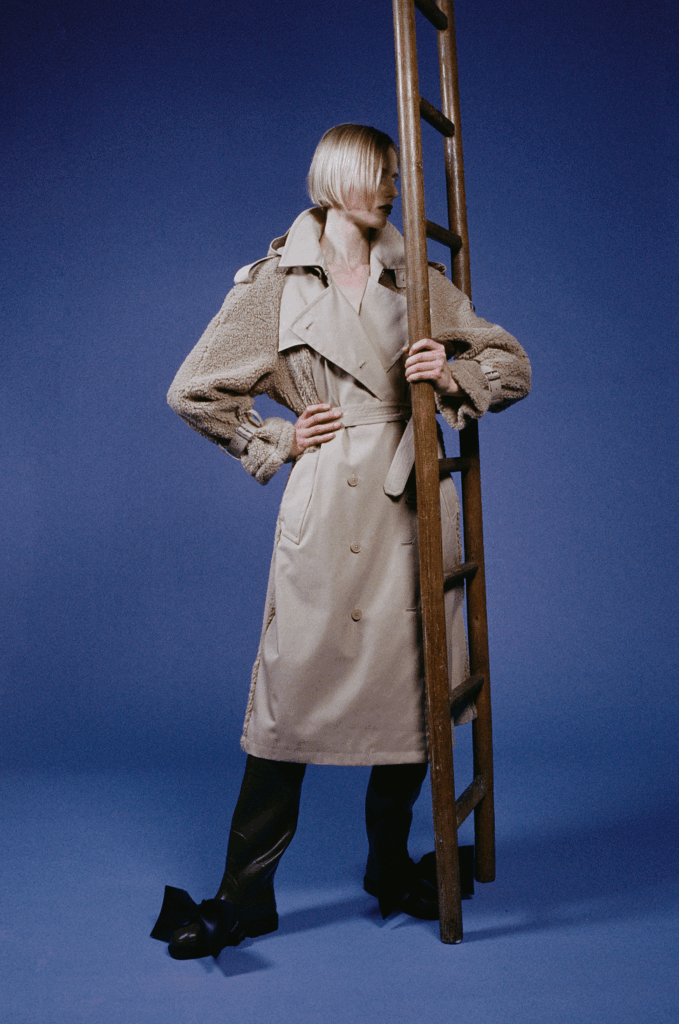
SHOOTING LOOKBOOK AIGLE
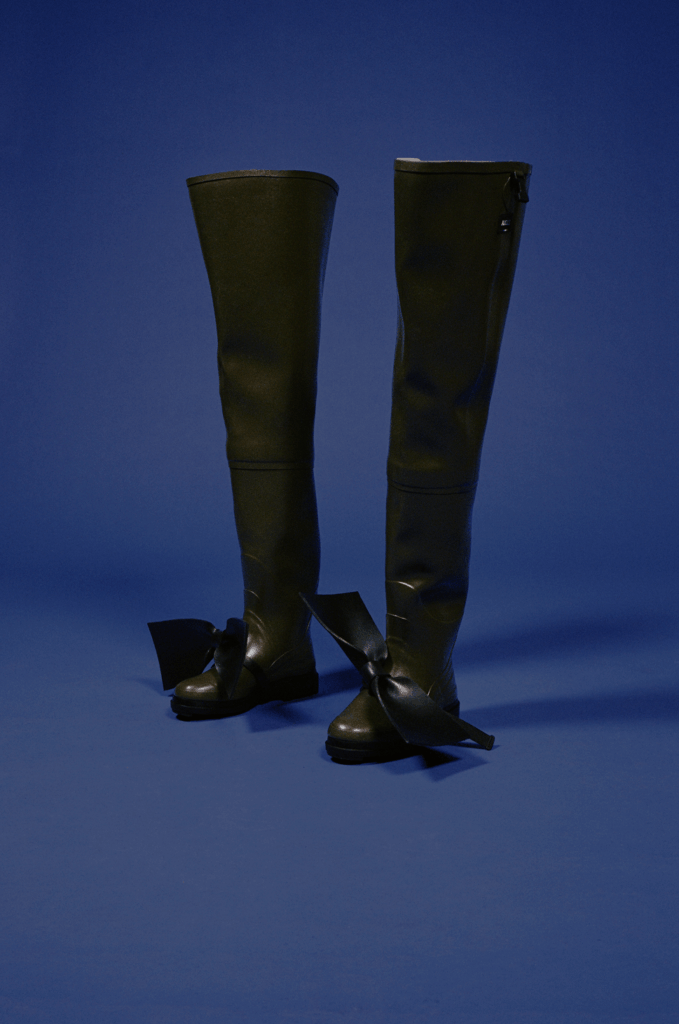
SHOOTING LOOKBOOK AIGLE
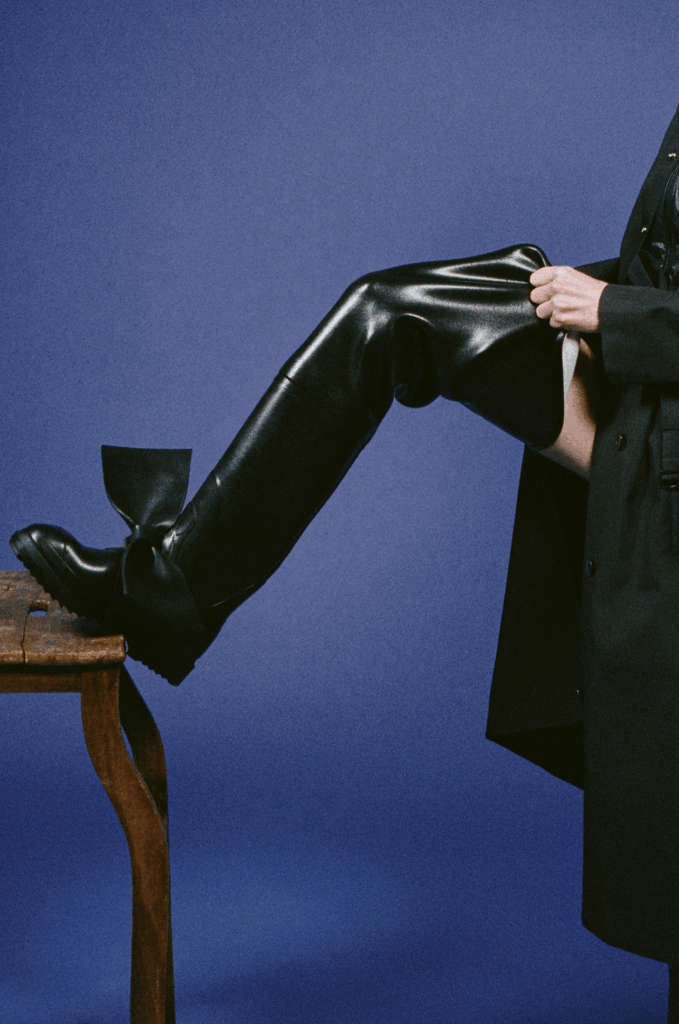
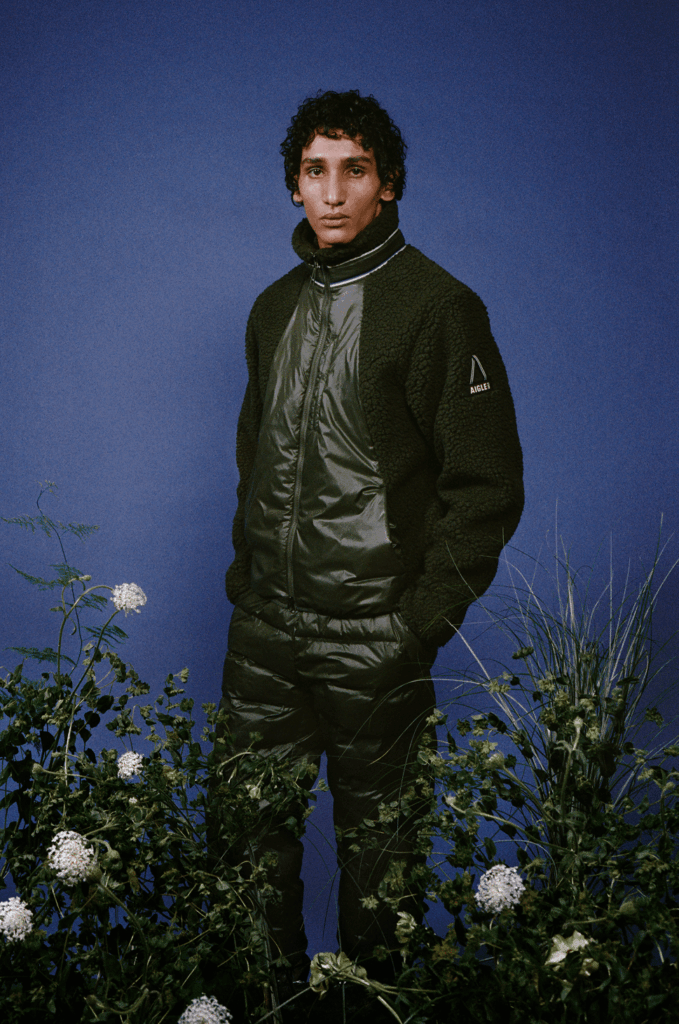
SHOOTING LOOKBOOK AIGLE
SHOOTING LOOKBOOK AIGLE
h: Winning the LVMH Prize in 2023 marked a major moment in your career. What changed for Setchu in practical terms after that—if anything—on the studio side, production, or opportunities?
SK: Now I can talk to someone like you. It really opened a door for me to meet more people. People in the industry start having interest in a small company like us. Obviously, there are other things—like having a bigger team—because the recognition of LVMH helps. But the growing audience, the number of people who are interested—that’s one of the biggest things.
h: Setchu is often associated with a deep respect for craftsmanship and materials. In a landscape driven by speed and spectacle, how do you personally define luxury today?
SK: Luxury is time. You can’t buy it. Sometimes garments last very long, and you can spend your life with them—that’s a luxury product. This is why I’m bringing in the handmade: if things are made by hand, they can be fixed by hand, too.
One day, when I was working at Savile Row, this gentleman came in. He was around 20 years old—and at 20, you cannot afford to buy suits at Huntsman of Savile Row, because that’s the most expensive tailor. But he brought in his great-great-grandfather’s suits, from generations back, and asked if I could retailor those because he didn’t want to throw them away. So we did it. People before used to be shorter and he was much taller, but we had some fabric, so we extended it, we let it out. After dry cleaning, he put it on, and it looked amazing. Inside the chest pocket of every Huntsman garment, it says who tailored it and when. That jacket was tailored in 1925, and he came back in the early 2000s—80 years later, yet the garment looked brand new.
That’s luxury to me, because the suits carry the history of the family. And the time you spend with your family is a luxury too. This is why, after a fashion show, I dine with journalists in my office. I don’t have to serve expensive food to enjoy the moment. What matters more is the time you spend together. I find that more luxurious than anything.
h: How do you hope people change—or become more aware of themselves—when they wear Setchu?
SK: It’s very simple, I think: confidence. A lot of people have negative feelings about their body—sometimes too skinny, sometimes too short, sometimes overweight. My garments try to reduce that pointless worry. No one is perfect. Some people are attractive because they are short, some because they are tall. We are judged by nonsense common sense. Every beauty comes from inside, and these clothes are there to make a person feel confident. I work hard to make everyone happy. At the end of the day, I am a prêt-à-porter designer: the garments are not made for one single person, but they have to fit all—not only models. Sometimes I ask a colleague to put a piece on: a different body shape, a different gender, a different posture. My goal is for people to feel something in the garment. Sometimes my clients message me—Satoshi, I was wearing your jacket today and it made me really happy; yesterday I had a bad time, but this morning I convinced myself to wake up early because I could wear Setchu clothes. That’s the best compliment I can get.
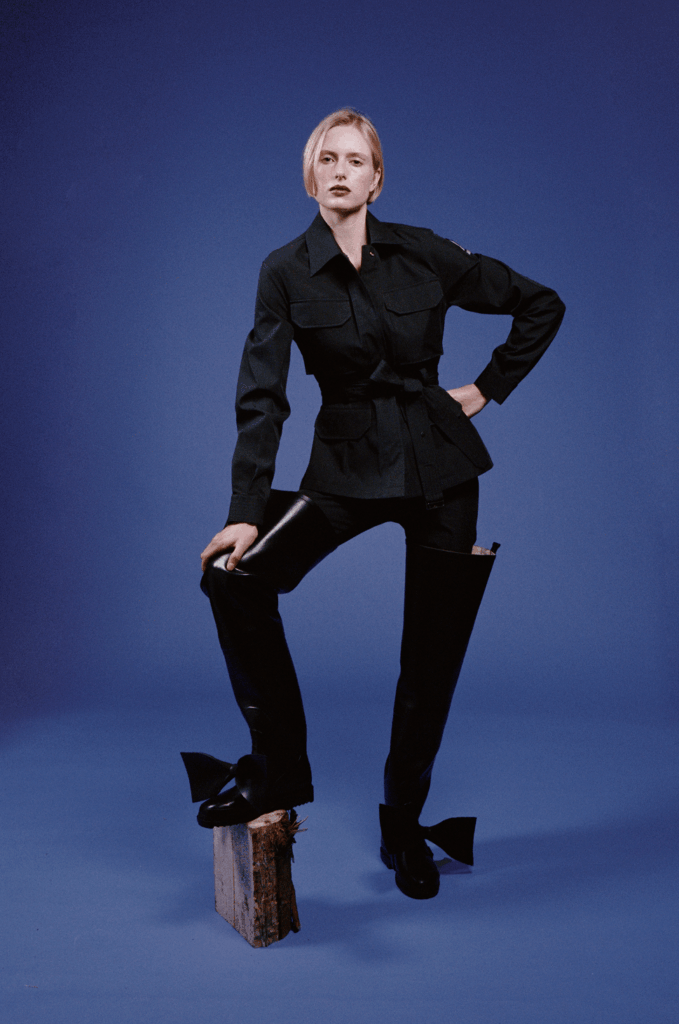
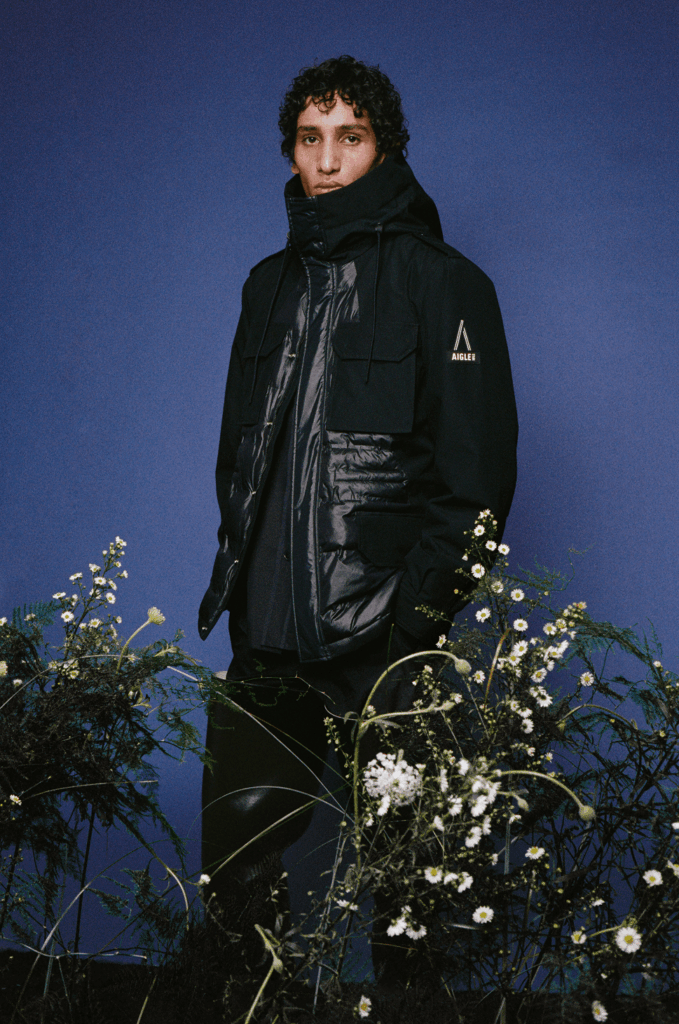
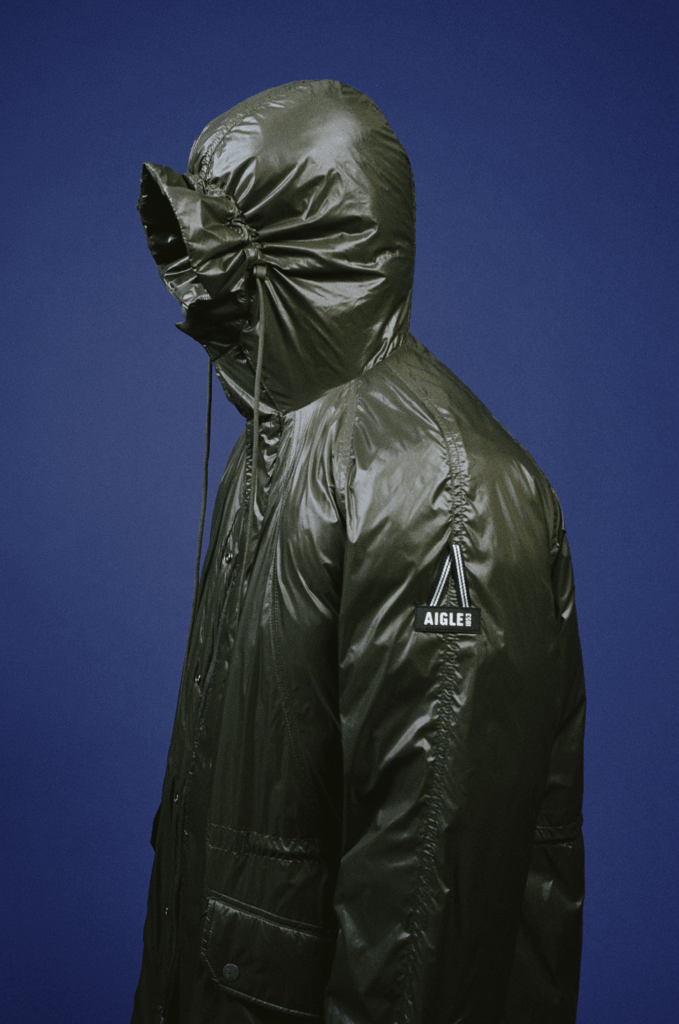
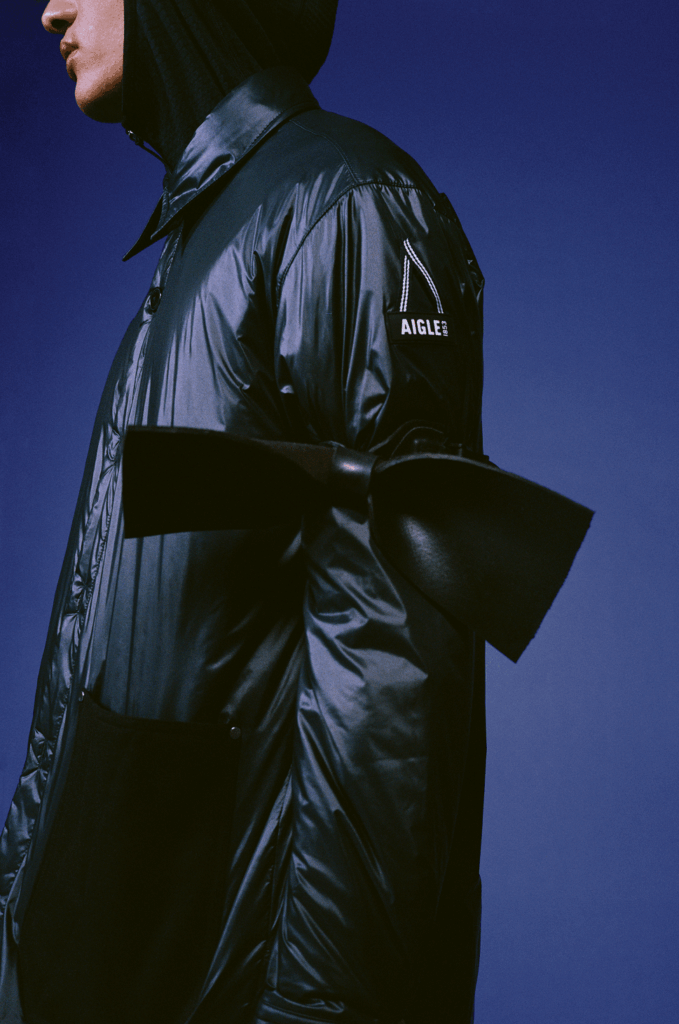
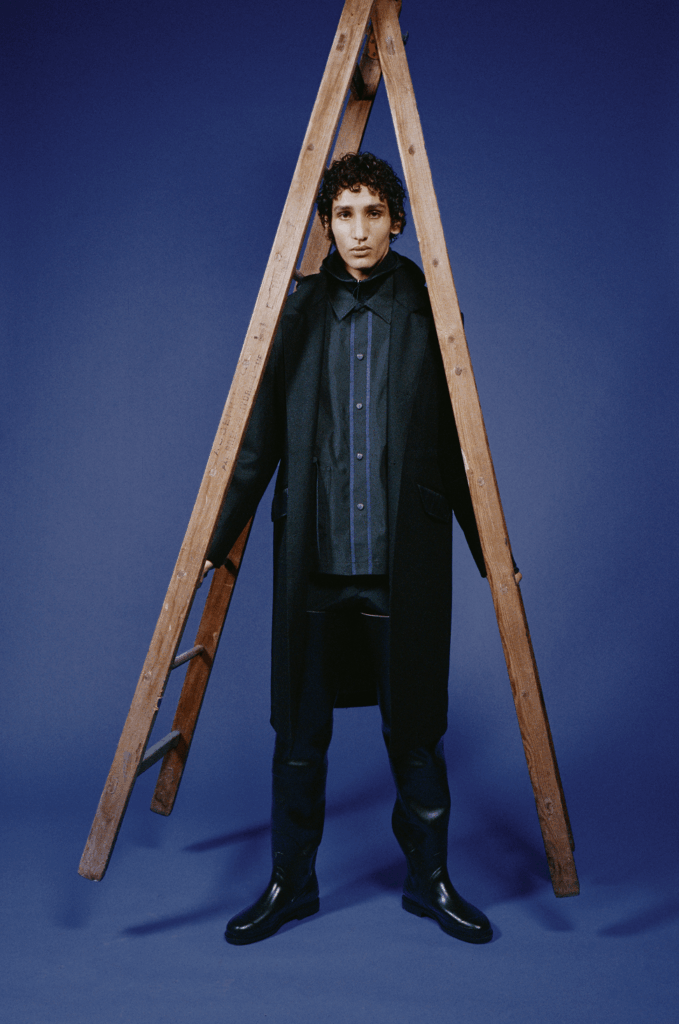
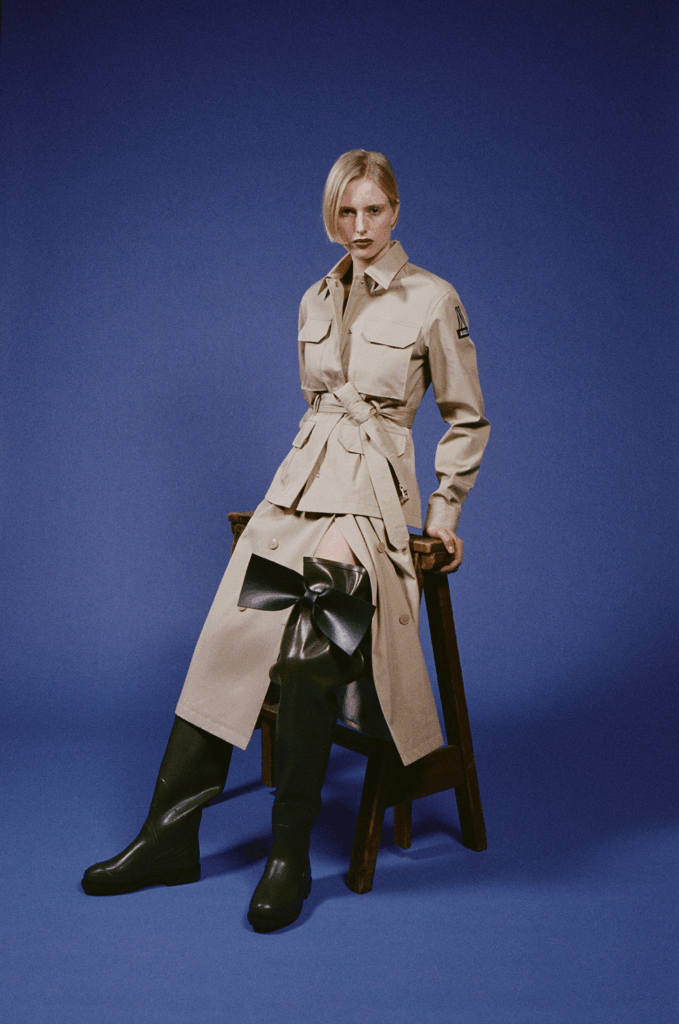
h: You collaborated with Aigle on a capsule collection launching this fall. How did you approach merging the brand’s outdoor functionality with the refined, transformable design of Setchu?
SK: Everyone knows Aigle. I knew them because of the rain boots—everyone has them, especially French people. It’s out of your choice: if you’re born into a French family, somehow the boots are there. That’s kind of a national brand. And it was brave of them to approach a Japanese designer. France is a kingdom of fashion companies, and Aigle is one of the oldest of them. Being offered this job was a real honour. I relate to them because they are an outdoor activity company, and, as I told you, I fish.
The first thing I came up with was the A-line, because of the A of Aigle. I wanted to approach it in some sort of European manner: to understand the body shape and apply that concept to the design. Aigle has its symbol, the Aigle tag, but I wanted to go further. I wanted to design a good, authentic image that people really want to consume.
So I started with this A-line, and really worked on it. Having a clear concept on classic garments is where I see the similarity between Setchu and Aigle. With Setchu, if you have a simple jacket with pleats, that’s a Setchu garment, because of origami. For Aigle, I wanted a line that is sexy for men and women, and also functional: I put the pockets on that line, so you don’t have to create another pocket line. Thinking about functionality is something I do at Setchu as well. Design-wise, it’s not the same as what I do. The fabric is not the one I mostly use for Setchu either, because Setchu is famous for cashmere, for expensive fine wool and silk from Como; there I had to use different fabrics. But the DNA, the way I construct—I connect the Setchu world to the Aigle world. As a result, those garments I could use for fishing—so it was a win-win relationship.
h: As a designer working across global systems and tight seasonal rhythms, what helps you stay creatively grounded and avoid losing clarity in the process?
SK: Not to think about timing. I set myself free. As we talked about, time is extremely important. There is that famous proverb: the grass is always greener on the other side. If you want time, you always want more of it. So I tell myself that even if I wake up one minute earlier, I should be positive about it: what can I do in this one minute? Then I can finish one look. I work quickly, and try not to think about time.
When you were given big homework for the summer holiday, you said: let’s do it later, let’s do it later—and then you never do it. I really changed myself in this. You start thinking about time not in a stressful way, but rather “What if there is no concept of time?” If you can do something, let’s do it now. It was such a positive way of controlling my own mind, and now I don’t put off whatever I have to do; it doesn’t feel like an obligation.
Obviously, I’m running a company, and in a way I’m the king here—I can do what I want. But I realised that if I do my work later, I give an extra problem to my team. If I make a last-minute decision, that causes so many mistakes and so much stress. The calendar is crazy. You have to keep doing it, but I stopped worrying about it. Actually, we have a lot of time; you just need to be smart about the way you use it. And when I start thinking about other people, I challenge myself better, because I don’t want to give people stress.
h: What excites you most about where Setchu is heading—and more broadly, what shifts in culture or making do you find most interesting right now?
SK: I’d like to make Setchu the first Japanese luxury brand. It will probably not happen in my lifetime. This is why I didn’t use my own name for it. As I told you, fashion itself is not Japanese culture; clothing is not Japanese culture. I appreciate that I can use other people’s culture for my career. But on top of that, I believe more in lifestyle. Fashion is not in the center of culture anymore, but lifestyle is, because our life remains to be in the center. I am into furniture design, perfume, lots of different things, and we are starting to do them. So the direction is to make a Japanese luxury brand—the Hermès or the Chanel of Japan—maybe in 100 years, in 200 years.
The second thing is that I’m looking into the possibility of more handmade, but at affordable prices. We still need to make a lot with our hands. AI is taking over our world, robots are taking over our world, and I do appreciate that; I don’t disagree with what’s happening. In fact, I’m using an iPad right now, we are using the internet to talk, and that’s a beautiful thing. We are in the middle of a big river. I cannot stop the flow, but I’d like to create some sort of boat that lets me steer myself, instead of being carried away by the river.
For me, that means some sort of handmade, something with a personal touch, and something that is not too expensive. I don’t want to tell people that their garment is too expensive because it is handmade. Yes, I understand that, but I’m still looking into the possibility of going against all of it and yet having a good product. That’s something I’m into. The last collection was so fun—I felt like I was back in my student life. Our team is getting bigger, I have more freedom to create something, and I don’t like just sketching it and sending it to the factory. I like to have something more thoughtful, an invention that makes people say wow. That’s something that feels like the right moment for me.
h: If you could share one piece of advice with young designers trying to balance heritage, discipline, and experimentation, what would it be?
SK: Listen.
SHOOTING LOOKBOOK AIGLE
SHOOTING LOOKBOOK AIGLE
SHOOTING LOOKBOOK AIGLE
SHOOTING LOOKBOOK AIGLE
Photography by GIOVANNI GIANNONI
Special thanks to PR CONSULTING PARIS