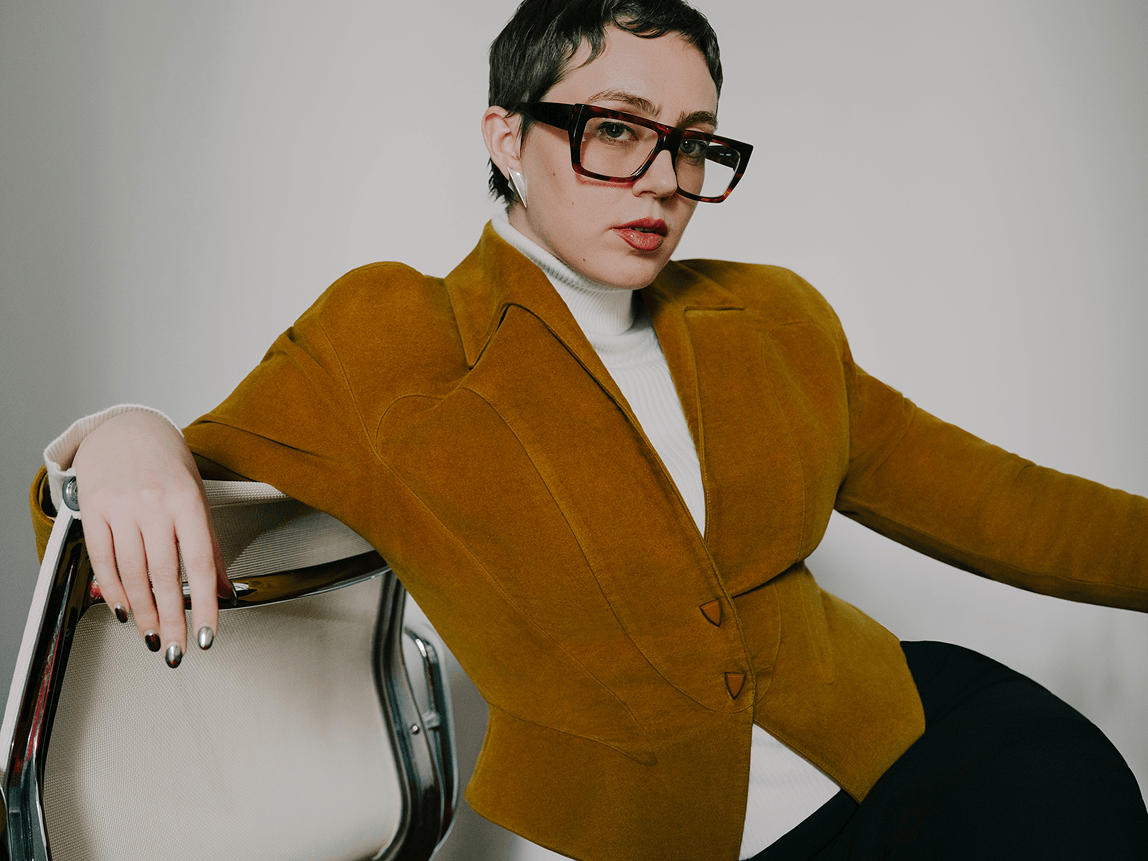
Whitney Mallett is a vital voice in literary criticism at a moment of profound media upheaval. Founder and editor-in-chief of The Whitney Review, she is also a regular contributor to some of her personal favorite titles, such as PIN–UP. From her New York home—where this winter’s relentless snow is finally thawing—she operates at the intersection of high-concept art and commercial utility.
When we speak, she is literally supported by literature; her computer is stacked on a pile of galleys. Surrounding her are the physical traces of the current “reading circuit”—proofs and publications sent by writers and presses hoping to find a home in her magazine’s “omnivorous” pages. Here, Mallett talks to hube about the tension of the erotica paywall, the claustrophobic morality of Canadian literature, the vitality of indie publishing, and why she is deliberately trying to attend fewer events.
hube: In London, there is an attempt to convert literary scene events into a sort of in-person dating app. Is this something that’s also happening in New York? Did you do anything this past Valentine’s Day?
Whitney Mallett: I actually met my partner at a reading years ago, so yes—I do think “hot people” hang out at readings partly to meet their Valentine. I was even invited to read at a Valentine’s event last year. The night before this most recent Valentine’s Day, one of my best friends eloped at the courthouse. They booked a sexy suite at the Standard Hotel and threw a very fun party to celebrate, which felt very apropos. Then, on Valentine’s Day itself, I went to the Anna Sui show and grabbed a burger with a friend I ran into there. In the evening, my man and I went to a housewarming party, followed by a party I was co-hosting, so it was a packed day.
h: That’s a Valentine’s marathon.
WM: I even squeezed in a business meeting somewhere, but things are a bit calmer now. I’m always trying to go to fewer events—there’s always something I want to do. For example, someone might be performing a piece they’ll never do again. Last night, there was a Peaches performance and I had FOMO when I saw it on my phone. But you won’t get anything done if you’re constantly at everyone else’s events.
h: Do you ever get FOMO from books?
WM: As we speak, I’m surrounded by galleys people have sent that I haven’t even started yet. Andrew Durbin’s book on Hujar and Thek is one I’m especially looking forward to; it’s meant to be deeply researched but also sexy.
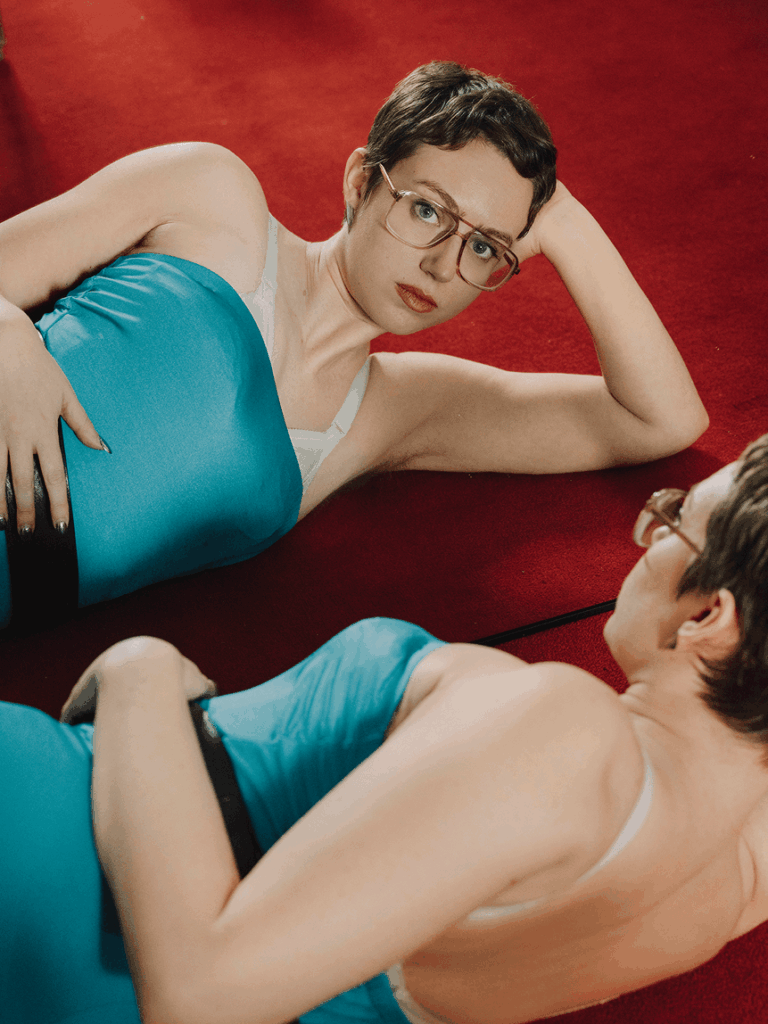

h: Your novel Missionary / Deliverance came out in 2022. Why did you choose to write an erotica novel, and what was the process and reception like?
WM: It started with an invitation from Tamara Faith Berger, an author who has been a big influence on me. At the time it made sense—I was already writing a lot of erotica and experimenting with publishing it on OnlyFans. Being behind a paywall gave me a sense of freedom and permission because it became a financial decision. I found myself writing much rawer material that didn’t feel indulgent.
I often struggle with making art that feels indulgent, which is why I ended up in magazines. They straddle the space between commercial utility and creativity. That tension is something I’m frequently drawn toward.
h: What was it like growing up in Alberta? How has that shaped your approach to literature?
WM: I’ve wanted to be a writer for as long as I can remember. When I was younger, my mom took me to the library often. As a teenager, I started getting the Sunday New York Times and was drawn in by Lauren Greenfield’s photographs—one series on teen weightlifting, another on girls with anorexia. Around the same time my dad subscribed to The New Yorker, and those publications shifted everything for me. Before that, I thought being a writer meant strictly writing books.
In school we read a lot of Canadian authors. I liked Leonard Cohen and, again, Tamara Faith Berger. She’s an exception to the sensibility Canadian literature likes to promote—the idea that there’s a moral value to certain novels. You can trace that attitude back to the 18th century, when people thought women were “addicted” to romance novels and deemed them a bad influence.
h: If someone isn’t an avid reader, what book do you think they would get addicted to?
WM: Natasha Stagg has mentioned that a lot of her non-reader friends tell her, “I can actually read your books.” Her style isn’t overly flowery. Some books demand real patience, but in this day and age, if you’re not using contemporary vernacular, the writing can come off as pretentious. I like short, snappy sentences and terse prose.
I would also highly recommend Perfect Victims: And the Politics of Appeal by Mohammed el-Kurd. Prose-wise, stylistically, and formally, it’s incredible. I’m always drawn to a voice that sounds like someone is actually talking to me. If you rarely read, that kind of directness is much easier to fall into.
h: How do you choose which books to cover in The Whitney Review?
WM: By design, the magazine is somewhat omnivorous. We review projects by people I’ve followed for a while, as well as certain releases that don’t have another publication that would cover them. That was one of the reasons I started the Review: there are people on the reading circuit with real followings who can fill rooms in multiple cities, yet their books don’t fit neatly into the literary fiction or art categories.
A lot of artists also release text-based publications. I wanted to create a space for works that feel like they fall through the cracks but still have an impact. They deserve to be part of the record and to be placed in conversation with other pieces that share similar thematic evolutions.
h: What was a “crazy” pitch someone sent you?
WM: Max Steele wrote about a Foamposite sneaker, and it was perfect. Also, in the first issue, Philippa Snow—one of my favorite writers—suggested celebrity memoirs, including the one co-authored by Kourtney, Khloe, and Kim called Dollhouse.
It feels like a conversation. I keep an eye on what’s coming out and invite authors I think are a good fit. River Ramirez, for example, is someone I know as a performer. R. Crumb, the illustrator who often draws Catholic schoolgirls with big hairy legs, is a really important American artist. There was a very research-heavy biography about him, and I felt we had to cover it. River mentioned they were part of a Discord dedicated to Crumb, and I just said, “I trust your point of view.”
h: You recently participated in a conversation with Alex Vernet and Isaiah Davis at Anton Kern Gallery for UMARELL. What was that like? Do you get nervous speaking in front of crowds?
WM: I like performing—the little rush of adrenaline. High-pressure environments create a certain intimacy. It always creeps up on me, and the day before I’ll realize I need time to prepare. I actually enjoy a bit of stage fright. I’m a pretty good public speaker and don’t get overly nervous, but sometimes I do choke. I did a manifesto reading once and felt curious about trying a beta blocker afterward. I don’t think I liked it—it felt like my brain was moving slower.
h: Where do you hope the world of literary criticism goes in the next few years? How will The Whitney Review play a part?
WM: The Washington Post just axed its book section a few weeks ago. The media in general is facing multiple existential crises. Even a successful novelist today probably can’t live off novels alone, so it’s harder than ever to sustain this work. Having a critical infrastructure around writers’ work is vital. We need media that allows for honest engagement, not just repeats what the artist thinks their work is doing. It’s the ecosystem that makes for healthy work.
Everyone in small publishing is in it for the love of the game, and there’s a bit of a renaissance happening right now for reviews and indie magazines. As people become more and more atomized in neoliberal capitalism, there is a huge need for shared spaces where feedback can happen—whether it’s an editor working with a writer or a review offering real response to a book. Those little conversations, ping-ponging back and forth, matter so much more than everyone living in their own little silos.
I studied the 18th-century pamphlet era, which was very similar to the current world of blogs and indie mags. Keeping those for the record is essential because it reveals how much astroturfing actually happens on review aggregators.
h: Anything you are looking forward to in the upcoming year?
WM: We’re approaching the third anniversary of The Whitney Review, which feels exciting. I’m also going to Montreal for a conference. I haven’t been back in a long time, and that’s where I spent my most formative years, from age 17 to 21. To be honest, we also have more Epstein files coming, whether we’re looking forward to them or not. I’m listening to Virginia Giuffre’s audiobook right now, so it’s very much on my mind.

Photography by KATHARINA POBLOTZKI
Words: JULIA SILVERBERG
