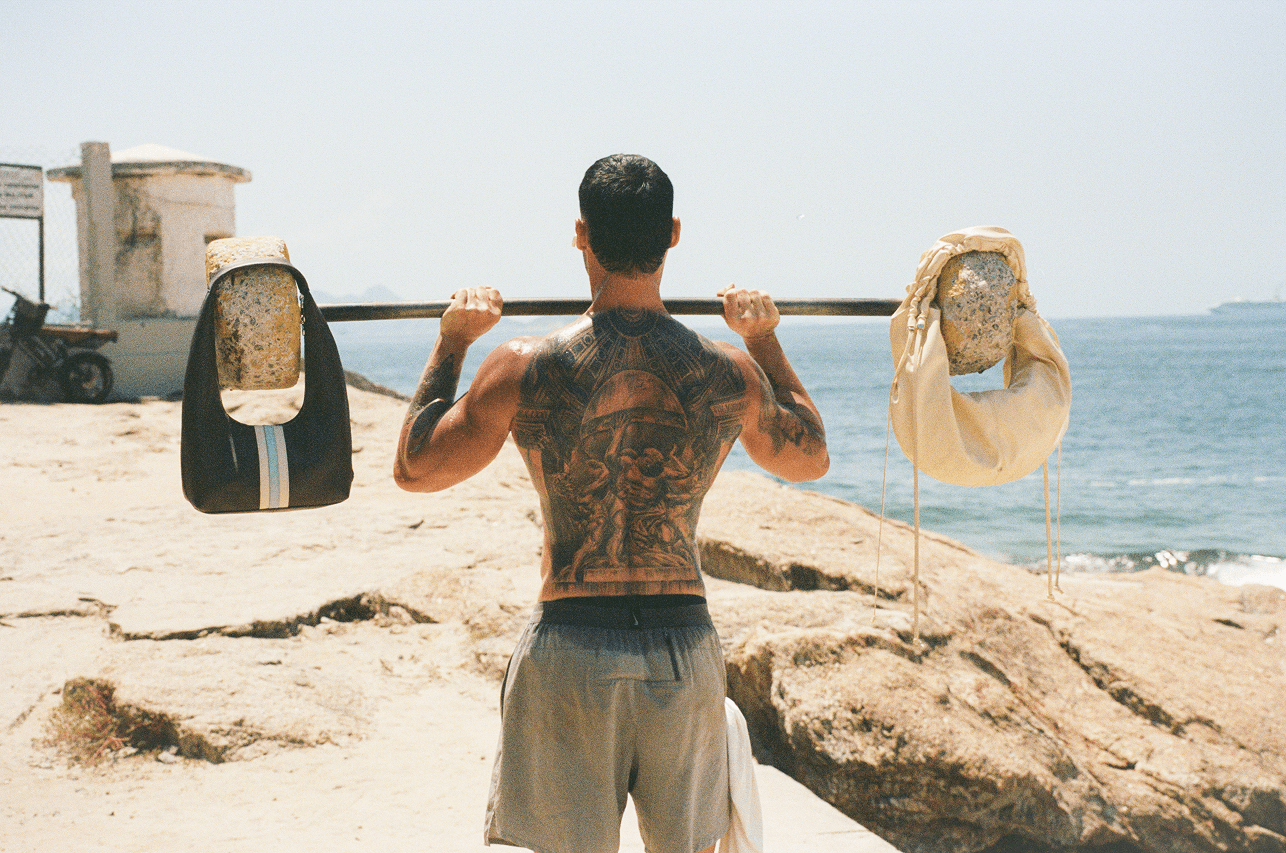
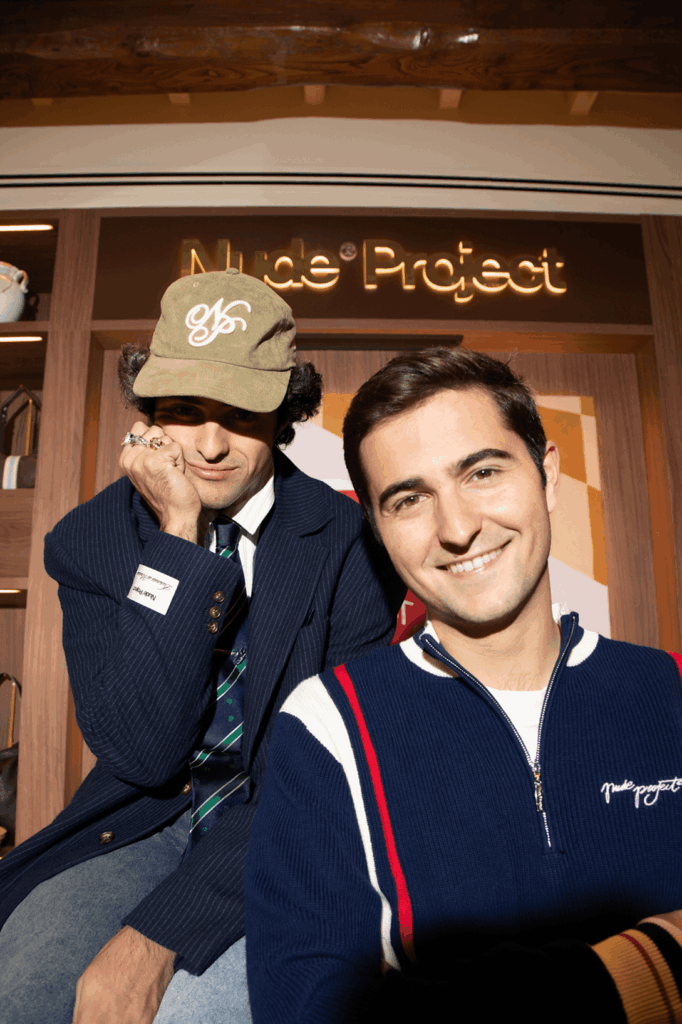
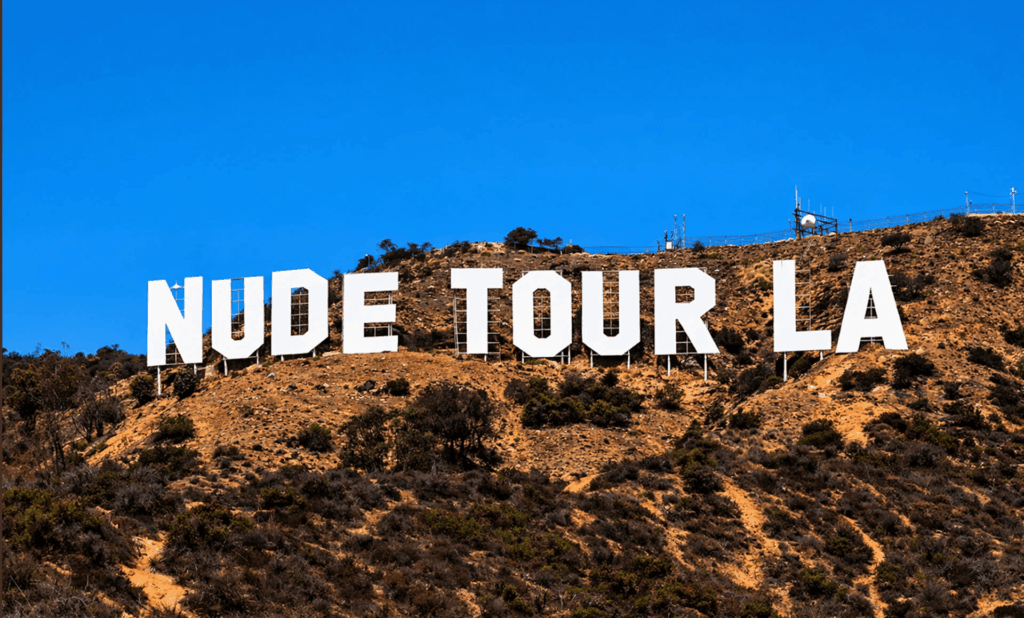
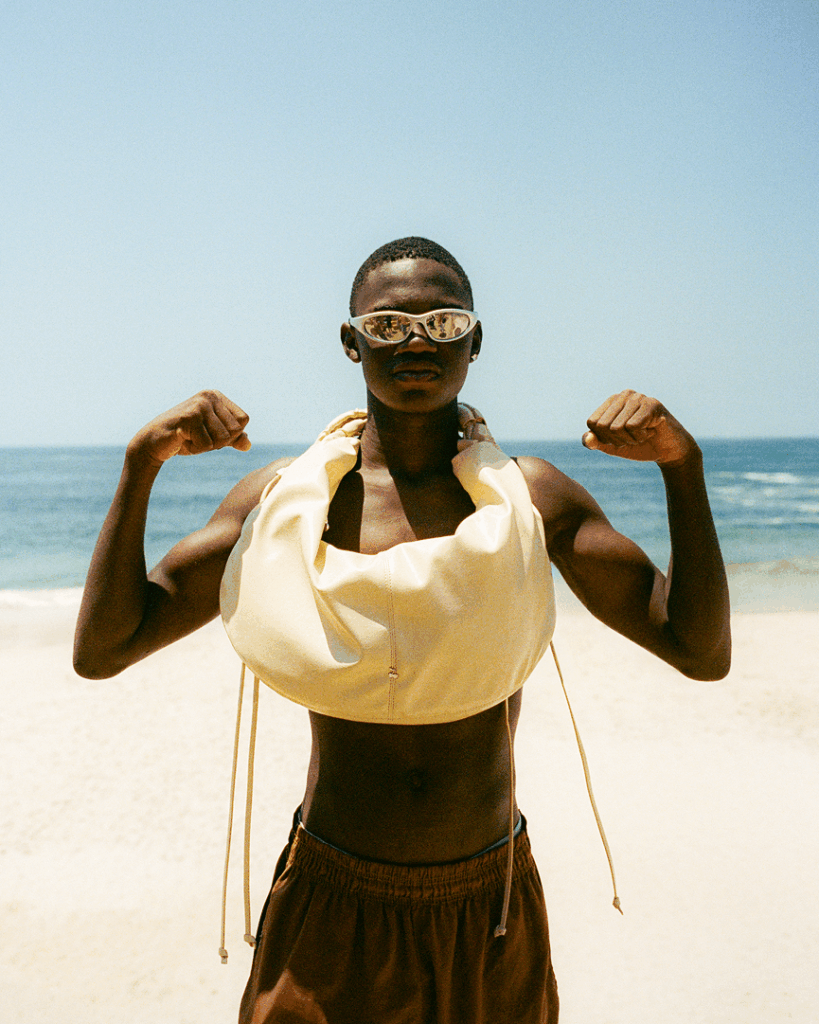
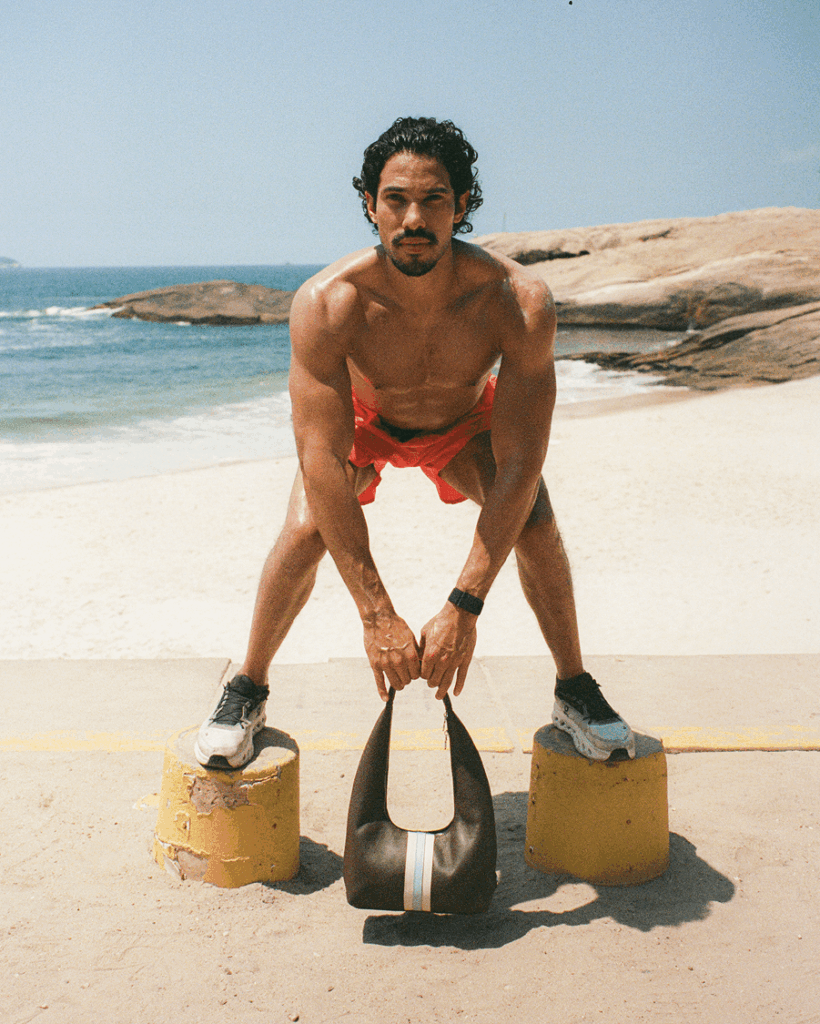


Nude Project began in Barcelona in 2018 as a brand that refused the usual script. Instead of chasing trends or corporate polish, co-founders Bruno Casanovas and Álex Benlloch set it out to make clothes for people who make things—artists, creators, and anyone with a point of view. Nude Project has come to represent a particular strain of contemporary creativity—one that values attitude and lived experience and treats fashion as both daily uniform and cultural statement.
Over the recent years, it has grown into an influential presence, known for consistent brand storytelling and a belief that a clothing label can also be a cultural space. Its stores, collaborations, and online world all circle back to the same idea: clothing as a shared language rather than just product. In our interview with Bruno Casanovas, co-founder and creative director of Nude Project, he looks back on how the project started, what authenticity actually requires for fashion entrepreneurs, and why staying curious may be the hardest and most necessary part of keeping the whole thing alive.
hube: You started Nude Project when you were just 19 years old. What were the personal impulses behind it? Was it frustration with conventional paths, or a sense of curiosity that led you to take that leap together rather than follow more traditional educational or career trajectories?
Bruno Casanovas: I think it was a mix of curiosity, naivety, and a real need to build something that felt ours. At that age, you don’t fully understand the scale of what you’re doing. We weren’t thinking in a very calculated way; we just felt there was space to create a brand that spoke our language and represented the way we saw culture, fashion, and community. It wasn’t necessarily a rejection of traditional paths, but we never felt very connected to the idea of following a fixed route just because that’s what you’re supposed to do. We wanted to experiment. We wanted to create something from scratch, with our own references, our own tone, and our own mistakes. That curiosity pushed us more than fear held us back.
h: How did your individual backgrounds shape the initial vision for the brand? In what ways did your different perspectives create a foundation that was stronger than what either of you could have built alone?
BC: Álex and I are very different, and that has always been one of the strongest parts of Nude Project. I come more from the creative side: storytelling, visuals, emotions, the cultural universe around the brand. Álex brings strategy, structure, focus, and a much clearer operational vision. From the beginning, that balance helped us turn ideas into something real. If it had only been one of us, the brand would probably have been less complete. Creativity without structure can stay as an idea, and structure without emotion can feel empty. Nude Project works because both parts meet in the middle. We challenge each other, but we also trust each other completely, and that creates a much stronger foundation.
h: Your slogan, “By Artists, For Artists,” positions Nude Project as more than a clothing brand—it feels like a creative platform. How do you define an artist in today’s cultural landscape, and what role does the brand play in nurturing that mindset?
BC: For us, being an artist is not only about painting, singing, or making something traditionally considered “art.” An artist is someone who has a vision and the courage to express it. It can be through music, fashion, content, photography, business, design, or the way they build a community. It’s more about mindset than discipline. “By Artists, For Artists” means we build from that perspective. We don’t want Nude Project to be just a brand that sells clothes. We want it to be a space where creative people feel represented, inspired, and supported. That shows up in our collaborations, our events, our content, our podcast, and even our stores. Everything is built around creativity, culture, and people who have something to say.
h: What philosophical or aesthetic principles guide your design process—from silhouettes and minimalism to the emotional response you hope to evoke through each collection?
BC: We always try to design pieces that feel effortless but still have personality. Nude Project is not about overcomplicating things. It’s about creating clothes that people can live in, travel in, go out in, create in. There is a balance between comfort, attitude, and storytelling. Aesthetically, we like pieces that feel timeless but connected to the moment. Silhouettes, fabrics, graphics, and details all need to make sense inside the world we are building. But beyond the product, the most important thing is the feeling. We want people to feel free, confident, creative, and part of something bigger when they wear Nude Project.
h: Collaborations seem central to Nude Project’s identity, from artists to cultural figures. What makes a collaboration meaningful to you, and how do these partnerships reflect broader ideas around community, authorship, and cultural exchange?
BC: A collaboration only makes sense when it feels organic. We don’t like collaborations that are just two logos next to each other. There has to be a shared vision, a cultural connection, or a story that feels real for both sides. The best collaborations allow both worlds to grow. They bring different communities together, create new references, and open conversations. For us, it’s not about using someone else’s audience, but about building something that both communities can feel part of. That’s why we care so much about authenticity. If the collaboration doesn’t feel honest, people notice immediately.


h: As a Spanish brand with a growing global audience, how do you navigate the balance between cultural specificity and universal appeal? Have your Barcelona roots shaped the brand’s attitude in ways that translate—or sometimes don’t—to markets such as the US and beyond?
BC: Barcelona has definitely shaped the way we see the brand. There is something about the city, the Mediterranean lifestyle, the mix of creativity, street culture, design, music, and freedom that is very present in Nude Project. Even as we grow internationally, that attitude stays with us. At the same time, we don’t want to force the brand to feel global in a generic way. We believe the more honest you are about where you come from, the more universal it can become. People in the US or other markets may not have the same references, but they understand authenticity, creativity, and community. Those values travel well. The challenge is to adapt without losing the soul.
h: Your Barcelona flagship feels less like a store and more like a physical extension of Nude Project’s universe. How did you approach translating the brand’s identity into a spatial experience? What role does the store play in your ecosystem today—is it primarily a retail space, a cultural hub, or something in between?
BC: We never wanted our stores to feel like traditional retail spaces. For us, a store should be a place where people can enter the Nude Project universe physically. Online, you can communicate through content, but in a store people can feel the materials, the atmosphere, the music, the architecture, and the energy of the brand. The Barcelona flagship, La Masia, is a good example of that. It is inspired by an art gallery my grandfather used to have, and we wanted to bring that emotional and cultural layer into the space. We also work with art exhibitions and curated experiences, so people don’t come only to buy clothes, but to discover something. Today, the store is retail, but it is also a cultural hub and a meeting point for the community. We want people to think: “There is a Nude Project store in this city, we have to visit it.” That is the goal: to create spaces that people remember, not just places where transactions happen.
h: What have been the most significant challenges you’ve faced—whether creative blocks, external skepticism, internal tensions, or ethical dilemmas—and how have they influenced your leadership styles and your partnership?
BC: One of the biggest challenges has been growing without losing what made Nude Project special in the first place. In the beginning, everything was very instinctive. We were young, we had limited resources, and we were building from a very personal place. As the brand grew, the challenge became learning how to scale that energy without turning it into something too corporate or disconnected from the community. Another big challenge has been staying relevant in a digital landscape that changes constantly. Algorithms, formats, trends, and consumer expectations move extremely fast, so you have to keep evolving without losing your identity. I think those challenges have made us more conscious leaders.
We have learned to listen more, to trust the team, and to understand that leadership is not about having all the answers, but about building the right environment for people to do their best work. In terms of our partnership, it has made Álex and me stronger. We share the same vision, but we bring different things to the table, and that balance has been essential.


h: How do you see clothing evolving as a cultural force? Does fashion still hold subversive or democratizing potential, or has it largely been absorbed into the machinery of luxury and consumer culture?
BC: I think fashion has always been both things at the same time, subversive and commercial, and the tension between those two is actually what makes it interesting. Yes, a lot has been absorbed. You see brands that started with a real point of view get swallowed by the machine and lose everything that made them matter. But at the same time, the barriers to creating something real have never been lower. Two kids with 300 euros can build a brand that reaches millions of people. That’s genuinely new. So I think the democratizing potential is still there—it just depends on who’s doing it and why.
h: If you could invite 3 people—dead or alive—to dinner, knowing they would all attend, who would they be?
BC: I would invite Mac Miller, Steve Jobs, and Buddha. I think it would be a very interesting mix: music, creativity, spirituality, and vision all at the same table. And maybe Michael Jackson too, if I could sneak in a fourth guest.
h: Looking ahead, what excites you most about the future of Nude Project?
BC: Honestly, the things we haven’t figured out yet. We’ve built something real—the community, the stores, the collaborations—but I feel like we’re still at the beginning of what Nude Project can be culturally. The part that excites me most isn’t a specific project or expansion. It’s the curiosity. Waking up and not knowing exactly what the next chapter looks like. That feeling hasn’t gone away, and as long as it’s there, I think we’re doing something right.


All images courtesy of NUDE PROJECT
Special thanks to ROCPR
