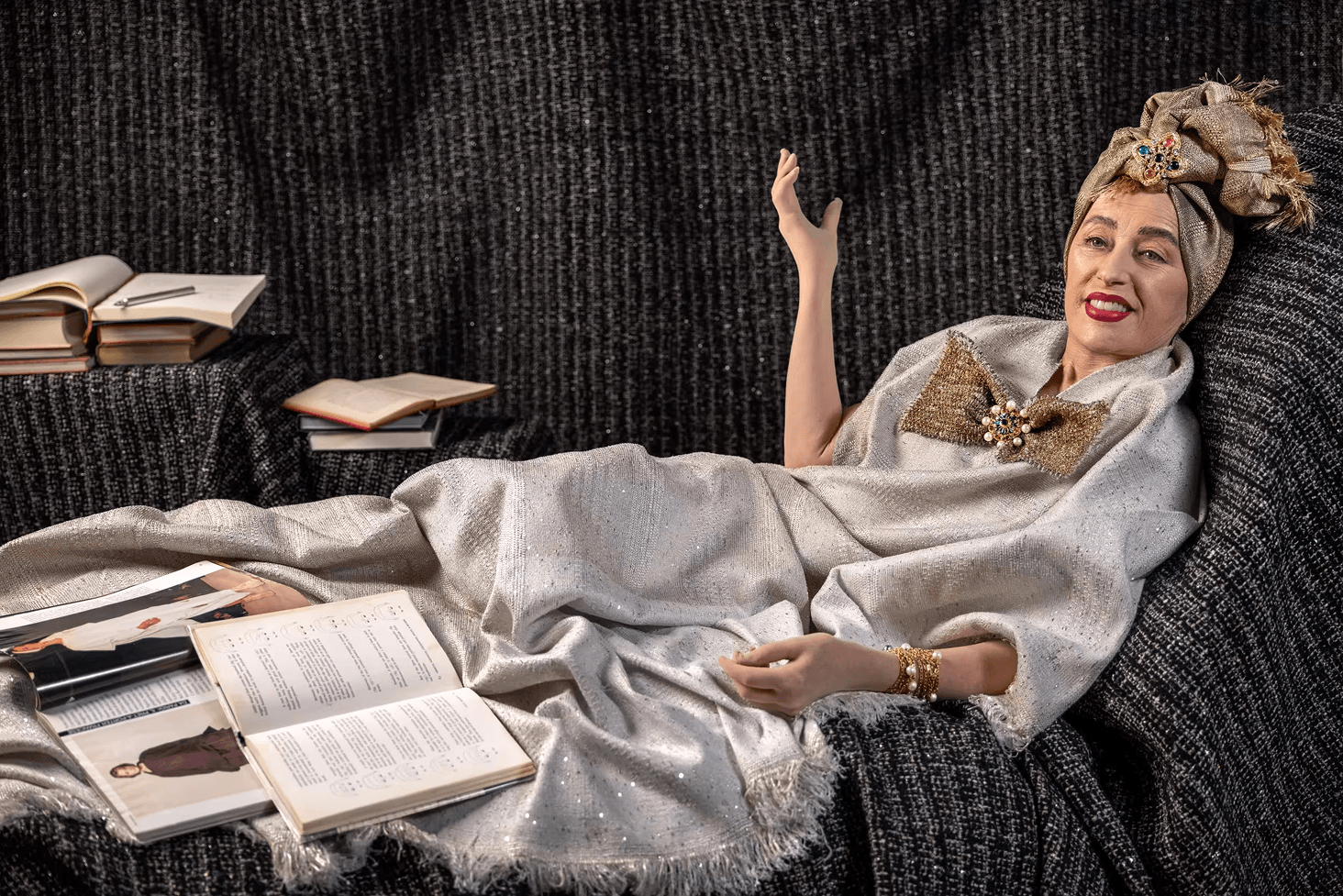
This autumn, Cindy Sherman debuts her new Fabric Matrons series at Hauser & Wirth London, adding a striking chapter to her photographic practice of constructed identities. Among the season’s notable London exhibitions, the show gathers staged portraits where fabric, makeup, wigs and meticulously composed settings become tools for examining beauty, aging and the uneasy ways women are seen.
Running from October 13th to December 23rd, 2026, the exhibition introduces fictional characters who seem to dissolve into their surroundings. Draped textiles serve as both costume and backdrop, blurring the line between concealment and display.
Where fabric becomes a second skin
For more than five decades, Sherman has used herself as her own model, inhabiting invented personas that expose familiar ideals of femininity. Fabric Matrons extends this practice towards the experience of aging, allowing anxieties surrounding beauty, time and appearance to surface more openly.
Working close to the camera, Sherman became increasingly conscious of aging and the unequal expectations placed on women and men around youth and beauty. Some faces appear almost airbrushed, while others accentuate wrinkles and signs of age, setting the desire to resist time against the possibility of accepting the face as evidence of a life lived.
Cindy Sherman work between concealment and visibility
Sherman’s elaborate fabrics become a visual language for recognition and disguise. Some protagonists wear gloves that give their skin an unnaturally flawless appearance, suggesting an impulse to conceal the signs that might reveal an individual self.
Elsewhere, fabric almost vanishes into the background, allowing figures to merge with their surroundings. The resulting images ask who gets to be seen and who is permitted to disappear.
Each photograph is a fictional portrait in its own right, yet the anxieties within them remain recognisable. By using disguises, poses and elaborate surfaces, Sherman encourages viewers to consider their own relationships with identity, beauty and visibility.
Fashion, artifice and the Chanel archives
The series continues Sherman’s long engagement with fashion imagery, with several works incorporating fabrics and jewellery from the Chanel archives. The connection follows her Ominous Landscapes series (2010–2012), where archival Chanel garments and accessories became part of her constructed characters.
Here, fashion takes on a more theatrical role. Elaborate textiles do more than signal luxury: they construct personalities, obscure bodies and complicate the boundary between what is revealed and what remains hidden.
Fabric Matrons treats identity as something continually shaped through clothing, faces, gestures, expectations and the gaze of others. Sherman’s fictional women may be carefully fabricated, but their questions about beauty, aging and the desire to remain visible feel unmistakably real.