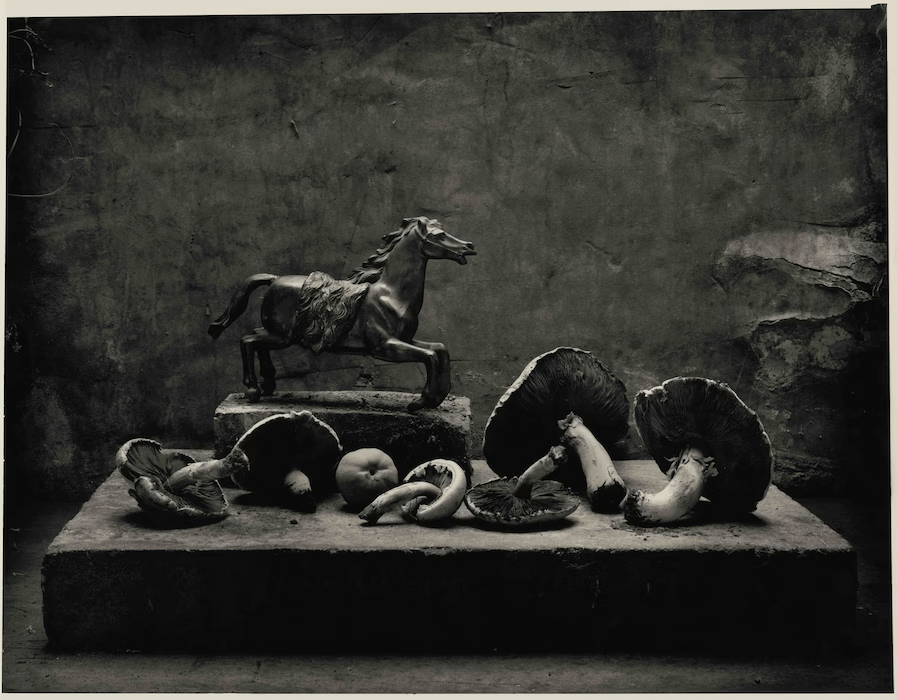
As Sir Don McCullin turns 90, the Holburne Museum in Bath marks the milestone with Don McCullin: Broken Beauty, a major photography exhibition on view from January 30th to May 4th, 2026. Bringing together seven decades of work, the exhibition traces the British photographer’s unflinching documentation of conflict alongside quieter, contemplative images — most notably a new body of work focused on Roman sculptures, shown in the UK for the first time.
A photography exhibition showcasing life through the lens
Few photographers have shaped visual history as profoundly as Don McCullin. Renowned for his stark black-and-white images, he documented war zones and humanitarian crises from Vietnam and Biafra to Northern Ireland and Cyprus, as well as the social landscape of post-war Britain. His photographs of shell-shocked soldiers, starving children, and urban poverty remain among the most enduring images of the 20th century.
Broken Beauty presents many of these iconic works alongside lesser-known photographs, revealing the breadth of McCullin’s practice. From early images such as The Guvnors (1958), taken in North London, to his powerful reportage for The Observer and The Sunday Times, the exhibition underscores his instinctive composition and unwavering empathy.
Yet this photography exhibition is not solely a retrospective of conflict. Interwoven with scenes of violence and suffering are meditative still-lifes and brooding landscapes from Somerset, where McCullin now lives. These quieter works reveal another dimension of his vision — one defined not by confrontation but by reflection.
Roman sculptures: a new chapter
At the heart of the exhibition lies a striking series of photographs of Roman sculptures, captured in museums around the world and never before exhibited in the UK. These close, intimate studies of ancient statues mark a contemplative turn in McCullin’s later career.
The broken marble figures — eroded torsos, fragmented limbs, timeworn faces — offer what McCullin himself has described as an antidote to the harsh realities of the front line. In the stillness of museum spaces, he finds solace in the “mouldering stone” and the silent endurance of classical forms. The sculptures, survivors of upheaval and decay, stand as quiet counterpoints to the human devastation he spent decades documenting.
Director of the Holburne, Chris Stephens, notes that the haunting beauty of these works offers “a contemporary view of ancient art” that feels particularly resonant within the museum’s historic setting. The Roman sculptures, with their themes of heroism and fragmentation, echo McCullin’s lifelong exploration of resilience and vulnerability.
‘Broken Beauty’: humanity at the core
Organised loosely chronologically, Broken Beauty threads together landscapes, still-lifes, war reportage, and the Roman sculpture studies to reveal continuities across McCullin’s immense body of work. Whether photographing a battered imperial bust or a soldier frozen in shock, his images share a profound compassion and respect for their subjects.
Now on view at the Holburne Museum in Bath until May 4th, 2026, this Photography exhibition is both a celebration of Don McCullin’s extraordinary career and a meditation on endurance — in humanity, in art, and in history itself.
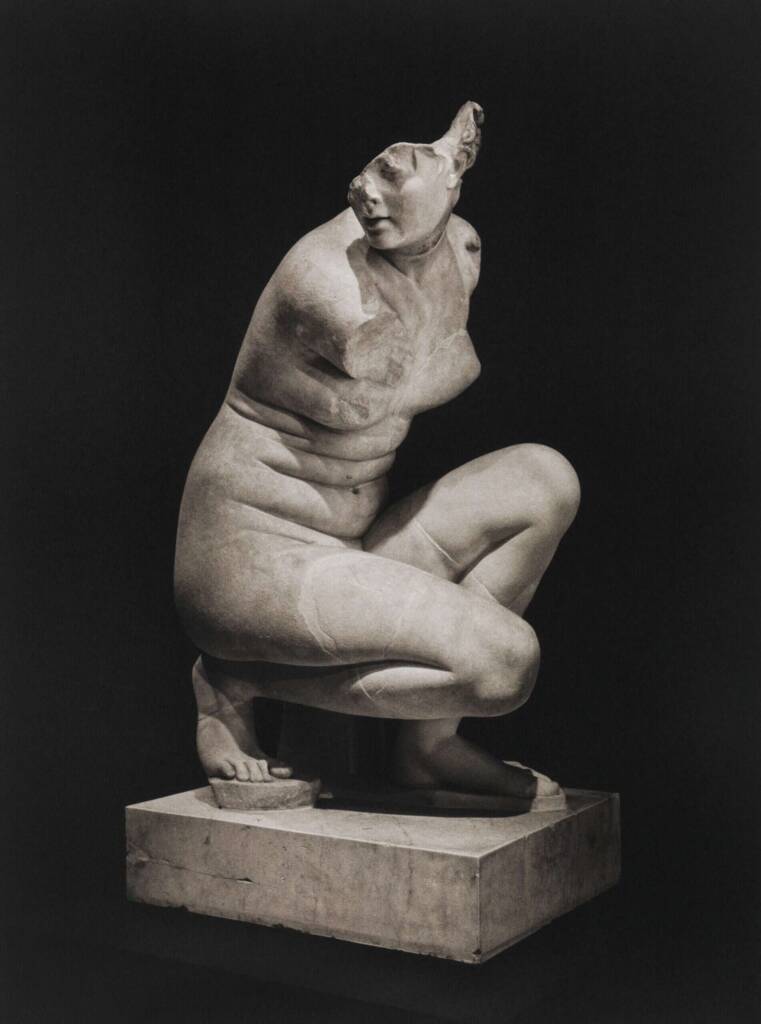
Venus, Palazzo Massimo, Rome 2022
Courtesy of DON MCCULLIN and HAUSER & WIRTH
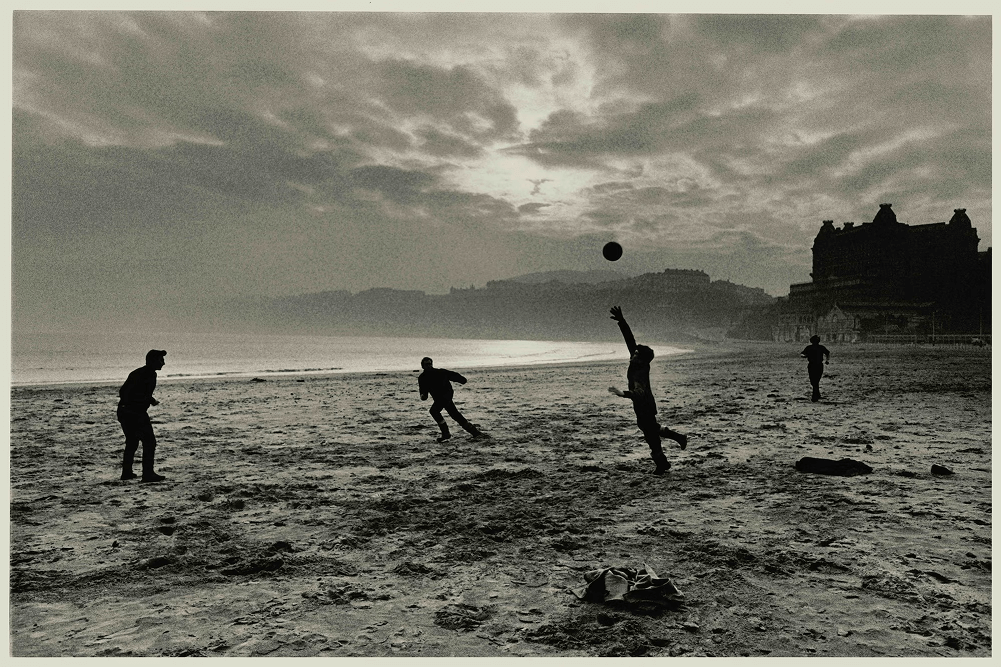
Fishermen, Scarborough Beach, 1965
Courtesy of DON MCCULLIN and HAUSER & WIRTH
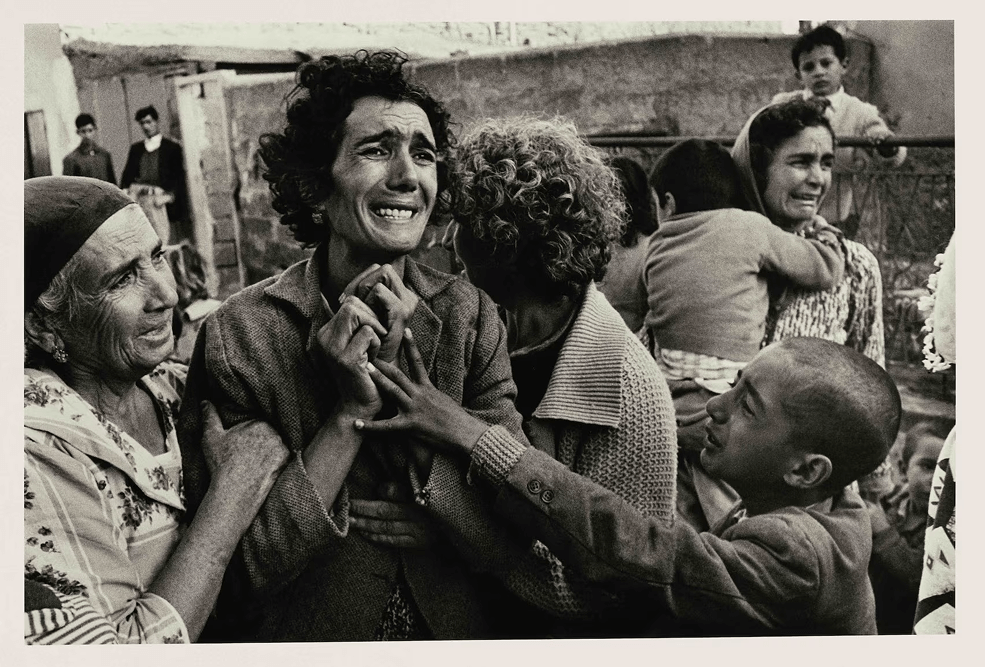
A Turkish woman mourning the death of her husband, Cyprus, 1964
Courtesy of DON MCCULLIN and HAUSER & WIRTH