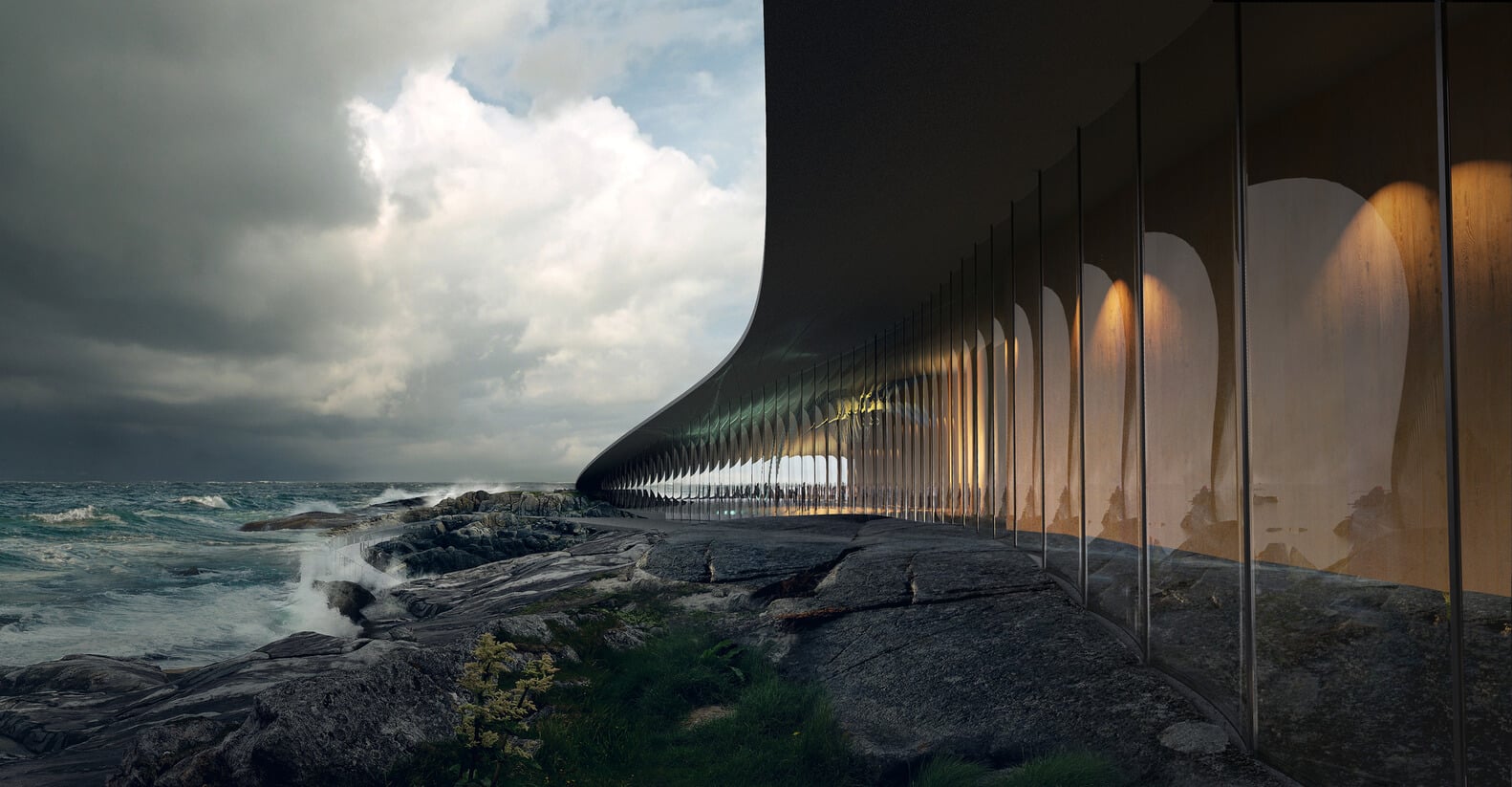
Opening in June 2027, The Whale in Andenes, northern Norway, will merge architecture, science and art in a cultural destination shaped by the Arctic landscape and the whales migrating through the Norwegian Sea. Designed by Danish architect Dorte Mandrup, the museum takes its cue from one of the region’s most remarkable natural phenomena.
A Whale museum shaped by the Arctic landscape
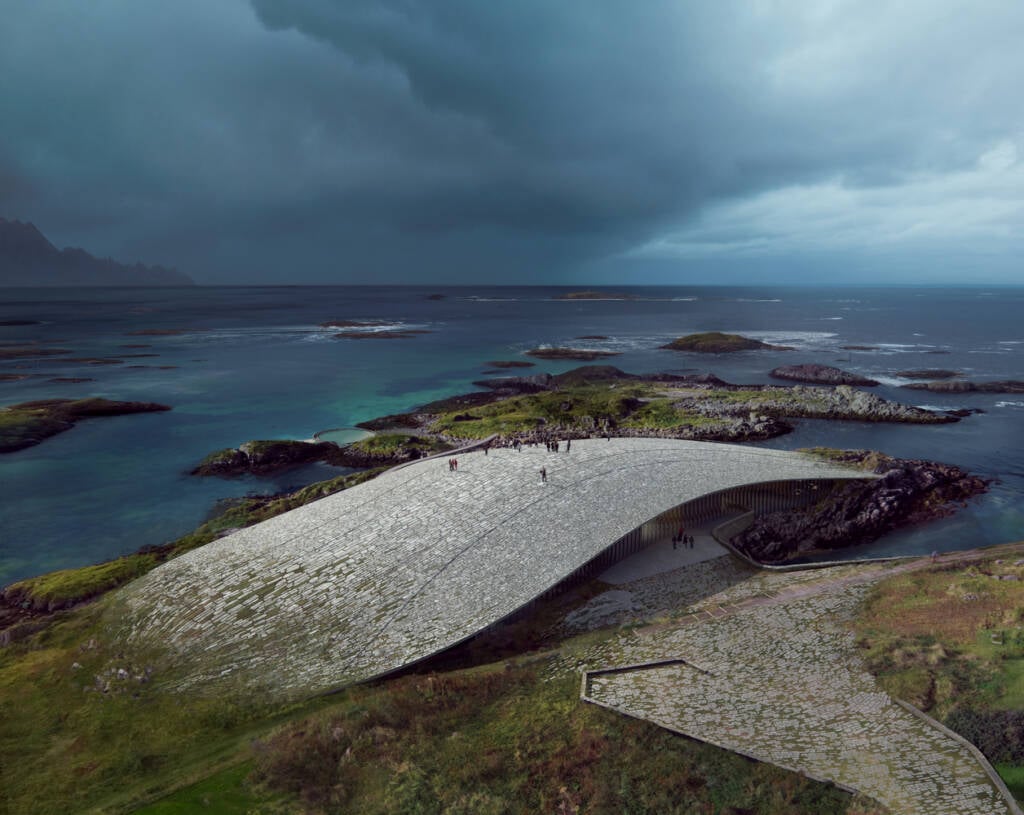
Located around 300 kilometres north of the Arctic Circle on Andøya, The Whale will rise from the rocky coast of Andenes, a renowned destination for whale watching. Selected through an international competition in 2019, Dorte Mandrup’s design treats the building as an extension of the terrain.
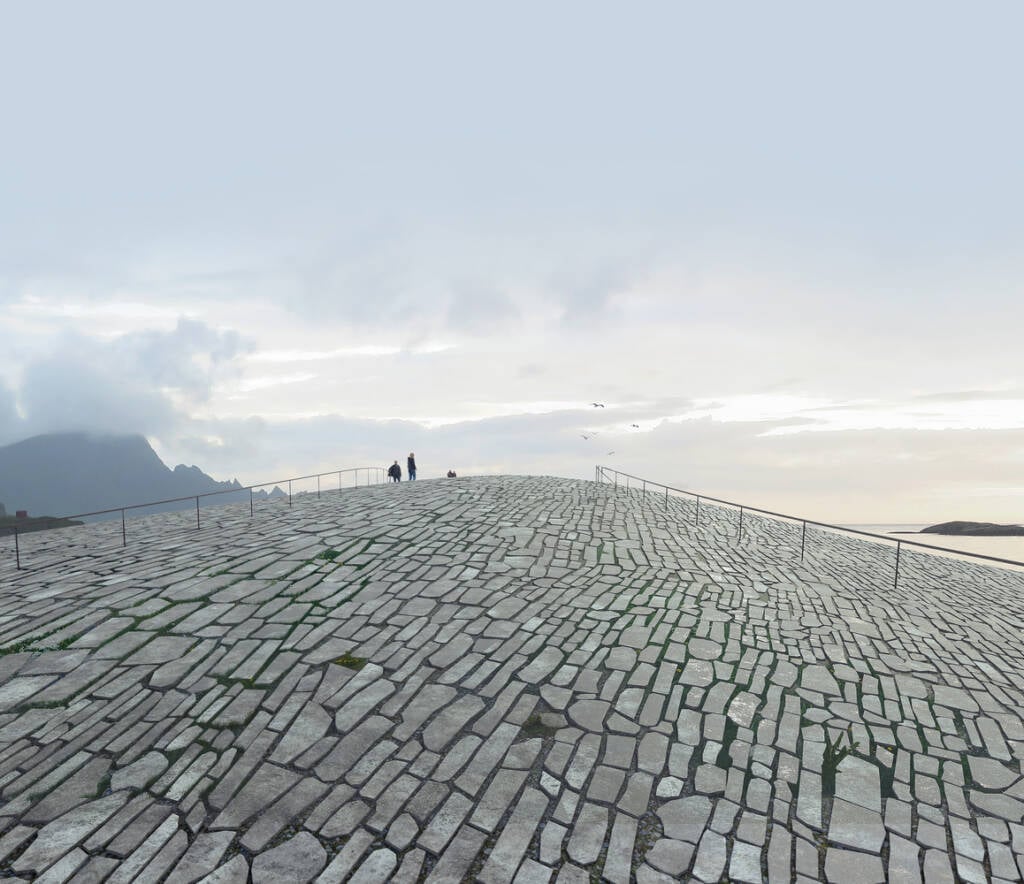
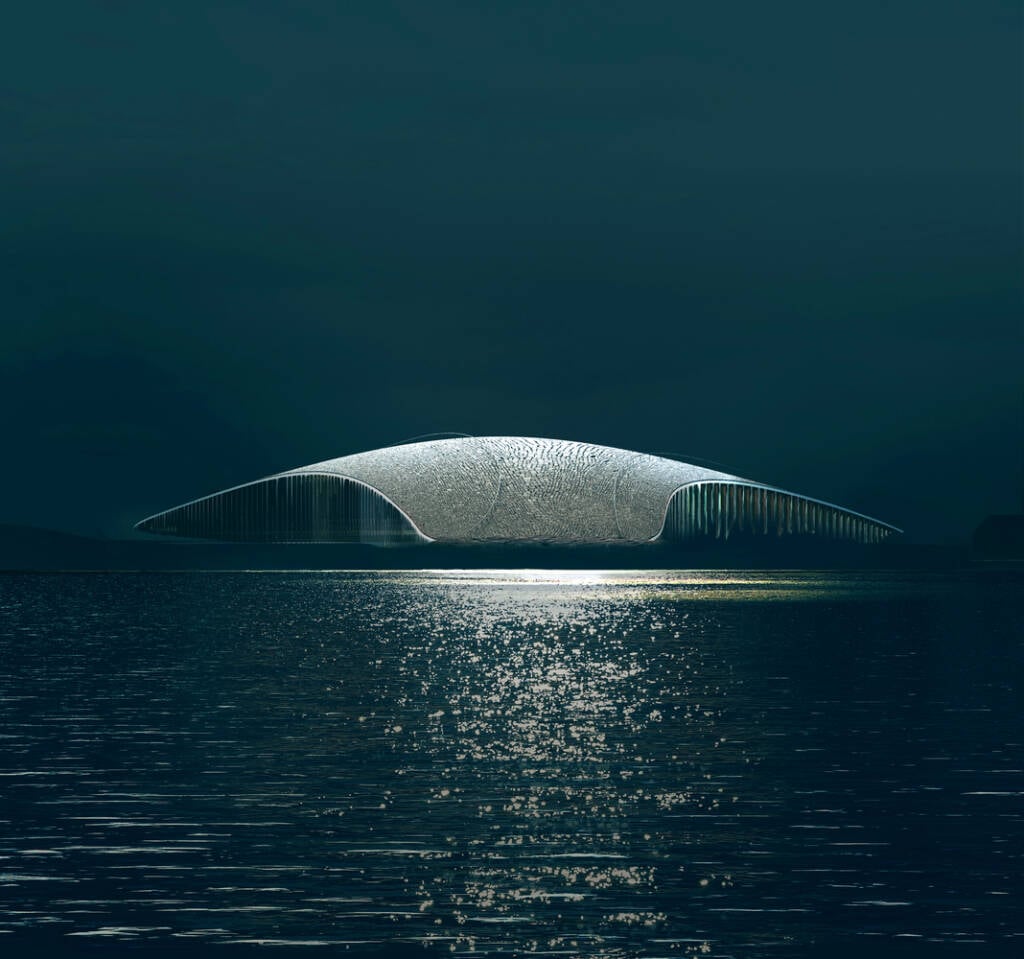
The architecture traces the contours of the site, lifting gently like a hill before opening towards the sea. Its signature parabolic roof recalls a whale diving beneath the water, while locally sourced, unworked stone will help the structure merge with its surroundings.
This connection between architecture and landscape is also structural. The curved concrete shell meets the ground at three points, distributing its weight efficiently while creating a vast column-free interior. Its aerodynamic shape reduces snow accumulation and helps limit material and energy use.
A roof that becomes a viewpoint
The roof will form an accessible public landscape, leading visitors upwards towards views of the Norwegian Sea and surrounding archipelago. From here, the museum becomes an observatory, offering glimpses of the midnight sun, northern lights and passing wildlife.
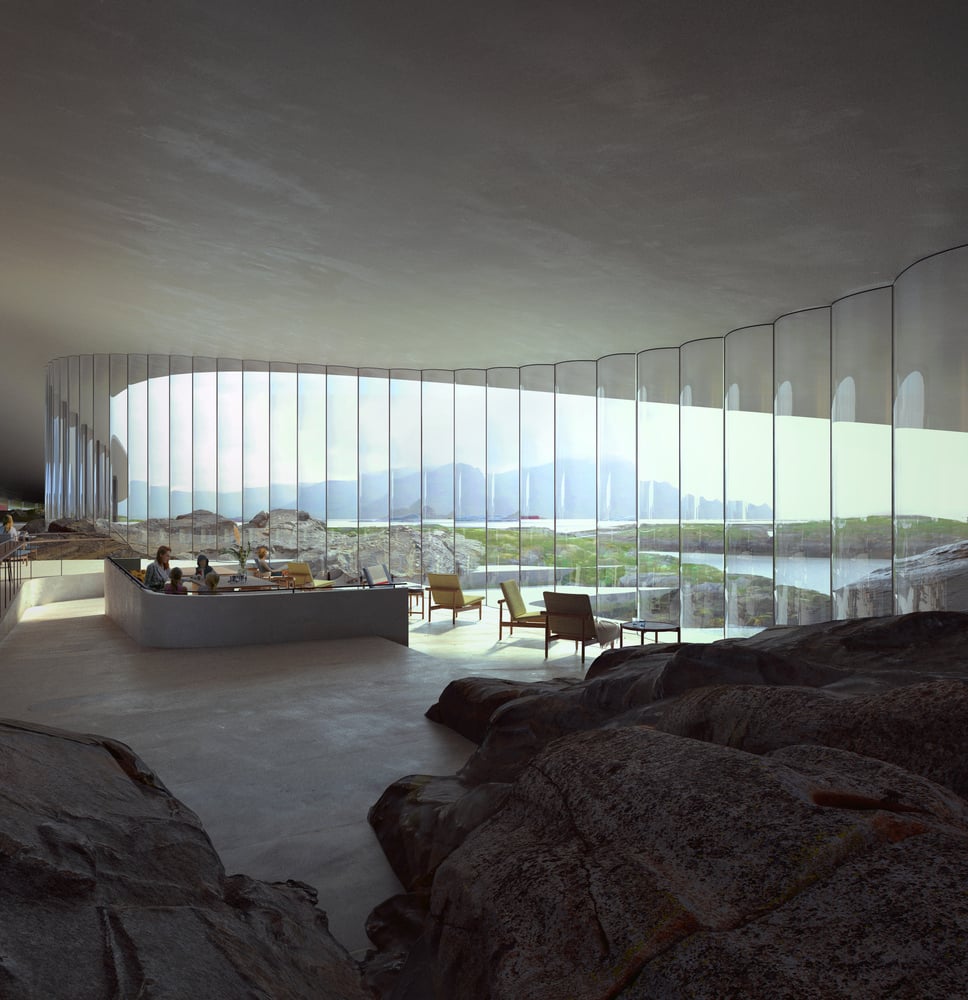
Large glazed openings carry the landscape into the exhibition spaces, framing mountains and water, while rocks from the surrounding terrain enter the building at several points, softening the boundary between architecture and nature.
Dorte Mandrup’s encounter with whales
The interior will combine art and science in a programme devoted to whales and the fragile ecosystems they inhabit. Developed with Ralph Appelbaum Associates, the exhibitions will examine relationships between humans and marine life, supported by offices, a café and store.
The museum moves between different realms—above and below water, human and animal, culture and nature—encouraging visitors to consider whales beyond their role as subjects of scientific study, through their movements, habitats and vast migrations.
Paths, platforms and viewpoints will extend into the surrounding landscape. A tide pool, campfire and stepping stones will draw visitors towards the coastline, making the Arctic terrain an integral part of the museum experience.
From whale watching to marine conservation
Beyond its architectural ambitions, The Whale aims to strengthen Andenes as a cultural and environmental destination. By linking whale watching, education and contemporary architecture, the project seeks to deepen public understanding of northern Norway’s marine ecosystems.
The Whale by DORTE MANDRUP
Images courtesy of MIR