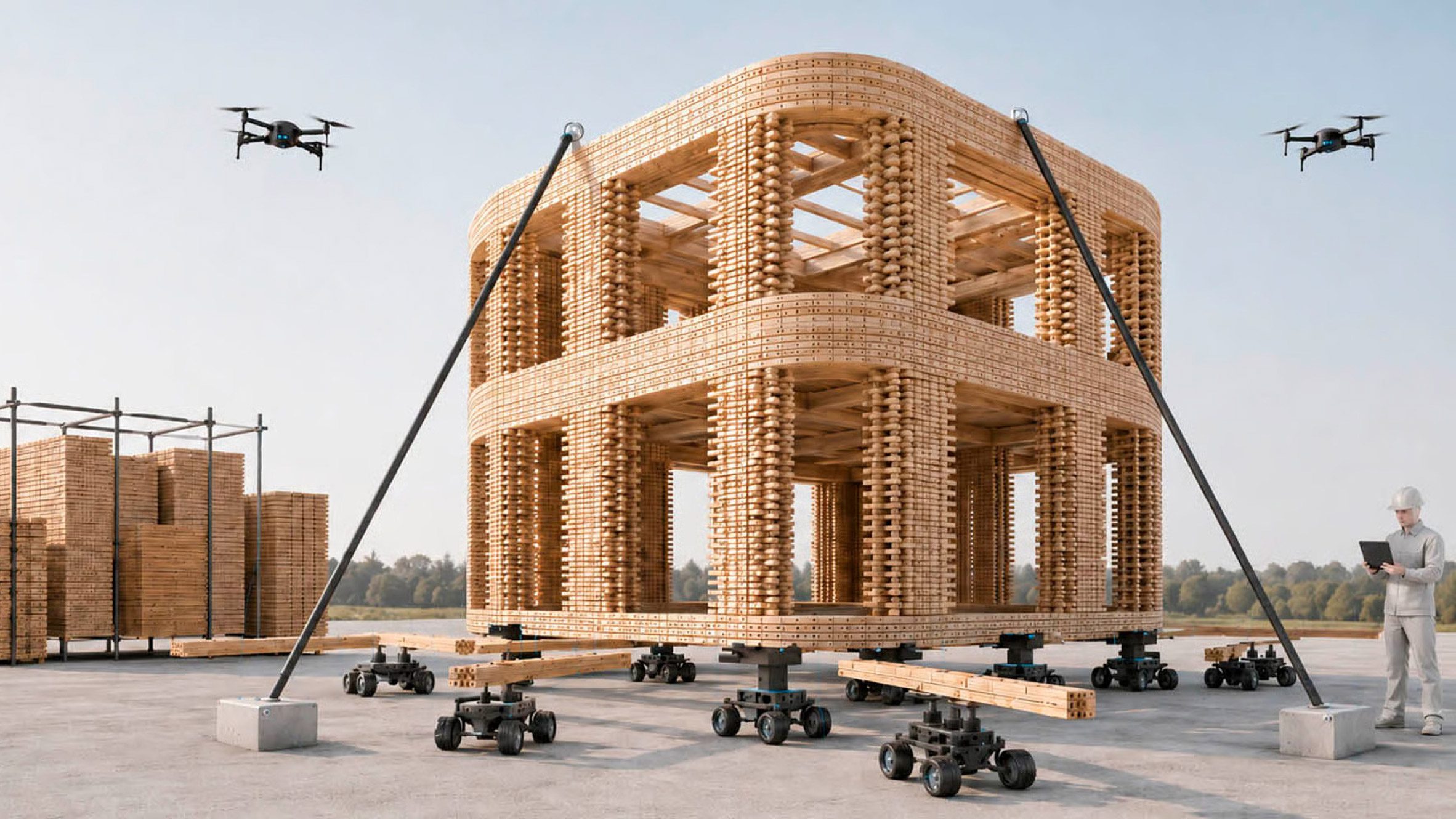
British architecture studio Foster + Partners is rethinking the building site with SWIFT-Build, an experimental system combining autonomous robots, drones and artificial intelligence. Pairing modular timber with robotic assembly, the project proposes a more flexible, efficient and circular model of sustainable construction.
SWIFT-Build: building timber structures from the top down
Developed with an international academic consortium, SWIFT-Build — short for Swarm-based Inverted Fabrication for Timber Buildings — has received a €4 million, three-year grant from the European Innovation Council’s Pathfinder programme.
The system reverses the conventional construction sequence: robots assemble the uppermost floor at ground level, lift it into position, then build the next layer beneath it. This process repeats floor by floor, allowing machines to work at ground level while reducing the risks and complexity of construction at height.
A coordinated fleet of robotic assemblers and lifting units handles the build, while drones monitor progress from above and flag potential problems in real time.
When robots work as a swarm
The machines communicate continuously, sharing information and adjusting their actions with limited human intervention. AI tools are designed to help the system adapt to different scales and applications, pointing towards a more flexible way of assembling buildings from modular components.
Timber is central to SWIFT-Build’s environmental ambitions. Components can be modified, dismantled and recovered over time, giving structures a longer material life instead of locking them into permanent assemblies.
The research will culminate in a full-scale timber pavilion constructed by an autonomous robotic swarm. Designed for disassembly, the structure can be taken apart mechanically, with its components recovered for future use.