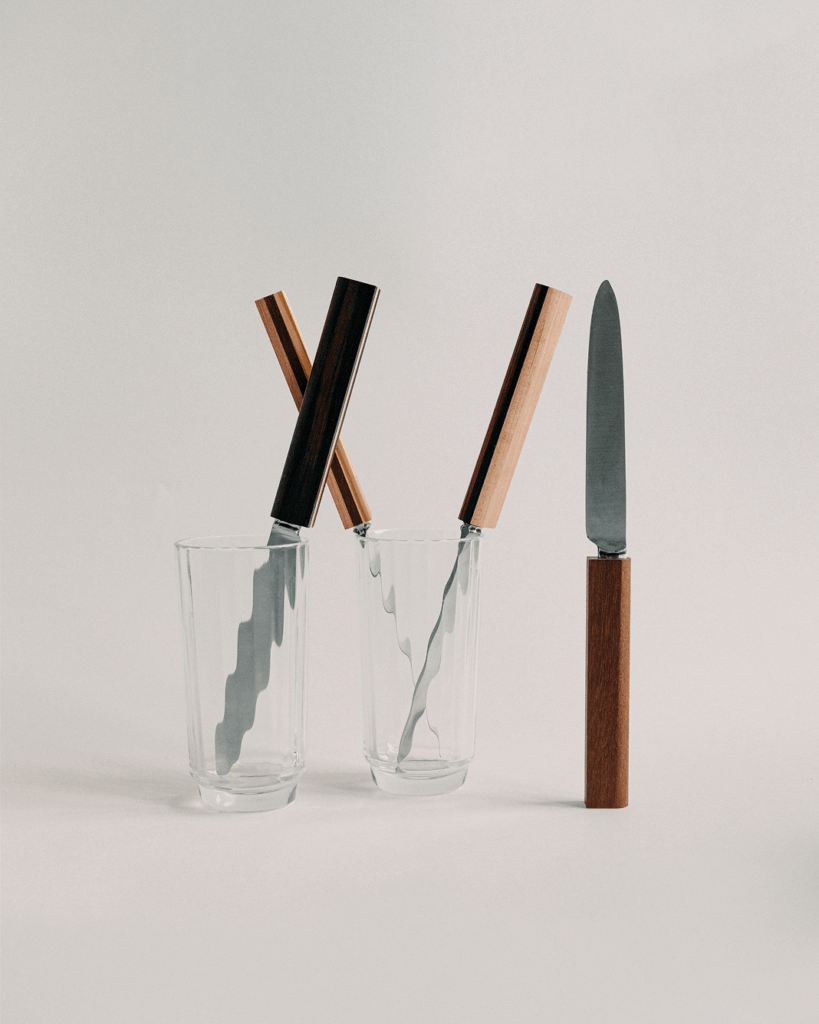
Crisol.Knives
Photography by CLEMENTE VERGARA, CD ELISA DI DATO, 2025
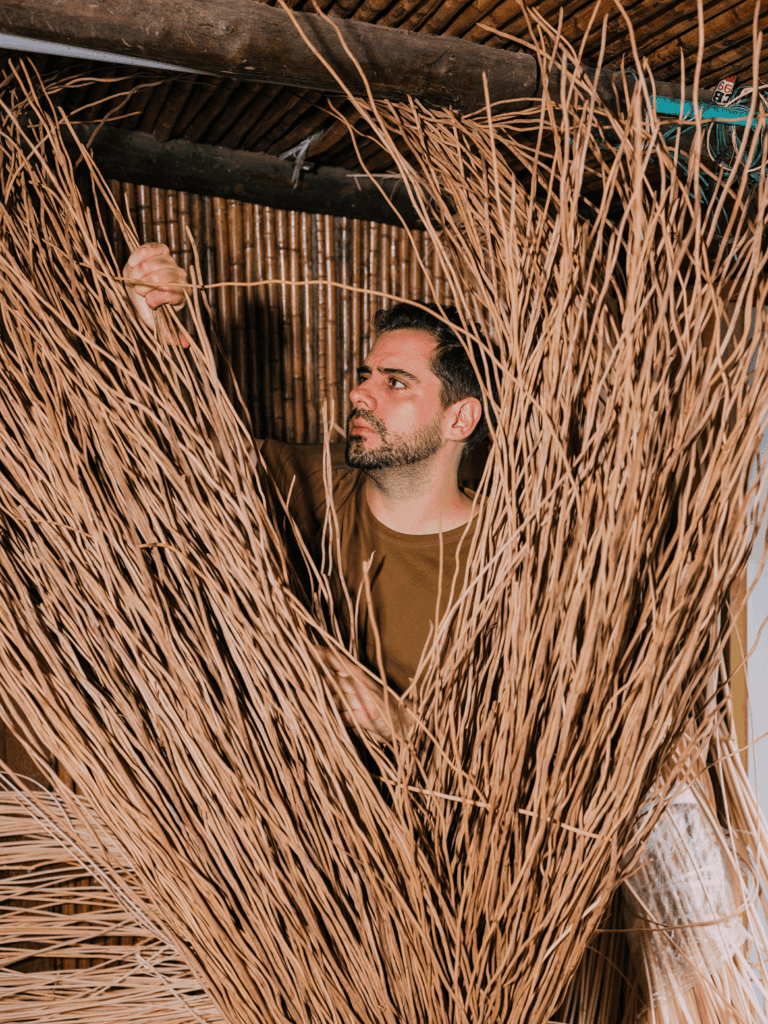
Francisco Jaramillo is interested in what an object can say before it is asked what it should look like. Trained as a product design engineer, he became increasingly restless with the human-centred logic that shaped his education, questioning why design so often begins and ends with the human. That question eventually led to Fango, the studio he founded around a simple but demanding premise: every object should have a reason to exist beyond its form.
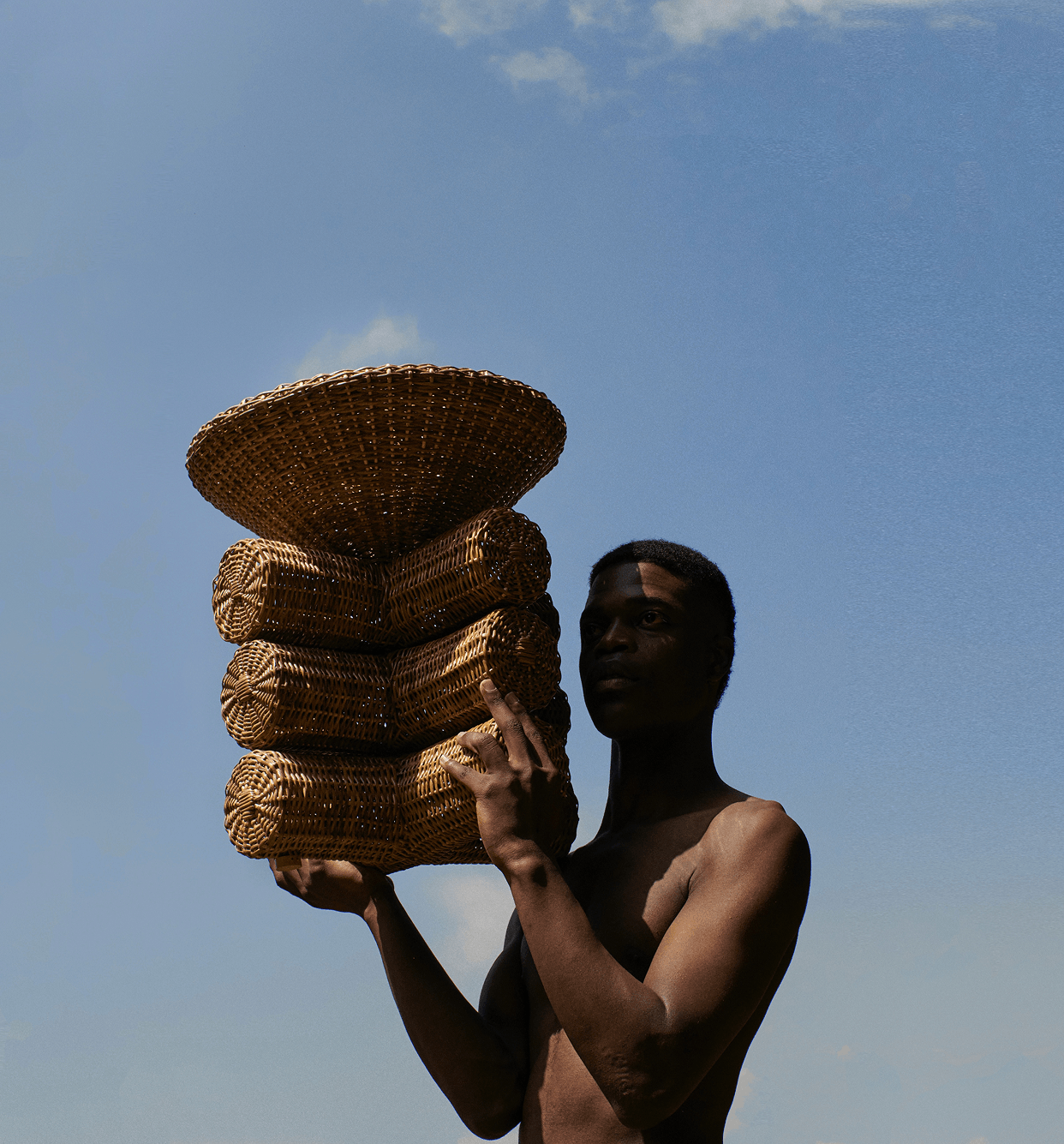
Working between Colombia and Barcelona, Jaramillo treats design as a form of research into place, material, memory, and the systems that connect them. His furniture grows out of Colombian traditions of woven making, developed in close dialogue with artisans and pushed into unfamiliar forms. Materials are never neutral in his practice: yaré carries the knowledge of Indigenous communities and the cycles of the Amazon; weaving becomes a way of testing how far a tradition can move without losing its meaning.
Distance has added another layer to this investigation. Since moving to Barcelona, Jaramillo has begun exploring blown glass through the experience of migration, reflecting on the Venezuelan communities he encountered in Colombia and on his own, more privileged experience of leaving one place for another. For him, identity is not something to recover in its purest form, but something that accumulates—through movement, history, colonisation, exchange, and time.
What emerges from Fango is therefore less a fixed visual language than a way of looking: at where materials come from, at whose hands transform them, at the histories embedded in objects, and at what design might reveal when it stops treating context as background. We spoke with Jaramillo about designing with purpose, challenging inherited techniques, the politics of materials, and what happens to a practice when its own geography begins to shift.
hube: What first drew you from design engineering toward furniture specifically—toward pieces that sit in rooms, that invite the body, that gather presence over time?
Francisco Jaramillo: There has never really been a shift toward furniture pieces specifically. My approach to design has always tried not to be defined by a particular type of object. It always depends on the message that the piece needs to communicate, and from there, the object takes shape and purpose.
In the case of the Ibuju collection, it ultimately became a group of furniture pieces because the idea was to create a parallel with furniture traditionally produced from large logs or trunks of wood.