Alexander Calder’s postwar years in France marked a period of artistic freedom, when the rhythms of the Provençal landscape inspired experiments across sculpture, ink and gouache. Calder: François Premier, at Hauser & Wirth Paris from October 19th to December 19th, 2026, revisits this fertile chapter through monumental kinetic sculptures and vivid works on paper created in 1953–1954.
The exhibition traces Calder’s pursuit of new forms, revealing how his fascination with movement, colour and equilibrium extended beyond his celebrated mobiles into a more intimate, gestural language of painting.
A French interlude of creative freedom
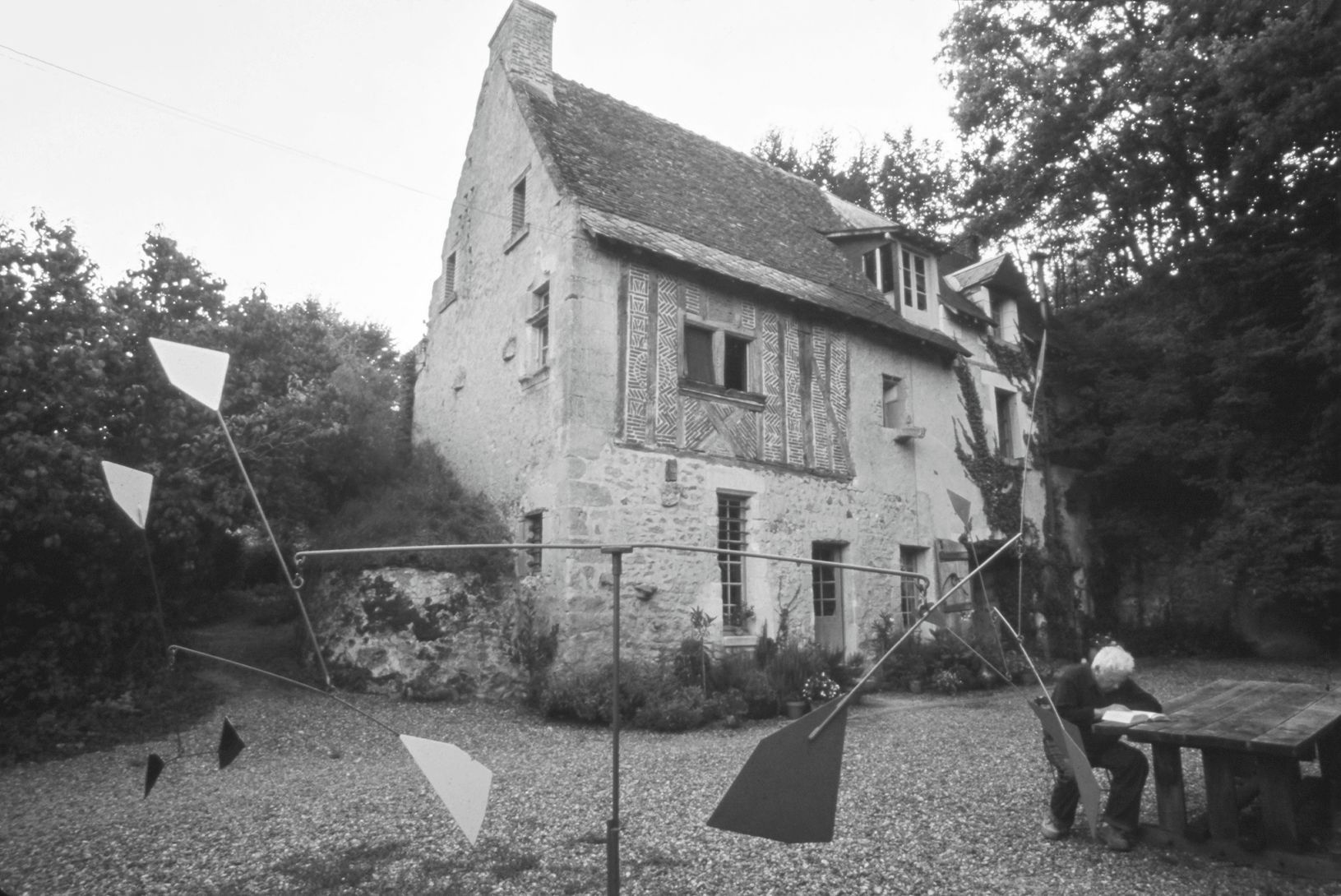
In spring 1953, Calder returned to France after two decades away, settling with his wife, Louisa, at Mas des Roches near Aix-en-Provence. The modest rural house, without running water or electricity, offered a secluded setting for concentrated work. The couple later acquired François Premier, a seventeenth-century stone property in Saché, deepening their ties to a country they regarded as a second home.
Immersed in the Provençal landscape, Calder developed large-scale sculptures alongside an extensive body of ink and gouache paintings. The work culminated in two Paris exhibitions in 1954, at Galerie des Cahiers d’Art and Galerie Maeght. More than seventy years later, Hauser & Wirth revisits this chapter in the first major exhibition devoted to Calder’s postwar years in France. Its title refers to the Saché property as well as the Paris street where the gallery is located.
Alexander Calder mobiles
Two major sculptures anchor the exhibition, revealing contrasting approaches to movement, structure and balance. One returns to public view for the first time in 72 years; the other makes its European debut seven decades after its creation.
Les Granettes (1953)
Developed in a local blacksmith’s workshop during Calder’s stay in Provence, Les Granettes departs from his usual process of preparing a model before construction. Calder chalked shapes directly onto steel plates, then cut and welded them with little room for error.
Suspended polygons in red, white and black give the monumental standing mobile an unexpected grace. Once installed in the courtyard of François Premier, the sculpture now anchors the ground floor of Hauser & Wirth Paris, marking its first public exhibition since its Paris debut in 1954.
The Putney Mobile (1954)
Above Les Granettes, The Putney Mobile offers a lighter counterpoint. Interlocking wires and white forms create an intricate structure whose balance depends on the relationship between each element. Its European public debut offers a rare opportunity to encounter Calder’s kinetic sculpture in person.
The two works reveal the breadth of his practice: one asserts the physical weight of steel, while the other traces delicate lines through open space. Their interplay makes rhythm, motion and equilibrium tangible.
Ink, gouache and the Provençal landscape
Painted in a converted carriage shed at Mas des Roches, Calder’s works on paper echo the rhythms of his sculptures through bold gestures, vivid colour and abstraction. The Black Star (1953) glows with saturated hues, while Untitled evokes the Provençal landscape and Portrait de famille depicts crosshatched monochromatic figures.
“I seemed to develop something new,” Calder recalled of his intense focus on gouache, capturing a period of restless experimentation.
On view at Hauser & Wirth Paris from October 19th to December 19th, 2026, the exhibition opens with a conversation between Alexander S. C. Rower, Calder’s grandson and president of the Calder Foundation, and curator Hans Ulrich Obrist on October 19th, from 5 to 6 pm. The opening follows from 6 to 8 pm.
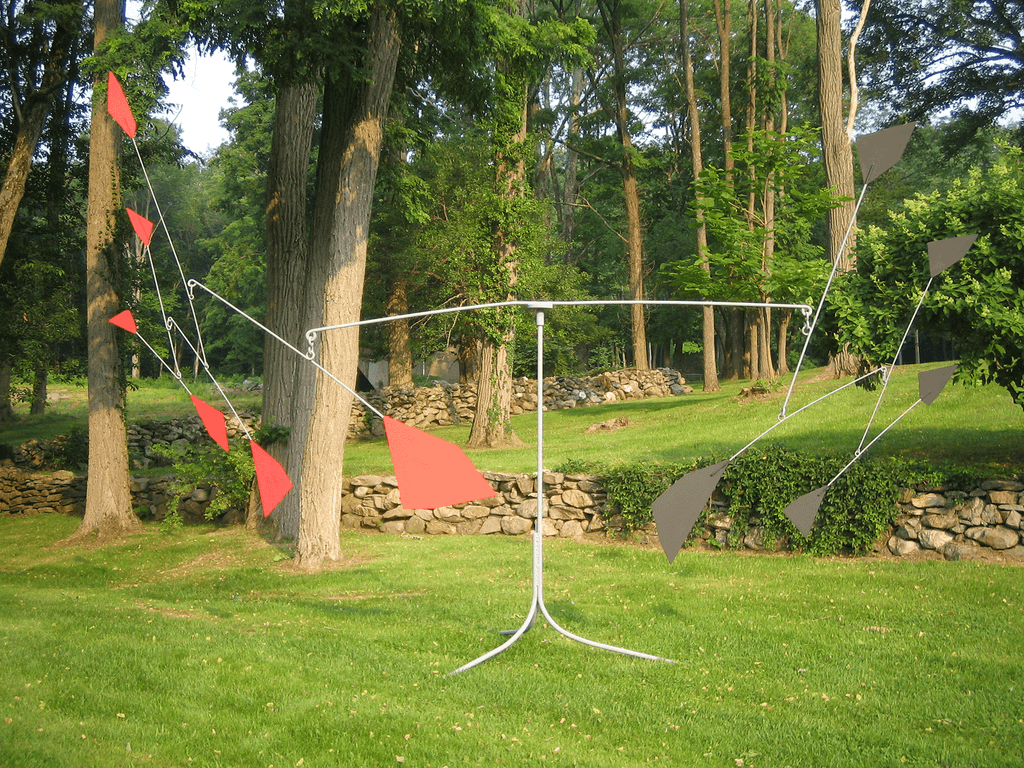
Les Granettes, 1953
© 2026 CALDER FOUNDATION, New York / ADAGP, Paris
Courtesy of CALDER FOUNDATION, New York / ART RESOURCE, New York
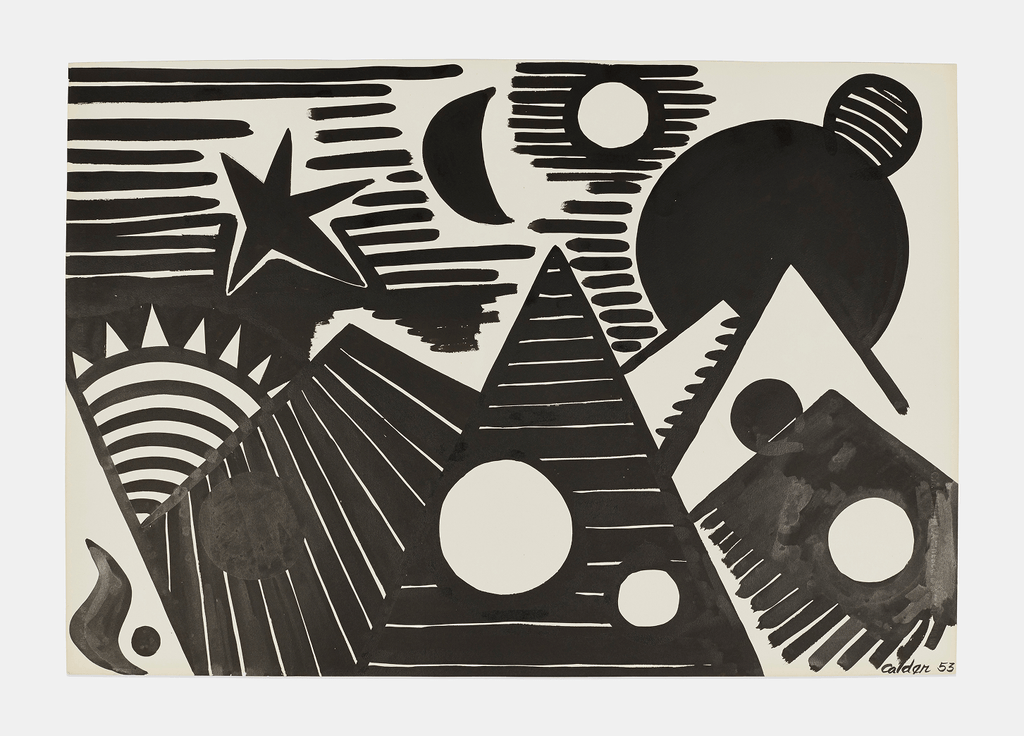
Untitled, 1953
© 2026 CALDER FOUNDATION, New York / ADAGP, Paris
Courtesy of CALDER FOUNDATION, New York / ART RESOURCE, New York
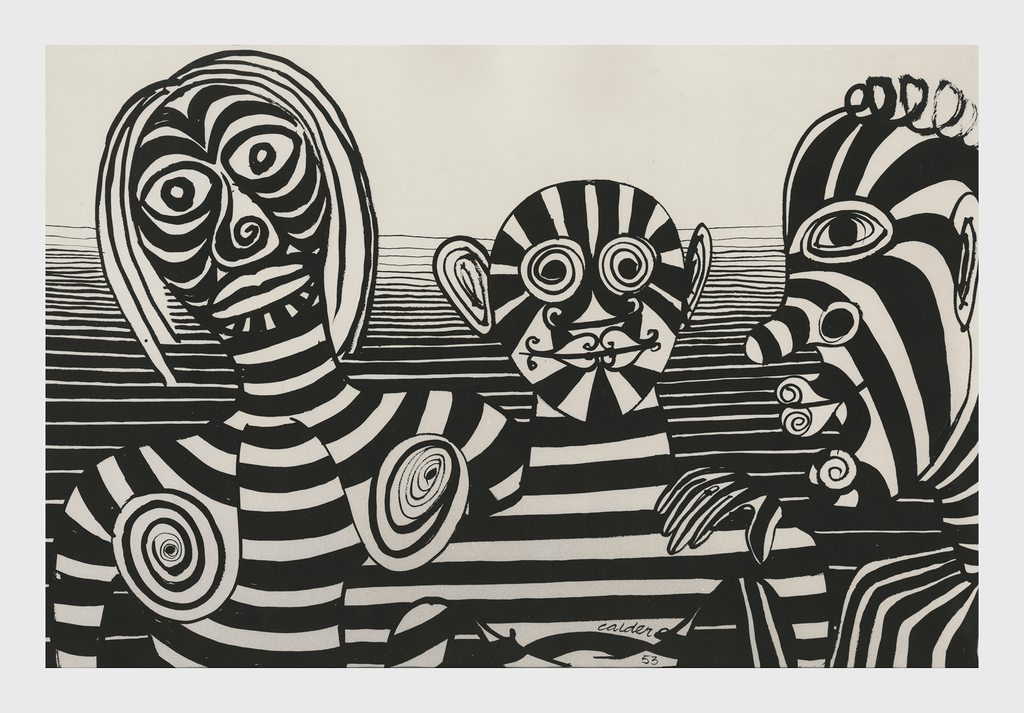
Portrait de famille, 1953
© 2026 CALDER FOUNDATION, New York / ADAGP, Paris
Courtesy of CALDER FOUNDATION, New York / ART RESOURCE, New York