On view at Sprüth Magers, Berlin, from November 14th 2025 to April 4th, 2026, Political Entertainment revisits the radical practice of Gretchen Bender, foregrounding her sharp critique of mass media, corporate power, and the politics embedded in popular culture. The exhibition brings together landmark works that feel strikingly current, situating Bender’s practice within ongoing debates around the politics of memory and visual consumption.
Politics of memory and mass media
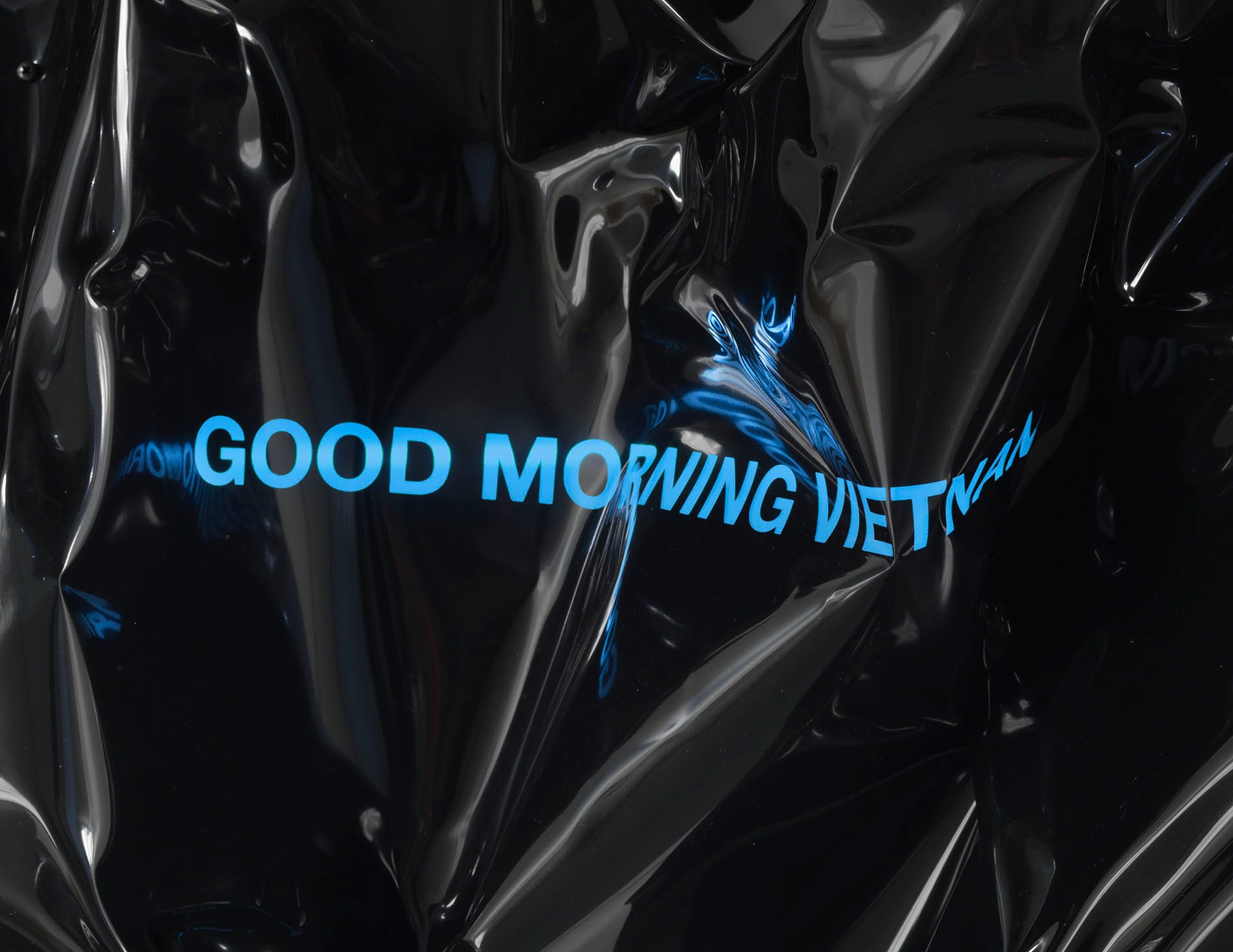
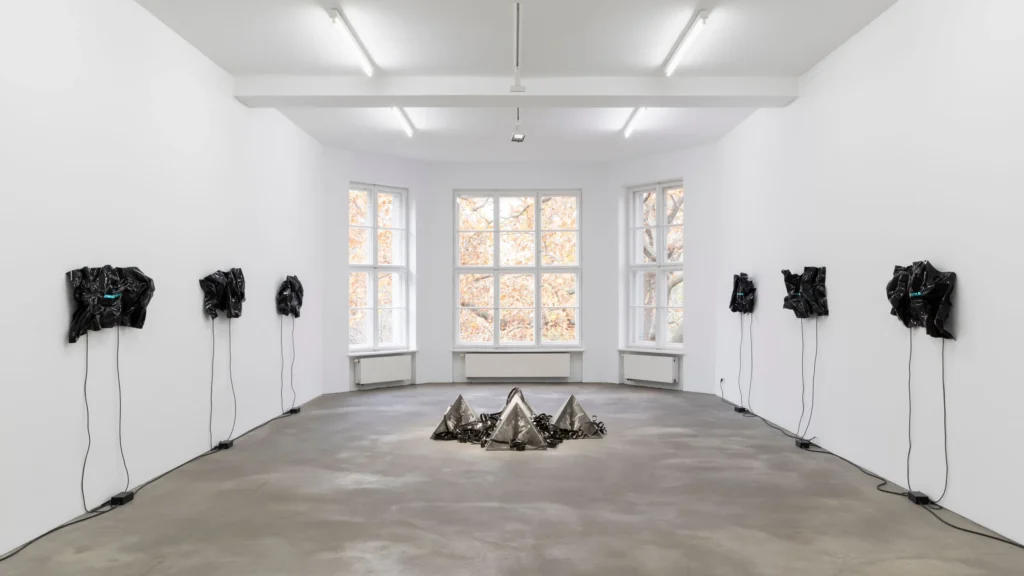
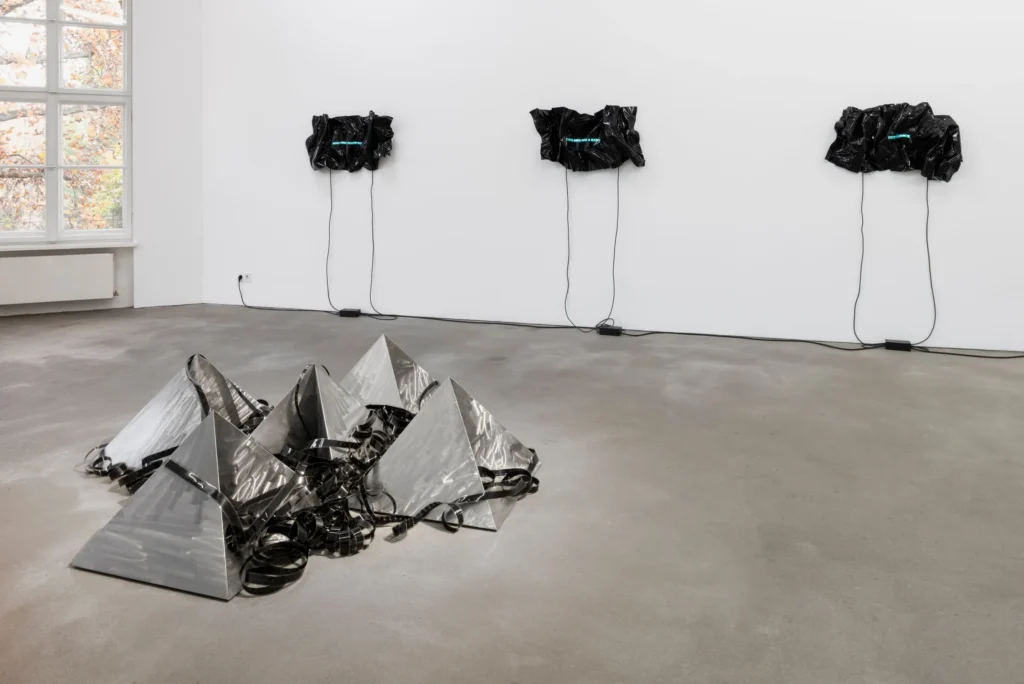
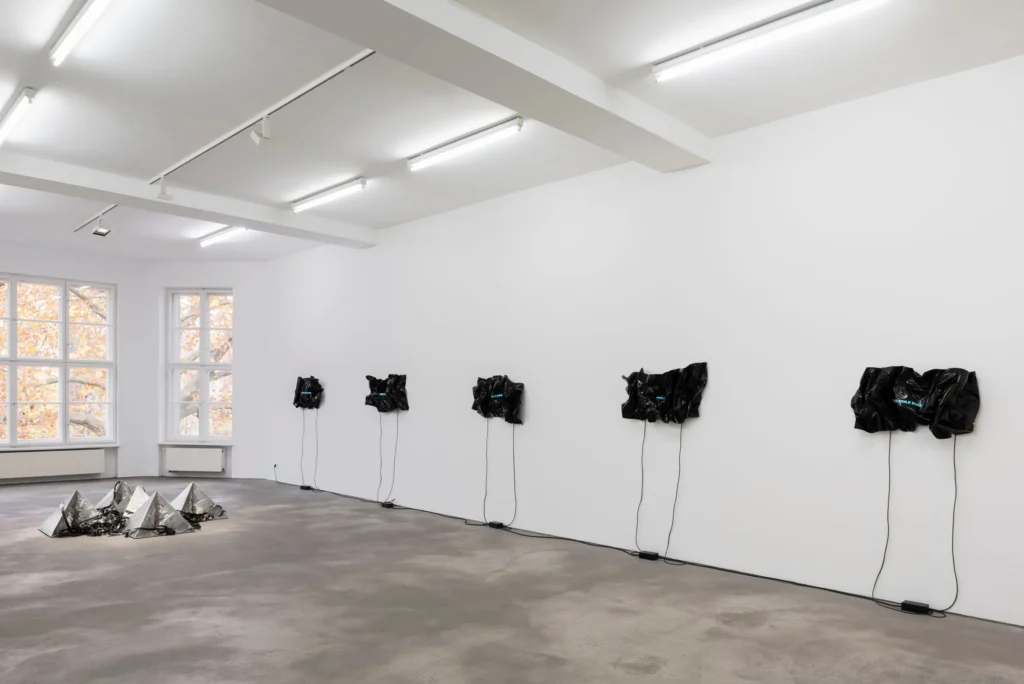
At the heart of the exhibition is Top Ten Grossing Films of 1988, shown for the first time since its debut in 1989. This series of ten conceptual sculptures, made from crumpled black heat-set vinyl and illuminated with neon, displays the titles of Hollywood’s most profitable films of that year. By isolating these box-office successes, Bender exposes how entertainment functions as a vehicle for political and financial interests, revealing cinema as a tool of persuasion rather than neutral escapism.
Conceptual sculpture as cultural critique
The exhibition also places Top Ten Grossing Films of 1988 in dialogue with People in Pain, a monumental installation composed of over a hundred film titles drawn from industry magazines before the movies were even released. Conceived as a dense mass of visual information, the work reflects on overproduction, disposability, and the fleeting value of cultural content. Together, the projects trace how anticipation, consumption, and forgetting shape collective memory.
Corporate forms and cultural aftermath
Completing the presentation is Untitled (X Floor Piece), a brushed steel and film sculpture from 1989. With its rigid, architectural geometry partially buried beneath discarded 35mm film, the work evokes a civilisation overwhelmed by its own media output—an image that resonates powerfully in today’s algorithm-driven landscape.
More than three decades on, Gretchen Bender’s work remains uncannily prescient. Political Entertainment positions her practice as a vital lens through which to reconsider how images are produced, circulated, and remembered—and how power quietly operates behind the spectacle.
Courtesy of SPRÜTH MAGERS
Courtesy of SPRÜTH MAGERS
Courtesy of SPRÜTH MAGERS