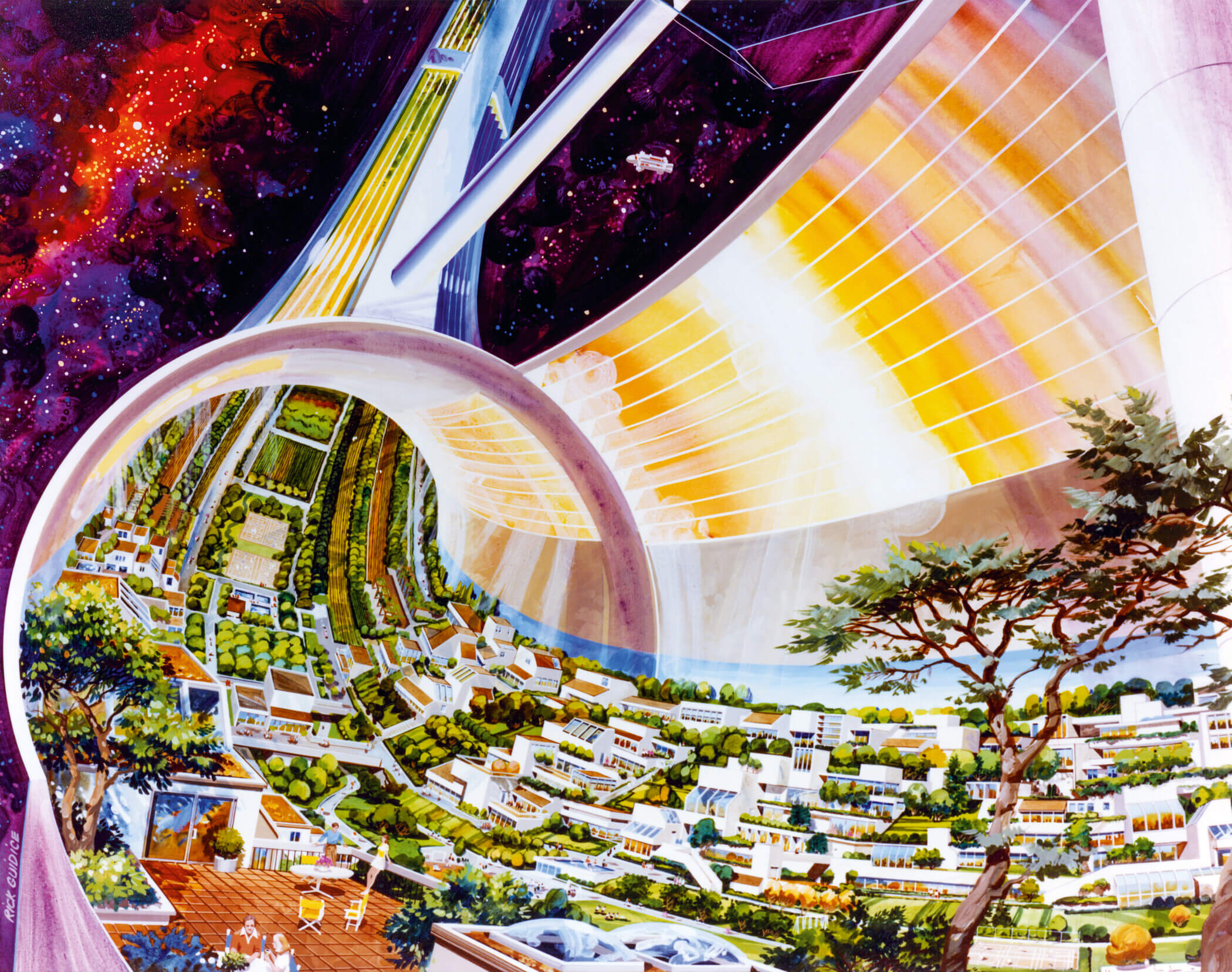
Home of the Future, 1925–1985: Designing Domestic Utopias at the Los Angeles County Museum of Art (LACMA) revisits six decades of technological optimism, domestic experimentation and shifting social ideals. On view at the Resnick Pavilion from September 27th, 2026, through March 14th, 2027, the exhibition examines how designers, architects, manufacturers and popular culture imagined new ways of living through design and technology.
Architectural models, drawings, photographs, films and everyday objects trace an era when technology promised cleaner, faster and more efficient domestic life—before those ideals gave way to more complicated ideas of progress, autonomy and the future.
Organised into four overlapping sections, Home of the Future follows the changing image of the American home from the 1920s to the dawn of the computer age.
1925–1945: Health, Efficiency and Mechanisation
The first section introduces a world fascinated by mechanisation. Self-cleaning houses, flying cars and speculative inventions reflected a belief that technology could eliminate domestic labour and reshape everyday life.
Electrification, radio and telephones connected American households to an increasingly networked society, while wartime research accelerated new materials and technologies that would fuel the postwar consumer boom.
1945–1965: Plastics, Push Buttons and Prefabrication
Postwar America embraced a vision of domestic abundance: pastel interiors, labour-saving appliances, prefabricated houses and automated kitchens. Charles and Ray Eames, George Nelson and Henry Dreyfuss helped define an era when technological progress and mass production became inseparable from good design.
Highlights include Buckminster Fuller’s Dymaxion House, an aluminium dwelling conceived as an affordable, mass-produced alternative to conventional housing, alongside Mies van der Rohe’s Farnsworth House, an opposing vision of architectural restraint.
Popular fantasies also enter the picture, from Barbie’s Dream House to the plastic Monsanto House of the Future, displayed at Disneyland for a decade. Together, they reveal how visions of domestic life were shaped not only by architects and engineers, but by advertising, entertainment and consumer culture.
Space Age Anxiety and the Cold War Home
The third section, 1950–1970: The Cold War Command Center, shifts from postwar confidence to nuclear anxiety. The home becomes not only a space of comfort and efficiency but a potential refuge from geopolitical catastrophe.
Space Age fascination generated fantasies of underground, underwater and extraterrestrial habitats. Eero Aarnio’s Ball Chair offered a cocoon-like retreat, while Olivier Mourgue’s Djinn chair and ottoman embodied a more fluid vision of modern furniture.
Television and audiovisual technologies further altered domestic life, turning the home into an information hub where distant conflicts, political events and technological breakthroughs entered the living room.
From counterculture to the computerised home
By the late 1960s, confidence in technological progress was beginning to fracture. The final section, 1965–1985: The Counterculture and the Computer, traces the shift from communal and back-to-the-land ideals towards personal computing and the wired home.
Countercultural thinkers challenged postwar technocracy, experimenting with alternative communities and new approaches to materials and consumption. Frank Gehry’s Bubbles lounge chair, made from humble corrugated cardboard, exemplifies this rejection of conventional luxury.
Floyd McKissick’s proposed Soul City, a multiracial planned community, reflects wider attempts to imagine more equitable forms of collective life. At the opposite end of the spectrum, the personal computer signalled a new model of domestic autonomy, as countercultural ideas and emerging digital technologies began to converge.
Design and technology, reconsidered
The exhibition’s central tension lies between what these objects promised and the future they ultimately produced. Self-cleaning kitchens, automated homes and personal computers once belonged to speculative fiction; many eventually became ordinary parts of daily life. Yet their optimism feels more complicated in an era shaped by climate change, artificial intelligence and renewed technological anxiety.
By placing furniture, architecture, consumer objects, media and speculative models in dialogue, Home of the Future shows that the future has never been a fixed destination. It is a projection of the desires, fears and political values of each era.
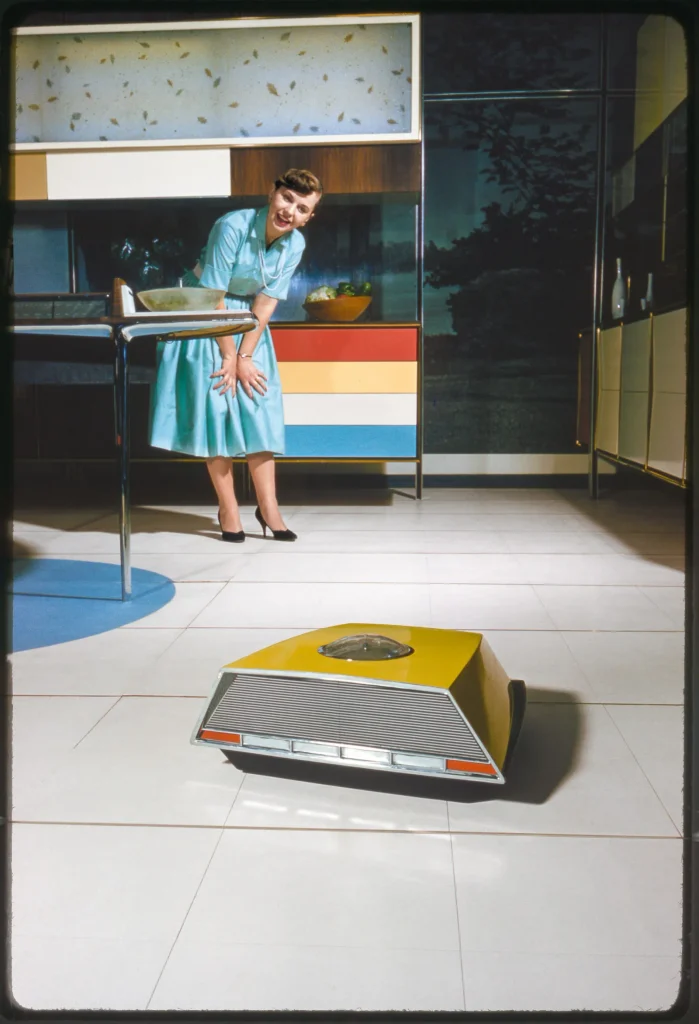
Anne Anderson in RCA Whirlpool Miracle Kitchen, 1959, kitchen designed 1956б photography 1959, printed 2026
Courtesy of LACMA
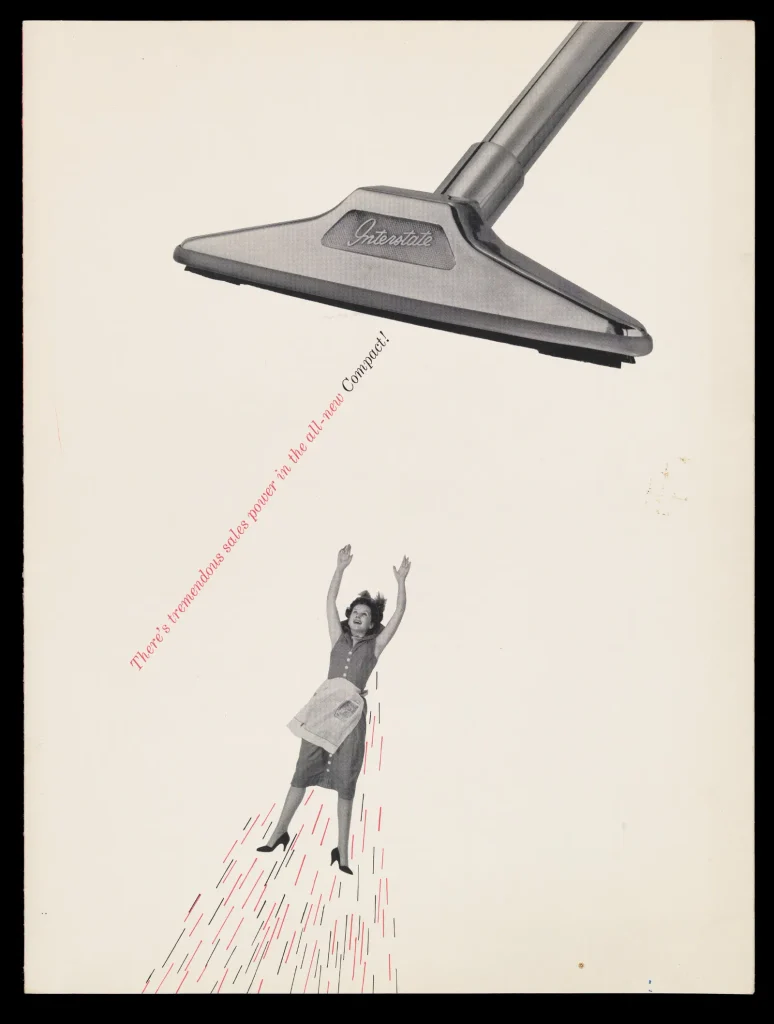
Interstate Engineering Corporation, Brochure, 1956
Courtesy of LACMA