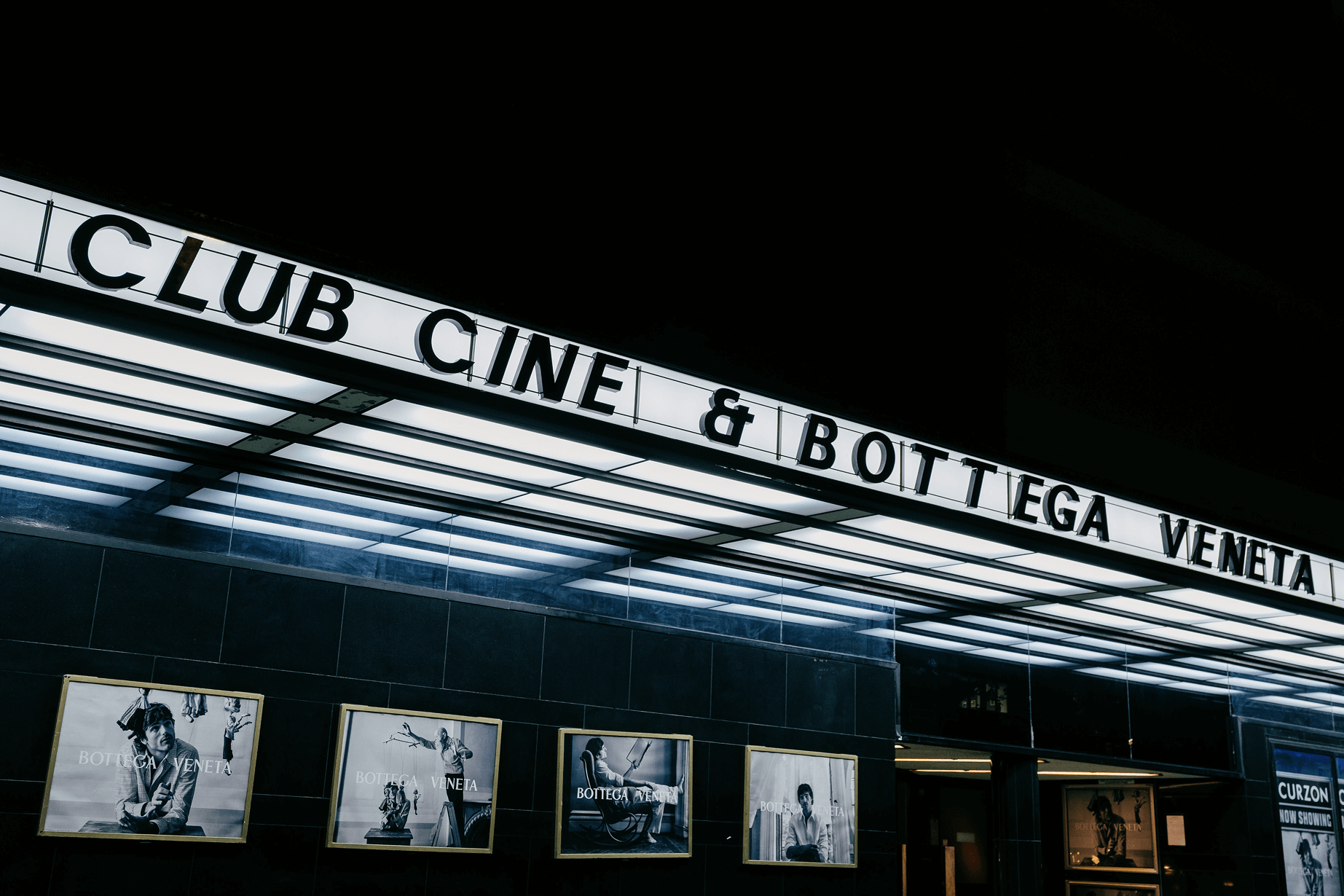
For the past 25 years, flip through fashion editorials and magazine covers and you’ll find Tom Macklin’s influence everywhere—quietly shaping stories you didn’t even know you were watching. The creative powerhouse at the intersection of casting, cultural engagement, and event programming shows that the roles he occupies don’t have to exist separately. When driven by storytelling, they thrive together. Macklin’s brainchild, Club Ciné, perfectly captures his love for a good narrative, showing how film clubs can occupy an unexpected space in contemporary culture while nodding to the celebrity-focused lens that makes his fashion work so cinematic.
For Macklin, casting always follows the same lines as a perfectly constructed script. He admires the intentionality of brands like Saint Laurent and visionaries like Jonathan Anderson, who aim to build community rather than a roster-focused world. Throughout his career, marked by discovering rising talents and nurturing their stories rather than overwriting them, he has resisted letting the industry’s pace dictate his own.
In this conversation with hube editor-in-chief Sasha Kovaleva, Macklin opens up about the Hitchcockian influences in his work, how the casting landscape has evolved, and the challenge and freedom of building a career that defies convention.
Sasha Kovaleva: Your career has unfolded across different corners of the creative industry. Looking back, what were the formative experiences that shaped your eye for talent and the kind of stories you want to tell through casting?
Tom Macklin: As a kid on family holidays, my sisters would be off making friends by the pool whilst I was content in my own little world with a book, my Sony Walkman, or watching films. I had an appetite for art and culture that I couldn’t quite explain—I just gobbled it all up. That instinct to observe rather than perform has stayed with me. It’s part of who I am.
If I trace the foundations of my eye for talent and the kinds of stories I’m drawn to tell, it begins with magazines.
I was obsessed with them from a very young age and would spend my pocket money collecting everything from i-D, Smash Hits and The Face to old issues of Vogue, Sky magazine, Sight and Sound, Blitz and anything else I could get my hands on. I still have them all. From around the age of ten until university, my bedroom walls became completely rammed with magazine covers, fashion campaigns, and editorial shoots layered on top of one another. You couldn’t see wallpaper. Mates would come round and comment—it was always a talking point. I was obsessed. I guess it was like a living, breathing mood board.
I kept scrapbooks too. That instinct to collect, edit and live inside references arrived early, long before I understood it as a creative skill.
I watched loads of film and documentary, and I became highly attuned to casting. If a character felt believable, I gave myself completely to that film or image. If the casting felt wrong, I disconnected almost immediately. I recognised that difference instinctively, without needing to articulate it.
I was always curious about how things were made. The mechanics. The decisions behind an image. The thinking that shaped the final outcome.
Alfred Hitchcock was hugely formative for me. I loved his films, but more than that, I loved his casting. The restraint. The psychology. The way tension was created through presence and withholding rather than excess. His work taught me that casting isn’t about charisma alone—it can be about control, implication and intention.
That sensibility extended into photography. I discovered Helmut Newton during university—his images were bold, sexy, and cool. I found Charlotte Rampling through his work just at the same time that I blew my university grant in my fresher’s year on art books during a trip to Soho. Sorry, Mum. His photographs felt romantic but tough. Cinematic. I was instantly drawn to them.
Andy Warhol and Corinne Day were hugely important too. Their work was plastered over my university bedroom wall. Warhol’s relationship with fame and repetition, and Day’s raw approach to bodies and vulnerability, influenced how I understand presence. Both reinforced the idea that casting is a form of authorship. Others I discovered around the same time were Saul Leiter, Wolfgang Tillmans, Herb Ritts and Jürgen Teller.
Culturally, I always understood the mainstream, but I was more instinctively drawn to the left field. I trusted voices that felt singular.
Filmmakers like John Waters, Gregg Araki, Pedro Almodóvar, David Cronenberg and Gus Van Sant shaped my early sensibility, as did Stanley Kubrick, William Friedkin and Fassbinder. The Shining fascinated me at an age when it probably shouldn’t have. Alien and Cruising left a deep imprint. I watched Serial Mom over and over. I developed a love of horror ignited by late night showing of A Nightmare on Elm Street that I snuck out of bed to watch.
I also paid close attention to actors. Viggo Mortensen was a teen pin-up for me, but also, as an actor, felt like someone whose choices carried weight and consequence.
Music was so influential, not only sonically but visually. George Michael was hugely formative for me as a music idol and role model, as a young gay man, so I was especially excited by his visuals: album art and the casting of his music videos. Freedom, Too Funky and Fast Love felt radical at the time. Bodies, gay identity and desire were presented with agency, not apology. Sade, too.
Alongside that, I loved and followed the evolution of Kylie Minogue in the 90s.
What fascinated me wasn’t reinvention as a gimmick, but the way magazines, photographers and stylists saw something in her that mainstream culture initially didn’t. They recognised range, elasticity, depth – and through collaboration, they helped draw that out. Those early The Face and i-D covers in 1990, 1991, and 1994 were provocative without being sensational. They created conversation rather than scandal.
I have those original magazines that I bought at the time framed in my hallway now (and have worked with her on many covers since).
Watching that slow, intelligent re-seeing of a figure everyone thought they understood had a profound effect on me. It reinforced my attraction to change, to evolution, and to refusing to stay fixed.
To the dismay of my parents, I’d spent hours in bookshops and newsagents before school reading magazines cover to cover. I loved New York Magazine and am still a subscriber.
I have Asperger’s and so all these early obsessions fed into a single instinct. A sensitivity to something meaningful. A belief in presence over performance. This belief formed early and sharpened over time, and it continues to shape how I see talent and the stories I want to tell through it.
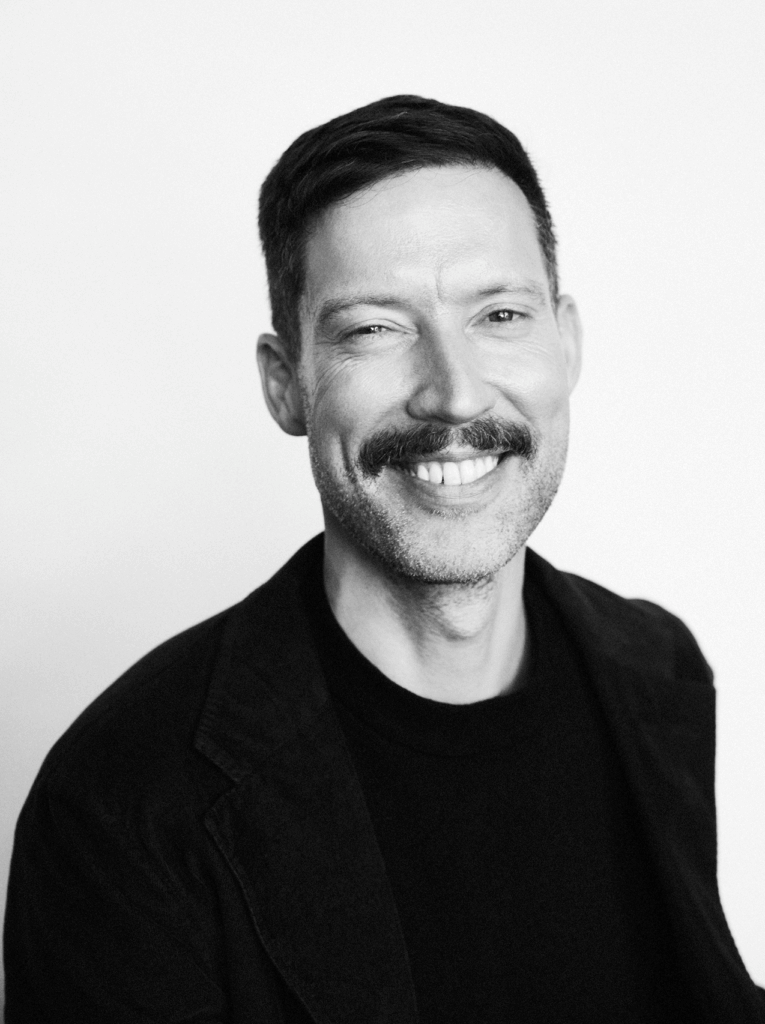
Photography by JOSH SHINNER
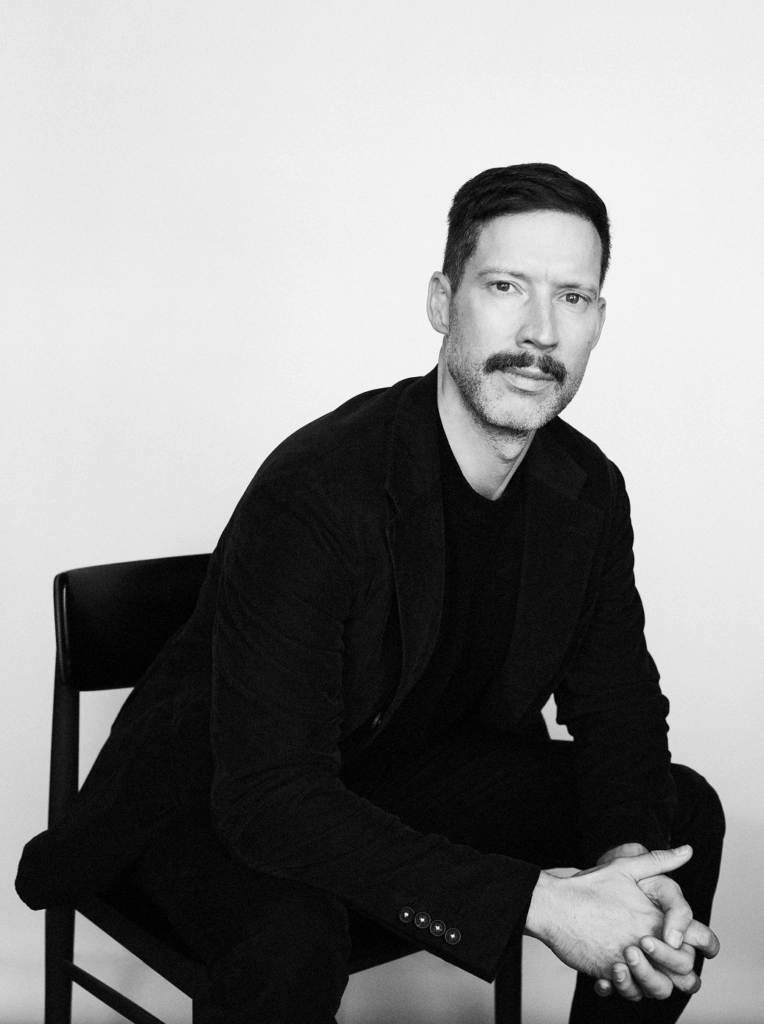
Photography by JOSH SHINNER
Courtesy of TOM MACKLIN
FRAN LEBOWITZ
Photography by DANIEL ARNOLD

VIGGO MORTENSEN
Photography by LUCA KHOURI

BETH DITTO
Photography by TIM WALKER for ES Magazine

PHARRELL
Photography by CAMILLE VIVIER
SK: In a world where casting is no longer just about the face but also about the narrative, values and digital presence, how has your approach changed in the past few years?
TM: It’s been genuinely fascinating watching how casting has evolved over the 26 years I’ve been doing it. If anything, that passage of time has reinforced one core truth for me: instinct matters.
I’ve had plenty of moments over the years where I’ve tried to encourage people to take a risk on casting and they simply haven’t wanted to—and that was one of the reasons I eventually stepped back from legacy media.
It was during COVID when I realised that legacy media was unable to be nimble or pivot, and I felt boxed in, unable to be creative in the way that I wanted to. I realised that I didn’t enjoy that structured singular way of working anymore—those publications had stopped taking risks, and it wasn’t allowing me to grow.
At a certain point, I stopped finding joy in the process.
Talent was moving from one magazine cover to the next, often without any real narrative or sense of intent, and the format began to feel repetitive. I wasn’t learning anything new, and I wasn’t being stimulated by it. As a consumer, I’ve always gravitated towards publications that feel distinctive, specific, and considered. I still buy print, but I’m very selective about what earns my attention.
The same applies to fashion brands. I’m drawn to a holistic vision—the photography, the casting, the references, the window displays, the campaigns, the graphic language. All of it needs to feel fully formed. That level of detail is what excites me, and it’s what I try to bring into my own work.
It’s also why, when I left Hearst, I actively sought out environments that allowed more freedom. My time at Document Journal was incredibly rewarding and some of my favourite covers I’ve ever booked came from that period because there was genuine space to experiment and trust creative instinct.
I understand the mainstream instinctively. I work with brands that need broad appeal, and I respect that. But I’m often just as interested in working with people who don’t have a social media presence at all. There’s something powerful about absence now. When you’re not exposed to someone’s life on a daily basis, there’s often more appetite, more curiosity, and more integrity in how they show up when they do choose to engage.
I’ve always been drawn to storytelling and something more meaningful. That’s been part of my DNA since I was very young, and even my commercial work in the early noughties was built on that foundation.
What feels different now is that the industry has finally caught up. Since COVID, #MeToo and Black Lives Matter in particular, authenticity, diversity and narrative are no longer fringe considerations—they’re understood as essential.
That shift hasn’t changed how I work, but it has allowed me to do the kind of casting I love more often. I feel more creative now. The type of casting I’m doing feels more human, more interesting, more compelling.
And that feels like a proper win.
SK: The idea of “talent” itself is complex. Do you think talent is something innate, or something the industry chooses to recognize? In other words, do we discover stars—or do we create them?
TM: I think it’s genuinely a case of both, and I’m not trying to sit on the fence here. Talent is innate—that’s the foundation—but recognition is collaborative, and that’s where it gets interesting.
I love discovering new talent and championing someone at the beginning, then following their career and finding different ways to work together over time. That instinct played out very clearly when I sat on the BAFTA Rising Star jury for twelve years, which I absolutely loved. Editorially, I’ve been in a position to introduce emerging talent to audiences before they were fully established. Sometimes I’d spot someone in a film and reach out to their team directly. Other times, their publicists would say, you need to see this, and they were right.
I was the first to shoot and put Carrie Mulligan on a UK cover. The same with Alicia Vikander, Emma Watson, Margot Robbie, Kristen Stewart, Robert Pattinson, Riz Ahmed—the first UK cover with Lady Gaga, then later Josh O’Connor, Harris Dickinson, Monica Barbaro, Letitia Wright, Florence Pugh, Lakeith Stanfield, Jessie Buckley, Michaela Coel, Honey Dijon, Myha’la, Franz Rogowski and Cynthia Erivo. Those moments weren’t about prediction or hype. They came from seeing the work and feeling absolute conviction.
If someone is genuinely talented—whether they’re an actor, musician, writer or artist—the industry tends to recognise that quite early through the quality of what they’re making. At that point, a good PR team steps in to help shape visibility, but the foundation is already there. In the space I work in, we’re not manufacturing fame for the sake of it. We’re responding to real ability and real craft.
There’s a shared excitement in that process. Editors, casting directors, publicists—we’re all, at our best, motivated by wanting other people to discover something special too. To go and see the film. To listen to the record. To read the book. It comes from a place of belief, not strategy alone.
So going back to your question, when someone is genuinely gifted, I tend to find them early. Either I reach out, or their team does, and together we help build visibility around something that already exists. It’s never about creating talent out of nothing. It’s about recognising it, trusting your instinct, and helping it find the audience it deserves.

AYO EDEBIRI
Photography by TYLER MITCHELL

JODIE FOSTER
Photography by WOLFGANG TILLMANS
SK: You work at the intersection of creative direction, talent discovery, storytelling and brand identity. What draws you most to the process of matching talent with independent press? What makes this relationship so creatively meaningful for you?
TM: I’ve always believed that the whole should be greater than the sum of its parts, which probably sounds a bit earnest, but it’s true. I’ve never been interested in casting in isolation—I enjoy collaborating with teams in every aspect of the creative process, from the initial idea through to how the final work lands in the world.
When I suggest someone for an independent magazine, it’s almost always with a wider holistic vision. That thinking is informed by where they are in their career, what they’re working on, their wider sensibility, and where I believe they truly shine. It’s about alignment, not exposure.
One of my favourite examples of this is casting Jodie Foster for the cover of Document Journal, photographed by Wolfgang Tillmans at his house on Fire Island. I knew Jodie was a serious art fan and that she loved Wolfgang’s work. I also knew, from speaking to Wolfgang, that he admired her deeply. It felt like an organic pairing rather than a constructed one, and the result didn’t resemble anything either of them had done before.
I remember visiting Wolfgang’s exhibition in Paris recently and seeing one of the images from that shoot—Jodie in his kitchen, wearing a New York Magazine T-shirt, chopping melon—blown up to an enormous scale. It was my favourite image from the series, and seeing it live in that context filled me with a real sense of pride. That’s when casting works at its best. It becomes part of a cultural record.
Another collaboration I loved was working with Viggo Mortensen for the cover of Document Journal, photographed by Luca Khouri in Madrid. Viggo is someone I’ve admired since I was a teenager, so being able to work with him in a way that allowed real time and space felt incredibly special. We shot on a farm just outside the city and spent the entire day together. He was open, curious and genuinely collaborative.
Viggo is multifaceted—an actor, an artist, a photographer, someone deeply connected to nature—and once he realised there was method in what we were doing, the magic really began to happen. We ended up with a body of work that felt different to anything I’d seen from him before, and that was entirely down to trust on both sides.
I also look back very fondly on the shoot we did with Sandra Hüller and Venetia Scott for Document Journal. We shot it in Germany just as Sandra was breaking out internationally and receiving Oscar and Golden Globe recognition. It was an incredibly original, visually stimulating story that sat firmly within Venetia’s aesthetic world, while also feeling completely authentic to Sandra. For reasons that are hard to articulate, it just chimed.
There are other moments like that. Casting Winona Ryder for Jimmy Choo’s AW24 campaign felt right in terms of timing, team and tone. It was creatively satisfying and also commercially successful, which matters.
Working with Cultured on a Fran Lebowitz cover was another defining experience. It took some internal convincing, but once everyone aligned, it became one of the publication’s most successful covers on social media. Fran doesn’t want to be styled or groomed. She dresses herself, presents herself exactly as she is, and that’s precisely why people respond to her. Her appeal is her sensibility. The same year, I cast Travis Scott and Rachel Sennott for a double September cover for Cultured—both polar opposites but it hit at an exciting time for both, and visually both worked in sync, and elevated the issue, they have an allure on the newsstand.
Then there was a David Hockney double cover for Esquire and Harper’s Bazaar, when he invited us to his Los Angeles home and studio in 2012—that level of access from someone so culturally influential was one of my biggest creative highs.
Equally I’ve enjoyed casting those megawatt stars such as Rihanna, Julia Roberts, Pharrell, Kylian Mbappé, Lady Gaga, Jennifer Aniston, Stormzy, Little Simz, FKA Twigs, A$AP Rocky, George Clooney, Daniel Craig, Cate Blanchett, Joaquin Phoenix, Keanu Reeves, Serena Williams, Travis Scott and Nicole Kidman.
Those are the projects that stay with me. The ones where casting feels authored and intentional, where the collaboration is genuine, and where the work adds something lasting to the culture rather than just filling a slot.
SK: I assume, as a casting director, you’re constantly scanning for authenticity, presence, and timing. What qualities draw your attention to talent the most—beyond the obvious surface-level attributes?
TM: Without wanting to sound like a broken record, for me it always comes back to the talent and the work. That is the non-negotiable starting point. If the work doesn’t connect, if it doesn’t make me feel something, then nothing else really matters.
That said, there are moments when someone has that extra, indefinable quality. The thing we can never quite name, but we all recognise it when we see it. Charisma, magnetism, presence. Whatever you call it, it’s the difference between someone being excellent at what they do and someone who feels genuinely next level. I love spotting it in real time early on.
Feeling is increasingly important to me because we’re living in an era of cultural overload and AI slop. Endless newsletters, constant content, infinite choice across film, television, books, podcasts, everything. Endless memes—ok, yes, am guilty of spamming pals with low brow memes, I think I need help—but in 2026, content and information is overwhelming. In that context, casting with intention really matters. When it’s done with purpose and clarity, it cuts through the noise in a way very little else does.
Timing is also crucial. You have to think about where someone is in their creative life, not just where they’ve been. It excites me to work with people on the cusp of something meaningful. A performance that’s about to shift how they’re seen. A book that’s about to land in a big way. An exhibition or body of work that reframes their career. Those moments carry energy, and I like to meet them head-on.
Equally important is the question of why now. Why this person, at this exact moment, on this platform, in this context. Casting isn’t just about who someone is, but how they’re being represented and what story we’re telling around them at that point in time. All those considerations come into play.
At its best, casting feels deliberate rather than reactive. It’s about recognising momentum before it peaks, and creating space for talent to be seen in a way that feels earned, considered and true to who they are.
SK: In your experience, what makes a collaboration between a celebrity and a brand truly work? And conversely—where do these collaborations most often go wrong?
TM: It works without question when the talent, the brand and the product or activation are genuinely in sync. When that alignment is there, you can feel it immediately and it lands culturally as well as commercially.
I cast Winona Ryder for a Jimmy Choo autumn-winter 2024 campaign and everything aligned—the product, the creative approach, where Winona was in her career and where the brand was at that moment. It felt well-oiled, confident and precise. That showed not only in the industry response, but in its commercial success too. They are always a dream to work with and it’s a recent project I’m genuinely proud of.
More recently, I worked on a series of activations for Belmond, including sending Cooper Koch to Italy for a social-led campaign. That pairing felt natural and playful. My Instagram DMs went absolutely wild, mainly from the gays, mostly NSFW content. That’s when you know you’re onto a winner.
A few years ago, Sydney Sweeney’s campaign for Ford stood out to me because it was rooted in her real relationship with cars and her personal history. It wasn’t a stretch. At that point in her career, it felt like the right story, told at the right time, with care and consideration. In contrast, her more recent campaign with American Eagle was a huge misstep and tone deaf—bad timing, bad creative and badly received. Whilst brand sales soared, Sydney’s profile took the brunt of that fallout.
Saint Laurent is another brand that consistently gets this right. Casting Hollywood icons such as Keanu Reeves, Christopher Walken, Gwyneth Paltrow and Michelle Pfeiffer feels embedded in the house’s DNA. It’s not trend led. It’s legacy-driven and confident in its own taste.
I also hugely admire how Jonathan Anderson approaches casting. Although he works with teams, the vision feels led by him. He builds a community rather than a roster, blending new faces with established ones in a way that feels deeply personal. Whether at his own label or at Dior, everything feels like an extension of his world. That’s world-building through casting, and very few people do it at that level.
Where collaborations tend to fall apart is when casting decisions are driven primarily by social media metrics. Followers alone are not a strategy.
If a campaign is cast with intention and storytelling at its core, it will likely travel organically. People will want to talk about it. Editors will want to write about it. It will perform on social because it resonates, not because it’s being pushed. Casting someone simply because they have millions of followers doesn’t guarantee that. Connection does. Alignment does. That’s where the real power lies.

WINONA RYDER
Photography by EZRA PETRONIO

JOQUIN PHOENIX
Photography by JUERGEN TELLER

WILLEM DAFOE and ROBERT PATTINSON
Photography by ALASDAIR MCLELLAN

DAVID HOCKNEY
Photography by CHRISTOPHER STURMAN

CHLOE SEVIGNY
Photography by PETRA COLLINS

JOHN MALKOVICH
Photography by ALEC SOTH

BEN WHISHAW
Photography by CHIESKA FORTUNE SMITH


Photography by OLIVER HOLMS
SK: CLUB CINÉ has become a distinctive initiative within your practice. How did the idea for the platform originate, and what gap did you feel it could fill within the creative landscape?
TM: A big part of my job has always been watching films far in advance, staying ahead of the curve in terms of what’s coming six to twelve months down the line. That meant attending festivals like Cannes, Venice and the London Film Festival, watching first-look screenings and test screenings, which I loved.
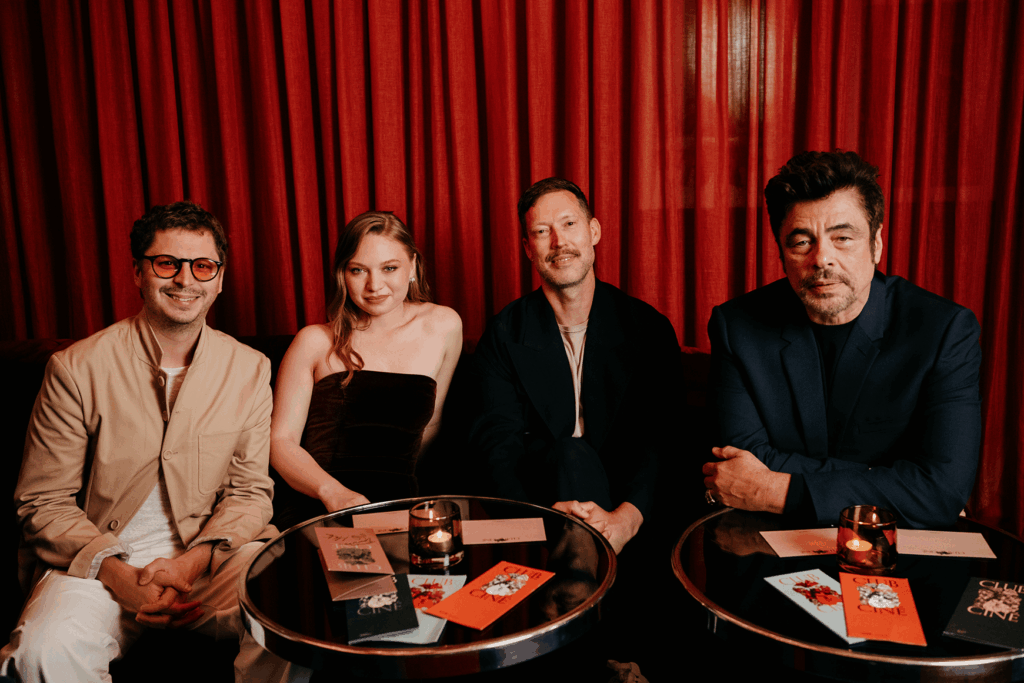
What I missed, though, was the collective experience of watching a film together as a film fan. Just before COVID—around 2018—a hotel in central London with a screening room approached me and asked if I’d like to use it. I loved the idea of starting a small industry film club for creatives I knew—editors-in-chief, actors, directors, producers, casting directors, artists, fashion designers, photographers, stylists, models—to come together and watch a film before release.
The idea was simple: curate films I believed in, watch them together, then go to the bar afterwards and talk about them properly. To get it out of your system and leave feeling nourished. That’s how Club Ciné began—on a very small scale, with around 30 people. Since then, it’s grown into what I jokingly call this sexy beast.
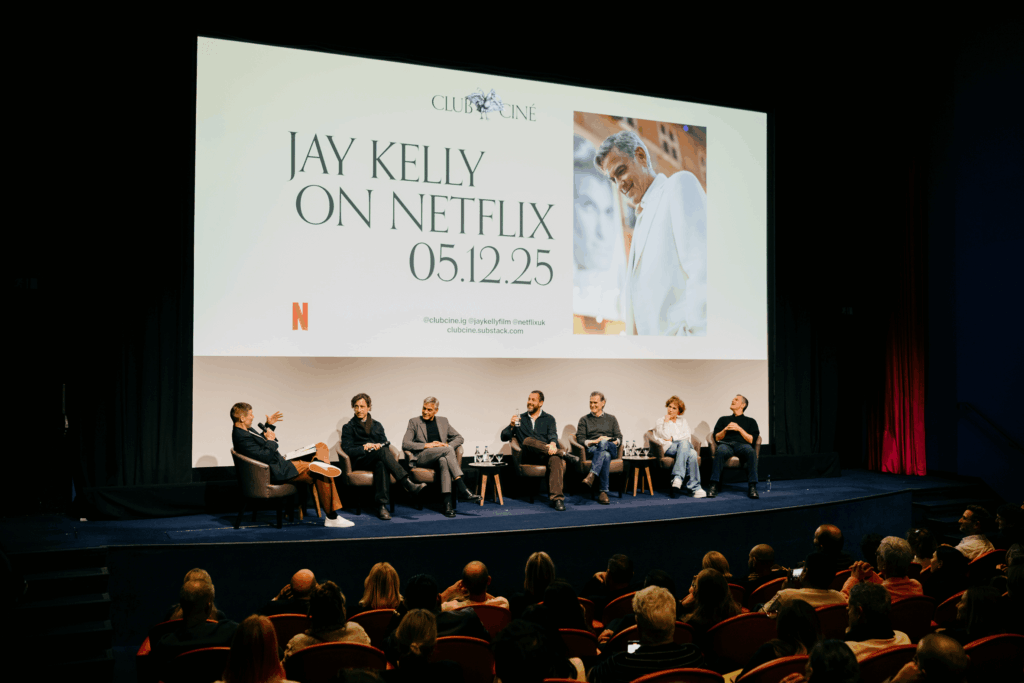
We now screen regularly, often with the director or lead cast in attendance, and I host Q&As. As the following became more cult, it felt natural to launch an editorial platform too. We launched on Substack in January 2025 with two clear franchises. Cinétherapy is a conversation about someone’s creative life told through the lens of cinema—a life story via film. And I Like to Watch invites people to write a love letter to the one cult film they can’t stop returning to.
Club Ciné, at its core, is about feeling film. Films that spark conversation, films that make us feel something, and celebrating the collective joy of watching them together at a time when cinemas are under real pressure. Long-term, we want to help make going to the cinema feel like an event again.
I never set out for Club Ciné to be a business or a ‘thing’. It came from a place of genuine obsession and love for cinema that I’ve had since childhood. I was actually quite reluctant to expand it at first because what it was on a small scale felt very precious.
When COVID hit, I stopped it completely and assumed that might be the end of it—that it belonged to a pre-COVID moment. But as restrictions lifted, I started receiving messages from people asking when it was coming back. That was the first real sign that there was an appetite for something a bit different, more human.
When we returned, we began introducing elements that made the screenings feel more bespoke and personal. We started creating printed film literature booklets—the kind of deep-dive I’d normally do myself afterwards on IMDb, but done in advance and beautifully designed, placed on seats for people to take home. People began collecting them.
We also introduced feedback cards, inspired by Stanley Kubrick’s Napoleon note cards and old-school test screenings from the 1950s and 60s. They’re anonymous, playful and completed afterwards in the bar then we photograph them for editorial coverage, and they’ve become part of the ritual.
The real turning point came when we started receiving organic press. Italian Vogue wrote about Club Ciné in its January 2025 print issue, positioning us alongside initiatives like Miu Miu Women’s Tales as part of a new wave of film clubs bringing people together and taking them off their phones. Then came coverage from WWD, The Sunday Times and the London Standard.
At that point, launching an editorial platform felt like the natural next step—a way to include more people in what we were building. Since then, the response to Cinétherapy and I Like to Watch has been incredible, with everyone from Charli XCX to Riz Ahmed, Gloria Steinem and Chloë Sevigny, Andrew Garfield and Sir Steve McQueen engaging with the platform. It confirmed there was a real appetite for a space like this.
Physically, we’d love to recalibrate the cinema experience. Going to the cinema hasn’t evolved much in decades beyond comfy seats and a bar and it should feel closer to going to the theatre or a major exhibition—something you get dressed for, look forward to, and experience socially.
There’s something powerful about being given context before a film, hearing from the filmmaker, discussing it afterwards and knowing your feedback is valued. Cinema doesn’t have to be solitary, although on occasion we all love slipping into a back row solo with a giant popcorn.
Editorially, Club Ciné sits in a slower space. We’re not industry trade or traditional legacy media. What we do is about considered discovery. Cinétherapy and I Like to Watch are structured so you can dip in at any time, and what you take away is personal – memories, emotions, obsessions. That human connection is priceless.
We’re selective about new releases too. We don’t cover everything—only what we genuinely believe in, but it always independent or auteur driven. And because of who I am and my own taste, some of the content naturally leans queer, or towards genres like horror, which I’ve loved since childhood. I like to think we occupy a space that didn’t really exist before—and the feedback suggests others feel the same.
SK: What mission today do you see behind CLUB CINÉ? Is it archive, community, experimentation, education—or something blending all of these?
TM: Definitely a blend of all four. Having worked editorially and commercially, been involved in marketing, and had access to sales figures and strategy, I feel well versed. At Harper’s Bazaar, during its 150th anniversary, I spent time in the archives looking at issues dating back to 1897, which really shaped how I think about format and evolution.
The way we consume culture has changed completely—music, art, TV, film—yet many formats haven’t caught up. That’s where I feel well placed. I’m an avid consumer myself, deeply engaged with social media and new ways of storytelling, but grounded in legacy knowledge.
I want to continue to tap into these core parts of our DNA and there will be a print element to Club Ciné, but it will be very different from what’s already out there. There will also be festivals and events – I’ve spent a large part of my career building and growing cultural events, from prestige awards to festivals, screenings to intimate dinner parties. I want Club Ciné to be surprising, nimble and responsive, always open to feedback and evolution.
Editorially, it’s never just about fame. It’s about taste, curiosity and generosity of thought. I want to speak to people who teach me something, whose recommendations you trust. That’s why our interview subjects feel so specific—Bruce LaBruce, Park Chan-wook, Bella Freud, Michele Lamy, Martin Parr, Michael Cera, Hari Nef, Jesse Armstrong, Oliver Sim (The xx), Steve McQueen, Gloria Steinem, Arianne Phillips, Ben Whishaw, Emma D’Arcy, Rebecca Hall, Rose Byrne, Murray Bartlett, Tahar Rahim and Benedict Cumberbatch.
They’re all very different, but what they share is a genuine obsession with cinema. That mix – famous, left-field and everything in between – is quintessentially Club Ciné.
SK: Has your understanding of beauty changed over the years—and do you think the fashion world is becoming more open or simply more strategic in how it presents diversity?
TM: Beauty, for me, has never been skin deep. It’s always been about the full picture. Intellect is the biggest aphrodisiac. A beautiful mind elevates everything else, and that inevitably feeds into how someone presents themselves. An innate sense of style, something instinctive and unmistakably personal, is deeply attractive to me.
Of course, traditional ideas of physical beauty exist and I’d be disingenuous to pretend they don’t matter at all. But physical beauty on its own is hollow. Too often people are encouraged to rely on that alone, and it rarely sustains interest. The people I consider timelessly beautiful are those where intellect, presence, talent and individuality converge—figures like Sade, Viggo Mortensen, Grace Jones, Charlotte Rampling, Sissy Spacek, Tony Leung, Lorde, Lakeith Stanfield, Riz Ahmed, Michelle Pfeiffer, James Baldwin, William S. Burroughs, Frank Ocean, Debbie Harry, Jodie Foster, Michelle Yeoh and Charli xcx.
When it comes to fashion, it’s difficult to generalise. There is, undeniably, a degree of strategy at play now. The world has changed, audiences are more informed, and brands that want to remain culturally relevant have to communicate in a contemporary way. In 2026, that means inclusion is no longer optional. That said, we’ve all seen how quickly commitment can fluctuate from season to season.
Some publications and fashion houses have historically been ahead of the curve, while others are still catching up. That disparity has always existed in every industry. Early in my career, I was explicitly told no when proposing Black or Asian talent, often in very blunt terms, and those conversations were genuinely upsetting. So I do recognise and welcome the progress that’s been made. But there is still a long way to go, and that work needs to be consistent rather than convenient.
SK: Fashion, film, social media, culture… your work sits in the middle of all of this. Where do you personally look for inspiration when your eye needs a reset?
TM: When my eye needs a reset, I return to the fundamentals. Art exhibitions, old black-and-white films, documentaries, books, curated screening seasons and media outlets I trust. These are the places that slow me down and remind me why I fell in love with culture in the first place.
At home I have a music and reading room—shelves filled with exhibition books, art books and literature that I’ve collected over the years, and still add to, and a record player with my vinyl. It’s a place I retreat to a lot when I want to feel fizzy.
But just as important are conversations. Talking with friends, colleagues and other creatives is often where the most unexpected inspiration comes from. I’m naturally curious about what moves other people—what’s stayed with them, what’s challenged them, what’s changed how they see the world. A conversation can quickly take on a life of its own, and there’s no predicting where it might lead or what you’ll take away from it. That sense of exchange, of shared discovery, is endlessly energising to me.
