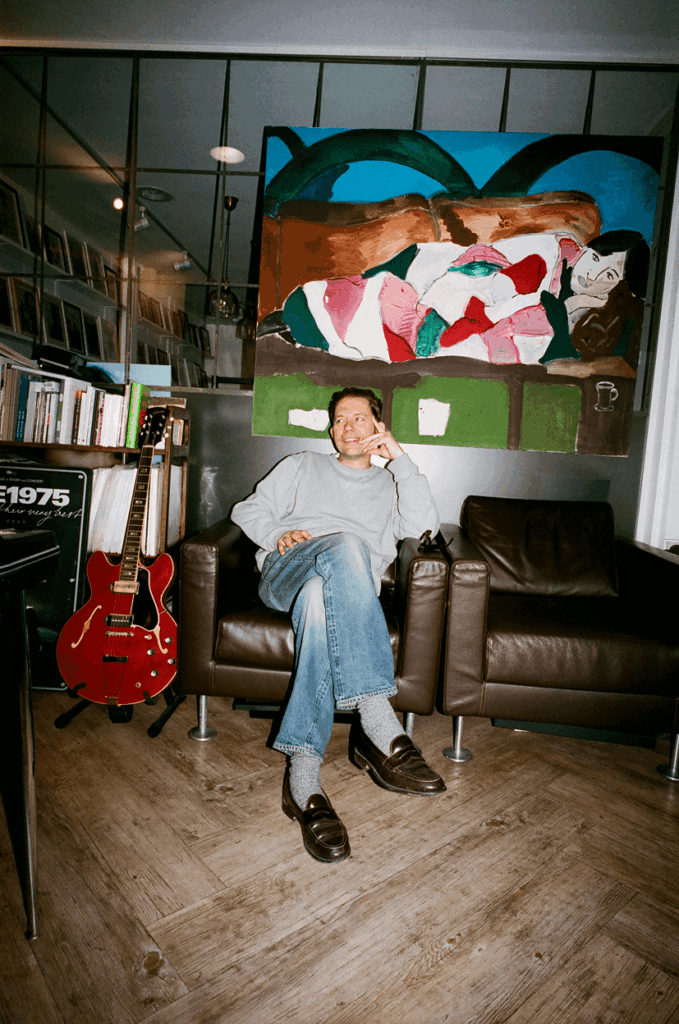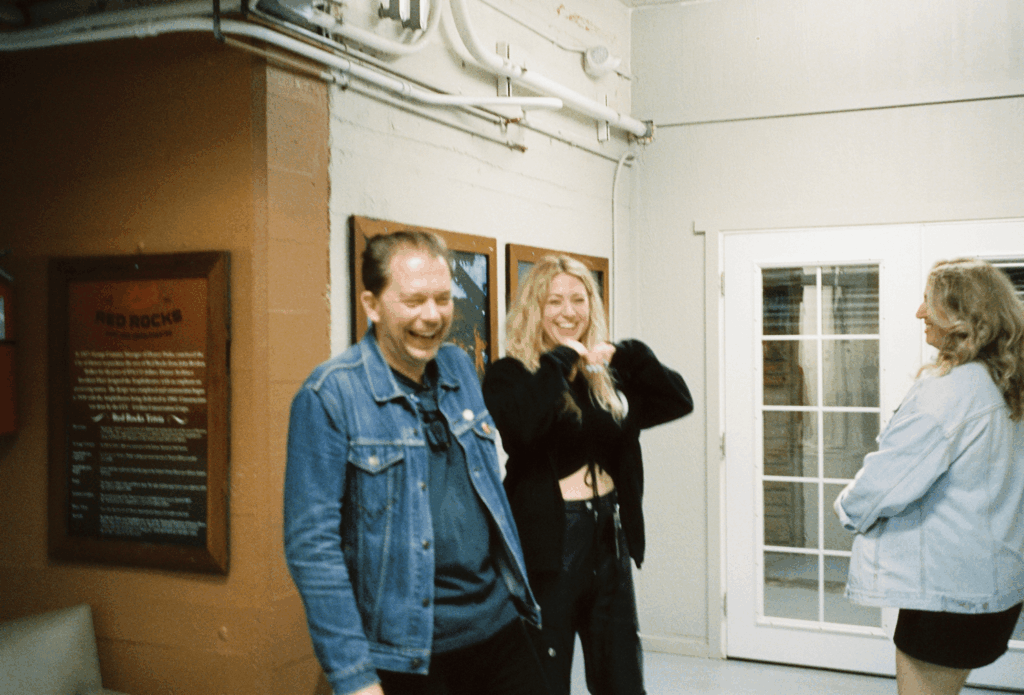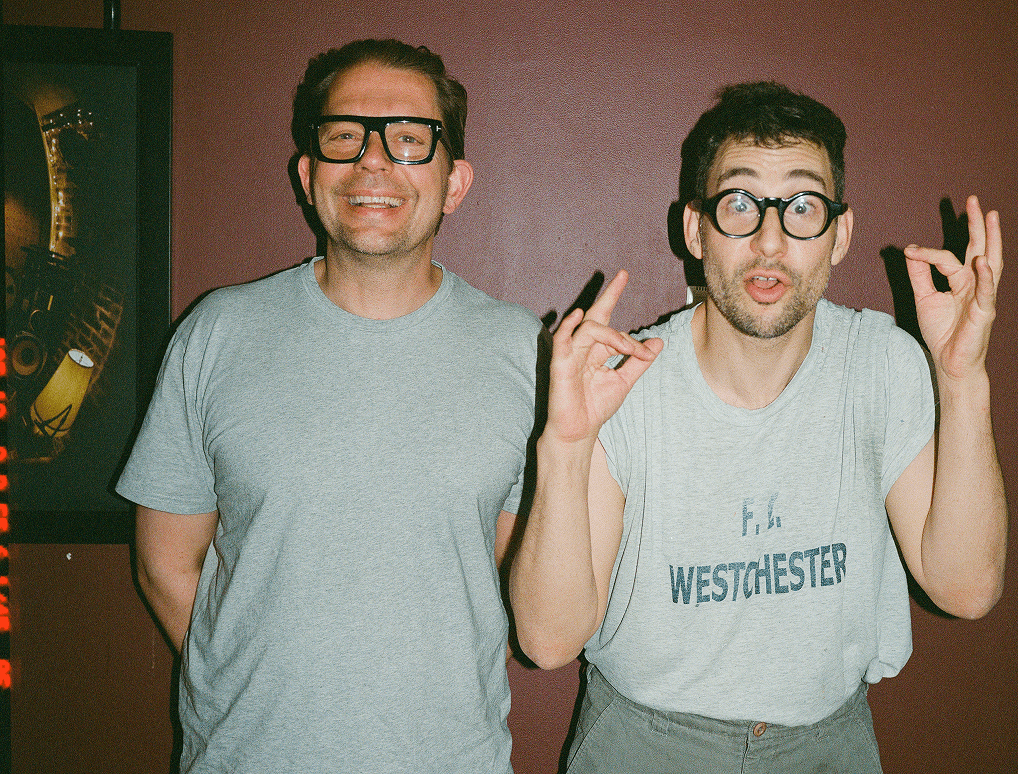
Jamie Oborne founded Dirty Hit in 2010—a label that’s grown alongside the artists it believed in from the start. With Beabadoobee, Been Stellar, The 1975, and nine-time Grammy nominee Jack Antonoff on his roster, Oborne has built a world of cult bands through conviction alone. His approach is emotional rather than formulaic: a label run on fandom and the art of music curation, where music feels made by fans, for fans. A former band member himself, Oborne has turned the DIY spirit of a teenage bedroom into a full-blown indie dreamscape. Each record on Dirty Hit plays less like a collection of tracks and more like an immersive world to live inside.
In this conversation, Oborne speaks with hube about managing The 1975, reading Burroughs, and treating a record label as a form of curation.
hube: When you begin working with an artist, do you start from sound, from story, or from something more intangible, like atmosphere? And if you could construct a dream world for an entirely fictional artist, what would it be?
Jamie Oborne: There’s never really a fixed starting point. My work and my life both feel like a series of serendipitous events. Usually, it starts from a connection with a person or group and grows naturally from there. Honestly, I feel like I already have artists who exist in those dream worlds. Working with people like The 1975, Jack Antonoff or Saya Gray, each has their own complete universe. I’m lucky that I get to live that fantasy in real life.
h: The name Dirty Hit feels both raw and precise. What layers of meaning do you see in it now, years on, compared to when you first chose it?
JO: I found it in a William Burroughs book. It described a feverish, drug-induced nightmare: something impure but electric. That sense of outsider energy and counterculture still feels true. I’ve always loved label branding, even as a teenager, and as soon as I saw that phrase, I thought it would make an amazing name for a record label.
h: Were you a Burroughs fan?
JO: Yeah, I was. I loved his cut-up technique and how it influenced art, pop culture, and music. His work led me to Brion Gysin and other artists who opened up completely new creative directions for me.