
Courtesy of SONGZIO

Courtesy of SONGZIO

Courtesy of SONGZIO
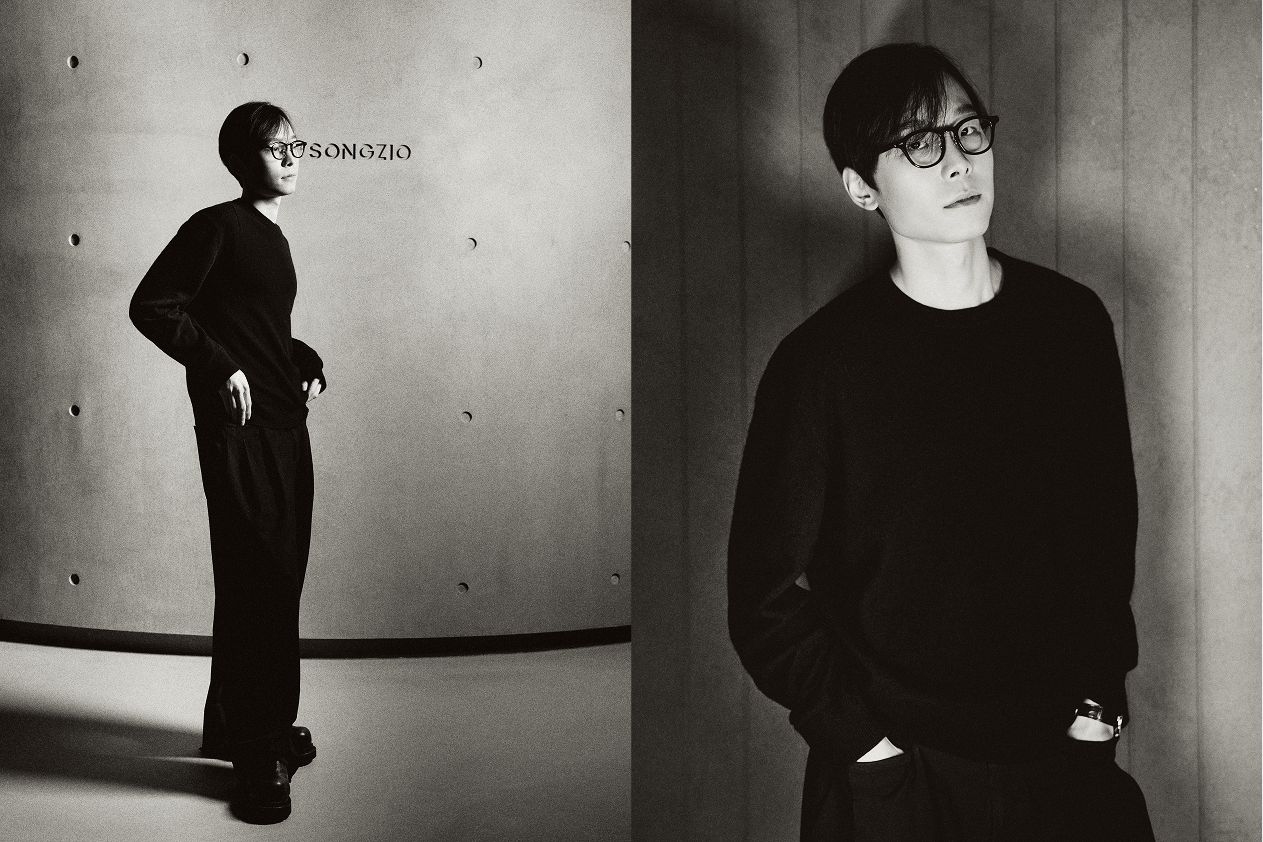
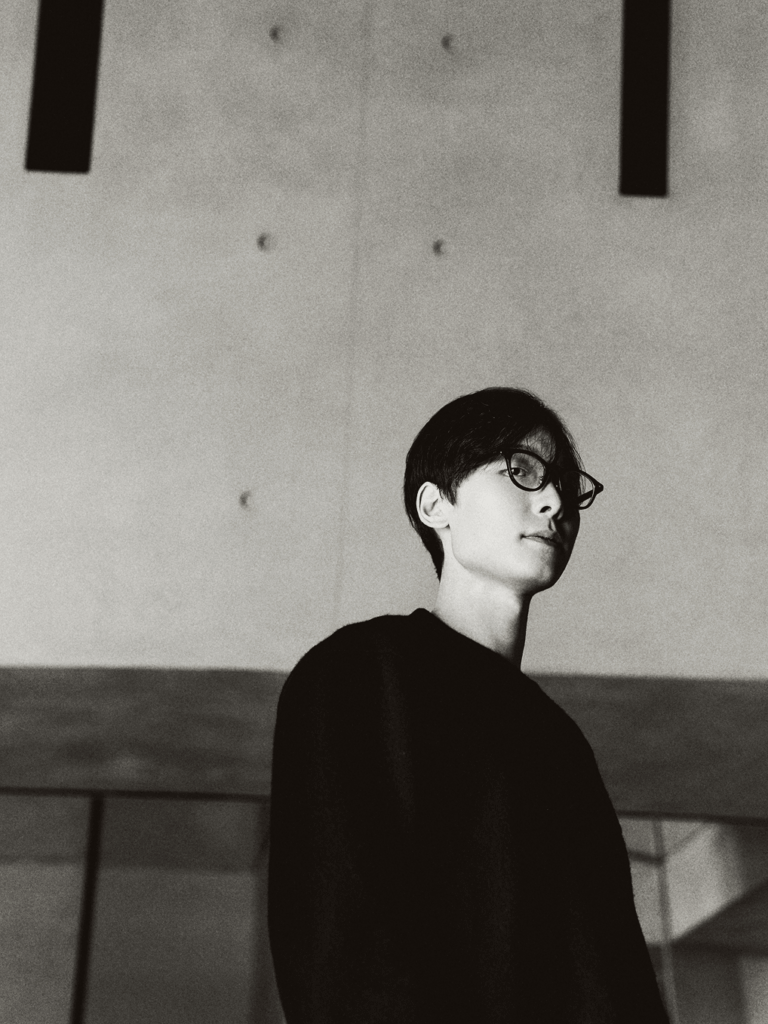
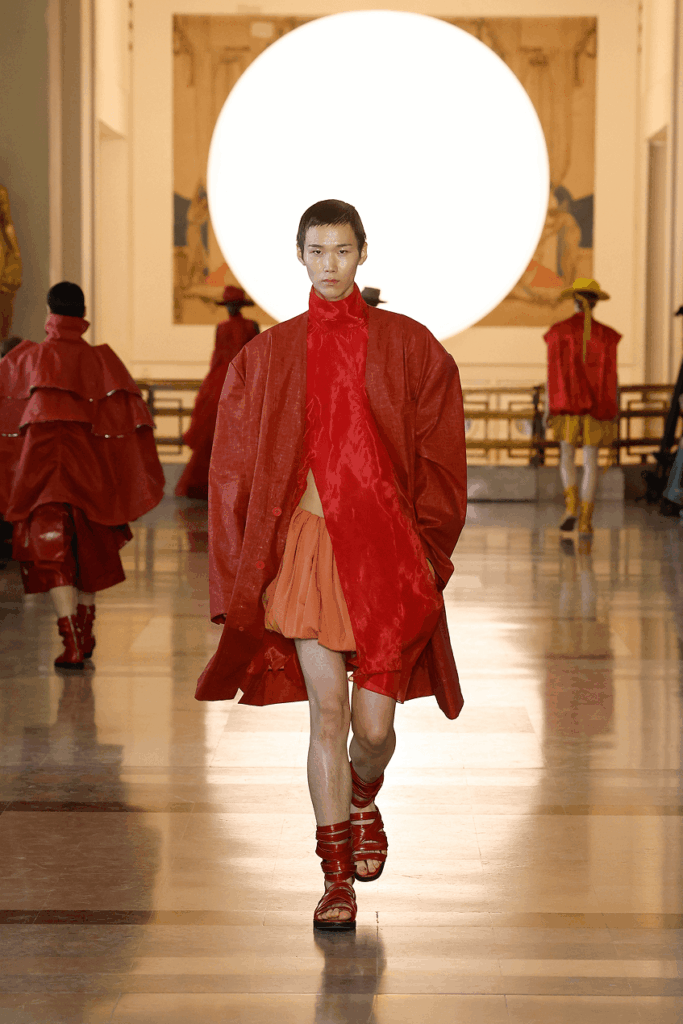
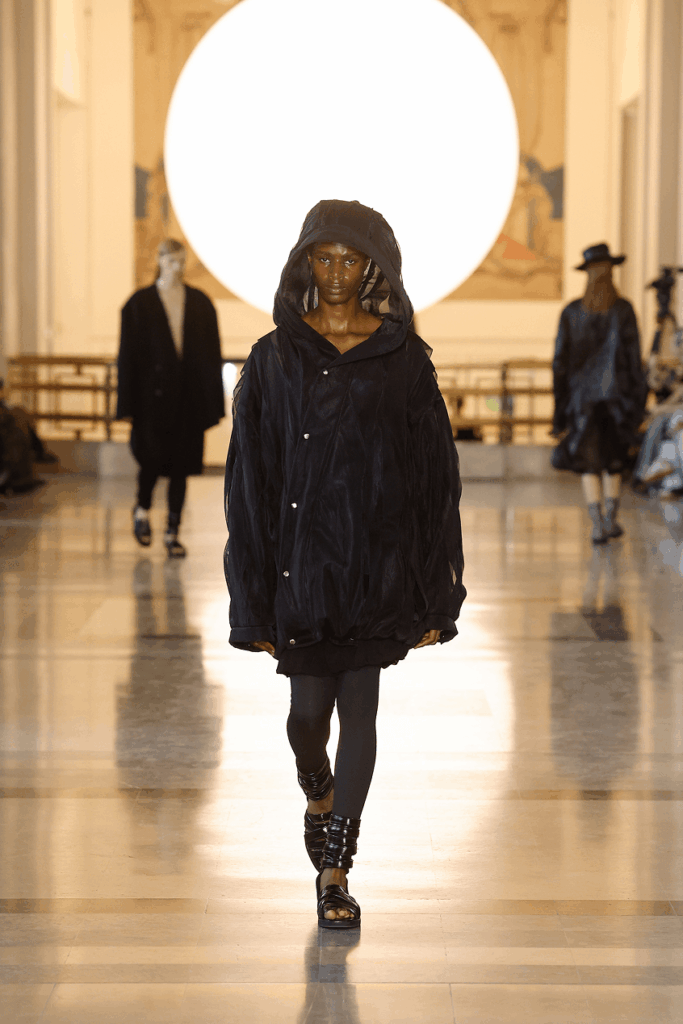
Between Seoul and Paris, between discipline and instinct, fashion becomes a language that does not translate—it connects. In the hands of Jay Songzio, Creative Director of Songzio, this connection takes shape as avant-garde elegance: a quiet force where East and West are not opposed, but carefully woven into one continuous narrative. Here, clothing becomes more than form—it becomes a selection of stories we choose to carry forward.
Founded in 1993 in Seoul, Songzio quickly established itself as one of the early voices of Korean fashion entering the global conversation. Today, under Jay Songzio’s direction, the house moves fluidly between Paris and Seoul—balancing artistic freedom with constant reinvention, and creating garments where tradition meets experimentation.
Over time, Songzio has expanded internationally, presenting at Paris Fashion Week and evolving through a series of cross-disciplinary collaborations. Among them are projects with The Walt Disney Company, drawing on the cinematic worlds of Tim Burton and The Simpsons—further blurring the boundaries between fashion, film, and visual storytelling. Alongside these, the brand continues to develop its own spaces, from Galerie Noir in Seoul to its Paris flagships, reinforcing its dialogue between cultures.
This vision finds a powerful expression in the recent Songzio x BTS collaboration. Created for the group’s comeback performance, Lyrical Armor reimagines Korean history through a contemporary lens—merging hanbok and Joseon-era armor into sculptural, avant-garde silhouettes. The garments move like living forms, carrying traces of the past while projecting a new kind of heroism for a global generation.
Sasha Kovaleva, our editor-in-chief, sat down with Jay Songzio to discuss fashion as an interdisciplinary art form, the tension between order and disorder, and the evolving identity of Korean fashion on the global stage.
Sasha Kovaleva: Songzio has grown into one of South Korea’s most influential fashion brands under your leadership. Looking back, was there a defining moment or spark that pushed you to pursue this path? Do you see yourself more as an entrepreneur, an artist, or a blend of both?
Jay Songzio: Fashion is such an interdisciplinary art. From architecture, spatial design, photography, videography, letters, to the collection itself, there are countless aspects one can study and create. Whether it is as an artist or an entrepreneur, this dynamic, ever-evolving, and endless process of creation is what continuously drives me.
SK: Having grown up in Paris and launched your brand in South Korea, you inhabit two rich cultural worlds. How do these influences collide and harmonize in your work—both in design and in how you lead the brand?
JS: Paris and Seoul are quite the polar opposites but inspiring in their own ways. Each city greatly influences my state of mind. In Paris, I feel freer and this sense of freedom allows me to wander around, imagining things with a rather lighthearted spirit. Paris often gives me my own time and opens up my mind while also allowing me to be very introspective.
Seoul is all about change. This almost obsessive desire of Koreans to constantly evolve, innovate and to find something new drives me very hard to not only dig deeper into our own identity but how to always reinvent ourselves. Seoul’s dynamism is certainly a driving force.
SK: Every creator faces forces beyond their control. What is a current challenge—creative, cultural, or business-related—that unsettles you, and how are you navigating it?
JS: Challenge is part of the job, and I think this slight sense of unsettlement and discomfort usually serves as a good source of inspiration and motivation. Songzio always find its own beauty between order and disorder, perfection and perfection, light and darkness… so in this unsettling place, somewhere in between, is where I find my own beauty.
SK: The human body is one of the most enduring and significant themes in the history of art and often serves as the starting point for discussions about beauty. Fashion is intricately connected to the human body, to its proportions and functionality. How do aesthetics and utility intersect for you?
JS: I define our aesthetic as ‘Avant Garde Elegance’ whereby aesthetics and functions co-exist. Our collections carry the experimental aesthetic of the avant-garde but always seek to find its own fluid and functional elegance, highly conscious of the human body.
SK: If you had to describe your brand in one emotion or sensation, what would it be?
JS: Aspirational.
SK: How do you envision South Korean fashion evolving on the global stage, and what role do you see Songzio playing in that narrative?
JS: South Korean Culture and Fashion will continue to evolve in the global stage and will find its own unique place. As for Songzio, we will always seek depth, authenticity and craftmanship to prove Korean design’s voice isn’t fleeting, but a permanent fixture in international fashion narrative.
SK: We live in a world where rigid concepts of gender still heavily impact many aspects of our lives. Exploring and observing the evolution of women’s and men’s fashion, how do you see the future of fashion in terms of gender?
JS: Although I recognize that gender roles are becoming more fluid in contemporary fashion, I think men’s and women’s fashion are quite different as men’s and women’s desires are often very different. Some styles may become genderless, and some may remain to be rigidly masculine or feminine, but does it really matter as long as the wearer feels comfortable?

Courtesy of SONGZIO

Courtesy of SONGZIO

Courtesy of SONGZIO

Courtesy of SONGZIO

Courtesy of BIGHIT MUSIC and NETFLIX

Courtesy of BIGHIT MUSIC and NETFLIX

Courtesy of BIGHIT MUSIC and NETFLIX

Courtesy of BIGHIT MUSIC and NETFLIX

Courtesy of BIGHIT MUSIC and NETFLIX

Courtesy of BIGHIT MUSIC and NETFLIX

Courtesy of BIGHIT MUSIC and NETFLIX

Courtesy of BIGHIT MUSIC and NETFLIX
SK: How did the SONGZIO x BTS Lyrical Armor collaboration for the Netflix comeback show come about?
JS: BTS reached out to us around two months ago to discuss this project. They were looking for a brand that could converge Korean History with their contemporary identity for this historical comeback show. From the conception of the initial concept, design of the collection to the final stage, it was a very collaborative creative effort with not only the group BTS, but also individual members, each with their own unique identity and story.
SK: What is the story/concept behind this collaboration?
JS: This special collection for BTS is called Lyrical Armor. It embodies the spirit of a new generation of heroes who carry the turbulent history of Korea within their bodies and souls while forging a new future. Drawing from the figures who shaped Korean history—valiant warriors, scholars, statesmen embodying dignity and intellect, and artists of profound insight and inspiration—the collection envisions BTS as pioneers who will open a new chapter in Korea’s future.
SK: What is the inspiration behind the collection?
JS: The collection draws inspiration from Korean Armor, the robust studded armor worn by warriors of the early Joseon dynasty as they entered the battlefield, and merges it with the flowing Hanbok traditionally worn by artists and ‘Sorigun’, Korean traditional singers, who transformed the sorrow, longing, and aspirations of the Korean people into ‘Sijo’, Korean poetry and folk songs.
SK: Can you describe key designs of the collection?
JS: Boldly resisting the boundaries of time, form, culture, and conventional notions of garments, the collection reconstructs Korean classical aesthetics by deconstructing traditional concepts and structures. These elements are pleated, layered, and fragmented into abstract pieces, then cut, refined, and reassembled into avant-garde silhouettes. The volumes of the garments swell and recede in rhythm with the body, while unstructured patterns and fluid drapes move like living sculptures.
SK: In your process, how much does the material dictate the final form of the garment, versus your original concept?
JS: For me, adhering to my original concept is very important, and for that reason, I develop many of my own materials. Naturally, in the process of creating a collection, I come across unexpectedly beautiful and inspiring materials that lead to new designs or encourage me to experiment more freely. However, in most cases, when I conceptualize a collection, I have a rather specific idea of which materials I want to use and how I want them to stand or flow on the body.
SK: If you could share one key lesson with young designers just starting out—something you learned the hard way or didn’t expect at the beginning of your career—what would it be?
JS: I think finding your own unique voice by being most true to yourself while remaining resilient is most important.
SK: How does it feel when your clothing takes on a ‘life of its own’ in the real world—being worn, adapted, or even altered by people?
JS: There is still no greater joy for me than witnessing someone wearing our clothes. Whether in everyday life or on stage, seeing my clothes take on lives of their own is always very moving.
Our garments often feature transformative elements (detachable, twistable, reversible, etc.), which give the wearer a certain creative freedom to alter and wear each piece in their own way. I also often witness our asymmetric and draped garments being worn in ways far more dramatic than I initially imagined—endlessly layered, wrapped around the body, dragging on the floor. Very expressive.
SK: In the era of digital fashion and virtual clothing, how do you defend or redefine the importance of tangible, handcrafted garments?
JS: I think that for designers in this rather daunting digital world, personal touch, tangible quality, and true craftsmanship have become even more crucial.
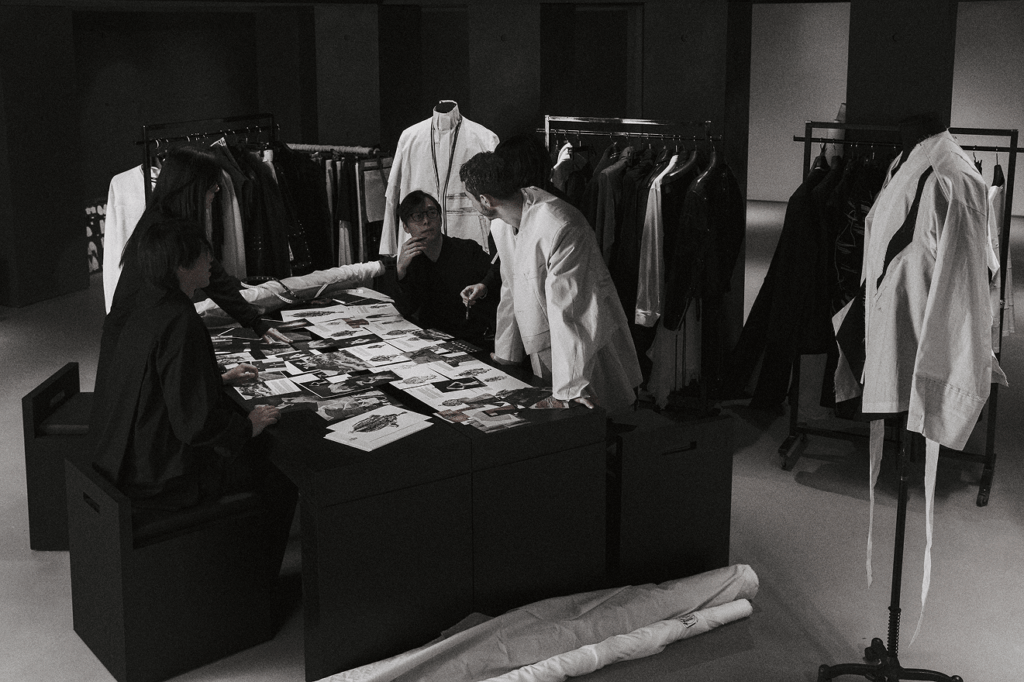
Our creative process is very traditional: I sketch, draw, and paint every day until I find the right look, the right concept. Then we experiment with new pattern-making, after which—through countless ‘toiles,’ ‘essayages,’ and ‘moulages’—we arrive at our own silhouette. With carefully chosen and developed materials, and the most meticulous craftsmanship, these toiles then come to life, each unique in its volume and texture. There isn’t much room for the ‘digital’ in this deeply human process.
SK: Creativity is often synonymous with freedom, a freedom that is associated with solitude. How do you perceive your freedom?
JS: Creativity itself may be associated with freedom, but once we begin to think and care about others, this freedom no longer seems to last. As a designer, I always seek to find my own voice, and believe what is most true to myself is the most creative. However, I’m not sure I always feel truly free in fashion. But, whether or not I feel free is not so important, it is most important how people appreciate, wear and find joy in what I always try so hard to create.
SK: How would you describe the future in three words?
JS: Order, And, Disorder

Courtesy of SONGZIO

Courtesy of SONGZIO

Courtesy of SONGZIO

Courtesy of SONGZIO


Courtesy of SONGZIO


Courtesy of SONGZIO

Courtesy of SONGZIO