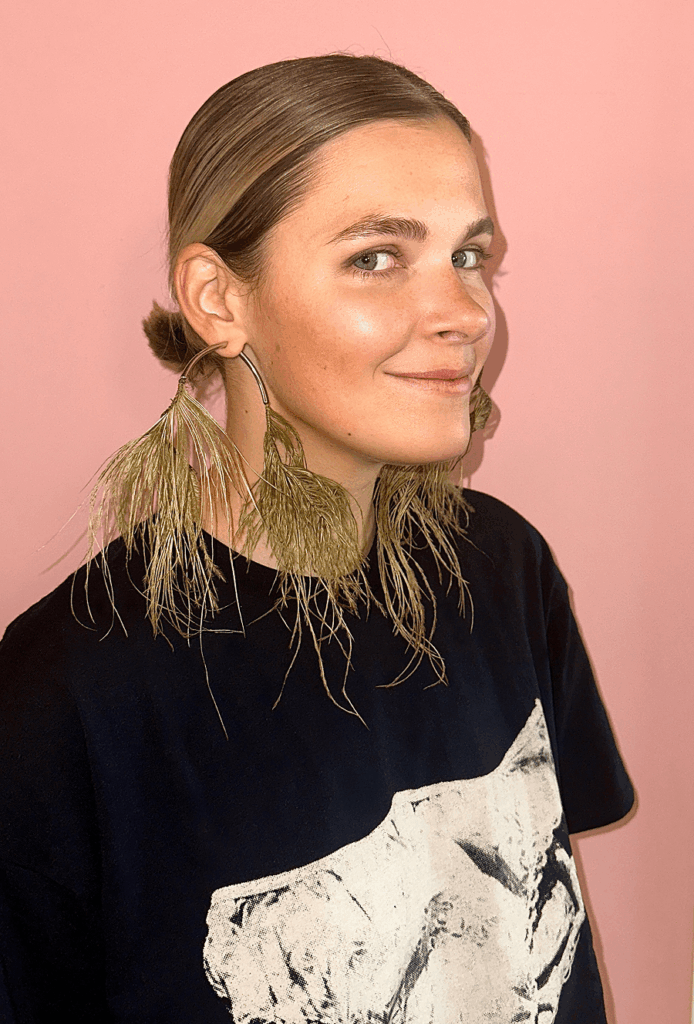
Marie-Victoire de Bascher is a Paris-based artist and designer whose sensibility was shaped by a colourful, creatively charged childhood that nurtured an early fascination with artistic narratives—a world of form, symbolism, and the humour hidden in objects. From this foundation emerged her eponymous studio, founded in 2019 in Le Marais—a space where fashion, art, and interior design converge into something distinctly MV. At its core lies a philosophy of storytelling in design, where each creation carries a whisper of narrative and emotion beneath its crafted surface.
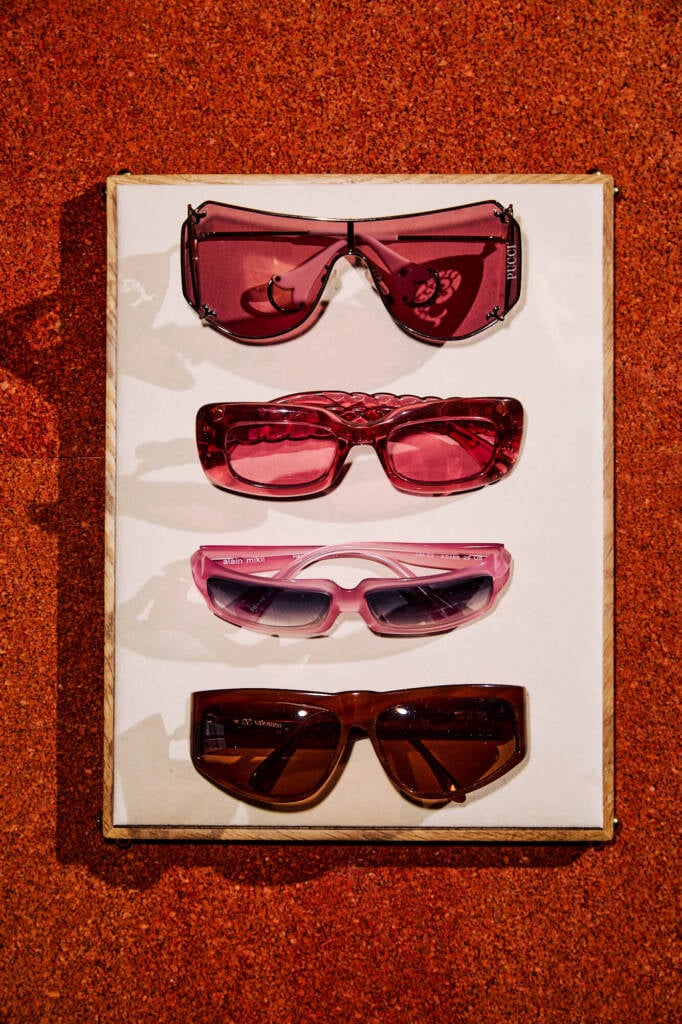
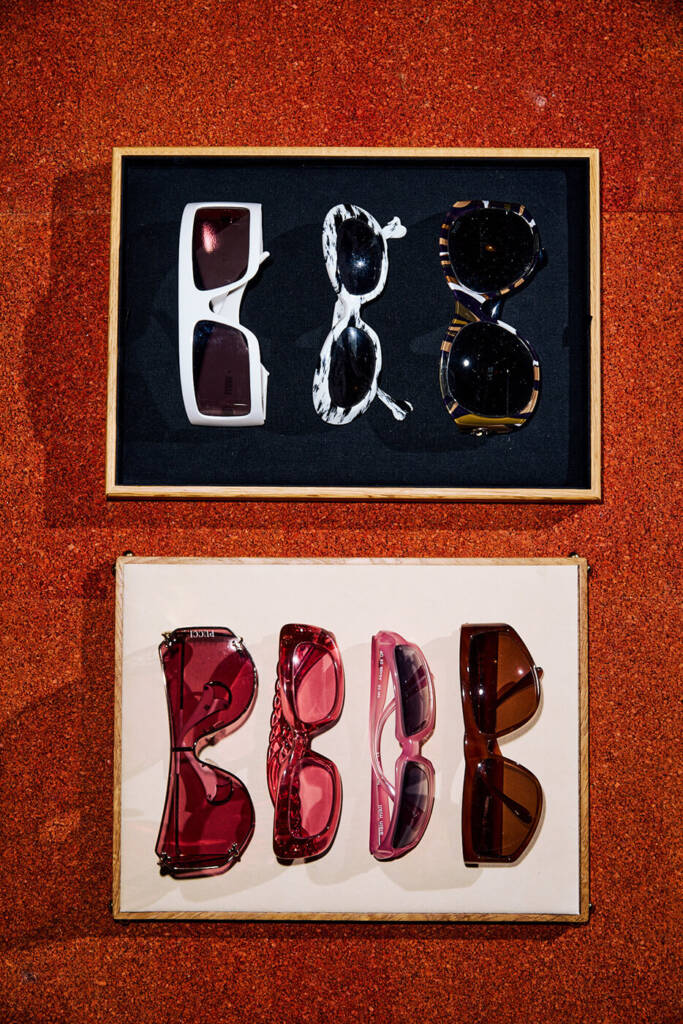
Her collaborations span the most current names in the luxury fashion scene: eyewear for Jacquemus and Pucci, jewellery for Lemaire, graphic direction for Hermès leather goods, and the dreamlike campaign for Diptyque’s L’Eau des Hespérides. Marie Victoire de Bascher’s work is a study in precision and play—where humour meets craftsmanship and fantasy meets form. Each piece stands as a quiet rebellion against rigidity, a reminder that design, at its best, is meant to be lived and enjoyed.
hube: You’ve designed eyewear for both Pucci and Jacquemus—two houses steeped in a spirit of joy and play. Does that sense of joie de vivre naturally live within your own aesthetic, or do you sometimes find yourself resisting it in search of a different mood?
Marie-Victoire de Bascher: I grew up watching the fun, sparkly runways of the ’90s, which gave me an appetite to combine work and play—my ethos emerged from this. But I have learnt to nuance my vibrant impulses and found pleasure in coding my DNA in details—a silly function, a cheeky name, secret encryptions. Humour is vital to my work. I can’t resist it.
h: You carry a rich Parisian fashion lineage—your uncle Jacques de Bascher, your cousin and former collaborator Théophile. Does heritage inspire or weigh on you? How do conversations about art and design unfold within a family so steeped in aesthetics?
MVB: I grew up in the countryside, far from the Parisian scene, but I come from a family of storytellers. They passed down memories in the shape of tales and myths, including a lot about my uncle’s extravaganzas, so his heritage really came in the shape of legends.
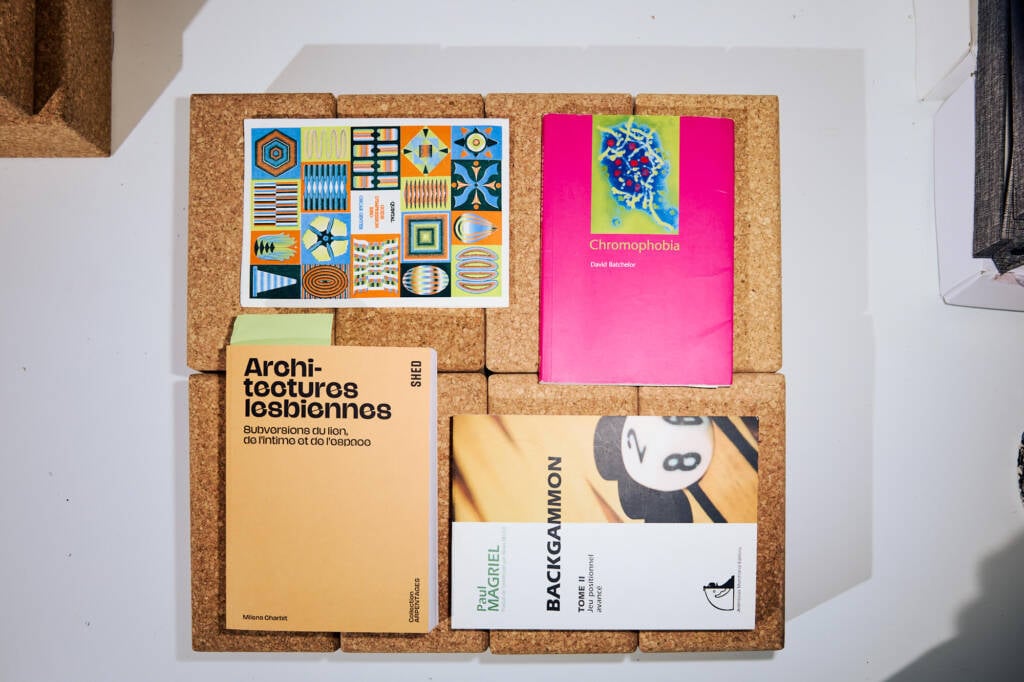
Working in fashion, I regularly meet a few people who knew him in the ’80s. When introduced, I always get the same reactions: it’s either a good scandalous gossip or some very judgemental eyebrows. But it’s really a small hassle, and I scarcely give my full name anyway (I mean, it’s long enough as it is!). Creatively, exploring the contrasts and similarities in our heritage is what brought Theo and me together. Our shared practice of design sparked an ongoing conversation centred on family games; we debuted our collaboration in 2024 with a massive backgammon table and are working on a chess salon for 2026. It’s a clash of aesthetics with a mutual taste for experimentation.
h: What first seduced you into the world of fashion and design? And if you could redraw the trajectory of your career, would you?
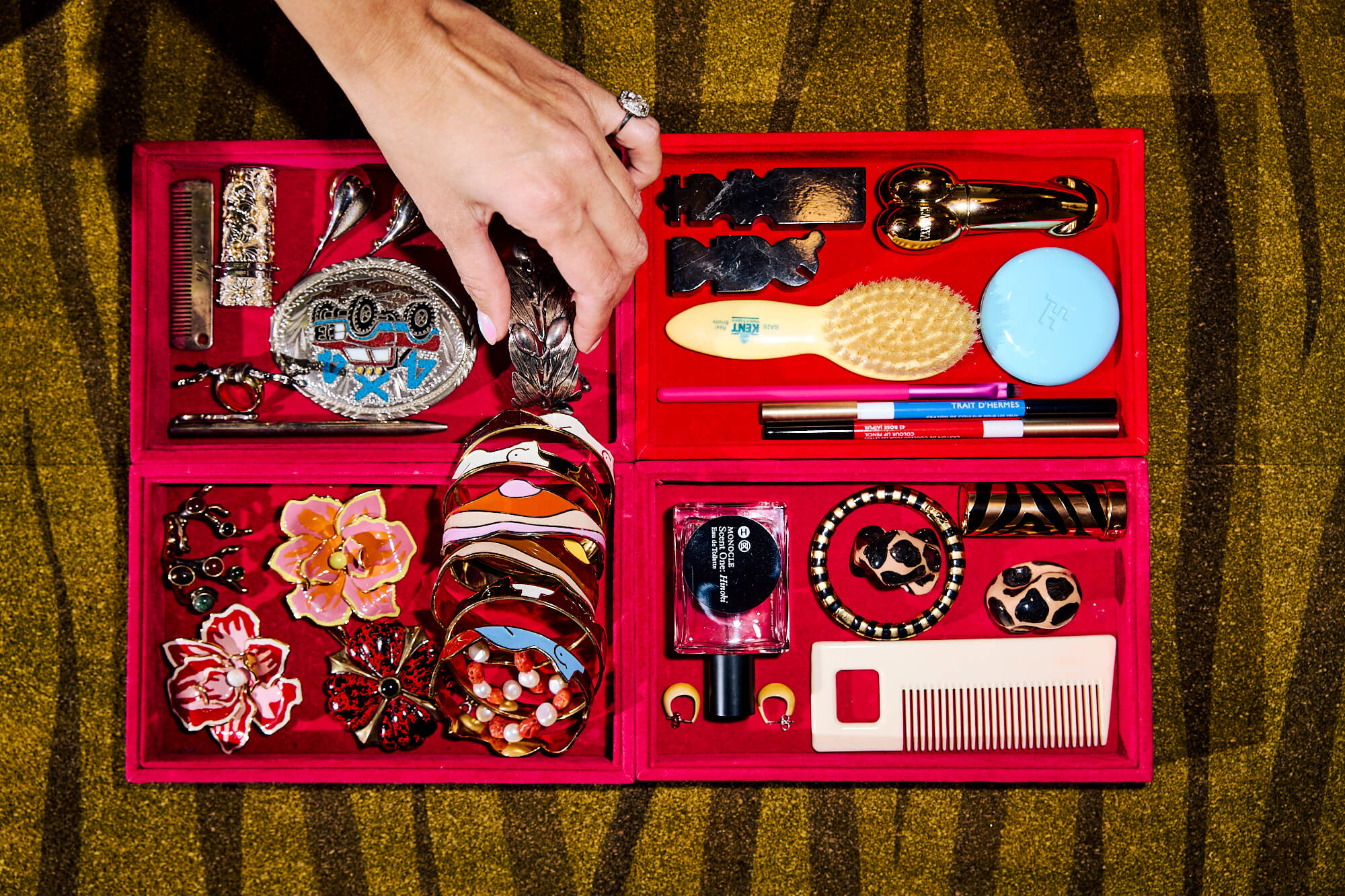
MVB: I remember vividly discovering a puzzle game—16 animali from Enzo Mari—at my grandparents’ and being amazed by the clever shapes and the weight of the pieces. I think it was the first time the beauty and ingenuity of a design really struck me. I wished I had designed it instantly. As for fashion, I was born with the mind of a magpie; everything shiny I find irresistible. Christian Lacroix haute couture, Versace and Jean Paul Gaultier in the ’90s were catnip to me; doing something in fashion was evident from a very young age. But fashion jewellery I really discovered during my first internship at Louis Vuitton under Marc Jacobs, where Camille Miceli was doing the most extravagant collage parures. I found my creative balance making connections between these seemingly very partitioned industries. I could not imagine my identity today without having explored these two passions.