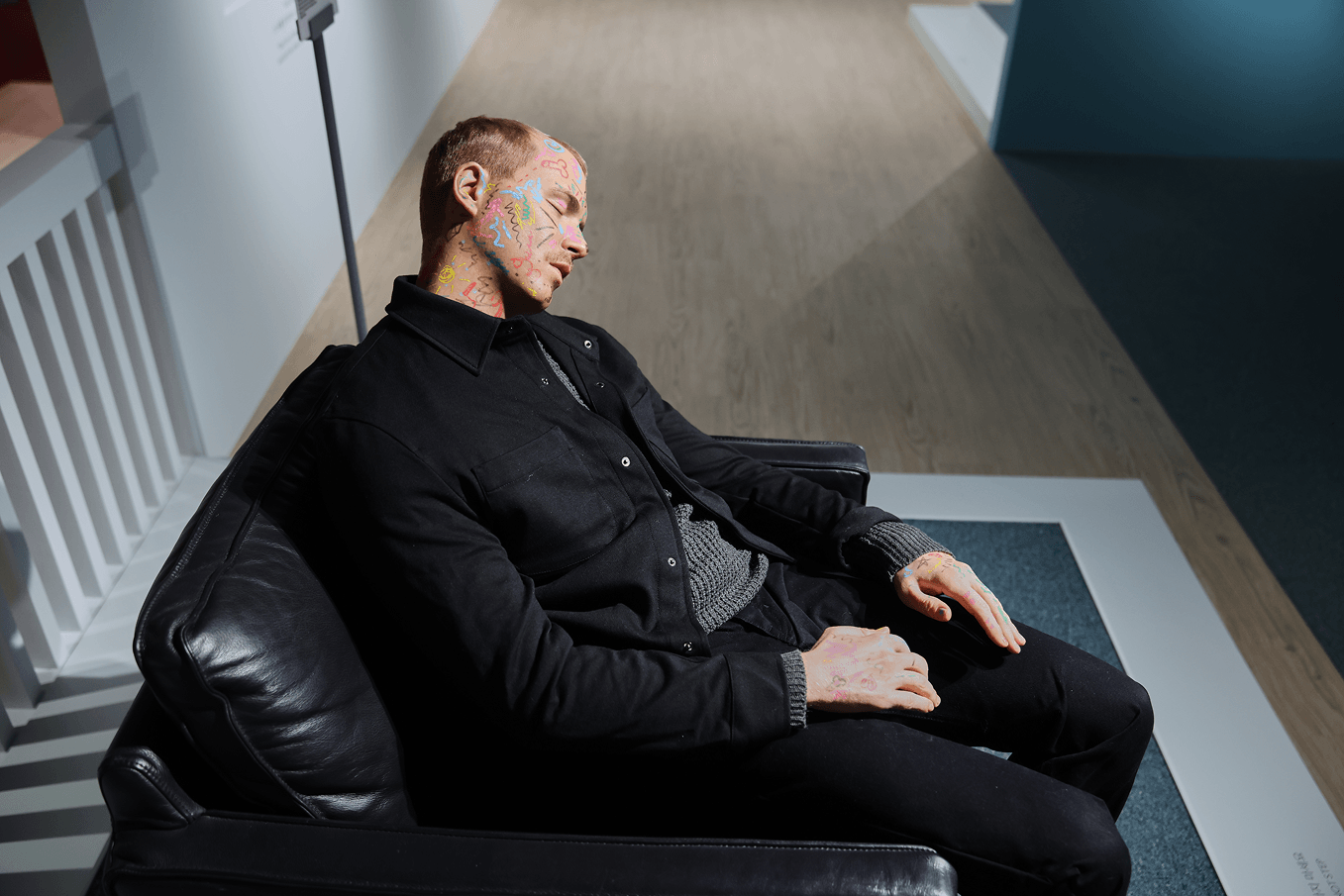
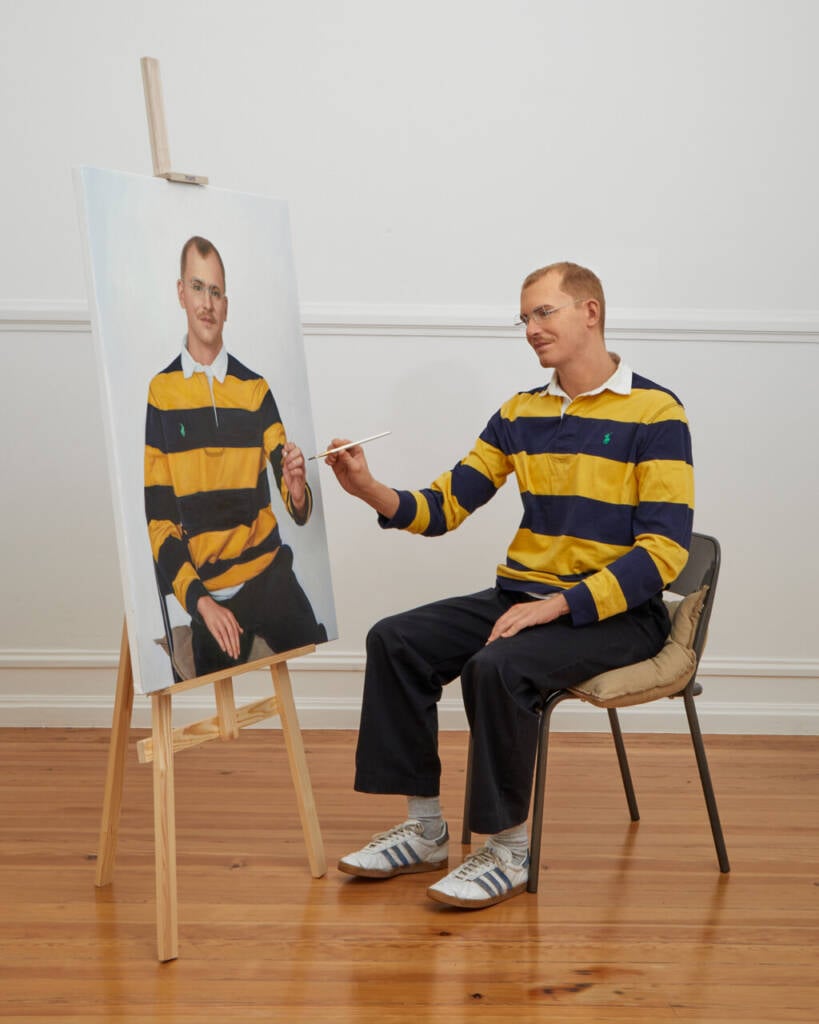
Self-Portrait, 2024
Oil on canvas, easel, chair, silicon, hair and textile; 178 x 100 x 152 cm
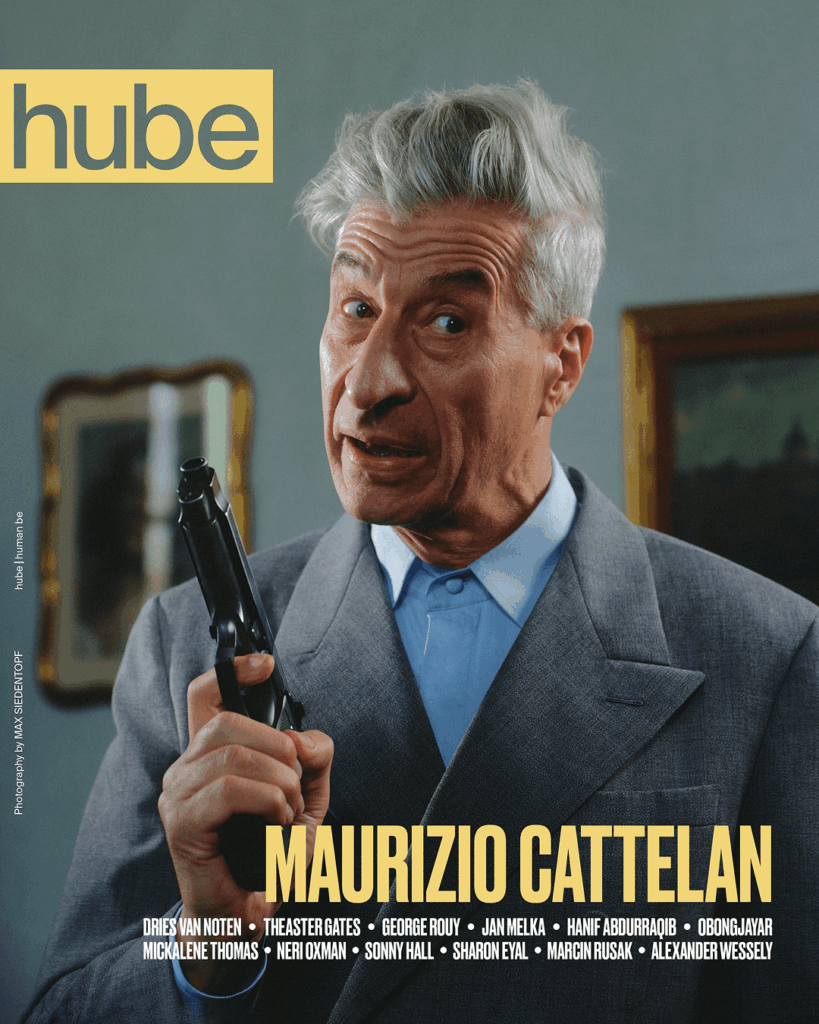
MAURIZIO CATTELAN
Photography by MAX SIEDENTOPF
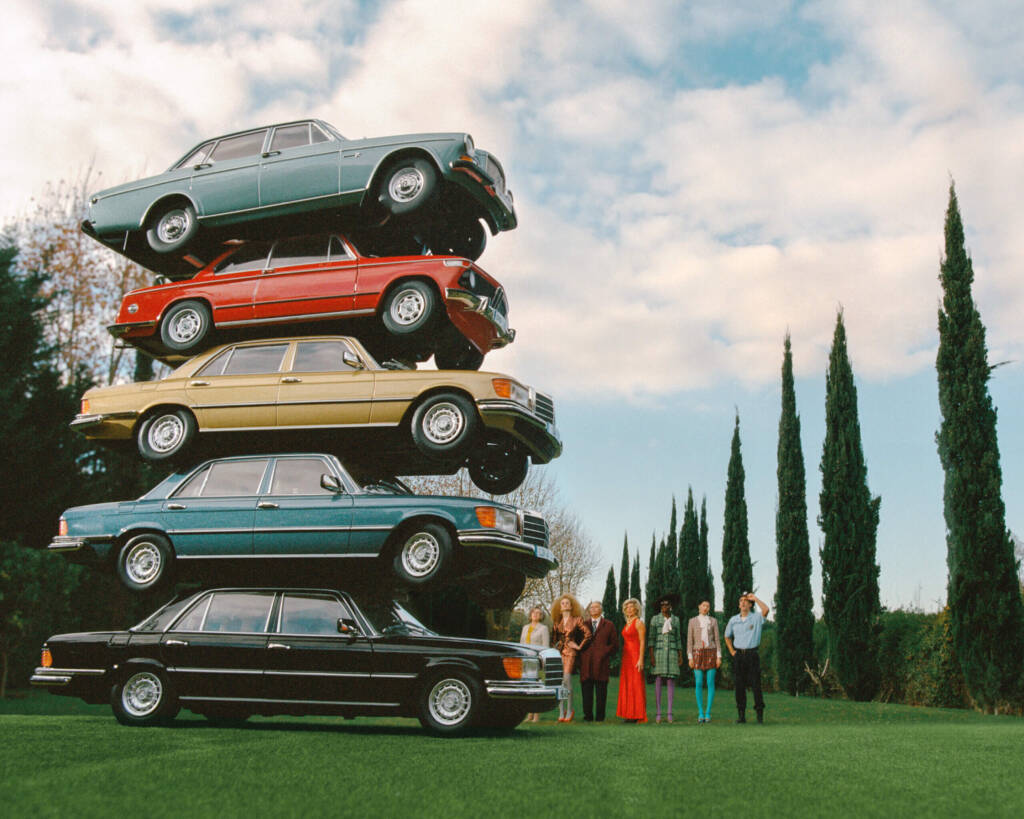
This Isn’t Where I Parked My Car
Max Siedentopf is an artist, photographer, and creative director whose work balances mischievous playfulness with quiet rigor. Moving effortlessly between sculpture, film, fashion, and the printed page, he has a rare gift for spotting the absurd in the everyday and elevating it without ever over-explaining. His approach is direct, intuitive, and unpretentious—an instinctive response to the world rather than a calculated position within it.
For hube’s upcoming Spring/Summer 2026 issue, we invited Max to shoot our cover story with Maurizio Cattelan. The pairing felt natural: both share a deep love of play, surprise, and subtle disruption. The resulting images—sharp, humorous, and tinged with mortality—capture a spirit of irreverent intelligence that defines both artists.
In this conversation with hube’s editor-in-chief, Siedentopf reflects on the instincts that guide his practice, the quiet disruptions he discovers in everyday life, and the ways he allows different strands of his work to collide.
Sasha Kovaleva: Let me start by saying—this is by no means flattery—but you are one of the most humble, thoughtful, and open to compromise photographers and art directors I’ve had the chance to work with so far. At first, I thought it was simply your personality that we should thank, but then I learned that you were a professional swimmer as a child. And I thought, of course—that must have shaped your character profoundly as well. I’m a runner myself, and some of my favorite words are “routine” and “discipline.” They help me stay grounded and mentally balanced. Do you find that the lessons from your swimming days still ripple through the way you work and live?
Max Siedentopf: Yes, absolutely, on a daily basis. During my teenage years, I was training around six hours a day and waking up at 4 a.m. every morning. It was incredibly demanding and required a lot of personal sacrifice, but I’m very grateful for that period. The work ethic it instilled in me is something I still carry with me today.
In many ways, sports and art sit on opposite ends of a spectrum. Art is deeply subjective—there’s no single right answer—whereas in sports, everything is measurable and brutally clear. You either touch the wall first or you don’t. Growing up in that environment shapes your mindset early: you learn to push yourself to the absolute limit, because effort and results are directly connected.
At the same time, there’s something almost meditative about it. I spent thousands of hours staring at the bottom of a pool, only to move from point A back to point A, repeating the same motion over and over again. That kind of repetition teaches patience, focus, and resilience.
Even though my work now lives in a much more subjective world, I still approach it with the same mindset—showing up every day, putting in the hours, and trusting that consistency will eventually lead somewhere—even if it’s back to point A.
SK: Growing up in Namibia must have been a unique experience. How did that environment shape your perspective on the world, and in what ways do those early years still influence who you are today?
MS: Growing up in Namibia was incredibly formative. It’s the second least densely populated country in the world, so you’re surrounded by vast amounts of space and nature, with very little external noise or distraction. In many ways, that creates a kind of quiet freedom.
As a child, a lot was left up to you. There wasn’t constant stimulation or endless options for entertainment—you had to invent things, find ways to occupy yourself, and learn to sit with stillness. Looking back, I think that was incredibly valuable. There’s something important about that kind of boredom. Boredom is where things begin—where your mind starts to wander.