
Photography by CONOR DOHERTY
Courtesy of OXMAN
Photography by NICHOLAS CALCOTT
Courtesy of OXMAN
Photography by NICHOLAS CALCOTT
Courtesy of OXMAN
“Biology is long and wet. Technology is quick and dry. Put them together and you invite a material ecology; a world in which designed products and environments contribute to, rather than compromise, ecological resilience.” In the work of Neri Oxman, this vision takes tangible form: a dome co-created by a robot and 6,500 silkworms, shoes grown from living bacteria, textiles that encode information within their very fibres. These projects are as aesthetically compelling as they are scientifically urgent, imagining a more resilient and connected world in the face of looming climate crisis. In 2010, driven by an interest in “nature-inspired design and design-inspired nature,” Oxman founded The Mediated Matter Group at MIT: a research lab exploring the intersection of computational design, digital fabrication, and synthetic biology. A decade later, she launched her eponymous studio, OXMAN, where these explorations continue to unfold, challenging us to imagine not just new objects, but entirely new ecologies.
hube: The merging of organic life and inorganic entities may become an inevitable part of evolution. Do you believe we have reached a point that requires us to reconsider our ethical frameworks and social norms? If so, how might this transform our understanding of what it means to be human?
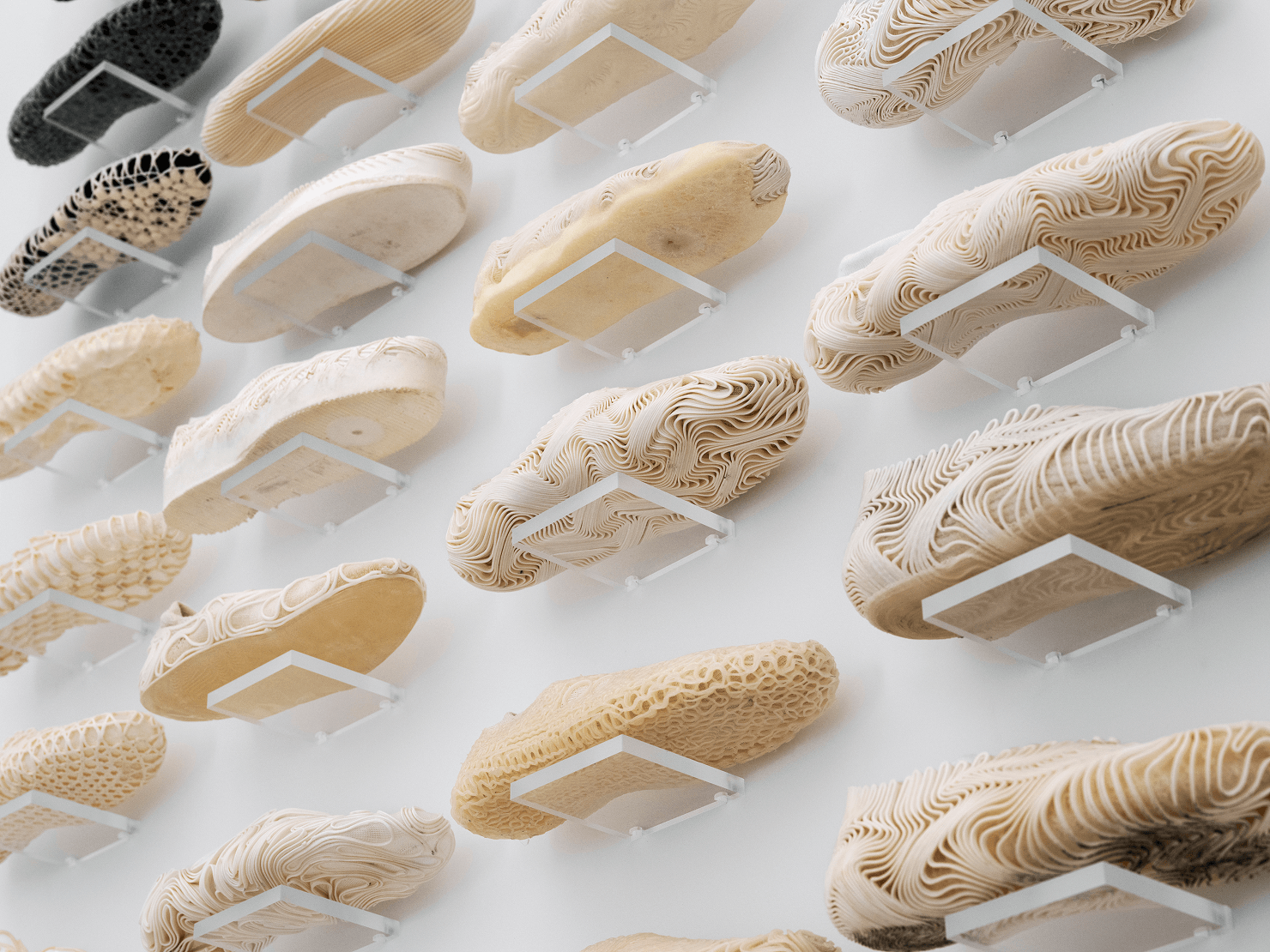
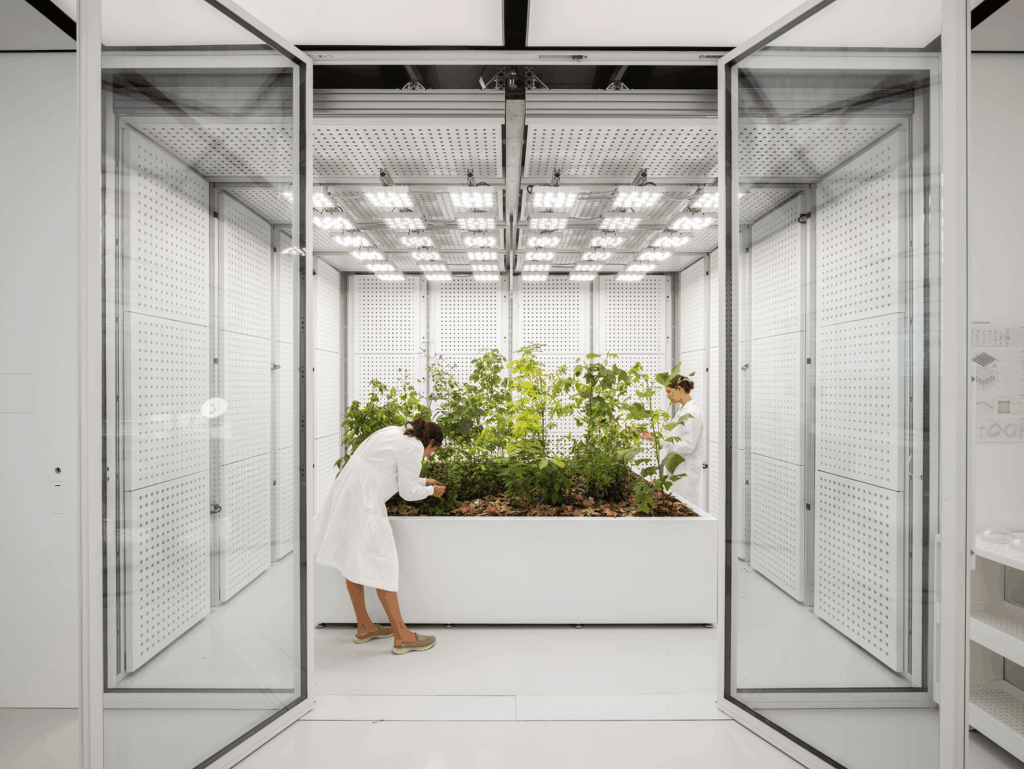
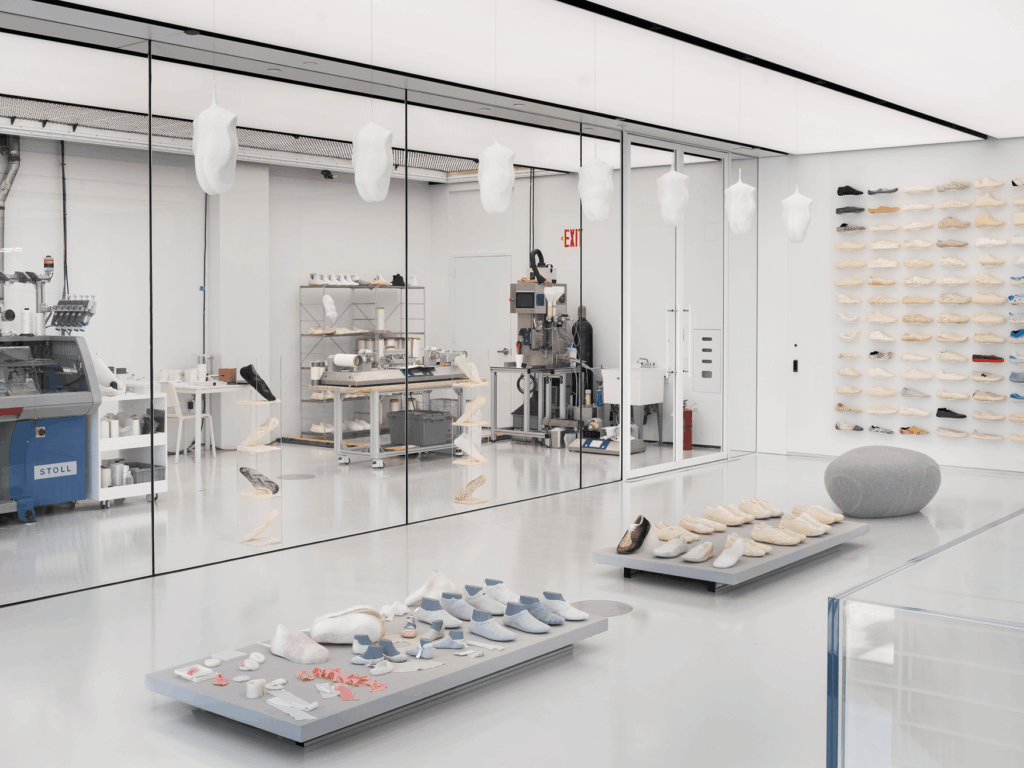
Neri Oxman: Pretty much everything we do in our lab embodies the complexity of fusing organic and inorganic entities. From our work in the Mediated Matter Group at MIT to what we’re doing today at OXMAN: AI-driven ecosystem engineering, bacterial shoes, bio-pigmented textiles, de-extincted smells—our projects intersect the natural with the built. These are not merely objects or products, they are hybrid living materials and systems designed to merge and leverage the best of both worlds.
Still, it’s important to draw a distinction between organically augmented inorganic devices and inorganically augmented organic agents. Think bio-hybrid transistors versus brain-computer interfaces, living neural networks on chips versus fully programmable cellular behaviour. The difference is in the agency. In the first case, agency is limited to circuitry. In the second, there is the possibility of emergent behaviour.
The shoe becomes a plant; the plant becomes a shoe. What’s unfolding now goes even further. Cognition, intention, and communication are no longer uniquely human. Forms of subconsciousness—like memory, pattern recognition and preference—can be externalised, networked, and shared. The implications are profound: being human may no longer be defined by biology alone, but by how agency is distributed, negotiated, and relinquished.
h: In this respect, what is your ultimate design vision?
NO: Biology is long and wet. Technology is quick and dry. Put them together and you invite a material ecology; a world in which designed products and environments contribute to, rather than compromise, ecological resilience. Imagine the natural world computing over Wi-Fi. Imagine photosynthesis not as a passive biochemical process, but as an agential system capable of responding, adapting, deciding for itself. Not as literal human consciousness, but as distributed agency embedded across the kingdoms of life.
Now ask what happens to climate, to animal migration, to ecosystems when features have agency. When they can propagate, adapt, or even go viral. Ethical frameworks and social norms are no longer sufficient unless they are structurally embedded into code, materials, and systems themselves.
We may have already crossed that bridge. The real question is how fast we act, and how much agency we are willing to embody or give up in an age where chapters of human subconsciousness can be externalised into a thinking cloud. Agency, not hybridity, is the ethical tipping point.