

Vollebak, a brand employing science and technology to create clothing, carries a curious openness to bold ideas and a willingness to push material science into wearable form. Founded by brothers Nick and Steve Tidball, it functions less as a conventional fashion label than as an ongoing exploration in human adaptation: an inquiry into the clothes of the future—when the pressures of climate, technology, and biology reshape daily life.
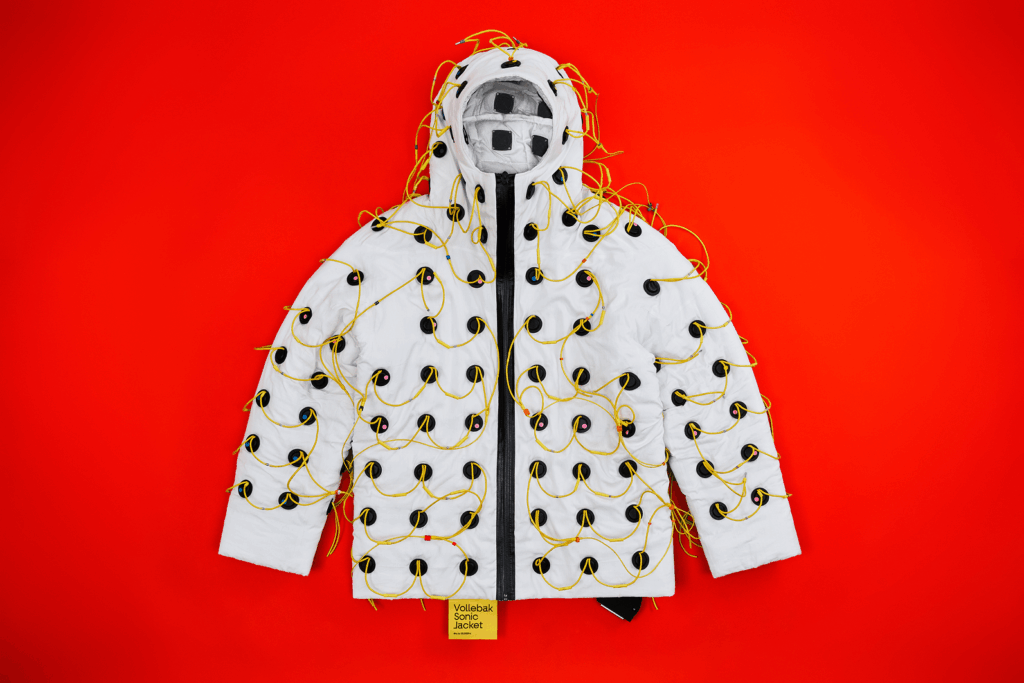
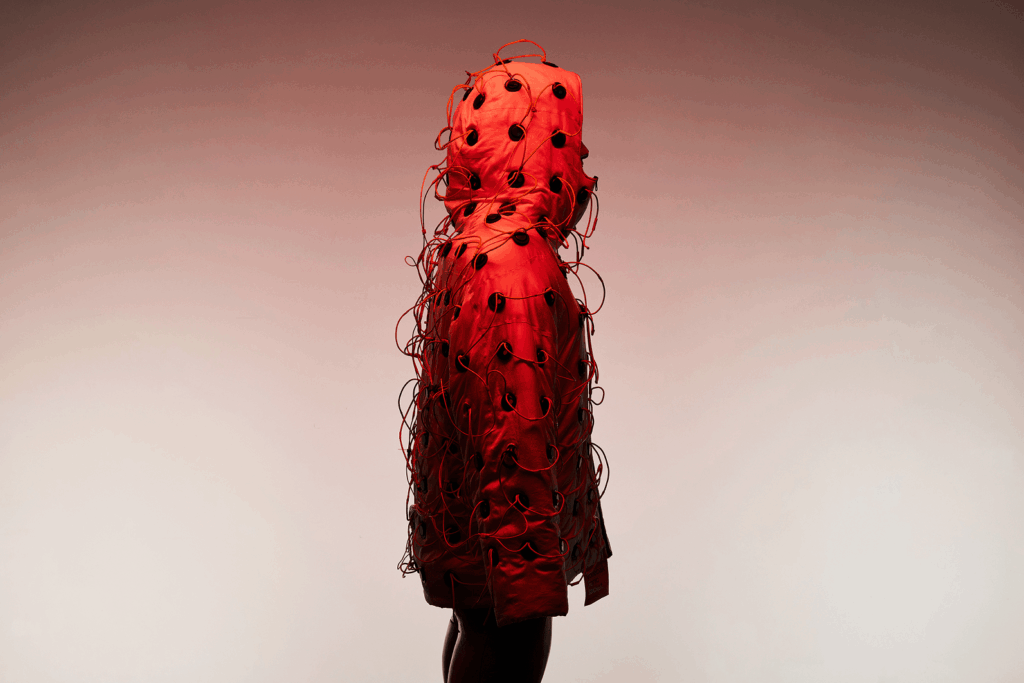
Vollebak clothing has a way of lingering in the imagination. There is the Sonic Jacket, which contemplates sound itself as both threat and therapy; the Martian Aerogel Jacket, lined with material developed for landing rovers on Mars; and a growing line of experiments that borrow from nature’s oldest tricks—self-regenerating systems, adaptive camouflage, extreme durability—and become wearable innovation.
At its core, Vollebak reflects a belief that the best design solves meaningful problems with clarity and imagination. Clothing becomes a medium for speculation: less about what we wear today than about what we might need tomorrow. Hube’s editor-in-chief, Sasha Kovaleva, spoke with Nick Tidball—an architect by training and an artist at heart—about functional design, transforming unconventional ideas into reality, and the future of clothing designed to enhance our lives.
Sasha Kovaleva: Vollebak often feels less like a fashion brand and more like a long-term experiment in what humans might need next. How do you decide which problems are worth building garments for in the first place? And what comes first for you: a material, a problem, or a question about the future?
Nick Tidball: I’ve got two children—my daughter is thirteen and my son is ten. I’m always fascinated by how the brain works and how ideas emerge. And now that I’m a dad, I’m quite conscious of not being too dictatorial about what a good idea is or how it comes about. In running the company, my biggest fascination is maintaining an openness to how good ideas come to you.
Sometimes you see a material which is so beautiful, or so revolutionary, or from a different industry, and you say: my goodness, that would be so cool, or so correct, in clothing, because it does this thing that no one’s ever talked about. Other times I’ll come up with ideas—mostly when I’m running, or playing the piano, or playing chess—and it’s hard to explain where they come from. If you imagine your brain as a problem-solving machine, or an idea-creation machine, it’s the vessel that holds a million different problems at the same time, and sometimes it just happens to answer some stuff you’d been thinking about. I let that happen. An idea can just come to me.
Sonic Jacket happened that way. No one had asked me to create a sonic jacket. My brain triangulated a few different things: my cat purring at ninety hertz, sonic weaponry—and I thought, well, you must be able to do sonic for good—and also the move forward in technology and clothing. It put those three together. I can’t honestly tell you how I came up with it, other than that it would be wild to create a jacket for sound and frequency.
Other times you see a problem, or witness a thing. Take, for example, the longevity of clothing. Why don’t clothes live a long time? How come they used to live longer a hundred years ago than they do now? That can’t be right. In the same way, lots of the food system is wrong—it might have been quite a lot better a hundred years ago, when you bought from markets and ate locally. The longevity of clothing would be exactly the same a hundred years ago: your shoes or your trousers or your jacket lasted way, way longer. That is a way smarter way to live. So as a clothing brand: how can I address that?
I’m also quite specific about what a good idea is. There’s a famous saying that if you can’t explain your idea to a child, you probably don’t understand it well enough. That’s so true. So much can get wrapped up in language. A beautiful concept, at its heart, is something anyone can understand. Not everyone might like it, but everyone can understand it. Say, “That’s fireproof and lasts one hundred years.” Then—“Oh, cool. Not a hoodie I throw away in three months. Okay, I understand that.” That’s what I’d class as a good idea.
I think it’s really important to have an idea that resonates with people. Doing an idea in isolation of understanding how the world works isn’t a terribly useful idea. That’s art, right? And I love art. I grew up doing art. I drew for ten hours a day, I studied architecture, I love art. But when you are building clothing with a purpose, it’s really important to understand that there might be a lot of people who would like that and need it.
SK: Your work often looks to nature for inspiration—whether it’s butterfly wings or squid skin—while staying deeply futuristic. Where do you see the line between copying nature and going beyond it, if there is one at all?
NT: Nature is the smartest scientist you’ve ever seen. If people had to recreate a bumblebee now—we can’t do it. We can’t do anything. We probably can’t recreate a worm. Nature is so utterly, fantastically clever, because as far as I’m aware it’s had about 780 million years to get good.
I don’t think there was much complex life on Earth until relatively recently. Say the Earth has been around for 4.5 billion years. Nature, in terms of complex life, has been evolving for hundreds of millions of years. There was the Cryogenian period, one of the most extreme ice ages on Earth, which lasted a few hundred million years. After things began to warm, life started to evolve in increasingly complex ways. It’s almost as if nature said, “Oh my God, I’d like to start now.” So nature has essentially been practicing for hundreds of millions of years. And humans—in a civilized way, for argument’s sake—for maybe 40,000 or 100,000 years. So our advancements in the last ten years are truly astonishing, but nature is still the greatest inventor ever.
All I like to lean into is people who’ve created incredibly clever technologies. Sometimes the technology is inspired by nature. Trees can be set on fire and then give rebirth to themselves—it doesn’t matter that they’re on fire, it’s almost the way they germinate. They have these incredible survival properties. So let’s say we make clothes like that. And then we probably also make clothes which are strictly technological—take the Martian Aerogel Jacket, which uses a parachute they use to land the Mars rover. But then, honestly, they made those parachutes inspired by seeds that flew.
So I’d imagine if you were to write a PhD on it, the idea that everything is not inspired by nature is probably impossible. You could draw every technological revolution in clothing back to this: them trying to mimic something in nature, or create something incredibly tough. There isn’t really a distinction—science and nature are the same thing. It’s a fascinating thing to think about.
As we move forward, there’s going to be an inevitability that biology and science will almost merge, with people working with biology at the most fundamental level to build materials that have never existed before. I think it’s called atomic layering, where different materials are layered together at an atomic, microscopic level to create these quantum materials. But again, you’re probably just doing something that nature has been doing for 500 million years and is already very good at. I’d imagine that’s what it will come down to.
I also think in the next thousand years—or maybe two thousand—you really will start to grow most materials. You’ll have self-healing materials, and they’ll simply become more like nature. You’ll be able to change things at a molecular level. That’s probably just an inevitability, where we scientifically change our environment. And maybe the more we advance, the closer to nature our materials get.
In the same way, you eventually might make things that fly through the air powered by the universe, as opposed to oil or petrol or gas. It might be that our clothes are powered by—I don’t know—they’re built by the equivalent of grass, and they grow through sunlight. The idea that we can predict what’s going to happen in the next 5000 years is impossible. It might actually go back to when the original caveman was found with a grass skirt and bare-skin shoes. It might revert to that, when we use nature even more. We just understand how to harness it.
SK: In your experience, what actually drives real innovation more: technical possibility or imagination?
NT: It has to be imagination, in my opinion, because the technical comes from “one plus one equals two” answers. I take this and this and I make this. The best ideas in the world forever are going to come from people’s brains. I was looking at what the human brain is capable of: in one second, it can do a 100 trillion computations per second. So imagination is always going to be king, because it’s the fundamental architecture that creates the new idea—and then the engineering simply catches up. Someone will have an idea so radical that then they have to work out how to do it. That’s the difference between science and imagination, and I’m always going to say imagination is better, because science will catch up to it. You can imagine anything. I can imagine a world where I jump through a portal and suddenly I’m on Mars. Maybe in 2,000 years, that happens, and that is simply the way we travel. But the engineering is not there yet. Engineering is the thing that responds to the imagination.
SK: AI is starting to enter every creative field. How is it already touching your process—if at all—especially when it comes to ideas, materials, or prototyping?
NT: AI is a funny one. If you take the sentence, the limit of your world is limited by your language—the AI can currently only know everything that’s been fed into it. Unless I’ve got something wrong about AI, which is possible. Its limit is therefore everything it’s been fed. Say it’s been fed fifty percent of the knowledge of all humanity, because it’s pretty hard to feed in all the stuff of past civilizations. You can’t feed into it everything the Aztecs did, because they might have done ninety percent of stuff we don’t know about. So you’re feeding it a part of the world that’s happened in the last, say, ten, twenty years—everything that exists digitally. Which is still a lot of resource.
I personally love it. It’s simply a tool; it’s simply how you use it. At Vollebak, currently the only thing I’m using it for is very fast visualizations of ideas. That’s it. But it’s only fast if you have really good taste. Say you have terrible taste and a terrible idea—it’s going to spit out some terrible things. But if you have really nice taste and a really nice idea, with a bit of tweaking it can produce some fairly good things. The visualization of a world or an object is useful, but that’s about it for now.
On Sonic Jacket, we used AI to visualize some really fast ideas, but essentially it was us feeding it: now I’d like the wires thicker and yellow. Now more like this. I want it black. It’s just a very fast tool. It’s like having access to a brilliantly fast painter—but one who can paint your portrait in two minutes, like Michelangelo. Well, maybe not Michelangelo—it definitely lacks some of the art. It lacks some of the imagination. It lacks human brilliance.
There will also be a bit of a—not a war, but a thing—in the world of high-end stuff: high-end AI art versus high-end human art. Some people go, I love this, because it’s pure human touch, this is a wine grown from a grape in a field here. Other people might use AI to create the greatest wine ever in the greatest glass bottle ever. You’ll have some who go, I love the humanity of this, and some who go, I love the technology of this. At Vollebak, it’s quite easy—I use it as a tool, the same way I’d use Photoshop, or Illustrator, or a great art director. Obviously, it’s changing very fast, and in the past two or three months, AI has become extraordinarily good at video. Ridiculously good.
I made the first AI video for Sonic Jacket. That was an incredible experience. I worked with Maxim Kelly, and he creates incredible dystopic AI views of America that look maybe like the nineteen sixties, black and white. I got him to create an imagined time where the Sonic Jacket has existed for quite a long time. It was very fun, very interesting to do, and it felt like a very modern thing. But I wouldn’t want to become overly reliant on it—in the same way I got my friend Henrik, who’s Swedish, to paint me three aliens. If it’s used in conjunction with everything else, it’s great. If you say it’s the only thing, in an industry like ours—it’s just a tool currently.


SK: What have been some of the biggest technical or logistical hurdles in bringing speculative concepts—like precursors to an invisibility cloak—into wearable reality?
NT: Originally it was getting factories to not think we were mad. We’d turn up with very advanced materials that people had never made clothes out of before. A few years ago, they hadn’t heard of us, and I think they were quite shocked by what we were trying to do. Most factories are set up to make a lovely red coat, or a nice lady’s T-shirt. And here we’re turning up with a material where we say, well, this is a rope they use in the Arctic, which gets stronger when it freezes and is almost impossible to cut. We’d like a coat out of that, please. So we had to find a series of people willing to go on the journey with us, take the risk, do the experiments, and venture into slightly unknown territory.
Now, obviously, we do also make clothes where the material is relatively easy to work with, but the technology might be quite advanced. I’ve just launched a T-shirt that cuts out some EMF radiation—almost a shielding T-shirt, so it cuts out Wi-Fi and signals. It’s a relatively normal-ish fabric, it just has to have some technological properties, but it’s a bit stretchy. It has a slight thing where once you construct it, it stretches, so you have to shrink it. So it does quite an advanced technological thing, but it’s a relatively normal fabric. Those challenges are okay—factories are always going to tell you it’s hard. That’s just how they are.
But the real challenge is finding partners who can work with untraditional materials the industry’s not asked them to work with before. Take our slightly rubbery aerogel insulation in the Martian Aerogel Jacket. That factory must have been asked thousands of times, can you stick down into this jacket, please? But no one’s asked them, can you take this slightly rubbery two-mil material filled with aerogel and line the jacket with that? It doesn’t mean they can’t. It just means they have to work with us to work out how. That’s in the mindset of the people, and the skill of the staff. That’s been the biggest challenge—to bring clothes made out of unusual materials to life.
There’s probably one other challenge, where you’re then told by the material people: “Aha, this is tricky, because the material does this—and what about this problem?” The industry is set up to sell pretty traditional materials in pretty conventional methods. It might be this shape, or this color, but there’s a system set up to cater to the norm. When you come in and say, I’d like to do something different—not for its own sake, but because it requires different methods and different thought patterns—that’s a fun bit. You have to find someone who’s going to go on the journey with you.
SK: You’ve collaborated with or drawn interest from visionaries in architecture, tech, and exploration. What shifts in cultural attitudes toward clothing, technology, and the body have you observed, and how might they shape the next decade of design?
NT: My simple answer would be: truth to the idea. Take architecture, food, and clothing. In the 90s, lots of the most famous architects would build buildings regardless of where they were building them. If their style was a crazy metal building with curves and weird shapes, that was going to be their answer—whether an art gallery in this city or someone’s home in the country. A one-size-fits-all idea. It wasn’t terribly truthful to what they were being asked to do.
In the same way, take 90s food—say the best was in Paris. It’s this chef doing these elaborate dishes, and they’re doing it because they can. They’re not necessarily doing it for a reason—they’re going, well, I believe this is the best of the best. It’s this very complicated thing, but it’s not actually answering a problem. It’s just imposing your desire and your preferences onto a situation.
And if I move forward to an example now—take a restaurant like Noma. They’re actually looking at the food challenges of the world, and it’s the best restaurant in the world. How do I take my fish from ten kilometers away? How do I flavor my food with a thing that’s never been flavored before? How do we grow our own kombucha and ferment it, in a completely sustainable way that, if scaled up, could revolutionize the food industry?
It’s the same in architecture. You have very appropriate answers to problems now, where people use the local wood or the local stone, and methods appropriate to the landscape. Bjarke Ingels is this type of architect; lots of people do this—Kengo Kuma as well. They’ll give a beautiful answer that looks at the tradition of the place, the future of the place, the materials of the place, the problems of the place. They’ll answer the brief of: how do you bring society together here? That’s where design is going.
And it’s been there before. Look at Le Corbusier—he built the Unité d’habitation, trying to create individual blocks of habitation for people while creating a standard. That got badly misinterpreted by a whole bunch of architects who then built housing flats all around the world. But what Le Corbusier was trying to do was answer a brilliant problem: how do you make people feel intimately connected, while having to live in high rises, and still create a sense of society? Then somewhere it got lost in the 80s and 90s, and people built mad, shiny buildings, and food that didn’t make sense.
I think we’re returning to a world where the greatest designers for clothing—the greatest people in cars or rockets or food or architecture—the design often has to have a really good purpose, and be a really clever answer to the problem they were first asked. The form makes sense because it’s typically from the function. And the idea makes sense because it’s a beautiful idea that takes the world forward a bit. The greatest thinkers in the world are doing these kinds of things more often than not. That’s absolutely the way design will be going for at least the next decade, until it zigs and zags again.
SK: Looking ahead a century, how do you envision the human body might evolve—through climate, technology, biology, or other forces—and what role might clothing play in supporting, protecting, or even actively shaping that transformation?
NT: The way I see it—if you go back a thousand years, to be strong of mind and strong of body was regarded as a brilliant thing. Da Vinci was part of this, wasn’t he? Five hundred years ago, a thousand years ago—go back ten thousand years and the strongest person in the village was the hero. What’s going to happen is that the brain has been thought of as way more important than the body. I know you have Western society where it’s all beautiful bodies, but the world is maybe the unfittest it’s ever been.
People can live lazier lifestyles now, because we don’t have to hunt for our food. Lots of people have shelter. So there might be a bit of a crazy world where clothing and robotics start to assist people who want to be more brain and less body. My fiancée was watching this Japanese TV show where they were giving normal people exoskeletons just to walk up a hill. If it’s starting there, you’re like, okay, this is probably happening now. I’d imagine there’ll be an unbelievable rise over the next five hundred years in exoskeletons for the human body, where people go: oh, do you remember when you’d just walk up a hill using your legs? That could easily happen.
I’d also imagine that clothing will, in the next five hundred years, turn incredibly intelligent, and do a number of things it won’t currently do. It’ll probably monitor you—both in good ways and bad, maybe. It’ll be able to tell you things about itself. It’ll probably be able to self-repair. We’ll move into a world of basically sci-fi. But once it becomes reality, it won’t feel sci-fi. In the same way, if you transported someone from fifty years ago into the world we live in now, it would feel like a sci-fi movie. But now we just take it for granted. I don’t think any of it will be scary. Once you see new technologies, they’re consumed by society and assimilated very fast.
I’d imagine we will have clothing that’s more like a skin—light, self-repairing, waterproof, keeping you dry. Skin tells you to have fear, because the hair stands on end. An intelligent skin. And the technology gives birth to a whole series of exoskeleton-advanced humans. Some might choose to have the exoskeleton external to them. And some—say you come back in five hundred years’ time—might choose to be relatively bionic. That might be: oh, of course, I have a neural sensor in my head that is a second brain. I have enhanced eyes. I have enhanced hearing.
A very clever guy, David Eagleman—a neuroscientist, he does haptics at Stanford and gives a brilliant talk on this on TED—talks about the human body as a system that will have plug-ins. You’ll have plug-in bionic hands, plug-in hearing, plug-in eyes, and it’ll be like Mr. Potato Head, where you plug in various things. I think he’s absolutely spot on—that’s what might happen in the next five hundred years. You’ll have slightly bionic humans, both internally and externally. But I don’t think it’ll be scary, because it’ll just be—that’s what the future looks like.
SK: How would you describe the future in three words, and what questions should we all be asking next?
NT: I have a pretty positive outlook, so my three words would have to be pretty optimistic. ‘Imagination’ would have to be one and ‘perpetual optimism’—because if you went with a word like hope, it’s a little too soft. The human is unbelievably equipped to think in perpetually optimistic ways.
Look at the human race, how we’ve survived and thrived. I know we do terrible things to this planet, but we are a perpetually optimistic race. We go: oh, let’s go to space. Let’s build planes. Why don’t we make cars? Let’s domesticate the horse? Let’s eat that plant. Let’s milk a cow. Let’s create the technological revolution. Let’s create a quantum computer. Let’s try and chat with aliens. Let’s work out if we can quantum space jump. Let’s invent maths. As a sort of machine, we’re unreal—perpetually optimistic in how we’ve approached progressing as people. With that come crazy, brilliant byproducts and crazy, awful ones—wrecking the world in some ways and making it incredible in others. We can travel the world to see its beauty in a way we simply couldn’t a hundred, two hundred years ago. So we can appreciate our little blue dot, but we also trash it doing crazy things.
A good way to think about the world, and people, is that we are the architects of our future. Take a bird, a worm, a tree. The worm is actually older than dinosaurs—it’s spent about 600 million years getting it good—going through soil, eating some soil. But the worm and the bird and tree aren’t necessarily building the future—well, actually, maybe the trees are, I don’t know. But humans are the architects of our future. We can do whatever we want. We can destroy the world, or we can make the world. It’s up to us.
More people should have the agenda of making the world brilliant. I’d imagine that most people, on their deathbeds, are just remembering things that were utterly beautiful to them. And they’ll be to do with love, with regret, with happiness—essentially, emotions and memories. If the human can spend as much of their time creating the most beautiful emotions and memories, then a byproduct would be that the earth becomes more beautiful.


