For Miles Greenberg, the body is both material and measure. He stretches time until movement becomes repetition, repetition becomes strain, and strain begins to expose the limits of the body itself. His performances can last for hours, sometimes twenty-four of them, with no clear distinction between action and endurance. In Oysterknife, he walked a conveyor belt without stopping for an entire day. He works with ensembles, obscures his performers’ vision with contact lenses, and records the performances as they unfold. Later, the bodies and gestures return in another form: as footage, casts and sculptures that allow an ephemeral act to acquire an afterlife.
Recent works have further intensified the physical and perceptual extremes that define his approach. Respawn, at the Art Gallery of Ontario in 2024, ran nine hours, with Greenberg fencing a robotic camera among life-size silicone copies of himself. At Sebastian, staged during the Venice Biennale that same year, he rotated slowly under dripping sugar syrup, pierced with arrows. Last year he brought The Flaying of Marsyas to the Stedelijk in Amsterdam and LE MIROIR to the 1-54 fair in Marrakesh. He has also worked at the Louvre, the New Museum, the Neue Nationalgalerie, and the Bangkok Art Biennale.
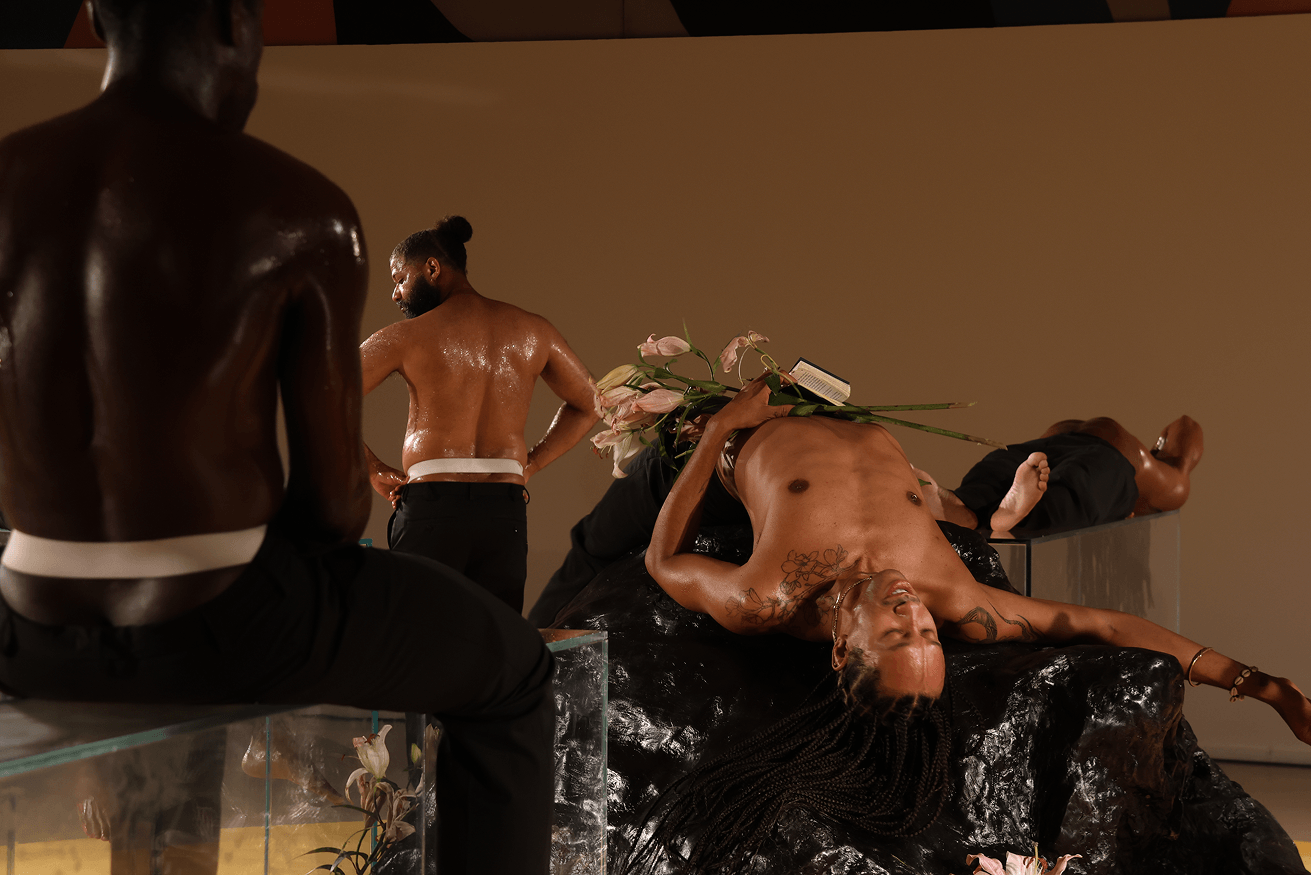
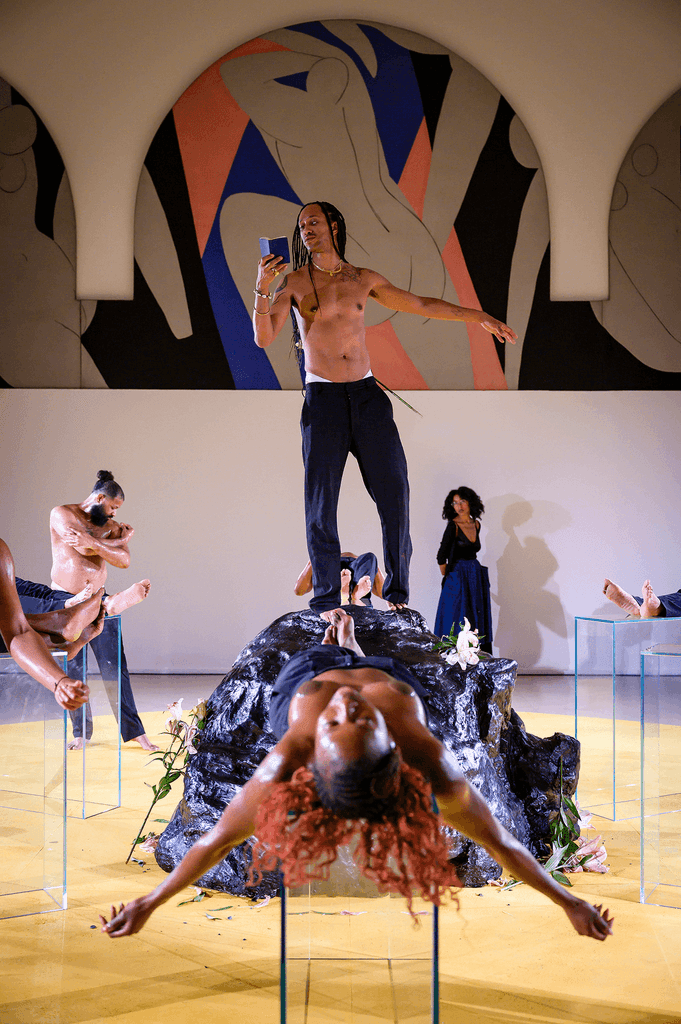
On October 3, Greenberg presented Douze études académiques/When Frustration Threatens Desire, a seven-hour performance, in the Salle Matisse of the Musée d’Art Moderne de Paris. It is part of Kerry James Marshall: The Histories, on view until January 24, 2027, which gathers around seventy works from more than four decades of Marshall’s career, including eight new paintings.
Ahead of the performance, Greenberg talked to hube about the Marshall painting that changed the course of the work, why he refuses to rehearse, and what happens when an artist leaves room for the unknown to take over.
hube: The title, Douze études académiques, borrows the language of the art-school study—the étude, the drawing done from a live model as an exercise. What made you want to reclaim that vocabulary for a group of performers inside a Kerry James Marshall show?
Miles Greenberg: This one’s a little complicated because, to be honest with you, I’ve modified the title since I started the journey with the piece. I started out very inspired by a painting of Marshall’s called The Academy (2012). I wanted to work from this idea of the singular subject and expand it, replicate it into a situation that was more of a ritual. But as time went on and I developed the work, I wasn’t happy with what I was coming up with around that painting; it was too theatrical, and I don’t really trust theatre. I went back through Marshall’s work and found a different piece I had completely forgotten about, but it had served as a reference for a couple of my earlier works, most notably a performance I did in Bangkok in 2021. It’s a scene of one figure levitating another. The painting isn’t part of the show, but it’s called When Frustration Threatens Desire, and I found it incredibly relevant to my personal life right now.
The thing about performance—and I think this is challenging, especially within the context of an institution—is that it changes very quickly. It moves and it lives. It’s no secret that an institution, especially one as prestigious as the Musée d’Art Moderne de Paris, don’t always have the capacity for spontaneity, despite their best intentions, and performance challenges that. It’s hard to commit to a singular idea when it risks changing quite radically between when you come up with it and when it’s time to show, print the guides, and put up the wall text.
All that to say, there’s been a lot of transition in the inspiration. Now the piece is called Douze études académiques/When Frustration Threatens Desire, and it’s completely different from what it was when the museum first approached me. I think that’s something to be embraced and excited about, and the museum, to their credit, is excited! But we still couldn’t reprint the wall text, so here we are! Performance is almost impossible for me to title before I do it, because the truth is I never know exactly what I’m doing until it happens. I have an idea, fundamentally, but at the end of the day, I’m seeing it for the first time with everybody else.
Douze études académiques performance
Photography courtesy of FABRICE GABORIAU
Douze études académiques performance
Photography courtesy of MICKAEL LLORCA
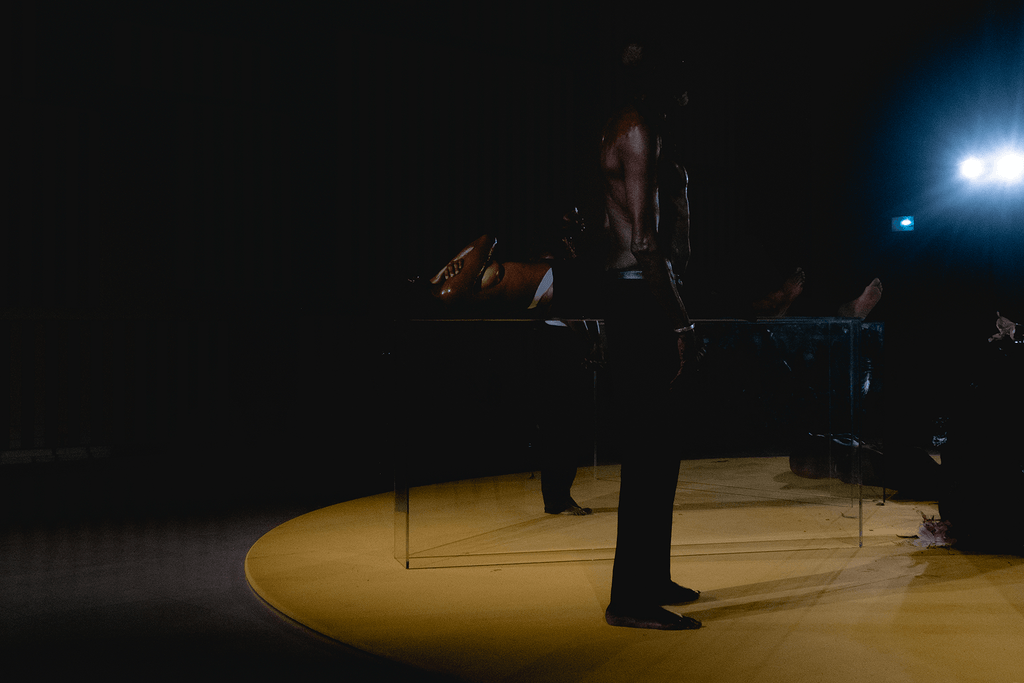
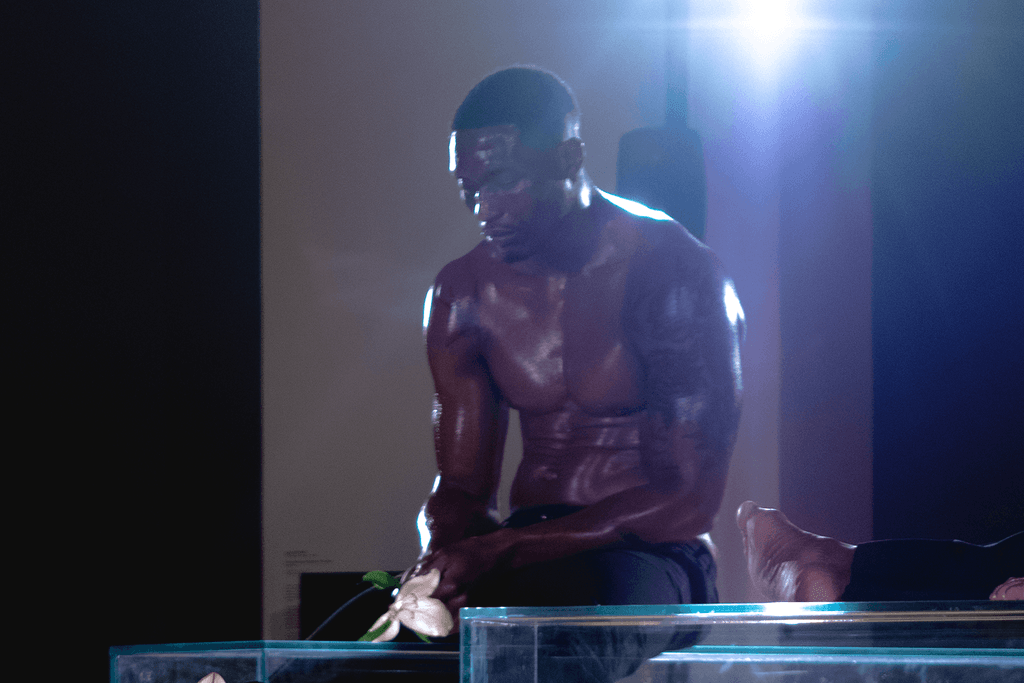
Douze études académiques performance
Photography courtesy of MICKAEL LLORCA
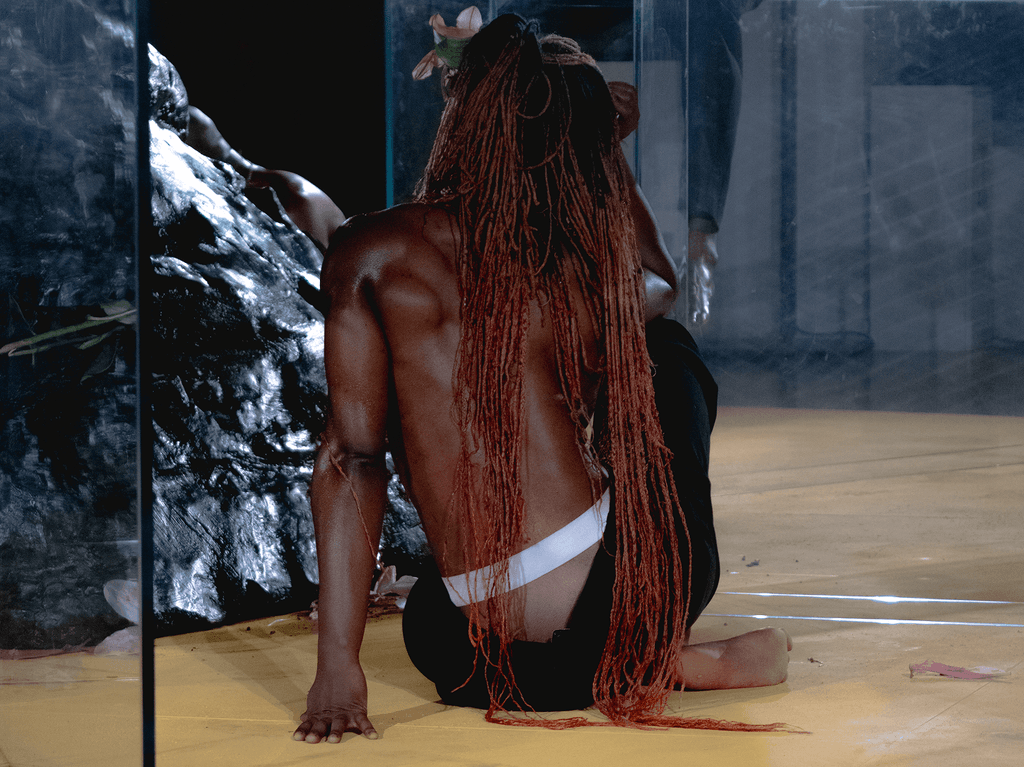
Douze études académiques performance
Photography courtesy of MICKAEL LLORCA
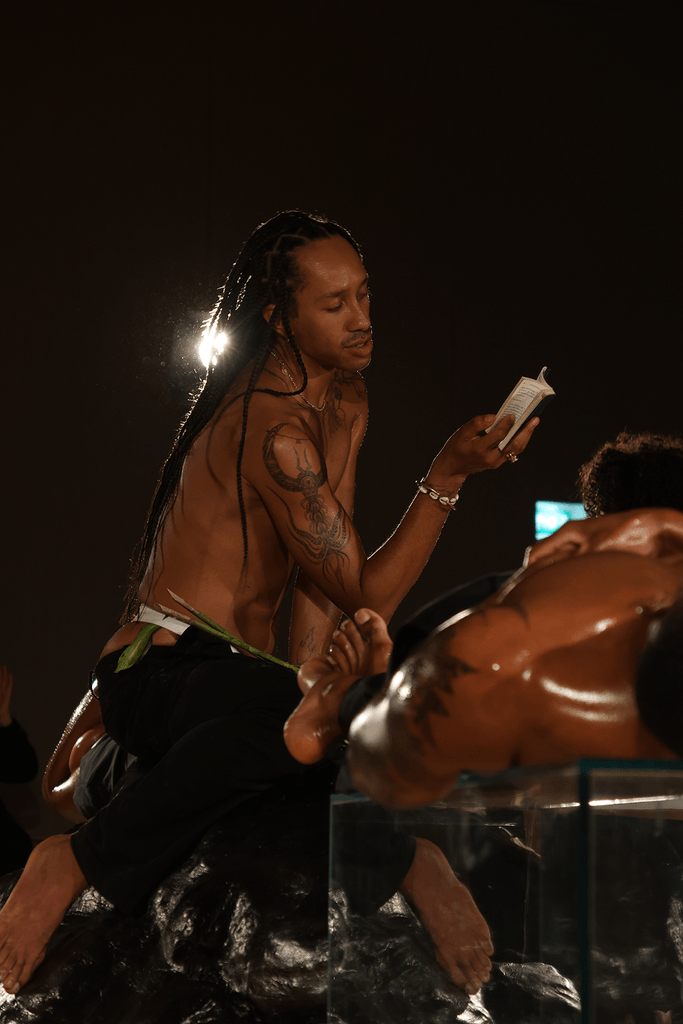
Douze études académiques performance
Photography courtesy of GAUTHIER SCHMITT
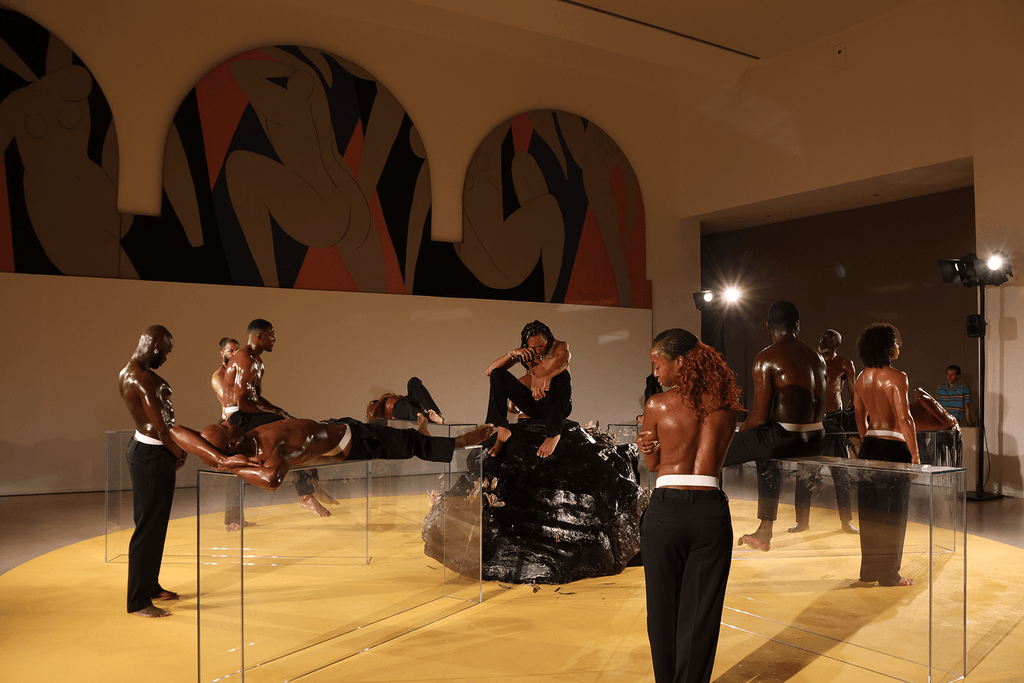
Douze études académiques performance
Photography courtesy of GAUTHIER SCHMITT
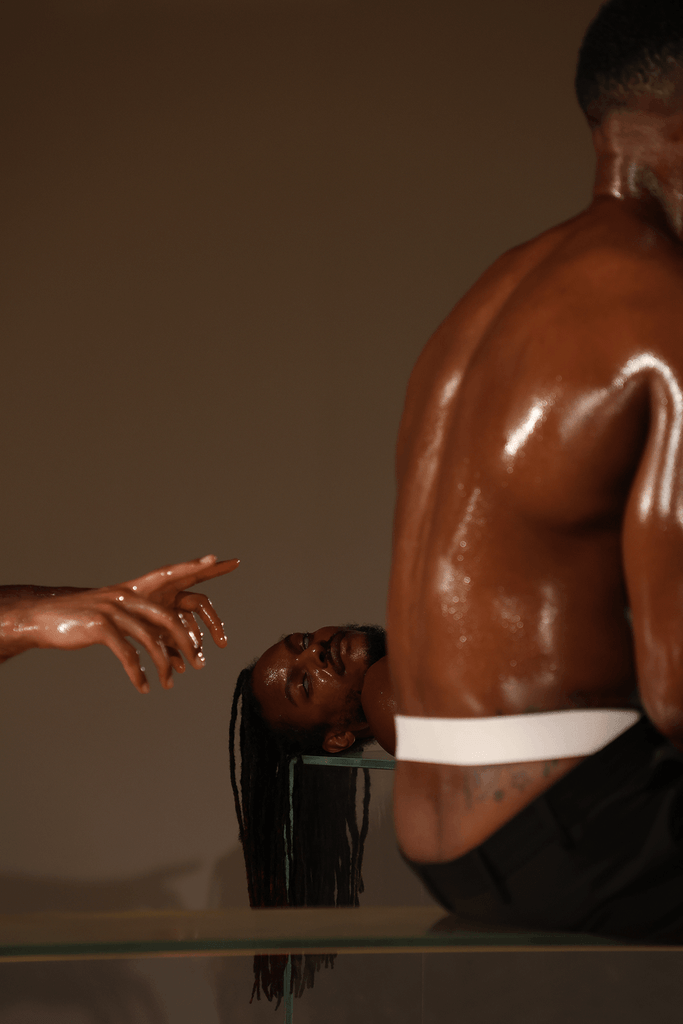
Douze études académiques performance
Photography courtesy of GAUTHIER SCHMITT
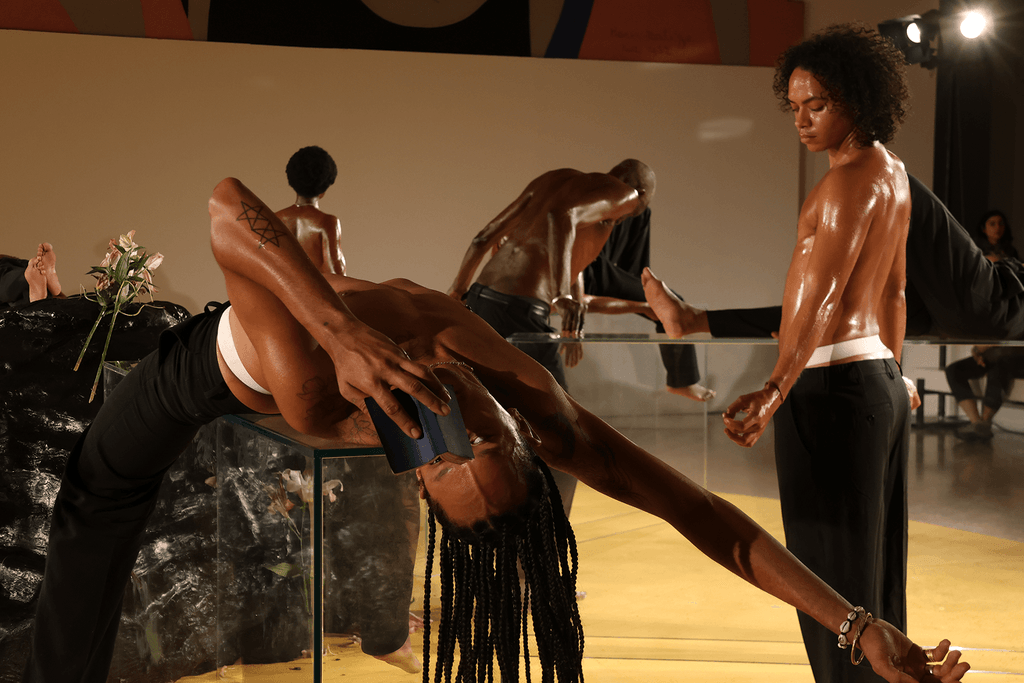
Douze études académiques performance
Photography courtesy of GAUTHIER SCHMITT
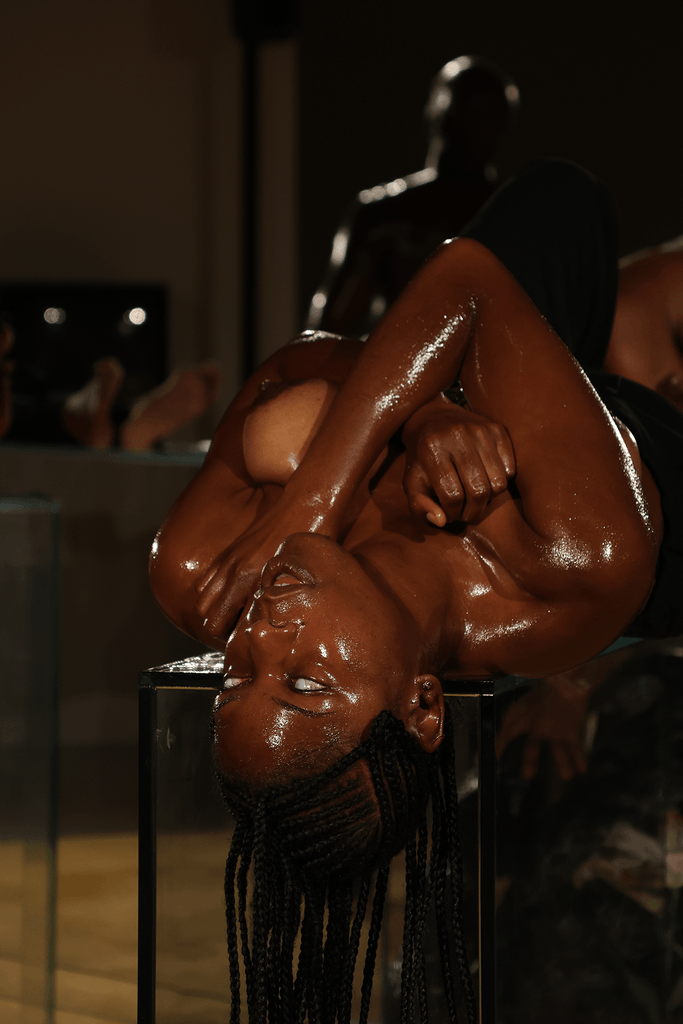
Douze études académiques performance
Photography courtesy of GAUTHIER SCHMITT
h: Marshall’s paintings have a very particular visual language—in the way figures are built, lit, and placed within the frame. When you bring this language into a live performance, how does it begin to take on a different life through the body and the space around it?
MG: I’ve never worked directly in conversation with Kerry James Marshall’s work before, but he’s been a reference and an inspiration. What I appreciate about the way he makes work is that it plays with what one of the things I think Black artists excel naturally at, which is a specific kind of abstraction. Even when it comes to figuration or representation, there’s always room for a little suspension of reality—it never quite has to be literal. I think a big part of the way the African diaspora makes art, and has always made art, is with an inherent ability to be fluid with what we say something is.
I’ve gained an appreciation for the way that he and artists like him—and, hopefully, artists like me—don’t have to rely on exactly what things are at first glance. The way he plays with shade and Blackness, takes a figure and creates a metaphor out of the surface of the skin. I find that very exciting, and it’s something I’ve tried to reference, or create some version of, in my own work.
h: Your performance asks us to look at the body in a different way. What do you want the audience to notice when they watch the performers?
MG: What I like about doing performance is that it’s not really up to me. I don’t think any artist should dictate what their audience notices, really. Hopefully, if I’m doing a good job, the audience will notice things that I don’t even know about yet.
h: Some of the performers are also singers, who will be sounding out chants, texts, and prayers pulled from Marshall’s own references. How did you choose to let sound enter a piece that’s otherwise built on stillness and slowness?
MG: We don’t know whether that’s going to happen yet. Nothing about the score of this performance is one hundred percent set in stone. That’s a thing I’m doing somewhat deliberately—leaving some decisions open and leaving room for serendipity and spontaneity. I’m leaving a lot up to the divine.
h: Your performers often wear contacts that take away most of their sight and turn them inward. Are you going to use the same method in Douze études académiques/When Frustration Threatens Desire, and why does removing vision matter so much to the kind of presence you’re after?
MG: It’s actually something I came up with when I was living in France. I appreciate how abstracting the eye of the performer gives us a certain protection, and gives the audience a certain protection, too. It works in all directions. My work isn’t really interactive. It’s more about an indirect energy exchange, a sculptural relationship.
I’m not compelled by the idea of my performers, myself, and the audience interfacing in a direct way, because then you get these clashes, these energetic collisions, that I don’t think the work is about. I like the idea of the body turning into an object. I like the idea of the performer being able to go inward, and of having a space where, on stage, we can mostly see only one another and not the audience. It splits the space into two parallel dimensions that can come very close and exchange energy but never actually touch. Especially when you’re working with Black bodies and queer bodies in front of a predominantly white European audience, you remove some of what might otherwise carry a lot of de facto baggage—ideas of subjugation and hierarchy that I don’t think are particularly interesting or beneficial to the work.
h: You’ve talked about slowness and the gradual decay of form. Over seven hours of your performance, what does that decay look like from the inside, and what do you want it to do to the people watching?
MG: I don’t know, and that’s the best part. It’s always difficult, but it’s something I love to witness over time, because the way a form falls apart tells you just as much about it as the way you construct it. It can vary from day to day. Today, for example, I have a cold. If I were to perform today, there would be certain particularities in my body that would say something about how it has been over the past week. I was just in a corset for six hours, I’m exhausted, the weather is terrible, there are things going on in my personal life—all of that would show up on stage. And if the day were totally different, which it will be on October 3rd, that would show up too.
There are truths that become very visible when you’re working with the body, which change rapidly, and I find that exciting. It’s like a sculpture: if you keep it at the bottom of the ocean, or on a windy cliff, or in a cave, it will change shape in a very particular way and be shaped by time and history. I think that’s a big part of what the audience responds to, because there’s something very human in understanding how our bodies change over time in ways we can’t control, but which our culture perpetually tries to unravel and understand.
h: Some of your performances continue to exist through video, photography, or sculpture after the live moment is over. How do you think about what remains of a performance once it has ended?
MG: I think a lot of historical performance art documentation is pretty lousy. I’ve talked about this a lot: 1970s performance art is a huge reference point and inspiration for me, but at the same time we’re looking at grainy black-and-white photographs, often taken by the artists themselves. There are varying exceptions: Ana Mendieta, for instance, is a huge reference for me—I love her work—and she had her own lens-based practice, with a lot of intention in how she went about her documentation. But I still think the documentation was secondary and somewhat limited. Then you look at artists like Theresa Hak Kyung Cha, whom I revere, but you feel she handed her camera to a friend and said, “Here, just do a few.” They’re still beautiful and important documents, but I personally wanted to assert more of my own voice in the remains of my time-based work.
I can’t say I care much about the ephemeral, or the idea of time-based work having to disappear—which is why I sometimes struggle with the title “performance artist” to begin with. It feels like an attachment to ephemerality comes with the territory. I want to make work the way a lot of artists throughout history, at least in the West, have made work: work that ostensibly lasts forever. So, thinking about what that looks like in a classical sense, I developed a language that documents, but is still a language, so I’m using the performance almost as a studio. Each layer of the work comes from the performance, but is a work unto itself. It isn’t about preserving one form of art in another. These are fully autonymous video works, fully autonymous sculptural works, and the performance works that birthed them, respectively.
h: Holding one of these durations is enormous. How do you choose the performers, and how do you prepare them for something that asks this much of the body?
MG: I cast in different ways. I’ve worked with people from all disciplines. This work features twelve performers, plus myself, and when I get back to New York, on October 29th, I have another piece that’s the biggest I’ve ever done, with forty-four performers at a time, eighty in total, over six hours. We don’t rehearse, ninety percent of the preparation is scenography and production formalities. We discuss the performance ahead of time, and the performers know the protocol and what we’re doing, but there isn’t a huge preparatory phase for this one. I’m seeing it as a jam session, or a sketch.
People are often surprised by how organic it is, and how easy it is to get into that trance state when you’re dedicated to it—especially when it’s somebody’s first time. Once you’re locked into this space, you have to negotiate with yourself, regulate your body, and with how you feel. And it’s all very feasible. A touch of naivety is part of the secret sauce.
I’m in this really peculiar moment right now right after ending a nearly five year relationship, which is amicable and for the best, but nevertheless has me interrogating my process and finding new ways of working, because it’s what I need right now. I think that I had accumulated so much fear of failure in my personal life, that was seeping into how occasionally stiff and precise I was with a lot of my institutional work; whereas now that the thing I was most terrified of failing at has organically ended, I feel empowered to be a bit messy, a bit less polished, and very earnest.
h: How is the Salle Matisse shaping Douze études académiques/When Frustration Threatens Desire—its light, its scale, its place in the building?
MG: I don’t know yet—which is great. I like to have these conversations with art history, but what they bring to the work is always somewhat unpredictable, so I like to keep it that way until it happens.
I’m being so fluid about this one in part because the invitation is so huge—I mean, transparently, to be paired with Matisse is just so much pressure that it simply short-circuits me. But in looking more closely, his permanent work in this gallery is very loose and playful and unconfined, so I’m trying to match that spirit to bypass being intimidated.
h: A museum visitor might catch ten minutes of a seven-hour piece and leave. What do you hope stays with someone who only sees a fragment of Douze études académiques/When Frustration Threatens Desire?
MG: I have no hopes. That’s not my responsibility. What I do hope is to create a situation where we can all get something new. Part of why I like doing what I do is that I can say very little about it before it happens. If we had this interview right after the show, it would be a completely different conversation. For now, I feel like I’m going on just as much of an adventure as the other performers and, hopefully, the audience. What I hope is that it’s effective, and necessary—because we have to think about what is necessary to say and do, especially in 2026, when there’s such a huge deluge of information. Hopefully, once we’re in the here and now of it, this piece will do something exciting and carry that element of spontaneity, serendipity, and the divine that brings forth something none of us know about yet.
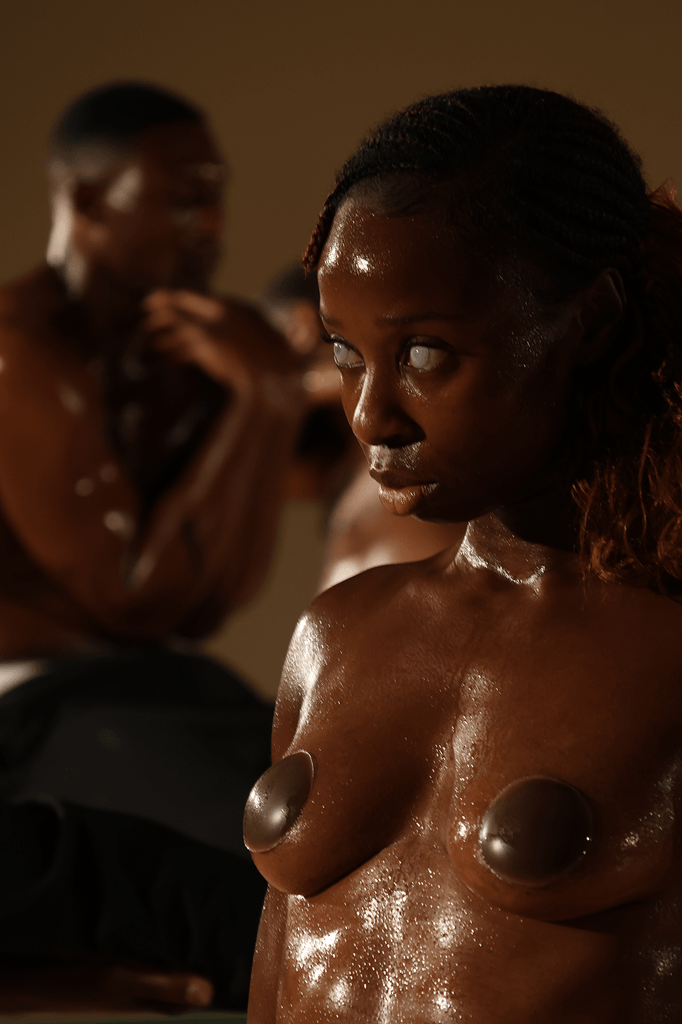
Douze études académiques performance
Photography courtesy of GAUTHIER SCHMITT
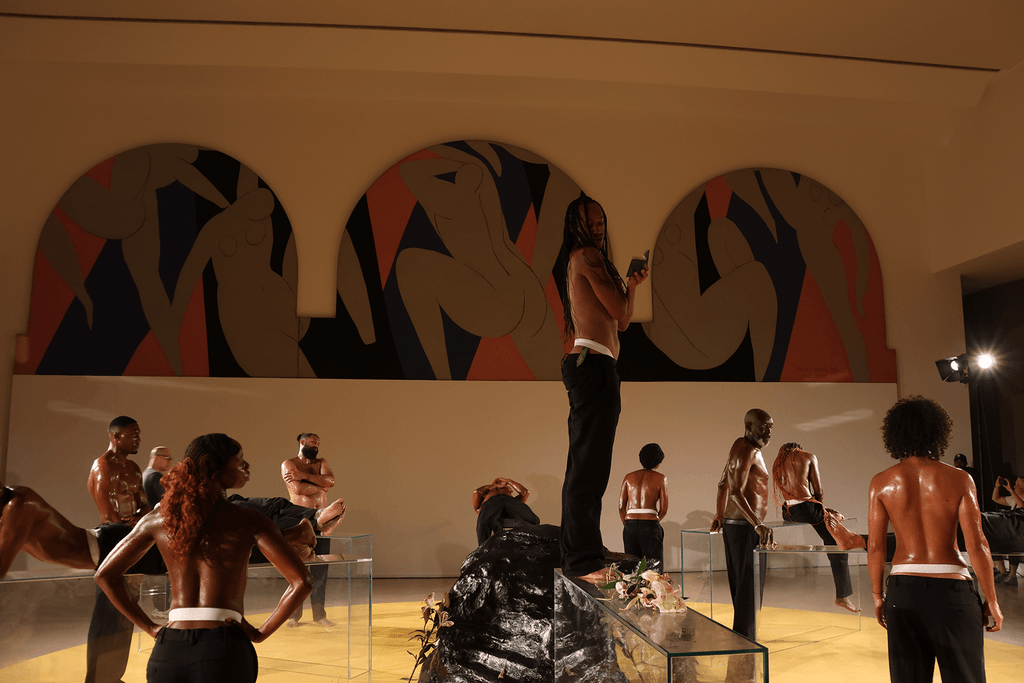
Douze études académiques performance
Photography courtesy of GAUTHIER SCHMITT
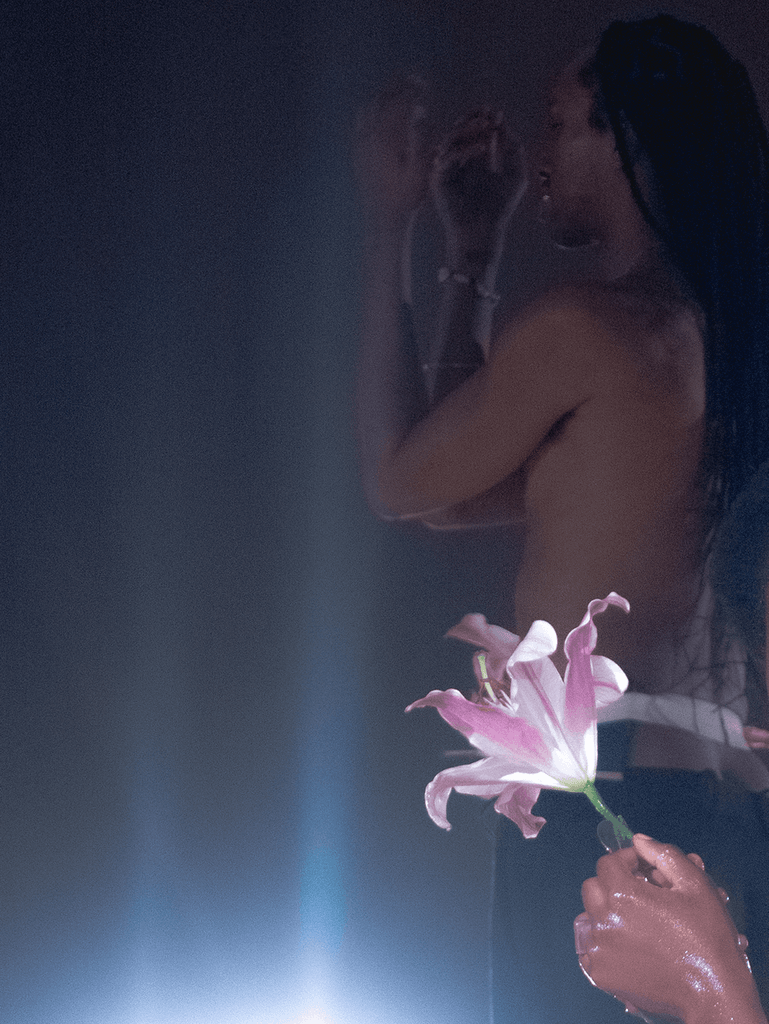
Douze études académiques performance
Photography courtesy of MICKAEL LLORCA
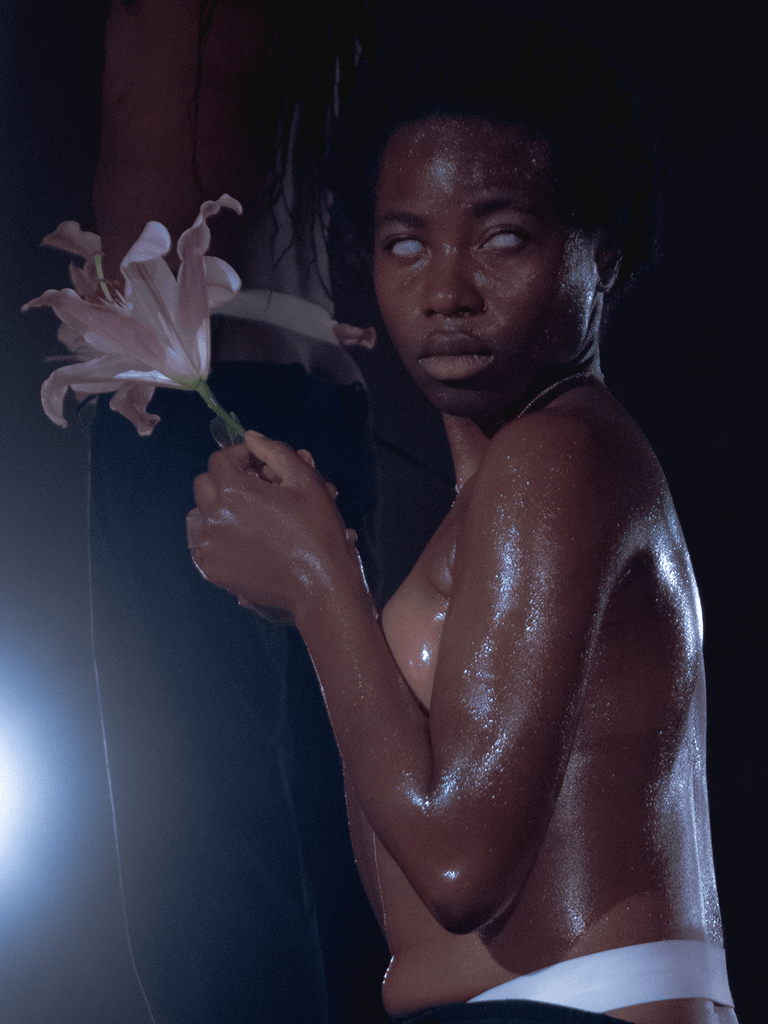
Douze études académiques performance
Photography courtesy of MICKAEL LLORCA
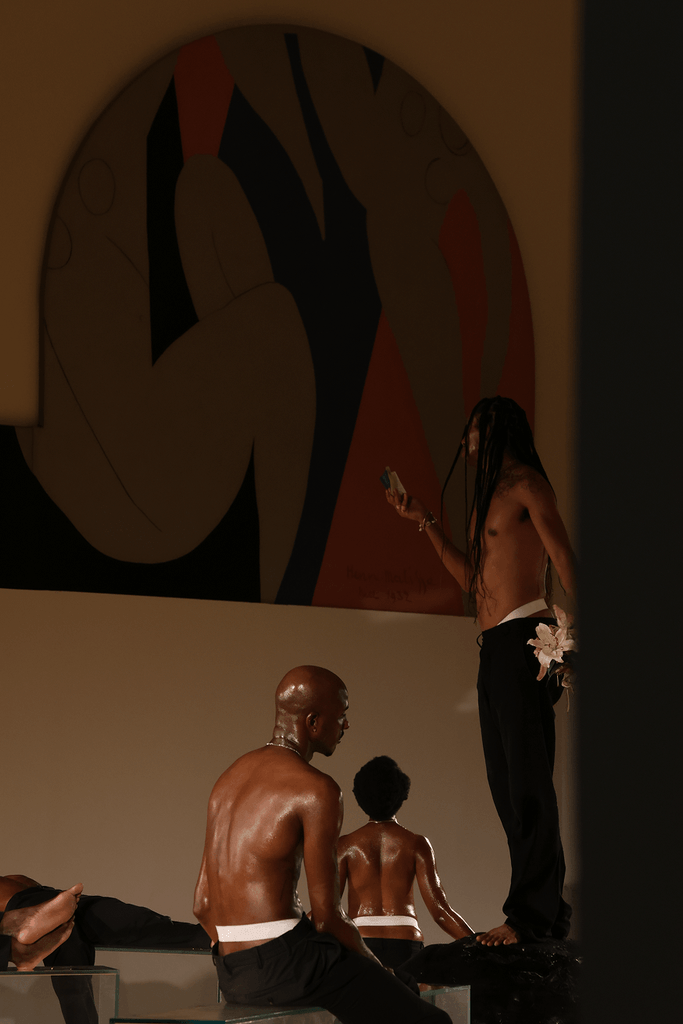
Douze études académiques performance
Photography courtesy of GAUTHIER SCHMITT
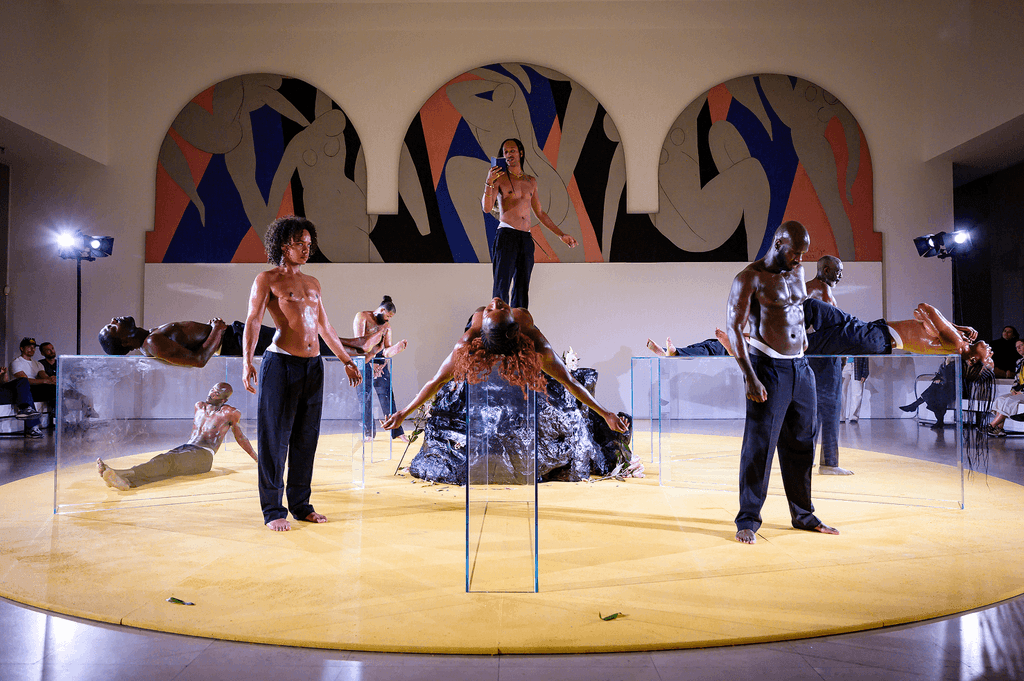
Douze études académiques performance
Photography courtesy of FABRICE GABORIAU