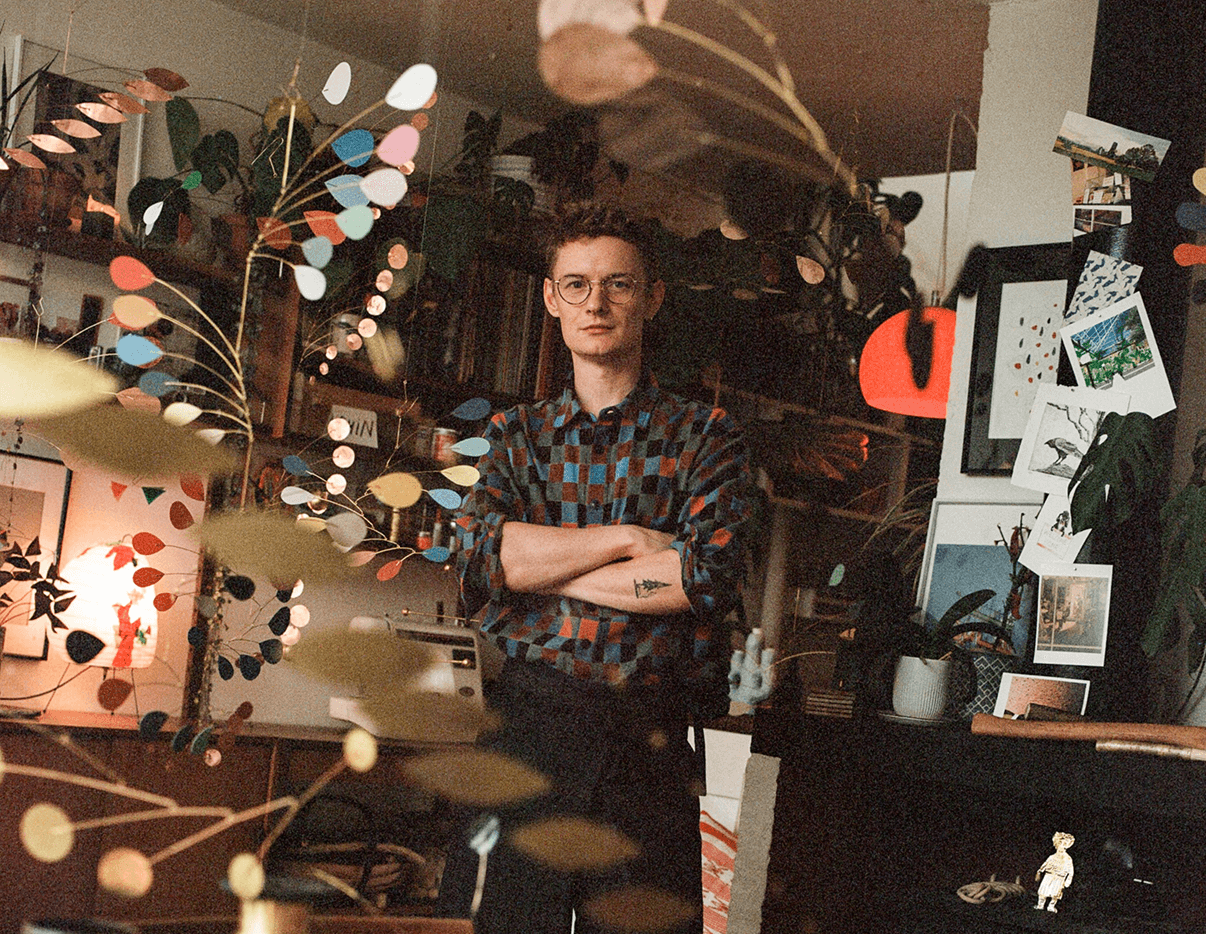
Phineas Harper is a British curator, founder and cultural strategist who has become a powerful voice for sustainable and inclusive design through their writing and leadership across major cultural institutions and international initiatives. As Deputy Director of The Architecture Foundation, Harper co-founded New Architecture Writers, now a key platform for diversifying architectural criticism before moving on to serve as Chief Executive of Open City, where they expanded the Open House festival and Accelerate, a nationally recognised mentoring programme for underrepresented youth, and published a number of books including the acclaimed London Feeds Itself edited by Jonathan Nunn. Their print-making and sculpture has been exhibited at the Royal Academy and in solo exhibitions around London. Harper has also given evidence on the intersection of design and political issues to the House of Lords and London Assembly, has lectured on architecture around the world, and curated significant exhibitions and awards such as the Oslo Architecture Triennale and the Architecture Prize of the Province of Styria.
In addition to previously serving as Deputy Editor of The Architectural Review, Harper has contributed to publications such as The Guardian, Financial Times and Dezeen, exploring the social impact of design. Much of their recent work continues to champion inclusive design as a practical and ethical framework—one that broadens participation in the built environment and challenges long-standing assumptions about who architecture serves. Throughout their wide-ranging career, Harper has led with a mission to open and diversify, seeking equitable design for all.
hube: Was there an early experience, place, or encounter that profoundly shaped your understanding of urban planning and the ways we inhabit cities? How did it influence your approach to architecture and design thinking?
Phineas Harper: Browsing the shelves of the British Council library in Kano, in northern Nigeria, where I lived for a time as a teenager, I came across an old copy of The Architectural Review. It was a special issue dedicated to the winners of the Aga Khan Award—a prize given to built projects of community value across the Muslim world. As a kid, I had always assumed architecture was mostly about posh house extensions and shiny skyscrapers, but here were new buildings all over the globe that were fighting poverty, providing essential community infrastructure, and saving precious heritage. Many were humble—a refurbishment of a historic marketplace, for example, or a network of new public lavatories in a deprived neighbourhood—but all were made with care and compassion. Reading that copy of the AR changed my adolescent perspective on architecture and urban planning overnight. I realised that design could have immense societal value. A year later, I enrolled in architecture school.
h: During your time at Open City, what motivated you to push particular agendas or projects? In what ways did the pandemic reshape your leadership style, your understanding of success, or the kinds of impact you wanted to achieve?
PH: Taking on the leadership of a charity dedicated to opening up cities around the world, just as the pandemic forced much of cultural life to close, was a wild challenge. The organisation was in rocky shape when I arrived, and Covid only made things more dicey, but we moved fast, innovated hard, and, in the end, didn’t just survive the pandemic—we emerged stronger and more diverse. Many larger cultural institutions responded to the pandemic feebly—shutting their doors, furloughing staff, and effectively going into hibernation. I took a different approach, using the pandemic as a creative opportunity to build useful and vibrant new cultural programmes for our audiences wherever I could. Five years on, I’m immensely proud of having not just successfully steered Open City through the most challenging period of its three-decade history, but also of growing the organisation, rebuilding its finances, reaching new audiences, and helping launch new architecture festivals from Chile to Mozambique.
h: You’ve consistently focused on projects for young people and future generations. In your view, what crucial gaps exist in contemporary education around architecture and urbanism, and how do your initiatives at Open City seek to address them? How might rethinking education shape the way we design and inhabit our cities?
PH: Educational inequality is severe in the UK. The opportunities available to the well-off minority of children who attend elite schools contrast profoundly with those accessible to state school pupils. Open City has worked with children for many years, but in the past its efforts were fairly untargeted in terms of the backgrounds of the young people it supported. When I took over as Chief Executive, the organisation was using charitable resources to augment the education of extremely privileged, privately educated students, for example, but could have been doing far more to support less well-off children from more diverse backgrounds. I gave the charity a more critical focus in its education work, trebling the scale of its youth programmes and specifically targeting under-represented communities. I would like to hope that if more young people from working-class communities were genuinely empowered by a fairer education system, we would see a fairer built environment as a result.
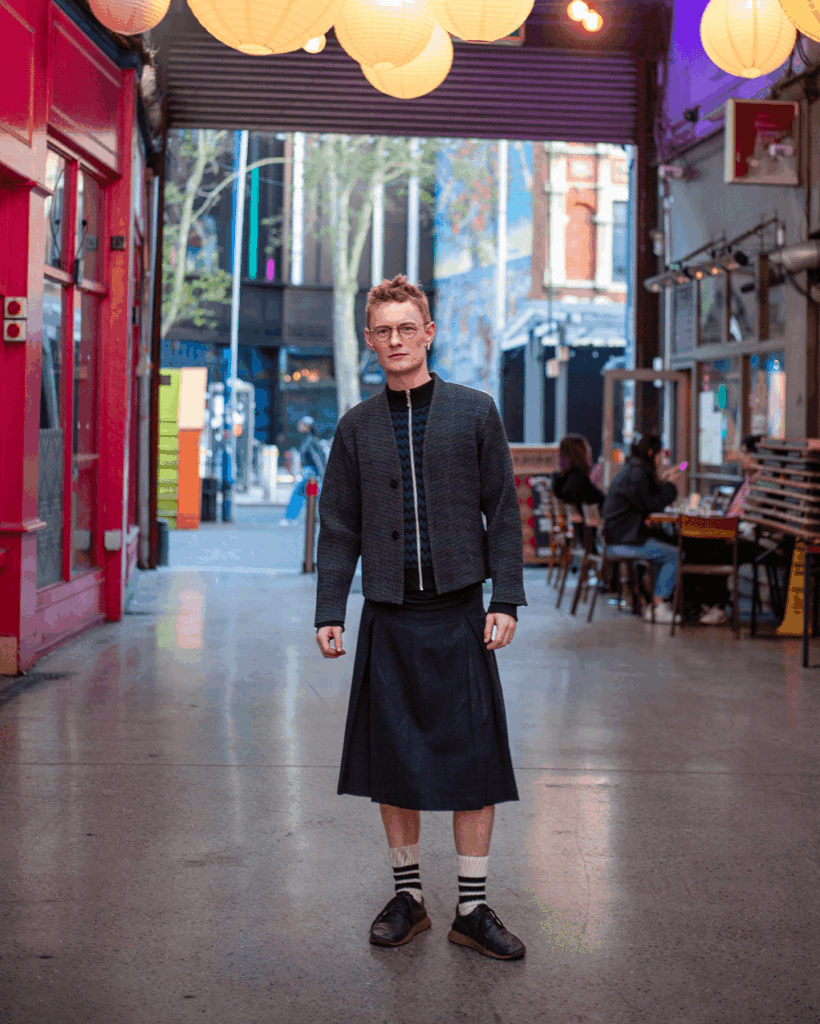

Courtesy of PHINEAS HARPER

Courtesy of PHINEAS HARPER

Courtesy of CAL THOMPSON

Courtesy of OSLO ARCHITECTURE TRIENNALE

h: You’ve worked across disciplines, including pottery, writing, and architecture. What insights from one practice have fundamentally shifted the way you approach the others? Do you see a common thread connecting them?
PH: It’s ultimately all about care. Everything is. The best architects are enormously caring people, investing attention and empathy in the smallest details on behalf of the clients and communities they serve. Writing is a highly careful craft as well, both in the delicate choices made over precise phrases and in the subjects covered, the facts checked, and the sources cultivated. Naturally, my sculptural practice of fragile, perfectly balanced mobiles also involves dextrous, practical care in bending brass and steel rods by the smallest fraction of a millimetre to create my structures. The best educators invest immense care in the learning of their students, and even management, for me, is fundamentally about care. It’s about caring for your team, for your mission, and for the sustainability of the organisation you lead. That’s not to say there aren’t times, as a leader, when you need to prioritise the needs of one group over another, however much you care for both, nor that even the most caring managers get everything right. But ultimately, care is the difference between a manager you want to work for and one you should avoid.
h: How do you balance the value of heritage with the need for innovation? Are there moments where heritage constrains creativity, or do you see it as a springboard for contemporary design?
PH: Architecture isn’t a zero-sum game. Heritage and innovation are not mutually exclusive. The best innovation learns from the past and works with built heritage to improve the world, rather than trampling on what has come before for the sake of newness. True innovation and heritage, therefore, go hand in hand. An “innovation” that cannot coexist with and enhance existing heritage is not innovative at all—it is merely the same old unthinking, dead-end, destructive practice that we must rid ourselves of to flourish in the future.
I would also question whether there really is much of a “need” for innovation. We already know how to feed everyone on the planet, how to cut carbon emissions to sustainable levels, and how to live in symbiosis with nature. Our problem is not a lack of ideas or knowledge; it is a failure of political will to act on building the fairer and more ecological economy required. Some days, I see far more to gain in learning from centuries-old indigenous knowledge than from flashy, wizzy innovation.
h: In what ways does architecture reflect political realities, societal priorities, or historical power structures? How does this awareness shape the way we document, critique, and interpret buildings and urban spaces?
PH: Buildings shape and are shaped by political and social forces every day. The historian Carol Willis once observed that architectural “form follows finance”—a pithy summary of how the streets we build broadly reflect back the values of our late capitalist society. Urbanism too mostly mirrors political reality. This is why, when a society starts to care less about the vulnerable, we almost instantly see more homeless people sleeping in tents or begging on trains—rising inequity reveals itself in the cityscape. But Willis wasn’t entirely right. There are cracks in any system—even in the most constrained political reality—and people have a way of prising open those fissures, creating spaces and communities that bend or break with the mainstream culture that surrounds them. Architecture echoes the stories that underpin society, about what is valued and what is not. To build a better city, we need first to tell better stories.
h: Which topics or debates in architecture do you consider most urgent today, and which voices or perspectives do you feel are still underrated or overlooked?
PH: When I graduated from architecture school, sustainability was barely on the agenda, seen by many as a nerdy, technical millstone around the neck of architectural expression. Then, in 2019, a renaissance: suddenly, everyone began to care about climate breakdown (some more sincerely than others). For those of us who had been advocating for ecological design for years, it was a huge relief—finally, the architecture world was starting to take concepts like embodied carbon seriously. But progress is still abominably slow. I believe the climate crisis is the most alarming—and also the most exciting—thing to happen to architecture in generations. We now know that the high-carbon materials and construction strategies of the past are useless for creating a prosperous, liveable future, so designers today have a unique opportunity to be part of meaningful, far-reaching change, the likes of which their forebears never got the chance to experience—how exhilarating!
I would also say that, in the UK at least, nobody truly understands the housing crisis, which is a huge barrier to solving it. So many people, including thoughtful, sensible, empathetic architects, still think our property prices are crazily high simply because we don’t build enough new homes. In fact, we have been building private homes faster than the population has been growing for at least five decades, yet prices have shot up regardless. Britain and many other Western economies urgently need to have more sophisticated conversations about the true drivers of their housing crises if they are to have any hope of addressing them.
h: Criticism is central to your work. How do you see architectural critique contributing to more sustainable, humane, and forward-thinking urban development?
PH: A damning critique of a new Broadway show or a glowing restaurant review can massively alter the economic vitality of those projects, but an architecture critic, by comparison, has barely any power to change the trajectory of a designer’s career or the fortunes of an individual building. Even the insults that critics throw at buildings they dislike are easily co-opted, reclaimed as value-adding monikers (for example, that is how The Shard got its name). The true power of architectural critique to effect positive change lies not in short-term quick wins, but in waging slow, steady, and consistent campaigns that champion the best practices while calling out the worst. I believe critics, therefore, have a real responsibility to always speak up without fear or timidity. Yet in design, as in many corners of contemporary culture, cowardly insipidness seems to be on the rise, as bland platitudes supplant robust debate. By “insipidness,” I mean the polite uncriticality sometimes veiled as “professionalism.” It is the way people talk on LinkedIn—praising themselves and each other while saying or doing nothing that might meaningfully challenge the status quo.
h: How do you envision truly sustainable cities, both environmentally and socially? Are there examples from your work where architecture or urban planning successfully merges ecological responsibility with community engagement?
PH: A truly sustainable city nourishes both the environment and its communities. It is simultaneously vivaciously characterful and genuinely equitable. It’s a place where getting to know your neighbours feels easy and natural, where cars are few, trees are many, and cultural life flourishes. Many cities are already getting it right in one way or another—Freiburg banned cars from its city centre in 1973; Vienna has some of the best social housing estates in the world (one of which features seven rooftop swimming pools and 20 saunas!); and public transport in Luxembourg is completely free. The challenge for the urban planners of tomorrow is not to invent entirely new concepts of metropolitan life, but simply to combine more of the successful ingredients of sustainable city-making that are already thriving around the world.
h: If you could design a city from scratch for future generations, what principles would guide you?
PH: The London MP Jeremy Corbyn once gave American politician Alexandria Ocasio-Cortez some advice about adopting a new allotment. Rather than suggesting what new seeds to sow or what compost to buy, his advice was simpler: “First, see what is already growing.” In a similar way, there is no such thing as building from scratch. Everywhere already has a unique history and context. In building a new city, town, or even a small house, there will be particular materials in the ground, animals on the land, and weather patterns in the sky. Understanding and embracing the fact that everywhere is different is what gives truly great architecture its richness. Building a new place, then, is about understanding what makes that place special already and letting that understanding guide you.
The government has announced locations for 12 potential new towns, and I would love to see thoughtful architects and urban planners leading those projects with a real focus on nature and heritage. The UK is now one of the most nature-depleted countries in the world, and we have treated our built heritage terribly as well, carving inner-city ring roads through historic neighbourhoods. But we did some things right. The massive plane trees that make London a surprisingly green city were planted by forward-thinking Victorians and Edwardians on behalf of descendants they knew they would never meet in person. Londoners are now living in a city enriched by generous choices made over 100 years ago. The big question for anyone involved in city-making today is this: will the choices we make today be so cherished a century from now?


Image courtesy of ROSA NUSSBAUM

Courtesy of MAJA SMIEJKOWSKA

Courtesy of MAJA SMIEJKOWSKA
Words: ISABELLA MICELI
