Sage Nation slow fashion sustainability in fashion Japanese denim
DR. MARTENS x SAGE NATION

Sage Nation: in praise of the everyday

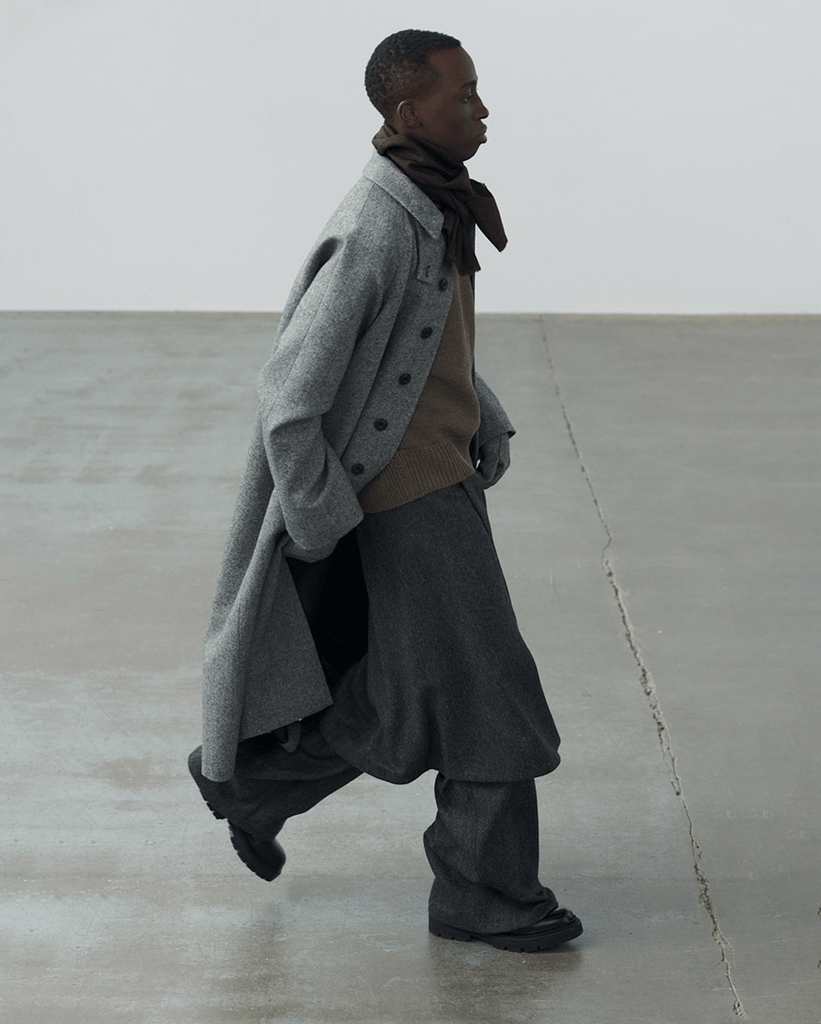
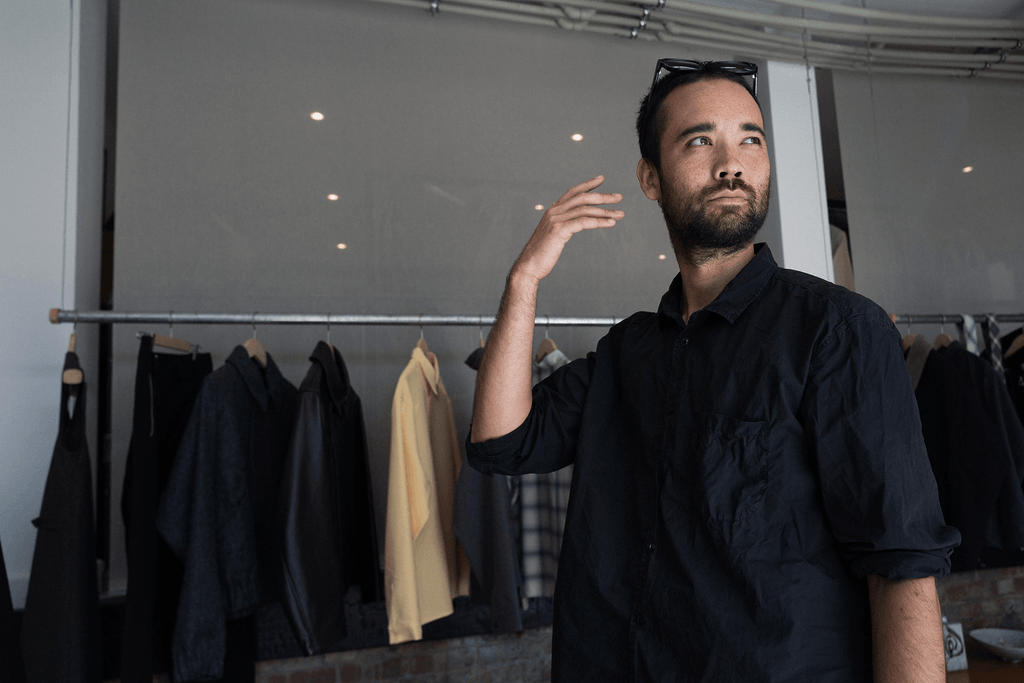
The Sage Nation studio is bright and airy, late-August sunlight drapes over the winter clothes, a preview of the new collection. The space is a hybrid studio-store, with the team and their customers separated by a delicate fabric partition. Sage loves the architecture, the closeness of process and product, of maker and wearer. With a smile, he compares his small brand to a local bakery. ‘I’ve got more in common with a baker than the creative director of an avant-garde fashion house.’ The metaphor comes naturally: early mornings spent kneading fabrics into new shapes, giving rise to community. Good clothes are as essential as good bread. And it’s true, Sage Nation clothes are things that nourish.

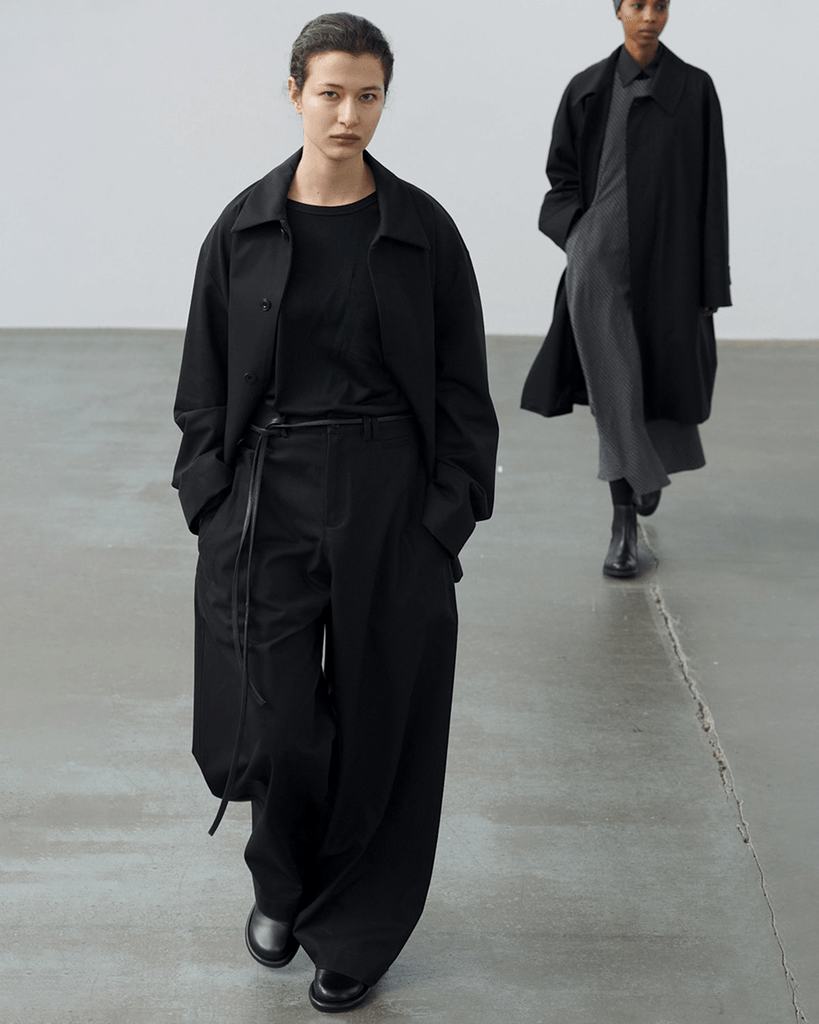
Leafing through a publication as he talks, Sage shows us a catalogue of his grandfather’s paintings. Yoshisaburo Toda’s work was exhibited only after his death, and its dark, rich colours now form the palette of Sage’s new collection. He wonders how these new garments will age, especially the coats, whose surfaces might develop a painterly wear and tear. This season, leather mittens and jackets are styled alongside woollen beanies, slouchy cardigans and canvas hoodies.

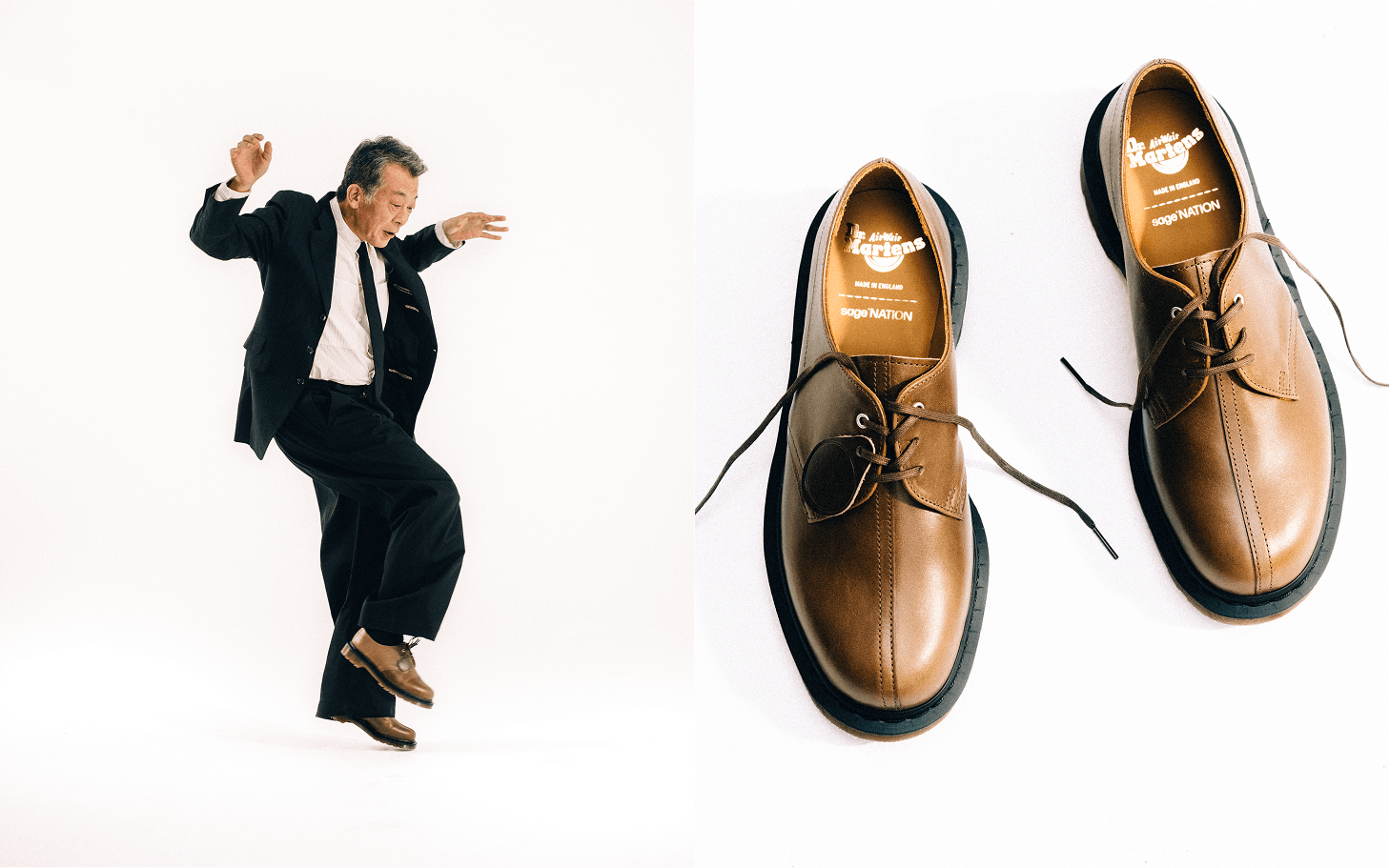
The collection is accompanied by a new collaboration with Dr. Martens: a Sage Nation riff on the classic Oxford shoe, this time with a seam running straight down the middle. A circular tag is attached to the laces. We might expect it to bear a logo or stamp of some kind, but Sage leaves it plain. It’s the Sage Nation ‘dot’, taken from the letter ‘I’ of his logo.

This charmingly subtle detail is not to be overlooked. It says everything you need to know about Sage and his process: precision, clarity and completeness. The brand has been built detail by detail, in resistance to explicit branding and logo-centric identities. Instead, loyalty lies in the brand’s reliability—slow fashion designed to sustain the everyday.

hube: Having grown up in England but been born in Hokkaido, Japan, your practice is founded on an understanding of the social customs, material languages and cultural characteristics of your dual heritage. In what ways do these two cultures align most naturally in your work? At the same time, their differences must also give rise to productive tensions—how so?

Sage Toda-Nation: I have an ongoing joke with my partner Yumi that what we miss about the UK when we are in Japan is the exact opposite of what we miss about Japan when we are in the UK. Both countries are so different but similar at the same time. The contrasts and similarities between both countries are what interests me. I’m a natural product of that tension. Naturally, it comes out in my work, how we do business and generally operate.

My partner Yumi—who works on art direction and marketing—is half Japanese, her mother is the brand’s pattern cutter and has lived in the UK for many years. My mother is British-Scottish but grew up in Japan. So, we are all a bit of a mash-up; this only makes things more confusing [laughs]. In other words, I enjoy my English breakfast tea just as much as I enjoy my sobacha. Above all else, both countries share the same respect for authenticity and respect for what has come before.
Sage Nation
slow fashion
sustainability in fashion
Japanese denim
Photography by MARTA TERESA
Sage Nation
slow fashion
sustainability in fashion
Japanese denim
Courtesy of SAGE NATION
Sage Nation
slow fashion
sustainability in fashion
Japanese denim
Courtesy of SAGE NATION
Sage Nation
slow fashion
sustainability in fashion
Japanese denim
Sage Nation
slow fashion
sustainability in fashion
Japanese denim
Courtesy of SAGE NATION
Sage Nation
slow fashion
sustainability in fashion
Japanese denim
Photography by MARTA TERESA
Sage Nation
slow fashion
sustainability in fashion
Japanese denim
DR. MARTENS x SAGE NATION
Sage Nation
slow fashion
sustainability in fashion
Japanese denim
DR. MARTENS x SAGE NATION
Sage Nation
slow fashion
sustainability in fashion
Japanese denim
Sage Nation
slow fashion
sustainability in fashion
Japanese denim
DR. MARTENS x SAGE NATION

h: Sage Nation is only six years young, born almost straight out of your graduation from university in London. At its conception, what ambitions did you have for the brand? With everything you have learned since, how have those ambitions evolved—and what have you had to redefine along the way?

SN: At the beginning of the brand, the ambition was really about wanting to find my perspective within fashion design. The motivation came from a place of wanting to prove to myself that I could create my idea of beauty. Now, I think it’s a lot more about the team and the legacy we have just started to build. Understanding that the clothes we make support people’s lives is something that still amazes me every day; I get a lot of fulfilment from that. Fashion can be a very surface-level industry, if you allow it to be. The goal is to continue putting clothes into the world that bring joy to people’s lives.

h: Of course, honesty and transparency are integral to this. Your materials are sourced from specialist makers around the world: Japanese denim, Scottish wool and Italian leather. In a way, craft is a feeling—the reassurance of knowing that a garment has been made fairly, with consideration for everyone involved and for the planet. Could you talk to us about the importance of responsible production and craftsmanship?

SN: Clothes are like food. What you put into your body really matters, as does understanding where the produce comes from. It’s really important to me that we make our clothes in the places that understand how to do it the best. Sage Nation at its core is about purity and a sense of minimalism. So, the fabrication and where things are made are where the detail lies. When you have a very simple, stripped-back design perspective, those things really matter.

As an independent brand, it’s important to support other small factories and suppliers and do our best to create an ecosystem, no matter how small it is. That’s my approach to sustainability: being mindful of both our environment and the community that makes the clothes. That’s what it’s all about.

h: The non-seasonal and largely genderless nature of your clothing also contributes to the brand’s sustainable approach. There is something deeply satisfying about wearing a garment until it feels like a second skin. How do you design for that kind of lasting relationship? At what point does a garment stop belonging to the designer and begin belonging to the person who wears it?

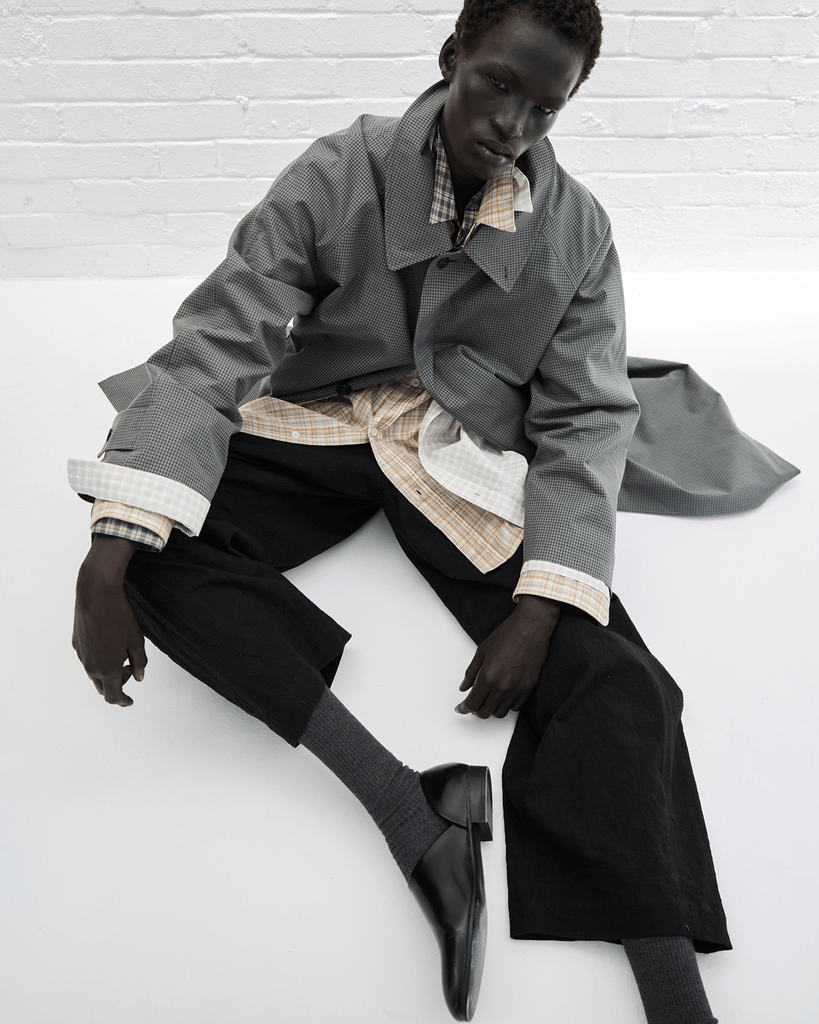
SN: When designing, the constant question is, “Would someone actually want this, and will they treasure this?” If not, then what’s the point? I have designed plenty of interesting garments that were potentially more innovative or ‘pushed the boat out’ more, but if it doesn’t seem like it can stand the test of time, then I don’t want to continue. We don’t need more clothes in the world! I don’t really design with unisex in mind. However, a good coat is a good coat no matter who it’s for. We have a lot of women who come to us for trousers and outerwear, and that’s always been a part of the brand.

Maybe a good way to reposition “we don’t need more clothes in the world” is through the idea that our waste problem can be reframed as a design problem: if something is made well and to last, it is less likely to end up in landfill.

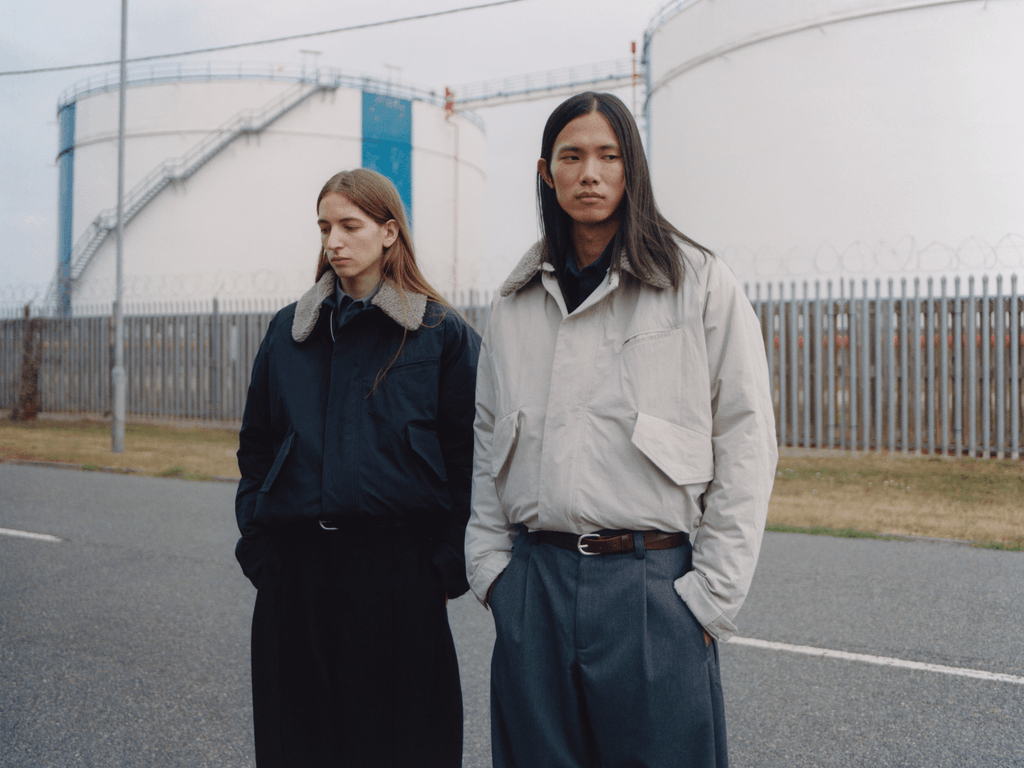
h: This ethos is reflected in the brand’s sensitive visual language. Models pose with understated confidence, bare faces and tousled hair: an everyday effortlessness, the boy next door, captured on film. What are you trying to communicate through these carefully curated visuals?

SN: Photography has always been a massive love of mine. How clothes are communicated through image making is what has always interested me. One of the main reasons I started the brand in the first place was because I wanted to shoot clothes—but I needed something to shoot. Who we cast and the feeling of an image of someone wearing Sage is one of the most important things to me. That’s what you remember, and that’s where it all began for me.

My mum was a photographer but stopped taking photos when I was born. But it meant that from a young age I was always aware of the ‘decisive moment’!

h: Your recent collection just launched mid-August. What influences have shaped this new body of work, and where does its focus lie?

SN: The focus lies in really homing in on what we do. The references and the constant stream of thoughts and ideas are ongoing and aren’t divided by seasons. Recently we have been really finding our way with Summer, as Winter has always come more naturally to me.

I’m someone who likes to look more introspectively at the brand’s output and really push the language further and further. I do not work in themes per season but instead see the brand as a constant labour of love which is forever evolving naturally. Developing an identity that is recognisable and clear is the best way forward for me. The more you do something, the more you find the brand’s voice; maybe through a series of stubborn decision-making, not wavering from the vision.

h: Collaborations can prompt different ways of seeing, different ways of interpreting your vision. What makes a creative partnership meaningful to you? Is there a person, brand or institution you would love to work with?

SN: For me, the power of collaboration is about the opportunity to present something in a slightly different light, or for a different audience. Learning from the process and exchanging strengths is what makes it significant. There should be something to learn from it.

We’ve just launched our first shoe with Dr Martens, at the end of September, as part of an ongoing partnership. We also have a few really exciting collaborations coming next year which will be the first collaborations we have done in the apparel world.

h: If a garment could carry a message into the future, what would you want your clothes to communicate about the time in which they were created?

SN: The clothes reflect the times and are true and honest to how people live. In the UK and beyond, many people are going through hard times: there’s a lot of unemployment and young people seem to be really struggling. I think this is reflected in how people dress—I feel there’s less colour and embellishment right now, and people are leaning more towards uniform and formality. I like the idea that we reflect the zeitgeist, we are all a product of it.

I think of Ian Curtis in the 70s, coming straight from his civil servant office job to do his gigs in his simple shirt and trousers. This is cool to me. When the clothes are a reflection of where you are at in life and in time, it becomes style.

I hope my clothes inspire a sense of ease and purity, feeling like you are not too heavily subscribed to one aesthetic. These clothes are there to enhance your life, to help you feel clarity when you dress.

h: Fashion is often described as a way to express who we are. Could it also be a way to discover who we might become?

SN: Like all things, clothes hold memories. But they definitely don’t define who we are. You define who you are and who you’re going to become. Hopefully, you can enjoy clothes along the way.

Sage Nation
slow fashion
sustainability in fashion
Japanese denim
Courtesy of SAGE NATION
Sage Nation
slow fashion
sustainability in fashion
Japanese denim
Courtesy of SAGE NATION
Sage Nation
slow fashion
sustainability in fashion
Japanese denim
Sage Nation
slow fashion
sustainability in fashion
Japanese denim
Courtesy of SAGE NATION
Sage Nation
slow fashion
sustainability in fashion
Japanese denim
Courtesy of SAGE NATION
Sage Nation
slow fashion
sustainability in fashion
Japanese denim
Courtesy of SAGE NATION
Sage Nation
slow fashion
sustainability in fashion
Japanese denim
Sage Nation
slow fashion
sustainability in fashion
Japanese denim
Photography by MARTA TERESA
Sage Nation
slow fashion
sustainability in fashion
Japanese denim
Sage Nation
slow fashion
sustainability in fashion
Japanese denim
Sage Nation
slow fashion
sustainability in fashion
Japanese denim
Courtesy of SAGE NATION

Words: MARTA TERESA

ISSUE 8

issue no8

Discover the new issue — available now